• Skip to primary navigation
  • Skip to main content

International Salsa Magazine

  • HOME
  • Previous editions
    • 2026
      • ISM / July 2026
      • ISM / June 2026
      • ISM / May 2026
      • ISM / April 2026
      • ISM / March 2026
      • ISM / February 2026
      • ISM / January 2026
    • 2025
      • ISM / December 2025
      • ISM / November 2025
      • ISM / October 2025
      • ISM / September 2025
      • ISM / August 2025
      • ISM / July 2025
      • ISM / June 2025
      • ISM / May2025
      • ISM / April 2025
      • ISM / March 2025
      • ISM / February 2025
      • ISM / January 2025
    • 2024
      • ISM / December 2024
      • ISM / November 2024
      • ISM / October 2024
      • ISM / September 2024
      • ISM / August 2024
      • ISM / July 2024
      • ISM / June 2024
      • ISM / May 2024
      • ISM / April 2024
      • ISM / March 2024
      • ISM / February 2024
      • ISM / January 2024
    • 2023
      • ISM / December 2023
      • ISM / November 2023
      • ISM / October 2023
      • ISM – September 2023
      • ISM – August 2023
      • ISM July 2023
      • ISM Edition June 2023
      • ISM – May 2023
      • ISM April 2023
      • ISM March 2023
      • ISM February 2023
      • ISM January 2023
    • 2022
      • ISM December 2022
      • ISM November 2022
      • ISM October 2022
      • ISM September 2022
      • ISM August 2022
      • ISM July 2022
      • ISM June 2022
      • ISM May 2022
      • ISM February 2022
      • ISM January 2022
    • 2021
      • ISM December 2021
      • ISM November 2021
      • ISM October – 2021
      • ISM September 2021
      • ISM August 2021
      • ISM July 2021
      • ISM May 2021
      • ISM April 2021
      • ISM June 2021
      • ISM March 2021
      • ISM February 2021
      • ISM January 2021
    • 2020
      • ISM December 2020
      • ISM November 2020
      • ISM October 2020
      • ISM September 2020
      • ISM August 2020
      • ISM July 2020
      • ISM June 2020
      • ISM May 2020
      • ISM April 2020
      • ISM March 2020
      • ISM February 2020
      • ISM January 2020
    • 2019
      • ISM December 2019
      • ISM November 2019
      • ISM October 2019
      • ISM Septembre 2019
      • ISM August 2019
      • ISM July 2019
      • ISM June 2019
      • ISM May 2019
      • ISM April 2019
      • ISM March 2019
      • ISM February 2019
      • ISM January 2019
    • 2018
      • ISM December 2018
      • ISM November 2018
      • ISM October 2018
      • ISM September 2018
      • ISM August 2018
      • ISM July 2018
      • ISM June 2018
      • ISM May 2018
      • ISM April 2018
      • ISM March 2018
      • ISM February 2018
      • ISM January 2018
    • 2017
      • ISM December 2017
      • ISM November 2017
      • ISM October 2017
      • ISM September 2017
      • ISM August 2017
      • ISM July 2017
      • ISM June 2017
      • ISM May 2017
      • ISM April 2017
      • ISM March 2017
      • ISM February 2017
      • ISM January 2017
    • 2016
      • ISM December 2016
      • ISM November 2016
      • ISM October 2016
      • ISM September 2016
  • Spanish
  • Download Salsa App
    • Android
    • Apple

Search Results for: Argentina

The beautiful story of dancer, actor and singer Pancho Martinez Pey

Dance has been always important for Pancho

Pancho Martinez Pey is an Argentine dance teacher, choreographer, actor, singer and dancer who has had a large participation in various shows and theatre plays in which he has demonstrated his skills in those disciplines where he has become an expert in recent years, among which we can mention ”Casa Blanca”, ”Café Tortoni”, ”Michelangelo”, ”Esquina Carlos Gardel”, ”Sabor a Tango” and many more.

Pancho Martinez Pey
Dance teacher, choreographer, actor, singer Pancho Martínez Pey posing for the camera

His father was a musician and second guitar player for Oscar Alemán in the 1970s, so he was always involved in the world of dance since he was eight years old and started learning to dance in a more professional way at the age of 12. However, the first time he had contact with tango was at 16, when he began to take his first steps in this particular genre. Three years later, he moved to Spain for a while to work as a drummer and singer in a musical group, with which he would tour the entire European country to offer his talent to the local public.

When they were not playing, they danced tango and Argentine folklore, which inspired him enough to devote himself entirely to tango in his country of origin, something that happened when a very young Pancho was just 22 years old. Once he was in his homeland, he worked as a ticket-taker at a train station for a few years while taking dancing lessons in the evenings, which trained and prepared him for his big break.

His big moment came when he was offered to participate in the piece ”Miguelangelo” together with Gloria and Eduardo Arquimbau, who formed one of the most emblematic couples of Argentine tango. He did not think twice about it and quit his job at the train station to go to dance professionally just as he does to the date.

In view of the fact that he was always used to listening to all kinds of music from a very young age, he had no trouble adapting to all the rhythms that he found in the way, such as folklore, tango, forró, swing, Argentine rock, among others.

He also enjoys singing very much and ensures he can sing all kinds of genres ”from K-Pop to tango”.

Pancho Martínez Pey dancing tango with María Nieves. Photo courtesy of Yumba Rojas

Combining dancing and singing with acting

When asked how he mixes dancing and singing with acting and all that histrionic part that makes his performances so particular, he says that his taste for this branch of the arts was also born in his childhood, since he always watched Argentine films in which dancing was very present and it goes without saying that they were always his favorites. Then, little by little, destiny led him to combine all these elements until he starred in his first important musical called ”Tanguera”. In this piece, participants did not talk or act too much, but they had to focus on putting on a good show at the level of dancing.

Another important musical in his career was ”Tita: Una Vida en Tiempo de Tango” with Nacha Guevara, which focused on the life and career of tango dancer and actress Tita Merello. This piece did require vocal talents between dialogues, so Pancho was finally able to show what he was made of as a singer.

All these facets have their degree of complexity, but the Argentinean performer thinks that the hardest part of his work is trying to combine all these areas, something a friend and colleague of his acted as a coach and helped him to train in the linking between singing, dancing and acting. He pointed out that this is a very strong training in which you have to control certain elements such as breathing, the air when dancing, concentration, among other details.

Role of man and woman in tango

According to Pancho, given that it is a dance of two, it is very important that both understand each other’s role in the dance. ”The leader leads and the other follows. In most cases, the leader is the man of the couple, who at the same time is the one who provides support and leads at the same time, while the follower has to follow the leader, but must also be an active member of the situation. Let’s remember that we are two people dancing and not one, so we are both active subjects in the dance. The woman expresses all her own beauty and sensuality, while the gentleman has that strength and guidance that, at the same time, seduces and makes his partner feel safe” said the artist.

Pancho with his father Oscar Cacho Martinez, and his uncle Raúl Martinez

How history and social changes have affected tango

Martínez explains that the World Tango championship gave a huge boost to this musical genre. It was always very popular in Argentina, but it did not have the importance it now has in most of the world. Tango came from a mixture of cultures in Buenos Aires, where the first lyrics of its social protest songs began to emerge. Tango has that popular and rebellious element coming from the people” explains the performer.

The golden age of tango was in the 1940s, when musicians and poets at the highest level began to emerge until foreign musical groups such as The Beatles or Elvis Presley appeared, who won over audiences of the time, which caused a temporary decline of tango. That is how matters stood until the early 1990s when the film Tango Argentino was released, which contributed significantly to the worldwide explosion of tango in those years and to improvement of techniques used for that dance”, he continued.

Finally, the dancer expressed his joy for the moment that tango is living nowadays, since he had never seen so many people interested in learning to dance it, both as entertainment and profession. He thinks that this current popularity is due to the need of people to connect with others after the pandemic and the multiple benefits that it brings at a mental level.

Read also: Major Latin radio stations in New York

Bebo Valdés is considered one of the central figures of the golden age of Cuban music

On March 22, 2013 in Stockholm, Sweden, Dionisio Ramón Emilio Valdés Amaro, better known as Bebo Valdés, died.

He was an excellent musician of Cuban music and Afro-Cuban jazz, considered one of the central figures of the golden age of Cuban music.

In addition to being a pianist, his best known facet, he has been a composer, arranger and orchestra conductor.

He was born in Quivicán, Cuba, on October 9, 1918. He was the father of the Afro-Cuban jazz pianist Chucho Valdés (b. 1941). From 1931 to 1935 he studied piano in his hometown with Moraima González; in 1936 he moved with his family to Havana, where he studied music theory, harmony and composition with Oscar Bofartigue.

In 1938 he made his professional debut with Happy D’Ulacia’s orchestra. He played in Havana, since the 1940s, in the orchestras Ulacia, García Curbelo, Julio Cueva and Orquesta Tropicana, and recorded albums with groups dedicated to performing Afro-Cuban jazz.2

Known among his family and friends by the affectionate nickname of Caballón because of his considerable stature, he composed mambos, such as La rareza del siglo, which covers the genre recently introduced by Pérez Prado and which would change the course of Cuban music. From 1948 until 1957, he worked at the Tropicana cabaret as pianist and arranger for Rita Montaner.

The Sabor de Cuba orchestra, of Bebo Valdés, and that of Armando Romeu, made the show of this night club, in which Valdés stopped performing in 1957, when he was hired by Ernesto Roca, of the Peer International Music Publishers, to make arrangements for Xiomara Alfaro and Pío Leyva; at the same time, he joined Guillermo Álvarez Guedez, of the Panart and Rolando Laserie in Radio Progreso. With his orchestra Sabor de Cuba, he accompanied singers Reinaldo Henríquez, Orlando Guerra (Cascarita), Pío Leyva and Ada Rex; Beny Moré also sang with this group, and Chucho Valdés made his debut.

About the descarga or jam session, there are multiple versions, this is the one by Bebo Valdés which, due to the concreteness of data, dates and record labels that made the recordings, is the most objective: “One night in October 1952, I was resting in a cabaret in Havana with members of the Tropicana orchestra.

Bebo Valdés Fue un excelente músico de música cubana y jazz afrocubano, considerado como una de las figuras centrales de la época dorada de la música

It is important to know that since 1948, Cuban, Mexican or even American musicians used to meet on Sunday afternoons at the Tropicana to play descarga, in the course of which we mixed jazz and Cuban rhythms.

Sometimes the descargas were held at four o’clock in the morning, at the end of the [Tropicana] show. The percussionist Guillermo Barreto was the one who animated them; we had received Roy Haynes, Kenny Drew, Sarah Vaughan, Richard Davis and many other musicians passing through; in fact, all the great names of jazz paraded through the Tropicana.

All of that could have been recorded, but no one was interested. So, that night Irving Price, the owner of a record store on Galiano Street, announces to me that producer Norman Granz is in town and that he can’t believe that Cuban musicians are capable of playing jazz.

Granz and Price ask me to go to the studio to record. It was September 16, 1952. So, I called some musicians, but I myself was late for the session, because in the morning I had another recording for RCA: I was going to accompany a singer! When I finally arrived at Panart’s studio, Granz had already left for the United States.

We called the orchestra The Andre’s All Star, after the name of Irving Price’s record store. We had decided to play classic jazz tunes, such as Distrust, Taboo, Sleep and Blues for Andre. At the end of the session, as there were still a few minutes available for the record, I started playing a riff, from which we improvised. We called that track “Con poco coco.”

The record was titled Cubano! and the participating musicians were all from the Tropicana cabaret: Gustavo Más, tenor saxophone; Alejandro Vivar (El Negro Vivar), trumpet; Kiki Hernández, double bass; Guillermo Barreto, timbal; Rolando Alfonso, tumbadora and Bebo Valdés, piano.

The works it contains are the same as those mentioned by Bebo Valdés, and the label, Mercury. In 1955, Bebo Valdés recorded, in the studios of Radio Progreso, Holiday Habana and She Adores the Latin Type, for the Decca label, which contained mambo, chachachá, bolero, jazz descarga, even jazz with bebop tendencies.

According to Luc Delannoy, in 1956 the Panart recorded Cuban Jam Session, with Julio Gutiérrez and Pedro Jústiz (Peruchín), as directors, and the musicians Alejandro Vivar (El Negro Vivar), Edilberto Escrich, Osvaldo Urrutia (Mosquifin), Emilio Peñalver, José Silva (CHombo), Juan Pablo Miranda, Salvador Vivar, Jesús Esquijarrosa (Chucho), Oscar Valdés, father, Marcelino Valdés, Walfredo de los Reyes and José Antonio Méndez. The participation of Israel López (Cachao) in a descarga did not occur until 1957, when the Panart recorded Descargas cubanas, with the participation of Cachao himself, Guillermo Barreto, Gustavo Tamayo, Rogelio Iglesias, Richard Egües, Andrés Hechavarría (El Niño Rivera), Rolito Pérez, Alfredo León, Arístides Soto (Tata Güines), Alejandro Vivar (El Negro Vivar), Generoso Jiménez, Orestes López (Macho), Emilio Peñalver and Virgilio Vixama. In other years, there were also recordings of downloads, and some unrecorded ones, such as those recalled by Leonardo Acosta at the Cuban Jazz Club, held between 1958 and 1960, with the participation of Pedro Jústiz (Peruchín), piano; Guillermo Barreto, drums and pailas, and Arístides Soto (Tata Güines), tumbadora (drums). This proves -or at least shows another side of the coin- that Bebo Valdés was one of the initiators of descarga in Cuba, a resource used by Cuban musicians in the most diverse instrumental formats, genres and styles of our popular music, as, for example, did the composers of the filin movement.

On June 8, 1952, with a band of twenty musicians, Bebo unveiled the batanga rhythm in the studios of RHC Cadena Azul; among the three singers in the orchestra was Beny Moré.

Bebo Valdés un virtuoso de la música cubana

That same year he travels to Mexico with the purpose of recording a disc with this new modality of Cuban music, which also included a new choreography; they were not successful, and, according to Bebo Valdés, “the batanga died a natural death”.

When he left Cuba in 1960 due to disagreements with the Cuban government, Bebo also abandoned his family, his wife Pilar Valdés and his five children (including Chucho). Bebo Valdés goes to Mexico, then moves to Los Angeles, California, where he works with singer Miguelito Valdés; from there he travels to Spain, where he records two albums as director of the orchestra that accompanies Chilean singer Lucho Gatica.

Later he toured England, France, Holland, Germany and Finland with the Lecuona Cuban Boys. In 1963 he settled in Sweden, and worked with the Hatuey Orchestra, a Swedish group playing Cuban music. In Sweden he formed a new family when he married in 1963.

International career

After thirty years of relative anonymity, on November 25, 1994, Valdés received a call from Paquito D’Rivera, who invited him to record a new album in Germany for the Messidor label. A new beginning in his career took place at the age of 76 with the recording of Bebo Rides Again.

He participated in Fernando Trueba’s film Calle 54, along with, among others, pianist and composer Chucho Valdés, Paquito D’Rivera, Elaine Elías, Chano Domínguez, Jerry González, Michel Camilo, Leandro J. Barbieri (Gato Barbieri), Ernesto Antonio Puente (Tito Puente), Arturo O’Farrill (Chico), Israel López (Cachao), Orlando Ríos (Puntilla) and Carlos Valdés (Patato).

In 2004 he traveled to Salvador de Bahia, Brazil, to participate in Trueba’s film El milagro de Candeal, along with Carlinhos Brown, Marisa Monte, Mateus Aleluia and César Mendez.

Bebo y Chucho Valdés una verdadera dinastía de la Música Cubana

An integral musician capable of tackling the most diverse genres and styles of music, not only as a pianist and composer, but also as an orchestrator and orchestra conductor of sublime values; of solid technical training, both theoretical and pianistic, Bebo Valdés is one of the all-time greats of Cuban music. He was, with Israel López (Cachao) and Patato Valdés, nominated for the Latin Grammy Award for El arte del sabor, best traditional tropical album 2002.

In 2002, Fernando Trueba produced Lágrimas negras, an album that unites flamenco singer Diego el Cigala with Bebo Valdés on piano.

After its release in 2003, it became an international success, recognized with a Grammy, three Music Awards, an Ondas Award, five Amigo Awards, three Platinum Discs in Spain and one each in Argentina, Mexico and Venezuela. The New York Times praised the album as Best Latin Music Album of the Year and opened the doors to a tour of Paris, New York, London, Havana, Buenos Aires, Tokyo, Mexico City, Madrid and Barcelona, among others. By the end of 2004 the album had sold more than 700,000 copies worldwide.

He retired to Benalmádena, a village in the province of Málaga (Spain), until his death in Stockholm (Sweden).

Chucho Valdés

Read also: Carlos “Patato” Valdés one of the best percussionists in the history of Latin Jazz

Meet Richard “Saoco” Rodríguez

Latin America / Venezuela / Caracas

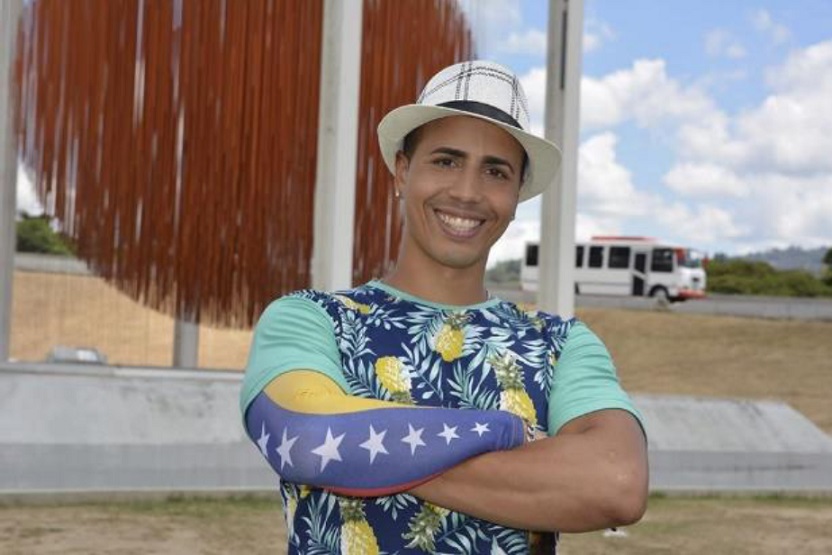
Venezuelan Richard “Saoco” Rodríguez

There is a great variety of countries in Latin America that are incredible, but none as varied, dynamic and beautiful as Venezuela, a country that is known for having beautiful and varied landscapes, a great variety of climates and fauna, and Venezuelans are very pleasant, respectful and mostly partygoers. On this occasion we have the pleasure of meeting the young salsa singer, Richard “Saoco” Rodríguez who sees the light in the city of Guarenas, the neighboring town of the great city of Caracas, Venezuela.

Richard “Saoco” Rodríguez

Since he was very young, he has stood out as a vocalist in local salsa genre groups, he was driven by recommendations from family and friends, he decided to compose his own songs and make contact with two great and renowned musical arrangers such as José “Tuky” Torres and Héctor “Chispa Hurtado, the latter is the one who takes the reins as music producer and arranger of his orchestra.

Richard “Saoco” Rodríguez has the ability to compose songs in a very contagious way, he takes up the essence of Son, Mambo and Guaguancó.

He has received 4 important awards from the Music Industry such as the Popular Vote of the Singing Festival at the Teatro Principal in 2016, the Compas de Oro Award for International Salsa in 2017, Salsa Revelation Figure of the Year in 2017, Yara Awards The Best Salsa Singer with International Projection in 2018.

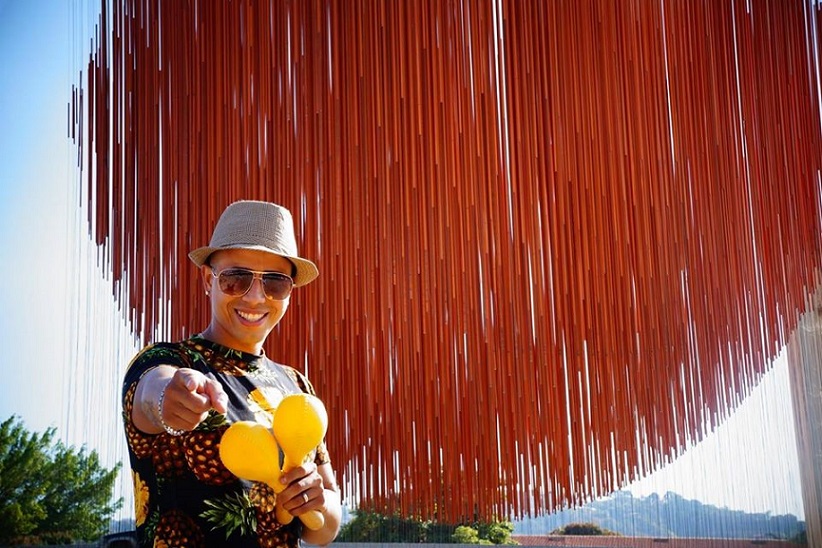
Richard “Saoco” Rodríguez

Today he presents a musical proposal with the launch of his new song titled “Soon you will return”, where he incorporates the Harp which is an emblematic instrument of Venezuela that resounds in the musical sound that maestro Héctor “Chispa” Hurtado gives it.

Consequently, Richard gets emotional when he tells us about this song, telling us that it all started one day watching the planes leave the Simón Bolívar Airport.

“I went to accompany a great friend who was going to Argentina and on the way home I thought about how hard it is to leave our land, leave our loved ones to undertake new challenges in another country. When I got home, the muse and nation came up with this beautiful song “Soon You Will Be Back” where I remind my Venezuelan brothers of our customs, the importance of sharing with the family, reminding them that we are a happy, pachanguero country.”

Richard “Saoco” Rodriguez.

Richard “Saoco” Rodríguez - Pronto Volveras
Richard “Saoco” Rodríguez – Pronto Volveras

Definitely Richard “Saoco” Rodríguez came with his talent, style and originality to be the difference, thus demonstrating that he is part of the relief generation in the Salsa Industry.

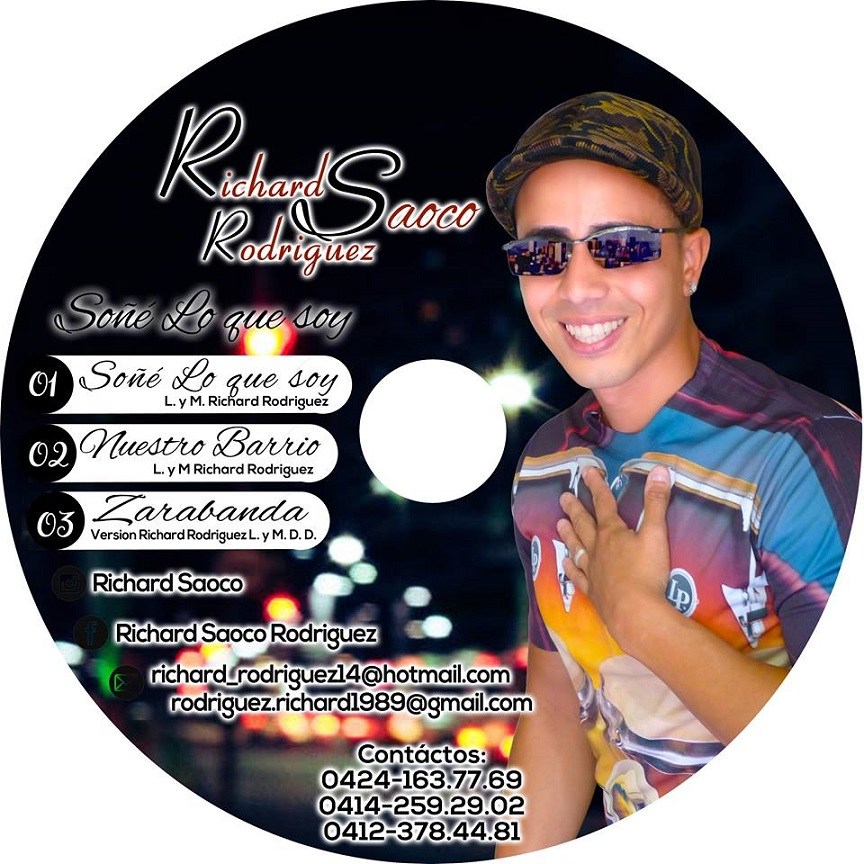
CD by Richard “Saoco” Rodríguez

For more information:

  • Facebook: https://www.facebook.com/people/Richard-Saoco-Rodriguez/100021840700541
  • Twitter: https://twitter.com/richardsaoco
  • Instagram: https://www.instagram.com/richardsaoco/?hl=es-la
  • YouTube: https://www.youtube.com/channel/UCI7Bt6vQsfKYEazwDNdty_Q

Shoemaker and shoe designer Carlo Farroni

We talked with shoemaker and shoe designer Carlo Farroni

In entertainment, singers, musicians and dancers are always the ones who show their faces to the audience, so they usually take the credit that comes from the final result, but there are many other professionals who also do their part so that a stage performance can be carried out, but unfortunately they do not get the recognition they deserve from the mass media.

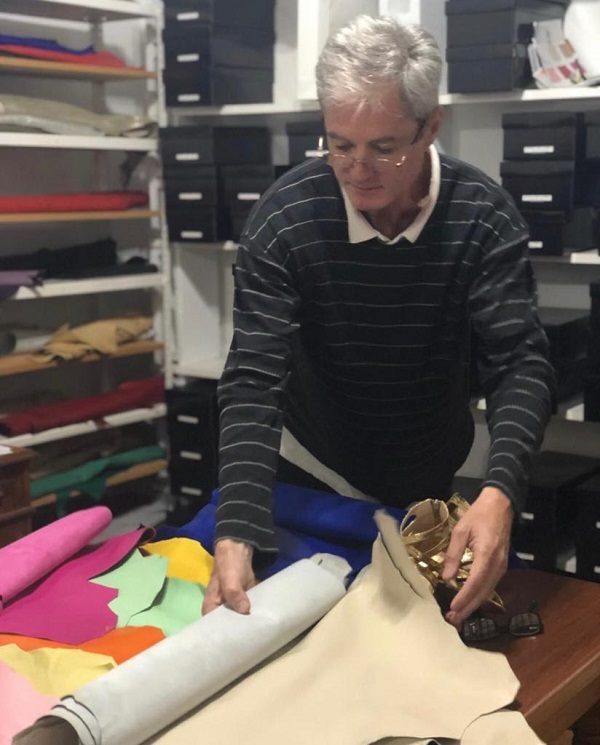
Carlo Farroni checking his materials for shoes

Some of those professionals are shoemakers and shoe modelists, who offer absolute comfort and elegance to artists during their shows, especially when it comes to dancers. Today, we are going to bring the story of Mr. Carlos Farroni, who kindly agreed to talk to us and told us how he began in this interesting and important occupation.

How did you start your career as a shoemaker and shoe designer? (título 3)

Carlos Farroni tells us that he started his apprenticeship at the age of 20, namely more than four decades ago. All this training took place at the shoemaking institute in Buenos Aires, Argentina, Farroni’s native country, but it was not the only place responsible for teaching this man everything he knows today. He also combined his studies with certain tasks in an artisan footwear workshop, something that would be a great support to the knowledge gained within the field of formal education.

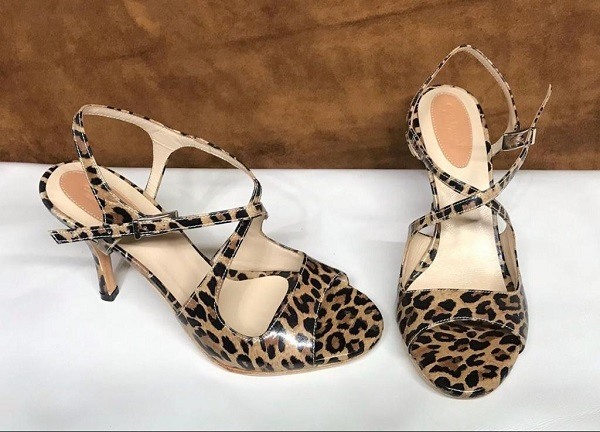
Dancing shoes for women made by Carlo Farroni

A few years later, he enbarked on a trip to Italy, where he worked in various areas of the creation of shoes, such as design and subsequent manufacturing, which was also extremely important for the Argentinean to continue learning how to navigate the world that has made him so well known.

Asked why he dedicates himself to the creation of special shoes to dance, he replied that he was carrying out exclusive footwear for theatre plays for many years, during this time his work started to become known in many parts of the world. After the quality of his products made news in many countries, many dancers started contacting Farroni to design exclusive shoes for them. It can be said that this is how he started the famous brand we know today.

More dancing shoes for women made by Carlo Farroni

How is your working methodology? (título3)

Regarding the production process, Mr. Farroni has revealed to us that everything is hand-made, which means that the tailoring, design, choice of materials, cutting, sewing, assembly and finished are handmade. In the same way, he ensures that the materials used for his products (most of the shoes are made of leather) are of excellent quality both in tanning and in thickness. This whole process is what makes the shoes look so professional and, at the same time, so comfortable and light as to allow the wearer to move freely.

It is also important to underline that the shoes handmade by Mr. Farroni’s brand can be used to dance every kind of musical genre without an problem. Obviously, tango dancers are the ones who most often seek out and promote these products, but there is no limit with regard to this detail. Anyone who wants the greatest elegance, sophistication and comfort at the moment of dance anything can contact Carlo Farroni, who will be happy to assist them and offer them the best of his work.

Dancing shoes for men made by Carlo Farroni

Read also: Omar Ledezma Jr talks about his experience at the Tempo Latino Festival

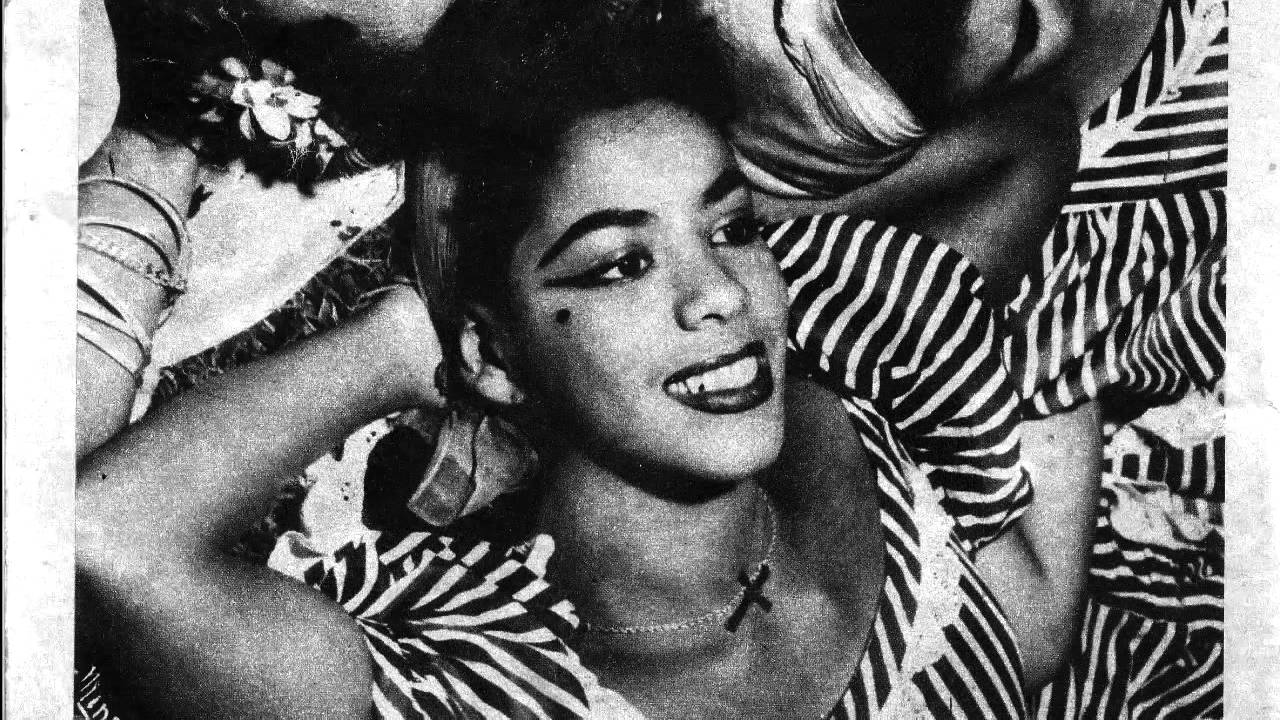
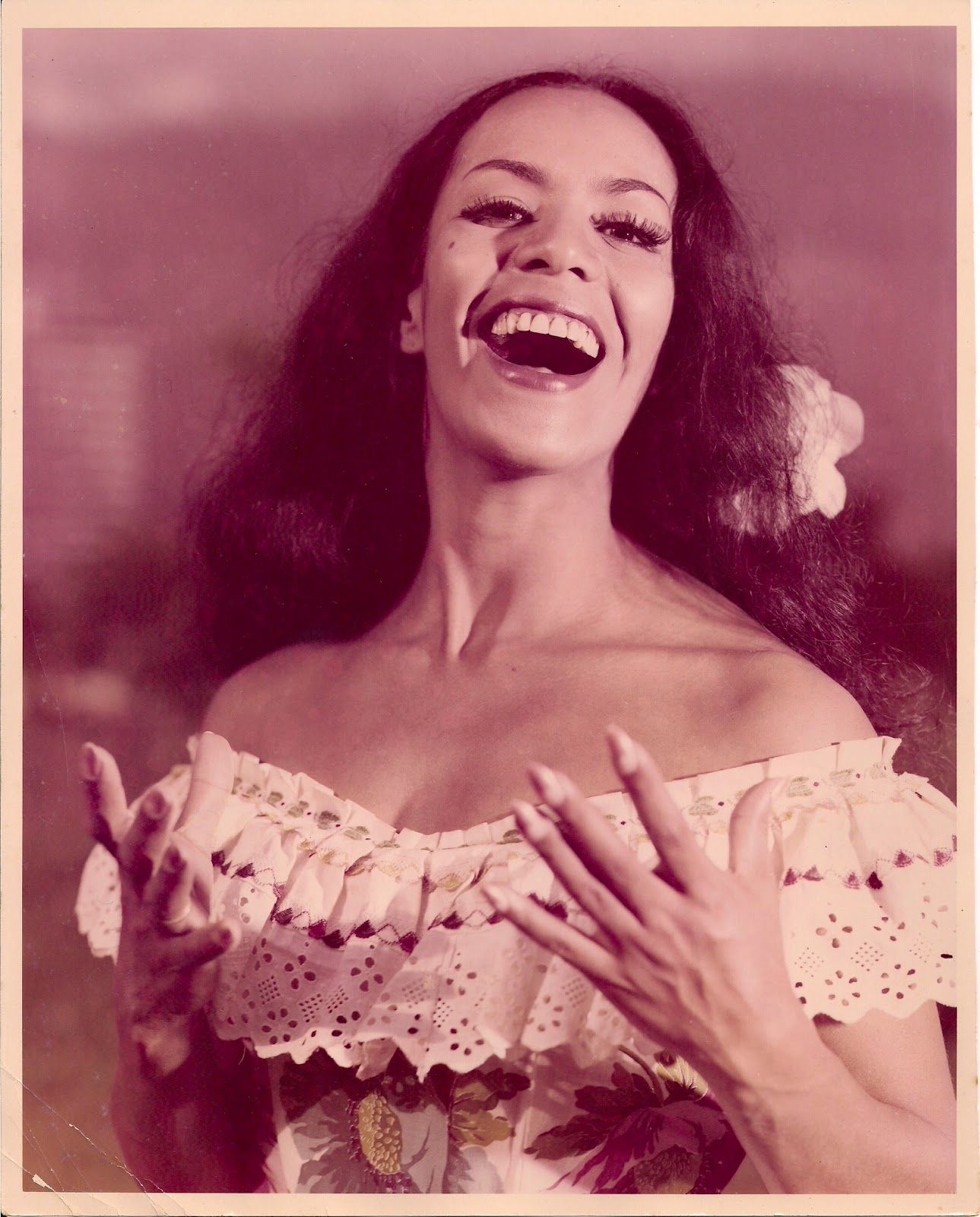
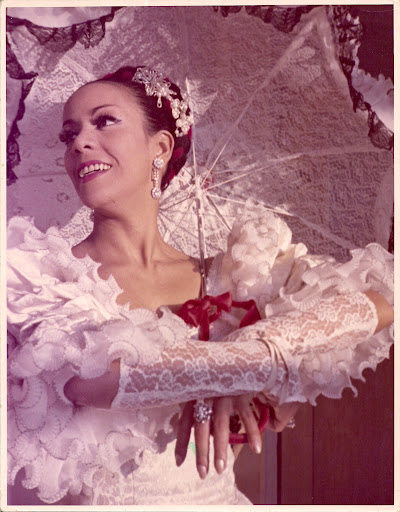
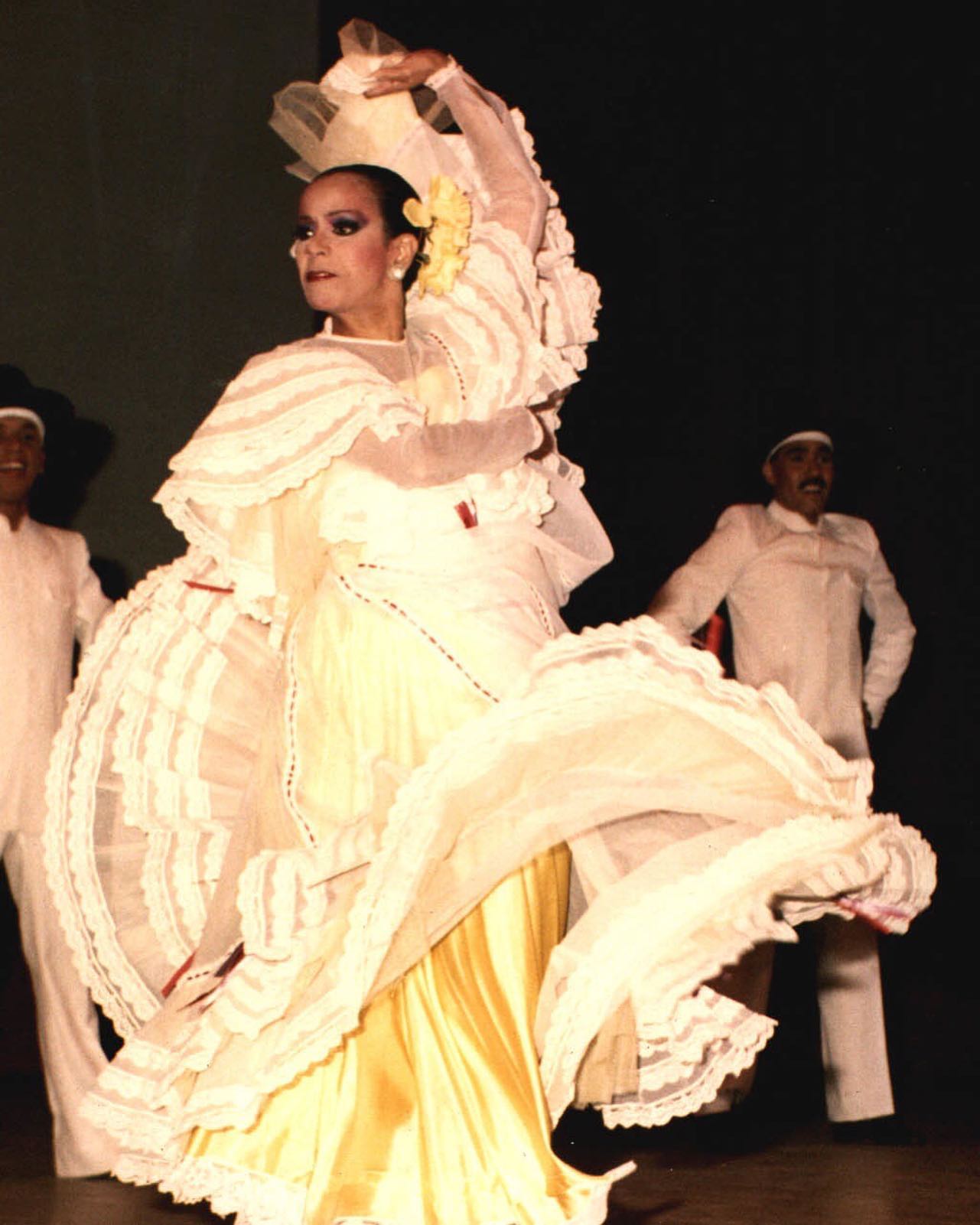
Yolanda Moreno “the People’s Dancer”

Venezuela has been a Caribbean and South American country that has always shown artistic tendencies among its inhabitants. Dance is no exception here, and one of the great representatives of typical Venezuelan dance is Sixta Yolanda Moreno de Rodríguez, better known as Yolanda Moreno the People’s Dancer” In this article we will talk more about her, keep reading.

The beginnings of Yolanda Moreno’s Career

This great Venezuelan dancer was born on August 6, 1936, in El Guarataro neighborhood of San Juan parish, in Caracas. Her parents named her Sixta Yolanda, a fact that few know unless her life is investigated, but she considered that Yolanda was easier to say and pronounce.

She grew up in a low-income family, but that didn’t stop her from pursuing her passion for singing and dancing. At the age of 13, she joined as a chorister in the musical group “Retablo de Maravillas” created by the Ministry of Labor. In this group she demonstrated her talent for music and a wonderful voice, in addition to fulfilling a childhood dream: «As a child I wanted to be a flamenco singer, I listened to the «Gitana de Color». With this group she met her first mentor, the Austrian dancer Margarita Brenner.

During this stage Yolanda met the one who will be the love of her life, her husband Manuel Rodríguez Cárdenas. To whom she also thanks all the support he has given her throughout her career, to the point of assuring that she would not be the dancer and woman she is today without his total trust and company. Although their relationship was a surprise since the marriage took place when she was only 16 years old.

The foundation of “Danzas Venezuela”

Another of her great achievements with her husband Manuel, is the founding of the group “Danzas Venezuela” in 1962. With it Yolanda manages to modernize the dance and folklore of the country, by changing the image of the dancers with very wide skirts and hair collected, that way they look more refined; she also changed the footwear to give more force to the zapateado.

Although at first these changes were not well received, Moreno with her husband achieved public acceptance, and also captivated the international public. Among the places they managed to visit are: China, Japan, Korea, Hawaii, San Francisco, Washington, New York, Canada, the Soviet Union and Latin America, from Mexico to Argentina. One of her special places was Puerto Rico, where she was given her nickname: “La Bailarina del Pueblo” (the People’s Dancer).

She also has great memories of China, especially when she was amazed by the respect for elders and the large number of artistic expressions that exist in this country. «Dance is a permanent job, very pleasant. I work until I am asleep. I got used to hard work, although it hurt, I danced» her words sum up her love for dance and art.

And Yolanda Moreno’s retirement came

Despite the fact that she will always be “The dancer of the Venezuelan people”, Yolanda has accepted that her days on stage are over, this of course does not mean that she won’t continue directing dancers and giving her advice with contributions in choreography. But Yolanda no longer actively follows her career, her big farewell was in 2008 with two performances at the Casa del Artista.

Of course, she has had special appearances like the one she presented in the posthumous tribute to Joaquín Riviera, which was part of the pre-opening of Miss Venezuela 2013. There have been other special events, but none as splendidly as the golden years of his career.

It is more than understandable that Moreno would withdraw from it, at 86 years old she is a woman who since she was a child has given everything to the art and folklore of her country. She also had to bravely face the farewell of her husband Manuel, which occurred in 1991 accompanied by her two sons Manuel Rodrigo and Fernán. It only remains to hope to be able to enjoy a few more years of her great ideas for the preservation, as well as modernization, of the typical dance of Venezuela.

  • « Go to Previous Page
  • Page 1
  • Interim pages omitted …
  • Page 20
  • Page 21
  • Page 22
  • Page 23
  • Page 24
  • Interim pages omitted …
  • Page 29
  • Go to Next Page »

International Salsa Magazine (ISM) is a monthly publication covering salsa activities around the world and has been publishing since 2007. It is a worldwide network of volunteers coordinated by ISM Magazine. Together, we work to strengthen salsa events around the world.