• Skip to primary navigation
  • Skip to main content

International Salsa Magazine

  • HOME
  • Previous editions
    • 2026
      • ISM / March 2026
      • ISM / February 2026
      • ISM / January 2026
    • 2025
      • ISM / December 2025
      • ISM / November 2025
      • ISM / October 2025
      • ISM / September 2025
      • ISM / August 2025
      • ISM / July 2025
      • ISM / June 2025
      • ISM / May2025
      • ISM / April 2025
      • ISM / March 2025
      • ISM / February 2025
      • ISM / January 2025
    • 2024
      • ISM / December 2024
      • ISM / November 2024
      • ISM / October 2024
      • ISM / September 2024
      • ISM / August 2024
      • ISM / July 2024
      • ISM / June 2024
      • ISM / May 2024
      • ISM / April 2024
      • ISM / March 2024
      • ISM / February 2024
      • ISM / January 2024
    • 2023
      • ISM / December 2023
      • ISM / November 2023
      • ISM / October 2023
      • ISM – September 2023
      • ISM – August 2023
      • ISM July 2023
      • ISM Edition June 2023
      • ISM – May 2023
      • ISM April 2023
      • ISM March 2023
      • ISM February 2023
      • ISM January 2023
    • 2022
      • ISM December 2022
      • ISM November 2022
      • ISM October 2022
      • ISM September 2022
      • ISM August 2022
      • ISM July 2022
      • ISM June 2022
      • ISM May 2022
      • ISM February 2022
      • ISM January 2022
    • 2021
      • ISM December 2021
      • ISM November 2021
      • ISM October – 2021
      • ISM September 2021
      • ISM August 2021
      • ISM July 2021
      • ISM May 2021
      • ISM April 2021
      • ISM June 2021
      • ISM March 2021
      • ISM February 2021
      • ISM January 2021
    • 2020
      • ISM December 2020
      • ISM November 2020
      • ISM October 2020
      • ISM September 2020
      • ISM August 2020
      • ISM July 2020
      • ISM June 2020
      • ISM May 2020
      • ISM April 2020
      • ISM March 2020
      • ISM February 2020
      • ISM January 2020
    • 2019
      • ISM December 2019
      • ISM November 2019
      • ISM October 2019
      • ISM Septembre 2019
      • ISM August 2019
      • ISM July 2019
      • ISM June 2019
  • Download Salsa App
    • Android
    • Apple
  • Spanish

Search Results for: Argentina

Oscar Rojas Oscar Rojas has 54 years of musical career full of passion, rhythm and flavor

Oscarcito Rojas and his unmistakable lump.

In Venezuela, during the years 53-54, there were cold and humid nights in the home of the Rojas Mendoza Family, located in a high area of ​​the Pastora of beautiful Caracas, there the furniture that was outside would wake up damp, particularly a child’s chair with a colonial design, which had the back and seat made of cattle leather, which when heated by the heat of the sun became warm like the leather of a coastal drum.

That is when the restless child Oscar, barely 7 years old, discovered the sounds produced by that cured leather and began that love relationship with percussion without realizing that this would be his life; his livelihood; his passion; his everything.

Oscar Rojas has 54 years of musical career full of passion, rhythm and flavor

He also devised a pair of congas with two milk cans of different sizes, and thus achieve different sounds in his new instrument.

By the 70s, being a talented young man and wanting to earn his own living, Oscar bought a motorcycle to work as a messenger. Unfortunately, he had an accident on it, which led to his resignation from the company. With the money he generated from the liquidation, he bought a drum kit that belonged to the illustrious Pavo Frank. This is how his foray into rock began.

Later, due to the fractures he suffered in the motorcycle accident, he could not continue playing drums, but he got involved in percussion without a drumstick, which is to say, by hand, and he started playing congas.

Óscar Eduardo Rojas Mendoza is one of the most beloved and respected conga players in the country. He is the third of five siblings (Jaime; Yolanda; Óscar; Freddy and Leibia), son of Óscar Benito Rojas (musician and cabinetmaker) and Cira de los Santos Mendoza (dressmaker).

Loved by all his family, especially by his sons Gabriel ☦️ Osduare☦️ and Enrique; and his granddaughters Gabriela and Daniela.

Familia Rojas Mendoza: Liebia, Freddy, Oscar, Yolanda y Jaime

Born in Caracas on October 18, 1946, he began his musical career in 1970 with Ramón Hernández, continuing with a trail of figures such as: Pablo Schneider, Vytas Brenner, Victor Cuica, Oscar Maggi, Soledad Bravo, Lilia Vera, Frank Hernández (El pavo Frank), Oscar D’Leon, Chuchito Sanoja, Professor Juan Carlos Núñez, Alfredo Naranjo.

He has participated in the best Jazz festivals in the world and in the country such as the Memphis in May International Festival (Tennessee), Varadero International Festival (Cuba), V International Festival of Montreal (Canada), Festival D’te de Québec (Canada), 10 International Festival of Montreal (Canada), Mar de Plata Jazz Festival (Argentina), Curacao International Festival where he was invited by the great saxophonist Paquito D’ Rivera, in the Venezuela Jazz Festival, in the 4 Caracas Jazz Festivals, in the Jazz Festival in El Hatillo editions IV, V and VII, and in festivals in the interior of the country.

He was an active founder of salsa groups such as Oscar D’Leon, where he participated in the recording of the first 3 albums, the group Caribe Libre, Gerardo Lugo’s Incorregibles, Alfredo Naranjo’s El Guajeo, Nano Grant’s Ensemble ll, Pavo Frank and his Orchestra. He was also part of the jazz groups Oscar Maggi (Macoya), Pedrito López, Otmaro Ruiz and Víctor Cuica.

Oscar Rojas y Djane Shina Rojas

Among the national and foreign artists he has accompanied are: Trino Mora, Chucho Avellanes, Mirtha Pérez, Estelita del Llano, María Rivas, Nancy Ramos, Nancy Toro, Cheo Feliciano, Ted Cordón, Paquito de Rivera, Eddie Sansson, Aldemaro Romero, Chuchito Sanoja, Jimmy Bosch, the Venezuelan Symphony Orchestra, the Municipal Symphony Orchestra of Caracas, among others. He was the founder of the La Calle Group and the Ensemble de la Calle, ReNueve (rock group), Negros and Aparte.

He currently works as a percussionist for Maigualida and his Ensemble. He also rehearses every Wednesday at Juan Sebastián Bar “El Templo del Jazz y La Salsa” with the new Ensamble de la Calle.

He has been in a musical career for 54 years, full of passion, rhythm and flavor.
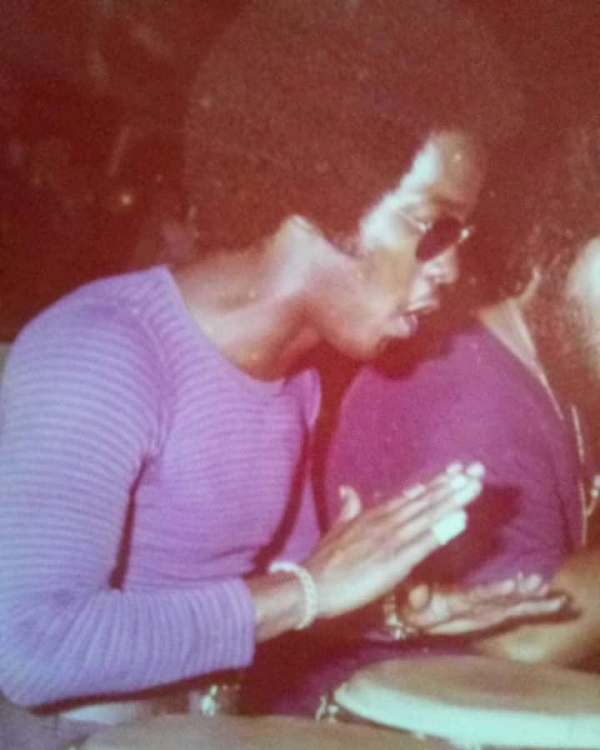
Oscarcito Rojas y su mazacote inconfundible

Research Sources: 

Djane. Shina Rojas

Jaime Rojas

Lutier: Freddy Rojas

Also Read: Djane Shina Rojas a Passion Turned into Reality

De Tierra Caliente founder Bronson Tennis talks about his career and band

There have been many American musicians who have fallen to the charms of Latin music, which is a practically inexhaustible source of genres allowing them to experiment with in many ways. One of them is Bronson Tennis, with whom we have been fortunate to talk about his interesting career and current musical group, De Tierra Caliente.

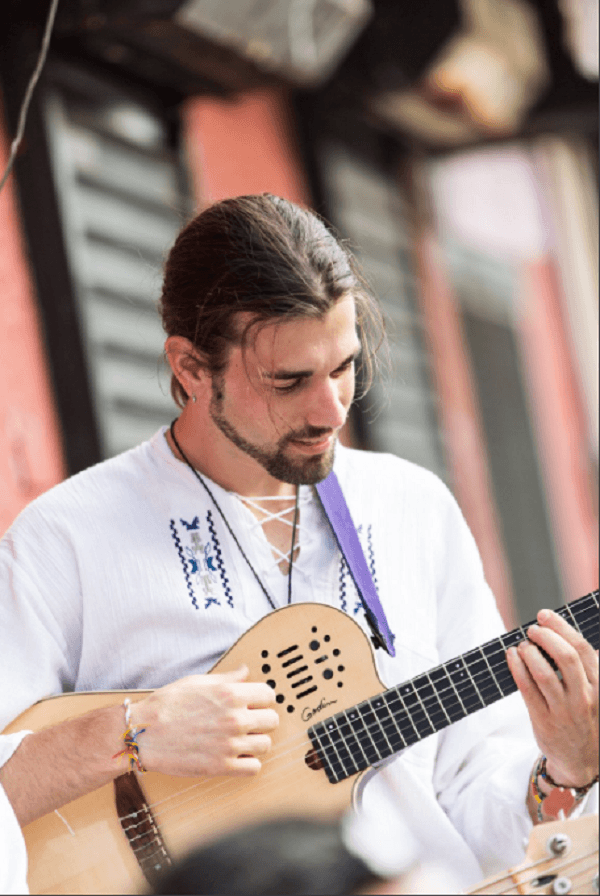
Bronson playing
De Tierra Caliente founder Bronson Tennis playing the guitar

Bronson’s beginnings in music

Bronson Tennis began to put his eyes on music when he was just a child, when he was very attracted to the 1990s alternative rock movement in the United States. When he was only 11 years old, his parents bought him his first bass guitar and later he also wanted to learn to play the guitar and sing.

In family matters, Bronson and his three brothers are musicians and several of his cousins and uncles have also been musicians. In addition, his mother was a fine artist and his grandmother was an art teacher.

Both in school and church, the boy always chased opportunities to sing and show his vocal skills to anyone who wanted to hear. He also took advantage of all these spaces to learn as much as he could about music until he was old enough to exercise it professionally. 

Today, his main instrument is the guitar, although he also plays the cavaquinho (an instrument of Portuguese origin which is widely used in samba) and the roncoco, which is an adaptation of the Andean charango that he uses to play salsa and Cuban son.

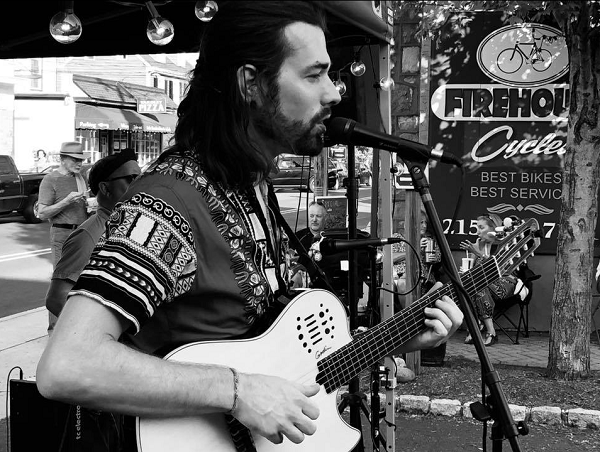
Bronson posing for the camera
Bronson Tennis playing the guitar while posing for the camera

Professional debut in music

Bronson also told us that he began his career path as a bassist and chorister in several musical groups in the city of San Diego between 2006 and 2009. He then spent some time in Philadelphia, where he also played with other bands from a variety of genres.

It is interesting that he lived in Buenos Aires, Argentina, where he also worked as a bassist and singer in some bands. In fact, in that same country, he helped form a Caribbean funk band in which he learned a lot about these genres so foreign to what he played in his childhood and youth. He stayed about four years in Argentina, specifically between 2009 and 2012, until he moved to Brazil for about six months to continue learning more and more about Latin music, but it was not his last stop in South America, as he was also in Colombia for a while more.

Following this, he returned to Philadelphia and decided to form his own orchestra which he named De Tierra Caliente.

Prior to De Tierra Caliente

When Bronson returned to Philadelphia, he had the chance to meet some musicians from the Puerto Rican music scene in that city and saw that they had similar outlooks on music, so they got back in the saddle to prepare a formal project amongst themselves.

The artist assures that it was in Argentina where he learned what it takes to move forward with his band. ”Argentines are people who do everything with strength and confidence, whether in music or in soccer. No matter who or what they have to face, as they take on all the challenges with confidence and that is something we could all learn from Argentina.” Bronson said of his stay in that country.

Bronson and his band
(L to R) Papo Buda, Bronson Tennis, Eubie Nieves, Andy Meyer and Steve Cochran

In Brazil, he studied percussion and learned Portuguese, while Colombia taught him to play salsa, champeta, vallenato and many other genres. In short, each country he has visited gave him tools to facilitate his learning in everything about Latin music in various areas.

Precisely thanks to all this acquired knowledge is that Bronson finally felt able to form his own band in 2014 in union with fellow musicians who understood what he wanted to carry out.

How De Tierra Caliente started

Upon his return to the United States, Bronson was very clear that he wanted to incorporate all those elements learned in South America and the Caribbean, but giving them his own touch. It was then that he met conguero Papo Buda, with whom he agreed on much and began the recruiting process for the rest of the musicians.

After that, Bronson and Papo could add more artists to the group, resulting in a fairly consistent group over time. Since its founding, very few musicians have left the band and Bronson and those who remain have an excellent relationship with all of them despite no longer being band mates.

Among his greatest inspirations, Bronson mentioned many artists and groups of various nationalities and genres such as El Gran Combo de Puerto Rico, the Brazilian composer and singer Paulinho da Viola, the group Caribe Funk and many others.

De Tierra Caliente playing
De Tierra Caliente playing live in Yardley

Read also: Latin jazz and mambo trumpeter Jonathan Powell and his great collaborations

The Son Rumbero Academy: E-Learning in virtual classrooms reached the world of dance

Latin America / Venezuela / Caracas

The Son Rumbero Academy, in step with technological advances, now opens a virtual classroom that will allow you to access an interesting range of online courses open to all through distance education processes with invited international instructors.

The teaching and learning processes are led hand in hand by education professionals, people who handle various tools and techniques that allow reaching the objectives of generalized instruction, now, the means and the contexts that affect this process are in the same way. of great importance to meet the aforementioned goals, hence the institutions invest so much time in physical improvements for the setting of the spaces destined to unite these processes.

It is not new to speak that technological means have invaded all areas of knowledge, there is no longer an area or content that is not already in process or in the process of being taught through the internet, hence the term distance learning. It is not something that escapes from the normality of our day to day.

Professor José Manuel Pérez, director of the Son Rumbero Academy with a great career in the field of salsa and education professional in the area of ​​computer science, is carrying out a process of teaching dance through virtual means, in this case, using the so famous virtual classrooms, where it focuses on asynchronous and asynchronous communication processes by which, the didactic interaction with the students predominates as the elementary basis of teaching, the student becomes the main center of self-information managing their learning through tutors and classmates from the open classroom for the specific dance specialty, is learning to dance by learning, it is doing it between appropriate means and environments.

Aula Virtual - Son Rumbero Academy
Aula Virtual – Son Rumbero Academy

The ways and methods of how to educate in the world of dance have always been maintained, in fact many people look for different alternatives given the circumstances of their tasks, work, home, occupations, in itself, an endless number of causes motivate the desertion when it comes to complying with schedules and routines in dance halls or gyms…

How many do not avoid entering this face-to-face modality due to little free time or the long time it takes to travel to a location, hence new ideas arise that facilitate access to world of dance from any corner of the world and at the time you want, and who would not like to adjust their classes to the hours and days they prefer, even more so if they can change them weekly according to their availability.

The Son Rumbero Academy project is not an original project, E-Learning and virtual classrooms have been in the educational world for several years, only that for the context of dance it was present in tutorial videos, a positive element but more of the same circle for some:

With a virtual classroom, the teaching process is extended, it not only depends on what the student has seen and practiced, in this we obtain constant supervision of the process, teachers dedicated to nourishing theoretical information and practicing something extremely important when understanding music and shaping it in dance it is about taking evaluations, participating in forums or conversations with several students in the same classroom, surveys, tutorial videos, correction process by videos sent to the teacher, easy access to multimedia elements…

from songs to explanatory audios, a world full of of elements that support to a greater degree the fact of learning from any dance discipline, not to mention seminars or professional courses, certifications of improvements in methodological processes in teaching for teachers and instructors, going from evaluation processes for dance competitions to complete percussion courses, a whole world of knowledge and elements given to the me You work in dance and now in music.

Son Rumbero Academy
Son Rumbero Academy

For this month of April, the project will begin with 3 high-impact courses, one on Cuban folklore dictated by Mr. Damian Ballester, a certification for instructors based on planning, evaluation and methodological processes of teaching by Professor José Manuel Pérez , closing with a theoretical-practical seminar on the complex of the rumba soon dictated by a professional in this area, director of one of the largest Cuban groups and participate in endless documentaries oriented to the complex of the rumba, a surprise that They will give us soon.

In the same way, they are betting on a new teaching method for beginners, those who perhaps want more privacy when starting steps in the world of salsa or another genre, new media that can contribute to the development of the diffusion of salsa in the world.

The invitation is now open for you to follow the accounts of the son rumbero academy on Instagram and Facebook at @sonrumbero, by the numbers of its offices in Colombia +573022582306, Venezuela +584122110104, Chile and soon in Peru and Argentina.

Latin America / January 2025

Fundación Cultural Madera 15 donde la Hermandad, el Deporte, la Danza y la Salsa van de la manoEnrique “Culebra” Iriarte, master of the piano and musical compositionLarry Harlow and Ismael Miranda: beginning of the so-called “Salsa Arseniana” in honor of the music of Arsenio Rodriguez, the creator of Son Montuno and “King of Guaguanco”.Calibrated maracas

DIRECTORY OF NIGHTCLUBS

Argentina flag
ARGENTINA

Aruba circular flag
ARUBA

Belize circular flag
BELIZE

Bolivia circular flag
BOLIVIA

Brazil flag
BRAZIL

Chile circular flag
CHILE

Colombia
COLOMBIA

Costa Rica circular flag
COSTA RICA

Cuba circular flag
CUBA

Dominican Republic
DOMINICAN REPUBLIC

Ecuador circular flag
ECUADOR

Guatenala circular flag
GUATEMALA

Mexico Circular flag
MEXICO

Panama circular flag
PANAMA

Peru circular flag
PERU

Puerto Rico circular flag
PUERTO RICO

Venezuela circular flag
VENEZUELA

Milonga’s contribution to Latin music in general

There are many Latin genres that have managed to find a place in the USA music scene thanks to the constancy of many of its great exponents, salsa being the genre we talk about the most. However, today we want to change the subject a little bit and analyze what is milonga and how popular it has become in recent years.

Malevo y su dama
Recreation of ”Malevo y Su Dama” in Buenos Aires, 1970

Definition of milonga

The milonga can be defined as a folkloric musical genre coming from the Rio de la Plata region, which is usually performed with a guitar accompaniment in 6/8 time. Usually, it is divided in two modalities that are the milonga campera (the genre in its purest form) and the city milonga (style subsequent to the milonga campera).

Etymology of ”milonga’’

Although the musical genre is known for being originally from Argentina, Uruguay and certain parts of Brazil, ”milonga” means ”word” in the Quimbundu language (a language of Angolan origin that corresponds in several expressions with Portuguese). It is important to mention that this is the language used by some tribes from Angola, which was a colony of Portugal, and that many of the slave population of those lands was transported to Brazil, Uruguay and Argentina.

According to information received from some scholars, after the defeat suffered by the Argentine founding father Juan Manuel de Rosas in Caseros at the hands of Entre Rios Governor Justo José de Urquiza, the Brazilian soldiers caught the porteños off guard while singing guajiras in mockery, at the same time that the porteños sang milongas.

In the ears of Brazilians, these songs sounded like gibberish they could not understand. In the end, as a result, the term had such an impact that locals began referring to their own creolized guajiras as milongas.

La milonga de buenos aires
Yanina Quiñones and Neri Piliu dancing “La milonga de Buenos Aires” at the 4th TangoLovers Festival 2018 in Athens, Greece

A little history of milonga

Milonga is known for its joy, speed and sensuality at the time of being performed by its dancers. Its binary rhythm is of great simplicity, so it is in stark contrast to the four beats of the guitar that gives the melody to the dance and is usually accompanied by lyrics occasionally.

It has always been closely related to paya and tango. In the case of paya, milonga used some of its elements specifically for the dance, while tango uses some details of the rhythm and the melody in milonga for its own dance. Today, the three genres are considered a very important part of the Rio de La Plata music scene and each of them has their own characteristics that distinguish one from another.

Milonga had much to do with the birth of tango, but at the same time, it evolved and maintained its independence. In fact, there is some sort of mix of the two called tango milonga that is almost extinct, although it is known that many musicians wanted to use it to give the rhythm of the tango more strength and sustainability. 

As for the places where milonga could be danced, the genre used to be found in neighborhood clubs, dance halls, tearooms and boites. The music used was usually recorded, although the venue owners hired small bands occasionally to change the modality. The popularity of these groups was so great that several of their musicians managed to join highly recognized orchestras at the time. 

Couples who went to milonga clubs to dance ballroom tango and outskirts tango. The first only consisted of beat and elegance, while the second had beat, elegance and figure. Among the most famous places to dance milonga that remain active to this today, we can mention El Barracas Central, Unidos en Pompeya, El Sunderland and many others.

Se dice de mi in milonga
Theddy Lizama and Pamela Ramos Aracena dancing ”Se dice de mí” in Santiago de Chile, November 2022. Source Fuente General de la Nación Argentina

Milonga at present

Today, milonga has become a genre of big importance for people eager to learn to dance things other than salsa, bachata or merengue. This genre offers them the opportunity to try something completely different thanks to which they can connect with others in ways they would not have imagined due to its peculiar rhythm and overflowing sensuality.

In addition to that, every day there are more and more events also called milongas, which consist of massive dances where couples show their best moves to the rhythm of various genres, such as milonga, tango, and vals criollo. In general, the scheduling of a milonga is divided into blocks of three, four or five dances that are separated by short pieces of light music. Apart from that, each block contains a sort of rhythm that is grouped by orchestra, singer or composer.

These events were very typical in Argentina, but have been gradually spreading throughout various parts of the world, including the United States. Nowadays, it is fairly common to find restaurants, night clubs and academies that offer this kind of entertainment to their attendees such as Alberto’s Night Club (San Francisco), The Tango Room (Los Angeles), Milonga La Paz Tango Club (San Francisco), Tango De Rey (San Diego), Tango La Nacional (New York), Fairmont Tango Club (Philadelphia), Dance Fire Studio (New York), and many more.

Read also: The best marimba band found in Los Angeles

  • « Go to Previous Page
  • Page 1
  • Interim pages omitted …
  • Page 7
  • Page 8
  • Page 9
  • Page 10
  • Page 11
  • Interim pages omitted …
  • Page 27
  • Go to Next Page »

International Salsa Magazine (ISM) is a monthly publication about Salsa activities around the world, that has been publishing since 2007. It is a world network of volunteers coordinated by ISM Magazine. We are working to strengthen all the events by working together.