• Skip to primary navigation
  • Skip to main content

International Salsa Magazine

  • HOME
  • Previous editions
    • 2026
      • ISM / April 2026
      • ISM / March 2026
      • ISM / February 2026
      • ISM / January 2026
    • 2025
      • ISM / December 2025
      • ISM / November 2025
      • ISM / October 2025
      • ISM / September 2025
      • ISM / August 2025
      • ISM / July 2025
      • ISM / June 2025
      • ISM / May2025
      • ISM / April 2025
      • ISM / March 2025
      • ISM / February 2025
      • ISM / January 2025
    • 2024
      • ISM / December 2024
      • ISM / November 2024
      • ISM / October 2024
      • ISM / September 2024
      • ISM / August 2024
      • ISM / July 2024
      • ISM / June 2024
      • ISM / May 2024
      • ISM / April 2024
      • ISM / March 2024
      • ISM / February 2024
      • ISM / January 2024
    • 2023
      • ISM / December 2023
      • ISM / November 2023
      • ISM / October 2023
      • ISM – September 2023
      • ISM – August 2023
      • ISM July 2023
      • ISM Edition June 2023
      • ISM – May 2023
      • ISM April 2023
      • ISM March 2023
      • ISM February 2023
      • ISM January 2023
    • 2022
      • ISM December 2022
      • ISM November 2022
      • ISM October 2022
      • ISM September 2022
      • ISM August 2022
      • ISM July 2022
      • ISM June 2022
      • ISM May 2022
      • ISM February 2022
      • ISM January 2022
    • 2021
      • ISM December 2021
      • ISM November 2021
      • ISM October – 2021
      • ISM September 2021
      • ISM August 2021
      • ISM July 2021
      • ISM May 2021
      • ISM April 2021
      • ISM June 2021
      • ISM March 2021
      • ISM February 2021
      • ISM January 2021
    • 2020
      • ISM December 2020
      • ISM November 2020
      • ISM October 2020
      • ISM September 2020
      • ISM August 2020
      • ISM July 2020
      • ISM June 2020
      • ISM May 2020
      • ISM April 2020
      • ISM March 2020
      • ISM February 2020
      • ISM January 2020
    • 2019
      • ISM December 2019
      • ISM November 2019
      • ISM October 2019
      • ISM Septembre 2019
      • ISM August 2019
      • ISM July 2019
      • ISM June 2019
  • Spanish
  • Download Salsa App
    • Android
    • Apple

Search Results for: Awards 2020

Greeicy premiere “Los Consejos”

Greeicy premieres her new single “Los Consejos” and is nominated for the 2020 youth awards

This time we have the Colombian actress, singer and dancer Greeicy Rendón who has moved into the world of current music; Since she was little, she was interested in acting and music, so with the help of her parents, she began to take acting classes, piano, flute, guitar and singing.

On August 3, 2017, she made her debut as a solo singer with the release of her first single, «Brindemos» and subsequently, in the company of other artists or alone, they developed various musical themes; currently the charismatic and talented Colombian singer and songwriter, Greecy premieres “Los Consejos” the second preview of her new album.
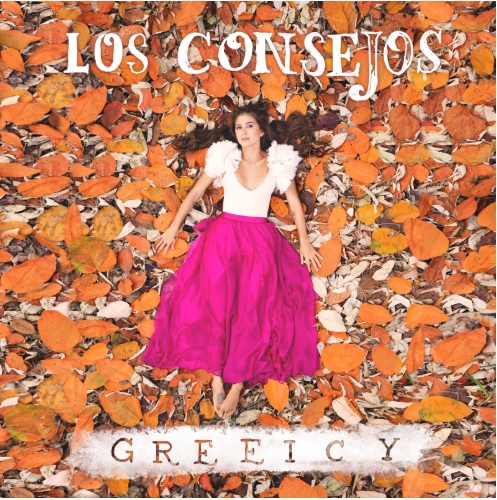
"LOS CONSEJOS" the second advance of his new record material
New single “Los Consejo”

“Los Consejos” is a ballad with a fresh proposal that incorporates urban pop tones with a sweet melody and powerful lyrics that fuse nostalgia and disappointment “Duele quererte y tú tan lejos, tenía la fé de que íbamos a llegar a viejos, me hago la fuerte, pero es complejo, si la tristeza se me nota en el espejo”

The song was written by Greeicy, Andres Torres, Mauricio Rengifo, Keityn, Rudeboyz, Lexuzbeatz, Bullnene, Flybot, and Juan Camilo Vargas Vasquez.

“Los Consejos” is accompanied by a music video, directed by Greeicy and Dario F. Burbano and produced by Mike Bahía, where Greeicy is seen longing for that love that could one day be, while he is seen alone on a swing, transmitting that pain we feel when love escapes from our hands, without really knowing why.

Greecy photo
Greecy photo on an estate

This new song follows in the footsteps of the premiere of “Los Besos” and its version on piano, a song that was initially released in April this year. “Los Besos” already has more than 60 million combined reproductions and its video more than 40 million views and is currently in Spotify’s Top 200 and Top 50 Viral lists in 9 countries, and also in the Top 100 of Apple Music Latino in 11 countries.

“Greeicy Rendón delights with his version of ‘Los besos’ on piano” – RCN Radio

“In this new romantic and fresh version, the charismatic and cheerful personality of Greeicy continues to be reflected, who today is positioned as one of the most important Latin pop artists of the moment.” – 40

Since entering the music scene, Greeicy has become one of the most prominent female figures within the genre, projecting sensuality, sparkle and style. For this reason, she has established herself as one of the most influential female artists, reaching 4.1 million subscribers and almost 2 billion views on her YouTube channel.

The nominees for Youth Awards 2020 were announced through social networks and in the voice of the most important artists of the moment, where the Colombian artist Greeicy achieves a nomination.

The awards given by the leading Hispanic network in the United States Univision, which year after year recognize the best of music, confirm Greeicy’s nomination in the Hottest Core category with their single “Aguardiente”.

The award ceremony will take place live at 8P / 7C on August 13 from Miami, Florida, in compliance with strict public health and safety measures.

Votes are already available at www.premiosjuventud.com/vota until next July 21.

Adriana Mosquea: Between Strings, Winds, and Spirituality

Vocal Excellence, Instrumental Versatility, and Artistic Training

Adriana Carolina Mosquea Santana, born on August 25, 1993, in Santiago de los Caballeros, Dominican Republic, is a multi-faceted artist who has built a solid career as a solo singer, bassist, stage actress, and vocal coach.

Adriana Mosquea Between Strings, Winds and Spirituality

Early Training and First Steps

She began her musical journey at the age of five in school and church choirs. At nine, she entered the Centro de la Cultura de Santiago, where she studied singing, electric bass, and classical guitar. By age 17, she became the only female voice and bassist for the fusion group Oveja Negra.

After an accident that hindered the mobility of her hands for eight months, she defied medical diagnoses and achieved a full recovery through self-directed therapy, resuming her career with groups such as Sol Latino and La Piña Tá Dulce.

The Leap into Lyrical Music and Theater

In 2014, she received a scholarship from the La 37 por las Tablas school, joining the elite vocal group Les Cantatis. Under the tutelage of Roberto Guzmán and María Ligia Grullón, she performed pieces by Vivaldi, Pergolesi, and Tchaikovsky, and participated in the opera Carmen. In 2019, she was part of the choir for the opera La Traviata at the National Theater, conducted by José Antonio Molina.

Solo Career and National Projection

As a soloist, she has released tracks such as Humo y Humo and Zombie, performing at festivals like Arte Vivo and the Alliance Française. Her multidisciplinary project, Circo Imaginario, led her to open for the iconic Dominican rock band Toque Profundo.

Her appearance on Dominicana’s Got Talent in 2019 earned her massive recognition and excellent reviews from the judges. That same year, she joined Belkys Concepción y las Damas as a bassist and backing vocalist, sharing the stage with legendary figures like Johnny Ventura and Fefita la Grande.

Adriana Carolina Mosquea Santana, born on August 25, 1993 in Santiago de los Caballeros, Dominican Republic

Professional Background and Academic Formation

Adriana’s dedication goes beyond performance; she is an art scholar. She holds a degree in Art History and is currently pursuing a degree in Special Needs Education, focusing on music pedagogy.

Key milestones in her professional journey include:

  • Oveja Negra: Her first professional group at 17, where she served as the bassist.
  • Son Santiaguero & Sol Latino: Projects where she explored Cuban Son and alternative rock.
  • Belkys Concepción: She performed as the bassist for the band led by “The Mother of Merengue,” highlighting Belkys’ overwhelming energy on stage.

Innovation During the Pandemic and Recent Collaborations

Between 2020 and 2021, she produced her album Arte, Magia y Libertad (Art, Magic, and Freedom) in collaboration with Venezuelan producer Daniela Yánez. Her singles have received nominations at the Indie Dominican Awards and Expo Cibao.

Additionally, she participated in the In Memoriam segment of the 2020 Soberano Awards and composed part of the soundtrack for the film La Soga 3. In 2025, she stood out in a tribute to Maridalia Hernández, performing the duet Te Ofrezco.

Pedagogical Work and Vocal Coaching

Currently, Adriana is a prominent vocal coach. She has been a key figure in the technical evolution of the artist Tokischa, working on projects nominated for the 2025 Latin Grammys and 2026 Premios Lo Nuestro. She is a graduate in Art History and is currently completing a Degree in Pedagogy at CESUMA University in Spain.

Excelencia Vocal, Versatilidad Instrumental y Formación Artística

“Singing is a means of expression and healing. My focus is on a balanced life and technical discipline to set the voice free.”

The Multi-instrumentalist and the Winds of Communication

Although her primary instrument is the bass (and double bass in her early years), Adriana is proficient in guitar, piano, drums, and ukulele. her foray into woodwind instruments, such as the clarinet and saxophone, was born from a spiritual search:

“Wind instruments work with air, which is communication. As an artist, I needed to work on my ability to communicate what I was keeping silent.”

Identity, Flavor, and Spirituality

Proud of her roots, Adriana describes Santiago de los Caballeros as a peaceful “city-countryside.” Her palate travels between the Dominican Sancocho de siete carnes and the Venezuelan Mondongo, a dish she confesses has captivated her.

Adriana Mosquea
Adriana Mosquea

For her, music and spirituality are tools for self-knowledge. She defines spirituality as the acceptance of human duality—seeking balance between light and shadow, far from the pretensions of the ego.

Also Read: Dominican bandleader and singer Papo Ross is triumphing in Montreal

David Atanacio Percussionist, Composer and Singer Unveils a New Sound

David Atanacio, grounded in the values of honesty, integrity, loyalty, responsibility, and respect, appears to be an individual of strong moral and ethical character. He is someone who can be fully trusted, a faithful and committed friend and colleague who always tells the truth and acts with righteousness.

His sense of responsibility ensures he fulfills his commitments, while his respect makes him a considerate, open person capable of building harmonious relationships. Together, these values suggest a dependable, upright, and kind personality, making him a positive and admired presence.

Born in New York City and raised in Puerto Rico, specifically in the municipalities of Bayamón and Cataño, David Atanacio has cultivated a unique musical identity rooted in a powerful fusion of Cuban rumba, flamenco rumba, and Afro-Caribbean influences.

David Atanacio Percussionist, Composer and Singer

In 1993, he began his musical journey as a bongo player for his uncle’s “Grupo Típico,” later joining a local orchestra as a conguero in 1996. In 1997, he was presented with the opportunity to become a singer, marking a turning point in his musical destiny.

Recruited to co-found “Grupo Folclórico Yuba Iré,” it was with this group that he began to perfect his mastery of rhythms like La Bomba, La Plena, El Guaguancó, El Yambú, and more. During this same period, David Atanacio discovered his talent for composing and began writing his first songs, including one titled “Lo que dice el Tambor” (What the Drum Says).

He was recommended to work with the “Orquesta Abran Paso” from Puerto Rico, with whom he accompanied luminaries such as Ismael Miranda, Adalberto Santiago, Junior “Hommy” González (RIP), Larry Harlow (RIP), among others.

He then received a call from the Puerto Rican Maestro “Paoli Mejías,” percussionist for “Carlos Santana’s” group, who invited him to be part of his first musical project, “Mi Tambor.” On this album, David’s song “Lo Que Dice el Tambor” was recorded, appearing as Track No. 7. The album was nominated for “Best Latin Jazz Album” at the Latin Grammys in 2004.

David Atanacio: Percussionist, Composer, and Singer Unveils a New Sound

David Atanacio: Percussionist, Composer, and Singer Unveils a New Sound

In 2003, the King of Rhythm, Mr. Afinque “Don Willie Rosario,” invited David to join the front line of his orchestra, where he remained until 2005. After leaving Willie Rosario’s Orchestra, David decided to move with his family to Tampa, Florida.

Even in his new home, David never lost touch with his roots. One day, he received a call to contribute background vocals to the production “Sobrevolando” by the acclaimed Puerto Rican group “Cultura Profética” (2019). This production earned them the Latin Grammy for “Best Alternative Album” in 2020 and a nomination for “Best Latin Rock or Alternative Album” at the 2020 Grammy Awards.

David Atanacio is a “Sonero de Calle” (Street Sonero), with ample talent and ability to succeed. He is a percussionist, composer, and possesses the added artistry of the “Soneo del Guaguancó” (Guaguancó vocal improvisation).

Atanacio is now releasing his musical proposal, “David Atanacio & Champán D’ Barrio,” featuring aged salsa and plenty of flavor.

David Atanacio & Champán D' Barrio
David Atanacio & Champán D’ Barrio

The album contains ten tracks, eight of which are his original compositions. The production features special guest Herman Olivera, who performs a duet with David on a meticulously crafted song titled “De la Vieja Escuela” (From the Old School). The first single from this project, “Lo que dice el Tambor,” is hitting the airwaves, now presented under his orchestrated concept, “David Atanacio & Champán D’ Barrio.”

The Puerto Rican sonero recently released his latest single, “No Me Llores Más” (Don’t Cry For Me Anymore), a masterfully interwoven piece that pays homage to the musical genres that have shaped his artistic journey. The song perfectly fuses Cuban rumba, guaguancó, Spanish flamenco rumba, and son.

More than just a song, No Me Llores Más is a deeply personal sonic exploration that honors the genres that have influenced David Atanacio since his beginnings.

More than just a song, “No Me Llores Más” is a deeply personal sonic exploration that honors the genres that have influenced David Atanacio since his beginnings. Rhythms such as trova, décimas, aguinaldo, bomba, and plena have profoundly impacted his musical development, adding unique nuances to his artistic expression and reaffirming his commitment to the cultural heritage of his homeland and the Caribbean.

“No Me Llores Más” Credits:

  • Lyrics, Music, and Lead Vocals: David Atanacio
  • Background Vocals: Herman Olivera Jr. & Adriel González
  • Musical Arrangement: Carlos García
  • Piano: Yassel Puppo
  • Bass: Kevin Pagan
  • Trombone Solo: Carloscar Cepero
  • Percussion: Diego Centeno
  • Spanish Guitar: Alex García Potia

With an exquisite arrangement by Carlos García and impeccable execution by top-tier musicians, “No Me Llores Más” marks a new chapter in David Atanacio’s career. It’s where tradition and vanguard embrace to the rhythm of the drum, the guitar, and pure emotion.

This track will be available on all digital platforms starting June 14, 2025.

The rumba lives, the son renews, and David Atanacio’s voice celebrates it!

Press Contact: David Atanacio [email protected] 813-569-9581

Reference: Luis Rojas

Also Read: Herman Olivera the sonero of the 21st century

Producer, composer, and guitarist Oscar Almonte innovates with Dominican music

The United States is and will remain the land of opportunities for artists from all over Latin America, and Dominican producer, composer, and guitarist Oscar Almonte is one more of those examples of what effort and discipline can achieve on fertile ground. We could talk exclusively with Mr. Almonte about the most important aspects of his prolific career, and we want to make them known to our readers, who always honor us by visiting to our content each month.

Oscar posing for the camera
Oscar Almonte with his guitar posing for the camera

What drew Oscar’s Attention to Music

Oscar began telling us that music as such has drawn his attention since he was very little, more specifically, the ones he was listening to at home and that some relatives played, as several of them are professional and amateur musicians. That mix of rhythms and melodies always intrigued him, especially those from Cuban music, which was very popular at that time.

Family parties were the perfect occasion for the young man to show his strong interest in music, as it was not uncommon for one of his uncles to bring out his guitar, play, and sing to lighten the mood. This was one of the things that led Oscar to learn to play as he saw adults do it.

Not to mention that Caleo López, his grandfather, was a guitar maker and played them as well.

Academic Training in Music

Oscar’s primary education in music was given in a self-taught way, In fact, their parents bought him his first guitar at just nine years of age, and he took some classes with this instrument. He stopped for a while and resumed his interest in the guitar at age 14, which is when he learned his first chords and memorized some rock songs he liked to play them.

When he had the right age, he began studying music at the Culture and Art Institute in his hometown, Santiago de Los Caballeros, where he completed a bachelor’s degree in classical guitar.

Move to New Jersey

Today, Oscar is based in New Jersey City, where he moved for the purpose of seeking new horizons personally and professionally. He wanted to soak up the musical culture that exists in the New York area, which is very close to where he is now.

When asked about the job opportunities he had upon arrival, he told us that he had the fortune of having contacts and friends with whom he had already traveled to the country, which allowed him to play with some bands he knew. However, he does admit that it took him a while to find a balance in his economy, so he had to work in family automotive businesses while his situation stabilized. He was working in that until he could devote himself exclusively to music, just as he did in his country.

Oscar performing at SOB’s
Oscar Almonte performing at SOB’s (Sounds of Brazil) in Nueva York

The main difference he noticed between the music scene in New Jersey and the Dominican Republic is that, in his home country, it is easier to live exclusively from music as a simple artist. There are things that are easier to do because the budget allows it, and certain places where musicians play cover some elements such as sound engineers and show producers. When he arrived to his new destination, he had to learn many of these things to be able to do them himself and not have to spend what he did not have.

Projects Oscar Has Been Involved In

Just as Oscar has taken great pains to make his own project, he has also been involved in others belonging to artists such as Pavel Nuñez, Felle Vega and La Orquesta de Las Danzas Mezcladas, Xiomara Fortuna, Irka Mateo, El Prodigio, and many others.

He has managed to make contact with several of them because they live in the same city as him. It also happens that he played with several jazz musicians through whom he got to know others, something which took advantage to develop contacts and friendships with whom he could work in the future.

Among the most important things he learned from them, one is audience management, repertoire management, certain vocal techniques that he did not know and, mainly, everything that has to do with the responsibilities an artist who is already the head of his own project should have. 

Soberano Awards Nomination 

The artist has also been nominated for the famous Soberano Awards in the category of Merengue of the year in 2012 thanks to the song ”Levántate”, which was recorded by Héctor Acosta ”El Torito”. An interesting aspect of this piece is that Oscar wrote it with the purpose of showing it to Ricky Martin so that he would finally record it, but unfortunately it was not possible to make contact with the Puerto Rican.

Oscar and Daddy Yankee
Oscar Belmonte next to Puerto Rican reggaeton singer Daddy Yankee

Over time, he learned that Héctor was looking for songs to add to his new album ”Corazón Abierto”, so Oscar got down to business and contacted his musical director to see if Acosta would be interested. Fortunately, he was and the song enjoyed very acceptance among the public, so he managed to get the nomination at that time.

Debut as a singer-songwriter

Finally, in the year 2020, Oscar was ready for his debut as a singer-songwriter and, at finally, to do things other than what a simple musician does. Although he was writing since he was 14 years old, always thinking for other artists, he decided to change his approach and focus on himself and his career. 

It is then when he made his debut in this facet with the song ”Mi Tierra”, in which he describes his hometown Santiago de Los Caballeros as the title indicates. Something interesting about ”Mi Tierra” is that it fuses rhythms from many parts of the world with Dominican pambiche.

Oscar defines pambiche as one of the sounds of merengue, but softer and calmer when compared with the more lively merengue.

As for the rest of the colors it has, the artist used elements of African music and very different tempos to those often used in merengue.

He is also promoting the song ”Bermudas” with the young singer Carolyn Rodriguez. A mutual friend introduced them and thought that their voices would work well together, so they gathered and made a romantic song based on urban bachata with hints of reggae and some electronic touches.

Oscar and Carolyn
Oscar Belmonte singing ”Bermudas” next to Carolyn Rodríguez live

Read also: Joshua Levine and his quartet have a lot of Guataca

“DeBÍ Tirar Más Fotos” is not just an album; it is an invitation to reimagine music and the cultural impact it can have in an increasingly interconnected world

Bad Bunny was born as Benito Antonio Martínez Ocasio in San Juan, Puerto Rico, on March 10, 1994. He is a composer and singer of urban music, especially trap and reggaeton.

Bad Bonny DeBÍ TiRAR MáS FOToS

Although he never took formal music classes or studied any instrument, he is a singer, composer and creator of his own songs. The first samples of his art were seen on YouTube, where he slowly began to gain fans.

In mid-2016, Bad Bunny joined Hear This Music, a label created by DJ Luian and Los Mambo Kingz, presenting the hit “La Ocasión,” an anthem of trap music. There he also recorded singles such as “Diles,” “Soy Peor,” and “Tú No Vives Así.”

Bad Bunny has also participated in songs with numerous artists, such as Farruko, De La Ghetto, J Balvin, Maluma, Nicky Jam and Ozuna, among other urban music stars.

In 2017 he conquered Europe, touring with more than 20 concerts in 20 days. Upon his return he sang “Si Tu Novio Te Deja Sola” at the 2017 Billboard Latin Music Awards with J Balvin.

In addition, he sold out concerts at the Luna Park in Buenos Aires on September 8 and 9. In November he released “Sensualidad” with Prince Royce and J Balvin.

The year 2018 began with great success.

On January 12, he released “El Baño”, a collaboration he recorded with Enrique Iglesias.

On February 6, he released “Salimos A Buscarte”.

On the 9th, he presented “Fantasía”, with Alex Sensation.

On the 14th, she released a version of the hit “Báilame” by Nacho, together with Luis Fonsi, Yandel and Daddy Yankee.

On the 15th, she released “Amorfoda”, a new single in which she says “no” to love.

She didn’t wait and on the 22nd, she released “Dime Si Te Acuerdas”.

On March 16, she released a song with Khea, Düki and Cazzu, titled “Loca”.

On the 23rd of that month, “Dime” was released, recorded with Revol, J Balvin, Arcángel and De La Ghetto.

On April 1, she presented “Me Rolié”. In the same month, she released: “Te Boté”, with Ozuna, Nicky Jam, Nio García, Darell and Casper Mágico; and “Explícale”, with Yandel, Noriel Cosculluela and Brytiago.

On May 5, she recorded “Contigo”.

Bad Bunny nació como Benito Antonio Martínez Ocasio

On the 12th, 13th and 14th she presents her songs live, again at Luna Park. In between these concerts she releases “Sólo Avísame”. Then she releases “Quiere Verme”, together with Anuel Aa and “Diles”, with Ledy Medina.

On June 22nd she releases “I Like It”, recorded with Cardi B and J Balvin. On the 28th of the same month she releases the single “Estamos Bien”. She participates in Marc Anthony’s song “Está Rico”, together with Will Smith. On October 11th she releases “Mía”, in a spectacular collaboration with Drake singing in Spanish. On December 8th she releases the hit “Desde el Corazón” and on the 14th of the same month she presents “Sólo de Mí”, whose video reflects gender violence. On the 23rd her debut album goes on sale, under the name “X100Pre”.

On June 28, Bad Bunny & J Balvin present the eight-song album “Oasis” with the first single, “Qué Pretendes” (with special appearances by Mr. Eazi and Marciano Cantero of Enanitos Verdes)

Following the death of basketball player Kobe Bryant, Bad Bunny paid tribute to him with an emotional song titled “6 Rings.”

YHLQMDLG was released by the artist at midnight on February 29, 2020. The title means “I do what I want” and features collaborations with Daddy Yankee, Yaviah, Jowell & Randy, and Ñengo Flow. The album is a tribute to the marquesinas (garage parties) that Bad Bunny grew up attending, and features many nods to reggaeton from the early and mid-2000s

On May 10, 2020, he released his third studio album “Las que no iban a salir,” which features the participation of Don Omar, Zion & Lennox, Nicky Jam, Yandel, among others.

In July, after being the first Latin urban artist to be on the cover of Rolling Stones magazine, El Conejo Malo becomes the protagonist of the first digital cover of the legendary Playboy magazine.

On July 25, he releases the song and video: “Un día (One Day)” with Dua Lipa, J Balvin and Tainy.

On January 3, 2021, he releases the video for his song “Booker T”. That same year, he releases the single and video clip “Lo sentir BB” with Julieta Venegas and Tainy.

Bad Bonny
Bad Bonny

Throughout the year, he publishes several singles and video clips.

On May 5, 2022, he releases the album “Un verano sin ti”.

On June 2, he releases the video clip for the song “Tití mepregunta”.

On November 30, he releases the single “La Jumpa” with the video clip.

On December 22, he released the single “Gato de noche” with Ñengo Flow.

On February 15, 2023, he released the video for “Ojitos lindos” with Bomba Estéreo.

On May 18, he released the single “Where she goes” along with its video.

On July 21, he collaborated with Travis Scott on the single “K-Pop” with The Weeknd.

On September 25, he released the single and video “Un preview”.

On October 13, he released the album “Nadie sabe lo que va a pasará mañana” becoming a hit single.

Becoming the most listened to album of the year in a single day.

“What are we overlooking in Bad Bunny’s ‘DeBÍ TiRAR MáS FOToS’? Beyond reggaeton, a lesson in artistic evolution.”

While social media is boiling with divided opinions about Bad Bunny’s new album, it is worth moving away from the extremes and analyzing “DeBÍ TiRAR MáS FOToS” from a broader perspective.

Beyond being a reggaeton album, this work is an artistic, cultural and strategic manifesto that leaves valuable lessons for all musical genres, including salsa.

Bad Bunny has used his position as a global artist to fuse elements such as salsa with urban rhythms, achieving a musical dialogue that transcends generations and tastes. However, the impact of this project does not stop there.

I’d like to share five key aspects that other artists could learn from this release to innovate and connect more deeply with their audiences.

  1. The power of nostalgia: plastic chairs as a universal symbol

The album cover, with the humble plastic chairs, connects directly with the everyday life of Latin American neighborhoods. These common objects evoke memories of family gatherings, celebrations, and moments of community. The message is powerful: simplicity can be deeply meaningful and resonate globally.

  1. Exclusivity that generates value: “Residencia” concerts

Instead of a world tour, Bad Bunny is betting on “Residencia,” a series of exclusive concerts in Puerto Rico. With this strategy, he not only boosts tourism and the local economy, but creates a “FOMO” (fear of missing out) phenomenon in his fans. This generates massive advance reservations on hotels and flights.

  1. QR codes: intelligent digital interaction

Integrating technology with music is something that Bad Bunny has done masterfully. QR codes in Puerto Rico allow fans to interact with the album in innovative ways, unlocking exclusive content and creating a bridge between the physical and the digital.

  1. Incorporating traditional genres and sounds

Bad Bunny is not afraid to mix salsa with reggaeton, betting on musical arrangements that celebrate his cultural heritage. This shows that genres are not compartments or “silos”, but platforms for dialogue

  1. Expectation and release strategy

From the announcement of the title to the release date, passing through a short film full of cultural references, everything in this project has been designed to create a narrative that maintains the interest of the public. The lesson here is clear: music is not just released, it is experienced as a complete cultural event.

Final thoughts: innovation and evolution

In a world dominated by technology, staying traditional is not an option for artists who want to grow. Tools like Web 3.0, Blockchain, NFTs to offer immersive experiences and AI are revolutionizing the way musicians interact with their audiences and generate income.

While some lose themselves in criticism, others take advantage of these tools to redefine their art and project themselves globally. The lesson is clear: you have to look ahead and dare to evolve.

“DeBÍ TiRAR MáS FOToS” is not just an album; it is an invitation to reimagine music and the cultural impact it can have in an increasingly interconnected world.

Also Read: Sessions from La Loma brings together salsa fans from all over the world in Puerto Rico

  • « Go to Previous Page
  • Page 1
  • Page 2
  • Page 3
  • Page 4
  • Interim pages omitted …
  • Page 10
  • Go to Next Page »

International Salsa Magazine (ISM) is a monthly publication about Salsa activities around the world, that has been publishing since 2007. It is a world network of volunteers coordinated by ISM Magazine. We are working to strengthen all the events by working together.