• Skip to primary navigation
  • Skip to main content

International Salsa Magazine

  • HOME
  • Previous editions
    • 2026
      • ISM / March 2026
      • ISM / February 2026
      • ISM / January 2026
    • 2025
      • ISM / December 2025
      • ISM / November 2025
      • ISM / October 2025
      • ISM / September 2025
      • ISM / August 2025
      • ISM / July 2025
      • ISM / June 2025
      • ISM / May2025
      • ISM / April 2025
      • ISM / March 2025
      • ISM / February 2025
      • ISM / January 2025
    • 2024
      • ISM / December 2024
      • ISM / November 2024
      • ISM / October 2024
      • ISM / September 2024
      • ISM / August 2024
      • ISM / July 2024
      • ISM / June 2024
      • ISM / May 2024
      • ISM / April 2024
      • ISM / March 2024
      • ISM / February 2024
      • ISM / January 2024
    • 2023
      • ISM / December 2023
      • ISM / November 2023
      • ISM / October 2023
      • ISM – September 2023
      • ISM – August 2023
      • ISM July 2023
      • ISM Edition June 2023
      • ISM – May 2023
      • ISM April 2023
      • ISM March 2023
      • ISM February 2023
      • ISM January 2023
    • 2022
      • ISM December 2022
      • ISM November 2022
      • ISM October 2022
      • ISM September 2022
      • ISM August 2022
      • ISM July 2022
      • ISM June 2022
      • ISM May 2022
      • ISM February 2022
      • ISM January 2022
    • 2021
      • ISM December 2021
      • ISM November 2021
      • ISM October – 2021
      • ISM September 2021
      • ISM August 2021
      • ISM July 2021
      • ISM May 2021
      • ISM April 2021
      • ISM June 2021
      • ISM March 2021
      • ISM February 2021
      • ISM January 2021
    • 2020
      • ISM December 2020
      • ISM November 2020
      • ISM October 2020
      • ISM September 2020
      • ISM August 2020
      • ISM July 2020
      • ISM June 2020
      • ISM May 2020
      • ISM April 2020
      • ISM March 2020
      • ISM February 2020
      • ISM January 2020
    • 2019
      • ISM December 2019
      • ISM November 2019
      • ISM October 2019
      • ISM Septembre 2019
      • ISM August 2019
      • ISM July 2019
      • ISM June 2019
  • Download Salsa App
    • Android
    • Apple
  • Spanish

Search Results for: Bar

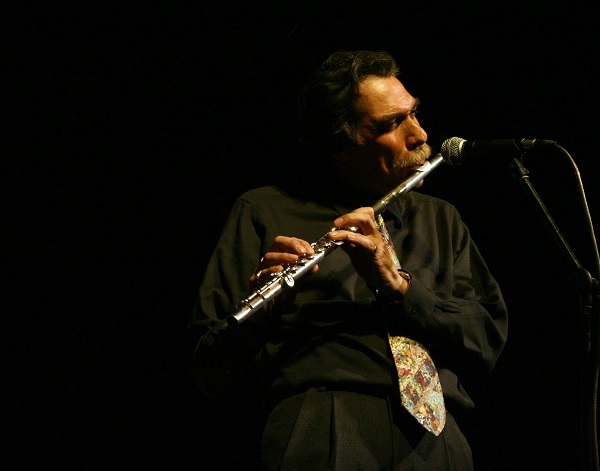
Dave Valentín is considered one of the most important Latin jazz flautists in history, thanks to his technique and rhythm

Valentín: The Master of the Flute in Latin Jazz.

Dave Valentín is considered one of the most important flutists in the history of Latin jazz, thanks to his technique, rhythm, and vast musical knowledge.
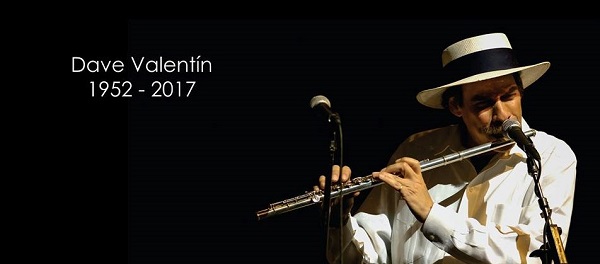
Dave Valentín is considered one of the most important Latin jazz flutists in history, thanks to his technique and rhythm

Born in the Bronx, New York, on April 29, 1952, to Puerto Rican parents from Mayagüez, Valentín grew up in a home filled with music. From the sounds of Tito Rodríguez and Tito Puente to Machito, the musical culture that surrounded him as a child was a major influence. Although he loved the bongos and congas, he joined a Latin group as a timbalero during his teenage years. He played in the “cuchifrito” circuit and in working-class dance halls in New York.

Dave Valentín’s life largely reflects the story of the children of Puerto Rican immigrants in New York who forged their own destiny through hard work, dedication, talent, and family support. In fact, the musician, composer, and arranger himself liked to say that “each person creates their own reality.”

A Legacy-Filled Career

  • GRP Records Pioneer: Valentín was the first artist to sign with the influential GRP record label, which allowed him to consolidate his career and spread jazz fusion and Latin jazz to a wider audience. He recorded 16 albums with the label, including titles like Legends, The Hawk, Land of the Third Eye, Pied Piper, In Love’s Time, Flute Juice, Kalahari, and Red Sun, among others. These works combine the intensity of Latin cadences with influences from pop, R&B, Brazilian music, and smooth jazz. For the musician, being signed by this multinational company represented “the opportunity of a lifetime.”
  • Notable Collaborations: Throughout his career, he worked with major figures in jazz and Latin music such as Tito Puente, Manny Oquendo, Cano Estremera, Eddie Palmieri, Ricardo Marrero, Dave Grusin, and Patti Austin.
  • Awards and Recognitions:
    • He earned a Grammy nomination in 1985.
    • He won a Grammy Award in 2003 for his work on the album Caribbean Jazz Project, alongside vibraphonist Dave Samuels.
    • He was chosen as the top jazz flutist by readers of Jazziz magazine for seven consecutive years.

Come Fly with Me (2006)
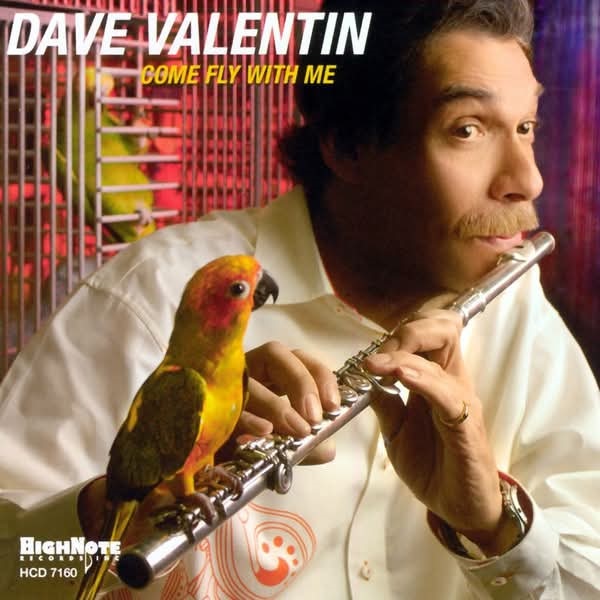
Dave Valentin - Come Fly With Me
Dave Valentin – Come Fly With Me

Dave Valentín always moved in the realm of fusion. His incorporation of smooth jazz elements, Latin influences, and the sensitivity of modern jazz made him a difficult artist to pigeonhole. Come Fly with Me is one of his most notable albums, as it focuses on a direct approach to Latin jazz. The majority of the songs are Afro-Cuban with a New York flair, without including funk or samba rhythms.

Driven by a formidable rhythm section that includes Robert Ameen on drums, Milton Cardona and Richie Flores on percussion, Luques Curtis on bass, and his friend Bill O’Connell on piano, the album overflows with power and elegance. Trombonist and arranger Papo Vázquez also participates on several tracks. The group’s rhythm is profound and the solos are filled with inspiration. Despite some less successful moments, Valentín’s innate sense of taste and melody shines brightly.

Album Credits

Musicians:

  • Dave Valentín (Flute)
  • Bill O’Connell (Piano)
  • Luques Curtis (Acoustic Bass)
  • Papo Vázquez (Trombone)
  • Chris Barretto (Tenor Sax #1)
  • Robert Ameen (Drums)
  • Milton Cardona (Percussion)
  • Richie Flores (Percussion)

Tracks:

  • Come Fly with Me
  • Twinkle Toes
  • Enciendido
  • Mind Games
  • If You Could See Me Now
  • Easy Street
  • Tu Pañuelo
  • House of the Sun
  • Song for My Brothers

Sadly, Dave Valentín suffered a stroke in 2012 that forced him to step away from music. He passed away in 2017. Despite his passing, his musical legacy remains a fundamental reference for flutists and lovers of Latin jazz.
Valentín El maestro de la flauta en el jazz latino

By:

L’Òstia Latin Jazz

Rafael Vega Curry for the National Foundation for Popular Culture

Dj. Augusto Felibertt

Also Read: Pamir Guánchez, brilliant Venezuelan singer, flutist, saxophonist and arranger.
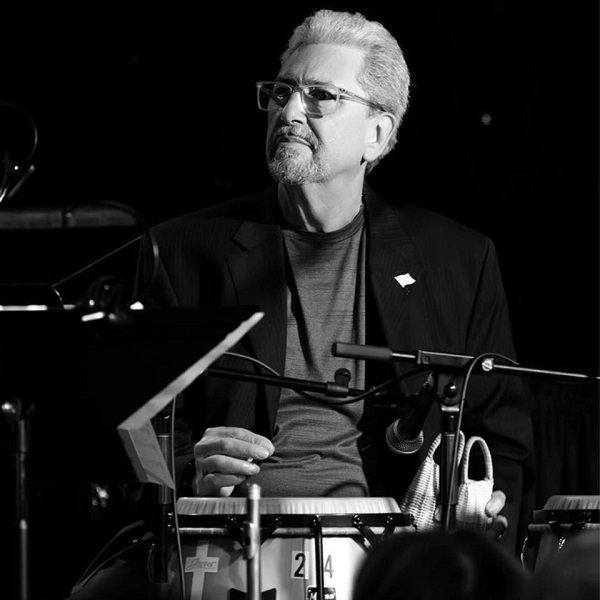
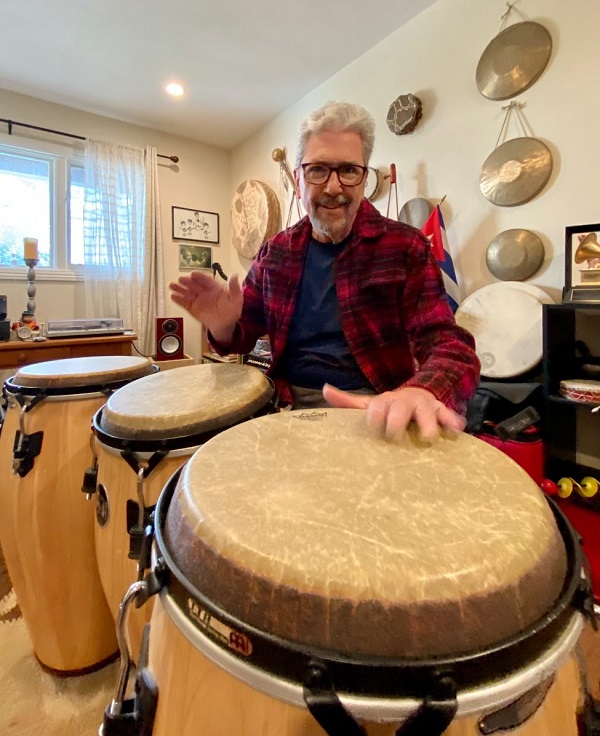
Luis Conte: The Cuban-American percussionist who fuses Cuban son with global music

Luis Conte is a renowned Cuban-American percussionist who has left an indelible mark on the music industry. His talent and versatility have led him to collaborate with an impressive list of world-class artists.

Luis Conte, the percussionist who fuses Cuban son with global music.

Born in Santiago de Cuba, Conte emigrated to Los Angeles in 1967. Throughout his career, he has been honored multiple times as “Percussionist of the Year” by specialized magazines like Modern Drummer and Drum Magazine.

Luis Conte has been the percussionist for some of the biggest names in commercial music, including James Taylor, Phil Collins, Jackson Browne, Madonna, Sergio Mendes, Ray Charles, Pat Metheny, Beck, Shakira, Sade, and Herb Alpert.

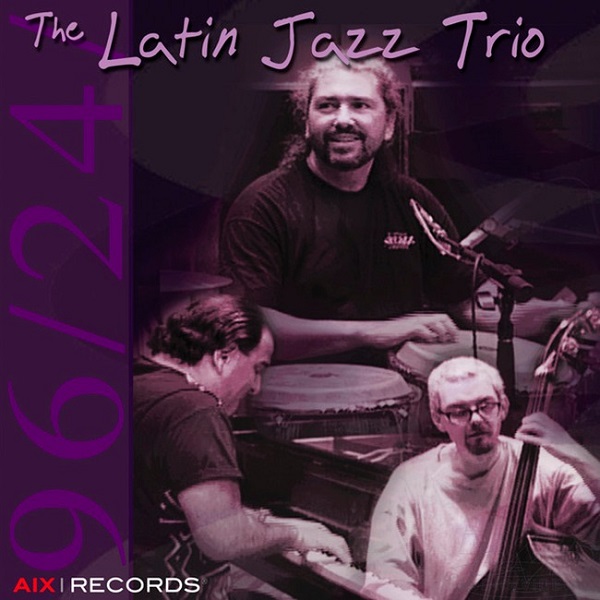
In this first HD-Audio Latin recording, his talent, along with that of pianist David Garfield and the recently deceased bassist Dave Carpenter, comes to life through the magic of 96 kHz/24-bit, 5.1 channel surround sound. The music is mixed to maximize individual musical lines and timbres. Bob Stuart, the founder and chairman of Meridian Audio, described the sound as “incredible,” adding that it was one of the best recordings he had ever heard.

The difference lies in the use of new technology, strict adherence to signal purity, and a willingness to experiment with instrument placement. Finally, you have the opportunity to hear authentic HD-Audio with performers who know how to create wonderful music.

Being a percussionist is like being a geographer. These instruments come from all over the world: Africa, Brazil, Colombia, the Middle East. I try to cover everything.

Luis spent the first 15 years of his life absorbing the rich musical heritage of son and carnaval. “Life in Cuba is about enjoying it, and music is fundamental to that lifestyle,” says Luis. “Music is almost like food for Cubans.” Immersed in the music of his native Cuba, Luis also developed a passion for rock & roll, R&B soul, jazz, and The Beatles.

At age 15, in search of freedom, Luis emigrated to Madrid, Spain. He soon had another opportunity to travel, this time to Hollywood. In California, Luis stayed with a cousin and attended Hollywood High School, where he played guitar in numerous rock bands during his teenage years.

After high school, Luis met John Monteallegre, who reconnected him with Cuban drumming at L.A. City College. By age 18, Luis had a strong interest in drumming and took every opportunity to play and learn, drawing inspiration from a deep well of rhythm he absorbed during his youth in Cuba.

David Garfield’s mission is “I make music.” And “make music” is what he does, as a world-renowned keyboardist, producer, and composer. Whether it’s jazz, rock, funk, or world beat, he is the creative force behind the production of numerous internationally acclaimed recordings.

Conte is a renowned Cuban-American percussionist

After studying music at Ohio State University, the late Dave Carpenter started his professional career playing with three jazz giants: Buddy Rich, Maynard Ferguson, and Woody Herman. More recently, Carpenter was part of drummer Peter Erskine’s trio, which also included pianist Alan Pasqua. A veteran of the Woody Herman and Bill Holman big bands, he also worked with Bill Perkins, Jack Nimitz, Herb Geller, Herbie Hancock, Jack Sheldon, Al Jarreau, Bill Cunliffe, Jan Lundgren, Terry Gibbs, Buddy DeFranco, and Richard Stoltzman, among others.

As sought-after in Los Angeles studios as he was in clubs, Carpenter has an extensive list of recording credits. He participated in more than 200 recordings and composed dozens of themes and scores for television and film.

Sadly, Dave passed away from a heart attack in June 2008. The music world lost a truly wonderful musician and person. The premium DVD-Audio/Video discs from AIX Records are two-sided: one side is an interactive DVD-Video disc, and the other is a DVD-Audio disc (which requires DVD-Audio compatible equipment for playback).

The sound of this recording brings these incredible instrumentalists into your listening space. The HD audio surround mixes immerse you in the musical interplay with a full-range frequency and dynamic response. Discover how good Latin jazz can sound! When I’m asked at trade shows what my favorite discs are, I always include The Latin Jazz Trio.

Dave Carpenter, Luis Conte & David Garfield – The Latin Jazz Trio (2002-R2018)

Dave Carpenter, Luis Conte & David Garfield - The Latin Jazz Trio
Dave Carpenter, Luis Conte & David Garfield – The Latin Jazz Trio

Tracks:

  1. Luisongo
  2. Doña Olga
  3. Memories Of Rio
  4. Mujaka
  5. Song For My Father
  6. Future Generations
  7. Pools
  8. Rumba Del Cielo
  9. Kumbisa / Cuba

Musicians:

  • Dave Carpenter (Bass)
  • Luis Conte (Percussion)
  • David Garfield (Piano)

Recorded at the Zipper Auditorium at The Colburn School of Performing Arts, 2000.

By: L’Òstia Latin Jazz

Dj. Augusto Felibertt

Also Read: Israel “Cachao” López, a Cuban musician and composer, has been hailed as “the Inventor of Mambo”

How Money Is Made Today: Recording Artists, Record Labels, and Digital Platforms

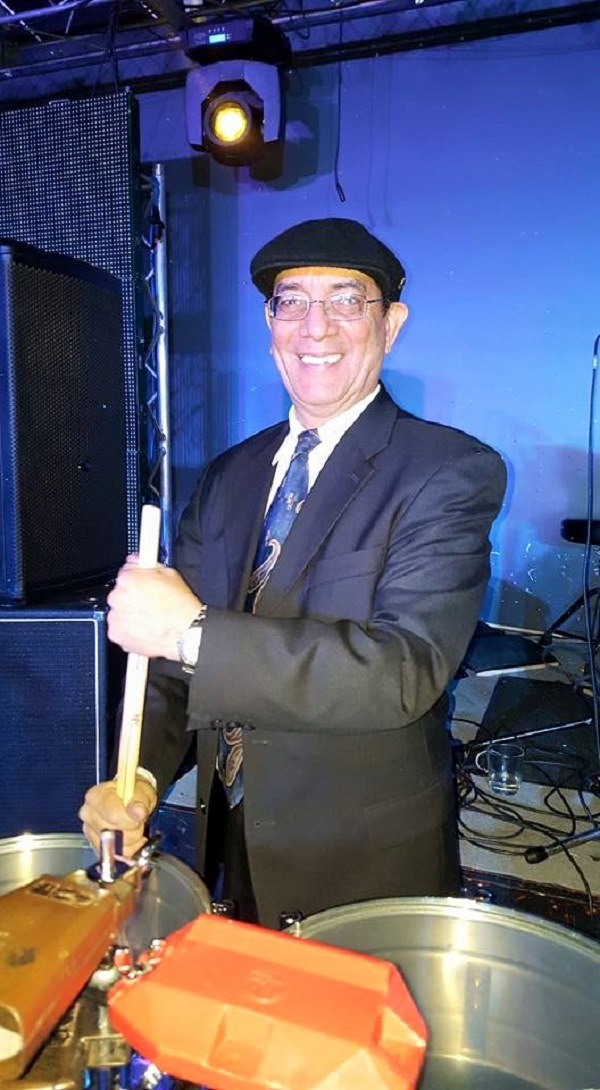
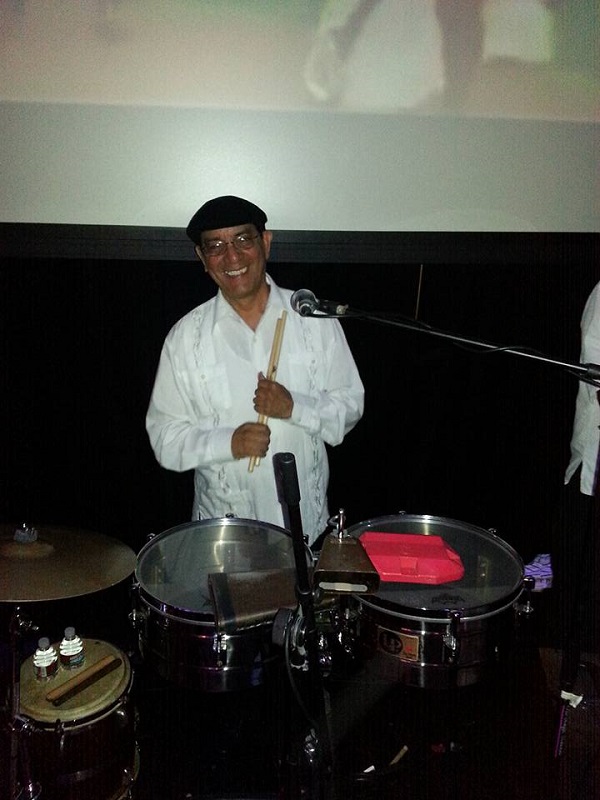
Carlos Navarro is a renowned multi-percussionist, producer, bandleader, and singer, known for leading the Orquesta Son y Clave. Here are some key details about him and his music:

  • Musical Style: He specializes in genres like salsa, mambo, merengue, and Latin jazz.

  • Orquesta Son y Clave: The band has gained popularity in recent years, even sharing the stage with world-class artists like The Rolling Stones.

  • Collaborations: He has worked with major talents in Latin music in Los Angeles, including Tito Nieves, Luis Barbarán, and others.

  • Family Connection: He is the brother of the famous singer Cherry Navarro.

    Carlos Navarro reconocido multi-percusionista, productor, bandleader y cantante, conocido por liderar la Orquesta Son y Clave
    Carlos Navarro reconocido multi-percusionista, productor, bandleader y cantante, conocido por liderar la Orquesta Son y Clave

1). What’s the current process for recording, music production, and royalty distribution?

The current process begins with recording, which can now be done in professional studios or in home studios equipped with high-quality technology. Next is music production, which includes editing, mixing, and mastering to ensure the material meets industry standards.

Once the final product is complete, it’s distributed digitally through aggregators or distributors who place it on platforms like Spotify, Apple Music, and YouTube, among others. As for royalties, these are mainly collected by collective management societies and the platforms themselves, who distribute the income based on streams, downloads, or licenses, assigning it to the author, performer, and producer as stipulated in their contracts.

2). What is the impact of digital platforms that artists use to release their music?

Digital platforms have transformed the music industry by democratizing access. Today, any artist, regardless of their fame or resources, can distribute their music globally. The biggest impact is visibility: a song can reach millions of listeners without the need for a traditional record label.

However, there is also the challenge of market saturation, which requires artists to accompany distribution with solid strategies for digital marketing, branding, and social media presence.

3). How are the revenues distributed once the product is complete?

Revenue distribution varies according to contractual agreements, but generally, it’s split between authors and composers (publishing royalties), performers and producers (master recording royalties), and the distribution company or label.

In the digital environment, streaming platforms pay a percentage for each stream, which first goes to the digital distributor and is then divided according to the percentages agreed upon in publishing and production contracts. This system makes good administrative management essential so that everyone involved receives what they’re owed.

At The Blind Tiger Super Club in Santa Barbara California. Son y Clave Orchestra Carlos Navarro. Great venue.

4). Name some current business models for producing a record.

  • Independent Digital Distribution: The artist pays a digital distributor (e.g., DistroKid, CD Baby, TuneCore) and keeps most of their rights.
  • Record Label Contract: The label invests in production and promotion in exchange for a percentage of royalties and even the master rights.
  • Licensing and Sync: Producing music geared toward films, commercials, and video games, generating income from usage licenses.
  • Crowdfunding: Fans support the funding of the album in exchange for exclusive rewards.
  • 360 Deal: The label or company handles not only production and distribution but also concerts, merchandise, and image rights, in exchange for a larger percentage.

5). What strategies can artists use to monetize their work in the digital environment?

  • Streaming and Digital Downloads: Maximizing presence on Spotify, Apple Music, Deezer, etc.
  • YouTube and Content ID: Monetizing through views, ads, and copyright control.
  • Digital and Physical Merchandise: T-shirts, vinyl records, NFTs, and exclusive products.
  • Social Media and Subscriptions: Platforms like Patreon or TikTok offer the possibility of direct income from fans.
  • Licensing and Sync: Offering music for TV series, films, video games, and advertising campaigns.
  • Virtual Concerts and Exclusive Experiences: Monetized live streams, digital meet-and-greets, or access to exclusive content.

6). What do you think about creating a digital platform among us, the Latin musicians, where the profits go to the artists?

I think that’s an extremely valuable and necessary proposal. A digital platform created by and for Latin musicians would have a direct impact on the independence and sustainability of our artistic projects. By eliminating traditional intermediaries and ensuring most of the profits go directly to the artists, it would foster a fairer and more equitable industry.

Furthermore, this kind of initiative would not only allow for a better distribution of income but also the creation of a strong community where we can support each other, give visibility to emerging talents, and preserve the cultural identity of our music. In a market dominated by global platforms that prioritize volume over quality, having our own space would be a strategic tool to strengthen our voice as Latin artists and give true value to our creative work.

Carlos Navarro
Carlos Navarro

Also Read: How Money is Made Today as a Recording Artist with Record Labels and Digital Platforms

Rudy Regalado. The legend of percussion

North America / USA / California

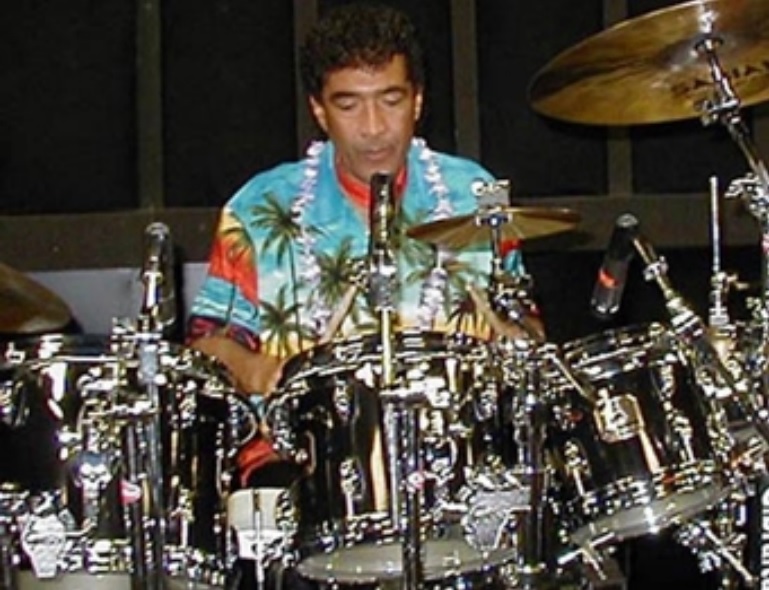
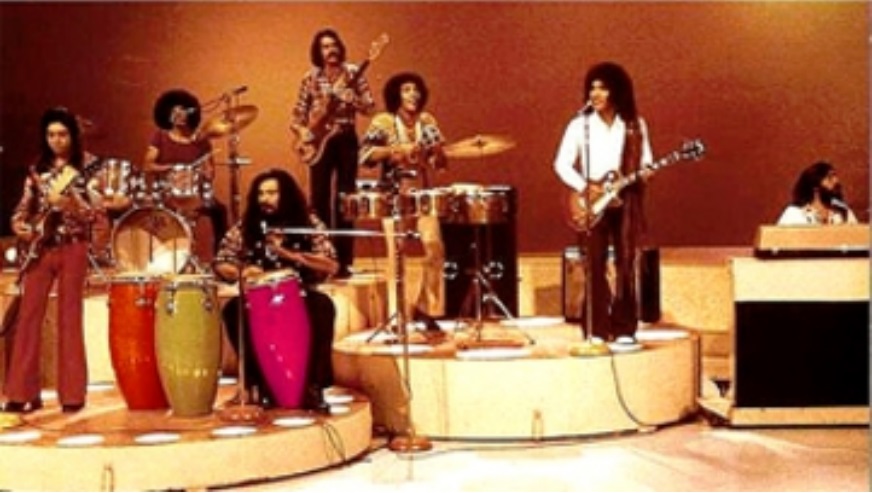
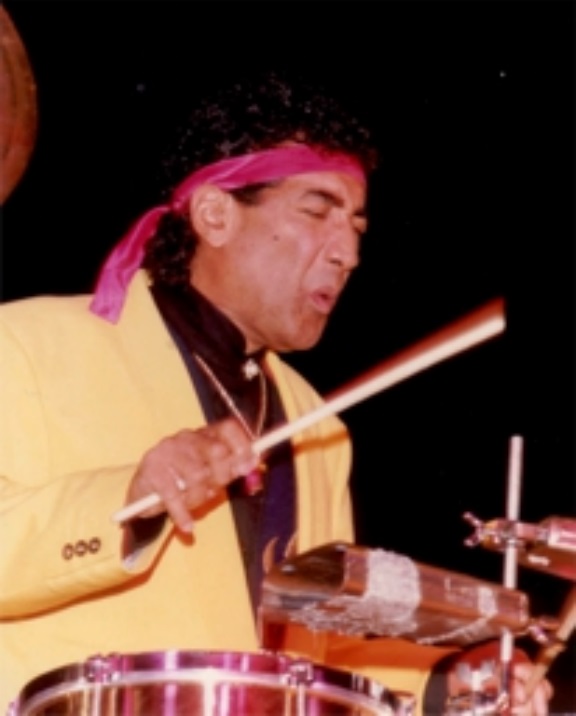
Rudy Regalado was a composer/ educator and one of the top Latin Rock Timbaleros based in the area of East Los Angeles, California during the 1970s and the second more famous Latin percussionist after Tito Puente. His legacy has been exceptional, 23 recorded albums, participated in big Festivals from USA and shared the best platforms with the best in the world. This artist was well known for his style, his contagious rhythm and eccentric presence.

Photo 1: Rudy Regalado

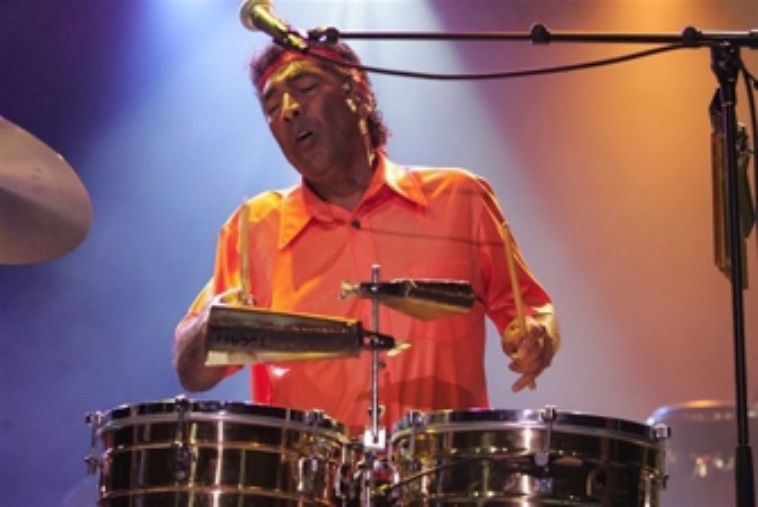
Rudy Regalado was a genuine and outstanding timbales maestro; he was inspired as a child by big bands Machito and Tito Rodriguez, who were two of favorites he became interested in playing music and the Timbales.

His beginnings in this instrument go back at the end of the 1950s. During that period as s teenager, he learned to play the drum and timbales in home town (Caracas-Venezuela). For 1963 and with desire to eat the world with his music he moved to Puerto Rico and started playing in hotels and clubs in the San Juan area with Julio y su combo, the first house bands he played with in Puerto Rico’s at Hotel Caribe Hilton. They were the backup house band for all the famous musicians that performed in the Island in 1965; at the same time he studied harmony and percussion at Pablo Casals Conservatory of music.

Photo 2: Rudy Regalado

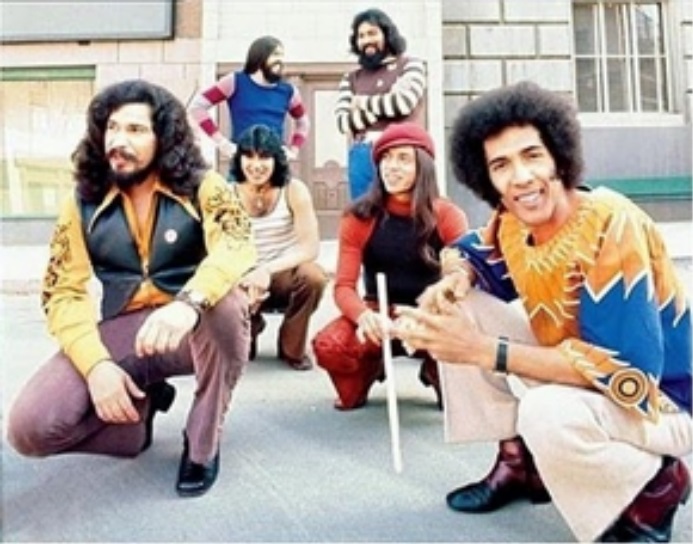
A decade later the restless Venezuelan timbalero migrated to Southern California, where he joined playing with local jazz and Latin groups before joining with the extremely popular Latin Rock Band called El Chicano.

The timbalero of timbaleros spent twelve years with El Chicano, singing and playing the timbales in 5 albums, which was included in Top 40 hits during the 1970s with the songs “Viva Tirado” and “Tell Her She’s Lovely”. El Chicano also created the theme song for the television series Baretta, which ran on ABC from 1975 to 1978.

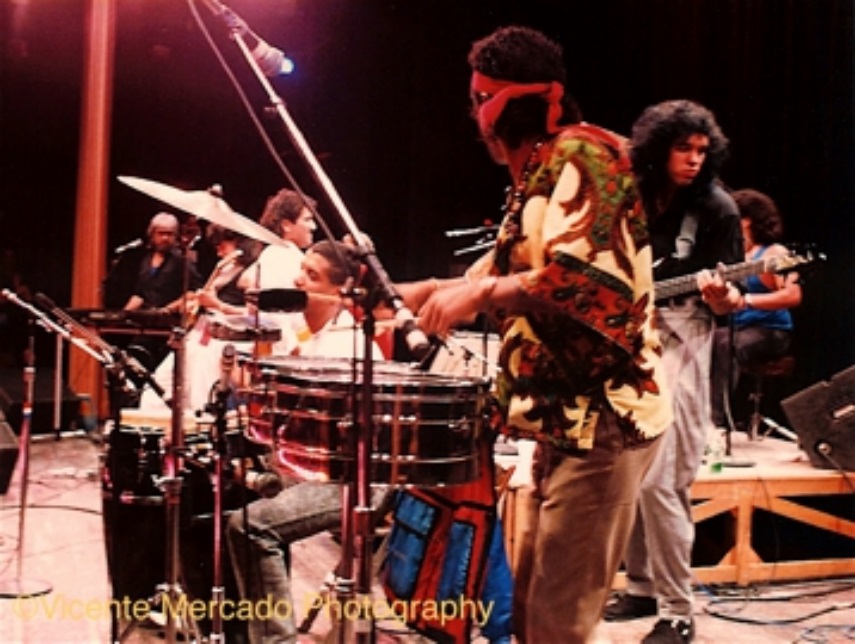
After, Rudy formed his own Latin Jazz All-Star / Salsa Band in 1983, which included a selected group of musician from Los Angeles. Initially known as Todos Estrellas, the band eventually became known as Chévere (aan expression of Venezuelan popular slang) and appeared at the PlayBoy Jazz Festival, Disneyland and Fiesta Broadway, among other engagements. The band also performed overseas in summer festivals in Canada, Hong Kong, Indonesia, Kuala Lumpur, Malaysia, Singapore, Thailand and throughout the European continent.

Photo 3: Rudy Regalado

As part of an El Chicano reunion in 2009, the Timbales maestro performed during the 40th anniversary of Woodstock festival at the Golden Gate Park Music Concourse in San Francisco, where the group actually celebrated their own 40th Anniversary, and last played with them at the Greek Theatre of Los Angeles in front of over a 100,000 screaming fans.

In addition, he participated in a variety of sessions with the Zawinul Syndicate, Quincy Jones, Alphonse Mouzon, Caravana Cubana.

Photo 4: Rudy Regalado

Rudy also toured with Aretha Franklin in charge of her percussion section, was a drummer for Los Melódicos in its 1980 tour of United States, and performed on the Tonight Show, the Nancy Wilson Show and American Bandstand. His film credits include The Skeleton Key (2005), as well as the television series Pepe Plata (1990) and Clubhouse (2004).

Héctor José Regalado better known as Rudy Regalado passed away on November 4th, 2010, in Las Vegas – Nevada, where he died from complications of pneumonia at the age of 67.

Photo 5: Rudy Regalado

Currently, his daughter Norka Tibisay Regalado founded in 2013, the Rudy Regalado Foundation. The goal of the foundation is to provide inner city music programs with instruments and financial support. “Let no child be left behind due to lack of funds”. In February, 2014, they donated over 2500 instruments and donated $2000.00 to help with cost for instructors. Her goal is to get financial support from big companies and the community in order to reach many more music programs; she is also working on bringing music programs inside children´s hospital to help the healing process to their mentally ill children and burned survivors.

Rudy Regalado will be forever remembered as one of the greatest Latin exponents of Salsa / Jazz sound of all time, undoubtedly, The Legend of Timbales (January 29, 1943 (Caracas – Venezuela) – Covember 4, 2010 (Las Vegas – Nevada).

Photo 6: Rudy Regalado

For additional information or to make a donation, please contac Norka Regalado at 323.270.8176 or go to website www.rudysfoundation.org/

North America / October 2025

Tito Puente Jr 2025William cepeda 2025

Alberto Gonzalez and Hector LavoeAnia Bartelmus 2025PBSCanto Tropical 2025Luis Medina 2025Thumbnail about the salsa museum

Las Maracas promo

Martinez attorney

Directory of North American nightclubs

Canada flag
CANADA

Ontario, Canada
ONTARIO

Canada, Vancouver
VANCOUVER

United States flag
UNITED STATES
California US circular flag

CALIFORNIA

Florida circle flag
FLORIDA
Illinois circle flag

ILLINOIS

Michigan Circle flag

MICHIGAN

NJ circle flag

NEW JERSEY

New York Cicle flaga

NEW YORK

Ohio State
OHIO

Pennsylvania Circle Flag
PENNSYLVANIA

tEXAS CIRCULAR FLAG
TEXAS

Virginia Cirular Flag
VIRGINIA

Washington DC circle flag
WASHINGTON DC


  • « Go to Previous Page
  • Page 1
  • Interim pages omitted …
  • Page 20
  • Page 21
  • Page 22
  • Page 23
  • Page 24
  • Interim pages omitted …
  • Page 165
  • Go to Next Page »

International Salsa Magazine (ISM) is a monthly publication about Salsa activities around the world, that has been publishing since 2007. It is a world network of volunteers coordinated by ISM Magazine. We are working to strengthen all the events by working together.