• Skip to primary navigation
  • Skip to main content

International Salsa Magazine

  • HOME
  • Previous editions
    • 2026
      • ISM / March 2026
      • ISM / February 2026
      • ISM / January 2026
    • 2025
      • ISM / December 2025
      • ISM / November 2025
      • ISM / October 2025
      • ISM / September 2025
      • ISM / August 2025
      • ISM / July 2025
      • ISM / June 2025
      • ISM / May2025
      • ISM / April 2025
      • ISM / March 2025
      • ISM / February 2025
      • ISM / January 2025
    • 2024
      • ISM / December 2024
      • ISM / November 2024
      • ISM / October 2024
      • ISM / September 2024
      • ISM / August 2024
      • ISM / July 2024
      • ISM / June 2024
      • ISM / May 2024
      • ISM / April 2024
      • ISM / March 2024
      • ISM / February 2024
      • ISM / January 2024
    • 2023
      • ISM / December 2023
      • ISM / November 2023
      • ISM / October 2023
      • ISM – September 2023
      • ISM – August 2023
      • ISM July 2023
      • ISM Edition June 2023
      • ISM – May 2023
      • ISM April 2023
      • ISM March 2023
      • ISM February 2023
      • ISM January 2023
    • 2022
      • ISM December 2022
      • ISM November 2022
      • ISM October 2022
      • ISM September 2022
      • ISM August 2022
      • ISM July 2022
      • ISM June 2022
      • ISM May 2022
      • ISM February 2022
      • ISM January 2022
    • 2021
      • ISM December 2021
      • ISM November 2021
      • ISM October – 2021
      • ISM September 2021
      • ISM August 2021
      • ISM July 2021
      • ISM May 2021
      • ISM April 2021
      • ISM June 2021
      • ISM March 2021
      • ISM February 2021
      • ISM January 2021
    • 2020
      • ISM December 2020
      • ISM November 2020
      • ISM October 2020
      • ISM September 2020
      • ISM August 2020
      • ISM July 2020
      • ISM June 2020
      • ISM May 2020
      • ISM April 2020
      • ISM March 2020
      • ISM February 2020
      • ISM January 2020
    • 2019
      • ISM December 2019
      • ISM November 2019
      • ISM October 2019
      • ISM Septembre 2019
      • ISM August 2019
      • ISM July 2019
      • ISM June 2019
  • Download Salsa App
    • Android
    • Apple
  • Spanish

Search Results for: Bar

Argentine-American composer and guitarrist Alejandro Meola kindly talked to us

There is a country we do not usually talk much about in this edition, but we have found the best moment to do so, and it is the land of tango and mate, Argentina. It turns out that, on this occasion, we talked with composer, singer and guitarist Alejandro Meola, who has honored us by accepting our invitation to this very special exclusive interview we had. 

Alejandro Meola is an artist who was born in the city of Miami, but his parents moved to Argentina when he was very young, so he spent his childhood and adolescence in the aforementioned country. In his accent, we can see how influential his upbringing in Buenos Aires was.   

Next, we will touch some of the most important issues related to his career and his life in general.  

This is Alejandro Meola
This is Alejandro Meola, a very talented Argentine-American guitarist

Alejandro’s beginnings in music 

As is typical, Alejandro began to feel a great attachment to music and it all started with the guitar that was in the house he grew up, with which he played at an amateur level and began practicing slowly and improving his skills over time. He says he always knew that his vocation was music, even without being old enough to decide on these issues. 

Given that the guitar was the instrument with which he started in music, this will always be the most important element in his artistic life above any other. However, he is also capable of playing other instruments such as piano, drums and bass, which can transport him to places within his mind where the guitar does not always take him.   

With regard to composition, Alejandro started to develop in this area through the need to express those emotions he had on the inside and communicate what his feelings in an original way with the help of music and the melodies that compose it. ‘‘I like to communicate things that resonate in other people’s minds and that’s where my taste for composition came from. Besides, I think that practice and time improve your ability to communicate emotions and transmit messages to anyone who listens to you. That evolves with oneself” said the artist.  

Alejandro’s musical education 

Alejandro told us that he studied at a music school in Argentina where he specialized more on guitar and composition, but what he calls ”street training” also helped him a lot to polish his act as an artist. The experience gained out the academies is so important to Alejandro that he even defines it as ”a parallel university”, which is as important as formal academic training, if not more. 

”It’s the street that gives you the tools, the experience and the journey to be a more complete artist. Practice on real stages is critical to specialize in music as it should be” Alejandro said on the subject.  

street training is important for Alejandro
According to Alejandro, ”street training” is very important for any artist

Argentine and American roots in Alejandro’s work 

Hearing Alejandro play evidences that he is heavily influenced by legendary and world-famous Argentine rock and the artist confirms this stating that he listened a lot to Fito Paez, Soda Stereo, Charlie Garcia, Gustavo Cerati, Luis Albert Spinetta, Andres Calamaro, among others. Undoubtedly, all of these music luminaries played a very important role on how this young man would perceive music, adding to all the American rock and blues he would listen to upon arrival in the United States. 

However, he noted that being in the United States also allowed him to listen to a number of Latin artists and rhythms which he never planned on experimenting with, but he did. His song ”La Inmigración” is a good example of this. In that regard, living in New York has expanded his horizons and led him to discover salsa, Cuban and Puerto Rican music. He also says that he took inspiration from Héctor Lavoe, Cheo Feliciano and La Fania when doing one or two songs. 

”At the end of the day, my music is a mixture of who I am and the places I’ve lived. A little from there, a little from here and a little from nowhere (laughs). A little from everywhere and a little from nowhere” he said.  

Alejandro also said that he is always on the lookout for other rhythms and ideas that come his way, but always using rock and guitar as a starting point.   

Alejandro at The Bowery Electric
Alejandro Meola playing live at The Bowery Electric

Why Alejandro chose New York as his permanent residence 

Since he was very young, Alejandro had always wanted to experience the dream of living and working in his art in New York. In addition to that, he wanted to know other cities in the country where he was born because while it is true that he spent most of his life in Argentina, he was also very clear that his country of birth was the United States, so he was curious to know it better. 

Once in New York, I met all kinds of people and artists with a very high musical level, so I was able to learn a lot from all of them. I feel like the bar is rising here and that led me to want to improve further every day. In that sense, I feel that New York gives you thick skin, since there are many obstacles to overcome to be truly recognized in music” said Alejandro about the city.   

The artist has been living in New York for 10 years now and is at ease in the place in which he currently is. In addition, he has managed to find a niche singing in Spanish, which has made him very happy and satisfied with his career.    

How Alejandro deals with languages in his music 

Something very common that many well-known artists do is to record songs in both English and Spanish so that the audience they reach is bigger, but Alejandro does not believe in it. He thinks that each song must have its own language and feeling, so he prefers to do one version of each song in one language. 

When he arrived in New York, he experimented a lot with English and has several albums in this language, but noting that he could work with Spanish without problems, he began to focus his music in that direction. In fact, today, almost all of his concerts are in Spanish.   

Each language has its advantages and disadvantages in terms of sound, so I must always pay attention to that,” said Alejandro on the subject. 

It has been a great pleasure for us to count on the talented Argentinean singer Alejandro Meola for this edition and we wish him the greatest success in his career from now on. 

Read also: El Tresero Moderno San Miguel Perez 

Roberto Roena and Apollo Sound will celebrate 50 anniversaries at the Puerto Rico Fine Arts Center

Latin America / Puerto Rico / San Juan

Roberto Roena: Staying active in any profession for 50 (fifty) years is not an easy task for anyone. But if it is a musical orchestra that half a century later continues to bring tropical music to all corners of the planet, more than a musical group, it becomes an institution.

That is the reality of the Apollo Sound orchestra and its founder, the percussionist and dancer Roberto Roena, who this summer celebrate five decades making the world dance and will celebrate it with a great concert to commemorate his career.

“We are going to do something big to celebrate 50 years. It will be in the month of June at the Center for Fine Arts, “said Roena in conversation with this medium.

“It’s going to be something really cool. We are going to sing the hits of the orchestra, we will have guests and a little bit of everything”, added the musician, who indicated that the exact date will be confirmed in the coming weeks.

Roberto Roena and Apollo

The Apollo Sound Orchestra was founded in July 1969 and its name derives from the launch that same month of the Apollo 11 space mission, which aimed to carry the first human being to walk on the surface of the moon.

His record catalog includes more than 20 productions and among his most notorious hits are “Tú loco loco y yo tranquil”, “El Escapulario”, “Marejada Feliz” and “El Progreso”, among many others. In the case of Rohena, the renowned 79-year-old musician from Mayagüez began his musical career much earlier, at age 16, with the distinguished group of Rafael Cortijo y su Combo.

He was also part of Rafael Ithier’s Gran Combo and appeared in the star catalog of the famous Fania record company and its All Stars, among other collaborations.

It was in the Mayagüez neighborhood of Dulces Labios where he was born, raised and took his first steps as a dancer. “Sweet Lips is my neighborhood. I have many memories of my childhood days.

From there came great musicians, such as Santitos Colón and Mon Rivera”, he pointed out.

Roberto Roena
Roberto Roena

When she was nine years old, her family moved to Santurce and when she was barely a teenager, she was already appearing on television.

He was discovered by Cortijo in one of his dance performances on the La Taberna India program and from there he became a percussionist for the renowned group. Since then, he has not stopped delighting his followers with his music.

“In these 50 years, there is no greater satisfaction than being able to continue playing,” said Roena, who last Saturday began the celebration of his 50 years in a concert at the Lehman Center of Performing Arts in New York, where he brought together several of the singers who accompanied the group in its beginnings, such as Sammy González, Tito Cruz and Carlos Santos, among others. In addition to the concert, Roena does not rule out going back to the studio to continue shaping her music for posterity.

“This does not mean the end of Roberto Roena and the Apolo Sound. We are going to continue as long as God wants”, he sentenced.

Roberto Roena
Roberto Roena

RELATED ITEMS: 50TH ANNIVERSARY, CENTER OF FINE ARTS P.R., INTERNATIONALS, ROBERTO ROENA AND HIS APOLLO SOUND

http://asondesalsa.com.pa/roberto-roena-y-apollo-sound-celebrara-50-aniversario-en-centro-de-bellas-artes-p-r-para-el-mes-de-junio/

Luis “Perico” Ortiz: six decades of impeccable musical trajectory

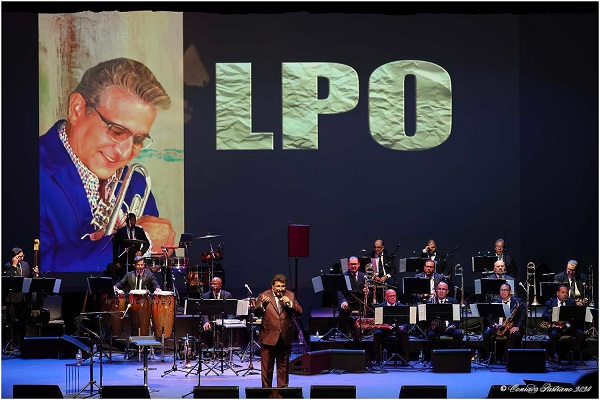
The lobby of the Centro de Bellas Artes in Caguas served as a prelude to the concert, entitled Tocando y contando historias (Playing and telling stories), for which we came to enjoy “Perico” and his guests. Mario Ortiz, Jr. brought together a dozen trumpet players (Luis Figueroa, Richie Segarra, Roby Texeira, Rafael Lebrón, Kevin Ibáñez, Ricardo Marrero, Kenneth Torres, Rubén Días, Ricky Zayas and Simón Rivera) to pay tribute to Luis “Perico” Ortiz by performing his most emblematic solo: ‘Coro Miyare’.

Luis "Perico" Ortiz and his Orchestra
Luis “Perico” Ortiz and his Orchestra

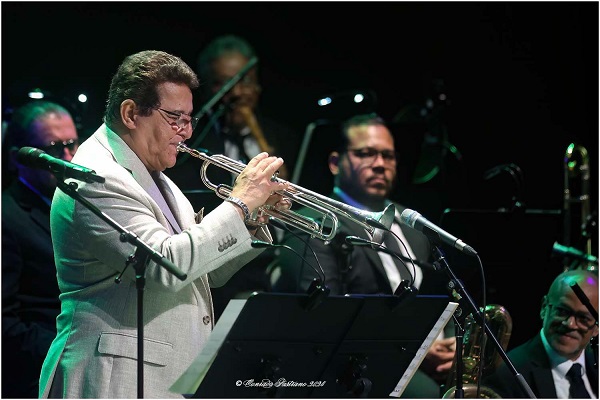
Once in the concert hall, the child trumpeter Daniel Torres (whom Perico predicted would be his successor) and Luis “Perico” Ortiz kicked off the concert with a fun trumpet correspondence. The musicians, turned into actors, shared with us the scene in which we saw Luis “Luisín” Ortiz as a child, playing ‘Quítate de la vía Perico’ with his trumpet; introduction that gave way to the custodian of Ismael Rivera’s legacy (“Moncho” Rivera) to sing the emblematic theme to which “Perico” owes his nickname, while the audience enjoyed images of “Maelo” on a giant screen. The short film defined how “El Sonero Mayor”, personified by “Moncho” told “Luisín”, that from that moment on he would be called “Perico”.

Moncho also interpreted ‘Bilongo’, a song in which Richard Carrasco stood out on the bongo after the saxophones made themselves felt with forcefulness. “Perico” also claimed his turn with the trumpet solo that preceded a resounding “Buenas noches” in the voice of the virtuoso trumpet player.

The orchestra was integrated by: Luis “Perico” Ortiz on musical direction; Yturvides Vilchez, Jan Duclerc and Rolando Alejandro Lora on trumpets; Rafy Torres, Jorge Díaz, Randy A. Román, Mario Alonso Ángel Marulanda on trombones; Roberto Calderón on baritone saxophone, Luis Daniel Valentín Muñiz on tenor saxophone; Antonio Luis Orta and Luis Fernando Hernández on alto saxophones; David Marcano on timbales; Gadwin Vargas Vélez on congas; Richard Carrasco Ayala on bongo; Juan Manuel Rivera Colón on piano; Carlos Luis Martínez Peña on bass; Henry Santiago and David Carrero on backing vocals.

Luis “Perico” Ortiz
Luis “Perico” Ortiz

Then, Henry Santiago received the microphone to sing ‘Tres grandes amigos’. For the song, which refers to Tito Rodríguez, Tito Puente, and Machito; “Perico” introduced “Manolito” Rodríguez and Arianelys Ortiz Cruz, a blind autistic timbalera player.

He was followed by Norberto Vélez, who performed ‘Julián Del Valle’ (1978, Súper salsa) and ‘De patitas’ (1979, Luis “Perico” Ortiz, One of a kind) – songs of great vocal and interpretative difficulty, popularized by the unmistakable voice of Rafael De Jesús – with his usual sympathy. Nor-Bert once again demonstrated his powerful voice, and was matched by the saxophones, whose forcefulness did not diminish the power of Vélez’s voice.

“La India” arrived with her usual energy to interpret ‘Químbara’ and “Manolito” did his part singing ‘La Reina es la rumba’, in company of “La India”, alternating on the soneos.

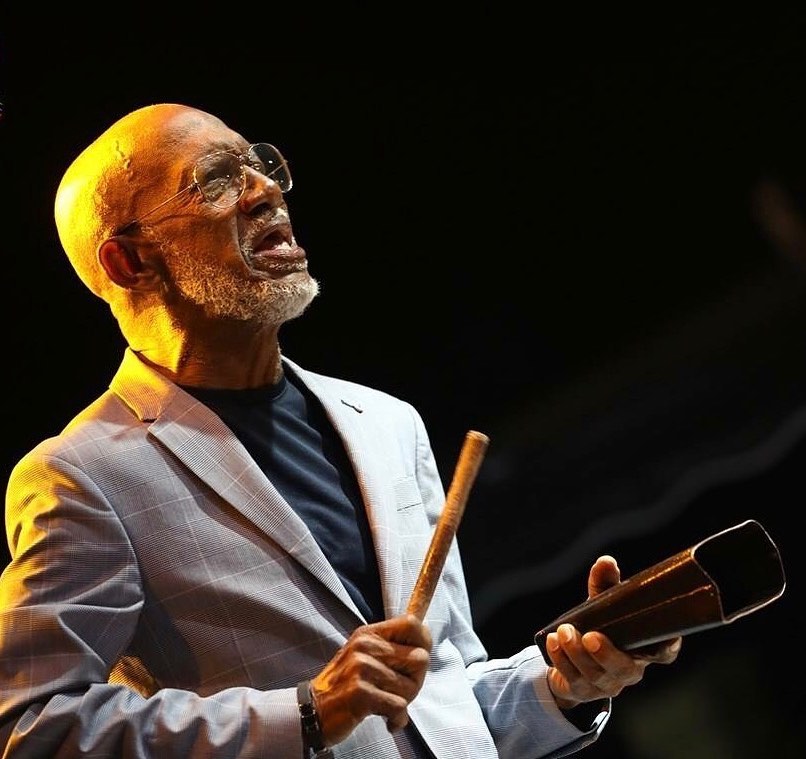
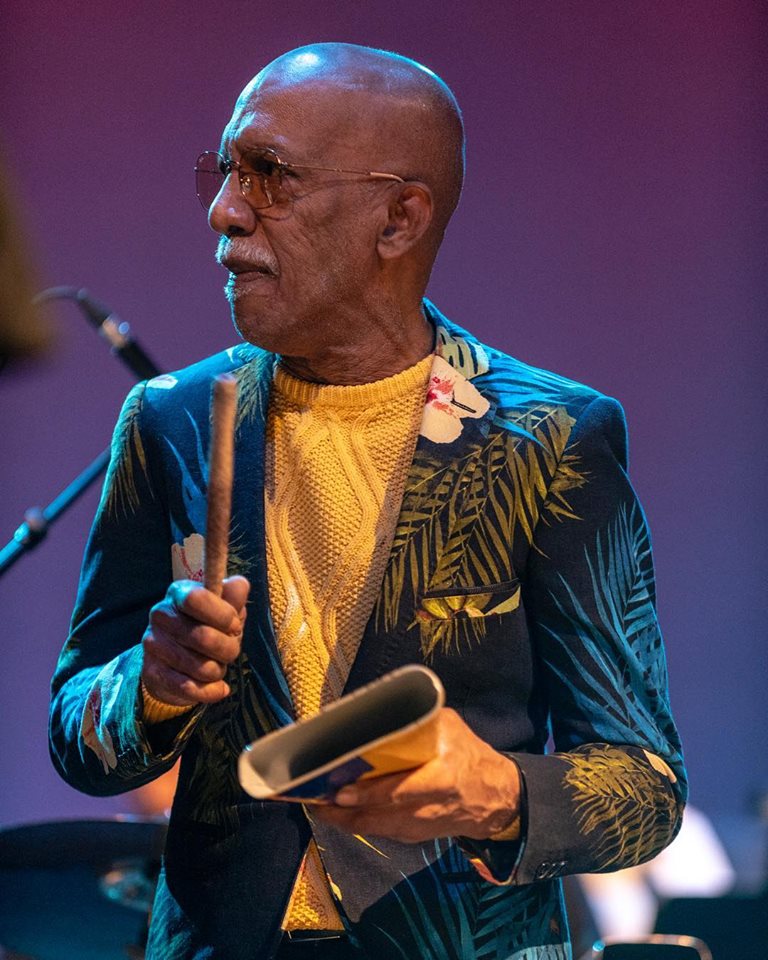
Coro Miyare” made use of Richard Carrasco’s unbeatable performance in the bongo solo with drumsticks -which had been popularized by Roberto Roena-, followed by the crushing solo by “Perico”, the piano solo by Juan Rivera, the conga solo by Gadwin Vargas and the timbales solo by David Marcano.

Richard Carrasco Ayala en el bongó y Luis “Perico” Ortiz

The highlight of the concert was Gilberto Santa Rosa’s brilliant renditions of ‘Atrevida’ and ‘Planté bandera’; recorded and immortalized by Tommy Olivencia’s La Primerísima, to which Santa Rosa briefly belonged.

After the intermission, as a tribute to the “Niño bonito de la salsa”, “Perico” invited Tony Vega to the stage to perform ‘Así se compone un son’ and ‘Borinquen tiene montuno’, the latter adorned with an elaborate trumpet solo by “Perico”.

“Perico” brought Gerardo Rivas to the stage to perform ‘Río abajo va’ (1985, La vida en broma), popularized in the voice of Domingo Quiñones. Gerardo explained that he had accepted the invitation to participate in the concert without knowing which song he was going to sing, in a clear allusion to the vocal difficulty of reaching Domingo’s vocal register. Gadwin Vargas sprinkled the theme with a conga solo with a mozambique beat, very well achieved. Gerardo’s second song, ‘Perico lo tiene’, brought to the stage the cacique of the Rivas dynasty (“Jerry” Rivas, singer of El Gran Combo de Puerto Rico) on the tres and Richie Bastar (bongos player of La Universidad de la Salsa). While Bastar took over on the bongo and the bell, Richard Carrasco took over the güiro. At the end of the intervention, “Jerry” asked for a round of applause for the mulato mayor, Don Rafael Ithier, who was enjoying the concert with all of us who were there.

Then, “Perico” dedicated ‘Perfume de gardenias’ to his mother; a speech that was enjoyed with an instrumental prelude performed by “Perico” and a great vocalization by “El Caballero de la Salsa”.

Next up was Rubén “Panamá” Blades, who received a standing ovation from the audience. This made visibility difficult, although it did not affect our enjoyment of the audio. Blades was in charge of the big hits ‘Plástico’ and ‘Pedro Navaja’ (1978, Siembra). During ‘Pedro Navaja’ Gadwin Vargas replicated the conga sound that Eddie Montalvo immortalized on the recording.

The stage was full when all the guests arrived to perform ‘Como vivo yo’, after Perico announced with a trumpet solo the song that would end the show.

As Luis “Perico” Ortiz said, the vote of love and confidence that we witnessed there will be remembered as an unrepeatable evening, which detailed what has been six decades of impeccable career that the trumpeter, composer, arranger and music producer has achieved.

Luis “Perico” Ortiz y Gilberto SantaRosa
Bella Martinez Puerto Rico 


Also Read: ¡Attack Sergio! Unbreakable: A fun read because of the contradictory content

Omara Portuondo announces world tour

Latin America / Cuba / La Habana

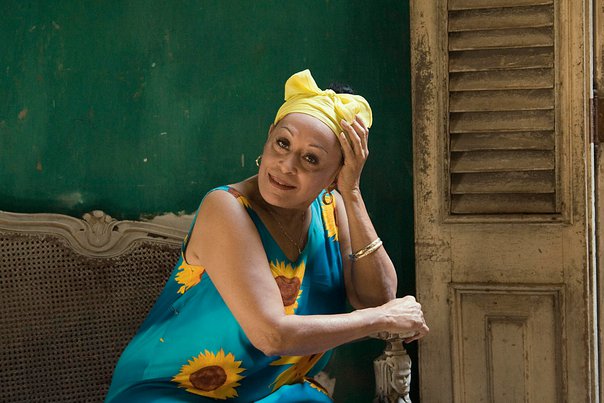
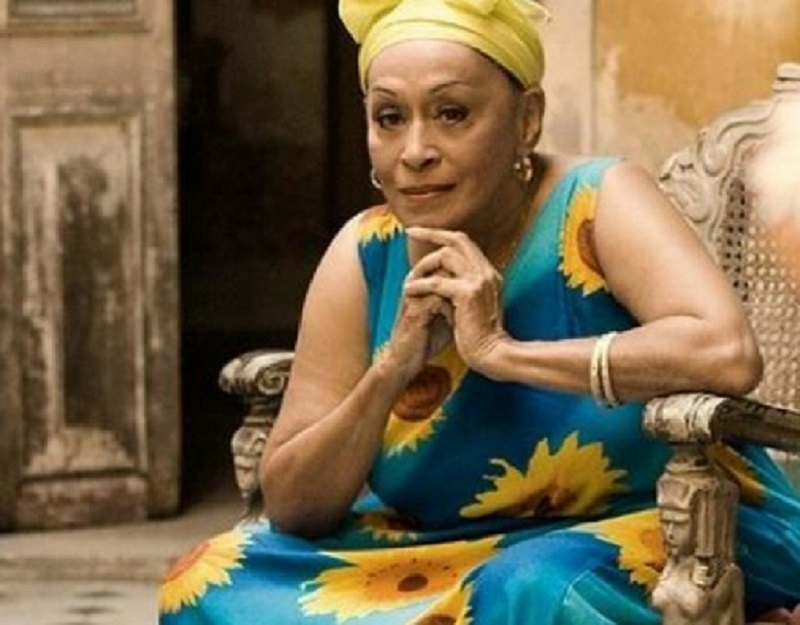
Cuban singer Omara Portuondo will embark on a world tour in April that will take her to places in the United States and Europe in a first stage, the artist announced at a press conference.

Omara Portuondo
Omara Portuondo

“Omara es Cuba” gives its name to the tour that will start on the 19th at the Regent Theater in the city of Los Angeles, and has concerts scheduled in New York, Chicago, Holland, Hungary, Singapore, South Korea, Canada and France . Among other countries, in some of which it will be presented for the last time.

Omara Portuondo
Omara Portuondo

For the month of November, the Bride of Feeling, as the artist is also known, has planned performances in South America on stages in Argentina, Chile and Uruguay.

The tour, which will last until 2020, will close this year with a great concert on the island.

For the occasion, the Cuban diva will be accompanied by talented musicians: pianist Roberto Fonseca, Andrés Coayo (percussion), Ruly Herrera on drums and bassist Yandy Martínez.

Omara Portuondo
Omara Portuondo

Fonseca stated that it is an honor to share the stage with Portuondo, whom she considers a universal singer who has gone through all styles but always maintaining her Cuban identity.

The repertoire of the tour will include classics performed by the artist throughout his career, including some from his time at the Buena Vista Social Club, an “all-star” project of which Portuondo was the main voice since its creation in 1997.

Omara Portuondo
Omara Portuondo

The 88-year-old artist is one of the most successful and beloved Cuban singers in Cuba, her discography includes thirty titles and she has recorded with the most notable Cuban and foreign artists.

Awarded the National Music Award (2006), she was also awarded a Latin Grammy for Best Contemporary Tropical Album in 2009 for her album “Gracias”.

Gira USA de Omara Portuondo 2019

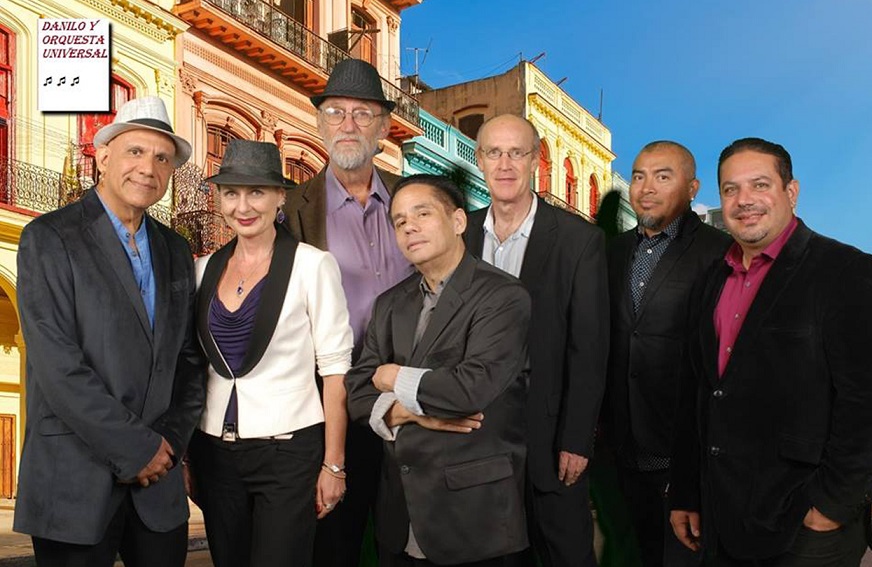
Danilo y Orquesta Universal in one and only performance this month at Flamingo Conference Resort and Spa

North America / USA / California / Santa Rosa

Danilo y Orquesta Universal: Prepare to an evening in the company of the best Hard Salsa and practice this tropical dance with multiples dance lessons for all levels

Enjoy the experience and connection with Salseros of the San Francisco Bay Area in the Saturday Night Live Salsa organized by Santa Rosa Salsa located in the spaces of Flamingo Conference Resort and Spa, which has achieved its fame for the Latin Live entertainment it offers.

Date: Saturday, June 8th

Cost: $15 (Includes dance lessons)

Show: 9:30PM

Salsa Lessons: 7:00PM & 8:00PM (No partner or experience necessary)

Danilo y Orquesta Universal

Bio: When Danilo Paiz was a child, his grandfather took him to the rehearsals of his Big Band era Jazz group. His grandfather, Francisco Perez, known in Nicaragua as Pancho Perez, was the director and saxophonist of both his own groups, “The Black Cats” and “La Centroamericana”. These bands played the music of Benny Goodman, Glen Miller, Perez Prado, Artie Shaw and other music of the ’50s.

This early exposure to Jazz gave Danilo a strong foundation for his composing skills and in his unique and original vocal style.

In his extensive musical career, this compositor has played with talent and internationally known musicians, such as: Ray Baretto, Ruben Blades, Mary Wilson of the Supremes, Benny Velarde and his Super Combo, Ray Obiedo, Dave Valentin, among others.

Danilo demonstrates some of his best work on bongo and vocals on the Ruben Blades’ CD titled “Ruben Blades and Son del Solar, Live!”. More about his Biography as well as Event Dates through http://www.danilo-y-universal.com

Join Danilo y Orquesta Universal for a night of Salsa Dura!

Purchase your Tickets NOW at:

https://www.eventbrite.com/e/DANILO-Y-ORQUESTA-UNIVERSAL-AT-THE-FLAMINGO-june-8-2019-tickets-60293323955


The Flamingo Conference Resort and Spa Details:

Venue: The Flamingo Conference Resort and Spa. 2777 4th St. Santa Rosa, CA 95405

Phone: (707) 545-8530

Age: +21 with ID

FULL BAR | DRESS TO IMPRESS | FREE PARKING

Website: www.SantaRosaSalsa.com

  • « Go to Previous Page
  • Page 1
  • Interim pages omitted …
  • Page 66
  • Page 67
  • Page 68
  • Page 69
  • Page 70
  • Interim pages omitted …
  • Page 165
  • Go to Next Page »

International Salsa Magazine (ISM) is a monthly publication about Salsa activities around the world, that has been publishing since 2007. It is a world network of volunteers coordinated by ISM Magazine. We are working to strengthen all the events by working together.