• Skip to primary navigation
  • Skip to main content

International Salsa Magazine

  • HOME
  • Previous editions
    • 2026
      • ISM / March 2026
      • ISM / February 2026
      • ISM / January 2026
    • 2025
      • ISM / December 2025
      • ISM / November 2025
      • ISM / October 2025
      • ISM / September 2025
      • ISM / August 2025
      • ISM / July 2025
      • ISM / June 2025
      • ISM / May2025
      • ISM / April 2025
      • ISM / March 2025
      • ISM / February 2025
      • ISM / January 2025
    • 2024
      • ISM / December 2024
      • ISM / November 2024
      • ISM / October 2024
      • ISM / September 2024
      • ISM / August 2024
      • ISM / July 2024
      • ISM / June 2024
      • ISM / May 2024
      • ISM / April 2024
      • ISM / March 2024
      • ISM / February 2024
      • ISM / January 2024
    • 2023
      • ISM / December 2023
      • ISM / November 2023
      • ISM / October 2023
      • ISM – September 2023
      • ISM – August 2023
      • ISM July 2023
      • ISM Edition June 2023
      • ISM – May 2023
      • ISM April 2023
      • ISM March 2023
      • ISM February 2023
      • ISM January 2023
    • 2022
      • ISM December 2022
      • ISM November 2022
      • ISM October 2022
      • ISM September 2022
      • ISM August 2022
      • ISM July 2022
      • ISM June 2022
      • ISM May 2022
      • ISM February 2022
      • ISM January 2022
    • 2021
      • ISM December 2021
      • ISM November 2021
      • ISM October – 2021
      • ISM September 2021
      • ISM August 2021
      • ISM July 2021
      • ISM May 2021
      • ISM April 2021
      • ISM June 2021
      • ISM March 2021
      • ISM February 2021
      • ISM January 2021
    • 2020
      • ISM December 2020
      • ISM November 2020
      • ISM October 2020
      • ISM September 2020
      • ISM August 2020
      • ISM July 2020
      • ISM June 2020
      • ISM May 2020
      • ISM April 2020
      • ISM March 2020
      • ISM February 2020
      • ISM January 2020
    • 2019
      • ISM December 2019
      • ISM November 2019
      • ISM October 2019
      • ISM Septembre 2019
      • ISM August 2019
      • ISM July 2019
      • ISM June 2019
  • Download Salsa App
    • Android
    • Apple
  • Spanish

Search Results for: Bobby Cruz

Metamorphosis: from music to photojournalism, a reinvention without limits

In the salsa scene, we are privileged to have the presence and companionship of Felix “Guayciba” Ayala.Guayciba is one of the greatest photojournalists Puerto Rico has ever produced.

He has moved from the musical notes that embrace our ears to now capturing visuals that awaken our five senses of unrepeatable moments.

I appreciate and share first hand the reference of how this idea begins, how the seed of wanting to be a photojournalist is planted, after having directed the Guayciba Group for 12 years.

“In the mid-’80s, a group of friends and I got together. We started playing and put together a Christmas repertoire. People liked it, and they told me, ‘Hey Felix, you should form a group, you sound great.'”
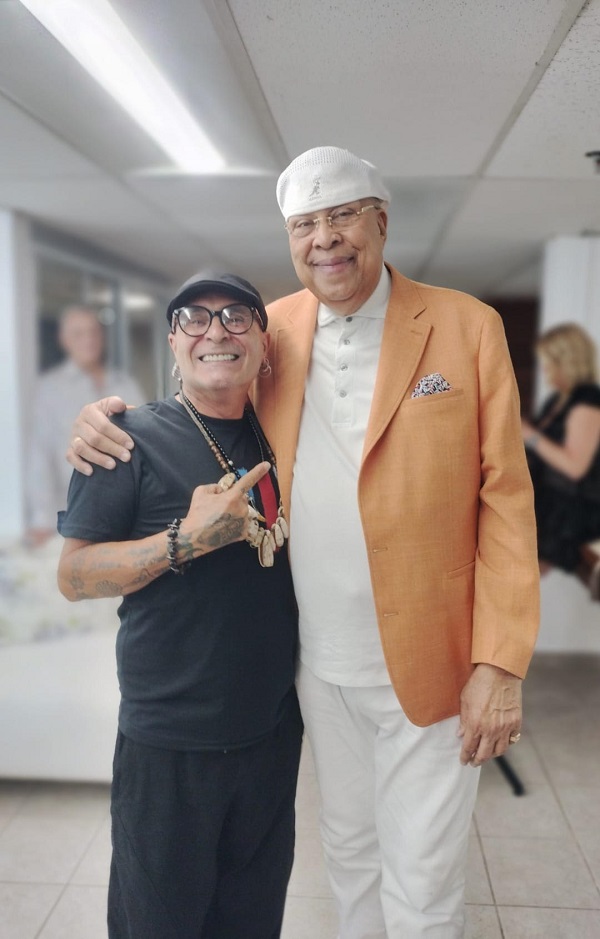
Félix “Guayciba” Ayala y Chucho Valdes

Encouraged by the public’s reception, they set about the task of banding together and formalizing a repertoire of Christmas music, which they later expanded to include popular music. In 1987, the group did not yet have a name, but the musicians were already rehearsing and playing in a bar in Santa Rosa (Bayamón, Puerto Rico).

In 1988 they started calling themselves Murciélago Sound Machine and got their first professional contract, for which they charged $200.00. During one of the rehearsals, Felix’s neighbor, who owned a movie and video rental store, offered to give him the name of his store: Guayciba; which he had already registered with the State Department.

The rest is history.

Felix liked the name, even though he still didn’t know what it meant. Guay-ciba means to take care of the stone.  It turns out that our Taino Indians communicated by carving messages on stones, which we now know as petroglyphs.

This form of communication of our Indians, the Tainos, was engraved on the stones that are part of our heritage.

Since 1989, Guayciba claims to have lost his last name – Ayala – to replace it with the name he is known by in the media, Guayciba.
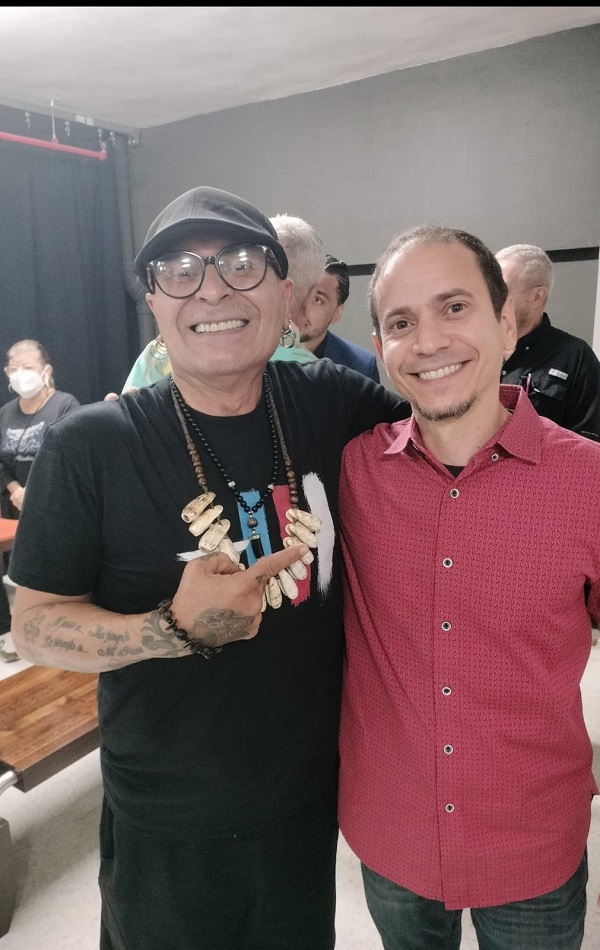
On the salsa stage we have the privilege of having the presence of Felix "Guayciba"
On the salsa stage we have the privilege of having the presence of Felix “Guayciba”

This was the name of the musical group of which Félix Guayciba was the director, composer and singer.  As the main member and founder, he took on the task with commitment and in 1989 they released their first record production, entitled Nuestra música primero en LP, because CDs were not yet widespread in the market.

Felix remembers that the first singer of Grupo Guayciba was Gisela Ortiz.  Some time later, Gisela got thyroid cancer and when she lost her voice, she had to be replaced by Aidita Encarnación.

Guayciba recalls that Aidita made her debut with the group during the “Coffee Festival” in Maricao and remained with the group until it disbanded in 2000.

In 1991 they produced Echemos pa’lante, which opened the door to radio stations on the island. In 1992 they produced Por ti doblaré rodillas, and in 1993 they released what Felix considers their masterpiece under the title Borinquen, nido de amores.

Félix affirms that this production became the classic album that consolidated them in Salsoul, Z-93 and Estereotempo.  Later they released La revolución apoya lo nuestro. In 1999 they released their last album, Contra viento y marea.

In this last Guayciba production, Maestro Luis ‘Perico’ Ortiz made two arrangements: “Déjame Soñar” by Perín Vázquez, which Tito Puente had already recorded on the 100th album, backing the voice of Tony Vega (Antonio Vega Ayala), the cousin of Félix Guayciba Ayala. The six albums of the Grupo Guayciba were recorded in the studio of Maestro Pedro Rivera Toledo, and in Contra viento y marea Maestro Rivera Toledo recorded the saxophone.
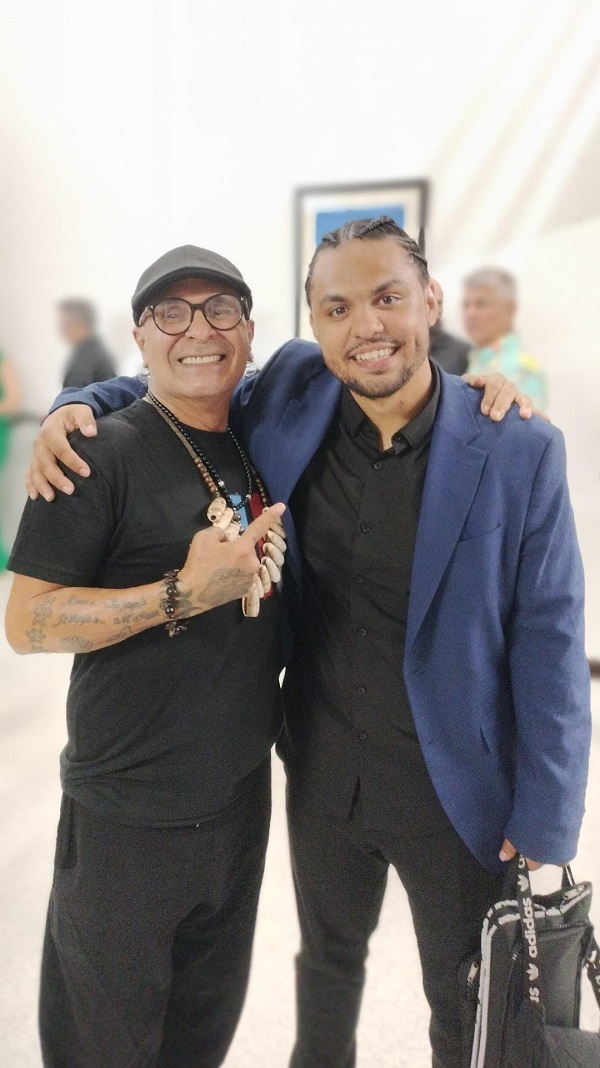
Félix “Guayciba” Ayala

In his last album, the song “Por nada la cambiaré” was composed by Guayciba and dedicated to his homeland, Puerto Rico.

They never recorded Christmas music because their mission was to defend our music, the seis, the bomba, the plena and the guaracha, among other indigenous rhythms. The time came for the group to disband, but as Guayciba affirms: “We left a legacy for the musical history of our nation (…) Guayciba was, is and will be one of the best musical groups in the history of typical Puerto Rican music. I have retired, but at least we have left a legacy for history, we have left a mark”.

With the arrival of the new millennium, Guayciba’s musical stage ended to give way to the visual arts, making it clear that he had not retired from the humanistic arts, but had reinvented himself and now stood out in the visual arts.

The images captured by Guayciba’s photographic lens are full of life and movement. The viewer sees as if the artist, athlete or object in the photo comes to life.

Guayciba reflects while explaining how the image speaks or remains silent, depending on the adjustment made, the movement given, the position and the light.

He hastens to clarify: “I have used my musical career to distinguish myself in photography. I photograph artists the way I want them to photograph me.

I try to make the image I take of an artist or a show speak. In photojournalism, the photo has to speak.”

Guayciba made the decision to move from music to photojournalism as a result of a deep depression that he faced and fought with professional help.  Once the decision was made, he began training at the University of Puerto Rico.

He never forgot what one of the specialists who was part of the medical team that helped him recover told him: “I have faith in you.  If you are going to be a photojournalist, I want you to be the best photojournalist”.

Felix attended classes every Wednesday for three hours. He remembers his first photographic experiments.  One that comes to mind is Ricardo Arjona, who performed for an entire season at the Centro de Bellas Artes. Felix would leave his weekly class to go to the CBA, where he would stay until late.
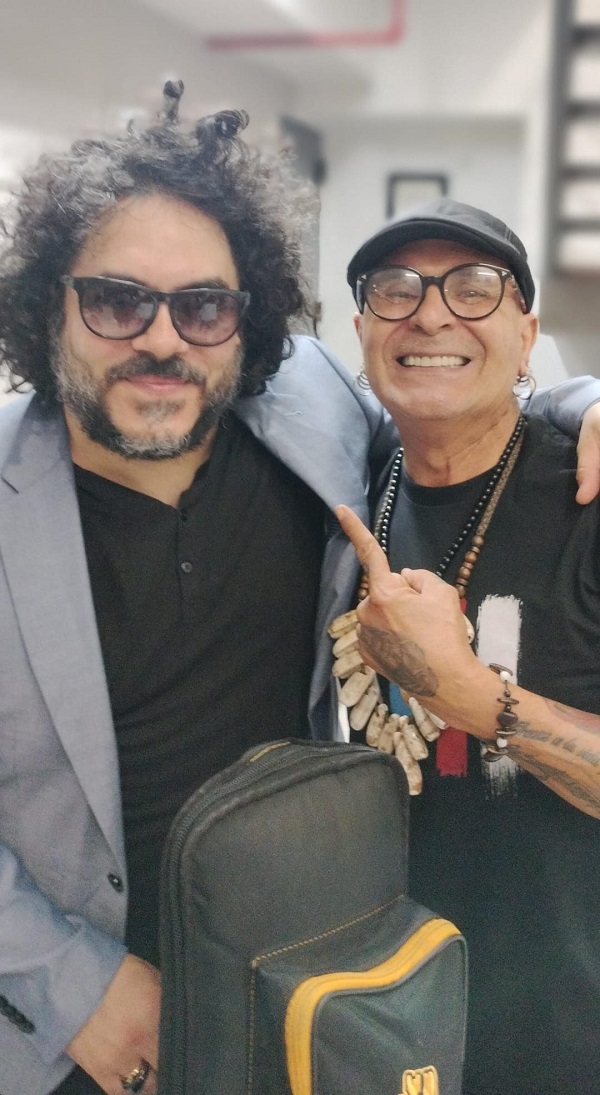
On the salsa stage we have the privilege of having the presence of Felix "Guayciba"
On the salsa stage we have the privilege of having the presence of Felix “Guayciba”

The next day he would go to a megastore to develop the photos from the night before and bring them to the professor to evaluate the shots.  The professor would give him advice on what to do to improve the photos he had in hand.

Another moment he remembers with emotion was in 2002, when Fania played a concert at the Juan Ramón Loubriel stadium in Bayamón.

Guayciba already had a digital camera, and during that concert, he says he used 25 rolls of film with 36 exposures each.

He says this was his first international assignment. The first time he photographed an international artist was when he was still a photography student, practicing with Ricardo Arjona in the Fine Arts Department.

As a result of that coverage, he got in touch with the Guatemalan artist, who was thrilled with the photos Felix took, saying at the time that they were the best photos he had ever taken, adding that the Puerto Rican had captured his best side.

Felix has continued to evolve and has had the opportunity to cover concerts by Elton John, the Rolling Stones and Paul McCartney, among others.  He says: “The only thing I don’t do is pornography, weddings or quinceañeras”. His specialty is artistic shows and sporting events.

Guayciba is the longest serving photographer to cover the Coliseo de Puerto Rico since its inauguration in 2004, when Sonora Ponceña, Richie Ray & Bobby Cruz and Roberto Roena’s Apollo Sound performed in that memorable concert produced by Pepe Dueño.

One of the highlights of his career was a trip to Cuba in 2009, where Guayciba was the official photographer for the Puerto Rican delegation that went to the Cuba Disco Festival, which was dedicated to Puerto Rico in that edition.

He has taken more than 24,000 pictures of Cuba. The most memorable experience of his trips to Cuba was visiting the resting place of Che Guevara.

He continues to learn from all the images he has taken and published.  “At one point, during the performance of the 2013 musical Pedro Navaja, the Caballero de la Salsa, Gilberto Santa Rosa told me, “You have to let yourself be criticized and you have to accept criticism as long as it is constructive criticism.”

Felix added and still maintains: “It depends on who is criticizing you, because there are people who criticize you just to make fun of you; yes, you know, out of envy”. In fact, Felix understood that he had the best photos of Gilberto.

When he went to see him to show him, Santa Rosa told him: “They’re good, but these photos where I’m alone don’t say anything because it could be at the Fine Arts Center or it could be in some theater.  This concert is symphonic, where is the symphony orchestra?” Santa Rosa was right. “From that ear flattery I learned that you have to take the picture of the artist and the complements like stage, orchestra, etc..  It’s like writing a story.  You have to include the day, the historical setting, the characters, and make sure that the viewer can get a picture of what happened there in the moment. It’s more of a frozen in time effect.

Guayciba considers Conrado Pastrano her teacher and mentor. She expresses gratitude for all that she has learned in photography and acknowledges that there is still more to learn.

Conrado is an exceptional colleague who takes the time to explain ways to correct unwanted effects in images. Guayciba has developed her own unique style by studying the works of other colleagues and drawing inspiration from each of the photojournalists whom she admires.

Guayciba is highly regarded as one of the top photojournalists in Puerto Rico, although he is humble and has never claimed the title for himself.  He recognizes that there are others who may be more talented than him.  His motto is: “I may not be the best, but I am proficient in my craft and the photos I take convey a narrative.”

When he is at the ball park, he adeptly adjusts his lighting, shutter speed, and lens to capture the intricate details on a ball despite its velocity exceeding 100 miles per hour. When artists perform on stage, Guayciba faces the task of restoring their natural appearance despite the color filters and stage lighting often making them look unnatural or cartoonish.  Overcoming these challenges and bringing the images to life, imbues these artists with renewed enthusiasm for their craft, a pursuit they have devoted over two decades to.

At 68 years of age, he prays daily for longevity. He abstains from drugs and alcohol, including wine, champagne, and cider. His sole indulgence is tobacco and photography.

To view Félix Guayciba’s artistic works and keep in touch with this vital advocate of Puerto Rican culture, please visit the publication at www.guayciba.com. To email him, please use [email protected], or follow his IG account at https://www.instagram.com/guay54/.

To reach him by phone, please dial 787-637-8617. He is always available and eager to assist with his usual helpful demeanor.

Bella Martinez Puerto Rico

Also Read: Bella Martínez presents “Las memorias de Jimmie Morales: un conguero para la historia” [Read more…] about Metamorphosis: from music to photojournalism, a reinvention without limits

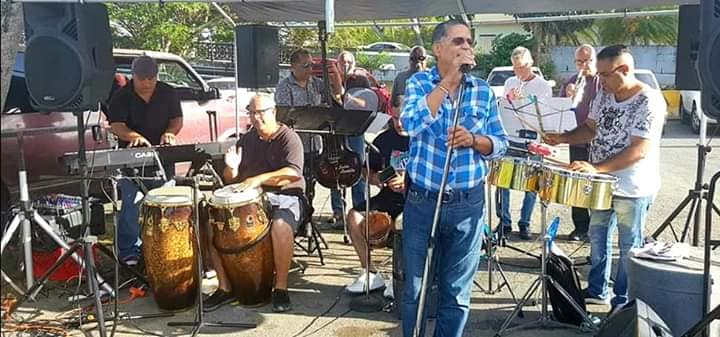
Pablo Padin born in Manhattan, New York

North America / United States / New York 

Pablo Padin born in Manhattan, New York. I grew up with a pair of Timbales at home

I was born in Manhattan, New York on December 1, 1969.  My parents Pablo and Haydee Padin moved from Puerto Rico to New York in 1968. My father played Timbales with local salsa groups at the time, so I grew up with a pair of Timbales at home.

My father started teaching me how to play at a very young age.  We moved to LA. , California in 1978 and I started playing drums in the school band and in the community drill teams as well.

I (Pablo Padin) got my first private drum set lesson at the age of 9 at a music school in Hollywood California.

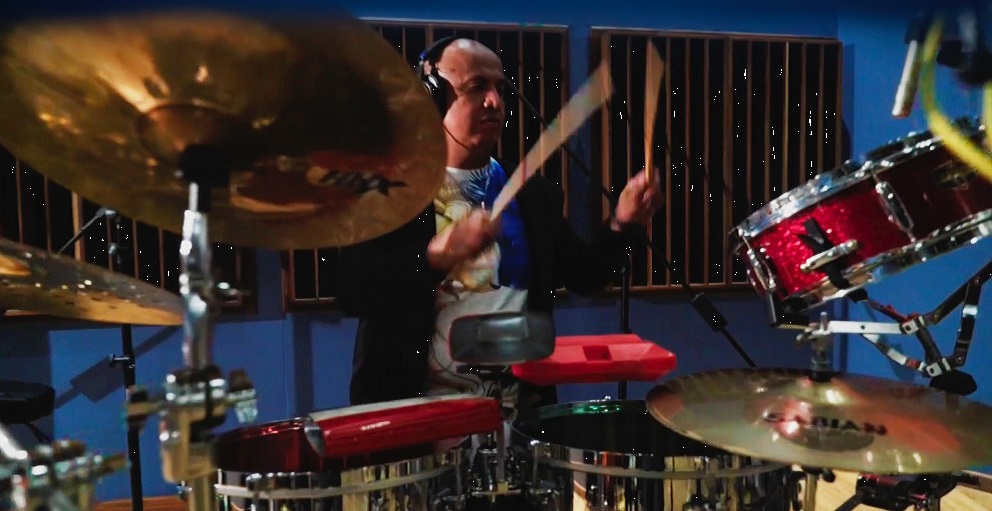
Pablo Padin in concert

At the age of 15, I (Pablo Padin) started playing my first steady gig in a salsa band with my father at a nightclub in Marina Del Rey, California.

In 1989 we moved to Puerto Rico so I started studying music at the Interamerican University in San German, PR. At the university I studied with the musicians that were playing with all the big salsa and merengue groups of that time.

So at that point in time I started playing with famous salsa singers such as Roberto Lugo, Nino Segarra, Hector Tricoche, Domingo Quiñones and Johnny Rivera.

At the same time I started doing studio work as well. In 1996 I got the call to play with Gilberto SantaRosa and did that gig for 15 years. It was with Gilberto that I hooked up with piano player, arranger and producer Jose Lugo.

Jose started using me on all of his studio productions. I have won 6 Latin Grammys and 2 American Grammys on recordings and productions of artists such as: Millie Quezada, Elvis Crespo, Grupo Mania, Gilberto SantaRosa and Tito El Bambino.

Pablo Padin singing
Pablo Padin singing

At that point in my career I started recording and playing concerts with artist such as Puerto Rican Power, Pedro Brull, Yomo Toro & Willie Colón, Andy Montañez, Ismael Miranda, Tito Nieves, Cheo Feliciano, Rafael De Jesus, Richie Ray & Bobby Cruz, Bobby Valentín, Marvin Santiago, Cano Estremera, Victor Manuelle, Ruben Blades, Ray De La Paz, Jose Alberto ”El Canario” Lalo Rodriguez, Truko Y Zaperoko, DLG, Isaac Delgado, Herman Oliveras, Edwin Colón Zayas and many others.

To this date I’ve been working with Jose Lugo’s Guasabara Combo, in which our first cd was nominated for the Latin Grammy.

We are working on our third cd now that will include two original compositions of mine. I’m super exited, humbled and thankful for all the great experiences that I’ve lived and for the ones that are yet to come, Thank You God!!!!!

Jorge Bautista

Latin America/ Mexico / Mexico City

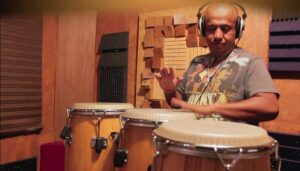
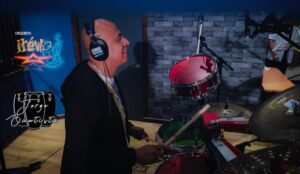
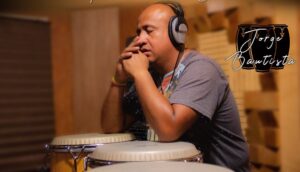
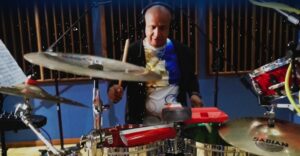
Jorge Bautista, Musical director and percussionist of the Irawo Orchestra

Jorge Bautista is a musician from Mexico City, he began his percussion studies at the age of 5 due to family tradition.

Jorge Bautista
Jorge Bautista and his Congas

The timbal, conga and bongo are the first percussion instruments that he studies empirically until at the age of 15 he studies at the autonomous music school for 5 years and then diversifies his knowledge in percussion from various places in Latin America such as : Colombia, Dominican Republic, Cuba, Peru and Brazil among others as well as in Africa.

Accompaniments Sauce

The experienced percussionist musician Jorge Bautista has performed important musical accompaniments with great exponents of our Afro-Caribbean music such as: Jerry Rivera, Maelo Ruiz, Tito Nieves, Willie González, Alfredito de La Fe, Oscar D`León, Larry Harlow, Ismael Miranda. , Ritchie Ray, Bobby Cruz, Roberto Roena, Oscar Hernández, Alberto Barros, Arturo Ortiz, Arturo Ortiz, Jimmy Bosch, Tito Allen, Viti Ruiz, Ray Sepúlveda, Herman Olivera and among others.

Jorge Bautista
Jorge Bautista

Latin Jazz Accompaniments

Among the stars of Latin Jazz, percussionist Jorge Bautista has performed accompaniments, among them we have: Arturo Sandoval, Ed Calle, Waney Bergeròn, Hector Infanzòn, Ola Onabule, Tlaxcatecalt Latin Jazz, Papo Sánchez, Ofunan, Daniel López, Latin Jazz On, Latin Hot Band, Density 6 and among others.

Other accompaniments

The Mexican multi-instrumentalist has also accompanied great music performers such as: Armando, Manzanero, Susana Zabaleta, Emmanuel, Kalimba, Samo, Víctor García, Carlos Cuevas, Alexander Acha, María León, Lisset, Aleks Syntek, Maria del Sol and Raul D’blasio.

Jorge Bautista and his musical instruments

Due to his great versatility, he has been invited to give clinics in different cities of the Mexican Republic as well as in several countries in the United States, Honduras, Colombia and Guatemala.

Currently the musician is sponsored by several major instrument brands worldwide: Gon Bops, Tama, Sabían, Promark, Remo, Rockears, GR, NND Percusión, and Veerkamp.

National Zalsa Day 2020

North America / Puerto Rico

In April 2000, the third Sunday of March was instituted as the National Zalsa Day under Law #100 of the Senate of Puerto Rico

National Zalsa Day 2020 - Edicion Platino
National Zalsa Day 2020 – Edicion Platino

History

The National Zalsa Day was created in 1984 by Pedro Arroyo, Z-93 Programming Director, who always had the desire to celebrate an event where the talent of popular salsa music, its composers and performers would be recognized, to present it to the great public that loves this tropical genre.

Since its first year, the great event has seized a public eager to enjoy this live music.
The support was total and it immediately positioned itself as the annual concert of the people of Puerto Rico and visitors from other countries.

Since its inception, the National Day of the Zalsa was dedicated to some figure of this genre, as a recognition of their talent and their roots in the public.

  • 1984 – Dedicated in life to the Sonero Mayor, Ismael Rivera
  • 1985 – Rafael Ithier of the Great Combo of Puerto Rico
  • 1986 – Tito Puente and Santitos Colón
  • 1987 – Hector Lavoe
  • 1988 – Andy Montañez and Gilberto Santa Rosa
  • 1989 – Celia Cruz and the Sonora Ponceña
  • 1990 – Willie Colón and Tite Curet Alonso
  • 1991 – Bobby Valentín, Oscar D’ León and the composer Gloria González.
  • 1992 – For the Best 5 Trumpets of Puerto Rico: Elías Lopés, Charlie Sepúlveda, Juancito Torres, Mario Ortiz and Luis “Perico” Ortiz
  • 1993 – Celebration of the Tenth Anniversary of the National Day of the Zalsa, dedicated to the Salsero People 1994 – Ray Barreto and Adalberto Santiago
  • 1995 – “Sunset Duels”
  • 1996 – Dedicated to reunions: Classic Ensemble, Tito Nieves, Luis “Perico” Ortiz and Rafael De Jesús, El Gran Combo; Andy Montañez and Roberto Rohena; Sonora Ponceña with Luigi Texidor and Yolanda Rivera.
  • 1997 – To the salsa town
  • 1998 – Jerry Masucci
  • 1999 – Cheo Feliciano
  • 2000 – Richie Ray and Bobby Cruz
  • 2001 – Eddie Palmieri
  • 2002 – Ruben Blades
  • 2003 – Johnny Pacheco and Roberto Rohena
  • 2004 – Quique Lucca, Papo Lucca and Willie Rosario
  • 2005 – Tommy Olivencia and Roberto Angleró
  • 2006 – Los Hermanos Lebrón and posthumous tribute to Charlie Palmieri, Tito Rodríguez and Ray Barretto
  • 2007 – Ismael Miranda, Ramón Rodríguez, Raphy Leavitt and Sammy Marrero
  • 2008 – Larry Harlow and Manny Oquendo
  • 2009 – Celebration of the release of Tite Curet Alonso’s work on Puerto Rican radio. Dedicated to Louis Garcia.
  • 2010 – Johnny Ortiz. Special recognition to Héctor Maisonave and Ángel Luis Córdova García “Paleco”.
  • 2011 – Elvin Torres from Costa Brava, Luisito Ayala from Puerto Rican Power, Paquito Guzmán, Tito Allen and Luigi Texidor
  • 2012 – Posthumous tribute to Frankie Ruiz. Dedicated to the Zodiac Orchestra and the Latin Corporation.
  • 2013 – Posthumous tribute to Pedro Arroyo, former director of Z-93. Special recognition to Edwin Morales from La Mulenze, Pedro Brul, Pedro Conga from Orquesta Internacional and Cano Estremera.
  • 2014 – El Gran Combo, Joe Rodríguez de La Terríca, Justo Betancourt and Meñique
  • 2015 – Gilberto Santa Rosa receives the first National Zalsa Day Star Award. Dedicated to Sammy “Rolo” González, Mickey Cora, Nacho Sanabria.
  • 2016 – Eddie Palmieri receives the second National Zalsa Day Star Award. Dedicated to Lalo Rodríguez and Tito Rojas.

National Zalsa Day 2020

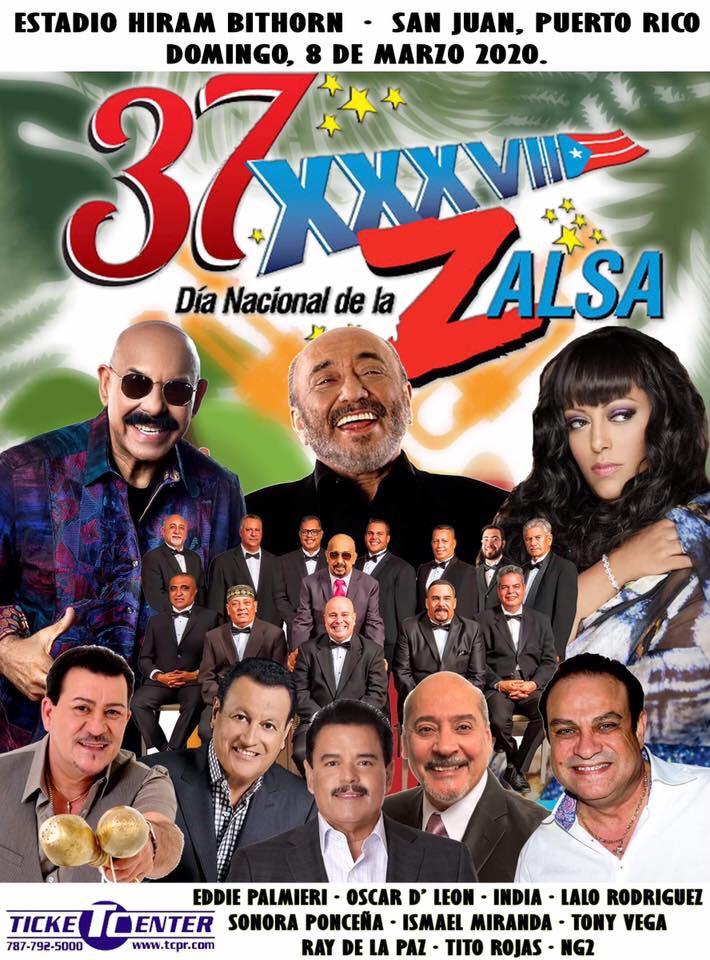
On March 8, the 37th edition of the National Salsa Day will be held at the Hiram Bithorn Stadium, in San Juan, Puerto Rico.

National Zalsa Day 2020 outside

We often hear that salsa in Puerto Rico is not having a good time or that the atmosphere is not what it used to be. However, each time before. However, every time National Salsa Day is announced, everything changes.

Those who live on the island rub their hands to wait for the big moment and those who arrive from abroad begin to check plane tickets and schedule a little vacation.

In 2020 it will not be the exception. The station Z93 announced a tremendous salsa billboard with Eddie Palmieri, Sonora Ponceña, Oscar D’ León, Ismael Miranda, Lalo Rodríguez and India.

In addition, Tony Vega, Ray de la Paz, Tito Rojas and NG2 have been confirmed as part of the great salsa party. This has caused fans on social networks to begin to express themselves with different opinions about the chosen artists.

Perhaps the balance tilts favorably towards the more classic salsa and not so much towards the proposals of the youngest (except NG2), but let’s see how this formula works for Zeta.

National Zalsa Day 2020 37 XXXVII

The Crazy Owl, a popular Puerto Rican radio host, announced that tickets can be purchased on the Ticket Center website (tcpr.com/). So you are already warned.

If you want to give yourself the pleasure of enjoying salsa on the Isla del Encanto itself, this may be your chance.

Flyer of National Zalsa Day 2020
  • V.I.P platinum $225.00
  • Area / V.I.P
  • Open bar / open bar
  • Quick access / Fast Pass
  • Private bathrooms / private bathrooms
  • Official T-shirt / official t-shirt
  • V.I.P arena $75.00
  • Numbered seat / reserved seating
  • Quick access / fast pass
  • Private bathrooms / private bathrooms
  • General admission $15.00
  • Christmas offer only 1000 tickets

For more information:

  • https://zeta93.lamusica.com/
  • https://www.facebook.com/zeta93fm/?ref=page_internal

Hindy & his Orchestra “The Sonera of the Moment”

Latin America / Buenos Aires / Argentina

Hindy Singer of the Latin genre, with a high and extensive artistic career in salsa.

Hindy born in San Félix – Edo. Bolívar, in the south east of Venezuela, in 27 years of artistic career, has enriched her musical career through her different participations as a soloist, chorister, singer-songwriter and producer.

Photo 1: Hindy dancing in a party festival

His beginnings in the Venezuelan salsa music elite are with a first place in the Record Report, at the hands of the international producer César Monges “Albóndiga” interpreting in his production “De Regreso a mi País” the version of the song A Flor de Piel del Venezuelan singer-songwriter Yordano Di Marzo, being in turn the leading voice of the Monges orchestra “Latín Girls” under the representation of Korta Records of the businessman “Negro Mendoza”.

Among some of the national and international celebrities with whom he has participated on different stages are: Cheo Feliciano, Viti Ruiz, Henry Fiol, Roberto Blades, Jr. Gonzáles, Paquito Guzmán, Richie Ray & Bobby Cruz, Gilberto S, Wladimir Lozano, Erick Franchesqui , Paquito Barón, Gustavo Rodríguez, Armando Manzanero, Pancho Céspedes, Gran Combo, S. Ponceña, Hildemaro, etc.

There is a long way to go, if it can be said, in the “short” artistic career of Hindy Castillo. His jump to internationalism was in 2007-08 to Europe, where he participated for two consecutive summers in different popular music orchestras touring more than 30 cities in Spain, and in France.

Photo 2: Hindy dancing in a party festival

His next artistic stop was in the state of Mexico.

Hindy was selected to assemble an international orchestra and travel from Venezuela to do a 3-month tour, which lasted another 13 months, the immediate rapport of all its members was a total success, profiling a true blunderbuss in the salsa environment. Veracruz.

She was also chosen to participate in the 1st Boca del Río salsa festival and, among other presentations, shared the stage with the great composer Armando Manzanero and Pancho Céspedes, extending her presentations to Guatemala City. Later, she travels to the capital, DF, invited by a local producer, who, seduced by her talent, encourages her with her orchestra to perform on different stages of the Aztec capital, capturing the taste of the Mexican music lover and salsa dancer, who turn to her presentations. to appreciate and enjoy his voice and the special talent of the soneo Salsoso.

Hindy musicalizes, produces her first songs and debuts as a singer-songwriter, under the executive production of her representative Carlos Zapata.

They record four songs sprinkled with romanticism, maintaining the bases of “hard” salsa and with novel musical variants.

Flamenco was one of these variants that played an important role in this product since its mixture with salsa resulted in a very genuine and fresh sound, from the pen of select Venezuelan arrangers. Graduated instructor of Popular Singing.

He has developed musical studies of: vocal technique, German singing method in Spain, Latin piano and modern harmony. He is currently doing his Bachelor of Music and Popular Singing at the José Ángel Lamas High School of Music. And preparatory studies of trombone. Caracas.

Photo 3: Hindy dancing in a party festival

As a musical producer, she manages the concepts “MujereSon & Boleros”, a musical of Boleros and sones, the social project Mujeres de la Escena, and her main project “Hindy & su Orquesta”, with a dynamic scene, full of salsa for all tastes, with the majestic quality that characterizes her performances.

Hindy is a talent full of energy, charisma, quality, with a Venezuelan flavor to export.

  • « Go to Previous Page
  • Page 1
  • Interim pages omitted …
  • Page 4
  • Page 5
  • Page 6
  • Page 7
  • Page 8
  • Interim pages omitted …
  • Page 19
  • Go to Next Page »

International Salsa Magazine (ISM) is a monthly publication about Salsa activities around the world, that has been publishing since 2007. It is a world network of volunteers coordinated by ISM Magazine. We are working to strengthen all the events by working together.