• Skip to primary navigation
  • Skip to main content

International Salsa Magazine

  • HOME
  • Previous editions
    • 2026
      • ISM / March 2026
      • ISM / February 2026
      • ISM / January 2026
    • 2025
      • ISM / December 2025
      • ISM / November 2025
      • ISM / October 2025
      • ISM / September 2025
      • ISM / August 2025
      • ISM / July 2025
      • ISM / June 2025
      • ISM / May2025
      • ISM / April 2025
      • ISM / March 2025
      • ISM / February 2025
      • ISM / January 2025
    • 2024
      • ISM / December 2024
      • ISM / November 2024
      • ISM / October 2024
      • ISM / September 2024
      • ISM / August 2024
      • ISM / July 2024
      • ISM / June 2024
      • ISM / May 2024
      • ISM / April 2024
      • ISM / March 2024
      • ISM / February 2024
      • ISM / January 2024
    • 2023
      • ISM / December 2023
      • ISM / November 2023
      • ISM / October 2023
      • ISM – September 2023
      • ISM – August 2023
      • ISM July 2023
      • ISM Edition June 2023
      • ISM – May 2023
      • ISM April 2023
      • ISM March 2023
      • ISM February 2023
      • ISM January 2023
    • 2022
      • ISM December 2022
      • ISM November 2022
      • ISM October 2022
      • ISM September 2022
      • ISM August 2022
      • ISM July 2022
      • ISM June 2022
      • ISM May 2022
      • ISM February 2022
      • ISM January 2022
    • 2021
      • ISM December 2021
      • ISM November 2021
      • ISM October – 2021
      • ISM September 2021
      • ISM August 2021
      • ISM July 2021
      • ISM May 2021
      • ISM April 2021
      • ISM June 2021
      • ISM March 2021
      • ISM February 2021
      • ISM January 2021
    • 2020
      • ISM December 2020
      • ISM November 2020
      • ISM October 2020
      • ISM September 2020
      • ISM August 2020
      • ISM July 2020
      • ISM June 2020
      • ISM May 2020
      • ISM April 2020
      • ISM March 2020
      • ISM February 2020
      • ISM January 2020
    • 2019
      • ISM December 2019
      • ISM November 2019
      • ISM October 2019
      • ISM Septembre 2019
      • ISM August 2019
      • ISM July 2019
      • ISM June 2019
  • Download Salsa App
    • Android
    • Apple
  • Spanish

Search Results for: Bobby Cruz

Renzo Padilla “El Borincaico”

Latin America / Peru / Lima

Renzo Padilla (Renzo Antonio Padilla Reyes) was born in Barrios Altos in Lima, Peru, on July 12, 1979. In search of a better future, in 1993 his parents decided to travel to the city of Buenos Aires.

Renzo Padilla. At the age of 15, Renzo began his career as a backing singer with the “New Band Salsa” Orchestra. His time with this group was brief, because later he would join the Orquesta La Original, made up of Peruvian musicians based in Buenos Aires.

Renzo Padilla
Renzo Padilla
Photo of Renzo Padilla in concert

In the year 2000 he moved to New York City, fulfilling a dream that he thought was impossible. That same year he signed a contract with the Grupo Fuerza Juvenil, he participated for two years in this group that was nominated for the Billboard awards in 2002.

He meets the timbalero Jimmy Delgado and he offered him a project to record, so Renzo resigns from Fuerza Juvenil and decides to record with Delgado, his first single titled Salsa con Dulzura. After this recording he was invited to accompany the most renowned artists in the world of salsa, such as: Frankie Hernández, Cheo Feliciano, Ismael Miranda, Cano Estremera, Ismael Quintana, David Pabón, Roberto Roena, Marvin Santiago, Meñique, Ray Barreto. , Adalberto Santiago, Cuco Valoy, Junior González, Paquito Guzmán, Yolanda Rivera, Luigi Texidor, José Bello, Pedro Conga, Cheo Andujar, Anthony Cruz, Luisito Carrion, Maelo Ruiz, Tito Nieves.

Renzo Padilla in concert
Renzo Padilla
Renzo Padilla

Another of his dreams came true when he met the master Willie Colon, he was invited by him to perform a song by Hector Lavoe, in a New York nightclub. He was also invited by El Gran Combo de Puerto Rico on several occasions.

In 2003, Ray Barreto and Adalberto Santiago met again, in which he participated as a chorister at the prestigious Carnegie Hall in New York.

Renzo Padilla in concert 2
Renzo Padilla on stage

In 2006 with bassist Ray Martínez he recorded his second album Alto Nivel, and recorded two songs with the Narváez Orchestra. In 2008 he sang with Jimmy Delgado at the Leyendas de la Salsa Concert, along with a lineup of artists such as Luis Perico Ortiz, Richie Ray, Bobby Cruz, Lalo Rodríguez and Adalberto Santiago.

Renzo also sang in the second part of the Legends of Salsa Concert in tribute to Ismael Quintana, where Tony Vega, Luis Perico Ortiz, Lalo Rodríguez, Héctor Tricoche performed, among others.

In 2009 he was a soloist with the Lavoe All Stars Orchestra, made up of musicians from Willie Colon and Hector Lavoe, such as Professor Joe Torre, José Mangual, Jimmy Delgado, Eddie Montalvo, Reynaldo Jorge, Milton Cardona.

Renzo Padilla and the orchestra

In 2010 he was called by the New York group “Our Latin Thing”, to share the stage with Victor Manuel.

On the other hand, Renzo began to develop his talent as a composer. One of his compositions Donde Esta Tu Amor was recorded by Puerto Rican singer Maelo Ruiz.

In 2014 he got together with Jacob Plasse to form the Melaza Group, in which all the songs are his. In that same year, he participated in the largest salsa group, the “Fania All Stars”, and also sang for the recording of the Narváez Orchestra’s album 65 Infantería.

In 2015 he participated as a backing vocalist and as a singer in the concerts of the piano emperor Eddie Palmieri.

Renzo Padilla singing in concert

In October 2016 he was part of the Eddie Palmieri Orchestra that traveled to Lima to perform a concert at the National Stadium. He has been a vocalist for Los Hermanos Lebrón.

In 2017 he had a successful tour of different cities in Japan. Currently he continues to sing in Lima and on tour around the world.

Renzo Padilla singing

This talented Peruvian singer is considered one of the promises of salsa. He will continue in his rising career of success and international recognition.

Betty Zapata ¨The Lady of Salsa¨

Latin America / Venezuela / Caracas

In Venezuela, Caracas, the neighborhood is a way of life with its own identity. The neighborhoods of the entire National Territory, its inhabitants, become outstanding characters. Such is the case of Betty Zapata who was born in the emblematic La Pastora Parish located in the Capital (Caracas). There he spends his childhood in a neighborhood of colonial and historical houses of Venezuela.

Betty Zapata ¨The Lady of Salsa¨

There are many memories of that legendary Zone, they are inevitably built by those associated with survival, preparation, development, work, love, struggle and family formation, its magic and what marked it for life… . “Music”.

My connection with music is due in part to the fact that I live in a popular area where the music that was heard was Afro-Caribbean (mostly Salsa), the parties or meetings in my house and the neighborhood were always enlivened by that type of music, the most rooted and sticky collectively, originating the most varied dancers.

In the Carnestolendas festivities, improvised platforms (Templetes) were installed to stage the most varied costume and dance contests. Leaving my childhood and beginning my adolescent stage, I participated in dance competitions, obtaining recognition and prizes that were awarded to the young people of my generation.

I attended festive celebrations (dance meetings) with my older sisters at the age of 12, not because I was a dancer, but to not leave me alone, since I was the youngest of 3 sisters, this allowed me to share with people older than me and which I was learning the different dance styles “remembering with great affection the Cayender family, made up of excellent dancers” they are part of my school and love for dance. My cadence, flavor and body movement also allowed me to learn until I had my own dance style.

The music of the moment was the Danzones, Billo’s, Melodicos and in my house my sisters listened in the 70’s to Joe Cuba, Ricardo Rey and Bobby Cruz, Eddie Palmieri, the Latin Dimension prevails, Grupo Mango, Salsa Mayor, La Banda and his Young Sauce. That stuck with me forever and I felt drawn to Salsa.

That gave me the basis to fully incorporate myself into the exciting world of music. In the Barrio salsa is something essential, if you don’t dance it, enjoy it, feel it, you’re nothing.

Attending a meeting, an event, a concert, a presentation, a party or a meeting and there is no salsa, you feel an emptiness since with it we enjoy, we share, we dance and it definitely puts us to enjoy.

Photo - Betty Zapata ¨The Lady of Salsa¨
Photo – Betty Zapata ¨The Lady of Salsa¨

In the course of my 6 decades of existence, I have not ceased to be linked to it in different facets: as an audience, spectator, guest, contestant, jury, organizer, producer and director of events.

Each of these participations has allowed me to stand out, stand out and be a well-known, popular and loved person, a reference in the organization of a good party, night events, presentations of representative groups of the world of Salsa such as:

Ray de La Paz, Herman Olivera, Frankie Vásquez, Bobbie Valentin, Willie Rosario, Spanish Harlem Orchestra, Sonora Ponceña, La Selecta, Mulenze, Carlos Cano Estremera, Julio López, Yolandita Rivera, Mambo Legends among others, and for those from the Patio: Bailatino, Rumberos del Callejón , Ensamble La Calle, Albondiga y su Pandilla, Repicao, Tributo, On Fire, La áquina de la Salsa, La Negramenta, Gerardo Rosales, Javier Plaza’s Son Risa Orchestra among others.

This has allowed me to be an obligatory reference when it comes to producing and making an event of great importance and musical quality where the Dancing Public is respected and appreciated, providing them with the comforts to enjoy an excellent show and Latin music is seen as an element of identity that belongs to all of us to live it and feel it.

I am (Betty Zapata) currently planning and developing projects in the short, medium and long term and to give you a heads-up I am giving you the scoop: I am here with my radio program to promote, support, disseminate and promote our exciting and magical world of Caribbean music.

Alberto Crespo and his magical muse

Latin America / Venezuela / Caracas

Alberto Crespo, a young pianist, arranger, composer and music producer, from an early age began his studies in Piano and Theory and music theory at the “José Ángel Lamas” music conservatory in the city of Caracas, to later continue his studies in harmony, counterpoint , orchestration and improvisation in different music schools

Alberto Crespo
Alberto Crespo

Since the age of seventeen he has accompanied and toured nationally and internationally with orchestras and artists such as Celia Cruz, Bobby Capo, Carmen Delia Depiní, Ray Barreto, Héctor Lavoe, José Alberto El Canario, Henry Fiol , Ismael Miranda, Mulenze Orchestra, Andy Montañés, Adalberto Santiago, Tito Nieves, La India, Herman Olivera, Frankie Vásquez, José Mangual Jr., Richie Ray and Bobby Cruz, Carlos Cano Estremera, Tito Allen, Pete Conde Rodríguez, Junior Gonzáles, Frankie Vazquez Guatacando.

Photo of Alberto Crespo

He has stood out as a producer, arranger and pianist for national and international artists such as Maikel Stuart Ny. Frankie Morales Former singer of Tito Puente Ny, Dancer Orchestra of Cheo Navarro, Grupo Mango.Grupo Bacheo, Naty y Su Orquesta, Rumberos Del Callejon de Carlitos Padron, José Papo Rivera Ny, Renzo Padilla Ny, Soneros De La Calle, Freddery el Frederyck El Coco II, Wilmer Cobos Cuenta Nueva II and his Orchestra, La Kindness Orchestra, Efrén Avellaneda and his Orchestra, Lisandro Torres and his Orchestra, Mariana La Sonera and his Orchestra, Canelita Medina, Andy Duran and His Latin Jazz, Herman Olivera Ny , Angie Rincón in London, among others.

With more than thirty years of experience in salsa and Latin Jazz, he has integrated the best groups in Venezuela, including the Orquesta Bailatino, Naty y Su Orquesta, Grupo Bacheo, Andy Durán and his Latin Jazz, El Pavo Frank and his orchestra, Orquesta La Renovación, Los Rumberos Del Callejón, Orquesta las Vibraciones, Verónica Rey and Her Orchestra, Salsa Silva and Guerra by Mauricio Silva Musician and, Mariana La Sonera and Her Orchestra, Grupo Mango. Between his tours he has visited countries such as the United States, France, Colombia, Peru, Argentina, Australia, Curaçao, Mexico and Aruba.

Photo - Alberto Crespo
Photo – Alberto Crespo

Alberto Crespo and Bacheo Latin Jazz has two record productions, the first el Chuchu del viejo and the second de África Soy, which will be on sale soon, and they feature musicians with a long career and perform salsa and Latin jazz with a varied repertoire in rhythms such as son, danzón, chachachá, guajira, salsa, etc.

He currently serves as director, arranger, composer of the Salsera Resistance of Venezuela Bailatino and at the same time working hand in hand with musicians of international stature.

Alberto Crespo anh his piano

Great Christmas salsa songs and their stories

Christmas is a time of joy where one of the most important elements is music, so we believe this is the best opportunity to feature some of the best Christmas salsa songs that we can remember. Here are the most cheerful songs in Latin music to listen to during the most beautiful time of the year.

Aires de Navidad by Héctor Lavoe and Willie Colón

”Aires de Navidad” is a great song which is part of the Christmas album ”Asalto Navideño Vol. I” from 1971. In the same year, Lavoe and Colón were already making preparations to record an album entirely dedicated to the festivities, indeed, they already had some songs recorded, but they knew that there were still details to finish. 

Then, Héctor asked musician Roberto García to join the project that was underway, as they needed a guitarist to accompany them. Garcia accepted the proposal almost immediately and got excited about the project that he even proposed Yomo Toro to join them, to which Hector and Willie agreed with no problems.

The day they agreed to record the material, Toro came in first and began playing a Puerto Rican cuatro when he was scheduled to play the electric guitar. However, Johnny Pacheco, upon hearing the sounds, liked the arrangement and approved it without question. 

That is how the four artists set out and recorded what would soon become one of the greatest Christmas hymns in recent times, and it will surely be in thousands of homes around the world this month.

Aires de Navidad
One of the photos taken during the recording of ”Aires de Navidad”

La Fiesta de Pilito by El Gran Combo de Puerto Rico

”La Fiesta de Pilito” is included in the album ”Nuestra Música” by El Gran Combo de Puerto Rico, which was recorded in 1985 as a tribute to the most beautiful and endearing of the Island of Enchantment during the Christmas holidays. Back then, any musical work created by El Gran Combo always became a resounding success once it was released and its members were sure that this would be no exception.  

It is then when the composer of one of the main songs of ”Nuestra Música” came on the scene, and we are talking about Luis ”Pilito” Cruz, who would become part of the internationally acclaimed salsa group that same year.

What is known in the first instance about the song is that it did not have a specific name, so it was baptized as ”La Fiesta de Pilito” honoring the composer of its first two verses. Subsequently, the piece was completed with pregones and soneos created by the rest of the orchestra members.

Additionally, they received the support and collaboration from ‘‘El Caballero de La Salsa” Gilberto Santa Rosa, who served as a guest artist for the legendary recording.

Nuestra música at Christmas
Cover of the Christmas album ”Nuestra Música”

Bembé en Casa de Pinki by Richie Ray and Bobby Cruz

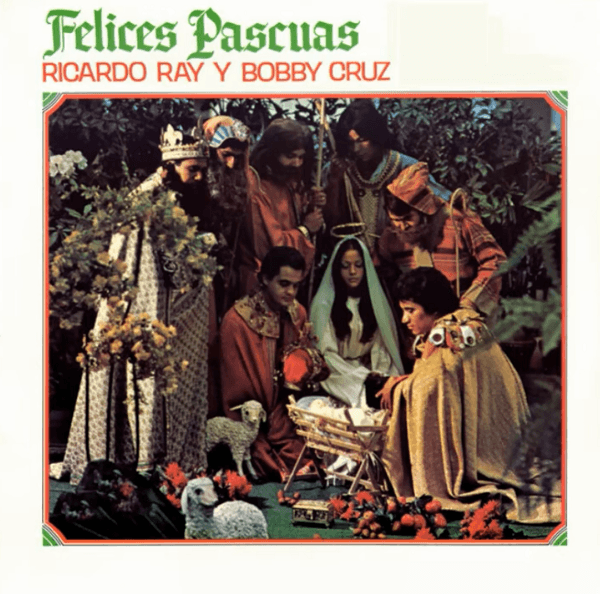
”Bembé En Casa de Pinki” is a Christmas song written by the famous duo Richie Ray and Bobby Cruz, which was released in 1971 and is the first single from the Christmas album ”Felices Pascuas”.

The song’s title comes from someone who would be very important in the career of the two aforementioned artists and that was the Panamanian-born diplomat named José Rogelio ”Pinki” Arias. The gentleman was a close friend of Richie and Bobby and, at the same time, director of the Panamanian Institute of Tourism. He used his friendship with the vocalists to invite them to various events in his country, knowing that they would be a complete success with the presence of the duo.

Such was the affection both exponents had for ”Pinki” that they dedicated to him two songs from their extensive repertoire, which were ”Bembé en Casa de Pinki” and one belonging to the album ”El Diferente”. 

Among other songs, ”Felices Pascuas” also includes tracks such as ”Bomba en Navidad”, ”Mi Niñez”, ”San José”, and ”Aguinaldo Navideño”.

Felices fiestas at Christmas
Cover of the Christmas album ”Felices Fiestas”

Estelita by La Sonora Ponceña

Another group that never misses a chance to offer their talent to please their fans and make them enter the Christmas atmosphere during the holiday season, leaving great classics that can not be missing every year in our homes and one of them is ”Estelita”.

Something that can never be missed in a Christmas album is that colorful character who always brings playfulness and good humor to the atmosphere. In this case, it is Estelita, who is a party neighbor who always sneaks into the Christmas parrandas in her neighborhood, something that many people will surely feel identified with in various parts of Latin America.

The song was written by the late maestro Joe Torres and was part of the album ”Otra Navidad Criolla!” along with ”Opera Gandinga”, ”Vamonos Pa’l Campo”, ”La Vengo Siguiendo”. 

Read also: Luis Guillermo Rangel the great friend of everyone

Tribute to Johnny “Dandy” Rodríguez Jr. His first recording was professionally with Tito Puente in 1964 and was titled “Exciting Rhythm of Tito Puente”

Johnny “Dandy” Rodriguez, (September 11, 1945, United States August 17, 2024) son of Johnny Rodriguez Sr. who was nicknamed “La Vaca”, remembered percussionist who was part of the orchestras of Tito Puente and Tito Rodriguez, among others; as we can deduce, music for Johnny Rodriguez is something clearly hereditary given that as a child he attended his father’s rehearsals and his mother was a dancer.

Johnny Dandy Rodriguez Foto By Miguel Martillo

To get an idea of ​​the musical family, let’s say that Johnny Rodriguez Sr. also took part in performances and recordings with musicians and singers of the stature of: Alfredito Levy, Joe Quijano, Jose Curbelo, Lou Perez Louie Ramirez, Machito, Miguelito Valdes, Noro Morales, Orlando Marin, Pete Terrace, Pupi Campo and Xavier Cugat.

The father’s enormous musical background was emulated in a great way with ample merits by the son.

Dandy Rodriguez grew up in Spanish Harlem in Manhattan, his home was very musical and when he was in high school he learned the details of percussion represented by the bongos, congas, timbales and drums. Influenced by his father he became interested in music and so in 1962 he joined the band of maestro Tito Puente.

His first professional recording was with Tito Puente and was titled Excitante Ritmo De Tito Puente; after this first album with Puente, “Dandy” Rodriguez began to deepen his musical studies listening and learning from leading musicians such as: José Mangual Senior bongosero from Machito, Rogelio “Yeyito” Iglesias bongosero from Cachao and Vitin Palacio bongosero from Johnny Segui.

He worked with the King of Timbales for more than three decades, initially in the sixties, more specifically from 1962 to 1972, then he rejoined Tito Puente’s band at the end of the seventies and was part of it practically until the death of the famous King of Timbales.

In the extensive career of our Johnny Rodriguez in music we must mention his internship with Joe Cuba’s orchestra, with whom “Dandy” Rodriguez himself says he participated in seven or eight albums since the mid-sixties; the first of them titled Joe Cuba Sextette – Comin’ At Yous; without forgetting to mention that in those albums the name of Johnny Rodriguez Jr. does not appear in the credits due to issues related to contracts with record companies.

His stay with Puente was not a limitation for him to be part of other musical groups, so he also worked for several years with another great of Latin music, the remembered Tito Rodríguez. He was also part of the band of the famous conguero Ray Barreto, replacing Tony Fuentes, and was one of the founders of the famous Típica 73 in 1972 and even took part in a couple of albums with Machito.

In the seventies, during the Salsa Boom, “Dandy” Rodriguez left his mark on recordings with: Jose “Cheo” Feliciano, Charlie Palmieri, Roberto Torres, Willie Rosario, Ismael Quintana, Celia Cruz & Johnny Pacheco, Louie Ramirez, Richie Ray & Bobby Cruz, Fania All Stars, Alfredo De La Fe, Conjunto Clásico, Henry Fiol and Tito Allen.

As we mentioned before, John Rodriguez returned to the band of maestro Tito Puente in 1978 and was part of the band until Ernesto Antonio Puente’s death in 2000 at the age of 77; he participated in this cycle in at least twenty musical works apart from a large number of concerts and performances on tours in different countries around the world.

During those two decades with Tito Puente he also worked with other musicians, singers and groups such as: Miguel Quintana, Roberto Torres, Charlie Rodriguez, Tito Allen, Alfredo De La Fe, Azuquita Y Su Melao, Charlie Palmieri, Celia Cruz & Johnny Pacheco, Paquito D’ Rivera, Raulin, The Bronx Horns and Angelo Vaillant.

Luisito Quintero, Johnny Rodriguez y George Delgado

During the first two decades of the new century, the musical work of maestro Johnny Rodriguez continued and his musical mark has remained in other publications with The Latin-Jazz Coalition, Frankie Morales, Eddie Palmieri, Gilberto Santa Rosa, George Delgado, Victor Manuelle, Rick Arroyo, Orestes Vilato, Mitch Frohman, Cita Rodriguez, Doug Beaver, Adalberto Santiago and Jeremy Bosch.

Also, special mention must be made of the participation of maestro Johnny Rodriguez with a group called The Latin Giants Of Jazz, in the best style of the classic Big Bands made up of great teachers, including some of the former members of maestro Tito Puente’s band; with this group they have published four albums; this project gave rise to another band called The Mambo Legends, who recorded the album entitled: Watch Out! Be careful!

John Rodriguez is without a doubt one of the most prolific percussionists in the world of Latin music called Salsa. The nickname “Dandy” dates back to his childhood when the car he was driven in was bought at a store or shop called “Dandy” and people said look how cute “Dandy” is and from there he stuck with that nickname. In music he is better known as Johnny instead of John.

In (the year 2022) the experienced Johnny Rodriguez had three or four groups with which he is playing, including Dandy Rodriguez and his Dream Team, while teaching percussion classes online.

He is one of the true legends of Latin music, not to mention that his talent has also been reflected in recordings for other musical genres such as: Electronic, Folk Rock, Folk, World & Country, Funk / Soul, Heavy Metal, Jazz, Stage & Screen, Jazz-Funk, Merengue and Pop.

Johnny Rodriguez y George Delgado

In his very extensive artistic career, maestro Johnny Rodríguez was part of historic and iconic recordings of our musical culture, some of these albums have been worthy of awards such as the Grammy Award, among which are:

Tribute to Beny Moré – Year 1978

On Broadway – Year 1983

El Rey: Tito Puente & His Latin Ensemble – Year 1984

Mambo Diablo – Year 1985

Goza Mi Timbal – Year 1990

Mambo Birdland – Year 1999

Masterpiece / Obra Maestra Tito Puente & Eddie Palmieri – Year 2000.

“In 2008, Johny entrusted LP’s Research and Development Department with the design of the John “Dandy” Rodriguez Jr. Legends Series bongos. John is proud that these drums, which bear his name, feature such outstanding sound and visual characteristics.”

Johnny Rodriguez’ “Dream Team”

Also Read: Jerry Ferrao says in salsa key: “My life is a drum”

Collaboration: Marino de Jesus (1588) from Salsa History from the Dominican Republic

  • « Go to Previous Page
  • Page 1
  • Page 2
  • Page 3
  • Page 4
  • Page 5
  • Page 6
  • Interim pages omitted …
  • Page 19
  • Go to Next Page »

International Salsa Magazine (ISM) is a monthly publication about Salsa activities around the world, that has been publishing since 2007. It is a world network of volunteers coordinated by ISM Magazine. We are working to strengthen all the events by working together.