• Skip to primary navigation
  • Skip to main content

International Salsa Magazine

  • Home
  • Previous editions
    • 2025
      • ISM / November 2025
      • ISM / October 2025
      • ISM / September 2025
      • ISM / August 2025
      • ISM / July 2025
      • ISM / June 2025
      • ISM / May2025
      • ISM / April 2025
      • ISM / March 2025
      • ISM / February 2025
      • ISM / January 2025
    • 2024
      • ISM / December 2024
      • ISM / November 2024
      • ISM / October 2024
      • ISM / September 2024
      • ISM / August 2024
      • ISM / July 2024
      • ISM / June 2024
      • ISM / May 2024
      • ISM / April 2024
      • ISM / March 2024
      • ISM / February 2024
      • ISM / January 2024
    • 2023
      • ISM / December 2023
      • ISM / November 2023
      • ISM / October 2023
      • ISM – September 2023
      • ISM – August 2023
      • ISM July 2023
      • ISM Edition June 2023
      • ISM – May 2023
      • ISM April 2023
      • ISM March 2023
      • ISM February 2023
      • ISM January 2023
    • 2022
      • ISM December 2022
      • ISM November 2022
      • ISM October 2022
      • ISM September 2022
      • ISM August 2022
      • ISM July 2022
      • ISM June 2022
      • ISM May 2022
      • ISM February 2022
      • ISM January 2022
    • 2021
      • ISM December 2021
      • ISM November 2021
      • ISM October – 2021
      • ISM September 2021
      • ISM August 2021
      • ISM July 2021
      • ISM May 2021
      • ISM April 2021
      • ISM June 2021
      • ISM March 2021
      • ISM February 2021
      • ISM January 2021
    • 2020
      • ISM December 2020
      • ISM November 2020
      • ISM October 2020
      • ISM September 2020
      • ISM August 2020
      • ISM July 2020
      • ISM June 2020
      • ISM May 2020
      • ISM April 2020
      • ISM March 2020
      • ISM February 2020
      • ISM January 2020
    • 2019
      • ISM December 2019
      • ISM November 2019
      • ISM October 2019
      • ISM Septembre 2019
      • ISM August 2019
      • ISM July 2019
      • ISM June 2019
      • ISM May 2019
      • ISM April 2019
      • ISM March 2019
      • ISM February 2019
      • ISM January 2019
    • 2018
      • ISM December 2018
      • ISM November 2018
      • ISM October 2018
      • ISM September 2018
      • ISM August 2018
      • ISM July 2018
      • ISM June 2018
      • ISM May 2018
      • ISM April 2018
      • ISM March 2018
      • ISM February 2018
      • ISM January 2018
    • 2017
      • ISM December 2017
      • ISM November 2017
      • ISM October 2017
      • ISM September 2017
      • ISM August 2017
      • ISM July 2017
      • ISM June 2017
      • ISM May 2017
      • ISM April 2017
  • Download Salsa App
    • Android
    • Apple
  • Spanish

Search Results for: Cali

Bachata Festival 2017 in San Francisco, California

North America / USA / California
Bachata Festival 2017 in San Francisco, California

The Ultimate Bachata, Salsa, Kizomba and Zouk Experience… A Dance Convention for Beginners, Intermediate & for all levels of dancing! The 9th Annual SF International  Bachata Festival

  • Date: JULY 21st – 24th, 2017
  • Bachata | Kizomba | Zouk | Salsa (4-Party Rooms)
  • 3 days and  3 nights of dancing
  • Friday, Saturday & Sunday from 10am until 6am!
Photos from the 2017 Bachata Festival in San Francisco

Transform your dance skills in one weekend with these world renowned dance instructors plus a dance experience of a lifetime!

  • Live Band
  • Dance Workshops from 10am to 5pm
  • Performances Every Night Ÿ Social Dancing until 6am
  • Jack and Jill Contest prize Giveaways

SFIBF, (San Francisco International Bachata Festival) is the largest and hottest Bachata festival in the world, located in one of the greatest city in the world – San Francisco. Created by Rodney Rodchata Aquino, along with its sister event Reno Bachata Festival, they are the first Bachata festivals in the USA. It celebrates the music and dance of Bachata, preserving its roots and accepting its evolution, as well as Salsa, Zouk and Kizomba.

Marriot Flyer
Marriot Flyer

Festival Line-Up

More than 20 instructors, DJs and Live Band for this year’s festival!

Adam Taub (Colorado)/ Bachata:

Adam Taub is one of the few ones who have seriously studied authentic bachata (the way Dominicans dance). SFIBF is extremely proud to present him with his special music, history and dance workshops at the San Francisco International Bachata Festival – July 21-23, 2017.

Adam Taub
Adam Taub

Adam Taub is a documentary film director from Colorado whose films include La Quinceañera, Don Angelo, and El Duque de la Bachata. His film La Quinceañera won the 2007 award for Best Documentary at the Angelus Student Film Festival in Hollywood, California and Best Documentary at the San Diego Latino Film Festival.

Alberto & Nola (Australia) / Bachata:

Nola Komis is the Founder, Director and Principal Instructor of A Touch of Salsa Latin Dance Studios in Sydney, Australia. A Touch of Salsa runs classes in Salsa, Bachata, Zouk and Kizomba. They also offer competition courses, workshops, performance courses and more and will this year will be celebrating 11 years.

Alberto and Nola
Alberto and Nola

Nola Komis and Alberto Torres-Perez have been teaching together for the past five years and they are both passionate and love sharing their passion for dance. Nola and Alberto have both travelled to Athens, Geneva, New Zealand, Hawaii and all over Australia where they have taught workshops at Festivals/Congresses to packed participants and have received many great reviews for their classes.

Nola and Alberto are looking forward to being part of the San Francisco Bachata Festival in July 2017.

Emelie Andagan (Sacramento) / Salsa:

The Yemaya Salsa Dance Company was founded by Emelie Andagan & Heather Wong-Xoquic in October, 2000. Emelie learned to dance salsa after only a few years due to her extensive dance background of over 20 years and many years of experience as a ballet and jazz student, and later a teacher at the Ballet Theatre of Dover Dance Conservatory.

Emelie Andagan
Emelie Andagan

The troupe started as a small group of only four couples that rehearsed twice a week in various garages and practically anywhere with a smooth surface. She owns and manages Yemaya Dance Studio in Sacramento, and is the main director of Yemaya dance Company.

Emelie Andagan
Emelie Andagan

Luis Aguilar (San Francisco) / Salsa:

Luis Aguilar debuted in 2000 with the Salsa Mania Dance Company in San Francisco. Since then, he performed with such giants in the Latin music industry as El Gran Combo de Puerto Rico, the Tito Puente Orquestra, Celia Cruz, Ray Barretto, Jose “El Canario” Alberto, Oscar de Leon, Eddie Palmieri, the Spanish Harlem Orquestra and Sonora Carruseles. In addition to his impressive performance credits, Luis has taken 1st place in many Latin dance competitions and Congresses such as The San Francisco International Salsa Congress and the Bay Area Salsa Dance Competition.

Luis Aguilar
Luis Aguilar

Since joining forces in 2007, Luis and Anya have become the ON 2 WORLD SALSA CHAMPIONS for the second year in a row, along with having become two time undefeated San Francisco Congress Salsa champions in ’09 and ’10, undefeated two time New York Congress champions in ’09, ’10, Puerto Rico Hustle and Salsa champions ’09, and are currently the North American Salsa Champions and two time winners of the NY/NJ salsa open. With their combined backgrounds, Luis and Anya make a dynamic duo that brings a fresh new element to the salsa dance floor.

Benga Da Beatz (Ohio) / Kizomba:

Benga is a Nigeria born international dancing sensation, with backgrounds in several African dances, ballroom dances, American dances, and latin dances. From Waltz to Tango, Makoussa to Kizomba, hip hop to west coast swing, and Irish dance to Bollywood. Benga has intensive dancing experiences all across the globe.

Benga Da Beatz
Benga Da Beatz

An Afro Beats and Afro-cuban solo performer, and a latin dance instructor well known to many now as the Da Beatz. With 26 years of African Dancing and 6 years of professional latin dancing, Benga is teaching and promoting at every Latin events possible with his own vibrant style of Fun Swagness.

Cymeone Mopao (France) / Kizomba:

Cymeone Mopao
Cymeone Mopao

Cymeone Mopao is a well-known kizomba instructor based in Paris. He is one of the first instructors to have taught kizomba in France beginning in 2009. Born into a family of musicians, he was accustomed to lots of music and quickly adapted to the dance lifestyle. As he immersed himself into dance, he became proficient in African style dances such as ndombolo and coupé décalé.

Cymeone Mopao
Cymeone Mopao

When he was 18, he joined a group of dancers called “les coeurs brisés “. From there he became interested in other Afro style dances like Zouk, Kompa and Kizomba. He gave his first Kizomba class in 2009 and became one of the most wanted instructors in international festivals. In 2010, he was the first French instructor to teach Kizomba in the United States (New York).

Bruno & Olga (Los Angeles) / Zouk:

Bruno and Olga started dancing together in November 2015 and have since taught and performed at numerous events around the country from local workshops to large international congresses.}

Bruno & Olga
Bruno & Olga

In 2016 they took second place in the semi-pro division of the Zouk US Open with their now well-known choreography piece “Worth It” and shortly after got featured in the “Fences” movie, that’s currently in production stage. Olga has a rich dance background in classical ballet, modern, contemporary and commercial jazz, as well as hip hop and heels choreographies. She is also an All-Star west coast swing dancer. Bruno is trained in hip hop, salsa, kizomba, tarraxinha, semba, and of course brazilian zouk.

He has been on the social dance scene of his hometown Braga, Portugal since he was 14 years old. Since his move to the US he’s been mainly focusing on zouk and kizomba, training and teaching around the country with his partner, performing in ISDC dance company for a while, and currently codirecting the Zouk team at Ivo Vieira’s Dance company and learning from the best dance professionals in the world.

Sandro (Brazil) / Zouk:

Sandro Soncini is a dancer, choreographer and dance instructor from Florianopolis, Brazil. He has studied and trained in dance for over 10 years. Sandro is experienced in many partner dance styles, and has intensively studied the concepts of body movement driven by his training in tango.

Sandro
Sandro

In 2010 Sandro moved to Argentina to continue to develop his dance skills and education at DNI tango school. Sandro has participated in various congresses and competitions, including BAILA FLORIPA DUO, where in 2012 together with his partner he placed 3rd.

Sandro has taught in zouk throughout Canada, United States and Brazil. Currently Sandro is living in Vancouver, Canada with a focus on promoting zouk in the Pacific North West.

Bachata Festival 2017, Tickets / Passes:

  • Tickets: Full Passes $200.00 Unlimited. (EXP July 15th)
  • Tickets at Doors: $250 Buy Your Passes in mybachatafestival.com

Location: The SF Marriott Hotel 1800 Old Bayshore Hwy, Burlingame, CA 94010 Discounted Nightly rate of $141 a night (you must use the site – www.sfibf.com) Free Shuttle 24 hours a day.


Bachata Festival 2017

De Tierra Caliente founder Bronson Tennis talks about his career and band

There have been many American musicians who have fallen to the charms of Latin music, which is a practically inexhaustible source of genres allowing them to experiment with in many ways. One of them is Bronson Tennis, with whom we have been fortunate to talk about his interesting career and current musical group, De Tierra Caliente.

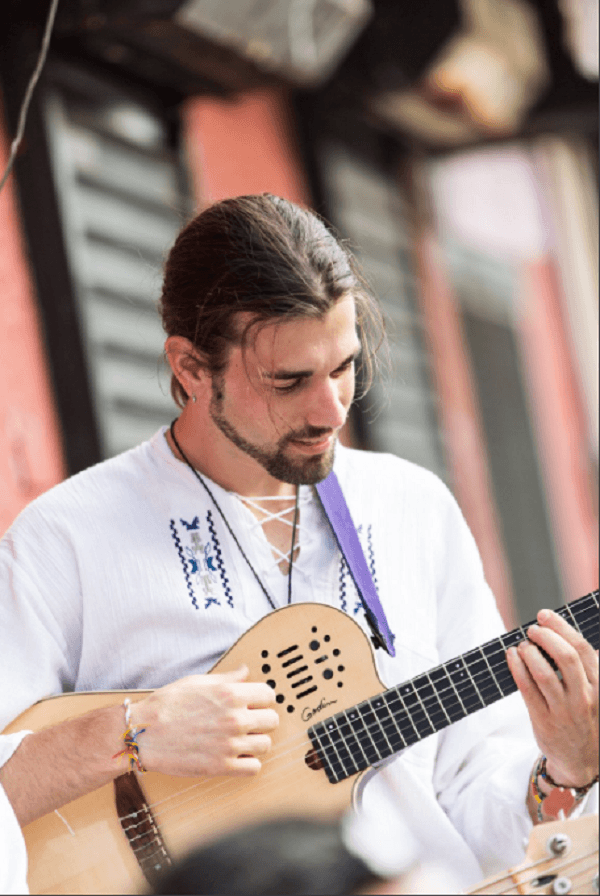
Bronson playing
De Tierra Caliente founder Bronson Tennis playing the guitar

Bronson’s beginnings in music

Bronson Tennis began to put his eyes on music when he was just a child, when he was very attracted to the 1990s alternative rock movement in the United States. When he was only 11 years old, his parents bought him his first bass guitar and later he also wanted to learn to play the guitar and sing.

In family matters, Bronson and his three brothers are musicians and several of his cousins and uncles have also been musicians. In addition, his mother was a fine artist and his grandmother was an art teacher.

Both in school and church, the boy always chased opportunities to sing and show his vocal skills to anyone who wanted to hear. He also took advantage of all these spaces to learn as much as he could about music until he was old enough to exercise it professionally. 

Today, his main instrument is the guitar, although he also plays the cavaquinho (an instrument of Portuguese origin which is widely used in samba) and the roncoco, which is an adaptation of the Andean charango that he uses to play salsa and Cuban son.

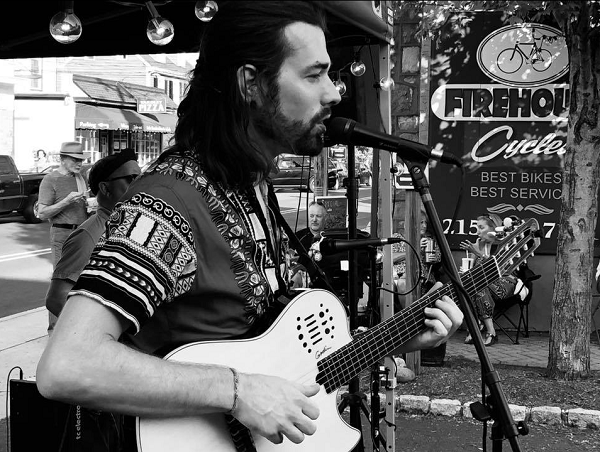
Bronson posing for the camera
Bronson Tennis playing the guitar while posing for the camera

Professional debut in music

Bronson also told us that he began his career path as a bassist and chorister in several musical groups in the city of San Diego between 2006 and 2009. He then spent some time in Philadelphia, where he also played with other bands from a variety of genres.

It is interesting that he lived in Buenos Aires, Argentina, where he also worked as a bassist and singer in some bands. In fact, in that same country, he helped form a Caribbean funk band in which he learned a lot about these genres so foreign to what he played in his childhood and youth. He stayed about four years in Argentina, specifically between 2009 and 2012, until he moved to Brazil for about six months to continue learning more and more about Latin music, but it was not his last stop in South America, as he was also in Colombia for a while more.

Following this, he returned to Philadelphia and decided to form his own orchestra which he named De Tierra Caliente.

Prior to De Tierra Caliente

When Bronson returned to Philadelphia, he had the chance to meet some musicians from the Puerto Rican music scene in that city and saw that they had similar outlooks on music, so they got back in the saddle to prepare a formal project amongst themselves.

The artist assures that it was in Argentina where he learned what it takes to move forward with his band. ”Argentines are people who do everything with strength and confidence, whether in music or in soccer. No matter who or what they have to face, as they take on all the challenges with confidence and that is something we could all learn from Argentina.” Bronson said of his stay in that country.

Bronson and his band
(L to R) Papo Buda, Bronson Tennis, Eubie Nieves, Andy Meyer and Steve Cochran

In Brazil, he studied percussion and learned Portuguese, while Colombia taught him to play salsa, champeta, vallenato and many other genres. In short, each country he has visited gave him tools to facilitate his learning in everything about Latin music in various areas.

Precisely thanks to all this acquired knowledge is that Bronson finally felt able to form his own band in 2014 in union with fellow musicians who understood what he wanted to carry out.

How De Tierra Caliente started

Upon his return to the United States, Bronson was very clear that he wanted to incorporate all those elements learned in South America and the Caribbean, but giving them his own touch. It was then that he met conguero Papo Buda, with whom he agreed on much and began the recruiting process for the rest of the musicians.

After that, Bronson and Papo could add more artists to the group, resulting in a fairly consistent group over time. Since its founding, very few musicians have left the band and Bronson and those who remain have an excellent relationship with all of them despite no longer being band mates.

Among his greatest inspirations, Bronson mentioned many artists and groups of various nationalities and genres such as El Gran Combo de Puerto Rico, the Brazilian composer and singer Paulinho da Viola, the group Caribe Funk and many others.

De Tierra Caliente playing
De Tierra Caliente playing live in Yardley

Read also: Latin jazz and mambo trumpeter Jonathan Powell and his great collaborations

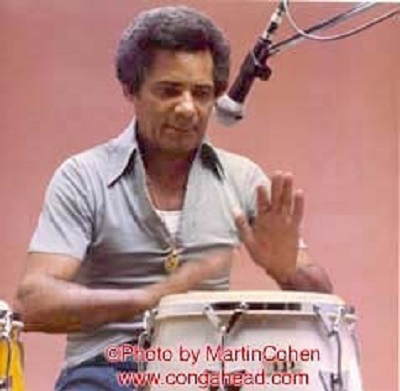
Virgilio Martí was an excellent rumbero and composer of the classic “Cuba Linda” where he was vocalist and percussionist in Grupo Folklorico Experimental Newyorkino

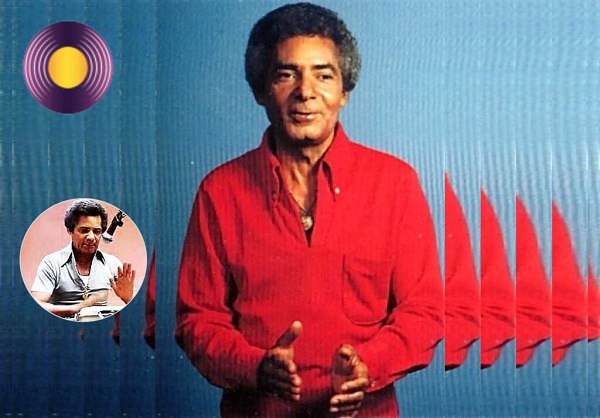
Virgilio Martí, born in 1919 in Havana, Cuba.

Virgilio Marti
Virgilio Marti

Fine Rumbero, Singer, Composer, Arranger, Percussionist, Actor and Orchestra Director well known since the late 40’s, especially as a guaguancó singer.

He began touring the world in 1949 and met his later wife in 1960 in Peru.

That same year, he settled in New York, participating in the local scene. He participated in the LP “Patato y Totico” in 1967, he also participated with his brother Eloy Martí in a Quintet accompanied by Gene Golden for the year 1979.

Israel López (Cachao), Arsenio Rodríguez, Héctor Cadavieco, Francisco Valdés, Papaíto, Tony Mayari and Mario Cadavieco also worked on that album.

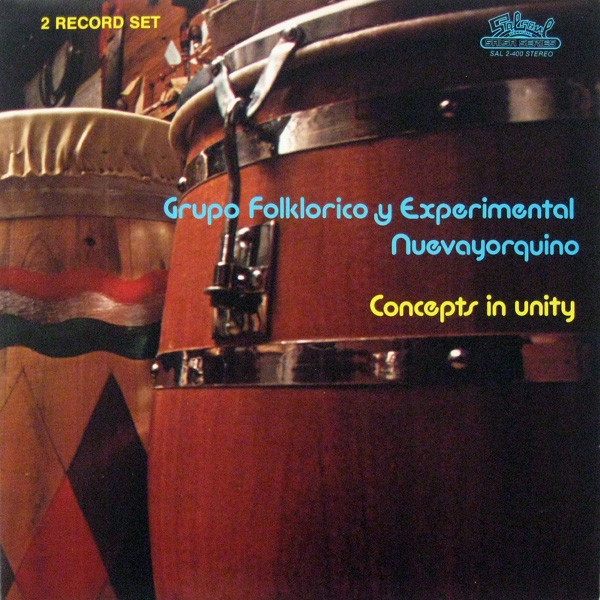
He participated in the “Grupo Folklórico Experimental Newyorkino” where he was their vocalist and percussionist in 1975. During his stay with them, he composed the song “Cuba Linda”.

Another work of Martí of great remembrance is the album titled: “Saludando A Los Rumberos” published by the Caimán label in the early 80’s and in which the Cuban acts as vocalist and main star.

Grupo Folklórico Experimental Newyorkino

In it Martí is involved with talents such as: Tony Cofresí, Andy and Jerry González, Yomo Toro, Paquito Pastor, Ray Romero, Claudio Roditti and Ignacio Berroa, among others.

“Iya Modapue” is in itself a guaguancó with open rumba, being at the same time the favorite number of the ‘Grupo Folklórico’, and even the first groove to be recorded.

The levels of experimentation and the freedom to unload several rhythms in a single musical performance are the factors producing the attraction of the musicians for “Iya Modupue” (which means Thank You Mother).

The vocal part is in the hands of Virgilio Martí. The trumpet of “Chocolate” Armenteros, the trombones of José Rodríguez and Reinaldo Jorge, the flute of Gonzalo Fernández and the percussion of Frankie Rodríguez stand out.

“Se Me Olvidó” a bolero by Lolita de la Colina but adapted in guaguancó to the style of the Grupo Folklórico, which, by the way, turned out to be the piece of greatest radio diffusion in the tropical environment and therefore, the one that would open the doors to the group.

The song was interpreted by Virgilio Martí, who also plays the congas. In “Se Me Olvidó”, the violin of Cuban Alfredo de la Fe, the quinto of Julito Collazo, the street redoblante of Jerry González and a Mexican marimba played by Andy González in counterpoint to the notes of the double bass, also played by Andy, stand out. Here it is worth mentioning that Alfredo de la Fe is a virtuoso violinist and among his many performances, I remember his work with Eddie Palmieri, Larry Harlow (the wonderful Jew), the Fania All-Stars and the avant-garde Típica 73.

In the early 80’s he formed a band with brothers Andy and Jerry González, and percussionist Ignacio Berroa.

It is worth mentioning Virgilio Martí’s 1985 performance in the film by Cuban filmmaker León Ichaso entitled “Crossover Dreams” (Sueños truncados).

In it, the Havana native plays the role of “Cheo Babalú” and vocalizes the song “Llora Timbero”.

In that film production made in New York City, he also participates with actor Rubén Blades, who plays the role of “Rudy Veloz”, where they sing the song “Todos Vuelven”.

In 1990, he contributed to the “Soundtrack” of the movie Azucar Amarga.

He maintained a great skill in converting songs from other genres into rumba arrangements.

We can mention the adaptation of the theme of the Brazilian composer Jorge Ben, “Más Que Nada” in which he appears on the LP with Patato and Totico.

Martí died on October 17, 1995.

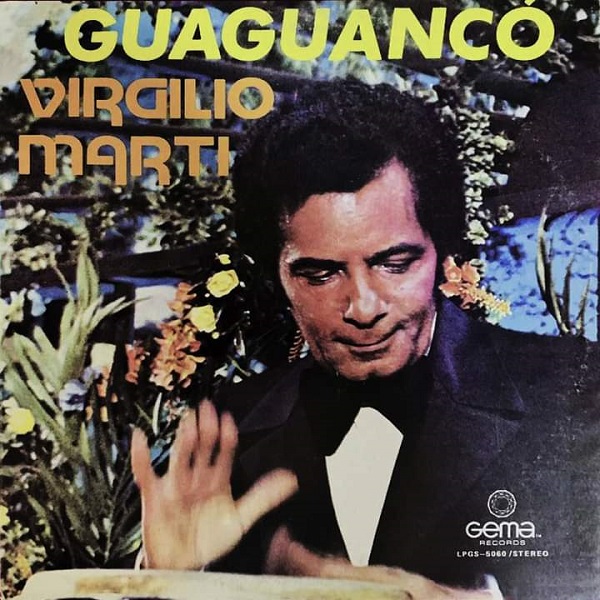
Virgilio Marti – Guaguanco (1979)

Tracks:

  1. Amanecer (Armando Manzanero)
  2. Todos vuelven (Rafael Otero)
  3. A tus pies (D.R.) (Agustin Lara)
  4. My childhood (Laureano Martinez)
  5. Saluting the rumberos (Manolo Albo)
  6. I’m going to divide it (R. Livi)
  7. Acanapon (D.R.)
  8. The little handkerchief (D.R.)
  9. Que susto (Virgilio Marti)
  10. Odiame (Rafael Otero)
Virgilio Marti - Guaguanco (1979)
Virgilio Marti – Guaguanco (1979)

Information realized (June 1, 2024)

Also Read: Carlos “Nene” Quintero comes from a family of musical prodigies

Contributor: Dj. Augusto Felibertt (International Salsa Magazine)

Virgilio Martí participated as aVirgilio Martí participated as a vocalist in the Grupo Folklórico Experimental Newyorkino in which he composed the song “Cuba Linda”

Virgilio Martí, born in the year 1919 Havana, Cuba, Rino Rumbero, Singer, Composer, Arranger, Percussionist, Actor and Orchestra Director, well known since the late 40’s, especially as a guaguancó singer.

He began touring the world in 1949 and met his later wife in 1960 in Peru.

Virgilio Martí participated as a vocalist in the Grupo Folklórico Experimental Newyorkino in which he composed the song "Cuba Linda".
Virgilio Martí participated as a vocalist in the Grupo Folklórico Experimental Newyorkino in which he composed the song “Cuba Linda”.

That same year, he settled in New York, participating in the local scene.

He participated in the LP “Patato y Totico” in 1967, he also participated with his brother Eloy Martí, in a Quintet accompanied by Gene Golden, for the year 1979.

Israel López (Cachao), Arsenio Rodríguez, Héctor Cadavieco, Francisco Valdés, Papaíto, Tony Mayari and Mario Cadavieco also worked on that album.

He participated in the “Grupo Folklórico Experimental Newyorkino”, where he was their vocalist and percussionist, in 1975. During his stay with them, he composed the song “Cuba Linda”.

"Grupo Folklórico Experimental Newyorkino, donde fue vocalista y percusionista del mismo, en 1975
“Grupo Folklórico Experimental Newyorkino, donde fue vocalista y percusionista del mismo, en 1975

Another work of Martí of great remembrance is the album entitled: “Saludando A Los Rumberos”, published by the Caimán label in the early 80’s and in which the Cuban acts as vocalist and main star. In it, Martí is involved with talents such as: Tony Cofresí, Andy and Jerry González, Yomo Toro, Paquito Pastor, Ray Romero, Claudio Roditti and Ignacio Berroa, among others.

Virgilio Martí, born 1919 Havana, Cuba.

“Iya Modapue”, constitutes in itself, a guaguancó with open rumba being at the same time the favorite number of the “Grupo Folklórico”, and even the first groove that was recorded.

The levels of experimentation and the freedom to unload several rhythms in a single musical performance are the factors producing the attraction of the musicians for “Iya Modupue” (which means Thank You Mother).

The vocal part is in the hands of Virgilio Martí. The trumpet of “Chocolate” Armenteros, the trombones of José Rodríguez and Reinaldo Jorge, the flute of Gonzalo Fernández and the percussion of Frankie Rodríguez stand out.

“Se Me Olvidó” – a bolero by Lolita de la Colina – but adapted in guaguancó to the style of the Grupo Folklórico, which, by the way, turned out to be the piece with the greatest radio airplay in the tropical environment and, therefore, the one that would open the doors to the group. The song was performed by Virgilio Martí, who also plays the congas. In “Se Me Olvidó”, the violin of Cuban Alfredo de la Fe, the quinto of Julito Collazo, the street redoblante of Jerry González and a Mexican marimba played by Andy González in counterpoint to the notes of the double bass, also played by Andy, stand out.

Here it is worth mentioning that Alfredo de la Fe is a virtuoso violinist and among his many performances, I remember his work with Eddie Palmieri, Larry Harlow (the wonderful Jew), the Fania All-Stars and the avant-garde Típica 73.

In the early 80’s he formed a band with brothers Andy and Jerry González, and percussionist Ignacio Berroa.

It is worth mentioning Virgilio Martí’s 1985 performance in the film by Cuban filmmaker León Ichaso entitled: “Crossover Dreams” (Sueños truncados). In it, the Havana native plays the role of “Cheo Babalú” and sings the song “Llora Timbero”.

In this film production made in New York City, the actor Rubén Blades, who plays the role of “Rudy Veloz”, also participates. There they sing the song “Todos Vuelven”.

In 1990, he contributed to the “Soundtrack” of the movie Azúcar Amarga.

He maintained a great skill in converting songs from other genres into rumba arrangements. We can mention the adaptation of the song by Brazilian composer Jorge Ben, “Más Que Nada”, which appears on the LP with Patato y Totico. Martí died on October 17, 1995. (Tom Data “Facebook”)

Virgilio Marti - Guaguanco (1979)
Virgilio Marti – Guaguanco (1979)

Virgilio Marti – Guaguanco (1979)

Tracks:

  1. Amanecer (Armando Manzanero)
  2. Todos vuelven (Rafael Otero)
  3. A tus pies (D.R.) (Agustin Lara)
  4. My childhood (Laureano Martinez)
  5. Saluting the rumberos (Manolo Albo)
  6. I’m going to divide it (R. Livi)
  7. Acanapon (D.R.)
  8. The little handkerchief (D.R.)
  9. Que susto (Virgilio Marti)
  10. Odiame (Rafael Otero)

Information realized (June 1, 2024)

Sources:

DiscoGS

Spotify Virgilio Marti

Virgilio Marti Youtube

Also Read: Justo Betancourt Querol Cuban sonero and singer famous for his interpretation of the song “Pa’ bravo yo”

Vocalist of La Moderna Tradición Eduardo Herrera and his fascinating story

This time, we are very pleased to have been able to talk with a talented Venezuelan who has left the name of his country well off thanks to his talent and professionalism. We are talking about bandleader and singer Eduardo Herrera, who was kind enough to speak exclusively to us and give us details on his personal and professional life so that we can get to know a little more about him.    

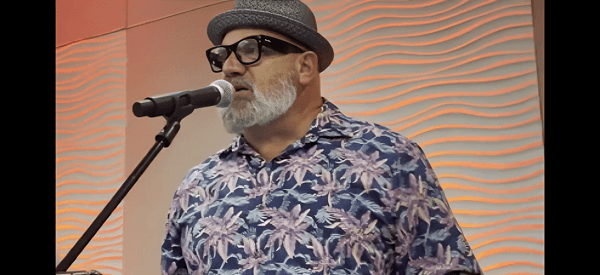
Venezuelan singer Eduardo Herrera
This is vocalist of La Moderna Tradición and Venezuelan singer Eduardo Herrera

How did Eduardo Herrera become interested in music?   

Eduardo comments that his parents always spent their time singing in a very cheerful way since he was a child, so his best childhood memories are with music. 

He grew up in Caracas, so he always had close contact with all kinds of music and listened to a great variety of artists starting with Celia Cruz, La Sonora Matancera, La Billo Caracas Boys, Los Melódicos, Benny Moré, Oscar D’ León, Daniel Santos, Los Adolescentes La Dimensión Latina, La Fania, among others. These artists strongly encouraged him to lean towards salsa in the 1970s.   

In his hometown, he began playing with the Teresa Carreño Chamber Choir, which was his first professional contact with music and, in his own words, was a great school for him during his time there. 

In 1987, being already in the state of California, United States, there was an orchestra called Radiante that played Puerto Rican salsa. Eduardo worked with them for a year until he joined Orquesta Sensual, whose strength was romantic salsa that was fashionable at the time.   

After that, he also worked with Orquesta Charanzón, which at that time was led by Anthony Blea, a famous violinist from the Bay Area. It was with this band that he began to fully discover Cuban music and develop a great passion for it, which would lead him to continue along this path in the following years.    

In those years, he played with an unlimited number of orchestras with which he gained a lot of experience and learned to perform properly on stage. However, his big break came with the Orquesta La Moderna Tradición in 2021, when he was offered to participate with the group in some projects.   

Even so, the latter did not prevent him from working with other groups of this style throughout the San Francisco Bay Area, as he has no problem with playing with anyone who wants to invite him.   

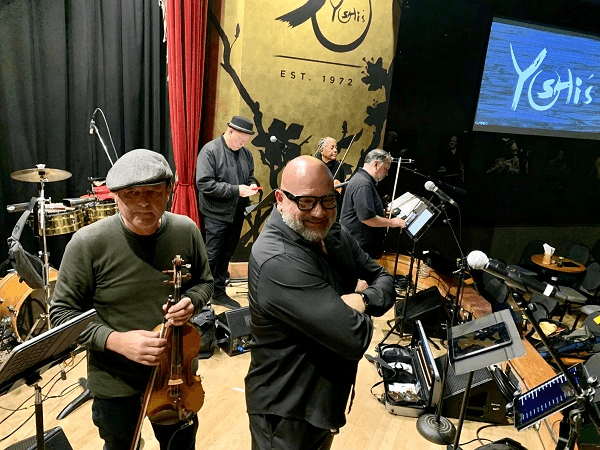
Eduardo Herrera and Tregar Otton
Eduardo Herrera next to director, arranger, composer and violinist Tregar Otton at Yoshi’s

Reasons to leave Venezuela and go to the United States   

Like any other immigrant, Eduardo’s primary reason for leaving his country was the search for new opportunities. Eduardo goes on to explain that he was awarded a scholarship by the famous Gran Mariscal de Ayacucho fellowship programme and managed to obtain his degree in biology in the United States, but unfortunately with the change of government, the things that were promised to him and other fellows such as jobs and revalidations were not kept. As a result, the young man was left in a limbo that made it nearly impossible for him to practice biology.    

With his options reduced to almost zero in Venezuela, Eduardo had no choice but to return to the United States, where he started working as a high school teacher until 2023, when he finally retired from his basic profession. In total, he taught for more than 40 years at the secondary level. During most of this time, he combined his school activities with his second profession, which was music.   

Other areas of music explored by Eduardo 

The singer explained to us that his voice has always been his most important instrument when he gets on stage, but he also confesses to having experimented with hand percussion instruments such as the maracas and the güiro. He pointed out that both are very easy to learn at first glance, but they have their level of complexity once you try them. 

At present, he only uses his voice in the orchestras in which he currently plays.  

Orquesta La Moderna Tradición   

”La Moderna Tradición reached out to me at the beginning to record one of their CDs and I started singing backup and the harmonies, which is how you should always get you started in any group. When you master those areas and have the talent, you may think about being a soloist and that’s exactly what happened with me” Eduardo started saying about the issue. 

La Moderna Tradición’s music was mostly instrumental at that time and they wanted Eduardo for their second album, which would include choirs for the first time, but the group had no singer at that time. In view of the good results offered by the vocalist, he found himself in frequent demand to give voice to other old numbers, but now with a singer.   

Years later, he finally received the proposal to be part of the orchestra as such, together with Ramón ”Monchi” Estévez on vocal. Already for the third album, all the songs had a singer, who was Eduardo most of the time. 

From then on, the artist has continued to be part of La Moderna Tradición with some interruptions because he moved from the Bay Area to the Central Valley in Manteca, which made it more complex for him to play with the orchestra on weekday evenings. 

At the same time, he worked with the group Vissión Latina, Carlos Caro’s orchestra or any other that invited him to play on weekends, which were on his days off. 

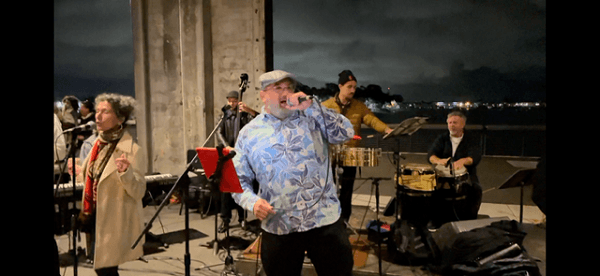
Eduardo Herrera performing
Eduardo Herrera performing live

What Eduardo has learned from La Moderna Tradición and other artists he has played with 

The most important things Eduardo says he has learned from the great artists he has played with are the study, humility, knowing your limits and the development of the love of music. He says the latter is fundamental, because if you do not love music, you will not do the job right.   

”With music, you sacrifice your time and the pay you receive in return does not always go according to what you do, but it is something you’re supposed to do for the love you have for the craft. If you do not love what you do, you will hardly do it well and use your skills in it” said Eduardo. He added that ”you are an eternal student and you never know everything about everything. There is always something to learn from other singers and seeing any of them on stage is an opportunity to emulate what they do as long as it is useful for your career. 

He also said that ”the ego of many artists is a really depressing thing because it prevents them from moving forward and takes their focus away from what is really important, which is the love of the genre and the opportunity to learn as much as you can”.  

Complex moments for Eduardo personally and professionally  

Eduardo mentioned to us that one of the hardest moments for him personally and professionally was his move outside of the Bay Area, which we had already talked about. Being so far away from the area where he did most of his performances was a blow to him, as he had to be near his wife and children.   

Eduardo was very late from work and his wife had a job which made her to leave home for several days, so it was up to him to stay with the children during all that time. For the artist, his family comes first every time and no job or hobby goes above that. 

His responsibilities with his children let him to distance himself from music little by little, since not being always available to play, orchestras would look for other singers to replace him. This made his opportunities to sing to be reduced, but Eduardo assures that the sacrifice has been worth it, as quality time with his children is the most main thing for him. 

Eduardo’s plans to create his own orchestra  

Eduardo was able to conduct an orchestra for a few months, which allowed him to see what the work of a director would be like and the truth is that he did not like it. ”During the time that I was conducting an orchestra, I could see I don’t have the right personality for it. I’m not good for working with adults who are irresponsible and many musicians tend to be late for the engagements and not to take this profession very seriously. I’m a very perfectionist person who has very high standards and I don’t expect anyone to work less than me, so I know it would be torturous for me to have a responsibility of that magnitude,” Eduardo said. 

He says that being a bandleader is far beyond what he wants to do with music and that he wanted to keep developing as a singer. In addition to this, going back to the family issue, such a position would have forced him to be away from his family again and that was something he was not willing to do. 

He also took into account the little stability offered by music as a profession. His work as a biology teacher was much more stable and allowed him to have secure income without having to worry about the bad times of orchestras. He loves music to a fault, but does not like uncertainty and insecurity.  

Eduardo Herrera and Maru
Eduardo Herrera performing with Maru Pérez-Viana, La oderna Tradición manager and chorister

Other groups  

In addition to playing with La Moderna Tradición, he also works with a Cuban group called Pellejo Seco, with which he recorded an album that is currently being remastered in Cuba. The material was recorded just before September in California, but will soon be released to the public. 

Eduardo works directly with Ivan Camblor, director of the orchestra and professional tres player. In this part of the conversation, the artist was very complimentary about Camblor and highlighted his great potential as a bandleader and musician. 

Something he likes about Pellejo Seco is that his main genre is Cuban son and it focuses a lot on very rural and traditional Cuban rhythms, so he can explore other elements different from what he does with La Moderna Tradición. They are very different groups with different genres and different characteristics. 

Read also: Nicaraguan singer and guitarist Yelba Heaton in an exclusive interview 

  • Page 1
  • Page 2
  • Page 3
  • Interim pages omitted …
  • Page 131
  • Go to Next Page »

International Salsa Magazine (ISM) is a monthly publication about Salsa activities around the world, that has been publishing since 2007. It is a world network of volunteers coordinated by ISM Magazine. We are working to strengthen all the events by working together.