• Skip to primary navigation
  • Skip to main content

International Salsa Magazine

  • Home
  • Previous editions
    • 2026
      • ISM / January 2026
      • ISM / February 2026
    • 2025
      • ISM / December 2025
      • ISM / November 2025
      • ISM / October 2025
      • ISM / September 2025
      • ISM / August 2025
      • ISM / July 2025
      • ISM / June 2025
      • ISM / May2025
      • ISM / April 2025
      • ISM / March 2025
      • ISM / February 2025
      • ISM / January 2025
    • 2024
      • ISM / December 2024
      • ISM / November 2024
      • ISM / October 2024
      • ISM / September 2024
      • ISM / August 2024
      • ISM / July 2024
      • ISM / June 2024
      • ISM / May 2024
      • ISM / April 2024
      • ISM / March 2024
      • ISM / February 2024
      • ISM / January 2024
    • 2023
      • ISM / December 2023
      • ISM / November 2023
      • ISM / October 2023
      • ISM – September 2023
      • ISM – August 2023
      • ISM July 2023
      • ISM Edition June 2023
      • ISM – May 2023
      • ISM April 2023
      • ISM March 2023
      • ISM February 2023
      • ISM January 2023
    • 2022
      • ISM December 2022
      • ISM November 2022
      • ISM October 2022
      • ISM September 2022
      • ISM August 2022
      • ISM July 2022
      • ISM June 2022
      • ISM May 2022
      • ISM February 2022
      • ISM January 2022
    • 2021
      • ISM December 2021
      • ISM November 2021
      • ISM October – 2021
      • ISM September 2021
      • ISM August 2021
      • ISM July 2021
      • ISM May 2021
      • ISM April 2021
      • ISM June 2021
      • ISM March 2021
      • ISM February 2021
      • ISM January 2021
    • 2020
      • ISM December 2020
      • ISM November 2020
      • ISM October 2020
      • ISM September 2020
      • ISM August 2020
      • ISM July 2020
      • ISM June 2020
      • ISM May 2020
      • ISM April 2020
      • ISM March 2020
      • ISM February 2020
      • ISM January 2020
    • 2019
      • ISM December 2019
      • ISM November 2019
      • ISM October 2019
      • ISM Septembre 2019
      • ISM August 2019
      • ISM July 2019
      • ISM June 2019
      • ISM May 2019
      • ISM April 2019
      • ISM March 2019
      • ISM February 2019
      • ISM January 2019
    • 2018
      • ISM December 2018
      • ISM November 2018
      • ISM October 2018
      • ISM September 2018
      • ISM August 2018
      • ISM July 2018
      • ISM June 2018
      • ISM May 2018
      • ISM April 2018
      • ISM March 2018
      • ISM February 2018
      • ISM January 2018
    • 2017
      • ISM December 2017
      • ISM November 2017
      • ISM October 2017
      • ISM September 2017
      • ISM August 2017
      • ISM July 2017
      • ISM June 2017
      • ISM May 2017
      • ISM April 2017
      • ISM March 2017
      • ISM February 2017
  • Download Salsa App
    • Android
    • Apple
  • Spanish

Search Results for: Charanga

Maite Hontele in Concert!

Latin America / Venezuela / Caracas

A great musician is someone who can enlighten the stage only with his/her presence, this is the case when Maite Hontele is on stage. Full-house, the stage full of colors and all the audience is ready to dance and enjoy the best rhythm: SALSA!

Maite Hontele singing

International Salsa Magazine had the honor to be part of the last concert of Maite Hontele, the incredible dutch trumpeter, in Caracas, Venezuela.

The silence is interrupted with the beautiful sound of a characteristic trumpet playing a melody, the stage gets full of musicians and Maite comes out with the biggest smile that characterize her.

She starts with a speech where she explains how thankful she is for being there, talks a little bit about Colombia, and then the party starts! Two hours full of hits of herself, Oscar d’ Leon, and many other artists, with the performance of her Colombian band by her side.

But let’s get deeper in who is her. Maite Hontelé is a trumpeter who was born in Utrecht, Holland, and was raised with music. Her parents owned a huge collection of salsa and son Cubano, and every day she would listen to Latin music, quite unusual for a Dutch girl. After playing a few years with the local brass band, she decided to become a musician, and studied latin and jazz trumpet at the Conservatory of Rotterdam.

Maite Hontele
Maite Hontele

Her first big tour was life-changing. She went to Colombia, the country where she now lives. In 2004, Maite Hontelé toured with the world-famous Buena Vista Social Club. In 2009 Maite launched her first album, Llegó la Mona, a salsa-tribute to Colombian music. This album was made with the purpose to tour more in Colombia. Among the gigs she played was the Medellin Jazz Festival.

That year has been very important for her. Not only did Maite record her first album, she also found the place where she wanted to continue to live and make music. That’s when she decided to move to Medellin, Colombia.

In 2010, she released her second production, Mujer Sonora. The album is focused on oldschool styles such as son and charanga, but also contains some spicy salsa-tracks.

Maite Hontele photo
Maite Hontele photo

This album was presented at the 2010 North Sea Jazz Festival, and on various international tours. In 2011 and 2012 Maite toured many countries with her band, and was a guest with Ruben Blades, Yuri Buenaventura, Issac Delgado, Diego Galé (DVD-recording), Juan Carlos Coronel, Oscar D’León, and many others.

Her 3rd album, Déjame Asi, was released in April 2013. She is currently touring Europe and Latin America.

“My Outlaw Loredo is the most elegant gig-bag in the universe. A perfect match for me!” Maite Hontelé

The show ends with the best energy. Maite is not only an amazing trumpeter, but also a great singer and composer. We are glad to be part of his musical journey.

Maite Hontele playing the trumpet

Bonrinquen Orchestra “Pa’ Que Tú Lo Sepas”

West– California- Bay area

Borinquen Orchestra with more than 20 years of tradition in the salsa music market in the east part of the Bay area in California, launched their latest album “Pa’ Que Tú Lo Sepas” to the national and international level at the end of 2017.

This Album (Bonrinquen Orchestra) contains 10 tracks with seven unpublished singles, with which Borinquen shows the maturity in their sound. Likewise, the band has new members, invited artists and the best renowned arrangers of New York, Miami, the Bay Area of San Francisco and Puerto Rico.

Borinquen Orchestra - 2018
Borinquen Orchestra – 2018

Fans can now enjoy this CD, after 10 years of waiting, since the success of their debut album “Trombonist” in 2007. “Pa ‘Que Tú Lo Sepas” presents the most exquisite cocktail Salsero with the most varied styles of US and Latin American.

This recording with duration of 5 years of production and postproduction achieves the goal of telling through their songs, life experiences and stories that include a contribution to the culture of the national Salsa, thanks to its unique sound and the pen of the composers and members of the orchestra: Marco Montoya and Carlos Xavier Soto.

1- Borinquen Orchestra

The single “Cha Cha Borinquen 415” is a tale of two songs wrapped in one with an introduction of Cha Cha with a Hard Salsa explosion and the incorporation of percussion solos of the highest energy. The Cuban timba is present in “Carolina” and the Puerto Rican style of Salsa from the old school in “Yo Tengo Una”. In the seventh track you can enjoy the voice of the special guest, Willy Torres (leading vocalist of Spanish Harlem Orchestra) in “La Culebra”, a song with the purest New York style.

“Americano Latino” and “Nosotros” contribute to the album the characteristic sound of the timeless Salsa. The modern Salsa with a touch of pop element is represented by “Ay Negra”, which adds a touch of freshness to the record production. Finally, one of the most important covers in this CD is “Never Knew I Needed” (Salsa version), it is versioned with the mix of both languages: Spanish – English, which gives an inclusive, modern and versatile touch to the song original R&B written by the singer and composer Ne-Yo and is dedicated to the audience that also enjoys this tropical music in the Anglo-Saxon language.

Borinquen Orchestra - Pa' Que Tu Lo Sepas
Borinquen Orchestra – Pa’ Que Tu Lo Sepas

This orchestra of young musicians, and led in principle by Bill Ortega Sr (until 2016), is an entirely familiar musical project where each member had shared with each other previously in other groups, which made the perfect combination of talent and personality that characterizes it nowadays and turns it into “a very polished Salsa band”. Commented Marcos Montoya.

Orquesta Borinquen, named after the Puerto Rican mother of the group’s current leader, Bill Ortega Jr, continues to celebrate the success of “Pa ‘Que Tú Lo Sepas”, their second album and the beginning of many triumphs to come, thanks to their efforts, dedication and perseverance.

Currently, Borinquen keeps on promoting and booking shows throughout California, mainly in the San Francisco Bay area, San Jose, Santa Rosa and Los Angeles.

Borinquen Orchestra
Borinquen Orchestra

 “We still believe there is more growth to come as our musical skills continue to mature and our sound continuing to be defined, while we keep playing together as a group for many years to come”. Marcos Montoya

Members: Special Guests:
Bill Ortega Jr (24 years ancient) Band Leader- Trumpet- Percussion & Vocal Willy Torres–Vocalist (SHO)
Carlos Xavier Soto  (14 years ancient) Lead vocal & Songwriter Carlos Rivas-Guitar/requinto
Marco Montoya  (15 years ancient) Piano- Songwriter & Studio Engineer Ernesto Mazar- Bass (Charanga Habanera)
Gilbert Roman (10 years ancient) Bass Christian Pepin- Percussion
Aaron Routtenberg (10 years ancient) Timbales- Percussion & Vocal Julio Perez- Percussion
Sean Zuniga (4 years ancient) Congas Karl Perazzo- Percussion
Eric Mendez (15 years ancient) Congas Miguel Melgoza-Percussion
Ricky Gomez (15 years ancient) Bongos Jamie Dubberly-Trombone
Freddy Martinez (20 years ancient) Tenor Sax & Vocal Charly Aguilar-Trombone
Joe Camacho (13 years ancient) Tenor Sax- Bari Sax & Vocal Jimmy Flores-Guiro

Efrain “Junito” Davila-Keyboard player

Pa Que Tu lo Sepas - Borinquen Orchestra
Pa Que Tu lo Sepas – Borinquen Orchestra

Arrangers: Efraín “Junito” Dávila, Ramón Sánchez, Andy Guzmán, Willie Ruiz, Willy Torres and the West Coast arranger, Erick Peralta.

“Pa’ Que Tú lo sepas” can be downloaded NOW in all digital music platforms.

For more information, please visit www.orquestaborinquen.com

Or Listen to their playlist HERE → https://www.youtube.com/playlist?list=PL_YT648PIT3ysdVk7nN-CajuQRLvJZgYj

The Bolivian charango with Spanish roots

There are many instruments that have greatly contributed to make Latin music and its great exponents known worldwide, but unfortunately they are not very popular and the general public is unable to identify them. Such is the case of the charango, which we will talk about in this opportunity.   

The charango can be defined as a stringed instrument that is part of the lute family and has its origin in the South American Andean region. It is believed that it began to gain popularity during the Viceroyalty of Peru. It has approximately five pairs of strings, but there are some models that have a greater or lesser number of strings.   

Here is more information and interesting facts about the charango and its history.   

Federico playing the charango
Peruvian charanguista Federico Tarazona playing the charango

How the charango is created in the first place    

Although it was not possible to determine exactly when the charango began to be played, it was found that it existed from the 17th century and was inspired by the Canarian timple (a stringed instrument from the Canary Islands that has five strings).   

The Canarian timple was always very present in the so-called ”Spanish charangas”, which were a type of parades or comparsas that took place in the street. This is the origin of the name ”charango” with which it would be called from now on.   

How the charango began to become popular   

Previously, it was an instrument used exclusively by the more rural classes of the time and was closely related to the indigenous population. However, since the 1950s, this situation began to change and the charango started to be heard in more urban areas, which led residents of such places to participate in concerts and folkloric activities for all audiences.   

the one responsible for this was Bolivian-born musician and luthier Mauro Núñez, who in 1944 began to use the charango to disseminate folk music and peduce new charango models in order to popularize it even more. This led many other musicians to find their own musical styles with the instrument, which brought the charango to concert halls and theaters all over Bolivia.   

A few years later, the charango arrived in Ecuador, but in the 1960s, it reached Argentina and some European countries. During those same years, several artists from Bolivia, Peru and Argentina began to tour the world and, as a result, ended up taking the charango to the rest of Europe, the United States and Japan.    

In 1973, Bolivian charanguista and composer William Ernesto Centellas took the initiative to create la Sociedad Boliviana de Charango with the support of charanguista Abdón Caméo and singer-songwriter Ernesto Cavour Aramayo. This society organizes the Congreso Nacional de Charango and the Encuentro Internacional de Charanguistas every two years.   

Nowadays, everyone accepts the idea that the home city of the charango is the city of Potosí and, due to the way its later diffusion went, the town of Aiquile was very important for the instrument to the point that today it is known as the ”Capital of the Charango”.  

A Youtuber playing the charango
A Youtuber teaching how to play a charango

How is the charango and how is it played? 

The charango is shaped like the guitar, although it tends to be slightly smaller. Likewise, its sound box has a smaller size and the neck is much shorter. Among the most common sizes, we can mention 50cm, 60cm and 75cm. Generally, it has five pairs of strings, but there are some Peruvian models that may have four strings, two at eaither end and a double string in the middle. 

The way in which the charango is tuned varies depending on the area and the musician’s preferences, but the most common tuning is natural temple. Just like the guitar, the charango also has the third-order strings octaved between them.   

As for the way the charango should be played, the techniques most used by the charanguistas are the rasgueos, the repiques and the tremolo. In talking about the most popular rhythms, we cannot fail to mention the Huayno, the Carnaval, the Cuenca, among others.    

Playing the charango can be quite a challenge for beginning musicians, but with enough effort and dedication, incredible results can be achieved even for the most inexperienced. 

Read also: Yes, I speak the ancient African Lucumi toungue: The second language of salsa 

The Dudamel | Father and son

Latin America / Venezuela / Caracas

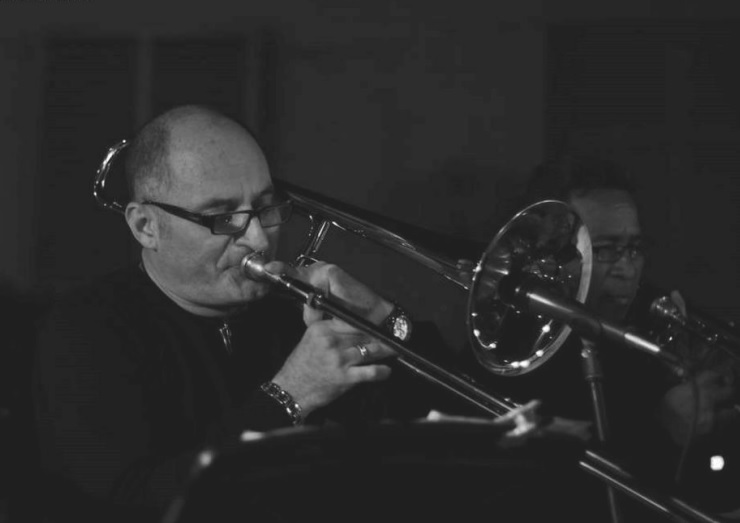
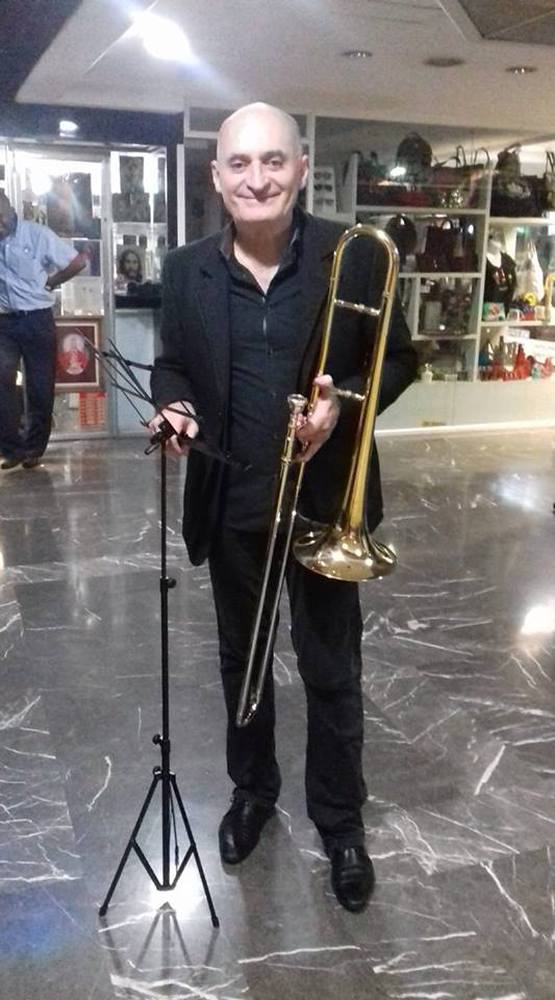
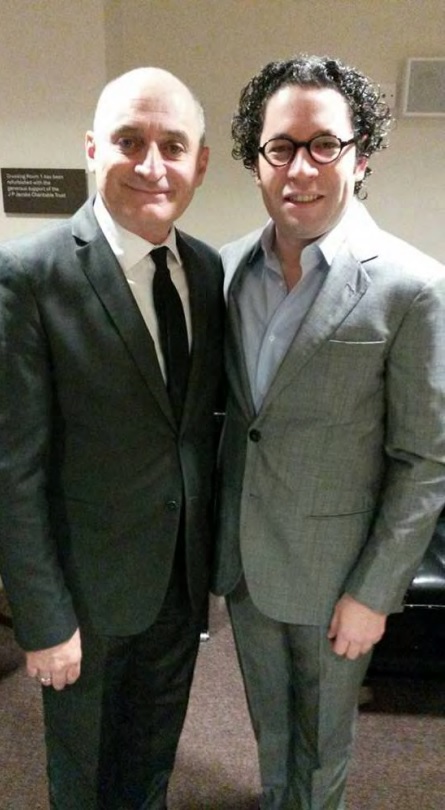
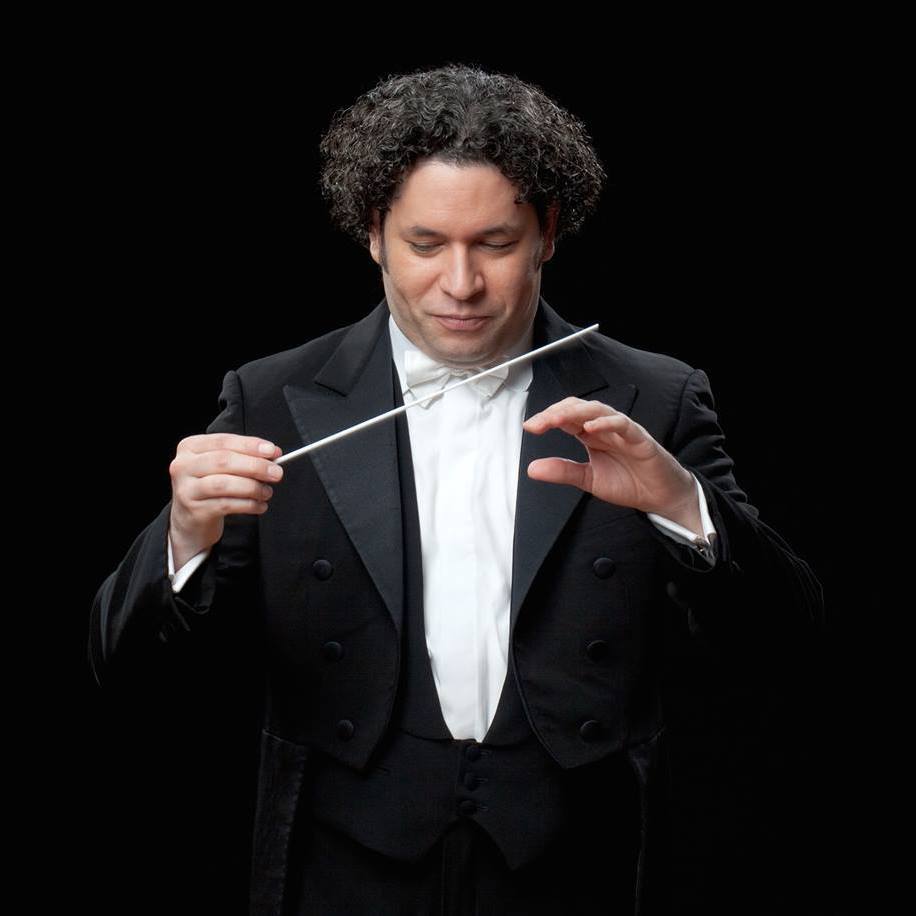
Oscar Dudamel, the father of Gustavo Dudamel, director of the Los Angeles Philharmonic Orchestra and the Simón Bolívar Orchestra of Venezuela, has been a musician for many years. Every Friday and Saturday, he receives applause from the public in the place where he plays the trombone since a small stage with “La Otra Banda de Dudamel” the Agraz ensemble, a salsa group whose main course is the songs of the duo made famous by Héctor Lavoe and Willie Colón.

Dudamel Padre e Hijo
Dudamel Father and Son

On Sundays, Oscar Dudamel has to be on the other shore and applaud standing up, as parents do, swollen with pride at the talent of their son who, with baton in hand, conducts a world-renowned Symphony Orchestra and if he think about it, his musical vein germinated from the brass bands of charanga, salsa and guaguancó.

After 10 at night it is difficult to find a place in “The Temple of Salsa”, the tickets are not sold out, but the tables and the best stalls of this place located on 7th Street that crosses Bolivar Avenue in Maracay, there fanatics and amateur dancers meet. of salsa and logically admirers of Héctor Lavoe and Willie Colón

Oscar Dudamel on the trombone is accompanied by Charly Guzmán, a talented young man who, at just 18 years old, shows the gifts of his voice; Oswaldo Agraz (musical director, piano and backing vocals), Gerardo Vargas (bass), Vicente Guzmán (timbale), Júnior Narváez (bongo), Diego Camus (conga and backing vocals), Ventura Prieto (trombone) and Johan Figueroa (alternate trombone). It is about the same format, instruments and identical distribution (the trombones next to the vocalist) of the orchestra that captivated him.

Dudamel father playing trumpet

And it is that music often also enters through the eyes, as Oscar Dudamel says, who knew he wanted to be a trombonist when he saw Willie Colón at La Feria de la Alegría holding his instrument while puffing out his cheeks, in that In this way, it is known that the first approach of the today brilliant, young and valued Orchestra Director Gustavo Dudamel to music, was not appreciating the Tchaikovsky that he likes to conduct so much, on the contrary, it was appreciating the music that came out of the trombone of his beloved dad.

The previous June, Oscar paid homage to Hector Lavoe as usual, for commemorating years of his death. “Héctor Lavoe died on Monday, June 29, 1993 at 11:45 in the morning”, an event that he remembers with the accuracy that sad events mark, but despite the pain, with satisfaction and pride, he mentions that his son Gustavo de Only 29 years old, before entering the stage he repeats a special ritual: “Before entering New York to direct, someone asked Gustavo: ‘“Master, what are you listening to? Tchaikovsky? and Gustavo replied: ‘No, Tito Rodríguez because he gives me swing'”.

If someone were to say that Gustavo Dudamel owes a debt to Willie Colón and Héctor Lavoe for his vocation as a musician, he would not be wrong, or acknowledge his father, who has often referred that his son’s versatility is due to the fact that he always listened to popular and classical music. . “I listened to more salsa than Beethoven, that’s why it has so much rhythm,” he says with a laugh.

Dudamel Padre
Dudamel Father

“I am his number one fan. He fulfilled the goals that I, due to various circumstances, could not fulfill, he made the dream that I wanted come true. He has reached where I would have liked”, reveals the father, who sees in his son an extension of his, “ .

In a life marked by music, a soundtrack for falling in love could not be missing. It was during the visit of El Gran Combo de Puerto Rico to Barquisimeto in the late 1970s that Oscar noticed Solange Ramírez, his wife and Gustavo’s mother; Today, 30 years later, when Falsaria sounds in Maracay, the song leads him to remember that indelible moment.

Gustavo Adolfo, as his mother calls him, began playing the güiro before he was four years old; later he would build his own battery out of biscuit tins and safety helmets.

Dudamel Padre e Hijo photo
Dudamel Father and Son photo

Gustavo received his first knowledge of music from his father, who was then a trombonist with the Lara Symphony, who had plenty of passion to play and lacked patience to teach. He wanted to be a trombonist, like his father, but his small arm could not reach the instrument.

“I imagined that Gustavo was going to be a musician,” he says. “I told him: ‘You have to be the best or among the best and never lose your principles or forget where we come from.'”

At the age of seven Gustavo played the timpani with La Banda Actual and at the age of nine he arranged for this salsa orchestra in which Oscar played for 16 years and with which he met again after many years.

Gustavo Dudamel
Gustavo Dudamel

Gustavo decided on the violin, an instrument that adjusted to his size, and at home, father and son had the habit of studying while walking. There were times when one would bend down for the other to pass, so that the slide of the trombone and the bow of the violin would not trip over each other. However, popular music and academic music finally made their own meeting.

Oscar does not shake his hair, but he inflates his lungs with force and from that mouth-to-mouth breathing with his instrument, he manages to get the best out of it…. The father speaks of his salsa orchestra with the same pride that the son (Gustavo) does of his classical musicians.

Anacaona Orchestra

Latin America / Cuba / Havana

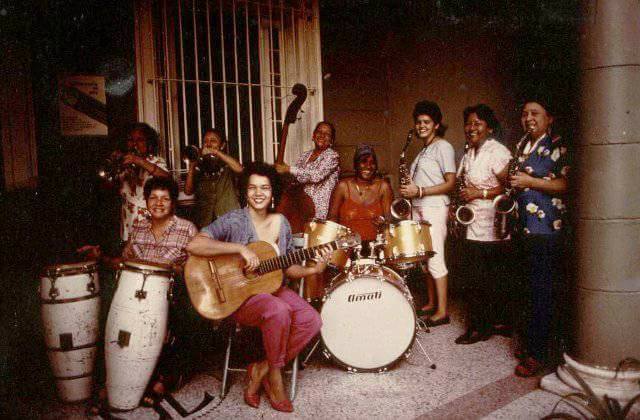
Anacaona Orchestra. Women of Cuba Since 1932

Genesis Founded in 1932

Anacaona Orchestra founded on February 19, 1932 by Concepción Castro Zaldarriaga and her sisters, being then the first female sextet of Son Cubano and in 1934 expanded to the Jazz Band and Charanga Típica format, projecting itself to the world from the famous ¨Aires Libres of the Saratoga Hotel. ¨ in the Havana Prado.

Anacaona Orchestra
Anacaona Orchestra

Between the 1940s and 1960s, these talented women toured throughout North to South America, the Caribbean and France.

In Mexico, one of the countries most visited by the orchestra at this stage, its images and sounds were recorded in some film of Mexican Cinema, such as: ¨the night is ours¨, ¨I do not deny my past¨ and ¨Women of theater¨ in which they alternated with film and music artists from that country. Also at that same time they recorded with the RCA Víctor label.

Anacaona Orchestra photo

The Aguirres

The sisters Giorgia and Dora Aguirre, with a solid musical background, specializing in Double Bass and Saxophone, recently graduated from the ¨Amadeo Roldan¨ Music Conservatory, joined the Anacaona Orchestra with its original founders in 1983, under the direction Alicia Castro, with whom they learned the most genuine genres of Cuban popular music, the rigor and discipline in this profession.

Anacaona Orchestra
Anacaona Orchestra

3rd Generation


After the retirement of the Castro sisters in December 1987, she assumed the direction of the Georgia Aguirre Orchestra, who, together with her sister and other young women who had also graduated from music schools, continued the work begun by the founders, consolidating a style that combines tradition with modernity, to preserve and enhance the history of Anacaona.

Anacaona Orchestra
Anacaona Orchestra

Tours

Internationally, they have traveled to more than 30 countries in Europe, Asia, Africa, America and the Caribbean, performing at important festivals and multiple stages, among which the most outstanding are:

Anacaona Orchestra
Anacaona Orchestra

The tour of 34 countries in the People’s Republic of China; his participation in the play ¨El Burgués Tropical¨ under the direction of Gerome Sabarì, inspired by Moliere’s classic, El Bourgeois Gentleman”; the tour made through some cities in the United States in which they also had a very emotional meeting with Graciela Pérez, singer and founder of Anacaona and the show “Sabor de la Habana” that opened the season of Cuban shows at the Cabaret Del Gran Casino Monte Carlo of the Principality of Monaco,

In addition to other important jazz and summer festivals in Spain, Germany, Belgium, Sweden, Holland, Canada, Jamaica, Aruba, Curacao, French Guiana, Guadeloupe, Martinique, Saint Lucia, Peru, Honduras, Venezuela and Mexico, among others.

Anacaona Orchestra flyer
  • « Go to Previous Page
  • Page 1
  • Page 2
  • Page 3
  • Page 4
  • Page 5
  • Page 6
  • Interim pages omitted …
  • Page 14
  • Go to Next Page »

International Salsa Magazine (ISM) is a monthly publication about Salsa activities around the world, that has been publishing since 2007. It is a world network of volunteers coordinated by ISM Magazine. We are working to strengthen all the events by working together.