• Skip to primary navigation
  • Skip to main content

International Salsa Magazine

  • HOME
  • Previous editions
    • 2026
      • ISM / April 2026
      • ISM / March 2026
      • ISM / February 2026
      • ISM / January 2026
    • 2025
      • ISM / December 2025
      • ISM / November 2025
      • ISM / October 2025
      • ISM / September 2025
      • ISM / August 2025
      • ISM / July 2025
      • ISM / June 2025
      • ISM / May2025
      • ISM / April 2025
      • ISM / March 2025
      • ISM / February 2025
      • ISM / January 2025
    • 2024
      • ISM / December 2024
      • ISM / November 2024
      • ISM / October 2024
      • ISM / September 2024
      • ISM / August 2024
      • ISM / July 2024
      • ISM / June 2024
      • ISM / May 2024
      • ISM / April 2024
      • ISM / March 2024
      • ISM / February 2024
      • ISM / January 2024
    • 2023
      • ISM / December 2023
      • ISM / November 2023
      • ISM / October 2023
      • ISM – September 2023
      • ISM – August 2023
      • ISM July 2023
      • ISM Edition June 2023
      • ISM – May 2023
      • ISM April 2023
      • ISM March 2023
      • ISM February 2023
      • ISM January 2023
    • 2022
      • ISM December 2022
      • ISM November 2022
      • ISM October 2022
      • ISM September 2022
      • ISM August 2022
      • ISM July 2022
      • ISM June 2022
      • ISM May 2022
      • ISM February 2022
      • ISM January 2022
    • 2021
      • ISM December 2021
      • ISM November 2021
      • ISM October – 2021
      • ISM September 2021
      • ISM August 2021
      • ISM July 2021
      • ISM May 2021
      • ISM April 2021
      • ISM June 2021
      • ISM March 2021
      • ISM February 2021
      • ISM January 2021
    • 2020
      • ISM December 2020
      • ISM November 2020
      • ISM October 2020
      • ISM September 2020
      • ISM August 2020
      • ISM July 2020
      • ISM June 2020
      • ISM May 2020
      • ISM April 2020
      • ISM March 2020
      • ISM February 2020
      • ISM January 2020
    • 2019
      • ISM December 2019
      • ISM November 2019
      • ISM October 2019
      • ISM Septembre 2019
      • ISM August 2019
      • ISM July 2019
      • ISM June 2019
  • Spanish
  • Download Salsa App
    • Android
    • Apple

Search Results for: Chucho Valdés

The Cuban pianist Chucho Váldes launched his new album “Jazz Batá 2”

East Coast – New York – New Jersey

Chucho Váldes. This virtuous pianist, composer and arranger brings to the music market the sequel of his album Jazz Batá after four decades

Musicians: Chucho Valdés (Piano), Yelsy Heredia (Double Bass) – Dreiser Durruthy (Voice and Superaron Batá) & Yaroldy Abreu Robles (Congas & Percussion) – and Guest artist: Regina Carter (Violin). 

After (Forty Six) 46 years, Chucho Valdés returns to the musical arena with Jazz Batá 2, an album that once again shows the creativity of this imposing Cuban music artist.

Jazz Batá 2 of the Latin Jazz genre contains eight tracks recorded in two and a half days in the John Lee´s studio in New Jersey. This ten-handed CD is the mix of classical music from West Africa impregnated in the piano solos with the Jazz Batá (sacred drums, with the hourglass shape of the Yoruba religion in Cuba), Violin, Bass and Percussion that give a sound with personality, rhythmic and lyrical at the same time.

The band in small format for this record production has four supporting musicians: Yaroldy Abreu Robles, Dreiser Durruthy Bombalé, Yelsy Heredia and Regina Carter. The first three belong to the Guantánamo region and they have deep roots in the Cuban musical culture, in addition to having studied at the conservatory.

Chucho Váldes
Chucho Váldes

Likewise and it should also be noted that Chucho Valdés, influential star of the contemporary Afro-Cuban Jazz, established this experimental format to three instruments (Piano, Bass and Batá) for the first time in 1972 with his album Jazz Batá.

The Jazz Batá 2‘s first single, “100 Años de Bebo”, is an unpublished melody whose composition was by Bebo and it’s a tribute to his centenary. This Danzón-Mambo is played by Regina Carter with an introduction and a “Tumbao” final, added by Chucho Valdés.

The tracks: “Obatalá”, “Oshun” and “El Güije” are themes inspired by the Yoruba religion of Cuba (Santería). Oshun is a Haitian merengue with the incursion of the violin, while El Güije is based on a rhythm created by the percussionist Dreiser Durruthy, and he presents it by speaking the sacred language, derived from the Afro-Cuban religion known as “palo”.

“Son XXI” from this new studio album, is a song by the deceased Cuban composer, Enrique Ubieta, who played with rhythmic clusters of Jazz. The first time that Chucho Valdés interpreted this theme was in the Musical Theater of Havana at the beginning of the 60s.

“Luces” is the first Bolero that incorporates Congas and Batá, as well as the harmonies of increased chords. And the single seven: “Chucho Valdés humor” is a “Descarga”, built on a rhythmic three notes (G, B, and C). According to the Valdés’ Words, “It’s like a twister”.

Finally, the eighth track: “El Payaso” is a piano solo, dedicated to Maurice Ravel. This melody was composed by Chucho Valdés when he was a member of the Cuban Orchestra of Modern Music (Founder in 1967). “… I’m a bit avant-garde, I play Batá on the Piano …”, said Chucho Valdés .

With this record production, Chucho Valdés marks a new milestone in his career, a beginning with the record label: Mack Avenue Records, and a significant chapter of his past.

TRACKS:
  1. Obatalá
5. El humor de chucho
  1. Son XXI
6. 100 Años de Bebo
  1. Luces
7. El Güije
  1. Oshun
8. El payaso


Release: November 16th 2018

Label Record: Mack Avenue Records


Available NOW to download in the entire world!


For more information, please visit:

Web Site: https://www.valdeschucho.com/

Or Follow him for his Social Channel: https://www.facebook.com/valdes.chucho

For more information visit this social medias:

Facebook: https://www.facebook.com/valdes.chucho/?locale=es_LA 

Instagram: @chuchovaldesmusic

X (Twitter): https://x.com/chuchovaldes?lang=en&mx=2 

Spotify: https://open.spotify.com/artist/27mRThsZ9K1BYmz0rioxwp
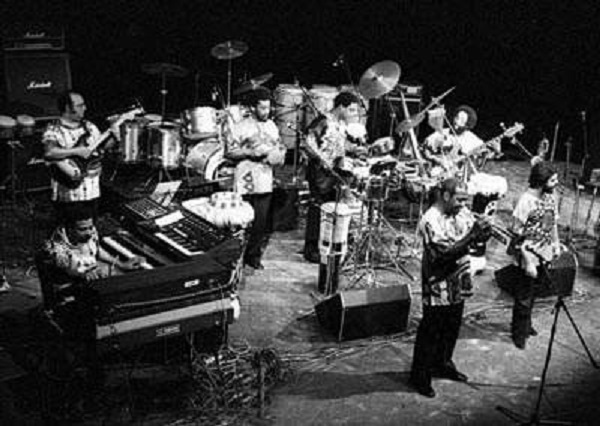
Irakere was a Cuban group that developed an important work in Cuban popular music and Latin Jazz under the direction of Chucho Valdés

Irakere was formed as such in 1967 but had begun to work much earlier; in that year precisely they went to a selection called in Havana to organize with the best musicians of that time the Cuban Orchestra of Modern Music; already in 1972 they were approaching to what they currently produce deciding in 1973 to call it Irakere, which in Yoruba language means Vegetation and that is how, starting from its name, they work based on the Afro-Cuban musical roots.

In this way, through the combination, mixture and interrelation of classical, impressionism, jazz, rock and various compositional techniques they managed to walk through all styles such as dance music, concert, traditional and popular Cuban music.

Thanks to the impulse of pianist Chucho Valdés, the Cuban group Irakere took off in 1973, nourished by Thelonious Monk’s bop.

Founders

Grupo Irakere: It was founded in Havana in 1973, by:

Jesús Valdés(Chucho) composer, director and pianist;

Paquito D’Rivera (Paquito), alto and tenor saxophone, flute and clarinet;

Carlos Averhoff, tenor saxophone, soprano, flute and bass clarinet;

Jorge Varona, trumpet, trombone and percussion;

Carlos del Puerto, bass, bass guitar and tuba;

Carlos Emilio Morales, guitar;

Bernardo García, drums and batá drums;

Jorge Alfonso, batá drums;

Enrique Plá, drums;

Carlos Barbón, güiro, chekeré and tambourine; and

Oscar Valdés, singer, tumbadora (conga), batá drums and bongo.

Irakere, fue un grupo cubano que desarrolló un importante trabajo en la música popular cubana y el Jazz Latino

On the founding of Irakere, Chucho Valdés expressed:

“For us the group always existed, it was present at all times; it was like something pending. At the beginning it had no name, it was just an idea we were working on: to use Cuban folkloric percussion in dance music, and to look for different timbres with a common characteristic: “ours”.

Then Oscar Valdés came up with the idea of combining the not easy and little known batá drum with the tumbadora, güiro and cowbell and so, step by step we arrived at the current group…”.

About Irakere’s first stage, the musicologist Leonardo Acosta points out: “one of the successes of Irakere had been not to try to invent and identify itself with a “new rhythm”, according to the old guidelines of advertising so much used from the forties to the sixties.

The slogan about the “new rhythm” was until recently the “open sesame” on which the musicians counted to become famous overnight, and by that way sometimes quite commercial results were achieved.

Apart from the fact that no “new rhythm” is so new, they all come from the alteration or amalgamation of pre-existing rhythms.

Irakere’s only alchemy comes from the spontaneous creativity of its members. Since there is no commercial endeavor, laboratory practices are unnecessary, and the group can perform a contradanza, a danzón, a son montuno or a cha cha chá without fear of seeming “old-fashioned”, since they are in fact playing something else at the same time. And without setting themselves the goal, nor having to invent a “pega” name, almost by an imperative of the material they are working on, new rhythmic combinations are emerging, to the point that Irakere’s rhythm is unmistakable among Cuban listeners or dancers.

Grupo cubano Irakere

Certainly, and in spite of their triumphs in international jazz festivals, Irakere is not a jazz group. But these successes are not gratuitous either, because as we have seen, they have formidable musicians with great experience in the jazz field, especially in the aspect of improvisation, the great discovery of jazz and perhaps its greatest contribution to the music of the 20th century.

“Paquito D’Rivera: Irakere was born against the will of the Cuban authorities”.

When talking about Cuban music, the name of one of the most emblematic groups in the country’s musical history comes to mind, Irakere, which in Yoruba language means vegetation, jungle.

Irakere became the seed that would germinate a lush forest of rhythms and sounds, a school through which many of the great stars of Cuban music have paraded.

Founded more than four decades ago, this legendary band has been a pioneer of Afro-Cuban jazz and the initiator of the musical revolution in the seventies.

Gracias al impulso del pianista Chucho Valdés, el grupo cubano Irakere levantó vuelo en 1973

Irakere emerged at a time when, due to political demands on the island, music and culture were treated as an instrument of revolutionary identification and jazz was branded as imperialist music.

It was at this time, in the late sixties and early seventies, that a group of great musicians founded a band whose main goal was to enrich Cuban popular dance music with Latin jazz as essential elements.

Under the direction of the outstanding pianist Jesús “Chucho” Valdés, excellent musicians came together in search of a different sonority, based on the use of Afro-Cuban folkloric percussion together with the renewed timbres of the popular rhythms of the time that fused jazz, rock, funk and popular Cuban rhythms such as son, mambo or cha cha chá, together with classical or concert music.

“Irakere was the Musical Generation of change”.

Sources:

https://www.ecured.cu/Irakere

Leonardo Acosta

Radio Televisión Marti

Mirna Guerra

Irakere

You can read: Israel Kantor was an excellent bassist, arranger and composer who achieved great popularity in Cuba for his vocal technique and original “Sonear” style

Chucho Valdes and Paquito D’ Rivera Will Tour for Europe

Jazz virtuous will offer a series of concerts from June to November 

Paquito D’ Rivera and Chucho Valdés

The pianist, composer, and conductor Jesús “Chucho” Valdes and the saxophonist, clarinetist, and composer Paquito D’ Rivera come together again to offer a tour called Reunión Sextet.

This tour of 2022 begins at the Mastercard Jazz Festival (Puerto Rico) and will pass through Poland (Bielsko-Biala), Spain (Pamplona, Marbella, Madrid, and Girona), and Germany (Essen) in June and July, and will end on November 30th in Zurich, Switzerland. Tickets range from €25 – €65 and you can get them in advance on Chucho Valdés’s website. www.chucho-valdes.com

The history of this long friendship dates back to the 1960s when they began their musical partnership as partners in the Havana Musical Theater Orchestra and the Cuban Modern Music Orchestra. With the founding of the Irakere orchestra by Maestro Valdés in 1973, Chucho and Paquito worked together again promoting the fusion of elements of Jazz, Classical music, Rock, and Afro-Cuban music that meant a transcendental development in Latin Jazz, and where Paquito and Chucho were the key figures. “Paquito was the heart of Irakere,” Chucho said.

Eight years later, Paquito went into exile in Madrid and later moved to New York. He developed a successful career as a leader & composer and won recognition as a Jazz Master from the National Endowment for the Arts of the United States in 2005. At the same time, Paquito also maintained his passion for classical music, receiving a Guggenheim Scholarship and commissions for quartets of strings, chamber groups, and symphony orchestras.

Meanwhile, Chuco remained in Irakere until 2005. He led trios and quartets, and established himself as a solo pianist. He produced his most recent production La Creación, a three-movement suite for small ensemble, voices, and Big Band. The masterpiece had its world premiere on November 5th, 2021, at the Adrienne Arsht Center for the Performing Arts in Miami and after was presented in Lyon, Paris, and Barcelona.

Now, after four decades, they come together to present Reunión Sextet accompanied by an extraordinary ensemble that includes Diego Urcola (Trumpet), Dafnis Prieto (Drums), Armando Gola (Bass), and Roberto Vizcaino Jr. (Conga). The repertoire will include old Latin Jazz hits, Latin American classics, and new compositions from the I Missed You Too album.

The two Cuban virtuosos have accumulated more than 25 Grammys and Latin Grammys. “I’ve always had the hope of being close to Paquito again and playing with him again,” he said. “I’ve always had that hope. Well, this is our moment.” The Maestro Chucho expressed.

His first tour in Spain was in 1981

Chucho Valdés, an icon of modern Afro-Cuban Jazz, told for a digital medium that practices the piano from six to eight hours a day. During the confinement, he was in Florida and composed La Creación (a tribute to Olodumare, the god of the Yoruba religion). This instrumental musical gem is sung, composed, directed, and performed by Valdés, and tells the story of the meeting of Afro-Cuban music in the Caribbean and the United States and how this has influenced globally. He also composed minor works and dedicated part of his time to teaching and virtual concerts.

Likewise, he added that the country that he would contemplate for a possible retirement would be Malaga (Spain) because his great pleasures come together: the Mediterranean, the diet, and many friends in the city.

Chucho Valdés Returns To The Iberian Peninsula In November

The Most Recognized Pianist Of The 21st Century Comes Back To The Voll-Damm Barcelona Jazz Festival After Two Years

Chucho Valdés with folded hands dressed in a floral shirt and blue cap
Chucho Valdés has received the award for Musical Excellence from the Latin Academy of Recording Arts and Sciences and was inducted into the Hall of Fame of Latin Composers

The master Chucho Valdés returns to the stage of the Voll-Damm Barcelona Jazz Festival on November 23rd, 2021 after two years of absence. The most recognized Cuban pianist of the 21st century will present his most recent musical production La Creación, a suite in four movements that exalts Yoruba-African history and its influences in South America and the Caribbean. A work dedicated to Olodumare and the worldwide celebration of his 80 years of life.

The founder of the Irakere group comes back to the incomparable sound of the Big Band, Afro-Cuban percussion, Blues, and the set of voices that represents his histrionics as a director, composer, and pianist with La Creación.

On this album, Valdés is accompanied on arrangements, keyboards, and conducting by Canadian Juno award-winning Cuban musician Hilario Durán and the Grammy Award winner and Emmy nominee John Beasley. Playing the Drums is Grammy winner and two Latin Grammy nominee Dafnis Prieto. Also, in La Creación stand out Erick Barbería, Yosvany González Franco, and Felipe Sarria Linares (Batá and voices), José A. Gola (Double Bass and Electric Bass), and Roberto Jr. Vizcaíno (Percussion). Former Van Van member Yeny Valdés adds her melodious voice to this production, while two Grammys winner Brian Lynch and “Daring Improviser” (rated by Jazz Times) Etienne Charles do it by playing the Trumpets. On the other hand, Carlos Averhoff Jr., considered one of the new voices in the new generation of Cuban jazz saxophonists, flaunts his virtuosity on the Tenor Sax and Marcus Strickland on the Alto Sax.

So remember…

Enjoy the concert of the master Chucho Valdés & The Yoruban Orchestra in the Iberian Peninsula!

Date: Tuesday, November 23rd

Time: 8:30 PM

Address: Palau de la Música Catalana. Music auditorium located on Sant Pere més Alt street in the Ribera district of Barcelona, Spain.

Ticket: From 26 €

Chucho Valdés dressed in a floral shirt and yellow cap
Chucho Valdés was born on October 9th, 1941, in Quivicán (Cuba)

In addition to this presentation in Barcelona, ​​the winner of six Grammys and four Latin Grammys, Chucho Valdés has scheduled an autumn tour that will visit the main cities of France and the neighborhood of the principality of Monaco, Monte Carlo. Finishing his tour in the city of Girona – Spain (December 4th) and Castellón de la Plana – Spain (December 11th). Tickets can be found from € 15 depending on the location.

  • You Can Also Read: Pianist Fadi Gaziri Debuts In Salsa Music With Cuba Classic

Currently, Dionisio Jesús “Chucho” Valdés Rodríguez, with more than 60 years of experience, directs a course of group classes that contain 14 recorded chapters lasting one hour. This exclusive virtual academy for pianists was inaugurated on March 15th, 2021.   However, this online study platform already includes live lessons and individualized tutoring with the delivery of certificates for advanced pianists.

“After the experience of the group classes in a virtual way, I realized that the students have different needs, so I decided to start with individual classes for advanced musicians. In this way, the classes will be focused directly on the needs of each one”. Chucho Valdés.

Perhaps These Data May Interest You:

Chucho Valdés dressed in white with nature in the background
To attend the Festival, minors under 16 must be accompanied by their father, mother, or legal guardian
  • The Barcelona Voll-Damm Jazz Festival is one of the oldest events and a world reference in Europe. Their first concert was held on November 3rd, 1966.
  • In this festival, master classes are offered by the best specialists, conferences with fascinating and current topics, meetings with artists, as well as outstanding concerts (some free) for fans and lovers of the Jazz genre.
  • For 32 years (1989) The Project has been the Barcelona promotion company in charge of organizing this autumn meeting annually.
  • The Project was created in 1988 and organizes more than 400 concerts a year with approximately 10,000 musical calls to date.
  • The Voll-Damm drink became part of the festival in 2002, becoming its main sponsor.

Angel Bonne He was part of Juan Formell’s Los Van Van Orchestra, and collaborated with the impressive Irakere band of maestro Chucho Valdés

Latin America /Dominican Republic

Angel Bonne born in Santiago in 1961

Angel Bonne began his musical studies at an early age, developing his skills on the clarinet.

The artist confesses that genetically his father, Enrique Bonne, “has a lot to do with his musical taste”; he grew up watching him play the piano, and the drums played in the patio of his house, where musical meetings were held with greats such as Pacho Alonso and Omara Portuondo among others.

Born in Santiago in 1961, Angel Bonne began his musical studies at an early age, developing his skills on the clarinet
Angel Bonne
He was part of Juan Formell’s Los Van Van Orchestra

After graduating from the National School of Art, he worked as a saxophonist in groups such as: Galaxia, Santiago Feliú, Beatriz Márquez (where he also acted as director), Granma (Santiago de Cuba) and Cuban Orchestra of Modern Music (Santiago de Cuba).

He also participated as a saxophonist, in albums of renowned singer-songwriters such as Amaury Pérez Vidal and Evelyn García Márquez.

He also collaborated with other groups such as the Grupo Síntesis and the Irakere by maestro Chucho Valdés.

His interpretative quality and musical talent led him to form part of one of the most important orchestras of Cuban music, Juan Formell’s Orchestra, Los Van Van, where, in addition to playing the saxophone, he performed as an arranger and singer.

During this period, he interpreted everlasting successes in the history of Cuban popular dance music, as is the case of the song Azúcar, still very much in demand despite having been recorded for more than 25 years.

After graduating from the National School of Art, he worked as a saxophonist in groups
Angel Bonne He also participated as a saxophonist, in albums of renowned singer-songwriters such as Amaury Pérez Vidal and Evelyn García Márquez

His passage by this musical group, is qualified by the own Angel Bonne, like one of the most important moments of his artistic career, in fact has continued collaborating with this transcendental orchestra in the record productions due to the mark left by its vocal timbre in the chorus.

At the age of 33, he decided to make his career as a soloist without abandoning his role as an instrumentalist and his qualities as a composer, and he formed several groups.

His versatility allows him to venture into several musical genres, among which jazz, Nueva Trova and popular music stand out.
Angel Bonne He also shows his skills as a composer, arranger, performer, conductor and record producer.

Since then, he has starred in several record productions: “Pa’ decir lo que yo siento”, “Circunstancias”, “Esta es mi música”, “Por favor escuchame” and “Bonne and Bonne Co. He has also made three albums in which his facet as a singer-songwriter is evident; these are these are: “De otra manera”, “Buscándome”, and “El guardián”. He has participated in more than 60 albums recorded with well-known Cuban figures.

He made the original music and soundtrack of the Cuban soap opera EN FIN EL MAR, from which hits like ESE soy yo, Sueños en la inmensidad and Cada uno por su lado were released.

His versatility allows him to venture into several musical genres, among which jazz, Nueva Trova and popular music stand out.

From Bonne’s discography, you will always remember songs like: ¨Usted will return to passer¨, ¨No I know why he wants me to mi¨, ¨Pura vestment¨, ¨Ya I went from the 20¨, Amigos, which was also nominated in the category of best video of the year at the PREMIOS LUCAS, (an important Cuban audiovisual competition) to others, which also showcase his skills as a composer, arranger, performer, bandleader and record producer.


By: Diana Marie

Home

  • Page 1
  • Page 2
  • Page 3
  • Interim pages omitted …
  • Page 10
  • Go to Next Page »

International Salsa Magazine (ISM) is a monthly publication about Salsa activities around the world, that has been publishing since 2007. It is a world network of volunteers coordinated by ISM Magazine. We are working to strengthen all the events by working together.