• Skip to primary navigation
  • Skip to main content

International Salsa Magazine

  • HOME
  • Previous editions
    • 2026
      • ISM / April 2026
      • ISM / March 2026
      • ISM / February 2026
      • ISM / January 2026
    • 2025
      • ISM / December 2025
      • ISM / November 2025
      • ISM / October 2025
      • ISM / September 2025
      • ISM / August 2025
      • ISM / July 2025
      • ISM / June 2025
      • ISM / May2025
      • ISM / April 2025
      • ISM / March 2025
      • ISM / February 2025
      • ISM / January 2025
    • 2024
      • ISM / December 2024
      • ISM / November 2024
      • ISM / October 2024
      • ISM / September 2024
      • ISM / August 2024
      • ISM / July 2024
      • ISM / June 2024
      • ISM / May 2024
      • ISM / April 2024
      • ISM / March 2024
      • ISM / February 2024
      • ISM / January 2024
    • 2023
      • ISM / December 2023
      • ISM / November 2023
      • ISM / October 2023
      • ISM – September 2023
      • ISM – August 2023
      • ISM July 2023
      • ISM Edition June 2023
      • ISM – May 2023
      • ISM April 2023
      • ISM March 2023
      • ISM February 2023
      • ISM January 2023
    • 2022
      • ISM December 2022
      • ISM November 2022
      • ISM October 2022
      • ISM September 2022
      • ISM August 2022
      • ISM July 2022
      • ISM June 2022
      • ISM May 2022
      • ISM February 2022
      • ISM January 2022
    • 2021
      • ISM December 2021
      • ISM November 2021
      • ISM October – 2021
      • ISM September 2021
      • ISM August 2021
      • ISM July 2021
      • ISM May 2021
      • ISM April 2021
      • ISM June 2021
      • ISM March 2021
      • ISM February 2021
      • ISM January 2021
    • 2020
      • ISM December 2020
      • ISM November 2020
      • ISM October 2020
      • ISM September 2020
      • ISM August 2020
      • ISM July 2020
      • ISM June 2020
      • ISM May 2020
      • ISM April 2020
      • ISM March 2020
      • ISM February 2020
      • ISM January 2020
    • 2019
      • ISM December 2019
      • ISM November 2019
      • ISM October 2019
      • ISM Septembre 2019
      • ISM August 2019
      • ISM July 2019
      • ISM June 2019
  • Spanish
  • Download Salsa App
    • Android
    • Apple

Search Results for: Chucho Valdés

The best of Cuban music in Tampa with Cuband Son Band

We are very happy to be able to talk with Lizandro Muñoz, Liaudriz Fuentes, and Alfredo Sotolongo, who are part of the Cuban music group Cuban Son Band. We will know a little about each of them and the orchestra as such so that the public can get to know them and identify them.

Although all the musicians are coming from Cuba such as the genres they play, they met in Tampa, Florida, where they currently reside and have developed their respective musical careers.

Lizandro playing
Lizandro Muñoz playing at Water Street Tampa in April

How Lizandro, Liaudriz, and Alfredo became interested in music

Lizandro was the first who talked a little about himself and started by describing how his father played the guitar and began teaching his son to do the same. After attending the pre-university studies and playing guitar along with a group for about four years, he did his military service and moved to Spain to work with a number of groups at many Latin music events, especially Cuban music, which was what he played most.

Itis at this point in the conversation that Liaudriz, the group’s keyboardist, joined the meeting. After saying hello and introducing himself, he began to explain that he started in music at a very young age in Cuba, more specifically on the Isle of Youth or the Isle of Pines, as it was known before. As a child, he already had a lot of affinity for the guitar just like Lizandro, but also for everything related to percussion, which led him to take the respective tests to enter a music school.

That was when he went through the elementary, middle, and part of the upper levels. He did not complete the latter, as he got the opportunity to move to the United States. 

When Alfredo, Cuban Son’s violinist, slipped into the conversation, he and the boys joked about whether he remembered how he started in music due to his age. He then relates starting in music at about 10 and is now 66, so much water has flowed under the bridge since then. He studied at the National School of Art up to the fifth level for five years, where he trained as a percussionist, singer, and violinist, but had to withdraw due to family problems. However, his great strength helped him keep the lights on.

By not being enrolled in any institution, he began his training at home. Several members of his family were helping him to continue his dream and one of whom was his uncle, a flutist who played in Los Van Van, who inspired him to follow his path in the world of music. This is how he resumed his academic training and received an A grade in singing and an A grade in violin lessons. 

Liaudriz playing
Liaudriz Fuentes playing the keyboard live

He was in the Cuban Institute of Radio and Television Orchestra, better known as ICRT for its acronym in Spanish, and made some recordings with Los Van Van as a violinist. In 1998, he emigrated to Israel, where he worked as a musician for 10 years and even played in an orchestra known as Jerusalem Salsa Band, in which he alternated with several great artists such as Alfredo de La Fe, Buena Vista Social Club, and many others.

After those 10 years, he moved to the United States in search of new opportunities, which led him to make contact with Lizandro and Liaudriz from Cuban Son, which he joined about two years ago.

Alfredo added that one of the things that brought them together was that his now bandmates were following the way of son, the same path as their ancestors, who were soneros. It is in their blood and they had that in common.

How Cuban Son Band got started

Liaudriz again takes the floor and assures that the affinity between them was also due to the need Cubans feel to continue making music from their native land despite the distance and the way many of them come together to do this work. This is something that has mushroomed in Tampa in recent years due to the large number of Cubans who have arrived there.

“Cuban Son Band emerged from our need to share the music of our country not only here in Tampa, but also in other cities in Florida,” said the young keyboardist on this subject.

Lizandro added that several members of the group came from a much larger orchestra, but for economic and practical reasons, they left it and opted for a smaller, more compact format. This also gave them the freedom to make the music they wanted without consulting many people. 

Alfredo playing
Alfredo Sotolongo playing the violin during a concert

The biggest challenges Cuban Son faced at first

Regarding the receptivity of the people to Cuban Son Band’s work, Alfredo pointed out that they always try to make their music as traditional as possible so that the audience may know it. What has made things easier for them was his senior audience that misses these genres and enjoys listening to them, even if they are not what is trendy right now. There are many new genres in Cuba, such as reggaeton and cubatón, but the audience between 30 and 40 years old are not fans of that kind of music, but of more traditional genres such as bolero, bachata, changuí, and others.

Lizandro also added that as long as they offer something traditional, original, and authentic, language barriers should not be a problem, even though most of their fans are American. One of the biggest challenges for the group has been communication, precisely because of the language of their lyrics, but that has not prevented them from being listened to and fervently supported. 

In addition to that, they rely on covers of well-known English songs to connect even more with their non-Latin listeners, which has made them accept their work even more willingly. Their traditional foundation and open mind to new things have been the key to their progress.

Lizandro, Liaudriz, Alfredo, and Raysel
Trumpet player Raysel Reyes, keyboardist Liaudriz Fuentes, Violinist Alfredo Sotolongo, and guitarist Lizandro Muñoz

Current members of Cuban Son Band

Alfredo pointed out that they always try to be as loyal as possible to their main project, which is Cuban Son Band, but they are also aware that it will not always be possible for them to play only with their main orchestra, as they will have to work on other projects due to their economic situation.

Liaudriz also said that something that benefits them is that Tampa is a city that is growing a lot as for the Latin music scene, resulting in more and more work for them and groups with the same characteristics. This allows them to call each other and help each other without egos or pettiness.

Inspirations for each one

Alfredo was inspired as a singer by artists such as Ibrahim Ferrer, Pacho Alonso, Felix Chappottín, Pedrito Calvo, Oscar D’ León, Gilberto Santa Rosa, among others. in one way or another, all of them have honored Cuban music and that makes them bastions of what Cuban Son wants to achieve.

For his part, Lizandro mentioned Buena Vista Social Club, Omara Portuondo, Compay Segundo, Adalberto Álvarez, Chucho Valdez, Juan Formell, Bebo Valdéz, and Benny Moré.

Read also: Tito Planas talked to us about his Orquesta Afinke and its members
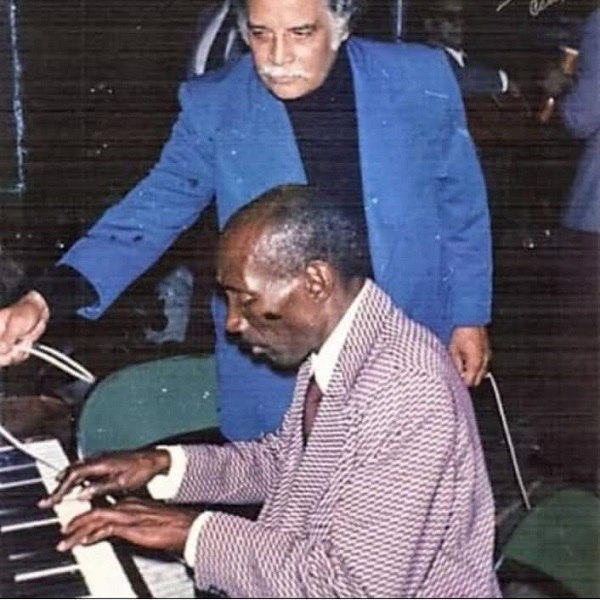
Ezequiel Lino Frías Gómez was an excellent musician, pianist, arranger and composer.

Ezequiel Lino Frías Gómez was born on April 10, 1915 in Havana, Cuba.

Lino Frías y Daniel Santos

Musician, Pianist, Arranger, Composer. He began his artistic career in the early 30’s, working with singer and composer Joseito Fernandez, in the orchestra of Raimundo Pla.

Later he became part of the Fantasía Orchestra.

At the end of the decade he worked with the Septeto Carabina de Ases.

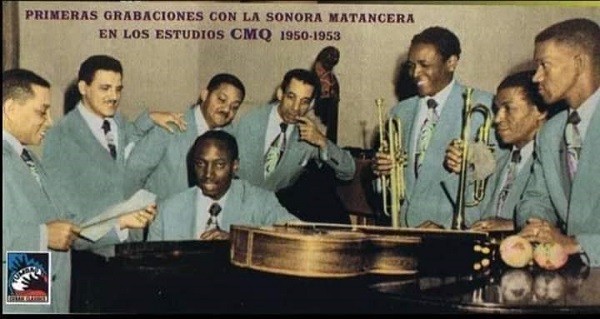
Some time later he joined Arsenio Rodríguez’s Conjunto Todos Estrellas in September 1940, remaining in it until November 1943, leaving his place to Adolfo Oreilly Panacea, to join the Sonora Matancera in 1944, until 1976, where he contributed in an important way both in the composition and musical arrangements, imposing his particular piano solos.

In 1974 he helped found with Armando Sánchez the Conjunto Son de la Loma.

Upon his retirement from La Sonora Matancera, the Puerto Rican producer René López invited Lino, together with Israel “Cachao” López, to revive the descargas he had already recorded in the fifties, assembling a Típica together with “Cachao”.

Sonora Matancea
Sonora Matancea

In his independent years Lino worked with Johnny Pacheco and Carlos “Caito” Diaz.

He accompanied great artists in recordings, in that period in New York, such as La Lupe, Olga Guillot, Daniel Santos, Carmen Delia Dipini, Bobby Capo, among others.

He died on May 22, 1983 in New York, USA.

Lino Frías, who for twenty-two years was the pianist of the Sonora Matancera, composed the very popular Mata Siguaraya in 1951.

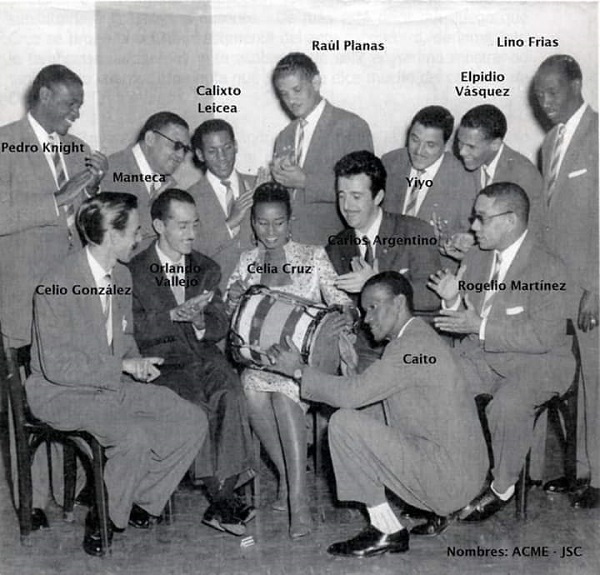
One of the most popular photos of the Sonora Matancera.

In it we can see Lino Frías from his piano looking at Celia Cruz, great interpreter of Mata Siguaraya, together with Benny Moré and Oscar D’León.

Ezequiel Lino Frías Gómez was born in Havana and died in New York in 1983.

Lino studied piano at the Havana Conservatory. For a time, in the 1930s, he played in the Raimundo Pia y Rivero Orchestra, whose singer was Joseito Fernandez. He would later play in the Orquesta Fantasía.

In 1939 he joined the Septeto Carabina de Ases, led by Mariano Oxamendi, guitarist and second voice, and with Bienvenido Grande, singer and harpsichord player, Nilo Alfonso, double bass, José Bergerey, maracas and third voice, Ramón Liviano Cisneros, tres player, Florencio Coco Morejón, bongos player, and Félix Chappotín, trumpet player.

In 1944, Lino joined the Sonora Matancera as a pianist, where he remained until 1976.

In the 1960s, Frías joined the movement that created the so-called salsa music, alongside Fania All Stars, Johny Pacheco, Bobby Rodríguez, Carlos Patato Valdés y Caíto, Carlos Manuel Díaz (Matanzas 1905-New York 1990), among others.

Don Adolfo, a Puerto Rican timbalero, worked with Lino Frías in a group that included some of the most renowned musicians and singers of the 1950s and 60s: Olga Guillot, Daniel Santos, Lucecita Benítez, Bobby Capó, Marco Antonio Múñiz, Carmen Delia Depiní, Chucho Avellaneda, Sergio González Siaba and La Lupe, among others.

In 1974, parallel to his work as a pianist in the Sonora Matancera, Lino Frías created the ensemble Son de la Loma, with the participation of Cuban-Niuyorquinos such as Marcelino Guerra, Rapindey (Cienfuegos 1914-Spain 1996), author of Convergencia, and Pedro Rudy Calzado (Santiago de Cuba 1929-New York 2002).

Celia Cruz y La Sonora Matancera

Due to arthritis, in 1976 Lino left the Sonora. His place is taken by Javier Vázquez, (Matanzas 1936), son of the double bass player Pablo Vázquez.

It is said that the death of Lino Frías, in 1983, was a hard blow for his great and faithful friend Celia Cruz (Havana 1925-New Jersey 2003).

In addition to Mata Siguaraya, Lino Frías composed Pan de piquito, Óyela, gózala, Vamos todos de panchanga, Cañonazo, Vive la vida hoy, Suena mi bajo, Convencida, Afecto y cariño, Has vuelto a mí, Baila Yemayá.

Also Read: Israel “Cachao” López Sobrado en fama y respeto en los años setenta se dedicó a mantener la tradición a nivel supremo

North America – December 2018

thubnails Ritmo Caribe ingles - North America - December 2018

Chucho Valdez thubnails ingles North America - December 2018

Chuchito Valdes thubnails ingles North America - December 2018

Latin America – December 2022

Europe – May 2022


  • « Go to Previous Page
  • Page 1
  • Interim pages omitted …
  • Page 8
  • Page 9
  • Page 10

International Salsa Magazine (ISM) is a monthly publication about Salsa activities around the world, that has been publishing since 2007. It is a world network of volunteers coordinated by ISM Magazine. We are working to strengthen all the events by working together.