• Skip to primary navigation
  • Skip to main content

International Salsa Magazine

  • HOME
  • Previous editions
    • 2026
      • ISM / March 2026
      • ISM / February 2026
      • ISM / January 2026
    • 2025
      • ISM / December 2025
      • ISM / November 2025
      • ISM / October 2025
      • ISM / September 2025
      • ISM / August 2025
      • ISM / July 2025
      • ISM / June 2025
      • ISM / May2025
      • ISM / April 2025
      • ISM / March 2025
      • ISM / February 2025
      • ISM / January 2025
    • 2024
      • ISM / December 2024
      • ISM / November 2024
      • ISM / October 2024
      • ISM / September 2024
      • ISM / August 2024
      • ISM / July 2024
      • ISM / June 2024
      • ISM / May 2024
      • ISM / April 2024
      • ISM / March 2024
      • ISM / February 2024
      • ISM / January 2024
    • 2023
      • ISM / December 2023
      • ISM / November 2023
      • ISM / October 2023
      • ISM – September 2023
      • ISM – August 2023
      • ISM July 2023
      • ISM Edition June 2023
      • ISM – May 2023
      • ISM April 2023
      • ISM March 2023
      • ISM February 2023
      • ISM January 2023
    • 2022
      • ISM December 2022
      • ISM November 2022
      • ISM October 2022
      • ISM September 2022
      • ISM August 2022
      • ISM July 2022
      • ISM June 2022
      • ISM May 2022
      • ISM February 2022
      • ISM January 2022
    • 2021
      • ISM December 2021
      • ISM November 2021
      • ISM October – 2021
      • ISM September 2021
      • ISM August 2021
      • ISM July 2021
      • ISM May 2021
      • ISM April 2021
      • ISM June 2021
      • ISM March 2021
      • ISM February 2021
      • ISM January 2021
    • 2020
      • ISM December 2020
      • ISM November 2020
      • ISM October 2020
      • ISM September 2020
      • ISM August 2020
      • ISM July 2020
      • ISM June 2020
      • ISM May 2020
      • ISM April 2020
      • ISM March 2020
      • ISM February 2020
      • ISM January 2020
    • 2019
      • ISM December 2019
      • ISM November 2019
      • ISM October 2019
      • ISM Septembre 2019
      • ISM August 2019
      • ISM July 2019
      • ISM June 2019
  • Download Salsa App
    • Android
    • Apple
  • Spanish

Search Results for: Cuba

Son 14 The History of the Orchestra and the Success of “A Bayamo en Coche”

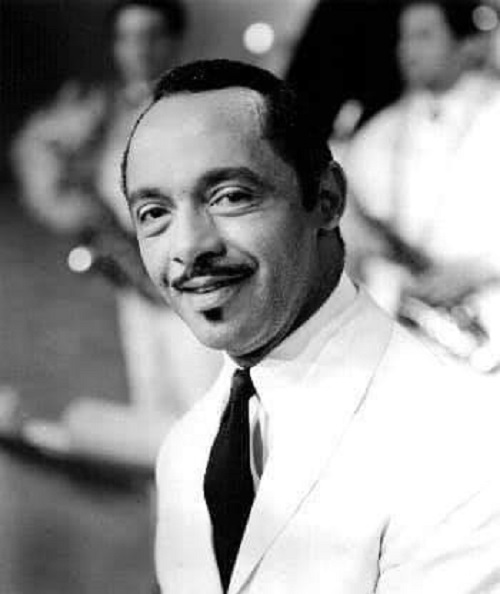
The Son 14 orchestra was founded in Santiago de Cuba in 1977 by vocalist Eduardo “El Tiburón” Morales (born in Cuba in 1935) and pianist and musical director Adalberto Álvarez.

As the name suggests, it is a 14-member ensemble dedicated to performing son, the national musical genre of Cuba. In 1978, Lázaro Rosabal (born in Santiago de Cuba in 1953) joined the group.

They quickly recorded several albums for the local EGREM label, many of which became bestsellers throughout Latin America, allowing them to undertake extensive tours across the Americas and Europe.

In 1992, co-founder Álvarez left the band to form his own group. Nevertheless, Son 14 continued its journey under the musical direction of Rosabal.

In addition to their continued success in the Latin market, the band began to gain international recognition, first with the song “El Son De La Madrugada,” included on the compilation Cuba – Fully Charged (Earthworks Records, 1993), and later with the release of Son – The BIG SOUND (Tumi Records, 1995), a compilation of their material from the Álvarez era.
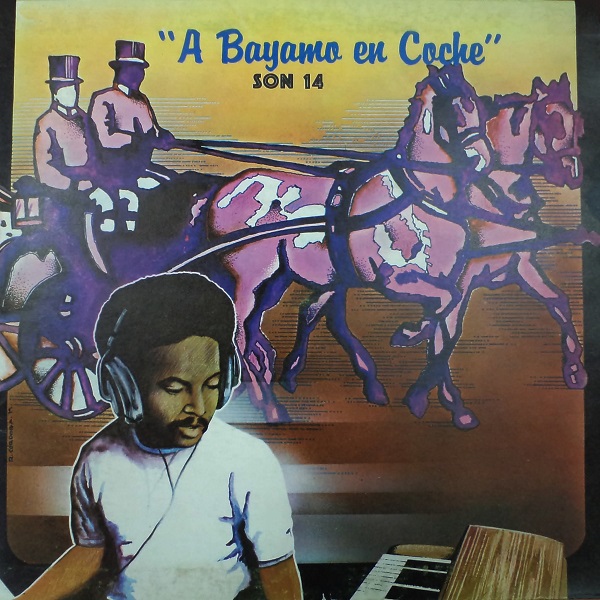
Son 14 de «A Bayamo en Coche»

After introducing a modern, vibrant version of son and its variations (son montuno, bolero son, etc.) to non-Latin audiences, Tumi Records commissioned a new recording at Cuba’s EGREM studios. Released in 1996 as part of the Cuba Explosion series, the album Cubanía proved that the band had not lost an ounce of its musical talent and energy under Rosabal’s direction. Three years later, the group released La Máquina Musical, which incorporated Colombian tropical rhythms into their sound, promoting the album with a European tour that included a performance at the Cuba Presente Festival at the Barbican Centre in London. (Source: AllMusic)

Eduardo Morales Orozco Tiburón

 The Milestone of “A Bayamo en Coche”

The album A Bayamo en Coche (A Bayamo by Carriage) was released in 1979, with its biggest hit being the title track itself. The album’s opening song, composed and arranged by Adalberto Álvarez from Camagüey, instantly transformed him into one of the leading figures in popular Cuban dance music from that year on.

The song “A Bayamo en coche” not only revives traditional son and enriches it with new sounds but also artistically recreates a cherished tradition rooted in Bayamo, the cradle of Cuban nationality. In this city, coches (horse-drawn carriages) are used for pleasure rides and recreation, and the song’s lyrics narrate these moments.

The album contained other tracks that were hugely popular in Cuba between 1978 and 1980, such as “Calle Enramada” (a son elegy to that main Santiago street), “El Son De La Madrugada” (with a beautiful later version by Omara Portuondo), “Se quema la trocha,” and “Elena la cumbanchera,” which turned the record into a landmark within this genre of Cuban music. Most of the tracks were performed by Tiburón Morales, the group’s lead vocalist.

Tribute to The Gentleman of Son

Recently, Son 14 founder Adalberto Álvarez, known as “El Caballero del Son” (The Gentleman of Son), was honored with a concert at the Karl Marx Theatre. This event celebrated his 46 years in music and the 35th anniversary of his later orchestra, Adalberto Álvarez y su Son.

The concert was a memorable tribute to the work of the composer of “A Bayamo en coche.” Some of his best songs were performed by notable Cuban musicians:

  • Septeto Santiaguero (Son para un sonero)
  • Pancho Amat and Alain Pérez (Tu fiel trovador)
  • Alexander Abreu (Pura imagen)
  • Paulo F. G. (Fin de semana)

At other points, Frank Fernández performed a duet accompaniment with the voices of Adalberto Álvarez and Jorge Luis Rojas, “Rojitas,” on Santa Cecilia.

Additionally, Rojitas sang with Tania Pantoja (Vivir lo nuestro) and solo (Y qué tú quieres que te den). Robertón and Lele, vocalists from Van Van, performed Agua que cae del cielo, while the orchestra Adalberto Álvarez y su Son took on De Cuba pa’l mundo entero, Son de la madrugada, and Los caminos de Ifá.

En La Sala Show “El Saraito” Adalberto Álvarez (R.I.P) Fundador, Director. Arreglista y Pianista del Son 14 de Cuba, Dj. Augusto Felibertt y Vicente López

That night, Maestro José Luis Cortés highlighted Álvarez’s musical quality, focusing specifically on “A Bayamo en coche,” the song that, in 1979, announced the existence of a great artist to the public. Álvarez was capable of bringing son to Cuban art schools and has defended Cuban son with grace and artistry, all while staying true to the essence of one of the dance music genres that best represents Cuban identity. (Source: Joel del Río, Cibercuba)

“A Bayamo En Coche” Album Details (1980)

No. Track Genre Composer
01. A Bayamo En Coche Son Adalberto Álvarez
02. El Son De La Madrugada Son guaguancó Adalberto Álvarez
03. Se Fue Mi Amor Y No Lo Vi Partir Bolero son Adalberto Álvarez
04. Calle Enramada Son Pedro Gómez
05. Elena La Cumbanchera Son Gerardo Martínez
06. Se Quema La Trocha Bachata-Son Adalberto Álvarez
07. Tal Vez Vuelvas A Llamarme Son montuno Adalberto Álvarez
08. Gimen Las Rosas Por Una Triste Ilusión Bolero Adalberto Álvarez
09. Vamos, Háblame Ahora Bachata-son Adalberto Álvarez

Musicians who participated in the recording (1979):

  • Director, Acoustic Piano, Keyboards: Adalberto Álvarez
  • Vocals, Minor Percussion: Eduardo “El Tiburón” Morales, Héctor Wedderbron, Daniel Carmenates
  • Bass: Jorge Machado
  • Guitar: Efisio Barroso
  • Trumpet: Eduardo Sánchez, Guillermo Femández, José Fernández, Dagoberto Rodríguez
  • Trombone: Lázaro Rosabal
  • Tumbadora (Conga Drum): Ubaldo Canes
  • Bongó, Cowbell: Guillermo Viera

Recorded at: EGREM Studios (1979)

Collaborators:

L’Òstia Latin Jazz

Dj. Augusto Felibertt

Also Read: Luis Conte: The Cuban-American percussionist who fuses Cuban son with global music
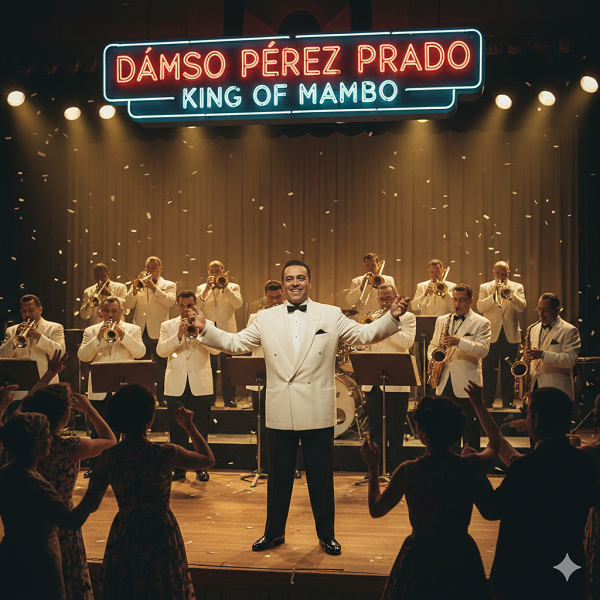
Dámaso Pérez Prado and the Succession of the “Mambo King”

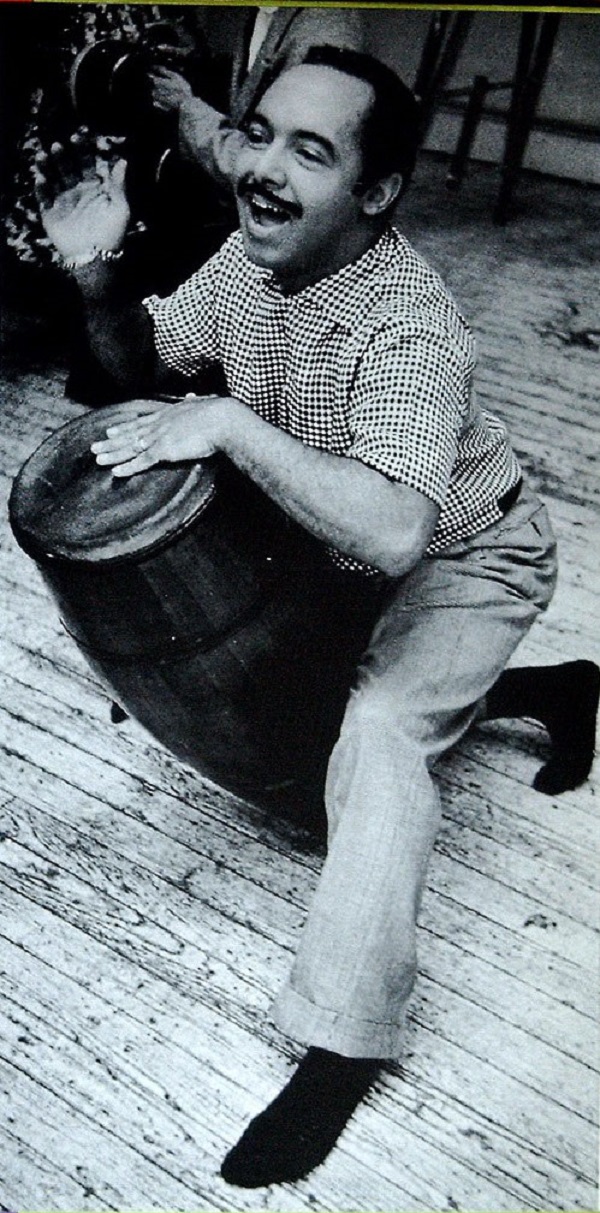
Dámaso Pérez Prado was a Cuban musician, composer, arranger, and orchestra conductor, known worldwide as the “Mambo King.”

On December 3, 1983, Pantaleón Pérez Prado, an excellent bass player and composer, passed away in Milan, Italy. He was born on December 27, 1926, in Matanzas, Cuba.

Pantaleón’s Beginnings and Career

Pantaleón followed in the footsteps of his famous older brother, Dámaso Pérez Prado. At age 18, he formed his first orchestra, which he left in 1950 to join Dámaso’s group as a double bassist, accompanying him for several years.

He also played for a short time in Havana with the Laito Castro Orchestra. In the mid-1950s, Pantaleón Pérez Prado went independent and traveled to Europe, where he led an orchestra of Cuban musicians. This group achieved great success performing the songs that Dámaso had popularized.

Dámaso Pérez Prado and the Succession of the King of Mambo

The Legal Dispute

In 1956, a dispute between Dámaso Pérez Prado and his younger brother, Pantaleón (1926–1983), led to an unusual legal conflict. Dámaso sued his brother for $500,000, accusing him of impersonation.

In Hispanic culture, it is common for children to receive both parents’ surnames. In this case, the brothers’ birth names were Dámaso Pérez Prado and Pantaleón Pérez Prado, respectively, with Pérez being the father’s surname and Prado the mother’s.

In Portugal, the song Pantaleón performed, “Mambo del Estudiante” (Student’s Mambo), became the “official anthem” of the University of Coimbra. He also succeeded in Spain, France, and Italy, where he was introduced as “Pérez Prado, Rey del Mambo” (King of Mambo), which produced intentional confusion with his brother Dámaso.

Dámaso initiated legal action that concluded with Pantaleón being prohibited from using the title “Mambo King,” while also being required to use his full name. Some suggest that, beyond the lawsuit, there was a tacit agreement between the two brothers, based on the fact that Dámaso visited Europe infrequently, focusing his activities in the Americas, while Pantaleón permanently settled in Milan.

Name Confusion and The Conflict’s Revival

Originally, RCA credited the recordings to Dámaso Pérez Prado. However, when his records began appearing in the US, the record company shortened his name to the more alliterative Pérez Prado. In 1955, Dámaso dropped his full name and legally changed it to Pérez Prado.

Around that time, Pantaleón, who played bass with his own group, appeared at the Alhambra theater in Paris under the name “Pérez Prado, el Rey del Mambo.” Pantaleón was subsequently restricted by court order from passing himself off as Pérez.

However, hostilities resumed when an angry French visitor called the Hollywood Palladium, where Pérez Prado was performing, and yelled at the management for featuring an “imposter,” claiming he had danced with the “real” Prado (actually Pantaleón) in Deauville a few weeks prior.

Dámaso Pérez Prado fue un músico, compositor, arreglista y director de orquesta cubano, conocido mundialmente como el Rey del Mambo.

The ensuing lawsuit effectively put Pantaleón out of commission, but the younger brother had a form of posthumous revenge. When Pantaleón died in 1983, a widely circulated obituary was headlined “Mambo King Dies in Milan,” leading many people to (erroneously) believe it was Dámaso who had passed away.

Pantaleón’s Career and Legacy

Pantaleón Pérez Prado performed in Greece and traveled to Iran at the invitation of the Shah himself and his wife, Princess Soraya. He remained active until shortly before his death in 1983.

Dámaso Pérez Prado’s Notable Hits

Dámaso Pérez Prado’s best-known songs include:

  • “Mambo No. 5”
  • “Qué rico el mambo” (also known as “Mambo Jambo”)
  • “Mambo No. 8”
  • “Cherry Pink and Apple Blossom White,” which was a number one hit in the United States.
  • “Patricia,” which was a worldwide hit and was included in Federico Fellini’s film La Dolce Vita.
Dámaso Pérez Prado
Dámaso Pérez Prado

Legacy: In addition to his recordings, Dámaso Pérez Prado participated as an actor and musician in several Mexican films. His music was key to the international popularization of the mambo, and his style remains influential in Latin music and jazz.

Collaboration:

Los Mejores Salseros del Mundo 

Dj. Augusto Felibertt

Also Read: Israel “Cachao” López, a Cuban musician and composer, has been hailed as “the Inventor of Mambo

Cache Live Music puts Miami to dance to traditional Latin music


Roland Cache graced this edition with his presence to tell us about his beginnings, the subsequent creation of his band Cache Live Music, and his current career. The American of Cuban descent honors his roots with the music he and his collaborators play to delight their fans at any event they are hired, indicating the pride he feels in representing his parents’ country and how passionate he is about his craft.

Roland shared many interesting details about his musical life, and we are more than happy to share them with our readers in the following lines.

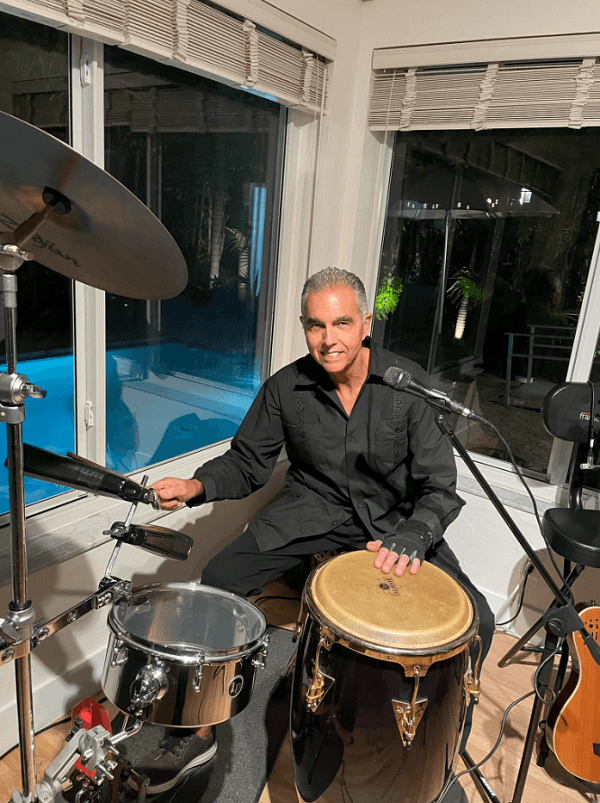
Roland Cache playing
Roland Cache playing drums live at an event

Roland’s musical beginnings as a teenager

As a child, Roland lived in Elizabeth, New Jersey, where some high school friends convinced him to play drums with them. Their favorite genre was the rock of the day, which was the 1960s. A few years later, specifically in 1973, another friend took him to a salsa concert at Madison Square Garden, and he liked what he heard so much that he became more involved in Latin music and left American music aside. 

Seeing great artists such as Tito Puente, Ray Barretto, and other artists of Puerto Rican descent, he learned to play timbales, tumbadora, and bongos, which allows him to play a combination of conga, timbales, and clave at the same time. 

Orchestras prior to Cache Live Music

Before creating his own band, Roland was part of other projects that were training him for what was to come in his career later. One of them was a band from New Jersey, whose members formed La Charanga Casino, which became very popular in that city.

Some time later, Roland could not play for a while, so he has been throwing himself into selling cars and other area businesses. Then, in 1998, he returned to music and created an American band that played rock and jazz with a touch of Latin music.

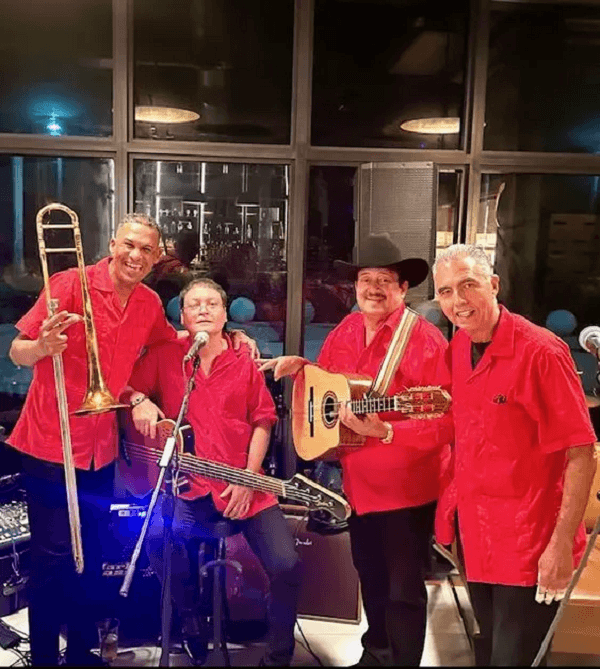
Roland Cache and the rest of the band
Roland Cache and the rest of Cache Live Music

Creation of Cache Live Music 

Eventually, he left the American band and founded a Latin band called Cache Live Music with a group of musicians, some of whom remain alongside Roland to this day. He met most of them through another musician friend who introduced them so he was knowing other artists who joined his project.

Cache Live Music was officially started in 1999, and according to its founder, the hardest thing about keeping a band like this together for so long was the search of opportunities in clubs and other kinds of places. However, Roland says that his experience as a salesman and negotiator has helped him a lot in winning contracts and the best conditions for him and his bandmates.

Current status of Cache Live Music

Today, the core of the band consists are three of its members: the guitarist, the bassist, and Roland, who is a multi-instrumentalist. More recently, Cache included a flutist, a trombonist, and sometimes a singer. This is how, depending on the requirements for a particular event, the group’s leader decides which members and instruments to include for every occasion in order to offer something different.

Cache at an Amazon event
Cache Live Music at an Amazon corporate event

Regarding the repertoire, they only perform covers, but they ensure that each and every song has their personal touch so that they resemble as little as possible to the original versions.

Anyone who wants to hire Cache Live Music can do so through its profile on The Bash by making a deposit and sending a contract to agree on the conditions of the event. However, it is important to note that they are already booked for December and January with corporate parties and weddings, for which we wish them every possible success because they already have the talent.

Tomas Pedro Regalado and Roland
Former Mayor of Miami Tomas Pedro Regalado and Roland Cache

Read also: The Williamsburg Salsa Orchestra: electrifying fusion and salsa flavored with indie rock

Europe / December 2025

Cafe Berlin 2025Radio Gladys Palmera 2025

Karina Bernales present December 2025 FESTIVALS

France December flag
FRANCE
Rainbow Fest Nancy

Rainbow Festival Nancy

Dec 11 / 14 2025

Salle Des Fêtes de Gentilly
710 rue du Capitaine Guynemer
Nancy, France 54100

From € 125

Slovenia circle flag
SLOVENIA
Afro Latin Village 2025

Afro Latin Village Winter Edition

Dec 05 / 08 2025

Hotel & Wellness LifeClass
Obala 33
Portoroz, Slovenia

From € 160

New Year’s Eve celebration

Austria 12 2025
AUSTRIA
NYE PARTY 2025

NYE PARTY

Dec 31, 2025 / Jan 1, 2026

JO & JOE
Europaplatz 1/6 1150
Fünfhaus, Austria

€ 129

Italy December
ITALY
CAPODANNO 2026

CAPODANNO 2026

Dec 31, 2025 / Jan 1, 2026

Arca Social Club
Via Degli Angeli 146, 175
Roma, Italy

€ 80

Calibrated maracasMartinez attorney

Directory of European nightclubs

CZECHIA 12 2025
CZECHIA

La Macumba 2024
La Macumba
Štefánikova 230/7 150 00
Prague, Czech Republic

France December flag
FRANCE

Canela
Canela Club Latino Paris
77 Rue du Faubourg du temple 75010
Paris, France

Cuba Compagnie
Cuba Compagnie Café
48 BD Beaumarchais 75011
Paris, France

Cubana
Cubana Café
47 rue Vavin 75006
Paris, France

La Pachanga
La Pachanga Officiel
8, rue vandamme 75014
Paris, France

La Peña
La Peña Saint Germain
3 passage de la Petite Boucherie 75006
Paris, France

Balajo
Le Balajo
9 rue de Lappe 75011
Paris, France

Pachamama
Pachamama PARIS
46 rue du Faubourg Saint Antoine 75012
Paris, France

Selsero
Salseroparis
9 Rue du Petit Pont, 75005
Paris, France

Germany December flag
GERMANY

Cascadas
Cascadas
Ferdinandstr. 12
20095 Hamburg-Mitte, Germany

Havanna
Havanna Berlin
Hauptstr. 30
10827 Berlin-Schöneberg, Germany
La Macumba - The Real Latin Club in Hamburgs
La Macumba – The Real Latin Club in Hamburgs
Adenauerallee 3 20097
Hamburg, Germany

Latin Palace Changó
Latin Palace Changó
Münchener Strasse 57
60329 Frankfurt, Germany

SODA
Soda Club Berlin
Schönhauser Allee 36
10435 Berlin, Germany

Malta 12 2025
MALTA

Bario Latino Malta venue
Barrio Latino Malta
Ghar il Lembi Street SLM1562 Sliema
Central Region, Malta

Poland 12 2025
POLAND

Teatro Cubano
Teatro Cubano Warsaw
ul. Aleksandra Fredry 6 00-097 /> Warsaw, Poland

Spain December 2023
SPAIN

ACM City
ACM CitY
Carrer Can Pallarès 2, Cerdanyola del Vallès
08290 Barcelona, Spain

Antilla
Antilla Barcelona
C/ d’Aragó, 141
08015 Barcelona, Spain

Azucar
Azúcar SalsaDisco
Calle de Atocha, 107
28012 Madrid, Spain

Disco Bar Cuba Live
Cuba Live
Ramón y cajal número 2
07011 Palma de Mallorca, Spain

El Son
Discoteca El Son
C. de la Victoria, 6
28012 Madrid, Spain

Prisma Discoteca
Discoteca Prisma
C. de Alcalá, 192
28028 Madrid, Spain

Discoteca El Edén Boliviano
El Edén Boliviano
Carrer Gremi de Tintorers, 49A
07009 Palma, Illes Balears, Spain

Mojito
Mojito Club
Rosselló, 217
08008 Barcelona, Spain

Morena
Morena Barcelona
calle 11 num.29
08860 Castelldefels, Spain
Que Chimba
Qué Chimba
Av. del Vallès, 117
08223 Terrassa, Barcelona, Spain
Sala Olvido Madrid
Sala Olvido
C/ Olvido 15
28026 Madrid, Spain
Seven Dance
Seven Dance (Dio Club)
Carrer del Perill 10
08012 Barcelona, Spain

The Host Madrid
The Host
C/ Ferraz nº 38
28008 Madrid, Spain
+34 918 05 36 48

UK December flag
UNITED KINGDOM

Salsa Soho
Bar Salsa Soho
96 Charing Cross Rd
WC2H 0JG London, UK

Salsa Temple
Bar Salsa Temple
Victoria Embankment, Temple
WC2R 2PH London, UK

Juju's
JUJU’s Bar & Stage
Ely’s Yard 15 Hanbury Street
E1 6QR London, UK

Revolucion de Cuba
Revolucion de Cuba Leeds
64-68 Call Lane
LS1 6DT Leeds, UK

LightHouse
The LightHouse Bar & Club
62 Rivington Street
EC2A 3AY London, UK


Cristobal Verdecia and his quartet Son Qba in Miami

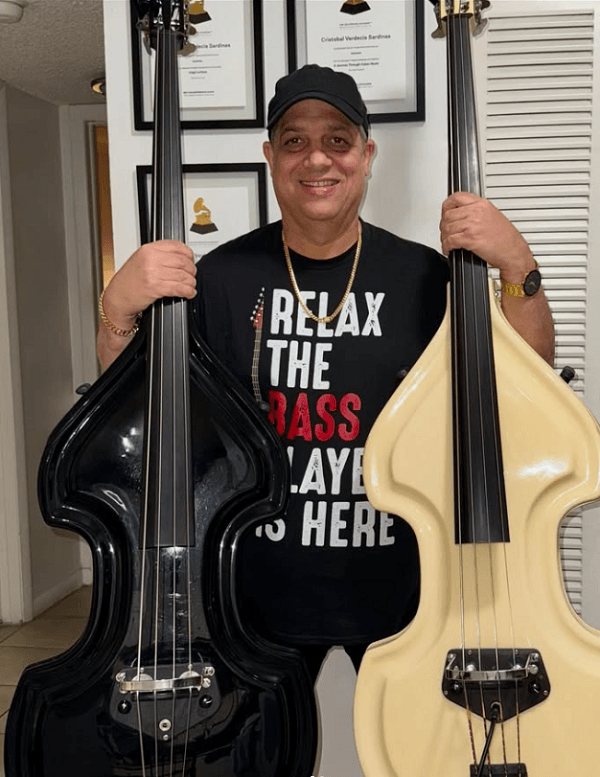
As we all know, Cuba is an endless source of talent and never tires of proving it. Today, we are really honored to be able to talk to one of its greatest exponents in the city of Miami and it is arranger, producer, bandleader, and bassist Cristóbal Verdecia, who very kindly agreed to talk to us for a few minutes about his life and career both in Cuba and in the United States, his home for more than 10 years.

Cristobal with his basses
Cristobal Verdecia with his two basses

Cristóbal’s beginnings and inspirations for entering the world of music

The first reference that Cristobal had at a musical level was his uncle Israel “Kantor” Sardiñas, who was the vocalist, bassist, and pianist for the legendary band Los Van Van. The artist always wanted his nephew to learn to play instruments, more specifically the piano, but Cristóbal had other hobbies at the time and did not pay much attention to him. Then, in 1982, Sardiñas packed suitcases and left Cuba in search of better opportunities, but not before leaving his piano, bass, and guitar to the young Cristóbal to use them in his place.

It was then that he finally became truly interested in music, and the instrument that most caught his attention at the time was the bass. Seeing this sudden love for the instrument, Cristóbal’s father decided to enroll him in the Guillermo Tomás Music Conservatory when he was about 10 years old. He greatly improved his skills with the bass and began playing with local jazz bands, but his academic training was not yet complete. 

Some time later, he enrolled at the Ignacio Cervantes Conservatory, where his teachers, in his own words, were two of the best bassists to come from Cuba: Silvio Vergara, now deceased, and Carlos Del Puerto. At this institution, he studied electric bass and double bass.

From there, Cristóbal began playing with increasingly prestigious bands such as Pachito Alonso y Su Kini Kini, Paulo FG y Su Élite, Adalberto Álvarez y Su Son, Havana D’Primera, among many others. Being with Pachito, he had the opportunity to share with artists of the stature of Roberto Hernández “Robertón” (current Los Van Van singer), “El Lele,” the Mengual twins, among others. It was Robertón who gave him some advice about how to improve the quality and raise the level of his work.

Cristobal and his uncle
Cristobal Verdecia and his uncle Israel “Kantor” Sardiñas

In the case of Paulo G Y Su Élite, he had the opportunity to serve as musical director for about five years in the band, which provided great learning for the future. 

Subsequently, Alexander Abreu, director of Havana D’Primera, had the idea of forming his own band with the best musicians in Cuba and that each musician had a substitute. That was where Cristóbal joined and became part of the first album, “Haciendo Historias.”

Move to the United States

When Cristóbal made the decision to leave Cuba, the first country he visited was Mexico, where he spent about four years and also played with many other bands. However, the idea of forming his own project was already on his mind for some time.

When he finally turned this idea into reality, the artist and his band accompanied singers who arrived alone, which provided him the expertise to face the future professional challenges that awaited him.

Julio Cesar, Cristobal, Marciano, and Franklin
Guitarist Julio Cesar rodriguez, bassist Cristobal Verdecia, percussionist Marciano Hernandez and tresero Franklin Reytor

Once his cycle in Mexico concluded, he moved to Miami in 2012 to continue growing in music, as he believed that the city offered him an opportunity that his previous country of residence did not. One of the first things he wanted to do was to revive his quartet Son Qba, which he had started in Mexico, but he was advised to take the time to learn how everything worked there first and then follow the path he wished.

This is how Cristóbal also managed to play with several local artists and bands to understand the dynamics of the place, such as Tony Succar, Issac Delgado, Timbalive, Aymée Nuviola, Grupo Niche, Gonzalo Rubalcaba, Albita Rodríguez, Buena Vista All Stars, among others. All this path traveled finally led him to be able to resume Son Qba with the full works in 2019.

Today, Son Qba consists of our guest Cristóbal Verdecia, tresero Franklin Reytor, percussionist Marciano Hernández, singer and guitarist Julio César Rodríguez, and singer José “Pepito” Gómez.

Read also: Gabrielito Y La Verdad giving everything in Los Angeles and beyond

  • « Go to Previous Page
  • Page 1
  • Interim pages omitted …
  • Page 21
  • Page 22
  • Page 23
  • Page 24
  • Page 25
  • Interim pages omitted …
  • Page 138
  • Go to Next Page »

International Salsa Magazine (ISM) is a monthly publication about Salsa activities around the world, that has been publishing since 2007. It is a world network of volunteers coordinated by ISM Magazine. We are working to strengthen all the events by working together.