• Skip to primary navigation
  • Skip to main content

International Salsa Magazine

  • HOME
  • Previous editions
    • 2026
      • ISM / March 2026
      • ISM / February 2026
      • ISM / January 2026
    • 2025
      • ISM / December 2025
      • ISM / November 2025
      • ISM / October 2025
      • ISM / September 2025
      • ISM / August 2025
      • ISM / July 2025
      • ISM / June 2025
      • ISM / May2025
      • ISM / April 2025
      • ISM / March 2025
      • ISM / February 2025
      • ISM / January 2025
    • 2024
      • ISM / December 2024
      • ISM / November 2024
      • ISM / October 2024
      • ISM / September 2024
      • ISM / August 2024
      • ISM / July 2024
      • ISM / June 2024
      • ISM / May 2024
      • ISM / April 2024
      • ISM / March 2024
      • ISM / February 2024
      • ISM / January 2024
    • 2023
      • ISM / December 2023
      • ISM / November 2023
      • ISM / October 2023
      • ISM – September 2023
      • ISM – August 2023
      • ISM July 2023
      • ISM Edition June 2023
      • ISM – May 2023
      • ISM April 2023
      • ISM March 2023
      • ISM February 2023
      • ISM January 2023
    • 2022
      • ISM December 2022
      • ISM November 2022
      • ISM October 2022
      • ISM September 2022
      • ISM August 2022
      • ISM July 2022
      • ISM June 2022
      • ISM May 2022
      • ISM February 2022
      • ISM January 2022
    • 2021
      • ISM December 2021
      • ISM November 2021
      • ISM October – 2021
      • ISM September 2021
      • ISM August 2021
      • ISM July 2021
      • ISM May 2021
      • ISM April 2021
      • ISM June 2021
      • ISM March 2021
      • ISM February 2021
      • ISM January 2021
    • 2020
      • ISM December 2020
      • ISM November 2020
      • ISM October 2020
      • ISM September 2020
      • ISM August 2020
      • ISM July 2020
      • ISM June 2020
      • ISM May 2020
      • ISM April 2020
      • ISM March 2020
      • ISM February 2020
      • ISM January 2020
    • 2019
      • ISM December 2019
      • ISM November 2019
      • ISM October 2019
      • ISM Septembre 2019
      • ISM August 2019
      • ISM July 2019
      • ISM June 2019
  • Download Salsa App
    • Android
    • Apple
  • Spanish

Search Results for: Cuban music

Ilhe Habana

Latin America / Colombia / Bogota

Ilhe Habana. Little Havana in Colombia

Ilhe Habana
Ilhe Habana

The Macarena Sector in Bogotá – Colombia offers us a great variety of gastronomic spaces, a reference sector for international food, for this reason we could not help but bring us closer to the best Cuban food space in the city, the great Ilhe Habana, a space of great tradition that takes you to enjoy a themed plaza of old Havana.

Ilhe Habana - inside
Ilhe Habana – inside
Ilhe Habana - inside - 2
Ilhe Habana – inside
– 2

From Sunday to Sunday from 12:00 to 4:00 pm, it opens its doors to a particular base of high caliber typical Cuban foods, we can get a great gourmet line, it is easy to get dishes such as old clothes, black beans, Moorish rice and Christians, yucca with mojo, habanero mincemeat, habanero shrimp, sea bass, squid rings, among others that delight your palate, arrival night from Wednesday to Saturday from 6:30 p.m. to 10:00 p.m.

Ilhe Habana - Cymbals
Ilhe Habana – Cymbals

It offers us a space decorated with groups and singers of the music of the island, letting the enjoyment roll until 12:00 am on Fridays and Saturdays to enjoy boleros, sones, danzones and even guarachas of this Latin American musical icon.

Ilhe Habana - live music
Ilhe Habana – live music
Ilhe Habana - live music - 2
Ilhe Habana – live music – 2

Ilhe refers to the word house or land according to the Yoruba language, something well defined with the Afro-Cuban culture, for this reason Ilhe Habana seeks a concept of old Havana, with a cozy space with brightly colored walls, wooden furniture and a house facade taken of the best Cuban roots.

Ilhe Habana - the kitchen
Ilhe Habana – the kitchen

During our visit we were able to talk with… the owner and cause of this gastronomic fever, he allowed us to enjoy the house specialty, the much-followed Roast Pork, although we noted that the fried cow was highly requested, as was the pork escalope. Located near the city center, on Carrera 3A, # 26B – 72, this Caribbean center offers us a space full of delicious dishes, visit www.ilhehabana.com and find out about a whole world of flavors, surely during your visit to Bogota you will not be able to forget going through this great restaurant.

Beatriz Márquez Castro, an exponent of romantic songs, “Feeling” and Bolero

Beatriz Márquez Castro is a singer, composer, and pianist, born on February 17, 1952, in Havana.

Beatriz Márquez Castro. Cantante, compositora y pianista

She is the daughter of the prestigious composer and performer René Márquez. She began her artistic career in 1968.

An exponent of romantic songs, “feeling,” and bolero, she gracefully delved into these genres, performing pieces by prolific authors such as René Márquez, Marta Valdés, Juanito Márquez, Silvio Rodríguez, and Germán Nogueira, among others.

Her mezzo-soprano range has enabled her popular “descents” to low tones, as well as her unexpected and no less appreciated “ascents” to much higher tessituras, without losing her defining style. This style is very appropriate for songs and boleros, genres in which she has remained one of Cuba’s leading cultivators.

She is known as “La Musicalísima.”

We are witnessing the realization of a long-cherished project with which the performer, pianist, and composer Beatriz Márquez settles a debt both on a family level and within Cuban discography.

After several years of searching through archives and old recordings, thanks to the collaboration of Cuban audiovisual producer Felipe Morfa, it was possible to prepare “Este encuentro” (Colibrí Productions, 2023). This album features a selection of known and unreleased pieces by singer and composer René Márquez Rojo (1914-1986), some of which were popularized in their time by internationally renowned figures like Antonio Machín or the Puerto Rican Daniel Santos, to name just two examples.

Beatriz Márquez Castro, an exponent of romantic songs, "Feeling" and Bolero
Beatriz Márquez Castro, an exponent of romantic songs, “Feeling” and Bolero

Given the influence René had on the career of his daughter and grandchildren, this is an album full of love and, above all, gratitude.

While he was best known for his songwriting, it is important to highlight the mark he left as a charanga singer.

Among others, we can mention his work with the charangas of violinist Cristóbal Paulín, Oscar Muñoz Bouffartique, and René Touzet.

He debuted at the Mil Diez radio station with the group led by Julio Cueva, to which he dedicated himself for ten years.

From the late 1930s onwards, the lyrics by the artist from Villa Clara quickly resonated with the public.

“El Inquieto Anacobero” recorded “El disgusto de bigote” with the Sonora Matancera in 1949 and also sang other Cuban songs such as “Soltando chispas,” “A San Lázaro,” and “El granito de maíz.”

René’s songs, among which “El quinqué” cannot be missed, speak of his natural ingenuity for storytelling.

Upon his death at 72, he left a musical legacy that has since been defended by his descendants.

In over five decades of her artistic life, Beatriz has become her father’s most faithful interpreter, having recorded songs for several albums such as “No respondo,” “Explícame por qué,” and the now famous “Espontáneamente,” initially included in the LP “Es soledad” (Egrem, 1970) and re-recorded on multiple occasions.

In “La Musicalísima”‘s discography, prior to this material, there were only two phonograms exclusively dedicated to the work of a single author: “Beatriz canta a Juan Almeida” (Egrem, 1978), followed forty years later by “Libre de pecado” (Colibrí Productions, 2018), a tribute to maestro Adolfo Guzmán, thus contributing to the rescue of the island’s musical memory.

“Este encuentro” spans traditional trova and moves from guaracha to son, without forgetting some of the composer’s most notable boleros.

It also allows us to appreciate René Márquez’s interpretive qualities by hearing his voice, rescued from old recordings.

The special participation of singers Evelyn García and Michel Maza, continuators of the family saga, is noteworthy.

Now, the 2015 National Music Award winner and the main architect of this phonogram invites us to explore René Márquez’s immense body of work, one that will by no means be forgotten, across eleven tracks._ Jaime Masó

Beatriz Márquez - Este Encuentro (2023)
Beatriz Márquez – Este Encuentro (2023)

Beatriz Márquez – Este Encuentro (2023)

Tracks:

  1. Este Encuentro
  2. La Vida Es Un Momento
  3. Muchachito Inocente
  4. No Respondo
  5. Nunca Habrá Distancia
  6. Soltando Chispas
  7. En El Cielo De Mi Vida
  8. Imposible Amor 09. Popurrit 10. Espontáneamente 11. Mi Placer

By:

L’Òstia Latin Jazz

Augusto Felibertt

Ecured

Instituto Cubano de la Música

Also Read: Enrique “Culebra” Iriarte, master of the piano and musical composition

Del Campo Dance Studio

North America / USA /  California

Del Campo Dance Studio is proud to be the longest running studio for Salsa dance instruction in the Sacramento area. With a well-rounded program focused on Salsa dancing they have seen countless students dance their way into confidence. Their dance community is welcoming and lively. You’ll find an energy and style that brings life to the dance floor in the group classes, workshops and at the outside weekly venues. Beginners are welcome and encouraged to join. Offering beginner classes on the dance floor, and in studio (no partner needed).

Now is your time to dance!

Salsa is a Latin style of dance that is primarily danced with a partner. The music is energetic and lively with percussions, horns and a distinct latin beat that has you moving in your seat. The dance is made of quick footwork, spins, patterns and a passionate show of body movement in relationship to the music-styling known as cuban motion or latin hip action.

Salsa is an excellent dance for inexperienced dancers to get their dancing feet moving and a favorite style for those who dance with a passionate soul.

Del Campo Dance Studio - Dancers
Del Campo Dance Studio – Dancers

Private lessons

Private lessons are available for individual students or for couples by appointment.

Private sessions are an excellent way for inexperienced dancers to become familiar with the dance style(s) they are most interested in, and a quick way to feel comfortable on the dance floor. Private lessons are also perfect for the more experienced dancer to quickly advance their dancing skills.

Group Classes

Group classes are an important part of the Salsa Dance program. Salsa Dance offers group classes for beginners, and intermediate classes for those who desire to continue learning and keep in-step with their dance training. All of the classes accommodate leaders and followers with attention to steps, partner techniques, rhythm with a touch of style. No partner needed! All you have to do is show up and have fun.

For more information about other dance classes, visit https://www.delcampodance.com/home . Private Lessons


John Leguizamo Returns to Broadway

North America / USA / New York

John Leguizamo returns to Broadway with the super production LATIN HISTORY FOR MORONS for only 16 weeks, a comedy theater that will teach the audience the story of Latino immigrants in North America that you won’t find either in books or in the education provided in the schools of the country.

John Leguizamo returns to Broadway with the super production LATIN HISTORY FOR MORONS

This sympathetic actor, comedian, and Colombian – American producer created this monologue due to the situation he faced a long time ago with his son. The child was being bullied in the private school that he attended in NYC for being one of the few children of Hispanic origin there. For that reason, and using homework of heroes assigned to his son, John began to teach him some Latino leaders who played big roles in American history. “Things were getting kind of rough out there…

And then, all of a sudden, we were in this dark episode where Latin people are being maligned and we’ve become the whipping post for the president. They even tried to pass the – show me your papers- law in Texas, basically profiling Latin people”, said Leguizamo to an American media.

After 4 years of research, this Emmy Award-winner actor, very happy, created this dramaturgy in which he reveals the struggle of 10,000 Latinos in the American Revolutionary War, the brave AfroCaribbean women in Virginia who sold their jewels to feed the patriots in the wars. The shocking truth of the Cuban woman, Loreta Velasquez, who joined the army in New Orleans and fought the front in three battles of the Civil War disguised as a man. And not in accordance with it, John will continue walking for 3000 years of history, he will make us cross three continents and tell us about different empires, Mayas, Aztecs and Incas.

John Leguizamo - Latin History for Morons - 3
John Leguizamo – Latin History for Morons – 3

He will speak of Montezuma and Menudo, Yes! You read well, “Menudo” and he will close the acts with traditional dances like the Cumbia and indigenous rituals without censorship. “I was so ignorant of my own history because it is not taught in schools. It was a huge hole in my education and it shouldn’t have been, because without us Latinos, America wouldn’t be the country that it is”, Leguizamo explained to an American media.

John, who acted in series such ER (Dr. Victor Clemente), films such as: Super Mario Bros (Luigi) and more recently Wick 2 (Aurelio), besides, the voice of Sid (the laziness) in Ice Age, he in Latin History for Morons has a very unique style, a mixture between a stand up and a traditional dramaturgy. “There are other characters on stage, which I play; I do scenes with them and there is a narrative moving forward… I like to take people there with mime, dance, and music – it is very physical… It’s amazing what the audience will allow you to do.

John Leguizamo - Latin History for Morons - 4
John Leguizamo – Latin History for Morons – 4

They will go with you anywhere as long as you stick to the rules that you set up at the beginning. That’s the beauty of theater. And that’s what makes me keep coming back. Anything is possible on stage. It seems to be the most democratic and egalitarian place in America for entertainment. Where else would Hamilton have happened? It couldn’t have happened in Hollywood, or on cable or the networks”, said Jhon Leguizamo in an interview.

John Leguizamo - Latin History for Morons - 2
John Leguizamo – Latin History for Morons – 2

For his solo work of 45min of duration and which began since the third week of October he had to prepare himself in boxing as well as in dance. Hard work he had to do every day. “I’ve learned to consolidate my storytelling and be more of myself. To not just be an entertainer, but allow my anger, my edgier sides – and allow people to be even more uncomfortable. I never wanted my shows to be just Pollyanna shows,” he also said, “Latin comedy is a full emotional experience.”

Latin History for Morons (a satirical History Class) back to John Leguizamo to Broadway, under the direction of the famous theater director Tony Taccone, who owns 36 years of Career and who currently is the artistic director of Berkeley Repertory Theater in Berkeley, California. Moreover, John made his first Broadway presentation in 1991 with “Mambo Mouth” winning an Obie and he was nominated several times for Tony Awards for “Freak” in 1998.

“Broadway is just a culmination of a lot of work, and it always feels so celebratory. It’s the gaining of the highest prize.” John Leguizamo.

John Leguizamo - Latin History for Morons - 1
John Leguizamo – Latin History for Morons – 1

Venue: STUDIO 54. 254 W. 54TH ST., NEW YORK, NY. Tickets: $79 – $139 To get more information like them on Facebook https://www.facebook.com/LatinHistory101/ or buy the tickets online through https://www.latinhistorybroadway.com/

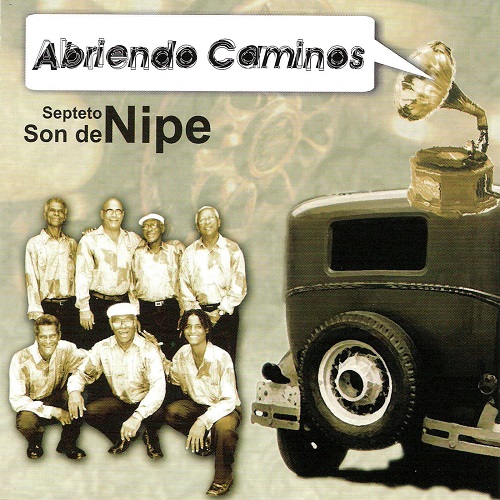
From Cuba El Septeto Son de Nipe come Abriendo Caminos (Opening Paths)

Son de Nipe. A musical septet born in the municipality of Antilla, it burst into the cultural world with an album of the In Situ label of the Colibri Record Production Company.

Antilla is the smallest municipality of the province of Holguin in Cuba and one of the smallest of Cuba, it was founded on January 21, 1925, it is famous from distant times for its beauty, legends and original aspect.

De Cuba El Septeto Son de Nipe vienen Abriendo Caminos

The group is formed by former musicians of the orchestra Brisas de Nipe of this municipality.

This project was born from the hands of Porfirio Núñez Cruz (Firo) who as Art Instructor at the Casa de Cultura Adelaida del Mármol of Antilla had experimented with other amateur groups, but not with the same results, because the members did not have the necessary musical training.

The album Abriendo Caminos includes 14 songs, 10 of which belong to Antillean authors.

“The value of Abriendo Caminos also lies in the fact that it helps Antillean composers and arrangers to open up to the recognition of their work and ways of doing things”.

From the singer and percussionist of the septet Son de Nipe, Alejandro Arencibia appears the guaracha Esa muchacha quiere bailar and the son, Honor al Guayabero; from Edalio Espinosa Alayo (Pupi), former member of the Brisas de Nipe orchestra, the son, Es caliente como el sol (It’s hot like the sun).

The songs A mi Antilla (bolero-son) and, Y no me niegues el beso (son) by José James Pinder, singer of the septet. By Oscar Fernández, former singer of the Brisas de Nipe Orchestra, the disc offers the themes Rebozo de amor (guaracha) and the son Que lástima.

Septeto Son de Nipe
Septeto Son de Nipe

From the director of the septet Son de Nipe Porfirio Núñez Cruz, Mi son tradicional.

And the guaracha Olvídate de esa nena by the Antillean composer Nemesio Palacio.

The remaining four musical numbers are; De que callada manera by Nicolás Guillén and Pablo Milanes, Culpable by Pepe Delgado, Rabo de nube by Silvio Rodríguez and Una alborada de amor by Ariel Dotres Zaldivar, these songs were arranged by Porfirio Núñez Cruz.

In the septet’s album Son de Nipe Abriendo Caminos “the guaracha, the bolero, the bolero-son and the genuine son are retaken with originality and revalued”.

The latter is due to the fact that the musical criteria followed by its director was the respect for traditional music, its deep knowledge, but imbuing it with very contemporary nuances, which results in a seal that distinguishes the septet Son de Nipe.

“We use the son, but more updated because we make innovations, harmonizing it in a more modern way, without losing its roots”.

The selection of the songs that made up the album Abriendo Caminos was in charge of the septet’s management, since the Casa Discográfica Colibrí wanted originality and the authentic exhibition of the work that has been developed with traditional music in the eastern part of the country.

Son Cubano de Nipe en Holguin

The graphic image of the disc, worked in sepia and black colors fundamentally manage to set the atmosphere that is offered to us with a vintage flavor and invites us to listen to these 14 songs full of tradition and contemporaneity.

“It will be a delight for the listener and the dancer, the good function of the tres in its solos and “entregas”, the beautiful and ingenious introductions, the exquisite mixture between text and music of the boleros, the harmonic patterns of the soneros that not for conventional reasons give up a significant finish, without neglecting, on occasions, the voices replacing wind instruments”.

The selection of the members was meticulous. Porfirio had in his favor the prestige he possessed and the convening power among his former colleagues of the Orquesta Brisas de Nipe, so much so that in the list of his group he planned to include Reyes Cástulo Urgellés Fáez, better known as Lulú as bassist and José James Pinder (Joseíto) as singer, both retired from the Orquesta Brisas de Nipe and linked to the Casa de Cultura in occasional activities.

The septet still needed to be completed with a key piece, the tres, for which the prestigious Mario Arencibia Rodríguez, one of the best tres players in Antilla, was summoned.

In the Arencibia family, musicians abound, that is why the group was completed with them: Alejandro, singer and Rafael on the tumbadora.

Alejandro and Mario had been part of an amateur group called Renovación Antillana for more than 20 years, which was very famous in its time and where a great number of aficionados were formed.

Alejandro sometimes played the tres in other groups, but in Son de Nipe he remained as a singer, he also had a work relationship that did not allow him to devote himself entirely to music; His nephew, trained at the Casa de Cultura and under the musical influence of the family, had taken over the tumbadoras, so Rafael Arencibia was the youngest of the group, he was barely 25 years old and at this young age he had already played in several amateur groups and got the Brisa de Nipe orchestra out of trouble, due to the unexpected absence of its percussionist.

Rafael Arencibia Rodríguez joined the project with enthusiasm despite the fact that the genre and style of the repertoire were not those used by the amateur groups of his contemporaries.

Iro had obtained the desired musicians, but he still had a big step to climb, his musicians were not professionals, they all had work commitments and he needed to prepare the project for the right day…(ecured).


Septeto Son De Nipe – Abriendo Caminos (2006)

Temas:

  1. Esa Muchacha Quiere Bailar (Alejandro Arencibia)
  2. Es Caliente Como El Sol (Edalio Espinosa Adayo)
  3. A Mi Antilla (José James Pinder)
  4. Rebozo De Amor (Oscar Fernández Paz)
  5. De Qué Callada Manera (N. Gillén / Pablo Milanés)
  6. Honor Al Guayabero (Alejandro Arencibia)
  7. Culpable (Pepe Delgado)
  8. Mi Son Tradicional (Porfirio Núñez Cruz)
  9. Y No Me Niegues el Beso (José James Pinder)
  10. Clodomiro (Oscar Fernández Paz)
  11. Rabo De Nube (Silvio Rodríguez)
  12. Qué Lástima (Oscar Fernández Paz)
  13. Una Alborada De Amor (Ariel Dotres Zaldívar)
  14. Olvídate De Esa Nena (Nemecio Palacio)
Septeto Son De Nipe - Abriendo Caminos (2006)
Septeto Son De Nipe – Abriendo Caminos (2006)


Research Sources:

L’Òstia Latin Jazz

Dj. Augusto Felibertt

Also Read: Virgilio Martí was an excellent rumbero and composer of the classic “Cuba Linda” where he was vocalist and percussionist in Grupo Folklorico Experimental Newyorkino

  • « Go to Previous Page
  • Page 1
  • Interim pages omitted …
  • Page 55
  • Page 56
  • Page 57
  • Page 58
  • Page 59
  • Interim pages omitted …
  • Page 102
  • Go to Next Page »

International Salsa Magazine (ISM) is a monthly publication about Salsa activities around the world, that has been publishing since 2007. It is a world network of volunteers coordinated by ISM Magazine. We are working to strengthen all the events by working together.