• Skip to primary navigation
  • Skip to main content

International Salsa Magazine

  • HOME
  • Previous editions
    • 2026
      • ISM / April 2026
      • ISM / March 2026
      • ISM / February 2026
      • ISM / January 2026
    • 2025
      • ISM / December 2025
      • ISM / November 2025
      • ISM / October 2025
      • ISM / September 2025
      • ISM / August 2025
      • ISM / July 2025
      • ISM / June 2025
      • ISM / May2025
      • ISM / April 2025
      • ISM / March 2025
      • ISM / February 2025
      • ISM / January 2025
    • 2024
      • ISM / December 2024
      • ISM / November 2024
      • ISM / October 2024
      • ISM / September 2024
      • ISM / August 2024
      • ISM / July 2024
      • ISM / June 2024
      • ISM / May 2024
      • ISM / April 2024
      • ISM / March 2024
      • ISM / February 2024
      • ISM / January 2024
    • 2023
      • ISM / December 2023
      • ISM / November 2023
      • ISM / October 2023
      • ISM – September 2023
      • ISM – August 2023
      • ISM July 2023
      • ISM Edition June 2023
      • ISM – May 2023
      • ISM April 2023
      • ISM March 2023
      • ISM February 2023
      • ISM January 2023
    • 2022
      • ISM December 2022
      • ISM November 2022
      • ISM October 2022
      • ISM September 2022
      • ISM August 2022
      • ISM July 2022
      • ISM June 2022
      • ISM May 2022
      • ISM February 2022
      • ISM January 2022
    • 2021
      • ISM December 2021
      • ISM November 2021
      • ISM October – 2021
      • ISM September 2021
      • ISM August 2021
      • ISM July 2021
      • ISM May 2021
      • ISM April 2021
      • ISM June 2021
      • ISM March 2021
      • ISM February 2021
      • ISM January 2021
    • 2020
      • ISM December 2020
      • ISM November 2020
      • ISM October 2020
      • ISM September 2020
      • ISM August 2020
      • ISM July 2020
      • ISM June 2020
      • ISM May 2020
      • ISM April 2020
      • ISM March 2020
      • ISM February 2020
      • ISM January 2020
    • 2019
      • ISM December 2019
      • ISM November 2019
      • ISM October 2019
      • ISM Septembre 2019
      • ISM August 2019
      • ISM July 2019
      • ISM June 2019
    • 2016
      • ISM December 2016
  • Spanish
  • Download Salsa App
    • Android
    • Apple

Search Results for: Cuban

Jerry Rivas, career, and support for the Spaha Salsa Gallery Museum

The Spaha Salsa Gallery Museum has been the recipient of a good number of objects donated by artists and their families after they had died. This time, it is the turn of Jerry Louis Díaz Rivas, better known as Jerry Rivas in the music scene, who is one of the main singers of El Gran Combo de Puerto Rico.   

We want to use his pleasant visit to our museum and his forty-sixth anniversary with El Gran Combo to talk a little about his great career and everything achieved in his long musical career over the past decades.   

Jerry with Johnny
El Gran Combo De Puerto Rico singer Jerry Rivas and Johnny Cruz

Life and career of Jerry Rivas   

Jerry Diaz was born in the city of Tampa, United States, on August 25, 1955 and his parents were of Puerto Rican origin, so it is undeniable that Puerto Rican heritage greatly influenced the path he would take later on.   

About five years later, Jerry and his family moved to the city of Bayamón, Puerto Rico, where he began to take his first steps in the world of music with the guitar, the Puerto Rican cuatro and the Cuban tres, counting on the support of professor Carlos Seguí to learn to play the latter. However, shortly after, he would decide that singing was his thing. 

While still a young teenager, he was part of various groups such as Grupo Complicación, Conjunto Cojoba and Grupo Chaney, being in all cases a very important part of the body of musicians who were in these bands.   

His big great came in 1976 when Don Rafael Ithier, who was interested in the artist to be part of El Gran Combo De Puerto Rico, after he was recommended by Don Quique Lucca, who thought of this boy as replacement of the legendary Andy Montañez, singer of the group for more than 14 years.   
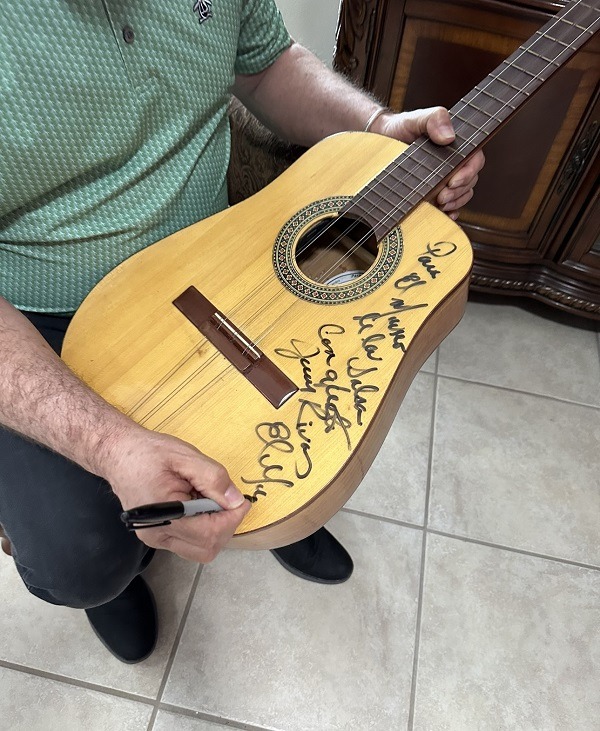
Jerry signing a tres
Jerry Rivas signing the Cuban tres he donated

Although it was not believed that Jerry could fill the shoes of his predecessor, his talent, effort and support from the music director of the orchestra, made him consolidate in the institution along with the rest of his colleagues and become one of the longest-serving members of El Gran Combo. 

International fame came with the album ”El Gran Combo En Las Vegas” thanks to the song ”La Clave”, in which he proved his vocal abilities to new levels. After that, he achieved his consecration as an international star with the album ”Happy Days” thanks to the song ”El Menú”.   

After that, everything that followed for Jerry was success with the orchestra, which resulted in approximately 30 recordings in a span of 45 years with El Gran Combo de Puerto Rico, his musicians and the extraordinary team behind the group.    

Other details of his life and support to the Salsa Museum  

In addition to being a vocalist for El Gran Combo de Puerto Rico, Jerry also participated in backing vocals with other great musicians for their respective musical works such as Willie Rosario, Bobby Valentín, Yuri Buenaventura, Gilberto Santa Rosa, La Sonora Ponceña, Adalberto Santiago and many others.   

Jerry with Johnny and the tres
Jerry and Johnny with the tres and the jacket Jerry donated to the museum

In each of these projects, the Puerto Rican artist has always given his personal touch and his unmistakable vocal chords, so it is normal that he is considered a legendary voice within the salsa movement not only in his country, but also worldwide.   

Due to all of the above, it is a true honor for the Spaha Salsa Gallery Museum to receive this great musical luminary in its facilities, where he was welcomed by its president and founder, Mr. Johnny Cruz. 

Some photos on the Cruz’s official Facebook page, it is evident that both shared a very pleasant time remembering things from the past and talking about music. In addition, Jerry donated one of his shirts and a Cuban tres to the museum so that they can be exhibited to the public along with the rest of the objects in its collection.   

We thank Jerry for his kindness, generosity and great talent, which we hope will continue to accompany us in the years to come. 

Read also: Tommy Olivencia Jr’s career and support for the salsa museum 

Latin America – July 2023

Djane Shina
 
Antonio Cartagena
 
Roberto Rodríguez
 
Luis “Tata” Guerra
 

Banner willian t. martinez immigration attorney

When it comes to compositions, Luis “Tata” Guerra is widely known internationally

On June 9, 1934, in Guanabacoa, Cuba, Luis “Tata” Guerra was born. Excellent Percussion Master with a Guinness World Record for having accompanied more orchestras live and in recordings.

A virtuoso musician, Luis Tata Guerra, member of a humble and hard-working family, is the last of 4 brothers, born of a musical tradition, his father played guitar, and his older brother Emerio Guerra is a guitarist in Havana.

He studied music and saxophone at the Salesian School of Guanabacoa. He learned to play the tumbadora, and the rhythms of Rumba and Guaguancó in his neighborhood in the 50s.

Luis “Tata” Guerra
Luis “Tata” Guerra

He joined the Almendra Orchestra in 1954, performing in the best nightclubs of the island. He rehearsed with Conjunto Casino and Conjunto Arsenio Rodríguez.

In 1956 he arrived in Colombia with the Cuban Swing Orchestra, he stayed for 4 years working with the groups Sonera del Caribe and the Pepe Reyes Orchestra (Cuban singer). From there he went to Venezuela where he has lived since 1960.

Maestro Guerra has an extensive career as a musician for his activity in different groups such as: Los Melódicos, Víctor Piñero y sus Casiques, Aldemaro Romero, Chucho Sanoja, El Pavo Frank, and accompanying on percussion in Caracas Tito Rodríguez, Miguelito Valdez, Rolando Laserie, Daniel Santos, Olga Guillot, Rubén Blades, Paco de Lucia, including the Timbal King Tito Puente and many Others.

Recognition for Luis "Tata" Guerra
Recognition for Luis “Tata” Guerra

His compositions have been played in the media in Santo Domingo, Spain, Cuba, Puerto Rico, Colombia, Venezuela.

The composition “Son Matamoros” dedicated to this famous Cuban trio, was included in the movie “Salsa” with the participation of Celia Cruz, Tito Puente, Mongo Santamaria, Grupo Niche and other values. He was a member of the VTV Orchestra (channel 8) for 23 years (1965-1991).

Member and Director of the trio Hermanos Rodriguez, in 1994 they traveled to the Canary Islands invited by President Hermoso, and are well known there for the hit “Son Canario” (composition by Guerra himself).

Again in 1999, they returned to the Canary Islands for more than 2 months, in addition to performing at the fabulous The Trump Taj Mahal Casino Resort in Atlantic City, New Jersey.

He presented his program “RAICES CARIBEÑAS” on ANTV.

When it comes to compositions, Luis "Tata" Guerra is widely known internationally.
When it comes to compositions, Luis “Tata” Guerra is widely known internationally.

His fondness for acetate collection was recognized throughout Venezuela. A work with his conjunto became very popular and the voice of “Kiko” Mendive reminded us of the grilles and discómanos of Cali in the 80’s. “Barara Bururu”.

We also remember the time he shared with his compatriot Rafael “Felo” Bacallao Hernandez, who had retired from the Aragon orchestra.

With great regret we recorded on February 24, 2015, the unfortunate news of the death of Tata Guerra, four months shy of his 81st birthday, he had been suffering from an accelerated affection in his respiratory system, remaining hospitalized at the Florida Clinic in the city of Caracas, where in the early morning of that day he left us.

“When I listen to reggetón/ my heart stops/ because my thing is rumba and son”.

Maria Luisa Guerra

Read Also:  Stelio Bosch Cabrujas a remarkable musician, but completely forgotten by the new generations

Source:

Por: Carlos Molano Gómez

Bogotá – Colombia
Derechos Reservados de Autor -primera publicación – 2016
Actualizado 2021.


Tempo Latino 2023

Tempo Latino 2023
Tempo Latino 2023

Tempo Latino is a music festival held in Vic-Fezensac, France, in the region of Gers in Gascony it is the first and the greatest Latin American and Afro-Cuban music festival of the summer in Europe. The festival was founded in 1994 and has been held annually since then.

“In 2020 and 2021, the festival was only interrupted for two consecutive years due to the containment of the new crown pneumonia (COVID-19) epidemic.”

With around 600 volunteers from all over the city for four days of intense activities and an audience of around 60,000 people from all over the world.

Tempo Latino offers a variety of Latin American and Afro-Cuban music, including Salsa, Bachata, Kizomba, Cumbia, Merengue, Rumba, Latin-jazz, Reggaeton and more. The festival also features dance workshops, food stalls and other cultural events.

International performers and instructors from Cuba, Puerto Rico, Colombia, Venezuela, Panama, Africa, the United States (primarily New York, Miami, and California), and Europe have participated in a number of concerts and workshops

Tempo Latino has grown from a small festival to one of the most important Latin American music festivals in Europe. The festival hosts some of the biggest names in Latin music, including Celia Cruz, Ruben Blades,  Eddie Palmieri, Oscar D’ León, Johnny Pacheco, Adalberto Álvarez, El Gran Combo de Puerto Rico, Kassav, Totó la Momposina,  and Los Van Van. Tempo Latino has also helped advance the careers of many new artists.

Here’s more information on Tempo Latino:

  • The festival takes place in a beautiful setting in the heart of the French countryside.
  • The festival is family friendly and has activities for all ages.
  • The festival is a great opportunity to experience a different culture and learn about Latin American and Afro-Cuban music.

A festival of concerts takes place in the square and, at the same time, many free outdoor events for those who want to discover music in the city’s dance halls in the afternoon and evening. In the second edition, they have integrated dance, music, and percussion lessons.

The 28th edition of Tempo Latino will take place from July 27-30, 2023.

The lineup includes:

La Conga

27 July – Ana Tijoux (France)

Les Arenes

28 July 2023

21:00 – Orchestra Baobab (Senegal)

23:00 – Grupo Compay Segundo (Cuba)

29 July 2023

21:00 – Lila Downs (Mexico)

23:00 – Cimafunk (Cuba)

30 July 2023

21:00 – Bernard Lavilliers (France)

23:00 – La Excelencia (USA)

and many more!

Pass Concert: 

On the official website, tickets for four days are available for 120 € (during the festival, they cost 150 €).

Eric Duffau

The current director of Tempo Latino is Eric Duffau from Toulouse, France. He is also the founder of the music festival which he started in 1994. A passionate lover of Latin American and Afro-Cuban music, Dufour devoted his life to promoting this music to a wider audience and serves on the board of the French Association for the Promotion of Latin Music (AFMPL).

Director of Tempo Latino is Eric Duffau from Toulouse

Dufoe was a tireless promoter of Latin American and Afro-Cuban music. He travels the world in search of new talent and works hard to make Tempo Latino a major cultural event. He is a passionate advocate of Latin music and works to bring this music to a wider audience.

Dufour graduated from the National School of Arts and Crafts (ENSAM) in Paris. In the early 1980s he worked as a DJ, during which time he became interested in Latin American and Afro-Cuban music. In 1989, he decided to create a festival to showcase this music and Tempo Latino was born.

https://www.tempo-latino.com/

https://www.youtube.com/user/TempoLatinoFestival

The Tempo Latino Festival is Back

Get to know the “ La Malamaña ” Orchestra

On this occasion we have the opportunity to meet the “La Malamaña” Orchestra

La Malamaña, a salsa orchestra that was born in 2008 as a band that paid tributes to the greats of salsa such as: Rubén Blades, Héctor Lavoe, stars of La Fania and the Cuban music and timba. They have a neighborhood band spirit, heirs to the sound of the New York neighborhood orchestras of the 70s and 80s, fused with elements of the timba sound and concepts of street music.

La Malamaña Orchestra playing
La Malamaña Orchestra Live

The name of the band was baptized by the former member – founder of the band, “Mauricio Ochoa” who founded and is leader of the orchestra “La Sonora Libre de Barcelona”. The name alludes to the Rubén Blades theme “they are looking for you” and that in addition to that also reflects our way of interpreting, writing and arranging the master genre: Salsa.

The Orchestras are based in Quito-Ecuador, with members from different latitudes, they build a proposal of Quito sauce, also called “high altitude Salsa”, for the 2800 meters above sea level where the city of Quito is located.

His main concerts were:

·   Emerald Carnival ·   Foro Mundial de la Bicicleta MINGAMOS
·   Music Festival in Quito and Cuenca ·   Festival – Engine of Change (Ambato 2019)
·   Festival in Defense of the Yasuní National Park ·   LATIN GROOVE EC (Independent Salsa Festival 2019)
·   Libertarian Days ·   CUMANDA Parque Urbano (Agenda Cultural – 2019)
·   Festival Cota 70, FIL Q (sharing stage with La 33) ·  Quito Fest-Fiestas (sharing stage with Rubén Blades)
·   Canoe Fest ·   Festival del Chocó Andino, Pacto 2019


Photo of the keyboardist of the La Malamaña Orchestra
Member of the La Malamaña Orchestra

But internationally, among the most important are:

  • 2012: Presentations in Beijing and Tianjin, in the People’s Republic of China.
  • 2015: First Tour in Europe (Genoa, Barcelona, ​​Madrid, Lyon, Paris and Tours).
  • 2018: Second Tour in Europe:
    • Festival des musiques métisses in the city of Colmar
    • FIMU de Belfort Festival “3 presentations”
    • Festival La Javelle-Guinguette “1 presentation”


During their time in the world of music they created several albums with a very characteristic sound of them. His first album was called “manual of urbanity and good customs” released in December 2011, which was followed by his single “El Kikuyo” in 2014, a song that was included in the international independent salsa compilation “Salsa de Hoy ”; In 2017 they released their song “Ya Llegó”. As of 2018 they released their latest album released which they baptized “SALSA DE ALTURA”; the members of the orchestra named it that way since Quito is 2800 meters above sea level. This new album has 6 songs by the band, among which are live versions and new material.

Photo of La Malamaña Orchestra
La Malamaña Orchestra at Club Lavoe

Did you know that there is a wide variety of topics that your audience likes, for example, the population of Cali, Colombia likes “What counts the braids” and “How to say” a lot; and in their homeland (Ecuador) they he quite liked his songs: “El kikuyo” and “Para armar”.

The members of the orchestra:

·       Grecia Albán – Voices

·       Edgar Granda – Voices

·       Javier Toro – Piano

·       Jamshid Gordón – Electric bass

·       Fidel Minda – Drums and timpani

·       Diego Minda – Conga Drums

·       Sebastián Segovia – Saxo Tenor

·       Carlos Quilumba – Saxo Alto

·       Yony Muñoz – Trombone

·       Francisco Rangél – Trombone


All the members like the strength that “salsa” has, as a music of resistance in the sense of maintaining African and mountain roots in Latin America. They have a lot of new songs and not so new ones that haven’t been recorded yet, we’re in a moment of creation. Soon they will record their new material for the enjoyment of our public.

Soon they will have an event in the month of January 2020 in the city of Quito, Ecuador for the anniversary of a hotel located in the Historic Center

They mentioned to us that their goal is: “We are interested in expanding the musical panorama of Quito salsa towards an alternative platform and generating more audiences at a local, national and international level”

They also sent a message to all their fans and new talents “To our fans we want to say that thank you for enjoying our music and our “sui generis” proposal of salsa and to the new talents simply that they believe in what they say and sing… .this is not about doing something to stick….but rather about being consistent with what is thought and with what we want to contribute in this world that so much lacks good art”

La Malamaña Orchestra photo
La Malamaña Orchestra finishing its presentation at the Club

For more information:

  • Facebook: https://www.facebook.com/lamala.mana/
  • Phone: +593 99 801 9775
  • Email: [email protected] / Edgar Granda/ Manager: [email protected] /     Press contact: Diego Minda, [email protected]

  • « Go to Previous Page
  • Page 1
  • Interim pages omitted …
  • Page 63
  • Page 64
  • Page 65
  • Page 66
  • Page 67
  • Interim pages omitted …
  • Page 116
  • Go to Next Page »

International Salsa Magazine (ISM) is a monthly publication about Salsa activities around the world, that has been publishing since 2007. It is a world network of volunteers coordinated by ISM Magazine. We are working to strengthen all the events by working together.