|
|
|
|
|
|
|
|
|
|
|
|
|
|
|
|












|
|
|
|
|
|
|
|
|
|
|
|
|
|
|
|
|
|
|
|
|
|
|
|
|
|
|
There are many Latin artists residing in Canada who have gone to the North American country to seek opportunities in music and, little by little, they have found them thanks to people like Tracy Jenkins and her label Lula World Records.
Tracy Jenkins, with whom we had the opportunity to talk a few days ago, is one of the co-founders of Lula World Records, part of the Lula Lounge nightclub team and an artist manager.
We found it very interesting to discover a record label belonging to a project focused on managing artists who make Latin music, which is a great opportunity to further promote our culture and genres that have been disseminated throughout the world in recent years.
Tracy has done an immeasurable work to guide and make known soloists and groups from all over Latin America and we want to recognize her great work with the most important details of the conversation we had with her.

When we wanted to know a little about the context of creating Lula World Records, Tracy told us that this was a project born from the vibrant Latin music scene at the Lula Lounge club, which has 21 years of operation in the city of Toronto.
During this time, the venue has established itself as one of the best places to enjoy live Latin music throughout the city of Toronto and Canada in general. Attendees can usually enjoy live singers, orchestras and DJs on Fridays and Saturdays, although there can be more days.
Currently, it is the only place in Canada that offers a total of 12 salsa orchestras and each one has its own sound and repertoire. It is the club that gave rise to what would later become known as Lula World Recodrs, which was born as a means to share the best quality salsa music produced in Toronto with a much more global audience.
The first official release of the project took place in 2012, but in the form of a musical complication under the name ”Lula Lounge Essential Tracks”, including the best tracks from artists such as Roberto Linares Brown, Yani Borrell, The Puentes Brothers and many other important names in the Canadian music industry.
Tracy says that, from that moment, they saw the opportunity to continue producing and releasing albums and tracks from other renowned singers and groups such as Lula All Starts, Conjunto Lacalú, Lengaïa Salsa Brava, Salsotika, La Borinqueña and El Charangon del Norte led by Wilver Pedrozo.

”We have centered our efforts on Latin music because of the relationship this project has with Lula Lounge, which opened its doors in 2022 with a concert by Isaac Delgado. From that point, the club has been remaining current for more than 20 years, time in which it has been the birthplace of new projects and emerging artists who have used the venue as a platform to develop and promote their music to local salsa fans,” Tracy said.
Among the many genres supported by Lula World Records all this time, we can mention salsa, Latin jazz, merengue, Cuban son, samba, bossa nova, reggae, classic tumbao, Latin-leaning funk, among many others. However, Tracy and his team are not limited to Latin genres, as they have also promoted Caribbean, Arab and European styles.
Something else Tracy said is that it is highly unlikely that the line followed by the label will change, since there are many migratory waves from Latin America that Canada continues to receive, so he knows that the Latin scene will keep growing in the coming years.
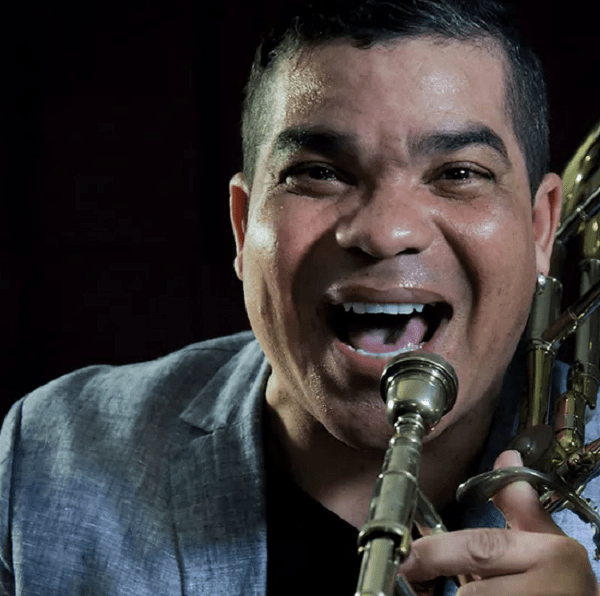
As with any other music label, Lula World Records has its own requirements for managing an artist, Tracy explained that she and her team generally engage with artists who have made great strides in recording, mixing and mastering their own music.
During the evaluation process carried out by them, aspects such as the quality of the songs, excellence in production, catchiness of the tunes and the overall authenticity and originality of the project are taken into consideration.
The label has a particular interest in original and innovative mixes of diverse musical elements and used as an example an Afro-indigenous punk rock group of Brazilian origin called Xocô, which recently released one of its latest albums. Two other great examples of this diversity are Ahmed Moneka, the creator of Arabic and Afro-Iraqi jazz, and Nastasia, a Ukrainian soul singer.
Another detail they take into consideration is the artist’s ability to collaborate with them during the process of releasing their albums. Releasing a record production requires a lot of work from start to finish and a lot of things to do such as marketing and promotion of music. Lula World Records wants artists who fully live up to their commitment and use all the platforms and tools available to promote what they are doing.
To close the conversation, Tracy told us that any artist who want their musical work to be promoted can submit their EPK to the company for evaluation by the board of directors. They are still a small label, but hope to grow a lot more over the next two years and even manage artists outside of Canada.
Read also: Christmas salsa albums to listen to this December
The beautiful island of enchantment Puerto Rico has always given birth to many of the best salsa exponents of all time and the source of talent that has come out of that place has been inexhaustible. It is always a pleasure to be able to talk with a boricua of those who continue to leave their Latin heritage on high and, this time, it was the turn of the arranger, composer, sound engineer and trombonist Félix O. Rodríguez from Santurce.
It was very kind of the artist to give us a few minutes of his time to answer some questions for International Salsa Magazine and then we will be elaborating a bit on the topics we discussed with the salsa exponent.
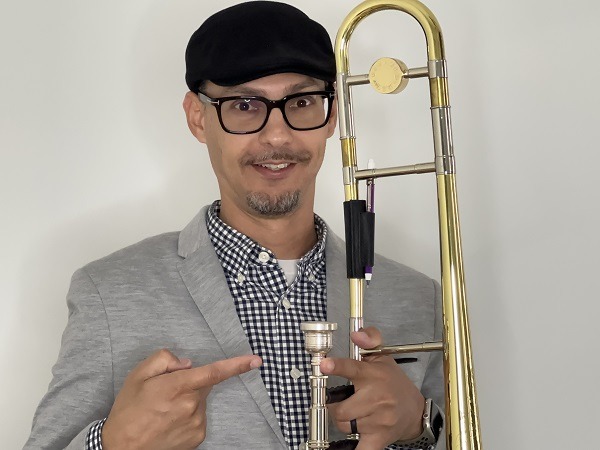
Félix’s first contact with music was at home, as his parents listened a lot to salsa, merengue, bachata and Latin music in general. While listening to this music, one of the things that attracted him the most was the sound of the trombone, especially in artists such as Willie Colón, Oscar D’ León, Gilberto Santa Rosa and many others.
Once he reached the seventh grade in school, he decided to take music lessons and chose that instrument to start his training due to his fascination with it, something that today he does not complain about because he assures that he has done very well.
In this learning process, noticing Félix’s interest in the trombone, his father, who was a professional orchestra musician, invited him to rehearsals so that he could soak up this whole atmosphere from an early age. It just so happened that the trombonist of this orchestra could not attend a rehearsal, so they gave the opportunity to the young boy to take his place for that night.
After two or three shows, Félix was selected as house trombonist when he was only thirteen years old. Although he was not old enough to enter nightclubs, he was allowed to be present because he was part of the orchestra that would play there.
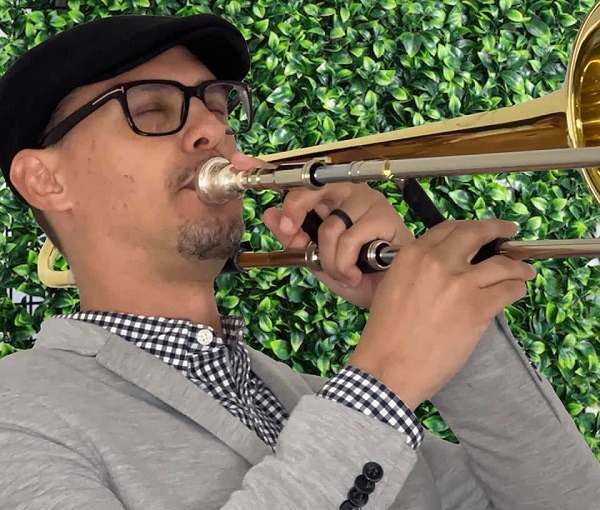
When he entered high school, Félix began to study a bit about music theory and related topics such as chords, writing for a specific instrument, percussion and other subjects.
The young man worked so hard to train that, at only 15 years old, he was already perfectly capable of making musical arrangements, starting with transcriptions of music existing so far and copying notes from those songs. After several years on it, he finally started writing his own original music.
In fact, he went on to record a couple of songs with Orquesta Innovación (the second orchestra he was in), a couple of original songs that unfortunately were never released, but served as experience for what would follow.
Félix acknowledged with laughter that this was the only university he applied to, so it was almost an obligation for him to be admitted. Fortunately for him, it was.
He had to perform some tests with instruments and show examples of material of his own authorship to prove his musical skills. Everything he had learned so far was mostly based on salsa.
Thanks to his effort and dedication in previous years, he was admitted to the University of South Carolina, where he studied music theory and trombone for five years. While there, the musician learned everything necessary about the historical aspects of all variants of classical music, jazz, marching band, orchestral symphony and many more.
The formation obtained in his studies is still useful to Félix in the arrangements he makes today. However, he made it clear that his passion was and still is salsa and Latin music in general.
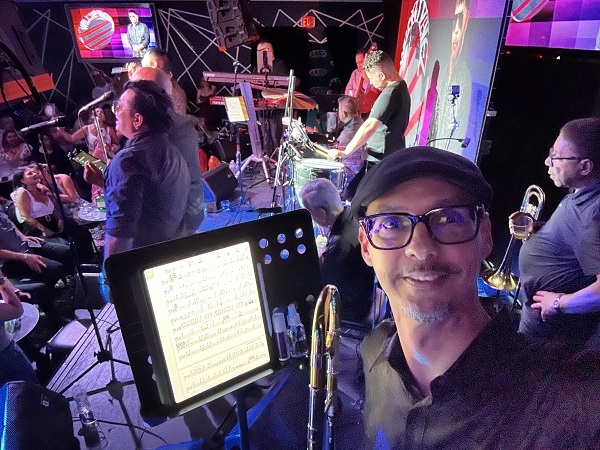
Upon graduating from the university, Félix was commissioned as an officer in the U.S. Army, following his father’s example, who was perfectly capable of meeting his obligations in the military and continuing to exercise his passion for music without having to give up either.
As fate would have it, the artist met up with a former colleague from Orquesta Innovación, which led them to revive their passion for music and to create Orquesta Ideal, with which he spent eight years at Fort Bragg (U.S. military installation), North Carolina, his first stop as an officer.
Over the years, he was assigned to units in Spain, Germany and Korea. It didn’t matter where he went because there were always Puerto Ricans and Latinos eager to get together to make music, which Felix took advantage of to be in touch with music, whether as a trombonist or a DJ.
When asked if these events in which he was involved in were open to the public, he said yes in most cases, as military bases allowed entry to anyone, but unfortunately that changed with the Twin Tower Bombings on 9/11.
During the last years of his military career, Felix studied production, mixing and remastering at Berklee College of Music in order to go preparing for his return to music once his retirement was official.
In addition to playing the trombone and arranging, the musician also loved production, editing, mixing and mastering, so he wanted to learn much more about all of these areas and thus have more control over his own work.
Given that the Covid-19 pandemic was starting at that time, his hours at the military base where he worked were significantly reduced, which he took full advantage of to dedicate more time to school and continue growing as a professional musician.

In the year 2021, Felix released his first EP titled ”Con La Música Por Dentro”. In a world still hit by the pandemic, the artist found it very difficult to record and promote his first solo musical work.
He wanted to record with live musicians, but because of this same situation, it was not possible, so there were endless backing vocals he had to do and instruments he had to play himself in order to make the EP happen, so his name is the one that predominates in almost all the credits of the material.
Fortunately, he succeeded to establish a recording studio at home and was supported his friend and singer João José, who recorded voices, piano and bass for the three tracks that make up the EP.
Atlanta
When we wanted to know why he chose Atlanta as his final destination to settle permanently, he told us that he did it to support his wife, who has got a good job in that city. He remembered the time when he started in the army and his wife and daughter always followed him wherever he traveled for his military duties, so he considered that it is time to return everything his partner has done for him and decided to follow her this time.
He had to look a little to meet musicians and re-weave those connections in the industry and the Latino community in Atlanta, so he had to start from scratch in that sense. The good thing is that everything worked out for him and, as soon as he arrived in Atlanta, he was contacted to play with Willie Gonzalez. The bandleader liked his skills as a musician and offered him to continue playing with them, and so it has been to this day.
Read also: Four nationalities united in Ladama
He has moved from the musical notes that embrace our ears to now capturing visuals that awaken our five senses of unrepeatable moments.
I appreciate and share first hand the reference of how this idea begins, how the seed of wanting to be a photojournalist is planted, after having directed the Guayciba Group for 12 years.
“In the mid-’80s, a group of friends and I got together. We started playing and put together a Christmas repertoire. People liked it, and they told me, ‘Hey Felix, you should form a group, you sound great.'”
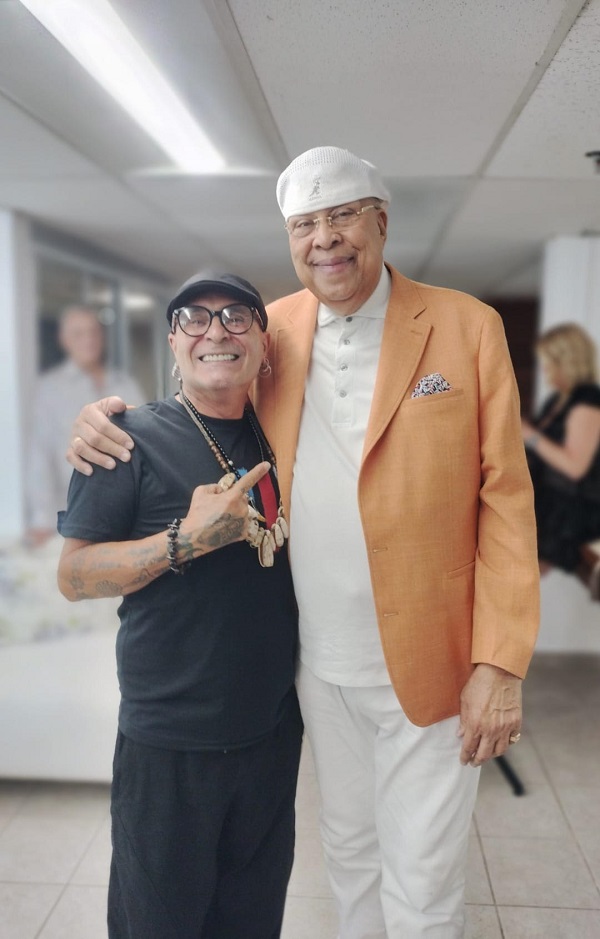
In 1988 they started calling themselves Murciélago Sound Machine and got their first professional contract, for which they charged $200.00. During one of the rehearsals, Felix’s neighbor, who owned a movie and video rental store, offered to give him the name of his store: Guayciba; which he had already registered with the State Department.
The rest is history.
Felix liked the name, even though he still didn’t know what it meant. Guay-ciba means to take care of the stone. It turns out that our Taino Indians communicated by carving messages on stones, which we now know as petroglyphs.
This form of communication of our Indians, the Tainos, was engraved on the stones that are part of our heritage.
Since 1989, Guayciba claims to have lost his last name – Ayala – to replace it with the name he is known by in the media, Guayciba.
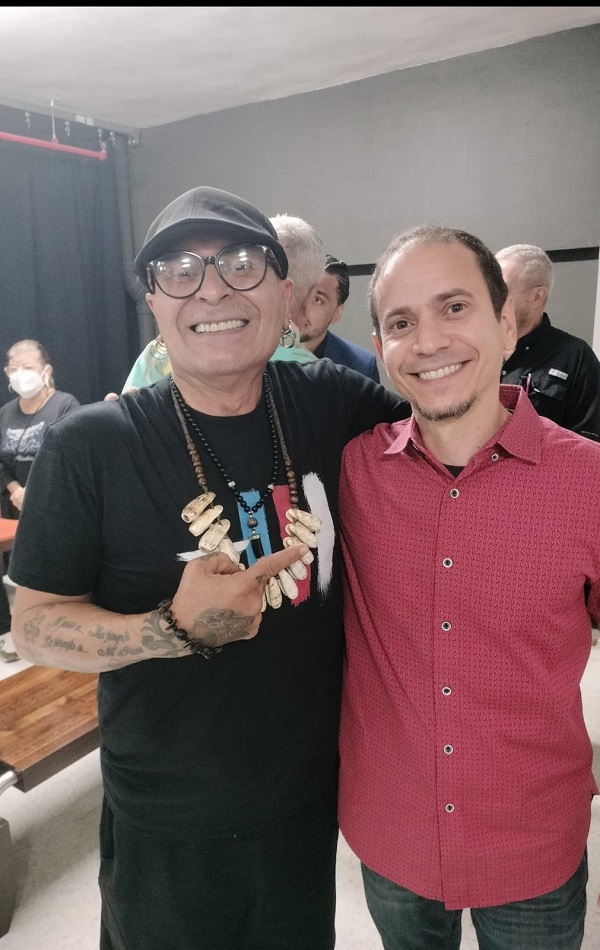
Felix remembers that the first singer of Grupo Guayciba was Gisela Ortiz. Some time later, Gisela got thyroid cancer and when she lost her voice, she had to be replaced by Aidita Encarnación.
Guayciba recalls that Aidita made her debut with the group during the “Coffee Festival” in Maricao and remained with the group until it disbanded in 2000.
Félix affirms that this production became the classic album that consolidated them in Salsoul, Z-93 and Estereotempo. Later they released La revolución apoya lo nuestro. In 1999 they released their last album, Contra viento y marea.
In this last Guayciba production, Maestro Luis ‘Perico’ Ortiz made two arrangements: “Déjame Soñar” by Perín Vázquez, which Tito Puente had already recorded on the 100th album, backing the voice of Tony Vega (Antonio Vega Ayala), the cousin of Félix Guayciba Ayala. The six albums of the Grupo Guayciba were recorded in the studio of Maestro Pedro Rivera Toledo, and in Contra viento y marea Maestro Rivera Toledo recorded the saxophone.
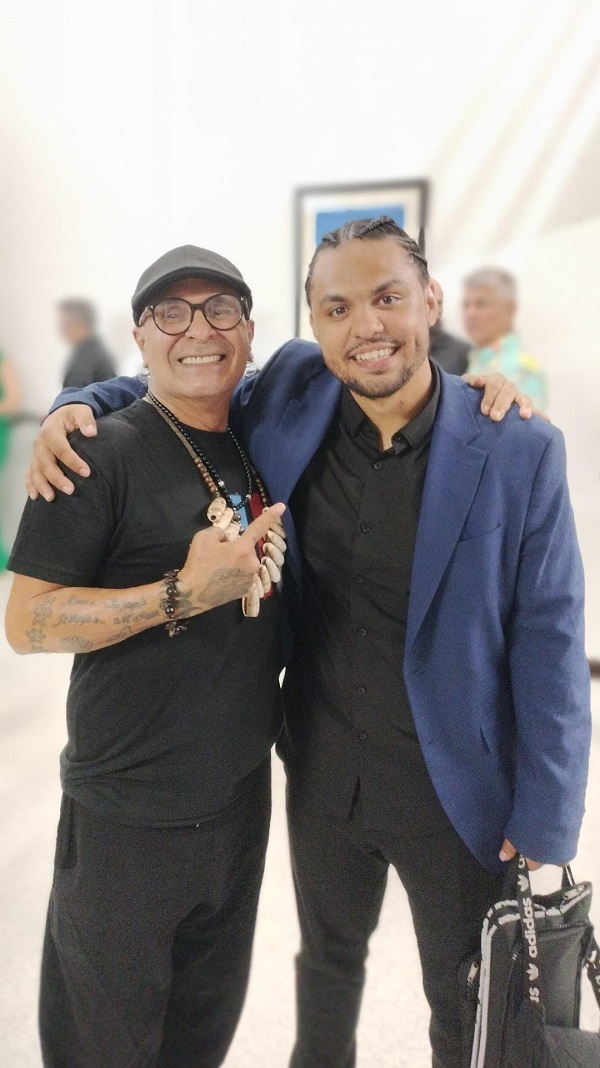
In his last album, the song “Por nada la cambiaré” was composed by Guayciba and dedicated to his homeland, Puerto Rico.
They never recorded Christmas music because their mission was to defend our music, the seis, the bomba, the plena and the guaracha, among other indigenous rhythms. The time came for the group to disband, but as Guayciba affirms: “We left a legacy for the musical history of our nation (…) Guayciba was, is and will be one of the best musical groups in the history of typical Puerto Rican music. I have retired, but at least we have left a legacy for history, we have left a mark”.
With the arrival of the new millennium, Guayciba’s musical stage ended to give way to the visual arts, making it clear that he had not retired from the humanistic arts, but had reinvented himself and now stood out in the visual arts.
The images captured by Guayciba’s photographic lens are full of life and movement. The viewer sees as if the artist, athlete or object in the photo comes to life.
Guayciba reflects while explaining how the image speaks or remains silent, depending on the adjustment made, the movement given, the position and the light.
He hastens to clarify: “I have used my musical career to distinguish myself in photography. I photograph artists the way I want them to photograph me.
I try to make the image I take of an artist or a show speak. In photojournalism, the photo has to speak.”
Guayciba made the decision to move from music to photojournalism as a result of a deep depression that he faced and fought with professional help. Once the decision was made, he began training at the University of Puerto Rico.
He never forgot what one of the specialists who was part of the medical team that helped him recover told him: “I have faith in you. If you are going to be a photojournalist, I want you to be the best photojournalist”.
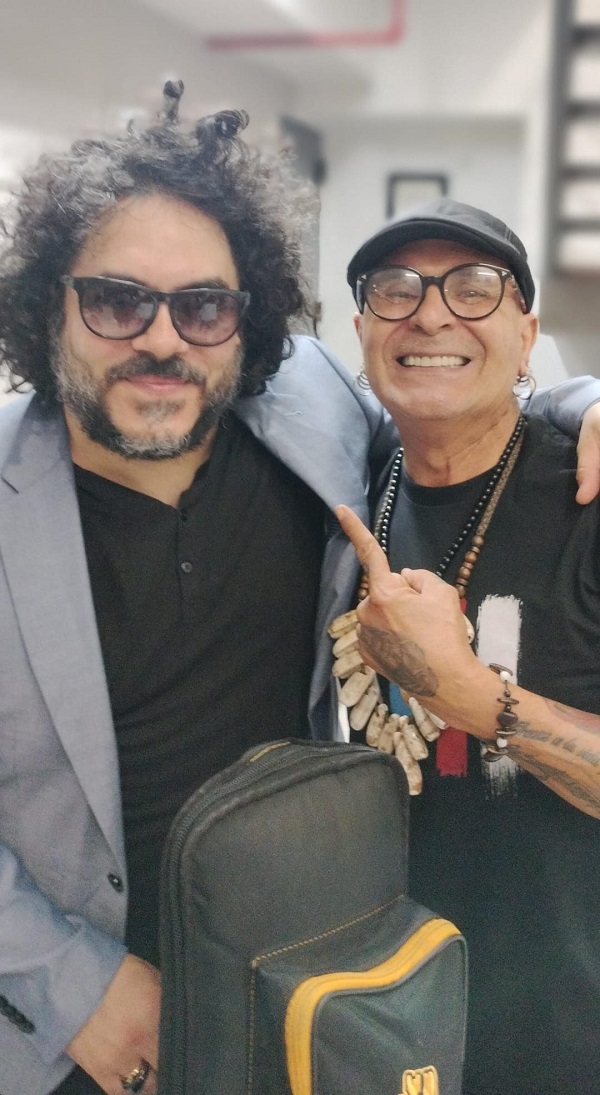
The next day he would go to a megastore to develop the photos from the night before and bring them to the professor to evaluate the shots. The professor would give him advice on what to do to improve the photos he had in hand.
Another moment he remembers with emotion was in 2002, when Fania played a concert at the Juan Ramón Loubriel stadium in Bayamón.
Guayciba already had a digital camera, and during that concert, he says he used 25 rolls of film with 36 exposures each.
He says this was his first international assignment. The first time he photographed an international artist was when he was still a photography student, practicing with Ricardo Arjona in the Fine Arts Department.
As a result of that coverage, he got in touch with the Guatemalan artist, who was thrilled with the photos Felix took, saying at the time that they were the best photos he had ever taken, adding that the Puerto Rican had captured his best side.
Felix has continued to evolve and has had the opportunity to cover concerts by Elton John, the Rolling Stones and Paul McCartney, among others. He says: “The only thing I don’t do is pornography, weddings or quinceañeras”. His specialty is artistic shows and sporting events.
Guayciba is the longest serving photographer to cover the Coliseo de Puerto Rico since its inauguration in 2004, when Sonora Ponceña, Richie Ray & Bobby Cruz and Roberto Roena’s Apollo Sound performed in that memorable concert produced by Pepe Dueño.
One of the highlights of his career was a trip to Cuba in 2009, where Guayciba was the official photographer for the Puerto Rican delegation that went to the Cuba Disco Festival, which was dedicated to Puerto Rico in that edition.
He has taken more than 24,000 pictures of Cuba. The most memorable experience of his trips to Cuba was visiting the resting place of Che Guevara.
He continues to learn from all the images he has taken and published. “At one point, during the performance of the 2013 musical Pedro Navaja, the Caballero de la Salsa, Gilberto Santa Rosa told me, “You have to let yourself be criticized and you have to accept criticism as long as it is constructive criticism.”
Felix added and still maintains: “It depends on who is criticizing you, because there are people who criticize you just to make fun of you; yes, you know, out of envy”. In fact, Felix understood that he had the best photos of Gilberto.
When he went to see him to show him, Santa Rosa told him: “They’re good, but these photos where I’m alone don’t say anything because it could be at the Fine Arts Center or it could be in some theater. This concert is symphonic, where is the symphony orchestra?” Santa Rosa was right. “From that ear flattery I learned that you have to take the picture of the artist and the complements like stage, orchestra, etc.. It’s like writing a story. You have to include the day, the historical setting, the characters, and make sure that the viewer can get a picture of what happened there in the moment. It’s more of a frozen in time effect.
Guayciba considers Conrado Pastrano her teacher and mentor. She expresses gratitude for all that she has learned in photography and acknowledges that there is still more to learn.
Conrado is an exceptional colleague who takes the time to explain ways to correct unwanted effects in images. Guayciba has developed her own unique style by studying the works of other colleagues and drawing inspiration from each of the photojournalists whom she admires.
Guayciba is highly regarded as one of the top photojournalists in Puerto Rico, although he is humble and has never claimed the title for himself. He recognizes that there are others who may be more talented than him. His motto is: “I may not be the best, but I am proficient in my craft and the photos I take convey a narrative.”
When he is at the ball park, he adeptly adjusts his lighting, shutter speed, and lens to capture the intricate details on a ball despite its velocity exceeding 100 miles per hour. When artists perform on stage, Guayciba faces the task of restoring their natural appearance despite the color filters and stage lighting often making them look unnatural or cartoonish. Overcoming these challenges and bringing the images to life, imbues these artists with renewed enthusiasm for their craft, a pursuit they have devoted over two decades to.
At 68 years of age, he prays daily for longevity. He abstains from drugs and alcohol, including wine, champagne, and cider. His sole indulgence is tobacco and photography.
To view Félix Guayciba’s artistic works and keep in touch with this vital advocate of Puerto Rican culture, please visit the publication at www.guayciba.com. To email him, please use [email protected], or follow his IG account at https://www.instagram.com/guay54/.
To reach him by phone, please dial 787-637-8617. He is always available and eager to assist with his usual helpful demeanor.

Also Read: Bella Martínez presents “Las memorias de Jimmie Morales: un conguero para la historia” [Read more…] about Metamorphosis: from music to photojournalism, a reinvention without limits