• Skip to primary navigation
  • Skip to main content

International Salsa Magazine

  • HOME
  • Previous editions
    • 2026
      • ISM / April 2026
      • ISM / March 2026
      • ISM / February 2026
      • ISM / January 2026
    • 2025
      • ISM / December 2025
      • ISM / November 2025
      • ISM / October 2025
      • ISM / September 2025
      • ISM / August 2025
      • ISM / July 2025
      • ISM / June 2025
      • ISM / May2025
      • ISM / April 2025
      • ISM / March 2025
      • ISM / February 2025
      • ISM / January 2025
    • 2024
      • ISM / December 2024
      • ISM / November 2024
      • ISM / October 2024
      • ISM / September 2024
      • ISM / August 2024
      • ISM / July 2024
      • ISM / June 2024
      • ISM / May 2024
      • ISM / April 2024
      • ISM / March 2024
      • ISM / February 2024
      • ISM / January 2024
    • 2023
      • ISM / December 2023
      • ISM / November 2023
      • ISM / October 2023
      • ISM – September 2023
      • ISM – August 2023
      • ISM July 2023
      • ISM Edition June 2023
      • ISM – May 2023
      • ISM April 2023
      • ISM March 2023
      • ISM February 2023
      • ISM January 2023
    • 2022
      • ISM December 2022
      • ISM November 2022
      • ISM October 2022
      • ISM September 2022
      • ISM August 2022
      • ISM July 2022
      • ISM June 2022
      • ISM May 2022
      • ISM February 2022
      • ISM January 2022
    • 2021
      • ISM December 2021
      • ISM November 2021
      • ISM October – 2021
      • ISM September 2021
      • ISM August 2021
      • ISM July 2021
      • ISM May 2021
      • ISM April 2021
      • ISM June 2021
      • ISM March 2021
      • ISM February 2021
      • ISM January 2021
    • 2020
      • ISM December 2020
      • ISM November 2020
      • ISM October 2020
      • ISM September 2020
      • ISM August 2020
      • ISM July 2020
      • ISM June 2020
      • ISM May 2020
      • ISM April 2020
      • ISM March 2020
      • ISM February 2020
      • ISM January 2020
    • 2019
      • ISM December 2019
      • ISM November 2019
      • ISM October 2019
      • ISM Septembre 2019
      • ISM August 2019
      • ISM July 2019
      • ISM June 2019
    • 2016
      • ISM December 2016
  • Spanish
  • Download Salsa App
    • Android
    • Apple

Search Results for: El Gran Combo de Puerto Rico

Izis La enfermera de La Salsa talks about her passion for music and nursing

This is our interesting conversation

Right now we are talking to Izis La Enfermera de La Salsa Good afternoon, Izis, how are you today?

I’m super happy and feel very blessed. I believe that being healthy is already a great blessing.

One of the things about you that has caught my attention the most is the name you chose. Why are you called Izis La Enfermera de La Salsa?

I have been a military nurse for the last 15 years. I mean, I’m a soldier in the United States Army. I work for the army as a nurse.

La Enfermera de La Salsa

So you use that name because of your first profession.

That’s correct. I loved the name because I believe that music has the power to cure, distract and heal. So, I think that mix was perfect. The fact remains that the name comes from my profession, but I also use music as part of the cure for my patients.

You come from a musical family. Evidently, that also influenced the path you took later on. What did you like most about the musical world while still a child?

I was born in Puerto Rico and my parents are Puerto Rican, but I moved out because my dad served in the army, so I followed in his footsteps. Indeed my family is musical and specialized in jíbaro music, which is very typical in Puerto Rico. I think this was the connection with my native island and my family, so to speak. When I listened to their songs, it inspired me to follow this path and, in particular, salsa was the genre with which I have made the strongest conection. My parents listen to a lot of salsa music and I fell in love with it. Since I was a child, I always wanted to be involved in these activities of dance and song.

Your first instrument was the flute. Do you play any other instruments?

I play a little bit of cuatro, which is the Puerto Rican string instrument, but I focus more on the flute and the vocal part. I used to play flute in classical music when I was in school, but I never thought I would use it in salsa. It’s the perfect combination.

How have you managed to combine your facets as a singer and a nurse?

That’s the question my family, friends and co-workers always ask me. My answer is that my profession requires 12 hours, but the advantage I have is that I don’t have to work every day. I take advantage of my spare time to pursue my other passion which is music; that’s why I always tell people that music is like my baby. Those who have children know that you have to make many sacrifices for them. That’s the same thing I do for music. Sometimes, it may happen that I don’t sleep or eat well, but I pour all that passion into music.

When asked how I combine both facets, I think I use my two passions to serve others. What feeds my heart and soul is to serve, so I serve my nation as a nurse and soldier. As a singer, I serve my community and anyone who listens to my music. That’s what fills me with energy.

Izis playing the flute

Salsa as a medicine

I recently interviewed Jérôme Martin, a Frenchman who runs an Internet site called La Salsa Es La Cura. When asked why he uses that name, he replied that salsa and music heal everything, whether it’s a physical or emotional pain, do you agree with that statement?

I totally agree. Karina, I began my career as a general nurse, but there came a point where I had the opportunity to specialize as a labor and delivery nurse. However, I felt I was missing something and that’s where I made the change for mental health. It is in this field that I have seen results related to music.

Although I was not a psychiatric nurse, I have had moments in which I have cared for patients with pills as I have mentioned in other interviews, but I felt they needed something more. When I started singing to them, I started noticing physical and mental changes. I remember a comatose patient who, when she came back, told me that all that she remembers was my voice. So, I myself have seen and experienced what music can do for your health.

Psycho-oncologist Argelia Melet states that the physical part won’t improve unless the mental part is well. In fact, she uses music in several of her therapies. It has much to do with what you are telling me.

That’s is absolutely true. If you don’t feed your body and your mental health, you are going to fail in many things.
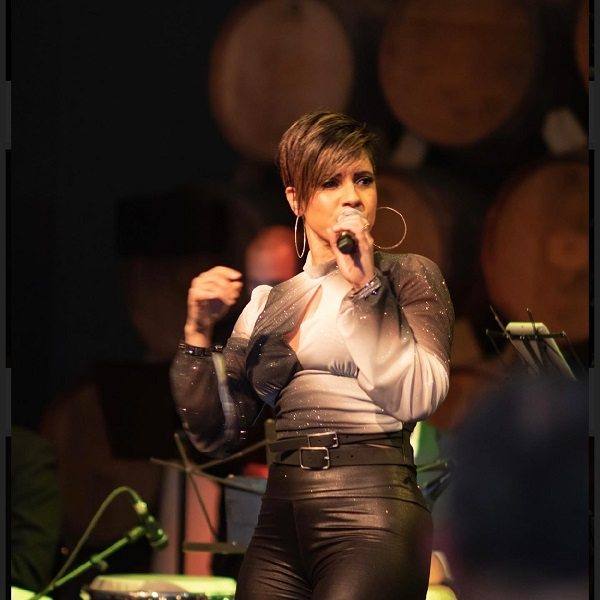
Izis performing on stage

How was your musical activity during the pandemic?

As a soldier, at that time, the army had sent me to a town in the middle of the desert and that’s when I knew that I would not be able to have so much musical activity because I was far away from everything. I did events for the military community here and there, but all that is over because of Covid.

At that time, I started recording and connecting with other people through a virtual initiative called Corro Con Salsa with which people can listen to this genre from anywhere and at the same time. The point of the show is to exercise with music and that project combines everything I believe in, that is, the physical, mental health and music. That made me cheer myself up a bit, as I was a little sad not to see my audience. As artists, the audience is our fuel.

During the pandemic, I got connected to my musical roots, that is to say, my uncle, my aunt and my cousins. We join together to make a song together online, which I don’t believe we could have done without Covid due to our occupations.

Let’s talk about your new album and the genres in which it focuses on.

You know that my passion is salsa, but I sing anything. I usually record salsa, but I have also recorded several bachata songs and one or another merengue song. However, I am no longer focused on albums because the release of a full album is not like it was before. Now, what I’m doing is releasing one song at a time. I’m releasing a Madonna song in a salsa version called Like A Prayer. I have been releasing songs in English because I live in the United States, so if I want Americans to understand me and feel the same passion for salsa, we have to have something in common, that’s where the language comes into play.

Besides music and nursing, what other passions do you have?

I love to paint. I paint on hats, shirts and many other things. This passion for art is like an extension of my passion for music and my way of connecting with the public because, oftentimes, I perform on stage and then I go to my sales kiosk where I interact with my fans, sign autographs, paint hats, among other things.

Almost all of my designs are related to music. In fact, many important artists have used them such as Larry Harlow, La Sonora Ponceña, El Gran Combo, and so on. Almost all my designs include musical notes, maracas, drums, among other musical elements.

One of the hats where Izis has painted

What Ángel Meléndez has to say about his brilliant musical career

Who Ángel Meléndez is

Ángel Meléndez is a source of pride for Puerto Rico who lives in Chicago, United States, and has a bright musical career that has not gone unnoticed by great well-known people and record labels linked to Latin music. The producer, arranger, composer, music teacher and trombonist studied at VanderCook College of Music, where he gained most of the knowledge that would serve him to become the figure he is today.   

His hard work has allowed him to be nominated for the Best Tropical Music category at the Grammy Awards and the winner of the 2005 Annual Independent Music Awards thanks to the talent he displayed on his album Ángel Meléndez & the 911 Mambo Orchestra.   

Meléndez was great lick to collaborate with some of the greats of music such as Cheo Feliciano, Adalberto Santiago, Tito Puente, Tito Allen, Frankie Ruiz, Ismael Miranda, among many others. 

Trombonist Ángel Melendez
Producer, arranger, composer, music teacher and trombonist Ángel Meléndez

His most recent projects include the one he made with Gia Fu and Ralph Riley. Riley was in charge of the making of Big Band Maquina (album name) and was in charge of organizing the work of all the artists who lent their talent to carry out this ambitious project together with Meléndez and other producers. The album includes 11 tracks and a bonus track, as a result of the serious issue of fathering so many music professionals in a single project in the middle of the pandemic and from so many recording studios. 

We had the opportunity to talk to him to learn a little more about his career and what he is doing now. We hope everyone reading this pleasant talk will enjoy it. 

Interview 

Today we are pleased to welcome composer, arranger, instructor and trombonist Ángel Meléndez. Good afternoon, Mr. Meléndez, how are you today?  

I am doing very well, thank goodness. Although I am very cold here in Chicago, but it is not your fault (laugh). 

You once commented that you always liked the Big Band sound. How important is the number of musicians in an orchestra?  

When I was a kid, my family always organized parties and played the music of Machito, Tito Puente, Tito Rodríguez and many others. So when I went to college, the jazz band director made me his manager. When I had it in front of me, I knew that was what I wanted to. I love it. That is why I say the more the better, but there are also groups like Joe Cuba Sextet that sound great with only six or seven members.   

You have been a music teacher for several decades. Do you think training other artists has influenced your style? Do you think that you have learned from your students? 

I have had many students who have become professional musicians and also learned a lot from them. In college I learned to play many instruments on a very basic level. One of the things I have learned from my students is that you can learn to play two, three or four instruments properly. I love the piano, I bought a Spanish guitar and am learning to play flamenco late in life. 

Ángel playing his instrument
Ángel Meléndez performing and playing the trombone


So you never stop learning and are always looking for new instruments and rhythms to add to your work 

Yes! Right now I am working on a project with Hong Kong producer Gia Fu and she is going to kill me because she does not want anyone to know yet (laugh). It’s called the Borinchino Project and includes Chinese songs in Latin rhythms. The first song is a bolero cha cha chá. 

What was the experience of working together with Gia Fu, Ralph Raley and the rest of the team of musicians with whom you made this album? Are you happy with the result?  

Of course we are! We were all pleased with the record. What happened was that I made a jingle called Lisa La Boricua for a dance academy called Lisa La Boricua in swing dancing about 20 or 25 years ago. In Germany, it was a hit for about 14 weeks. Gia is also a salsa DJ, she was doing some work in Switzerland when she heard that track which was like a jam session. She liked it so much that she thought about collaborating with me. After many months of looking for me, he found me. So my former timbalero is now music director of Victor Manuelle and knows the best musicians in Puerto Rico. When they called me and offered me to collaborate with them, they only wanted to make two songs. I told them if I said yes, we were going to get it right and go to Puerto Rico. Since we are in times of Covid-19, the best musicians are available. We went to Puerto Rico, made two songs and loved the result, so they said to make four more songs. The second time, Gia came from Hong Kong. She is like a painter who knows exactly what she wants. She already bears in mind the idea of how this will all turn out. She can be a bit stubborn, but, at the end of the day, everything always goes as she hopes. If she imagines a song with Tito Allen singing, she got it. 

Something that got our attention at International Salsa Magazine is the way you did this project. We know that you were conceiving everything from different countries and studios thanks to new technologies. How was the process of recording from several places as far apart? How do you feel about what you achieved?   

Most of the recordings were made at Rolo Studios in Puerto Rico. The vocals for the two tracks recorded by Herman Olivera were created at Nino Cegarra’s studio, but vocals by Tito Allen were done in New York because he did not want to travel to Puerto Rico. That is why Ralph, Gia and I went to New York to record them there, but the base, percussion, brass and backing vocals were done at Rolo Studios.   

Album Big Band Máquina
Album cover Big Band Máquina

In addition, the pandemic made everything difficult, especially travel, how much do you think the pandemic has affected your work? Do you feel that things are coming back to normal? Is your work back to normal?  

It has made it impossible to go back to work. I had about three or four bookings, but everything got cancelled when the Covid pandemic was getting worse. As I told you, In part it was a blessing because no one was working. Luis Marín (Gilberto Santa Rosa’s piano player), bassist Pedro Pérez (he has worked in more than 500 recording productions), conguero Sammy García (musical director of Charlie Aponte), Pocorelli (musical director of Víctor Manuelle as I had said), Sammy Vélez (musical director of El Canario), Richie Bastar (El Gran Combo’s congocero) were available to work with us and that it was a blessing. 

Exactly. This whole situation has given you the opportunity to do other activities such as writing music, making new arrangements and many other things.  

That’s it. I put my students on an assignment and most of them paid no attention anyway. I gave them 10 or 15 minutes to practice while I sat at the piano and waited for them to tell me something. During that time, I used to write. As they say, everything happens for a reason. 

What plans do you have for 2022?  

There’s Borinchino, which is the project I am working on with Gia and Ralph wants to repeat what we already did in mambo. Right now I am writing two new musical productions with new songs. In the case of Borinchino, the album will include several Chinese songs with Latin genres such as salsa, bolero, merengue, cha cha chá, among others. In the case of the project with Ralph, it will be almost the same as we did with the previous album. 

This is Gia Fu
Hong Kong producer Gia Fu

This all means this partnership with Ralph and Gia will continue for an indefinite time? 

Of course it will! They are thrilled with me and I am thrilled with them. They are my family in Hong Kong. The two people I love most in Hong Kong. The only people I know there, but I still love them very much. 

What recommendations do you make to young people who want to do the same thing in the future? 

I would advise them to learn about their culture. Our music is incredible and has a very high level. We grew up with children’s songs like Cheki Morena, so a complicated rhythm is very easy for us. In contrast, Americans grow up listening to the A, B, C song. When kids from our Latin countries begin to learn music, it is much simpler for them to play things with complicated rhythms. What I would like to tell those who read this interview is that they have to learn about their culture and music.  

Great conversación with conductor and timbalero Sammy Deleon

How Sammy Deleon’s career began to flourish

There have been uncountable artists who have lifted Latin music around the world, and one of them has been conductor Sammy Deleon. This American of Puerto Rican parents was born in Lorain, Ohio, on August 18, 1961, and grew up in the same county with his 14 brothers. He started his professional career with the Trio Puerto Rico when he was just 13 years old, after which he was already beginning to demonstrate his incredible musical skills. 

While it is true that neither of his parents were musicians, Sammy recalls with affection his mother while she used to sing at home and his father used to play the Puerto Rican cuatro during the Christmas season to celebrate the occasion to the sound of parrandas typical of the Island of Enchantment that were created for the occasion.   

This musician greatly enjoyed the work of Tito Puente, with whom he later developed a great friendship and an excellent working relationship. That happened on one night when the King of Timbales was playing a concert in Lakeview Beach. Deleon made his way to the stage, greeted the timbalero, wanted to talk to him and asked to play with him. After doing some soundtracks and a unique display of talent, Puente accepted to let him play and together they shone on stage by making one of the biggest dreams of Sammy a reality. 

After that, he ended up playing with Puente in his hometown, Orlando, New York and Puerto Rico. After many years, the same would happen with Tito Puente Jr. who would also take into account this musician’s talent for his shows. 

Sammy Deleon with his timbales
Sammy Deleon playing the timbales in one of his concerts

Deleon has shown diverse musical abilities throughout his career, but without a doubt, he has been successful in percussion, more than in any other. Likewise, he has dedicated much of his time and effort to exploring Latin and Afro-Cuban rhythms, resulting in a style that is unlike many other artists of his kind. 

For the last 10 years, he has managed to conduct his own group Sammy Deleon Y Su Orquesta, with which he has had many of his successes in his career so far, one of them the respect and admiration of a vast multicultural audience that is always seeking innovation in the music which they hear. 

During these years, he has managed to capture the attention of many DJs, dancers, and Latin music lovers thanks to his hard work and the enormous energy invested in each of his musical productions. Contigo Y Sin Ti and Baila Que Baila have been a gift to the ear on dance floors crowded with people of all musical tastes and different levels of skills in relation to dance and choreography. 

Everything he learned during his career has also been benefitial to other musicians, as Sammy uses his knowledge to mentor would-be percussionists who want to follow in his footsteps and those of the most acclaimed musicians in history. Unquestionably, a noble task for those who, at a certain point, had the same dreams.   

Sammy Deleon and his people
Sammy Deleon Y Su Orquesta

Interesting and emotional conversation with Sammy Deleon 

A very good morning to all of you. This is Karina Garcia, North American director for International Salsa Magazine. I am very happy today because we have a very special guest. This is none other than Sammy Deleon who is a composer, timbalero, and musician with a long-standing career. How are you, Sammy? How are you feeling today? 

I’m very well, thank you. I’m very well, thank goodness. From here in Cleveland, Ohio.  

All right, Sammy, could you tell me what pushed you to go into music? What inspired you? What did you decide to take this path and why did you chose percussion? 

Well, the one who put the music on was my father. Gumersindo Deleon was the one who started all this. I say he was a frustrated musician because his time was not very good, but slowly, he taught me and my two brothers Puerto Rican jibaro music when I was a little boy. Two years went by and one of my brothers was 15 years old, the other one was 14 and I was 13 when my brother taught us salsa when it was a boom in New York. That is how we started playing percussion on our own, since no one taught us.  

We listened to music every day and from there started singing in church choirs with trios, ensembles, jibaro music and, little by little, we kept going up, up, up. That is when my older brother Roberto, who was a timbalero before I do, saw that I were interested in the timpani than him while he was dedicated to the conga and my other brother Micky was dedicated to the bongo. Then the three of us were rehearsing almost every day and my dad said that we were too loud when playing percussion. Years passed and my brother Roberto moved to Florida, my brother Micky moved to Kansas City and I were alone here.  

I have been playing since I was 13, starting with the Trio Puerto Rico and, later, I started playing with a group called Conjunto Nabori with music by Cheo Feliciano and we were doing it with vibraphones, congas, timbales and so on. From there, we joined an orchestra called Charambo (meaning charanga and mambo) where I stayed for 10 years. Next thing after that, the orchestra was going to break up, another merengue group called Orquesta Marquis was being created when merengue was in full swing in the 90s. After being part of that orchestra for five years, we had a problem with the director, so we fired him and changed the name to Orquesta Impacto Nuevo where I stayed for 10 years. After burning the CD, we went to Florida to promote it and, after that, a few things did happen and I decided to go back to Ohio.  

We created a group under my own name, so it was called Sammy Deleon Y Su Orquesta with which we have worked for almost 25 years now. We have joined many different singers. When we were in the Charambo Orchestra, we performed with Tito Puente, Adalberto Santiago, Chivirico Dávila, Vitín Aviléz, Conde Rodríguez, Luisito Carrión, Tito Rojas, Tony Vegas and many more. We played with Ismael Mirando for over a year and I won several awards in the city as Legend of the year and it was a big thing. I use an orchestra composed of 18 musicians and played mambo created by Tito Puente and Los Mambo Kings.  

Remember that I come from a big family in which we were 14 siblings, 8 sisters and 5 brothers. The oldest was a DJ for many years and the one who brought salsa here in the 70s and 80s. I also had the joy of playing with the Gran Combo de Puerto Rico two years ago because their timbalero got sick, which is why I had the opportunity to play with them a couple of times while he was getting better. We have played in Buffalo, Cincinnati, New York, Los Angeles and many other places. 

Sammy Deleon at the Jazz Fest Cleveland
Sammy Deleon performing at the Jazz Fest Cleveland

All right, Sammy. Everybody knows very well your admiration for Tito Puente before you even became a famous musician. In fact, I remember seeing an interview with you in which you recount an anecdote of how you met and played with him. 

Thank you. You brought up a very cool issue. One time, Tito Puente came here to Cleveland, Ohio, in 1979. There was a big concert in Lorain, where I was born and raised. He played during the day, and at night, we went to watch him at a well-known jazz club. There, a friend of mine offered to give me 20 pesos if I was going to play with him, to which I replied yes. So I went to the stage, made a hand gesture, said give me a break and I do not think he heard me. However, he looked at me and told me to get close to him. When I was up on the stage, he said look at me, listen and don’t touch anything yet. That is when he did something, I did the same and we are continuing to do so. That was the last song on his set. He took me into his dressing room, asked me where I was from. I told him I was from Loraine, Ohio.  

He asked me who taught me to play and I told him I was just self-taught. He said no way!, and can you read music?, to which I answered no, but that I was learning to do it. Then, he told me that I had a great future in front of me and to keep playing the timbales because that is an instrument that requires a lot of strength to be played because it is not like a 4-drum battery. So basically, he told me to move on because I was going to have a good future in front of me. He died several years later, but I played with him a couple of times here in Cleveland, New York, Orlando, and Detroit, Michigan.  

After his death, I met his son, Tito Puente Jr. who came to Cleveland. I conducted an orchestra composed by 17 musicians, he played all of his father’s songs and we had a good time. When he comes in October, I have to provide him with the group again. Playing with Tito Puente was one of the best moments I have ever had. 

You commented in that interview and now that it was memorable for you to play with Tito Puente. Apart from that, what other memorable experience could you mention? 

There is an experience I had in 2016 when I won the jazz salsa and legend award. I was labeled a legend – imagine that, me a legend! Since when am I a legend? That took me by surprise when I got the prize. I am still shocked (crying). I didn’t expect that award because other musicians have had more years of trajectory than me.  

When the lady called me and said me what’s going on, I asked her if she was sure of what she was saying and she answered yes. After hanging up the phone, I sat down and cried because I did not expect this. I had to call my family and explain to them what was going on. The day I got the prize, my whole family was there with me. To this date, it still shocks me because it was a very special day for me. I pray to Him not to cry again because these things enter my heart.   

How does it feel to be on a par with your idols? How does it feel to play with them and to see the road you have taken? 

It has been amazing to accompany artists such as Tito Puente or Tony Vega, who are on another level and I am trying to get there. I’m already old man and coming up on 60 years old, but I still have a way to go and try to pull ahead step by step. I’m going to make it, but it was an honor to play with all those legends. We have opened up for many groups such as La Sonora Ponceña, La Mulencia, Luis Henrique and so on. I will never forget those days and times.   

Sammy Deleon and Bobby Valentin
Sammy Deleon next to Bobby Valentin

I understand that you have been responsible for training young people who wish to become percussionists, is that right? 

Yes, we are working with guys from Ohio to teach them about salsa, percussion, instruments and many other things. There are many who leave, but there are always two or three who stay on. Right now, we’re teaching kids all about salsa, which I love to do because I will not last long around here. 

In what way has teaching contributed to your career? What is the most valuable thing you have learned from your students? 

I learn that you have to be humble in life. When those boys go home and tell their parents that I’m teaching them, many of the family members want to come see what their kids are doing here. So I am working hard to see that they are learning only positive things and using their time well. What if they will be able to make good money and even become professionals about this in the future?

How do you think these young people perceive your music? 

Many young people opt for Reggaeton, which is what is fashionable, but I give thanks that I have achieved that two or three young people stay with me to learn. They want to learn to play the bongo, the conga, the timbales, and other things. I always look for more of them to get them interested in salsa. 

Sammy Deleon playing the timbales and posing before the camera
Sammy Deleon posing before the Camera while playing the timbales

What do you do outside the recording studios and off the stage? 

I love sports. When there is a basketball or football game (my favorite) that I want to see, there is no one to stop me from watching it.   

Do you practice any of them? 

Basketball, but I am too old for that. I used to play a lot, but I don’t do it anymore.   

What advice do you have for young people who want to devote themselves to music in the context of this pandemic? 

The only advice that I can give to someone who wants to learn to play music is to study, learn to read music, and choose an instrument before learning to play others. Many young people want to play many instruments at the same time, but they don’t master one. You have to master an instrument before trying to learn to play others.   


Email: [email protected]  


Facebook: Sammy Deleon 

Home

Coca-Cola Music Hall Performance and event venue in Puerto Rico

International Salsa Magazine / www.SalsaGoogle.com supporting the diffusion of amusement

Coca-Cola Music Hall offers the perfect stage for scenic events and legendary entertainment. This cutting-edge concert hall will change the music industry and live entertainment in Puerto Rico. Inauguration in August 2021!

The Coca-Cola Music Hall offers the perfect setting for legendary stage events and entertainment. This state-of-the-art concert hall will change Puerto Rico's music and live entertainment industry, opening August 2021!
Coca-Cola Music Hall Events and shows hall

Come to our opening with El Gran Combo de Puerto Rico “La Universidad de La Salsa” on August 28th. We will be the first salsa orchestra to perform in this new and trendy lounge, you really shouldn’t miss it!

We will be the first salsa orchestra to perform in this new and modern hall, you can't miss it!
Come with El Gran Combo de Puerto Rico “La Universidad de La Salsa” to our inauguration next August 28th.

PROCEDURES FOR STOPPING THE SCALE OF COVID-19

We are delighted to welcome you to Coca-Cola Music Hall while addressing the important health and safety needs of our guests and employees. We have worked diligently with health authorities to improve our already strict health, safety and cleaning measures.

ACCESSIBILITY

Our goal is to create that magic in the first time for all who come to Coca-Cola Music Hall by providing a memorable experience in receiving our guests with a smile, providing assistance, and outstanding service.

TICKETS TO ACCESSIBLE SEATING

Accessible seating is available at all events at Coca-Cola Music Hall. These are available at all levels of the venue and can be bought through the Ticketpop website by clicking on the accessible seating button located at the top left of the page where you can read “Buy Tickets”.

In addition, accessible seating is available at the ticket office at Coca-Cola Music Hall. Adjacent sets are available for companions depending on the availability.

ADDITIONAL SERVICES

ACCESSIBLE PARKING

Accessible parking is available beside Coca-Cola Music Hall at the Puerto Rico Convention Center for vehicles that show a handicap license plate issued by the State. These positions are assigned according to arrival, first-served basis, so we urge you to take this into account.

Places to drop off and pick up guests who are next to the ticket office.

ELEVATOR

The elevator is accessible to visitors who need help and is located on the esplanade of the main entrance at Coca-Cola Music Hall.

SERVICE ANIMALS

Service animals are welcome at Coca-Cola Music Hall and will rest in the seating area for the guest with a disability instead of the corridor.

It is recommended that people with large-sized service dogs occupy accessible seats for wheelchairs so that they do not block spaces.

PASSENGERS FOR WHEELCHAIRS

Wheelchair escorts can be requested at any entry point from one of our service representatives or security agents.
The Coca-Cola Music Hall’s customer service department offers free wheelchair escort to visitors upon request

Coca-Cola Music Hall customer service provides free wheelchair escort to those visitors who request it. Passengers for wheelchairs can be requested from one of our service representatives or security officers at any entry point.

Please note that our staff members will not stay with you during the event, nor shall you be permitted to remain in the wheelchair of the venue during it. Upon request, our Service Representative will walk you to the door following the end of the event.

For all of the above, both our staff and International Salsa Magazine invite you to visit our facilities.

Coca-Cola Music Hall Events and shows hall

Coca-Cola Music Hall is the venue for the most important concerts and special events in the country. The place has internal systems of staging, sound, and lighting, a LED video wall, and a capacity for up to 5,000 guests. Seven full-service bars are conveniently located around the hall to maximize flow, efficiency, and customer experience.

Coca-Cola Music Hall is a unique space for special events, corporate meetings and other function shows like awards ceremonies, galas, graduations, receptions, coming-out parties, private events, etc.

Upcoming events at Coca-Cola Music Hall

For all of the above, both our staff and International Salsa Magazine invite you to attend our facilities.

Address and Contacts

250 Convention Boulevard

San Juan, Puerto Rico 00907

Box Office: (787) 425-0900

Box Office Hours:

Monday-Friday 10 AM to 5 PM

https://www.cocacolamusichall.com/

Article of Interest: Son Divas with new energy


Home

It is indisputable that the most popular orchestra in Puerto Rico and South America during the 1970s was Roberto Roena’s Apollo Sound.

On July 20, 1969 the orchestra “El Apollo Sound” of the great Puerto Rican musician Roberto Roena was born. Together with trumpeter Elías Lopés he founded “El Apollo Sound”.

This name comes from the first rehearsal of his group, which coincided with the day of the launching of the Apollo rocket to the moon.

Roberto Roena recorded 10 albums in nine years for the Sello Internacional, part of the Fania label, and although he was not a great student of music, he was able to surround himself with very good musicians and use his talent to form his own group, which is now in its fiftieth year.

It is indisputable that the most popular orchestra in Puerto Rico and South America during the 70s was Roberto Roena’s Apollo Sound.

The name comes from the first rehearsal of their group, which coincided with the day of the launch of the Apollo rocket to the moon.
On July 20, 1969 the orchestra “El Apollo Sound” of the great Puerto Rican musician Roberto Roena was born.

“Lucky 7” was his seventh release in front of Apollo with the Fania International label, after his discreet debut as leader with Los Megatones and after a fruitful career as bongocero of Rafael Cortijo’s Combo and Rafael Ithier’s El Gran Combo.

With “Lucky 7” Roena consolidated his popularity on a continental level thanks to the arrangement of an innovative song that challenged the schemes of the overwhelming salsa sound institutionalized in New York during the decade: “Mi desengaño”, by Julio Merced and Pucho Soufront.

With "Lucky 7" Roena consolidated his popularity on a continental level thanks to the arrangement of an innovative song that challenged the schemes of the overwhelming salsa sound institutionalized in New York during the decade: "Mi desengaño", by Julio Merced and Pucho Soufront.
“Lucky 7” was his seventh release in front of the Apollo on the Fania International label.

In 1976 the Apollo and its new singer Papo Sánchez, pride of Hatillo, climbed the charts with a nostalgic lyric inspired by unrequited love. In his arrangement, trombonist Merced himself incorporated the cadence of the samba, linked through its bars with a son covered with the nuances of bossa nova, jazz and bomba.

The hit “Mi desengaño” invited many to reinvent their sound and reformulate their proposals in salsa, with more elaborate arrangements and harmonic sophistication, such as those made in New York by Marty Sheller for Willie Colón.

In addition to the brilliant debut of Papo Sánchez, the excellence of “Lucky 7” rested on the arrangements and orchestrations of such great musicians as trumpeters Luis ‘Perico’ Ortiz and Elías Lopéz, pianists Papo Lucca and Jorgito Millet and the King of the Bass, Bobby Valentín.

The sequence begins with the guaguancó “Que me castigue Dios”, performed by Sammy ‘El Rolo’ González, Apollo’s star singer until “La 8va. Maravilla”, their next album. In “Que me castigue Dios” we hear at the end the then incipient Rubén Blades with the declamation of some verses that today would deserve the repudiation of feminist organizations, but that in 1976, were applauded by the prevailing macho sociology in the industry:

Roberto Roena y su Apollo Sound
“La 8va. Maravilla” Roberto Roena y su Apollo Sound year 1977.

May my mouth dry up/If I ever kiss you again/And if I ever look at you again/May my eyesight blur/I’m tired of your bad breath/I never reproached you/Your feet smell too/And I know that not even the worms/With you they wouldn’t get their hands on that day you die/You a cow and I a horse with class/I wish a truck would run over your head/Pa’ que salga la sucieza con que tú a mi me me trataste.

“Lucky 7” was also an LP that satisfied the expectations of the dancer. Although many may have crossed themselves dancing to the samba of “Mi desengaño” and the fusion of “Que me castigue Dios”, the merengue “La mala maña”, arranged by Conjunto Quisqueya pianist Chokie Acosta, the pachanga with cumbia “Estás equivocada”, the composition “A bailar mi bomba” by Arsenio Rodríguez and the guaguancós “Me le fugué a la candela”, “La hija de la vecina” and “Fea” pleased the couples who in those days overflowed halls such as Rancho Luna, El Moroco and El Carretero.

There is no doubt that the best oiled edition of the orchestral collective Apollo Sound was precisely the one that intervened in “Lucky 7“, led then by flutist Miguel Rodriguez, trumpeter Mario Cora, timbalero Cuqui Santos, conguero Papo Clemente and trombonist Julio Merced, who later defected with singer Papo Sanchez to found the band Salsa Fever. Three decades after its release it is an irrefutable affirmation.

"El Apollo Sound" by the great Puerto Rican musician Roberto Roena

Roberto Roena recorded 10 albums in nine years for Sello Internacional, part of the Fania label.
El Apollo Sound” del gran músico puertorriqueño Roberto Roena


Home

  • « Go to Previous Page
  • Page 1
  • Interim pages omitted …
  • Page 8
  • Page 9
  • Page 10
  • Page 11
  • Page 12
  • Interim pages omitted …
  • Page 24
  • Go to Next Page »

International Salsa Magazine (ISM) is a monthly publication about Salsa activities around the world, that has been publishing since 2007. It is a world network of volunteers coordinated by ISM Magazine. We are working to strengthen all the events by working together.