• Skip to primary navigation
  • Skip to main content

International Salsa Magazine

  • HOME
  • Previous editions
    • 2026
      • ISM / May 2026
      • ISM / April 2026
      • ISM / March 2026
      • ISM / February 2026
      • ISM / January 2026
    • 2025
      • ISM / December 2025
      • ISM / November 2025
      • ISM / October 2025
      • ISM / September 2025
      • ISM / August 2025
      • ISM / July 2025
      • ISM / June 2025
      • ISM / May2025
      • ISM / April 2025
      • ISM / March 2025
      • ISM / February 2025
      • ISM / January 2025
    • 2024
      • ISM / December 2024
      • ISM / November 2024
      • ISM / October 2024
      • ISM / September 2024
      • ISM / August 2024
      • ISM / July 2024
      • ISM / June 2024
      • ISM / May 2024
      • ISM / April 2024
      • ISM / March 2024
      • ISM / February 2024
      • ISM / January 2024
    • 2023
      • ISM / December 2023
      • ISM / November 2023
      • ISM / October 2023
      • ISM – September 2023
      • ISM – August 2023
      • ISM July 2023
      • ISM Edition June 2023
      • ISM – May 2023
      • ISM April 2023
      • ISM March 2023
      • ISM February 2023
      • ISM January 2023
    • 2022
      • ISM December 2022
      • ISM November 2022
      • ISM October 2022
      • ISM September 2022
      • ISM August 2022
      • ISM July 2022
      • ISM June 2022
      • ISM May 2022
      • ISM February 2022
      • ISM January 2022
    • 2021
      • ISM December 2021
      • ISM November 2021
      • ISM October – 2021
      • ISM September 2021
      • ISM August 2021
      • ISM July 2021
      • ISM May 2021
      • ISM April 2021
      • ISM June 2021
      • ISM March 2021
      • ISM February 2021
      • ISM January 2021
    • 2020
      • ISM December 2020
      • ISM November 2020
      • ISM October 2020
      • ISM September 2020
      • ISM August 2020
      • ISM July 2020
      • ISM June 2020
      • ISM May 2020
      • ISM April 2020
      • ISM March 2020
      • ISM February 2020
      • ISM January 2020
    • 2019
      • ISM December 2019
      • ISM November 2019
      • ISM October 2019
      • ISM Septembre 2019
      • ISM August 2019
      • ISM July 2019
      • ISM June 2019
    • 2016
      • ISM December 2016
  • Spanish
  • Download Salsa App
    • Android
    • Apple

Search Results for: Europe clubs

Felipe Pirela | The Bolero of America

North America / USA / New York

Felipe Pirela:

En mi barrio el empedrao
Parroquia Santa Lucia
Había una barbería
Que era muy populachera
Te lavaban en ponchera
La silla se reclinaba
Y Luis el perro pelaba
Al son de una periquera
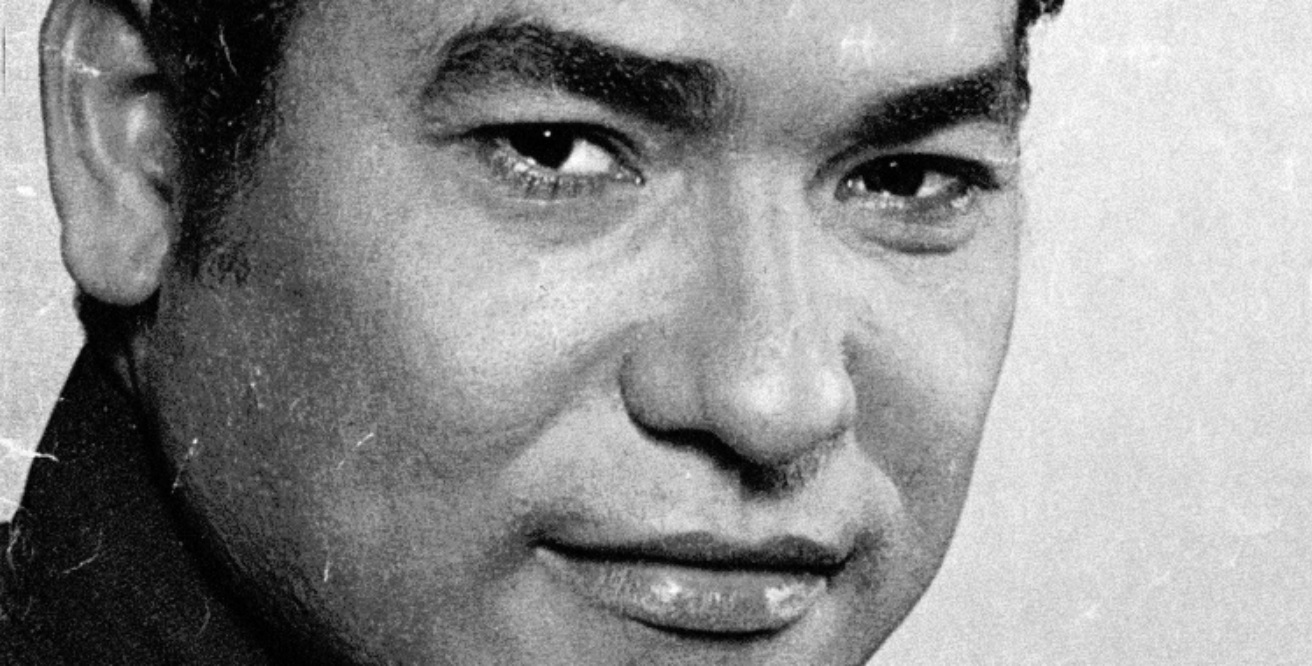
Felipe Pirela
Felipe Pirela

This is the sound of the tasty gaita performed by the group Sabor Gaitero and Los Gaiteros de Pillopo. It refers to a barbershop in a picturesque neighbourhood of Maracaibo in the Venezuelan state of Zulia. It was in this popular neighbourhood of Maracaibo, El Empedrao, that Felipe Antonio Pirela Morón was born in 1941. It was probably in this popular barbershop that he got his first haircut, and it was certainly in some corner of the neighbourhood that he took his first steps as a singer, perhaps interpreting gaitas or some other popular genre. The young Felipe was far from imagining that he would become “El Bolerista de América” (The Bolero of America).

The son of a bricklayer, Felipe Pirela Monsalve, and a housewife – an artist at heart – Lucia Morón de Pirela, the boy began his musical career as a child, supported by his mother, in small radio singing competitions. Incredibly, at the age of 13, together with some boys from the neighbourhood and his two brothers, he founded the group Los Happy Boys, which performed in various venues in Maracaibo, without even imagining that he would later become the main star of Billo’s Caracas Boys, a group that, upon arriving in Venezuela, debuted under the same name, Billo’s Happy Boys, directed by the Dominican maestro Billo Frometa.

At the beginning of his singing career, Felipe specialized as a bolerista, performing songs by prominent singers such as the Chilean Lucho Gatica, the Cuban bolerista Olga Gillot and Venezuela’s favorite tenor Alfredo Sadel.
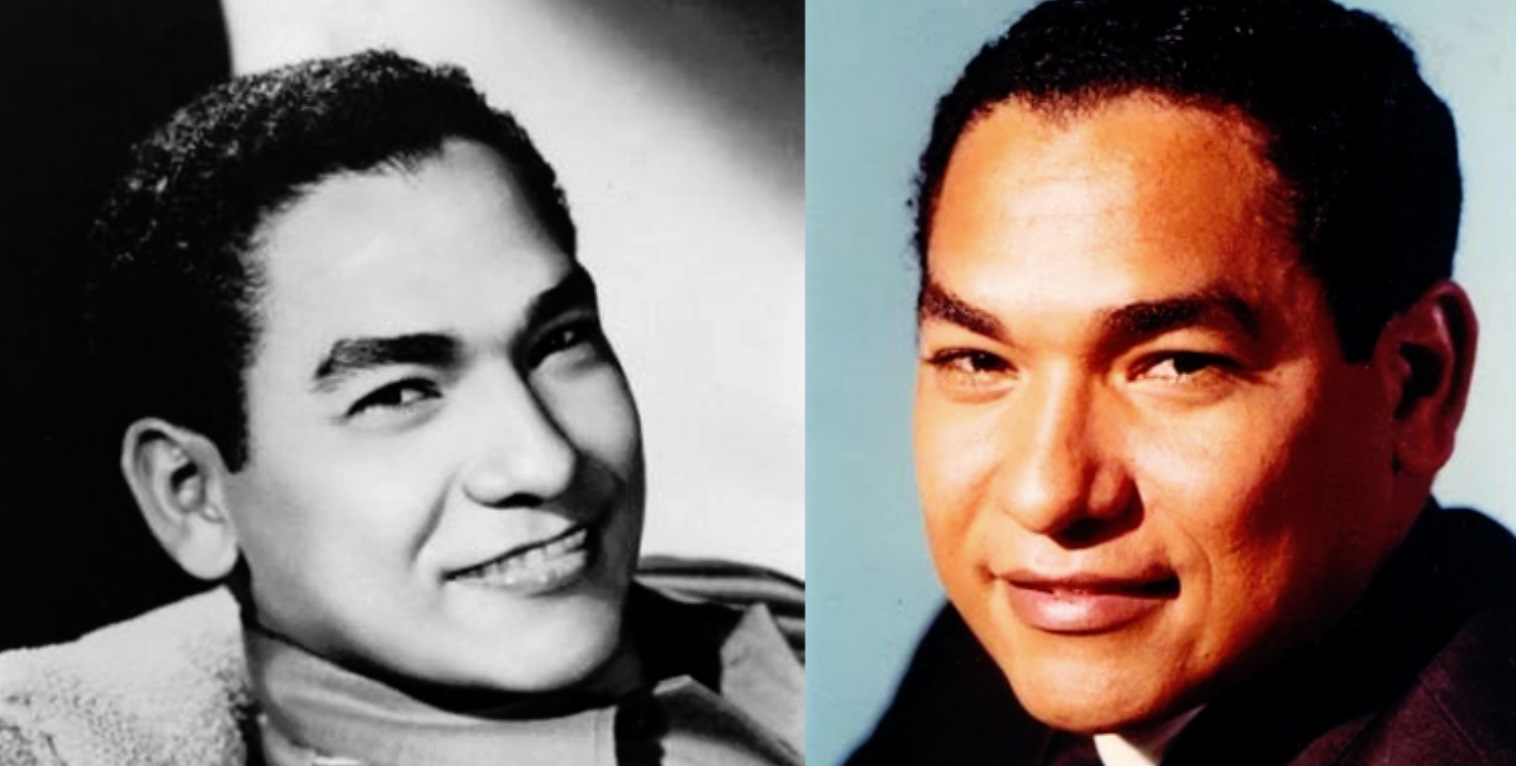
Felipe Pirela
Felipe Pirela

Radio Caracas Television had the honor of making Felipe’s image public for the first time in 1957, through an amateur program in which Felipe placed third. Unfortunately, there were no video recording systems in those days, so there is no record of this historic achievement. Later, the now defunct and legendary Venezuelan regional television station from Maracaibo, Ondas del Lago, served as a springboard for Felipe, who was one of its founding artists.

These performances allowed him to sign a contract with the station in 1958, after which he moved to Caracas, where he performed on Radio Caracas and in various nightclubs.

Shortly thereafter, he returned to Maracaibo to join the orchestra Los Peniques, with whom he recorded his first album in 1960 and began his professional career.

Like most of the artists, baseball players and boxers from Maracaibo, Felipe was a man of humble origins, pobre del pobre, with limited economic resources, who for a time missed opportunities to be noticed despite his immense talent.

Felipe Pirela
Felipe Pirela

Fortune smiled on him when Maestro Billo Frometa heard him sing, at a time when the arranger, director and musician from Quisqueyano was preparing to restructure his band, Billo’s Caracas Boys, and at the same time hired another singer from Maracaibo, the remarkable José “Cheo” García. This hiring gave an enormous boost to the already famous Billo’s Caracas Boys; the band acquired great international prestige, performing throughout America and Europe, popularizing the immortal mosaics that for many years enlivened the parties and were the favorites of the Venezuelan public.

Not for nothing, Billo’s Caracas Boys Orchestra has been called the most popular in Venezuela, the Caracas and Venezuelan clubs, Latin American countries and even the European continent (Tenerife, Spain) showed full houses during the band’s performances. In these performances, the acclaim for Felipe Pirela was total. Huge demonstrations of support, full houses and legions of fans followed the “crooner” on his tours.

When Venezuela’s favorite tenor, Alfredo Sadel, left the popular genre and his country to devote himself to opera, Pirela almost immediately replaced him in the favorite place of Venezuelans.

In 1961, “El Bolerista de América” recorded with a string orchestra conducted by Billo, the long playing Canciones de Ayer, including old songs and songs of that time, a recording that marked his resignation and departure to Mexico, where he also had memorable successes.

Felipe Pirela boleros with guitars

In 1964 he married Mariela Montiel, a marriage that resulted in the birth of a daughter, Lennys, and in which La Retirada was quickly marked by the fact that Amor se Escribe con Llanto (Love is Written with Crying) and that it probably does not last a lifetime.

Canada and Mexico witnessed his successes in ’67 and his return to Venezuela. Successful performances in Miami that same year motivated him to reside in the United States, where he tried to structure his own record company, a project that came to nothing and he was deeply disillusioned and returned to Venezuela, later residing in Puerto Rico, where he was taking La Última Copa when he was tragically assassinated in 1972.

For some, his career was marked by Sombras Nada Más, but for the vast majority, “El Bolerista de America” remains in the memory as one of the most unique stars of Latin American music of all time.


For Mario Cabrera Bello

Mario Cabrera Bello


Héctor Martignon has been one of the most sought-after pianists on the Latin jazz scene in New York

New York based-, Colombian born Hector Martignon has composed, orchestrated, produced, performed and recorded music in a wide spectrum of genres, from Classical and Crossover, to Jazz and World Music, to Rock and Pop.

His five albums as a leader, two as co-leader (MOZART’s BLUE FANTASIES and BACH’s SECRET FILES) as well as his work on over a hundred albums, scores for five feature films, three Broadway Musicals and multiple other projects, showcase his wide-ranging area of expertise.

At Mozart Studios recording Carlos Jimenez’ second CD, + Ruben Rodriguez + Vince Cherico. A pleasure!

After several nominations as a sideman, two of his five solo CDs were nominated for a GRAMMY Award (REFUGEE, 2008, and SECOND CHANCE, 2010).

He arranged and performed parts of the score of Ang Lee’s OSCAR-nominated movie EAT, DRINK, MAN, WOMAN.

His first professional recording was at age 18 (Mikis Theodorakis’s “Canto General”) while one of the most recent was on legendary rock band CHICAGO’s latest production, the Latin-tinged “EXITOS”.

He has written symphonic orchestrations, performed and recorded by the Russian Philharmonic Orchestra and compositions like ABRE LOS OJOS, CIERRA LOS OJOS, commissioned and premiered by the MUSICA DE CAMARA STRING ORCHESTRA at St Patrick’s Cathedral in April 2011.

Hector Martignon is currently working on a first CD with his BANDAGRANDE Big Band + String Quartet as well as an album with selections out of a series of  7 solo piano recitals at the Ludwigsburg University of Education (Germany), where he conducts a “compact seminar” on Classic Music-based improvisation every November.

Our trio in Tokyo
Our trio in Tokyo

As a requested sideman he has toured the world with such greats as Paquito D’Rivera, Ray Barretto, Gato Barbieri, Steve Turre, Don Byron, Tito Puente and was featured pianist with Max Roach’s PROJECT AMERICA at the 92 St Y.

His joy of teaching has made him a requested guest-lecturer and performance teacher in music faculties and academies in several countries of Europe, Japan, North- and South America.

Hector wrote an instructional book on Latin piano commissioned and published by Hal Leonard, the SALSA PIANO BOOK.

Martignon’s abilities as a pianist have always been enriched by his interest in varied musical genres.

He paid for his studies of classical piano and composition at the prestigious Freiburger Musikhochschule in Germany by performing with the best Afro-Cuban and Brazilian bands of Europe, backing stars like Celia Cruz and Ismael Quintana on their European tours, and recording with Tata Güiness and Arturo Sandoval.

At the same time he was attending seminars of contemporary composition with masters like Gyorgi Ligetti, Luigi Nono and Karl Heinz Stockhausen.

He also performed classical music in recitals and concerts in Germany, Italy and his native Colombia, specializing in Chopin, Bach and Debussy.

One of his latest endeavors has been a Jazz-Classical crossover  project, co-lead with star virtuoso trumpeter Joe Burgstaller, in which the music of the classics, from Bach to Ellington is re-created in a chamber-jazz setting, to be enjoyed on their two releases, “Mozart’s Blue Fantasies” and “Bach’s Secret Files”.

Living in Brazil for a one-year love affair with that country and its music, Martignon soon became a requested studio musician and worked for star producer Carlinhos Brown.

Luquillo Beach, PR
Luquillo Beach, PR

Since relocating to New York City, Martignon has been one of the most sought-after pianists on the Latin jazz scene.

He’s toured North and South America, Europe, and Asia with the bands of Mongo Santamaría, Gato Barbieri, Steve Turre and Don Byron, who had him record in his latest CD.

He was featured pianist with the bands of Tito Puente, Mario Bauzá, Chico O’Farrill, Paquito D’Rivera, and Max Roach in his “Project America.”
Most notably, Martignon was pianist for the late Ray Barretto’s various ensembles.

During his eight-year association with Barretto, his contributions as pianist, arranger, and composer were fundamental in shaping the sound of the now famous New World Spirit Sextet.

One of his last collaborations with Barretto, “My Summertime,” was a favorite nominee for a Grammy award.
Martignon’s versatility has also made him extremely active in the film and television industries.

Besides playing all piano parts, he arranged and produced many parts of the score for the Oscar-nominated film “Eat, Drink, Man, Woman” by Ang Lee and performed the piano and keyboard parts for many movie scores (i.e., “Gloria”, “Relativity”).

He is composer of the original music of two feature films, one of which, “Septimo Cielo”, won international awards. He also collaborated in the production of many Broadway musicals (“Chronicle of a Death Foretold”, Paul Simon’s “The Capeman”, “Selena Forever”) as conductor, arranger, and co-composer.
In the fall of 2003 Hector visited Slovenia and Russia to collaborate with singer-songwriter Vitaly Osmsçko’s first symphonic CD.

The Russian Philharmonic Orchestra recorded in Moscow the orchestrations written by Hector.

As a composer, producer and arranger of TV and radio music his record is no less impressive. In 2001 he landed two spots for HBO Latino, and one for Coca Cola.

HECTOR” S FOREIGN AFFAIR
In 1998 Martignon performed with his quartet “Foreign Affair”at the Brooklyn Academy of Music’s famed annual festival “The Next Wave” on a triple bill with Tito Puente’s “Top Percussion” and Don Byron’s “Music for six Musicians”.

This proved to be a turning point for him and his ensemble, which evolved from the strictly acoustic trio sound of the first two CDs to a more eclectic and electric quartet sound.

The new configuration that evolved from that memorable concert started a series of concerts and recordings, with guitarist Mark Whitfield, Cameroonian bassist Richard Bona and Cuban drummer Horacio “Negro” Hernández.

This quartet performed and recorded live during a weeklong stint at New York’s famous Birdland.

The group has also performed on BET television festivals, at jazz clubs in Manhattan, and made various appearances in clubs and open-air festivals in his native Colombia and in Europe.

Martignon’s third solo project, to be released in the fall of 2003, is not only a reflection of the group’s new musical direction but also of his interaction with other world class musicians.

Eddie Gomez, Jeff Watts, Mathew Garrison, John Benitez, Dafnis Prieto, Willard Dyson have all made their unique contribution to this, Martignon’s new sound of Jazz.

Hector In Amsterdam with daughter Leticia

Hector Martignon never fails to surprise, challenge and delight us. Stay tuned and get involved in this affair.

Site: Héctor Martignon

Also Read: “El Sol de la Música Latina” el primer premio Grammy para el histórico disco de Salsa Eddie Palmieri

5 best places to dance in Barcelona

Europe - Spain - Barcelona

5 best places to dance in Barcelona

We tell everything you need to know about it

Everyone wants to seize time when they travel, so we save you the search and show you the 5 places where you can go dancing salsa, bachata, merengue and all those vibrant tropical rhythms.

Europe cannot resist the swing of Latin music, dance and guaguancó!

1.- Antilla Salsa Barcelona

Antilla Salsa Barcelona is a discotheque specialized in Latin Music, the best option for your nights of Salsa in the city. Pass by the discotheque and share with us our happiness, our rhythm and our unique atmosphere. Approach to discover the musical selection of our DJs: salsa, bachata, kizomba, merengue, rumba, cha-cha-cha, casino wheel… They see and enjoy all our activities: exhibitions by renowned dancers, Free workshops and the collaboration of the Salsa-boys… Come and enjoy our unique and special environment!

Their school organizes the courses quarterly, and in the summer it also offers Intensive Courses and free Workshops for those who want to take advantage of their vacation period. Their School of dance receives pupils of all levels and for the different specialties and rhythms, too.

Antilla Salsa Barcelona

Address: Carrer d’Aragó 141, 08015 – Barcelona

http://www.antillasalsa.com

www.antillaescueladesalsa.com


2.- Mojito Club

Mojito Club is offering three salsa-nights a week and has one night completely dedicated to Cuban music. If you want latino music, salsa or bachata, Mojito Club is the place to go!  On Fridays & Saturday the club is 100% an international latino music club. You will also find orchestras playing live music that you can strut your moves to. The club is very popular and might be busy on Fridays and Saturdays, so arrive early! Mojito Club is the reference of Salsa, Bachata and Latin music in Barcelona. The classic Mojitos and an international cocktail bar and the restaurant will not leave you indifferent!

Sundays is student’s day! If you are a student of their dance school, Sunday is your day. Enjoy discounts with your VIP card and wardrobes for FREE. If you don’t know how to dance, they have their own Salsa School where you can learn from the first steps to the most advanced movements.

Mojito Club
Mojito Club

Address: Carrer del Rosselló, 217, 08008 Barcelona

http://www.mojitobcn.com


3.- Habana Club

Habana Club is both a dance club and a restaurant in one. Go there for a delicious meal with live music or show off your rhythm and moves on the dancefloor. The club is located in the district of La Barceloneta and is very popular. You’ll definitely enjoy the view! The party in Habana Barcelona consists of a large number of live shows that will make you enjoy music, quality and harmony of your audience to the fullest. A place where you can enjoy a full night, with exquisite dinner, dances with our entertainers and the best tropical cocktails and mojitos in Barcelona.

Habana Club
Habana Club

Address: Passeig de Joan Borbó, 74.


4.- El Bombón

El Bombón is the portal to the Caribbean in the heart of Barcelona. Salsa, latin soul, merengue, caribbean food and cocktails. The best Caribbean tapas in Barcelona and the best music. Amazing cocktails and amazing food!! Really good dancing music but not enough space to dance, so try to go to monday to friday.

El Bombón
El Bombón

Address: C. Mercè, 13 bis, Barcelona.

https://www.facebook.com/bombonbarcelona/


5.- Dio Club

The party for students and partners of the Seven Dance dance school.

It is a magnificent space in the neighborhood of Gracia that has 2 spacious dance halls and that on Thursdays and Saturdays you can go dancing salsa, bachata and kizomba as long as you have your school membership card. You can get your card completely free at the door or by contacting them previously. On Fridays and Sundays you can go dancing ballroom dancing or swinging. It is advisable to check the schedule before going to dance. A lovely place to practice any type of dance offered there, plenty of space, comfortable ventilation and a bar as god commands.

Dio Club
Dio Club

Address: Carrer del Perill, 10 08012 Barcelona

https://www.facebook.com/pages/Dio-Club/544345925626341

Héctor “Rudy” Regalado and his great career

This is Rudy Regalado

Héctor ”Rudy” Regalado was a Venezuelan artist born on January 29, 1943 in the 23 de Enero parish, Caracas, and died on November 4, 2010, in Las Vegas, United States, at age 61 as a result of pneumonia.

For a great part of his life, he devoted himself to being a brilliant bandleader, composer, percussionist and musician who had a very prolific career with more than 50 years of duration. At that time, he made an endless number of tours and was a very important member of the Orchestra El Chicano, which was very famous in those years.

Rudy Regalado was born in Caracas and died in Las Vegas

Youth

As a teenager, a young Hector began playing drums and timbales in the city of Caracas. The years were not many when he adopted the nickname “Rudy Regalado” as his artistic name in honor of the former Cleveland Indians’ player.

When he decided to embark on a career as an artist, he moved to Puerto Rico in 1963 and began to delight the public of San Juan in various nightclubs of the city. Along with these concerts, he was professionally formed at the Pablo Casals Conservatory of Music.

In 1970, he moved permanetly to Los Angeles and united his talent with local groups before becoming part of El Chicano that same year.

Career with El Chicano

One of the most important details to mention about Rudy Regalado’s career is his participation as a member of the band El Chicano, which was always dedicated to mix rock, R&B and jazz. He remained in the group for 12 years and recorded about five record productions which included songs such as “Viva Tirado” and “Tell she’s Lovely”.

The orchestra also created the song used for the television series “Baretta”, which was broadcast from 1975 to 1978.

Rudy Regalado with the rest of the members of El Chicano

All Star Band

In 1983, he formed his own orchestra “All Star Band” with an outstanding group of musicians from Los Angeles with whom he toured a lot of countries such as the United States, Canada, Singapore, Indonesia, Thailand and many more. A short time later, its members decided to change their name to “Chévere”.  

Almost a decade later, Rudy Regalado impressed the whole world when millions of people witnessed his timpal solo in the World Cup closing ceremony, alongside Kenny G and Whitney Houston.

A few years later, the artist toured Japan in the company of maestro Tito Puente, with whom he demonstrated his great skills as a percussionist and his high musical level.

Mr. Duran, host of The Mr. Duran Show, and Rudy Regalado

Other musical works

In 2008 he reunited with “El Chicano” for a reunion tour, which highlighted the 40th anniversary of the Woodstock Festival at the Golden Gate Park Music Concurse in San Francisco. That same day, its former members played together for the last time at the Greek Theatre in Los Angeles, resulting in a historic evening in which feelings were close to the surface.

During the course of his successful career, Regalado collaborated with different and important figures of the musical environment such as: Quincy Jones, Rubén Blades, Cheo Feliciano, Cachao, The Zawinul Syndicate, Paquito D’ Rivera, Willie Colón, Oscar D’ León, Alphonse Mouzon, Caravana Cubana, among others.

Rudy Regalado dedicated his life to music and to represent the name of Venezuela in every stage that enjoyed his talent, standing out in the music scene for his vibrant performances with the timbales, also for his prolific compositions and the dedication to his work.

If you want to know more about this Venezuelan icon, you can wrtite to his daughter Norka Tibisay Regalado and get more info about him.

Read also: Interesting conversation with vocal coach and YouTuber Ceci Dover

This is Jess Thomas and his story

From actor to director

Jess Thomas is a producer, film director and actor whose academic background is centered at San Francisco State University and work speaks for itself as to his talent. Once he made the decision to move to Los Angeles, he started making occasional appearances as an actor and stuntman in some television series. As a director, he has written about seven scripts and plunged into the world of broadcast engineering for various television networks such as FOX and ABC. 

Producer, film director and actor Jess Thomas
This is Jess Thomas and his story, A great producer, film director and actor. Jess Thomas

We had the opportunity to talk to Mr. Thomas to know many more details about his career and we were pleasantly surprised with the receptivity of the talented filmmaker and his wife and producing partner Anayancy Thomas. Below, we’ll talk a bit about his beginnings, recognitions and his most recent film ”God & Salsa”.

How his interest in film began

Jess Thomas tells us that she had a fascination for the world of entertainment since she was very young, as both his parents were always related to the arts one way or another. His father Jess Thomas Senior was an opera singer, while his mother Bettye Wright was a dancer and model. This family background led him to venture into all this at a very early age and the best example is the creation of super-eight films (film format in which eight-millimeter wide film is used) in high school.

He recalls that he had to produce a 60-page assignment for his history class, but his teacher allowed him to produce a short film instead. The grade was an A on that assignment and the teacher was so delighted that he showed the tape to the rest of his classmates and put him as a great example of creativity in cases like this. This is how a very young Jess already felt that his destiny would follow this same path for the rest of his life.

Anayancy Thomas, Jess Thomas' wife and producing partner
Anayancy Thomas, Jess Thomas’ wife and producing partner

Beginnings as an actor

He took his first steps in this profession as an actor and thought that this was the branch to which he wanted to dedicate himself definitively, but over time he discovered that writing, directing and producing were much more appealing to him. Jess found that he enjoyed joining the pieces together to take a film from a script to a screen much more than simply acting on it.

However, the filmmaker acknowledges that having acted allows him to communicate much more effectively and empathetically with the actors in his productions, as he understands the language of acting perfectly.

The Seeker

His first work as a director was the documentary ”The Seeker”, which tells the story of a quadriplegic who embarks on a journey on a motorcycle adapted to his disability and won in the category of Best American Documentary at the Rome International Film Festival. On this subject, Jess told us that the plot of the film was not his idea, but that of his friend Evan Somers, who stated his intentions to create a material that would raise awareness about this type of disability.

The idea of following him around the country on a motorcycle (designed by Somers himself) so much that he put all his efforts into learning all about the struggles of his friend, which led Somers to hire him as producer and director for a film about his story. They spent a month shoting the scenes and always something special and unexpected happened as the days went on.

Poster advertising ''The Seeker''
Poster advertising ”The Seeker”

Although they cannot be sure that everything would go as they planned, the result of the recordings spoke for themselves. In reviewing the tapes, they realized that they were getting something truly beautiful and completely spontaneous, as there was absolutely unscripted or unprepared by the team in charge of making the material.

In the end, they simply had to honor it in the editing room and sew all the pieces come together in a single masterpiece.

God & Salsa

Her most recent film work ”God & Salsa” has given much to talk about since its release in 2022. It all started when Jess met his now wife and producing partner Anayancy Thomas at an Entertainment Ministry event hosted by the church where they both attended. She told him she had plans to make a documentary about the negative impact that divorce can have on both children and parents in the long run, which Jess loved because his parents divorced when he was a child.

This event represented a before and after in his life during his adolescence, which made him develop certain behaviors and conducts that were destroying him, such as anger, lethargy, drug addiction, alcoholism, among others. In view of their shared the taste for this subject, they came together to make a feature film in which they would develop this point through characters who had these same experiences in the most natural way possible.

Javier Luna, who plays Shane in ''God & Salsa''
Javier Luna, who plays Shane in ”God & Salsa”

Although it is fiction, Thomas made it clear that there were several elements that had much to do with him and Anayancy herself, who began taking salsa classes to distract herself from various negative aspects of her life in those years through the use of the body and the mind required by the dance discipline. In fact, her teachers, Enio and Terryl, appear in the film and are part of the cast.

During all this time, there was a very special feeling between the two, so they ended up falling in love and got married shortly thereafter. 10 years later, they have a finished feature film, which premiered in October 11, 2022 in the United States and will soon be distributed in Latin America and the rest of the world. ”Our greatest inspiration for this project is the duty to use our pain to help others overcome theirs” said the director.

How the cast and soundtrack were chosen

When we wanted to know how the cast of ”God & Salsa” was chosen, he revealed that they shot a short film with the purpose of knowing how the movie would look like. It was also intended to serve as a proof of concept and a means to raise funds so we could create the feature film the way they wanted to.

Jovanna Vidal, who plays Raquel in ''God & Salsa''
Jovanna Vidal, who plays Raquel in ”God & Salsa”

”We put out a casting call through the Backstage platform, since our search was not focused on well-known actors, but on emerging talents avid of opportunities to shine. That is how we managed to find Javier Luna and Jovanna Vital, who did such a wonderful job that we decided to use them for the feature film. The other roles were assigned to people we already knew or had worked with previously, even if they didn’t have a lot of acting experience,” he continued.

As for the film’s soundtrack, the director told us that they focused their attention on local salsa bands and composers. Enio, Anayancy’s aforementioned dance teacher, recommended Carlos Navarro and his orchestra Son Y Clave, which has played in many of the best local and foreign clubs. Once we listening to them, we loved the sound, so we involved him in the project from the beginning of the proof of concept. Both Carlos and his musicians appear in some scenes showing all their talent.

They also used some of the music composed by Stephen Giraldo and Voodoo Tracks Music Publishing.

Jess Thomas, Anayancy Thomas, and Carlos Navarro

facebook.com/Godandsalsathefilm/

Read also: GOD & SALSA

  • « Go to Previous Page
  • Page 1
  • Interim pages omitted …
  • Page 15
  • Page 16
  • Page 17
  • Page 18
  • Page 19
  • Interim pages omitted …
  • Page 24
  • Go to Next Page »

International Salsa Magazine (ISM) is a monthly publication about Salsa activities around the world, that has been publishing since 2007. It is a world network of volunteers coordinated by ISM Magazine. We are working to strengthen all the events by working together.