Search Results for: Festival
Javi Jiménez from Barrio Manouche talks about his career in Spain and then in San Francisco
Javi Jiménez from Barrio Manouche graces us with his presence in this July 2025 edition after several months of wanting to talk to the artist. After witnessing one of his wonderful shows at Cascal Restaurant, where the group performs regularly, we have checked the high quality of Javi’s work and that of his bandmates, so we could not miss the opportunity to share the most important aspects of his career, both in his native Spain and in San Francisco.

Javi’s beginnings in the musical world
The first contact with music in Javi’s life was made thanks to his parents, and in the neighborhood where he grew up, music was always present. From an early age, he and his brother listened to all kinds of genres at home, which awoke in them an interest in this art form beyond seeing it as simple entertainment. He remembers that since he was six, he saw his uncle playing the guitar until a few years later, when he turned 10, his uncle gave him this instrument so that he could play it himself.
Although his family did not have many musicians, he mentioned a cousin of his who was a bassist and actually wrote him his first chords on a piece of paper so that he could experiment with his new guitar and he did.
First professional experiences
He describes his taste in music after the age of 12 as an “obsession,” and at that time, he was very into rock and punk, nothing to do with what he plays today. He then started hanging out with several schoolmates who shared his hobby of playing music, which ended up giving rise to his first band, Mulatask. Currently, there is nothing about this online, as the internet did not exist at that time, so all evidence that this alternative rock and grunge band ever existed is on CDs and MP3 files that are not public.
In addition to that, the music his parents listened to continued to influence him to some extent. Among their favorite artists were Silvio Rodríguez, Victor Jara, Canción Protesta and Paco Ibañez. These singers impacted him so much that he began to study a little the classics and play them, but rock and electric guitar were still his favorites above all else. In fact, his favorite artists were Jimmy Page of Led Zeppelin, Pink Floyd, Jimmy Hendrix, among others.

This was the kind of music he played with his friends in the neighborhood and they even gave small recitals in front of audiences of 200-300 people when they were 15 or 16 years old at the time, which made the teenage Javi love to show his art to the world.
Transition to gypsy jazz, modern jazz, and flamenco
Javi’s transition to gypsy jazz (inspiration for the name of his future band), modern jazz, and flamenco began when he moved to Barcelona, where he studied at a jazz and modern music conservatory. There he discovered a lot of genres and styles he had never heard before, one of which was bebop, also known simply as bob, which is a jazz style developed in the United States during the 1940s. At that time, he also discovered Charlie Parker, John Coltrane, Thelonious Monk, Dizzy Gillespie, among others.
Although Javi did not really identify with that language, he wanted to truly understand music so he could interpret it as best as possible. He did everything he could to understand bebop, but he found it very difficult until he started listening to Belgian gypsy jazz guitarist of Roma descent, Django Reinhardt, who was also a fan of Louis Armstrong. When he listened to Armstrong, he wanted to play the same thing, but with his own Roma touch, so he formed a band with two guitars, a bass, and a violin.
One of this band’s favorite genres is gypsy jazz manouche, which Javi loved and was passionate about since the first time he listened to it, to the point that he would name his future group Barrio Manouche (Gypsy jazz in Spanish).
On the side of flamenco, there were many gypsies and immigrants in his home neighborhood, including the Porrina family, which consisted of world-renowned percussionists such as Ramón Porrina, who has played with Concha Buika and Israel Suarez ‘‘El Piraña’’, a flamenco guitarist who was in Paco de Lucía’s last lineup.

Javi tells us this to show that flamenco was very present in the environment he grew up, largely because there were many migrants. In his family’s case, they came from Andalusia and Cordoba.
He continues to insist that he still did not like it very much and his thing was rock. It was in California that he finally had nostalgic about the music of his homeland and wanted to reconnect with his roots in foreign lands.
Moving to California
Javi had never thought about trying his luck in California until he met Adam Rouch, a Californian tattoo artist and musician who became his friend and with whom he toured Europe. In 2009, Adam had to return to his city because his parents were not in good health, and he told his Spanish friend to go with him to see how he liked the place.
Although the artist was not convinced by the idea, he ended up accepting and discovered in San Francisco fun, cultural exchange, diversity, and many things that fascinated him. The best thing was the opportunity for its inhabitants to express themselves through practically any type of art or genre without fear of judgment, which made him decide to definitely stay living and finally become an American citizen.

How Barrio Manouche was formed
After he met with many musicians and made many contacts, Javi and his brother Luis, who is also part of the group on cajón and percussion, met Salvadoran percussionist Marcos Odara, French saxophonist Cyril Guiraud, violinist Magali Sanscartier, bassist Chris Bastian, his future replacement Gary Johnson, and guitarist Ross Howe. Finally, they included Colombian bongo player and flutist Iván Rondón, with whom they collaborated until he became a permanent member of the band.
The previous artists make up the instrumental part, but the dancing part includes Fanny Ara and Brazilian dancer Emaye Ama.
Thanks to the huge number of nationalities and cultures present in the group, they have managed to get a unique sound Javi describes as a “bomb” due to the mixture of elements that are so diverse from one another.
He says he feels a deep appreciation and respect for each of them, which makes the unity of the group stronger and more lasting despite the crises and the passage of time.
Read also: Sizzling Summer Nights dancer April Connella breaks silence on Orlando Delgado and her career
Steps Dance Studio Inc.
North America / Canada / Toronto
Steps Dance Studio
Steps offers a complete curriculum of Salsa, Bachata, Hustle and Latin Dance for all skill levels. Working from a comprehensive dance syllabus designed by Jennifer Aucoin and refined by 20 years of Salsa teaching experience, their professionally trained instructors are patient, dedicated and passionate about their craft. Want you to leave your class and the dancefloor feeling great. The program is designed to allow students to begin anytime! Start any week, even absolute beginners. And come as often as your schedule allows. Steps Dance Studio has classes every night and on weekends, and most levels are offered twice a week or more.

Located just a few minutes walk from Bloor & Wellesley subway stations. 819 Yonge St. 3rd floor. Toronto, ON M4W 2G9 SE corner of Yonge St. & Davenport, north of Bloor St.
Meet Jennifer Aucoin, Founder, Executive Director and Instructor.
A full-time salsa instructor, choreographer and event organizer. She is co-artistic director for Steps Dance Company & co-founder of the Women’s Salsa Retreat. As a trained adjudicator, Jennifer has judged competitions in Puerto Rico, Ecuador, New York, Las Vegas, Orlando, Miami, Detroit, Ottawa, Montreal and Toronto. She has also represented Canada on the judging panel for the World Salsa Championships televised on ESPN.

She is on the judging panel for the prestigious Global Salsa Championships at the World Salsa Summit. Jennifer was also the first instructor in Canada to be certified to teach Latin Hustle by the IHDA. Jennifer is the founder and organizer of the annual Canada Salsa & Bachata Congress, an international salsa festival that takes place in Toronto every October.
This 4-day extravaganza, now in its thirteenth year, is the largest salsa event in Canada and features nightly performances by over 60 dance companies from all over the world and daily salsa workshops given by worldrenowned instructors. The Canadian Salsa Championships, part of the Canada Salsa & Bachata Congress weekend, is the largest and most widely recognized Salsa & Bachata competition in Canada.
Classes offered in Steps Dance Studio
Salsa
- Salsa Level 1: No previous dance (or salsa) experience required. Start this class at any time. Each class starts with an explanation and review of the basic Salsa step and the timing and rhythm of Salsa music, followed by a new beginner level turn.
- Salsa Level 2: Geared to those who are comfortable with the basic Salsa step, basic right and left turns and Cross Body Lead. Build on Level 1 material and learn new turns and combinations, add footwork (i.e. Salsa shines) and reinforce your timing and partnering skills. Learn proper posture, frame, weight transfer and connection.
- Salsa Level 3: Cross body lead patterns, traveling turns, back breaks, checks and different hand hold variations will be linked into fun turn pattern combinations. Start developing a flow of motion between the moves that will make you feel good and look good on the dancefloor.
- Salsa Level 4: This course will focus on high intermediate level turns and turn pattern combinations, how to maintain balance and connection with your partner while incorporating directional changes & intricate moves, improving musicality, how to remember shines and turn patterns and use them in different combinations, tips on how to be a better leader and follower, adding styling to your dancing – in short, how to be a more complete dancer!
- Salsa Level 5: This course focuses on taking your dancing to the next level. Advanced level turn patterns, technique and skill development. Execute double spins, multiple turns and variations, intricate choreography, advanced level syncopations and sexy styling. Adapt and combine your moves to suit the level of your partner.
Bachata
- Bachata Level 1: Bachata is a seductive and flirtatious dance that originated in the Dominican Republic and is played in all Salsa nightclubs. Learn the basic Bachata footwork and how to lead and follow some fun and simple Bachata turns and turn pattern combinations.
- Bachata Level 2: Learn new turns and turn pattern combinations while focusing on the correct connection, tension and movement of Bachata dancing. Learn body isolation exercises and drills to help make this dance look smooth and sexy.
- Bachata Level 3: Learn more intricate and complex Bachata turn pattern combinations. Learn how to execute syncopated Dominican style footwork. Learn body isolation exercises and drills to help you to incorporate the sensuous Bachata body movement needed to make this dance look effortless.
- Bachata Level 4: Learn more intricate and sexy Bachata turn patterns. Add syncopated Dominican style footwork into your partner dancing. Learn how to incorporate the sensuous Bachata body movement needed to make this dance look effortless. Refine your leading & following technique in order to build a connection with each dance partner. And much more… For more information about schedules, classes, lessons, workshops and contacts, visit

John Erban
Europe/ Suiza / Ginebra
John Erban. The International sensation of the Tango Scene
At International Salsa Magazine, we believe that what makes someone special is their passion and love for what they do and bring to others. This is the case with John Erban, the Venezuelan tango dancer and instructor that we had the pleasure to meet this month.

John Erban is based in Geneva, Switzerland. He is preparing his next European tour in order to give Tango classes, shows, festivals and more. With an interesting beginning, this Venezuelan left an engineering career to follow a passion that was growing inside of him:
Dance. The Colombian influence in his family was very important to him to take that step into dance. His beginning was centered in a more Latin/Caribbean style, starting with salsa and Venezuelan folklore.

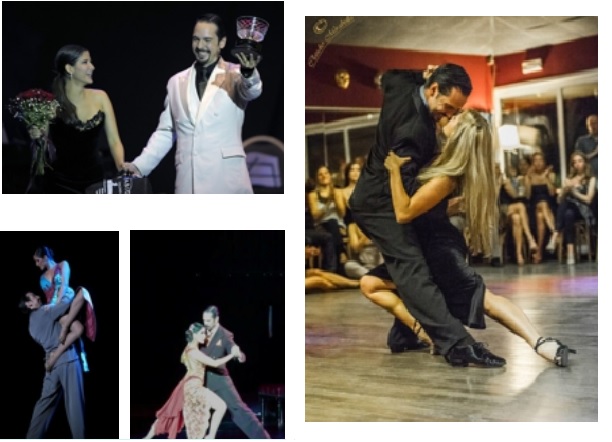
After many years of mastering these styles, giving shows and performances, John met the style that changed his life, Tango. Thanks to the Tango Caracas Company, this dancer started a career in the Tango scene and in 2006, after only three months of practicing with his partner in that moment, John went to the worldwide Tango Championship in Argentina and the couple could passed to the semi- final, something remarkable for a Venezuelan contestants couple.
Later, in 2007, they made it to the finals and in 2008 the couple took part again of the contest and won the 3rd place.

After that, many doors opened for John in the Tango scene around the world, making a dance tour in TokyoJapan, and different countries of Asia. This was a learning process for John in so many ways, because he had the opportunity to meet so many different cultures, languages, perspectives and, overall, dances.
He returned to Argentina in 2009, this time with the amazing dancer Clarissa Sanchez as his new dancing partner, but it was just until 2011, the year of victory, where they were tied in the first place with a Colombian couple After this, John’s career just got off the ground, working and dancing a lot in Argentina, having tours in United States and Europe.

Currently, John is working by himself in Switzerland, organizing a big Milonga once a month in Geneva, and being invited to jury, perform, Dj and teach in Festivals and other cultural events around the world. In November begins his next European tour, with confirmed countries as France, Spain, Italy, Switzerland and the U.K.
Some of his awards
- Representative of Venezuela in the 8th. World Tango Summit in Bariloche, Argentina 2009.
- Finalist of the 7th World Tango Championship held in Buenos Aires in 2009 in the category of Salon Tango.
- 3rd place of the 1st World Tango Championship held in Medellín, Colombia in 2011 in the Tango Salon category.
- 7th place of the 1st World Tango Championship held in Medellín, Colombia in 2011 in the category of Stage Tango.
- 2nd place of the IX World Tango Championship held in Buenos Aires, Argentina in 2011 in the Tango Salon category.
- 5th place of the IX World Tango Championship held in Buenos Aires, Argentina in 2011 in the Stage Tango category.
- BEST FOREIGN COUPLE OF 2011, in the IX World Tango Championship held in Buenos Aires, Argentina in 2011
But having a lifestyle where you have to travel worldwide makes difficult being near to your family and the ones you love and that is a lesson that John has learned after many years of working hard. “When you travel like this, you have to internalize a state of separation, and it has been very hard for me, but I’m still working on that”.
Nevertheless, John is making all to have his son with him, and being close with his family as much as he can. Future goals for John are continue traveling, working and dancing. He is also working for next year in developing his own clothing line, videoclip production and online tango lessons through his new website.


Travel gives him a great opportunity to learn and see all types of languages and cultures. He also wants to create a dance academy and dance company, in order to make festivals, workshops and more.
John talks about Venezuela, its current situation, Europe, the people he’s helping and more, but the most remarkable and beautiful thing is how passionate he is talking about Tango and dance in general. When you talk with him, the desire of learn to dance starts growing, he’s just inspiring.
When we asked him what is the thing that he loves the most about Tango, he says that is the energy that you want to give and show to others, the energy that you want your partner feel, the sensations, the moves…
He knows that Tango is a very strict style with specific rules and it requires a lot of discipline, but he is innovating the style, giving it his signature and personality, and that is what he wants to develop, a new way of Tango style that could captivate anyone.
Finally he gives us tips for beginners in Tango and in dance in general. “Stay humble, always. Ego is an obstacle that every dancer has to defeat. Also you need to have discipline, learning Tango and every dance is like to learn a new language, you have to practice a lot and put all you effort to achieve your goal”. The best advice from a professional.

John Erban is such and unique person, with so much talent and vibrant personality. To know more about him and his work, check his page https://www.facebook.com/Johnerbantango/ www.johnerbantango.com Instagram y Twitter: @johnerbantango Email: [email protected]
Asia / June 2025
| Karina Bernales present |

May 2025 |
FESTIVALS |
![]() |
Vivafest BodrumMay 07 / 14 2025 La Blanche Island Bodrum From € 100 |