• Skip to primary navigation
  • Skip to main content

International Salsa Magazine

  • HOME
  • Previous editions
    • 2026
      • ISM / July 2026
      • ISM / June 2026
      • ISM / May 2026
      • ISM / April 2026
      • ISM / March 2026
      • ISM / February 2026
      • ISM / January 2026
    • 2025
      • ISM / December 2025
      • ISM / November 2025
      • ISM / October 2025
      • ISM / September 2025
      • ISM / August 2025
      • ISM / July 2025
      • ISM / June 2025
      • ISM / May2025
      • ISM / April 2025
      • ISM / March 2025
      • ISM / February 2025
      • ISM / January 2025
    • 2024
      • ISM / December 2024
      • ISM / November 2024
      • ISM / October 2024
      • ISM / September 2024
      • ISM / August 2024
      • ISM / July 2024
      • ISM / June 2024
      • ISM / May 2024
      • ISM / April 2024
      • ISM / March 2024
      • ISM / February 2024
      • ISM / January 2024
    • 2023
      • ISM / December 2023
      • ISM / November 2023
      • ISM / October 2023
      • ISM – September 2023
      • ISM – August 2023
      • ISM July 2023
      • ISM Edition June 2023
      • ISM – May 2023
      • ISM April 2023
      • ISM March 2023
      • ISM February 2023
      • ISM January 2023
    • 2022
      • ISM December 2022
      • ISM November 2022
      • ISM October 2022
      • ISM September 2022
      • ISM August 2022
      • ISM July 2022
      • ISM June 2022
      • ISM May 2022
      • ISM February 2022
      • ISM January 2022
    • 2021
      • ISM December 2021
      • ISM November 2021
      • ISM October – 2021
      • ISM September 2021
      • ISM August 2021
      • ISM July 2021
      • ISM May 2021
      • ISM April 2021
      • ISM June 2021
      • ISM March 2021
      • ISM February 2021
      • ISM January 2021
    • 2020
      • ISM December 2020
      • ISM November 2020
      • ISM October 2020
      • ISM September 2020
      • ISM August 2020
      • ISM July 2020
      • ISM June 2020
      • ISM May 2020
      • ISM April 2020
      • ISM March 2020
      • ISM February 2020
      • ISM January 2020
    • 2019
      • ISM December 2019
      • ISM November 2019
      • ISM October 2019
      • ISM Septembre 2019
      • ISM August 2019
      • ISM July 2019
      • ISM June 2019
      • ISM May 2019
      • ISM April 2019
      • ISM March 2019
      • ISM February 2019
      • ISM January 2019
    • 2018
      • ISM December 2018
      • ISM November 2018
      • ISM October 2018
      • ISM September 2018
      • ISM August 2018
      • ISM July 2018
      • ISM June 2018
      • ISM May 2018
      • ISM April 2018
      • ISM March 2018
      • ISM February 2018
      • ISM January 2018
    • 2017
      • ISM December 2017
      • ISM November 2017
      • ISM October 2017
      • ISM September 2017
      • ISM August 2017
      • ISM July 2017
      • ISM June 2017
      • ISM May 2017
      • ISM April 2017
      • ISM March 2017
      • ISM February 2017
      • ISM January 2017
    • 2016
      • ISM December 2016
      • ISM November 2016
      • ISM October 2016
      • ISM September 2016
  • Spanish
  • Download Salsa App
    • Android
    • Apple

Search Results for: Grammy nomination

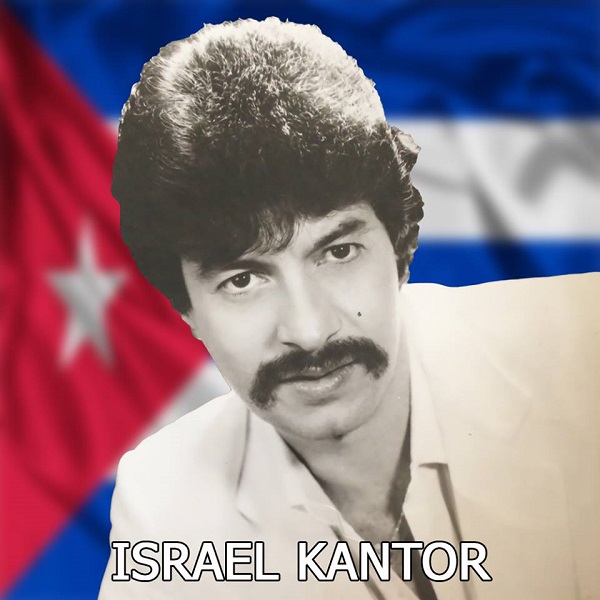
Israel Kantor was an excellent bassist, arranger and composer who achieved great popularity in Cuba for his vocal technique and original “Sonear” style.

His real name was Wilfredo Israel Sardiñas Domínguez. 

He was born on October 16, 1949 in Alturas de Canasí, a town in western Cuba between Havana and Matanzas, and his parents registered him a couple of years later in Bacuranao (birth date October 16, 1954).  A bassist, arranger and composer, he achieved great popularity in Cuba for his technique and original “sonear” style.

Although he was not very well publicized or acclaimed as a sonero, he managed to make a good name for himself in exile.

His mother played the tres and seven of his nine siblings formed a group with guitar, tres and lute; he played both sones and punto guajiro.

They used as bass a box called marímbula, which consisted of a box with four straps to produce the bass sound.  He began to sing with his brothers at the age of eight.

Later he went to Havana to study at the Conservatory of Guanabacoa, where he started playing trova sonera.

israel kantor
HE BECOMES A PROFESSIONAL

Israel Sardiñas improvised on the sonos with astonishing ease, and he is not exactly what you would call an interpreter “by ear”, or empirical. 

In fact, he played the bass before singing, and it was precisely his condition of bassist and arranger that made Meme Solis discover him in 1975 and took him and his group to work in the shows he was then directing in tourist centers on the beaches east of Havana.

“One night, at the dance show they were doing at the Hotel Atlántico, in Santa María del Mar, Israel took the microphone, I think because the group’s singer was not there,” Meme Solís recalls now.  “I saw him and told him: ‘But how well you sing!’ When I put on another show I gave him two numbers, and from then on people began to follow him”.

“I began to study Carlos Embale, Miguelito Cuní, Raúl Planas, Roberto Faz and Beny Moré,” he said, referring to the time when he stopped playing bass to devote himself to singing.  “There is everything that is Cuban music: guaracha, son, rumba. What I did was to listen to them and transfer them to the staff to understand how they moved their voices.

The one I liked the most was Raúl Planas; he was the one who rubateaba the most, the one who broke the syncopation the most.

Cuní had a good timbre, but always in time. Planas had a deeper timbre, and the sonero’s timbre must be metallic”.

That was the beginning of his professional career, which in Cuba would take him to the groups Ireson, Neoson, Los Yakos and Los Reyes 73. In 1979, he joined the Cuban group Los Van Van, founded and directed by bassist and composer Juan Formell (Juan Clímaco Formell Cortina was born on August 2, 1942 in Havana, Cuba).  As vocalist of the famous group, Israel became popular in Cuba for his vocal technique and his “sonear” style, which aroused great interest in the musical media, especially in popular music.  With the Los Van Van Orchestra he participated in the recording of the albums “Juan Formell y Los Van Van” in 1981 and “El Baile Del Buey Cansa’o” in 1982, both in the Egrem label of Cuba.  It was with this group that the artist became known, and left his stamp on the interpretation of the song “Seis Semanas”.

From that time on, he began to make musical arrangements.

After several international tours with Los Van Van he decided to leave them in Mexico in 1983, in search of greater freedom and possibilities for his career.

A month later he was already in Miami after crossing the border.  “I wanted to go to Grupo Afrocuba, but the bureaucracy wouldn’t let me,” he said on one occasion. “Van Van is very good, but Afrocuba came with a very strong force. I also wrote, I made arrangements, I had other ideas, and Afrocuba suited me better, because it was more jazzy”.  In an interview for a news agency years ago, he said: “I had a great school before being with Los Van Van. After traveling a lot with them, I was very anxious to see the world and the third time we were in Mexico, I decided not to return to Cuba”.
SUCCESS IN EXILE

When he arrived in New York in April 1984, he was still Israel Sardiñas, but when Johny Pacheco, the legendary director of the Fania All Stars, took him to an anniversary party of the group at the Cheetah two months later, the late “singer of singers”, Héctor Lavoe, heard him improvising and stopped the orchestra: “I want to baptize him right now as Israel Cantor”, said Lavoe.  The only thing left to do was to change the c for the k, spend two months with Lavoe’s band, and in October create his own, which he called La Verdad.

Thus, in 1984, he released the album “Israel La Verdad” with the production of Larry Harlow, on the Bacán Records, Inc. label. All the numbers were written and composed by Israel Kantor.

As its name indicates, La Verdad was a constellation of excellent musicians: Sonny Bravo on piano, Salvador “Sal” Cuevas on bass, Tony Barrero and Pedro “Pouchi” Boulong on trumpets, Barry Rogers on trombone, Mario Rivera on saxophone, Karen Joseph on flute, Frankie Malabé on congas and Nicolás “Nicky” Marrero on bongo among others.  Justo Betancourt and Adalberto Santiago collaborated on backing vocals, with Justo doing a duet track: “Rumberos De Nueva York”.  Other numbers on the album that deserve attention are: “La Verdad”, “Tu Lindo Pasado”, “María Antonia” and “A Mis Idolos”.

That same year he is invited to sing on the album by Ñico Rojas y su Orquesta entitled “Paso La Vida Pensando: ‘En Tí'”, on the Kanayón Records label, three songs: “Juan Ramón (El Chichón)”, which was popularized by José “Cheo” Feliciano when he was part of Joe Cuba’s group, “Por Encima Del Nivel”, which had the arrangements and piano of Luis Quevedo, in which he performs a superb piano solo, and in “Lo Voy A Matar”, composition by Tony Pabón and arrangements by maestro Kenny Gómez.

In 1986, he is the lead vocalist of the group Salsa Latina in the album “De Aquí . . Pa’ Lante!”, on the Coa Records label, which was produced by Isidro Infante and Israel Kantor himself and in which he composed half of the eight songs that make up the album.  The most outstanding numbers are: “En Honor A La Verdad”, “Se Acabó El Material”, “Saca Aserrín, Mete Madera”, “A La Mitad Del Camino” and “El Palo De China” (Composition by Raúl Marrero).

He temporarily left Miami to try his luck in Puerto Rico, Mexico and Italy until 1996, when he settled permanently in Miami.  He performed on various stages of the music scene: he inaugurated the Mamá Rumba Club in the Mexican capital, made arrangements for the orchestra of the Sábado Gigante program on Channel 23 in Miami, participated in a Cuban Jam Session at the Lincoln Center in New York, among others.

For more than two decades Kantor was the protagonist of important musical projects both in Latin America and Europe.  He recorded eight solo albums and six guest albums with orchestras such as those of Johnny Pacheco and Juan Pablo Torres.  Among his recordings are “Un Señor Kantor” for the BMG record label; a tribute album to Los Van Van for Sony Music and “Llegó La Música Cubana”, an album that took him on tour in Europe.

In 2003 he collaborated in the solo work of arranger and composer Jesús “El Niño” Pérez with Orquesta Sensación (not to be confused with the former group of Cuban Abelardo Barroso) entitled “Cuba y Puerto Rico Son De Un Pájaro Las Dos Alas”, in which Israel Kantor’s voice stands out over those of the other two singers: Danny Rojo and Rogelio Rente, as well as demonstrating his abilities to improvise on the soneo, in the number “Pa’ Puerto Rico” (which Jesus “El Niño” Perez composed for the album, “La Amistad” by Johnny Polanco).

His last great work, in 2003, was a tribute to Benny Moré his permanent artistic inspiration- entitled “To ‘El Bárbaro Del Ritmo'”, a live recording with the Tropicana All Stars orchestra, produced by Regu Records, owned by Recaredo Gutiérrez. 

The orchestra, made up of 22 musicians, mostly Cubans living in Miami, led by Israel Kantor, was nominated for a Latin Grammy Award in the traditional music category in 2004, and two other nominations for an Anglo-American Grammy.

The project, which consisted of a live show, recorded on DVD and seven albums, led them to share the stage with legendary figures such as Paquito D’Rivera, Marco Antonio Muñiz and Generoso “El Tojo” Jiménez, among other glories.

The Tropicana All Stars orchestra was made up of a large number of extraordinary musicians, all of them renowned and of the highest quality: Paquito Echevarría on piano, Cuban musician who has collaborated for a number of important singers such as Gloria Estefan, Rey Ruiz among others; Venezuelan Ramses Colón on bass, a virtuoso musician and desired in any band, Adalberto “Trompetica” Lara on first trumpet, possessor of a very Cuban technique when playing and improvising, he has been a musician of Irakere, Super Cuban All Stars, NG La Banda among others; Kiwzo Fumero on the second trumpet, comes from the conservatory “Alejandro García Caturla” of Cuba, since his beginnings he expressed his great interest in the instrument to which he has dedicated part of his life, he dominates the high notes with mastery for which he has been recognized by great masters of the genre; Lenny Timor on the third trumpet, participated with Los Sobrinos Del Juez for 14 years; Mario Del Monte on fourth trumpet, has been a member of prestigious orchestras such as Roberto Faz, Pacho Alonso, Tito Gómez among others; Alfredo Salvador on baritone sax, has been present in recordings for Celia Cruz, Paquito D’Rivera and Arturo Sandoval; José “Pepe” Vera on tenor sax, his resume includes recordings with the Tropicana Orchestra, Benny Moré, among others, Manuel Valera on alto sax; Juan Carlos Ledón on tenor sax, he has played with Orquestas Cubanas, Roberto Torres, Willy Chirino, Andy Montañéz, among others; Bayron Ramos on trombone, he has been a musician with Albita Rodríguez’s band and Fania All Stars; Braily Ramos on trombone, he has recorded with Gloria Estefan and Miami Sound Machine, Alejandro Sanz and others; Leonardo Timor Sr. on trombone; Leonardo García on timbales, has accompanied Luis Enrique, José Luis Rodríguez “El Puma”, Alexandre Pires, among others; Michael Gerald on percussion; Edwin Bonilla on congas, one of the best percussionists today who needs no further introduction; Juanito Márquez on arrangements, production and musical direction; Germán Piferrer is the musical director and arranger, and as very special guests Juan Pablo Torres, Roberto Torres, Generoso “Tojo” Jiménez, Carlos “Patato” Valdéz, Alfredo “Chocolate” Armenteros and Cándido Camero.

The vocal responsibility fell on Israel Kantor, who was emerging as one of the contemporary Cuban singers with the greatest international projection.  His voice can be heard in the twelve songs that made up the first musical volume: “Santa Isabel De Las Lajas”, “Oh! Vida”, “Maracaibo Oriental”, “Fiebre De Ti”, “Mata Siguaraya”, “Amor Fugaz”, “Bonito y Sabroso”, “Camarera Del Amor”, “Mucho Corazón”, “Yiri Yiri Bon”, “Perdón” and “Francisco Guayabal”, the cover was made by Cuban painter Andrés Puig.

Kantor’s love for his homeland turned his career into a constant homage to Cuban music.

“Over time, one assimilates growing up far from your homeland, not being able to return to stay connected to your roots, but time heals the wounds,” he said a short time ago.

“Inspiration is like a spring,” Kantor said, referring to the improvisations he made as a sonero singer.  “It’s born from the heart; ideas are constantly flowing to you. That’s why a sonero always sings the same song differently.

Cuban music is the continuity of what the singer generates: although the first thing is the vocal conditions, what you have to have is, above all, the clave; knowing how to play with the phrasing so as not to go against the clave”.

Kantor said, “You can train a vocalist to become a sonero, but if his relationship with the genre is not natural, from the heart, he will always end up giving clichés in his inspirations”.

He had no shortage of job offers, even though he was rarely heard on the radio in Miami.  When he was not performing with the Tropicana All Stars, he was performing with his group Havana Son -violin, flute, piano, bass, timbal and conga- in different stages both in the United States and internationally: at the Tropicana Hotel in Las Vegas; the Lincoln Center in New York (in 2003); at the Casa Cuba in Ponce, Puerto Rico, and on tours to the cities of Nicaragua, Lisbon, Oporto and Vigo, in Portugal and Spain, where he shared with other Cuban exiled stars like Willy Chirino and Albita Rodriguez.

Israel Kantor passed away on Saturday, July 1, 2006 at 11:00 p.m. at his residence in southwest Miami, victim of cancer, at the age of 57.  The artist, who had been suffering from liver problems for some time, had already undergone surgery in 2001 for colon cancer.  He is survived by his wife Rosalia Perez, aunts, uncles and cousins.  His body was laid to rest on Wednesday, July 5 at Caballero Rivero Funeral Home, 3344 SW 8th Street, in Miami, and buried the following day at Woodland Park Cemetery, located at 3260 SW 8th Street, in Miami.

“He always worked as if it was the first day,'” recounted his wife Rosalìa as she recalled the artist’s musical enthusiasm.  “He was never satisfied. He had a great hunger to play, to sing and to give people everything he had.”

REACCIONES POR SU MUERTE

 “Israel se hizo en Los Van Van. Tuvo una etapa muy brillante”, señaló Juan Formell, fundador de Los Van Van, ayer desde La Habana a El Nuevo Herald. “Está entre los cantantes más importantes con los que he trabajado. Para nosotros es una pena la pérdida de Israel”.

“Fue una de las voces más representativas de la música cubana de los últimos años”, dijo Adolfo Fernández, amigo personal y publicista de Kantor.  A su juicio, con la muerte del famoso sonero desaparece “una personalidad única y una manera de cantar irrepetible”. “El color de voz de Kantor era único”, destacó.

“Ha muerto uno de los mejores soneros que ha dado Cuba, y uno de los soneros auténticos, de los cuales no quedan muchos. Tenía una voz privilegiada, un ritmo y un sabor muy auténticos”, anotó la cantante Albita Rodríguez tras conocer la noticia de su deceso.

Fuente: herencialatina.com

Willy García releases a new album full of salsa named “Siendo Yo”


The Colombian salsa artist Willy García has surprised his fans with a new album full of salsa, of course the fast one, but where he also shows love songs hand in hand with nostalgia. Without neglecting touches of calculated risks and adventures to give all the listeners an album with a lot of great sounds, just like the one from Buenaventura has accustomed us to. Know a little more about this album with the following words.

“Mentiroso” is the title track that Willy García shows in “Siendo yo”

Mentiroso is a fast-tempo song that is exactly what Willy enjoys the most, but that doesn’t mean that the album isn’t a walk through different rhythms and tempos that offer us a glimpse into the thoughts of this great artist. There are songs in the style of “Como lo extraño” where each emigrant can feel identified with the nostalgia towards his homeland. But then we can find some risky tracks that go a bit far from his classic style.

For example, there is “Aquí le pago con esto” which is a collaboration with Cali Flow Latino where sounds of salsa, urban, tropical rhythms and holiday flavors are fused. In this way Willy wants to please his old fans but attract the new generations with modern sounds. The other songs are all romantic in style, but it is the last one on this list that Willy is most proud of,“Me enamoré de ella” is one of his favorites.

“Mujeres”, “Me Recuerda a Ti”, “Que Se Detenga el Tiempo” and “Si Eres Tu”, are all about love and romantic feelings that are precisely part of that essence that makes so many stick to the salsa genre. Another song that is worth talking about is “Cada día” which could be another hit for the radio and especially on the dance floors.

Arrangements of “Siendo Yo”

Starting with the song “Mentiroso”, it should be noted that it was mastered in New York City, recorded between Cali and Miami, with lyrics by Willy himself, in addition to the fact that he participated in the production together with the great Oscar Iván Lozano.

Among the musicians who participated in the recordings we can find many well-known names from the Colombian territory, such as Diego Galé who played the congas and the bongo, Diego Galindo, Johan Castro, Luis Araque and Christian Fernández did the choirs, while Luis Bravo and Carlos Latoche in the horn section, bassist Carlos Córdoba, timbalero Robert Vilera and Óscar Iván Lozano himself on piano.

A quick look at Willy Garcia’s career

Willy García’s career as a soloist is an incredible example that when there is talent, no matter how it is represented, it will always shine. We can name many recognitions and achievements, but the last few years have been one achievement after another that fill this son of the South American country with great pride.

First we must name achieving nominations for the Latin GRAMMY® 2021, in addition to the 2022 Heat Awards and 2022 Lo Nuestro Awards. Not counting the excellent positions it achieved on charts such as Billboard’s Tropical Airplay where it entered the top 10. It also managed to position himself at the number 1 of the USA Today’s chart, one of the most read publications in North America, with “Lo Veo y No Lo Creo” together with Gilberto SantaRosa “El Caballero de la Salsa”.

In addition to participating in the concert “Night of the Dominican Restoration” where he sang with Sergio Vargas. He also received from El Espectador the “Afro-Colombian Of The Year” award in the Arts and Music category. In general, 2022 only smiles at this great Colombian and more success are only expected from his fifth production as a soloist.

Eddy Herrera presents his new production “Aquí Estoy”


Eddy Herrera is “El Galán del Merengue” and one of the most recognized tropical music artists in the region and the world. He returns to the music scene with an album of 8 songs where he wants to demonstrate his experience, and the perseverance he has had throughout the years. This album is not just another taste of his particular flavor, but also shows different facets of the Dominican star. In this article we tell you all the details.

“Aquí estoy” by Eddy Herrera has the best production


For this album Eddy promised to show his facet as a composer, and the best possible quality for all his fans and those who enjoy tropical music. This production has different sounds to capture Herrera’s tastes. In addition to songs like “Y cómo te olvido”, “Bla bla bla”, “Cómo iba a saber”, “Adicto a ti”, “Te lo pido mi amor”, “A beber”, “Nadie como tú” and the hit “Si yo se lo pido,” which is the main song of this album, were produced and arranged by the best of the best.

In this very special album, Eddy had the participation of prominent producers and musical arrangers from the Dominican Republic such as Junior Cabrera, Edwin García, Moisés Sánchez, Isaías Leclerc, Francis Enmanuel Contreras (Dary Darys), Juan Daniel Montero and his own orchestra that accompanies him in all his productions and tours. In Eddy’s own words:

“I understand that this album will mark interesting things this year and years to come. Having the professionalism, talent and experience of producers, musicians, composers, mixing and mastering engineers was more than a real pleasure, it was an honor. I hope it is to everyone’s liking and long live the merengue”.

The lyrics of each track are authored by the following talents: Giordano Morel, Martín De León, René Solís, Luis A. Herrera, Jorge A. Herrera, César Brizuela, Ernesto Díaz (EL Duende), Enghel Mata and Valerio De León. Wanting to give this new production the best quality possible, Eddy worked on mixes and sound with the best technicians and sound engineers.

Highlighting the work of the talented and experienced mixing engineer and musician Allan Leschhorn, who is the winner of 14 Latin GRAMMY® Awards, and who has worked with leading national and international artists. Along with Boris Milan, also winner of 8 Latin GRAMMY®, more than 30 nominations and 3 GRAMMY® nominations, who was also in charge of the mastering of the complete album and the song “Y cómo te olvido”.

“With this new album I want to capture mainly that, regardless of the fact that in the last two years the situation at levels of work, economy and health has been devastating for everyone, despite everything, I remain firm and on my own feet working even a little more than usual,” explained the Dominican Eddy.

Eddy Herrera has a long career


Under the long list of successes that this son of the Dominican Republic has are “El jardinero”, “El loco y la luna”, “La medicina”, “Mujer tirana”, “Tu eres ajena” and “A dormir juntos” featuring the Venezuelan artist Liz. His previous production “Ahora” received the highest award by winning the Latin GRAMMY® for Best Merengue and/or Bachata Album.

With a 30-year career with a long list of achievements and success, it could be said that Eddy has already done it all. But he continues to go on stage to cheer up and make his fans and the public dance with everything he shows. Hence his commitment to offer the best quality in each production. He will soon do a promotional tour through Latin America so stay tuned for where you can see him.

Prince Royce Returns To European Stages With Classic Tour

The young Bachata idol will celebrate more than a decade of experience with a series of concerts in the Netherlands, Italy, France, Spain, and Switzerland

Royce recorded “My Angel” a single that was part of the soundtrack of the sequel Fast and Furious 7.

The internationally famous Latin superstar, Prince Royce, will tour Europe with five concerts called the Classic Tour in which he will perform his greatest hits and most recent singles in a unique and special environment celebrating his ten years of artistic career.

The tour will cover the five most important cities in Europe starting on June 6th at the Zénith multipurpose indoor stadium in Paris (France), he will go through Madrid (Spain) with Las Noches del Botánico on Friday, June 24th, after he will be in the city of Zurich (Switzerland) on June 25th, will continue at the Fiesta festival in Rome (Italy) on July 2nd, and of course, will end his visit to Europe by closing the Pal Mundo Latin-Caribbean Festival in The Hague (Netherlands) on July 3rd.

“EUROPE! See you this summer on the #PRClassicTour to sing all my classics. I’m crazy to see them again!” The singer of Dominican descent expressed this on May 4th through his Facebook account.

Tickets for the Classic Tour range from €40 to €100, and you can purchase them online through his official website. https://www.princeroyce.com/

The last stop to see Prince Royce in concert on the European continent will be at the Pal Mundo Festival in The Hague, a city located in the west of the Netherlands. Here, nature and the Latin world will come together for the first time in the huge urban park in the middle of the city, Zuiderpark, located at 2533 SP, Den Haag/The Hague.

Pal Mundo will take place during the first weekend of July, and it will have approximately 50,000 attendees from all over Europe who will enjoy urban and Afro-Caribbean music, dance to Latin rhythms, and broaden their culinary tastes with typical food of the South American and the Caribbean Islands.

Geoffrey Royce Rojas de León was born on May 11th, 1989, in the Bronx (New York).

Continuing in the same tone, Prince Royce, the artistic name of Geoffrey Royce Rojas, in the last decade has obtained almost 100 million followers on his social networks, 22 world hits on radio charts, 24 Billboard Awards, 20 Premios lo Nuestro, 19 Premios Juventud, 6 Latin AMAs, and 14 Latin Grammy® nominations.

In the last eight years, this 33-year-old artist has collaborated with Selena Gómez on the hit Already Missing You, Gerardo Ortiz (Moneda), Shakira (Deja Vu), Gente de Zona and Arturo Sandoval (Tumbao), Zendaya (X), Marc Anthony (Adicto), Thalia (You Lost My Love), Daddy Yankee (Come With Me), and more recently Natti Natasha (Antes Que Salga El Sol), Mau y Ricky (Doctor), and the single that trended on the global YouTube chart along with María Becerra released on March 4th, Te Espero.

This New Yorker artist has six studio albums: Prince Royce (2010), his debut album, with which he rocketed up the popularity list with songs like Stand By Me and Corazón Sin Cara. His next record production was Phase II (2012) and was followed by Soy El Mismo (2013), Double Vision (2015), Five (2017), and his last recording to date Alter Ego (2020). This sixth album released on February 7th contains two discs “Genesis” and “Enigma” for a total of 23 songs. The genres that you will find in this compilation discs are Salsa, Bachata, Latin Pop, Reggaeton, and Trap.

“I’m excited to share Classic Tour with all my fans, who have been there for me unconditionally since the beginning of my career”… I’m still here thanks to all of you, and this tour is for you. I am full of gratitude.” Prince Royce

La Sonora Ponceña Returns To Salsa County

The only performance with Yolanda Rivera & Mario “Mayito” Rivera will be at the Lehman Center

The name “La Sonora Ponceña” is in honor of the Cuban band La Sonora Matancera and its hometown (Ponce – Puerto Rico)

La Sonora Ponceña “National Treasure of Puerto Rico” together with its leader Enrique Arsenio “Papo” Lucca returns to Salsa County (The Bronx) with the special guests Yolanda Rivera and the Cuban singer Mario “Mayito” Rivera (former member of Los Van Van) onstage at one of New York’s leading non-profit performing arts centers, Lehman Center.

This unique presentation, long-awaited by its fans, will be on Saturday, May 14th at 8 PM at the Lehman Center for the Performing Arts located at 250 Bedford Park Blvd West, Bronx, New York 10468 and the online price per ticket ranges from between $45 – $100. https://www.lehmancenter.org/sonora-poncena

La Sonora Ponceña gained popularity in 1960 during its trip to New York City to give a series of presentations and established itself as one of the most demanded orchestras among Hispanics.

The legendary band, for more than 65 years, has made uninterrupted performances and has been recognized as one of the best Salsa orchestras for its fusion of traditional Cuban sounds with the modern style of Latin Jazz.

In 1967, under the direction of Papo Lucca, they released the first LP Hachero Pa’ Un Palo with the Inca label (a subsidiary of Fania). This album was an overwhelming success in New York as well as its second record production Fuego en el 23 (1969). The famous band from Puerto Rico recorded 29 more albums for this record label, including eight with the singer Yolanda Rivera, La Ceiba with Cuban singer Celia Cruz (1979), and in 1980 New Heights from which they began to establish the internationalization of the orchestra.

Musical Hegemony consists of 8 tracks including Caminando Con Mi Padre, Nadie Toca Como Yo, and Borrachera

This last year (2021), during the pandemic period, La Sonora Ponceña launched two new record productions: Hegemonía Musical (June 2021) and Christmas Star (November 2021).

The last one is the fourth Christmas-themed album in his career. “Thirteen years after our last Christmas production, we seek to present a record work that is a true reflection of the sound and musical quality that we always want to offer our audience”, Papo Lucca told digital media.

While “Salsa Que Cura To” is the first single taken from their most recent album Hegemonía Musical and whose authorship and interpretation is by Jorge Nicolai Avilés (vocalist of the band) with musical arrangements by Papo. Musical Hegemony, nominated in the Tropical Album of the Year category at the Billboard 2021 awards, was made with great dedication and professionalism as indicated on its official social media. “…We thank the public for the support they have been giving to this latest album that was worked with much love and dedication to the memory of our always remembered Enrique “Quique” Lucca Caraballo (RIP) and all our dear followers… And we will continue working as we have been doing for 67 years to place in your consideration what best of our music, soul, perseverance, and professionalism that seek to bring joy and enjoyment to all our dancers… Thank you very much!”

The song “Borinquen” (1980) with Sonora Ponceña becomes her a famous Salsa star

Yolanda Rivera will also perform at this event. She was born in Ponce (Puerto Rico) and moved to New York City with her family during her childhood. Her first opportunity as a singer was in 1969 in Willie Rosario’s band. In 1975 she returned to Puerto Rico and performed in several orchestras, including Joe Rodríguez’s La Terrifica. Her career reached its peak when she joined La Sonora Ponceña in 1977. The song “Borinquen” from the album Unchained Forcede (1980), a musical tribute to her native country (Puerto Rico), made her a Salsa star. Yolanda Rivera is considered one of the main and most famous singers of La Sonora Ponceña with songs like “Rumba en el Patio” and “Madrugador”. Her repertoire includes Salsa, Plena, Bolero, Guaguancó, Son Montuno, and Guaracha.

Mario “Mayito” Rivera (El Poeta de La Rumba)

The second special guest tonight will be Mario “Mayito” Rivera. His vocal skill and masterful interpretation of Cuban music in modern and traditional styles earned him the nickname “El Poeta de La Rumba”. Mayito was born in Pinar del Río (Cuba) and has training degrees from the National School of Art and the Higher Institute of Art. After his educational training in Cuba, he joined the band of the Cuban singer Albita Rodríguez and played bass in the Moncada group. From 1992 to 2011, Mayito was the lead voice and face of the successful Cuban band, Los Van Van, earning a Latin GRAMMY® and two nominations with them.

  • « Go to Previous Page
  • Page 1
  • Interim pages omitted …
  • Page 11
  • Page 12
  • Page 13
  • Page 14
  • Page 15
  • Go to Next Page »

International Salsa Magazine (ISM) is a monthly publication covering salsa activities around the world and has been publishing since 2007. It is a worldwide network of volunteers coordinated by ISM Magazine. Together, we work to strengthen salsa events around the world.