• Skip to primary navigation
  • Skip to main content

International Salsa Magazine

  • HOME
  • Previous editions
    • 2026
      • ISM / April 2026
      • ISM / March 2026
      • ISM / February 2026
      • ISM / January 2026
    • 2025
      • ISM / December 2025
      • ISM / November 2025
      • ISM / October 2025
      • ISM / September 2025
      • ISM / August 2025
      • ISM / July 2025
      • ISM / June 2025
      • ISM / May2025
      • ISM / April 2025
      • ISM / March 2025
      • ISM / February 2025
      • ISM / January 2025
    • 2024
      • ISM / December 2024
      • ISM / November 2024
      • ISM / October 2024
      • ISM / September 2024
      • ISM / August 2024
      • ISM / July 2024
      • ISM / June 2024
      • ISM / May 2024
      • ISM / April 2024
      • ISM / March 2024
      • ISM / February 2024
      • ISM / January 2024
    • 2023
      • ISM / December 2023
      • ISM / November 2023
      • ISM / October 2023
      • ISM – September 2023
      • ISM – August 2023
      • ISM July 2023
      • ISM Edition June 2023
      • ISM – May 2023
      • ISM April 2023
      • ISM March 2023
      • ISM February 2023
      • ISM January 2023
    • 2022
      • ISM December 2022
      • ISM November 2022
      • ISM October 2022
      • ISM September 2022
      • ISM August 2022
      • ISM July 2022
      • ISM June 2022
      • ISM May 2022
      • ISM February 2022
      • ISM January 2022
    • 2021
      • ISM December 2021
      • ISM November 2021
      • ISM October – 2021
      • ISM September 2021
      • ISM August 2021
      • ISM July 2021
      • ISM May 2021
      • ISM April 2021
      • ISM June 2021
      • ISM March 2021
      • ISM February 2021
      • ISM January 2021
    • 2020
      • ISM December 2020
      • ISM November 2020
      • ISM October 2020
      • ISM September 2020
      • ISM August 2020
      • ISM July 2020
      • ISM June 2020
      • ISM May 2020
      • ISM April 2020
      • ISM March 2020
      • ISM February 2020
      • ISM January 2020
    • 2019
      • ISM December 2019
      • ISM November 2019
      • ISM October 2019
      • ISM Septembre 2019
      • ISM August 2019
      • ISM July 2019
      • ISM June 2019
  • Spanish
  • Download Salsa App
    • Android
    • Apple

Search Results for: Grammys

Oscar D’León celebrates 50 years of career in Caracas “International Salsa Magazine says present”

In September, the greatest exponent of Venezuelan salsa in the world will celebrate five decades of brilliant artistic career with an international tour that will have as its main event, an impressive and awaited symphonic gala at the Teresa Carreño Theater. And for september 22 at the Forum in Valencia.
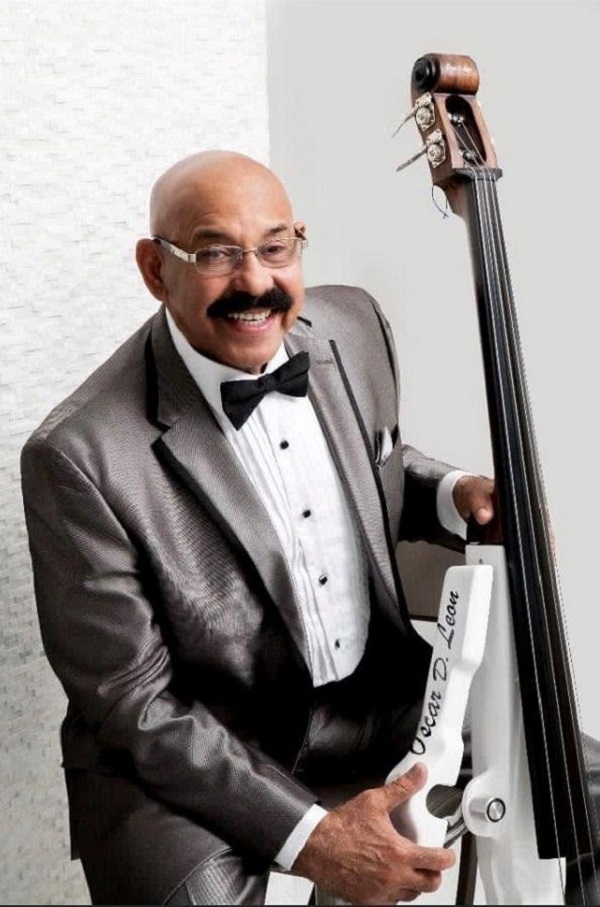
Miami, May 19, 2022. Undisputed legend of Caribbean music, Oscar D’León, the Sonero of the World, celebrates 50 years of successful artistic career with an international tour that will take him to different locations in the Americas and Europe this summer.

This tour, which will begin on June 20 in Mexico City, will continue in July with the “50th Anniversary Europa Tour 2022”, culminating in a spectacular symphonic gala at the iconic Teresa Carreño Theater, which, during two performances on September 16 and 17, will give his audience the opportunity to sing and dance to the music that has made him the most recognized and admired Venezuelan artist in the world over the course of five decades.

Acapulco, Arequipa, Santiago de Chile, Miami, Frankfurt, Munich, Berlin, Paris, Amsterdam, Madrid, Tenerife, London, Istanbul are some of the cities that will live the energizing experience of seeing him on stage, a real party for music lovers.

Deserving of hundreds of awards and recognitions, including five Latin Grammys, D’León has been nominated nine times for the U.S. Grammy, being the first Venezuelan to obtain such a statuette. He did it in 2001 thanks to the song “Cielito Lindo, La Negra Mariachi Medley” Featuring-Oscar D’Leon, included in a collection album: “Masterpiece/Obra Maestra de Tito Puente y Eddie Palmieri”.

In 2013, he received the Award for Musical Excellence, a special recognition granted by vote of the Board of Trustees of the Latin Recording Academy to artists who have made creative contributions of exceptional artistic importance in the field of recording during their careers.

A true prophet in his own land, this global artist who began writing his formidable musical history in 1972, at the age of 28, when he formed the Dimensión Latina Orchestra, promises to celebrate his half-century of career with an unforgettable show at the Teresa Carreño Theater, the most important in Caracas, organized by the Venezuelan companies Imagen Producciones and Oz Show, in alliance with the National Orchestra System of that country.

Important Notes

Venezuelan musician who is among the most outstanding authors and performers of salsa and Caribbean music in general. Oscar D’León’s professional career began late: legend has it that one night, while visiting a nightclub in 1973, he heard that the band playing there had been fired. Oscar seized the opportunity and offered his own band to replace the one that had left.

The owner accepted and hired him to start playing a few days later. There was only one problem: the band at that time consisted only of D’León himself. He quickly got in touch with trombonist César Monge, told him what had happened and both got down to work to put together a line-up.

The band was finally formed by Oscar (vocals and bass, an instrument he had taught himself to play), César Monge (trombone), José Rodríguez (percussion), Enrique Iriarte (piano) and José Antonio Rojas (trombone).

Thus was formed La Dimensión Latina, Oscar D’León’s first orchestra. “Pensando en ti” was the first of the orchestra’s long list of hits. Four years later, Óscar left the band and was replaced by Puerto Rican Andy Montáñez, a vocalist who sang with the Gran Combo de Puerto Rico. Óscar returned with his own orchestra, La Salsa Mayor, with which he recorded his first album, titled after the group’s name: La Salsa Mayor (1977). The work was a great success in his country, and little by little his name began to be heard on an international scale. The following year he recorded the album El Más Grande, which contained the songs “El baile del suavecito” and “Mi bajo y yo”, and shortly afterwards he made his first visit to New York to offer live performances.

Aside from being a great sonero, Oscar D’León is also an extraordinary showman. Almost always accompanied by his bass, with which he plays and dances as if they were a couple, Óscar moves around the stage with great skill. In Venezuela, Óscar D’León is an idol, not only as a singer and musician, but also as a model of a self-made man who, from a very humble position, achieves fame and success on an international scale.

He is considered one of the best interpreters of Afro-Latin music of all times and is undoubtedly among the Venezuelan artists with more projection abroad.

Despite having gone through several stages in the development of Latin music, Oscar D’León’s style, always unmistakable, has maintained some constants that have allowed him to ensure the loyalty of his wide audience. D’León has recorded with the most outstanding salsa stars; among his collaborations, which can be traced in more than fifty albums, stands out his participation in The Mambo King, the hundredth full-length album by the legendary Tito Puente.

Corresponsal: Lida. María Fernanda León

www.Sanjuanproducciones24.blogspot.com
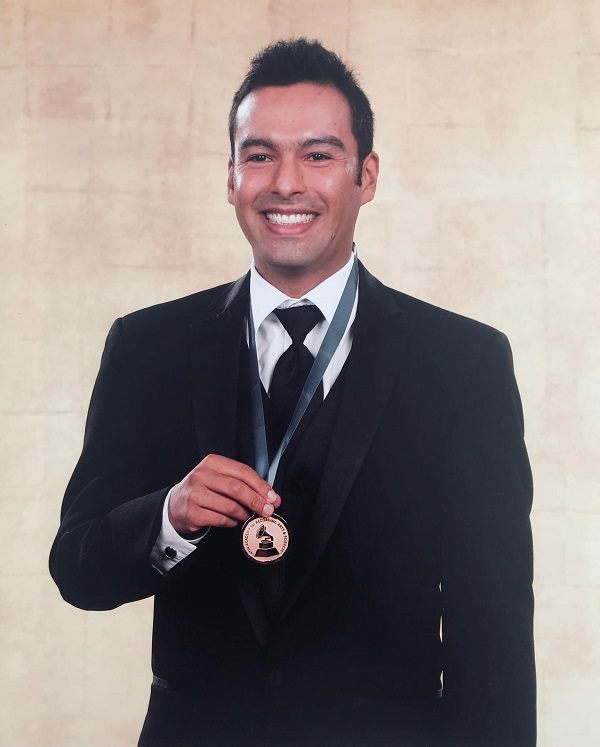
Sr Ortegón is a big success in Hollywood

Our nice talk

Good afternoon, we have here José Miguel Ortegón. He is a music producer, composer, DJ and violinist. Pleasure to meet you, Mr. Ortegón, how are you feeling?

I’m fine. Thank you very much for the invitation.

Your name is José Miguel Ortegón, but you are known as Sr Ortegón in artistic circles. Why?

I think that is a cultural tradition in the Hispanic world. Men are always called by their last name. That was natural and came spontaneously. Taking advantage of that señor is a Latin cliché, it was perfect for the work I was doing.

José Miguel Ortegón at the Latin Grammys

What was your first approach to the entertainment world?

I started recording with Guayacán, which is a salsa orchestra from Cali, Colombia. I received a lot of help from maestro Zumaque, who is a musician that does contemporary and classical fusion with Latin American rhythms. This was during my teens.

Then, you ventured into other facets, correct?

That’s correct. I started studying music at the conservatory when I was five years old and was in some rock bands. You know that our culture is divided into two musical styles in Latin America, which are classical and popular music. My first professional recordings came with the first computer we had at home as well as most of my generation. When the first computers came to our homes, the concept of music also changed.

How did you go from playing rock and classical rhythms to boogaloo and urban rhythms? How was that transition?

Cali has always been very linked to pachanga, boogaloo and charanga. Rock comes from blues and boogaloo is more or less part of the same trend, so it’s not uncommon for rockers to want to experiment with those rhythms I mentioned at the beginning. I also had teachers at the conservatory who taught classical music during the day, but played with professional orchestras at night. For me, that transition is inevitable.

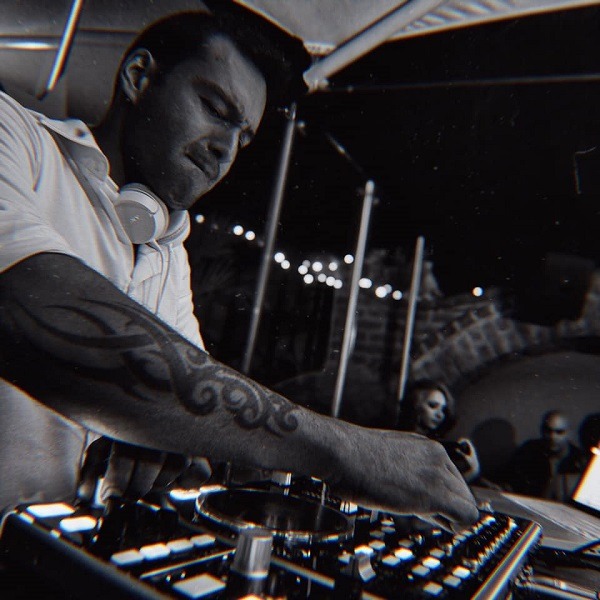
Sr Ortegón doing his job as a DJ

You have created music for series, movies, digital platforms, Disney, Netflix, animated series, etc. Did you think your career would go that far?

Thank you for your words. I make music. I have the same worry since I started in this world, I think I still have a lot to learn and maturing ideas, The truth is I never imagined it. I simply took the opportunity before me in Europe, where I was studying musicology at the Sorbonne. It is true that Latin music is very exotic there because there are not many Latin composers and producers.

At university, I got a chance to make music for a television channel. Subsequently, there was a snowball effect, a colleague who is now working in Hollywood contacted me for one of those jobs and that was my big opportunity. When I got the script, it was a Dominican series, which made me immediately discard salsa and mariachis. I thought about using bachata or something that really belonged to the Dominican Republic.

When you talk about Hollywood, it should be emphasized that there are several generations of Latinos born in the United States of any origin. A Cuban knows that a ranchera is not Cuban but from Mexico. Such a thing happenned a lot in the industry in previous years. The same rhythms and mixes were always used regardless of the Latin country involved in a production like, for example, West Side Story. I love that movie and think it’s excellent, but the music they used doesn’t sound Puerto Rican at all. That’s why I thought I should take this opportunity to respect the rhythms and traditions of each country. I know we all speak Spanish but each country has its own identity, so I respectfully take each rhythm and use it to make it authentic.

Latin music in Hollywood

When you did music for any series or film, were you given parameters to follow or did you have to be free to experiment with your music?

That’s one of the best questions I’ve ever been asked because the vast majority of producers are American and not connected with Latin culture, so salsa and merengue are the same for them. I just tell them to trust me, send me some samples to guide me, we analyze everything and move on. If the director or the editor doesn’t like what I did, we reach an agreement. Nowadays, this process is easier because there is more musical and cultural education on the part of the producers in the United States.

Sr Ortegón at the party in the Jetset Magazine

You were nominated for a Latin Grammy thanks to a mix of boogaloo and urban rhythms that you made. How did you think of it?

I’m 40 years old, so I spent my adolescence at the time when Californian hip hop was in full swing. Cali is one of the most Americanized cities in Colombia, so you were always listening to all those American groups and songs. Mixing all those rhythms with boogaloo has always seemed very interesting to me and I had no idea how to do that until I learned.

Since a mix between hip hop and Latin music is complex to make, a lot of people gsurrended and opted for reggaeton as culture. There are other groups such as Control Machete that have done an excellent job, but I felt they were lacking something. That’s how I started to learn, but it took me a long time because of lack of resources, since I didn’t have the right elements to respect the codes. So, I did a boogaloo song and a hip hop beat to mix them, which made me realize that they are sister rhythms. This work was very popular and even appeared in series and movies.

In fact, I heard about you from an email that included your new album entitled Latin Boogaloo Volume 2. I also listened to Volumen 1 and noticed the difference. What is the main difference between one volume and the other?

Volume 1 includes what I called Boogaflow, which is boogaloo with flow. Volume 2 is pure boogaloo. I tell you this because, for example, salsa is a term, but it’s really Afro-Cuban music made by Nuyoricans in New York if we go back to basics. Prior to that New York sound known as salsa, there was that phenomenon called boogaloo, shingaling or Latin soul.

I had to listen to disco to get to those rhythms because nobody teaches you anything about those genres. Unfortunately, those who created those rhythms are already dead or doing other things like Joe Cuba, Jimmy Sabater, the people from Sexta All Stars, Eddie Pamieri, Ray Barreto and many others. That fashion lasted about six or seven years and that was that. Every time I go to create a boogaloo, I have to listen very well because there are no scores or models to follow. Poncho Sanchez is one of the few who brings up the torch of that sound, although he is inclined more to Latin jazz.

I wanted to do a boogaflow, but my editor David Santiago proposed to me that we make two versions, one boogaloo version and the a little more acoustic one. What we were looking for was to please both audiences, the one who wants something urban and the one that wants something classic.

Which of the two volumes was more successful?

I know you have the answer (laughs). Volume 2 was the most successful. Number one has put me in touch with my salsa friends, but I didn’t want to tell them that I was going to make a volume two because boogaloo is not a very common rhythm.

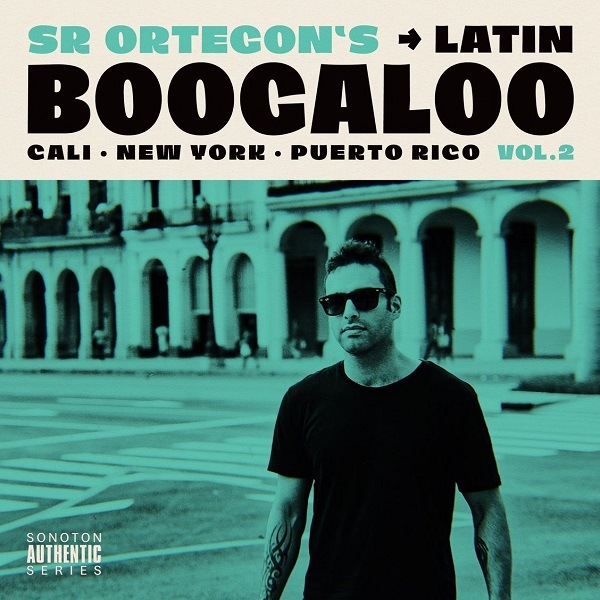
Cover of the album Latin Boogaloo Vol. 2

Chucho Valdes and Paquito D’ Rivera Will Tour for Europe

Jazz virtuous will offer a series of concerts from June to November 

Paquito D’ Rivera and Chucho Valdés

The pianist, composer, and conductor Jesús “Chucho” Valdes and the saxophonist, clarinetist, and composer Paquito D’ Rivera come together again to offer a tour called Reunión Sextet.

This tour of 2022 begins at the Mastercard Jazz Festival (Puerto Rico) and will pass through Poland (Bielsko-Biala), Spain (Pamplona, Marbella, Madrid, and Girona), and Germany (Essen) in June and July, and will end on November 30th in Zurich, Switzerland. Tickets range from €25 – €65 and you can get them in advance on Chucho Valdés’s website. www.chucho-valdes.com

The history of this long friendship dates back to the 1960s when they began their musical partnership as partners in the Havana Musical Theater Orchestra and the Cuban Modern Music Orchestra. With the founding of the Irakere orchestra by Maestro Valdés in 1973, Chucho and Paquito worked together again promoting the fusion of elements of Jazz, Classical music, Rock, and Afro-Cuban music that meant a transcendental development in Latin Jazz, and where Paquito and Chucho were the key figures. “Paquito was the heart of Irakere,” Chucho said.

Eight years later, Paquito went into exile in Madrid and later moved to New York. He developed a successful career as a leader & composer and won recognition as a Jazz Master from the National Endowment for the Arts of the United States in 2005. At the same time, Paquito also maintained his passion for classical music, receiving a Guggenheim Scholarship and commissions for quartets of strings, chamber groups, and symphony orchestras.

Meanwhile, Chuco remained in Irakere until 2005. He led trios and quartets, and established himself as a solo pianist. He produced his most recent production La Creación, a three-movement suite for small ensemble, voices, and Big Band. The masterpiece had its world premiere on November 5th, 2021, at the Adrienne Arsht Center for the Performing Arts in Miami and after was presented in Lyon, Paris, and Barcelona.

Now, after four decades, they come together to present Reunión Sextet accompanied by an extraordinary ensemble that includes Diego Urcola (Trumpet), Dafnis Prieto (Drums), Armando Gola (Bass), and Roberto Vizcaino Jr. (Conga). The repertoire will include old Latin Jazz hits, Latin American classics, and new compositions from the I Missed You Too album.

The two Cuban virtuosos have accumulated more than 25 Grammys and Latin Grammys. “I’ve always had the hope of being close to Paquito again and playing with him again,” he said. “I’ve always had that hope. Well, this is our moment.” The Maestro Chucho expressed.

His first tour in Spain was in 1981

Chucho Valdés, an icon of modern Afro-Cuban Jazz, told for a digital medium that practices the piano from six to eight hours a day. During the confinement, he was in Florida and composed La Creación (a tribute to Olodumare, the god of the Yoruba religion). This instrumental musical gem is sung, composed, directed, and performed by Valdés, and tells the story of the meeting of Afro-Cuban music in the Caribbean and the United States and how this has influenced globally. He also composed minor works and dedicated part of his time to teaching and virtual concerts.

Likewise, he added that the country that he would contemplate for a possible retirement would be Malaga (Spain) because his great pleasures come together: the Mediterranean, the diet, and many friends in the city.

Know everything about Oscar Hernádez and Spanish Harlem Orchestra

Spanish Harlem Orchestra and its beginnings

Spanish Harlem
Logotype of Spanish Harlem Orchestra

Spanish Harlem Orchestra is for many one of the best Latin jazz and salsa bands in the world due to its long career, impressive relevance and numerous awards throughout its 19 years of existence. This Latin music orchestra based in the United States was created by producer Aaron Levinson and producer, composer and arranger Oscar Hernandez, who gave birth to a legendary group, which was Grammy winning twice and whose style has differentiated it from many others of its kind. 

It all started with a call from Levinson to Hernandez to offer him the opportunity to join an ambitious project he had in mind, which consisted of the creation of a Latin jazz orchestra with a very peculiar sound and style. The producer could not resist such a proposal, so he agreed to lend his talent to the nascent initiative. This is how they debuted their first album Un Gran Día en el Barrio in 2002, thanks to which they received their first Grammy nomination for Best Salsa Album. After their first singles, the new group began to garner major success and to offer great performances all over the world. 

One of the main objectives of the members of the band is to set for themselves is to keep salsa dura alive in order to be lasting and to reach as many lovers of good music as possible. This is how the Spanish Harlem Orchestra, or SHO as its fans affectionately call it, has managed to preserve the best of traditional salsa, but from a fresh and innovative perspective.   

Its centerpiece Oscar Hernandez 

This is Oscar Hernández
Oscar Hernández playing the piano

Its most famous member Oscar Hernandez got his taste for music in the vicinity of Harlem’s Latin Quarter, where he spent his early childhood that would mark his professional future. As a young boy of 12, he became a trumpet player, but it would not be long before he decided to switch to the piano. He spent much of his adolescence playing with many Latin Jazz artists of the time. One of those great stars with whom Hernández had the opportunity to explore his talents was Rubén Blades, for whom he worked as a producer, arranger and pianist. 

In the 90’s, the musician produced the album Dance City, for which he received good reviews in the New York Times and was called by singer and composer Paul Simon for his Broadway show. 

Today, we are fortunate to have the pleasant presence of Oscar Hernádez to tell us about his beginnings and the path he had to take to join the project for which he is best known today by many of his fans, Spanish Harlem Orchestra   

Mr. Hernandez, reading your story, we noticed that Spanish Harlem started with a call from Aaron Levinson in 2000, could you tell us a little about that? 

Aaron Levinson is the producer. I did not know him. I have to make it clear that he is not a musician, but a DJ with a lot of connections and was called to make a record with the Warner Bross label with a specific concept. They thought he was the right person for that. He called me to help him with the musical part. Everything related Spanish Harlem Orchestra I owe to him because that is how I joined the project. That was what had to happen in terms of my fate. That is how God told me to wake up and understand that this was what I had to do. Until such time, I had only been a producer, arranger and pianist, so Levinson came to me and I accepted. We talked about the tracks and he picked some that I did not want to do. To make a long story short, we recorded the album, but Warnes Bross said they did not want to release it, so they gave it back to Aaron. A year and a half later, he sold it to a small company whose owners were friends of his and it was nominated for a Grammy. Since then, I started with the orchestra in 2002. The orchestra is almost 20 years and has been a great blessing for me. It was intended that he called me to put my personal stamp on that record with my brain and my heart, so I could create all the music that I have made these 20 years. Aside from that, we have gotten incredible reviews all over the world and won three Grammys. People know how good the orchestra is and how good the concepts we have recorded are because it is all documented. Listen to any of the albums and you will immediately note our quality, integrity, professionalism and musical concept. Obviously, I have very good musicians helping me, but final decisions start and end with me.  

After you decided to carry out the project, how did you combine what you already had with Spanish Harlem Orchestra? 

It was a moment in time that things were changing. I did not have anything stable at that time, as I had just finished working with Paul Simon in a stage play which was quite a large process. I was freelancing, so I was working for whoever called me. The perfect time came when I had the chance to create the orchestra and it was not easy because I had no ambitions for a career as a bandleader. It was not something I wanted to do, but I had to learn a lot of things after I became one like dealing with people, with musicians and with situations that were not easy. During that process, I had to get rid of a lot of people because I realized that I had good intentions, but that is not enough. You have to have willpower and be clear about the concept musically and in terms of business. I always try to deal with musicians in the best way because I was one before anything else. I try to be transparent and understand all situations, but there are also selfish people who want to enjoy all the advantages for themselves and I am not in that plan. My plan is to look for what is in the best interest of all of us as a group. At my age, I do not have time for anything but high quality and professionalism. I lasted seven years with Ray Barreto and recorded six albums. I lasted 12 years with Rubén Blades and we also recorded six or seven albums. What do I say? I have already worked with many people like Juan Luis Guerra, Paul Simon and many others who have left an important mark on me as a musician and as a director.

Oscar with his piano
Oscar Hernández next to his piano

What do you consider to be the most valuable thing you have learned from the artists you have worked with? 

I think all these people have love for music, which is the most important thing. I remember my times with Barreto, who listened to all the mixes we made and drove musicians crazy in search of perfection. Like Rubén Blades, who was a transparent person and always wanted to do his best as a musician. It is not just one thing I have learned, but several because they are all important. I believe that love, professionalism and willingness to work with musicians. I remember that Rubén was the bandleader, but he always considered our views as musicians. I was even the arranger and my musical value was respected from the beginning. I respect my musicians very much and I give them all the value they deserve. 

You told me earlier that you were on tour in New York. Could you tell us how it went? How did the audience respond? How did it feel to be back on stage after such a long time? 

It was incredible. Our first concert with the orchestra was in the very heart of of New York City on 42nd Street in Manhattan. There is a place called Brian Park and there were about 10,000 people there, as the event was free to the public. It filmed live and virtually streamed. I mentioned to the audience that this was the first time we played live and that we had only one rehearsal the day before. It was an amazing experience because I felt that musicians were in the best position to make a first-rate performance and they did. The audience warmly and gratefully applauded. When you do something all your life and suddenly it stops for a year and a half, you realize many things.   

What other events are you going to do? Are you planning on touring outside the United States? 

We are scheduled to have a tour in June in Europe, but it remains to be seen what will because COVID is still present and countries are evaluating how things are going to go in the next few months to specify dates and cities. In December, we will have four shows, two in Santa Fe, one in Albuquerque (California) and one in Costa Mesa (California). We are no longer touring as such, we are doing dates. It had been years since we have toured like we used to. The new album is done and sounds amazing. Last week, we were in New York finishing the vocals with the three singers, who are some of the best and it was a pleasure for me to share with them. They are clear that they have to do their part in what is going to be another great record.  

Oscar with his Grammy Award
Oscar Hernández with his Grammy Award

Questions from a lifelong admirer of Oscar Hernandez   

Augusto Felibertt, international director at International Salsa Magazine, professional DJ and collector, asked Oscar Hernandez some very interesting questions to learn more about his past as a musician.  

I want to know your feeling about your time with Grupo Libre de Manny Oquendo and Grupo Folklorico y Experimental Nuevayorquino. 

Associating with Andy and Jerry Gonzalez was an incredible experience for me as a young musician in New York. They were an important part of my development. They were a little older than me, but I remember Andy came up tome and presented himself when I was playing with Ismael Miranda in a club. He told me it was nice to meet me and that we sounded great. Since then, we became friends and he invited me to his house. When I arrived, it turned out he lived with Jerry in an apartment below his father’s and had an incredible record collection. We would spend many hours listening to music I had never heard and arguing about musicians. We would debate about who was the most important, who else we liked. It was a very nice time from which Conjunto Libre de Manny Oquendo emerged. I was the founding pianist of the group that recorded the first three albums. The image of Grupo Folklorico y Experimental Nuevayorquino also emerged. That group composed of of Andy, Jerry and René López became larger with other musicians who joined later such as Alfredo Chocolate Armenteros, Virgilio Martí, Heny Álvarez, Willie García, Milton Cardona, among others. There were so many musicians that the image of what a jam was (a spontaneous concert in which an artist or group performs before a small group of spectators) was expanded.  

Ray Barreto’s album Reconstrucción, a musical jewel for the salseros of the world. I want to know about your experience on that recording. 

Reconstrucción was one of the most important recordings of that time because the elements that Rey used to design the concept resulted in something incredible. I am very proud of that record with more than 40 years old. I was 25 years old when we made it and it went down in history. I am very grateful to Ray Barreto because he gave me the opportunity to work as a pianist and arranger on that recording. Even today, many musicians tell me that they listened to that album every day and were inspired by it.  

I would like to know about your time with Carabalí. 

Carabalí was the group of Raúl Primo Alomar, who was a conguero, and percussionist Rey Colón, who was a bongo player. They wanted to make a septet and called me to join as a producer. He was the producer of the two albums. I am very proud of that experience because I can be anywhere in the world and people still call me Carabalí wherever I go. Aris Martinez, the singer of the group, was about 20 years old at the time and I kept correcting him in the studio all the time. Nowadays I listen to him and he sings very well. However, it got to the point where we had a disagreement, so I left the group and wished them luck.   

You recorded an album entitled Como Nunca with Orlando Watussi, could you tell me a little about it? 

I do not remember much about the details, but Watussi has always been in the music business and has been considered one of the best singers. We don’t talk much, but he is a great person and a lifelong friend. That was a great opportunity for us and another example of how I have done my bit in the music scene with what I feel in my heart. 

Oscar Hernández with friends
Oscar Hernández, Rubén Blades, Eddie Montalvo, and Ralph Irizarry
Oscar Hernádez and his las recording
Oscar Hernández’s last recording entitled Visión

Link to Spanish Harlem Orchestra’s official website: https://www.spanishharlemorchestra.com/

Chucho Valdés Returns To The Iberian Peninsula In November

The Most Recognized Pianist Of The 21st Century Comes Back To The Voll-Damm Barcelona Jazz Festival After Two Years

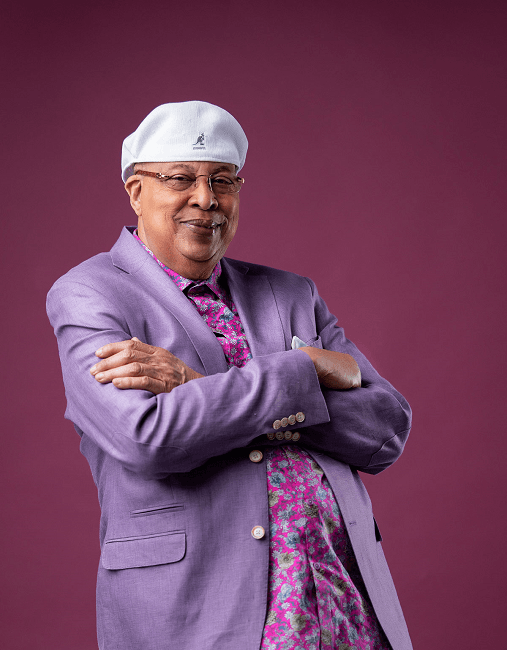
Chucho Valdés with folded hands dressed in a floral shirt and blue cap
Chucho Valdés has received the award for Musical Excellence from the Latin Academy of Recording Arts and Sciences and was inducted into the Hall of Fame of Latin Composers

The master Chucho Valdés returns to the stage of the Voll-Damm Barcelona Jazz Festival on November 23rd, 2021 after two years of absence. The most recognized Cuban pianist of the 21st century will present his most recent musical production La Creación, a suite in four movements that exalts Yoruba-African history and its influences in South America and the Caribbean. A work dedicated to Olodumare and the worldwide celebration of his 80 years of life.

The founder of the Irakere group comes back to the incomparable sound of the Big Band, Afro-Cuban percussion, Blues, and the set of voices that represents his histrionics as a director, composer, and pianist with La Creación.

On this album, Valdés is accompanied on arrangements, keyboards, and conducting by Canadian Juno award-winning Cuban musician Hilario Durán and the Grammy Award winner and Emmy nominee John Beasley. Playing the Drums is Grammy winner and two Latin Grammy nominee Dafnis Prieto. Also, in La Creación stand out Erick Barbería, Yosvany González Franco, and Felipe Sarria Linares (Batá and voices), José A. Gola (Double Bass and Electric Bass), and Roberto Jr. Vizcaíno (Percussion). Former Van Van member Yeny Valdés adds her melodious voice to this production, while two Grammys winner Brian Lynch and “Daring Improviser” (rated by Jazz Times) Etienne Charles do it by playing the Trumpets. On the other hand, Carlos Averhoff Jr., considered one of the new voices in the new generation of Cuban jazz saxophonists, flaunts his virtuosity on the Tenor Sax and Marcus Strickland on the Alto Sax.

So remember…

Enjoy the concert of the master Chucho Valdés & The Yoruban Orchestra in the Iberian Peninsula!

Date: Tuesday, November 23rd

Time: 8:30 PM

Address: Palau de la Música Catalana. Music auditorium located on Sant Pere més Alt street in the Ribera district of Barcelona, Spain.

Ticket: From 26 €

Chucho Valdés dressed in a floral shirt and yellow cap
Chucho Valdés was born on October 9th, 1941, in Quivicán (Cuba)

In addition to this presentation in Barcelona, ​​the winner of six Grammys and four Latin Grammys, Chucho Valdés has scheduled an autumn tour that will visit the main cities of France and the neighborhood of the principality of Monaco, Monte Carlo. Finishing his tour in the city of Girona – Spain (December 4th) and Castellón de la Plana – Spain (December 11th). Tickets can be found from € 15 depending on the location.

  • You Can Also Read: Pianist Fadi Gaziri Debuts In Salsa Music With Cuba Classic

Currently, Dionisio Jesús “Chucho” Valdés Rodríguez, with more than 60 years of experience, directs a course of group classes that contain 14 recorded chapters lasting one hour. This exclusive virtual academy for pianists was inaugurated on March 15th, 2021.   However, this online study platform already includes live lessons and individualized tutoring with the delivery of certificates for advanced pianists.

“After the experience of the group classes in a virtual way, I realized that the students have different needs, so I decided to start with individual classes for advanced musicians. In this way, the classes will be focused directly on the needs of each one”. Chucho Valdés.

Perhaps These Data May Interest You:

Chucho Valdés dressed in white with nature in the background
To attend the Festival, minors under 16 must be accompanied by their father, mother, or legal guardian
  • The Barcelona Voll-Damm Jazz Festival is one of the oldest events and a world reference in Europe. Their first concert was held on November 3rd, 1966.
  • In this festival, master classes are offered by the best specialists, conferences with fascinating and current topics, meetings with artists, as well as outstanding concerts (some free) for fans and lovers of the Jazz genre.
  • For 32 years (1989) The Project has been the Barcelona promotion company in charge of organizing this autumn meeting annually.
  • The Project was created in 1988 and organizes more than 400 concerts a year with approximately 10,000 musical calls to date.
  • The Voll-Damm drink became part of the festival in 2002, becoming its main sponsor.
  • « Go to Previous Page
  • Page 1
  • Interim pages omitted …
  • Page 4
  • Page 5
  • Page 6
  • Page 7
  • Page 8
  • Page 9
  • Go to Next Page »

International Salsa Magazine (ISM) is a monthly publication about Salsa activities around the world, that has been publishing since 2007. It is a world network of volunteers coordinated by ISM Magazine. We are working to strengthen all the events by working together.