• Skip to primary navigation
  • Skip to main content

International Salsa Magazine

  • HOME
  • Previous editions
    • 2026
      • ISM / April 2026
      • ISM / March 2026
      • ISM / February 2026
      • ISM / January 2026
    • 2025
      • ISM / December 2025
      • ISM / November 2025
      • ISM / October 2025
      • ISM / September 2025
      • ISM / August 2025
      • ISM / July 2025
      • ISM / June 2025
      • ISM / May2025
      • ISM / April 2025
      • ISM / March 2025
      • ISM / February 2025
      • ISM / January 2025
    • 2024
      • ISM / December 2024
      • ISM / November 2024
      • ISM / October 2024
      • ISM / September 2024
      • ISM / August 2024
      • ISM / July 2024
      • ISM / June 2024
      • ISM / May 2024
      • ISM / April 2024
      • ISM / March 2024
      • ISM / February 2024
      • ISM / January 2024
    • 2023
      • ISM / December 2023
      • ISM / November 2023
      • ISM / October 2023
      • ISM – September 2023
      • ISM – August 2023
      • ISM July 2023
      • ISM Edition June 2023
      • ISM – May 2023
      • ISM April 2023
      • ISM March 2023
      • ISM February 2023
      • ISM January 2023
    • 2022
      • ISM December 2022
      • ISM November 2022
      • ISM October 2022
      • ISM September 2022
      • ISM August 2022
      • ISM July 2022
      • ISM June 2022
      • ISM May 2022
      • ISM February 2022
      • ISM January 2022
    • 2021
      • ISM December 2021
      • ISM November 2021
      • ISM October – 2021
      • ISM September 2021
      • ISM August 2021
      • ISM July 2021
      • ISM May 2021
      • ISM April 2021
      • ISM June 2021
      • ISM March 2021
      • ISM February 2021
      • ISM January 2021
    • 2020
      • ISM December 2020
      • ISM November 2020
      • ISM October 2020
      • ISM September 2020
      • ISM August 2020
      • ISM July 2020
      • ISM June 2020
      • ISM May 2020
      • ISM April 2020
      • ISM March 2020
      • ISM February 2020
      • ISM January 2020
    • 2019
      • ISM December 2019
      • ISM November 2019
      • ISM October 2019
      • ISM Septembre 2019
      • ISM August 2019
      • ISM July 2019
      • ISM June 2019
    • 2016
      • ISM December 2016
  • Spanish
  • Download Salsa App
    • Android
    • Apple

Search Results for: Gran Combo of Puerto Rico

“Orquesta Zodiac” Its name came about due to the fact that in the early 70’s the ‘Walter Mercado’ program and the Zodiacal Signs were all the rage

In June 1971 what we know today as the Zodiac Orchestra was organized in the town of Loíza. Its name came about due to the fact that in the early 1970’s the Walter Mercado and the Zodiacal Signs program, which was broadcast on Channel 2 in Puerto Rico, was in vogue.

Tony Escobar’s uncle (the orchestra’s declamationist) suggested the name because it was an eye-catching and “new” name.

The Zodiac Orchestra was organized with members of a group called Loíza Power directed at that time by Paquito Pérez, who was 14 years old. In addition, it was nurtured with the best musicians of Loíza Sound of Javier Calcaño.

“Orquesta Zodíac” Su nombre surgió debido a que para principios de la década del '70 estaba de moda el programa de “Walter Mercado” y los Signos Zodiacales
“Orquesta Zodíac” Su nombre surgió debido a que para principios de la década del ’70 estaba de moda el programa de “Walter Mercado” y los Signos Zodiacales

The idea of recruiting these musicians was Paquito’s, since he grew up with José Luis Vizcarrondo and Tony Escobar.

Through Loiceño composers Carlos José Cirino (Tata) and Floren Ayala, the recording was achieved, as they approached Dario Gonzalez of Borinquen Record who contributed to make possible the release of the first 45 and LP. Tata’s “El Adiós” and José Feliciano’s “Las Costumbres” (1971) were part of this musical proposal that was very well received by the public.

This album became one of the best selling LPs. Other musical proposals of the group that would become hits were: “Panteón de Amor”  by Angel Laureano (1973), “Sinceridad” by Samuel Cirino, “Mi Guitarra” by Angel Laureano, among others. These great hits are frequently requested today on the Salsa Z-93 radio station.

After the initial success, many of the musicians dedicated themselves to work and to finish their studies, since they were married and were looking for security and economic stability for their respective families.

The Zodiac had the opportunity to travel to different cities in the United States such as: Boston, Connecticut, Philadelphia, New York, among others. They also traveled to other countries such as Colombia and others.
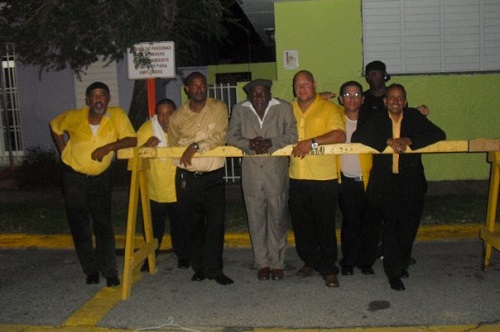
Orquesta Zodiac
Orquesta Zodiac

During these years, several orchestras were at their peak, such as: La Fania, La Selecta, Lebron Brother, La Corporación Latina, El Gran Combo, La Lupe, Chivirico Davila, Bobby Valentín, Tomy Olivencia, Ismael Miranda, Ricardo Rey, Roberto Rohena, Roberto Anglero, Justo Betancourt, among others.

In 1997 Paquito decided to retake and regroup the orchestra, and for some years he dedicated himself to reunite with the musicians and organize them again.

In 1999 he managed to restart La Orquesta Zodiac at the Z-95 festival in Mayagüez. Later they performed at the National Salsa Day dedicated to Cheo Feliciano in 1998.

These two presentations were made at the invitation of Pedro Arroyo (director of Z-93) to Paquito, and were a great success. El Gran Combo, Rubén Blades, Jimmy Zabater, La Solución, among others, also played in the tribute to Cheo.

The members of the current orchestra are young, and most of them were music students of Paquito Pérez, who worked as a music teacher for 30 years in the town of Loíza (before retiring).

José Luis Vizcarrondo, Tony Escobar and Paquito Pérez were schoolmates for years. The director of the orchestra in the beginning was José Luis, also collaborating with him were Tony Escobar (saxophonist and declamation player), Freddy Ayala (conguero) and Paquito Pérez (singer). All of them contributed ideas for the arrangements. Currently Víctor Pérez (Paquito’s brother) is the director of the wind section.

Orquesta Zodiac en el pueblo de Loíza

In 2010 the orchestra played in the National Salsa Day and in 2012 the orchestra played again in the same activity, but this time the activity was dedicated to La Orquesta Zodiac and La Corporación Latina. In which Z-93 gave them a well-deserved recognition and Paquito, José L, Tony, Tata, Laureano, and the rest of the new members of the orchestra were present.

Currently the orchestra meets periodically to practice, and are available for all kinds of activities.

Did you know that…! In June 1971 what we know today as the “Zodiac Orchestra” was organized in the town of Loíza in Puerto Rico. Its name came about due to the fact that in the early 70’s the program “Walter Mercado” and the Zodiacal Signs, which was broadcasted on channel 2 in Puerto Rico, was in fashion. Tony Escobar’s uncle (declamationist of the orchestra) suggested the name because it was a striking and “new” name …Referring to the image of the post belongs to the second production of this Puerto Rican group entitled “Spiritual Beauty Vol. II” published in 1973 under the label “Horóscopo Récord” and directed by the founder, arranger, pianist and saxophonist Mr. José Luis Vizcarrondo. It is worth mentioning that this production includes the classics: Montuno de Oriente, Vicio de Amor and Belleza Espiritual”. Another important fact about the group is that it is still in force with musicians of the new generation, but with the same Swing and musical concept.
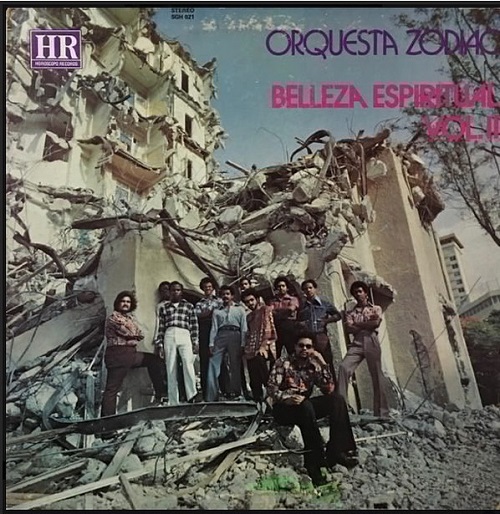
Segunda producción de dicha agrupación boricua titulada “Belleza Espiritual Vol. II” publicada para el año 1973

It is worth mentioning that the main responsible for making Orquesta Zodiac publicly known in Venezuela, Latin America and the Caribbean was Mr. Ali Delgado. Mr. Ali Delgado, for the year 1985 under the record label Performance Records, Delgado comments in detail that for the date of publication of this production the only popular sector (neighborhood) of Caracas where the Zodiac Orchestra was known was in Pinto Salinas.
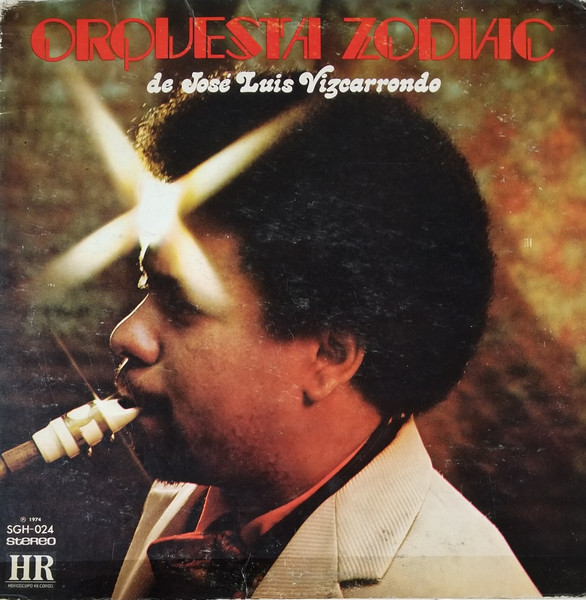
Orquesta Zodiac De José Luis Vizcarrondo

Delgado is a music producer, music lover, collector, director and founder of the projects Salsa de La Mata and Jazz con Clave in Caracas.

Dj. Augusto Felibertt y Ali Delgado

Also Read: Sessions from La Loma brings together salsa fans from all over the world in Puerto Rico

What a pleasure to talk to Pablo Pérez ‘‘El Alcalde de La Salsa’’

It is a pleasure to talk to Latin music artists who have left our genres in a high place all over the world and today it is the turn of the great American producer, composer and percussionist Pablo Perez, also known as ”El Alcalde de La Salsa”, who we were lucky enough to interview to know his fascinating story with music. We say to our dear readers that they cannot miss it.

Pablo playing
Pablo Pérez ”El Alcalde de La Salsa” playing the bongos live

How Pablo became interested in music 

From the beginning, Pablo made it very clear that since his childhood he has been interested in music, to the point of beginning to study it at school, as his taste was great since then. To what we must add that the time when he grew up in Trenton, New Jersey, was marked by a total command of salsa, which greatly influenced the young boy. However, he clarifies that he liked all types of genres like ballads, boleros, cha cha chá, merengue, classical music, among others. 

He grew up listening to all sorts of artists and groups such as La Fania All Stars, Ray Barretto, Willie Colón, Johnny Pacheco, Spanish Harlem Orchestra and many others. To some extent, all of them have influenced the style he applies to his own work today.

World traveler

Throughout all this process of being involved with music and learning what he knows today, he came to live in a lot of Latin countries like Puerto Rico, Venezuela, Ecuador, Argentina, Panama, Costa Rica, among others. During all these travels and stays, Pablo dedicated himself at all times to play and present his music to the populations of those places.

In the same way, each of these places has given something new to his style and, in them, he was able to hear new versions of other songs that he knew before. He himself did a new version of the llanera song ”Quierela más que yo” by Venezuelan singer Luis Silva, making it into a salsa song and giving it his own touch. ”I’ve always wanted people to connect with me through my music and I’m always looking to do new, danceable and interesting things,” Pablo said on the subject.

The artist has always liked to mix different sounds and instruments, so he had the idea of creating a trombone orchestra (the first instrument of his career) and seing how it worked. Finally, this group included two trombones, two trumpets and a baritone in order to obtain a bigger sound, helping with a ”baby bass” (an electric double bass model designed by Ampeg), and a piano.

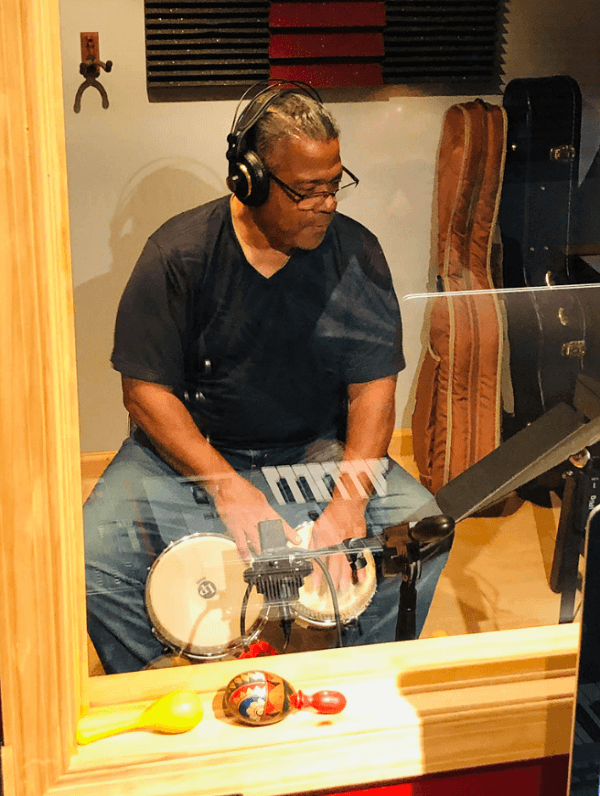
Pablo in the studio
Pablo Pérez recording in the studio

The Pablo Pérez Project and Orquesta Yanes

Although it is true that Pablo’s first major project was The Pablo Pérez Project in 2005, prior to that, he already had a group called Orquesta Yanes (2001), with which he recorded two albums back then. During that time, what was used were LPs and cassettes, one of them being a recording made in Belgium (country where he also lived) and called ”Pablo Pérez con el paisaje latino”. This was the same name of a group he created with local and Latin European musicians in Europe.

At the same time, the musician was also part of other orchestras in his native New Jersey as well as in Puerto Rico and some of them were ”El Nuevo Sonido”, ”Paquito Y Su Tumbao”, ”Peligro” and many others.

Time in Belgium

One of the most important events in Pablo’s career during his time in Europe was his involvement in the album ”Algo Diferente” by Mexican musician Héctor Islas y Su Pachuco 21. The artist referred to Islas as a very good person and a great singer whom he met in the aforementioned country and it was not long before they worked together.

Hector invited him to join his orchestra as a timbalero and they both toured the rest of Europe together, taking their music to anyone who wanted to listen to them in those territories. Later, the Mexican went to Cuba to make a series of recordings in which he asked Pablo to play the bongos.

During their tours, they were able to play alongside El Gran Combo de Puerto Rico, Jerry Rivera, Original de Manzanillo, Sin Damas, La Fania All Stars, La India and many more.

Pablo and Luis
Luis González ”El Tsunami de La Salsa” next to Pablo Pérez

El Alcalde de la Salsa

A very interesting facet Pablo had was that of a politician in 2014, when he ran for mayor of Trenton, New Jersey. Although targets were not met, the artist explains that this decision to compete gave him many positive experiences with the community.

One of the biggest endorsements he received at the time came from Willie Colón, whom he had known for many years. When the trombonist asked Pablo about his motivations for running for office, he replied that what he wanted was to help the community from a better position. That is when Colón nicknamed him ”El Alcalde de La Salsa” (The Mayor of Salsa), which Pablo liked so much that he decided to use it for the rest of his career.

It is worth mentioning that he also received the endorsement of Tito Nieves during his aspirations for political office.

Music played a crucial role in the campaign events, since the artist’s orchestra was very attractive to people, especially for the fundraisers that Pablo and his team carried out. Likewise, it was a good tool for the former candidate to connect with the community, especially the Latino community. 

It was in this same period that he made contact for the first time with his current bassist and arranger Michael Colón, pianist Efraín ”Juanito” Dávila and other musicians with whom he was able to form his orchestra, which helped him a lot during his political career to gain the sympathy and attention of people. 

When asked if he would be interested in running for public office, he assured that this stage of his life is over and that he prefers to concentrate solely on music for now. 

Willie and Pablo
Willie Colón endorsing Pablo Pérez’s campaign

Read also: How freelance musicians are viewed today

Mariana “The Sonera of Venezuela and for the world”

Janett Guevara García, artistically known as Mariana “La Sonera de Venezuela”, was born in La Pastora, Caracas on January 19, daughter of Reina García and Vicente Guevara.

Daughter of Reyna García and Vicente Guevara, she is the oldest of six siblings and from a very young age she showed her taste for music; an activity that has been her eternal passion, and has led her to make 12 record productions.

Mariana La Sonera de Venezuela

She is the oldest of six siblings and from a very young age she showed her taste for music; an activity that has been her eternal passion and has led her to make six record productions.

Educated in a convent school, she always participated and stood out in cultural events, until on one occasion she was suspended for telling the mother superior that there was a song called “La Cárcel” by Septeto Juventud that she wanted to sing at a cultural event.

At the age of 14, during her high school education, she learned to play drums and participated in the choir of the Caricuao Parish church where she lived.

As the years went by, Mariana was invited by Mr. Naty Martinez to a rehearsal, who was impressed when he heard her and decided to make a musical production.

That is when Mariana’s true pilgrimage began, going through stages earning the admiration of salsa greats.

In past years, she received praise from Queen Celia Cruz and has the guarantee and support of the singers of the Fania Stars, the Gran Combo de Puerto Rico, José Alberto El Canario and even her great friend and fellow countryman Oscar D’León.

Oscar El Sonero del Mundo y Mariana La Sonera de Venezuela

Mariana has been worthy of awards such as “El Congo de Oro” at the Barranquilla salsa festival.

She has been praised by personalities such as Don Tite Curet Alonzo. Mariana alternates her exciting career with the media, where she has a radio program dedicated to our Latin music “Sonsoneando con Mariana” winner of the 2010 Excellence Award, as a popular radio space in the Vargas State Venezuela.

She recently participated in the heartfelt tribute to the 50 years of artistic career of maestro Elio Pacheco, founder of the Latin Dimension, where she recorded an excellent song called “Al Olvido”.

She received praise from the Cuban queen Celia Cruz, and has the support of singers such as the Fania Stars, José Alberto “El Canario”, the Gran Combo de Puerto Rico and even her friend and confidant Oscar D’ León.

“Oscar represents more than a friend to me; he is like a brother. When he has a presentation in Vargas he does not hesitate to call me to see us and talk about our projects. I thank him a lot for his advice, because it has helped me to be where I am. The responsibility of being La Sonera de Venezuela falls on my shoulders.”

Y así quedó esta Sonera para su noche boleros

She has managed to release 12 musical productions. Among her best-known songs are “Frases hecha” in 1996, recorded in Peru and “Eres más fuerte que yo” by the composer Enrique Hidalgo.

Awards obtained

La Sonera has been worthy of multiple awards, including the “Congo de Oro” at the Barranquilla Salsa Festival, as well as the nomination three times in a row for the Vargas Excellence.

She has also received plaques as Female New Artist of the Year and Best Sonera in Caribbean Representation.

“I will never forget when they gave me the Catatumbo de Oro in Maracaibo, in the year 2000. It is one of my greatest achievements.”

Mariana La Sonera en el Santuario de La Divina Pastora en Barquisimeto

My family is my life

At just 18 years old, Mariana became a mother for the first time. “It is something that very few people know, but my first husband mistreated me physically, verbally and psychologically. The only thing I can be thankful for from that relationship is the existence of my son.”

She is currently a speaker, producer, and host of her own radio show “SONSONEANDO CON MARIANA,” broadcast Monday through Friday from 12:00 AM to 2:00 PM on Dial Azul 95.9 FM. At the same time, she directs her own group and is part of Jeque y su Banda, the Rumberos Callejón orchestra, directed by the experienced timbalero Carlitos Padrón, where she shares the stage with Rodrigo Mendoza, Wilmer Lozano, among others.

Edgar Dolor, Hayzalex, El Jeque, Janett Trejo, Mariana, Frederick, Carlitos Hurtado

Research Sources:

Djane. Shina Rojas

Luisana Brito, [email protected]

Also Read: “Canelita Medina” Caribbean popular music loses one of its best exponents

Saxophonist and flutist Dave Victorino talks to International Salsa Magazine

Dave Victorino is a saxophonist and flutist who plays various Latin genres such as salsa, Latin jazz and swing in the city of Los Angeles, California. The American musician has been kind enough to talk exclusively with International Salsa Magazine about various topics, including his beginnings, current career and existing projects. We hope that our esteemed readers will like the details of this conversation. 

Saxophonist Dave
This is saxophonist and flutist Dave Victorino

Young Dave’s beginnings in music

Dave recalls that his taste in music led one of his cousins to give him a flute so that he could start playing an instrument and see what happened. However, over time, the young man preferred the saxophone, which he found he liked much more at the time. He reckons that his interest in music began when he was just a 12 or 13-yeard-old.

His interest in the saxophone began with a friend of his mother’s who was a teacher of that instrument, so he was the first to teach him how to play it properly and, even after so many years gone by, he continues to remember everything he learned with him. 

Education

Dave graduated with a degree in music education from Cal State Los Angeles and assured us that one of his greatest mentors there was saxophonist Barney Martinez, a very important figure in Latin jazz at the time. This was a time of great learning for what was to come professionally, and that knowledge continues to help him a lot. 

He also studied with other important music teachers and professors who complemented his musical training almost perfectly. 

What has Dave learned from his greatest collaborations?

Throughout his career, Dave has collaborated with groups such as The Henry Mora Big Band, Temptations, Al Viola, Fred Ramirez, Little Anthony and The Imperials and many others. Obviously, all these personalities have had something important to teach the musician when sharing the stage with him.

Dave refers to Henry Mora as one of his greatest mentors in this whole process, as he had much more experience than the artist, so he had a lot to learn and imitate from him. 

Each professional experience is one more step on the road to excellence that Dave and any artist looks for in his work, which is achieved through practice and spending time with more experienced teachers.

Dave playing
Dave Victorino playing the saxophone live

Great inspirations

When we wanted to know Dave’s greatest inspirations, he could not help but first mention the group El Chicano, with which he played in the early 1980s. One of its founding members and singer Bobby Espinosa, who showed him some recordings of the Fania All Stars and Johnny Pacheco while playing one of the best solos Dave had ever seen. In fact, the artist considers Pacheco his favorite flutist from the very moment he first heard him. 

He also commented that he really likes the way Stan Getz, a Californian saxophonist whose main genres were jazz and pop, played.

How his love for Latin music was born

Dave’s first contact with Latin music was with the group El Chicano, but then came other groups that playing genres that caught his attention.

For several years in the 1980’s and 1990’s, he played in a park three times a week and, on those same days, a DJ would play music by Johnny Pacheco himself, El Gran Combo de Puerto Rico and other salsa groups. He became so fascinated with everything he heard that, little by little, he began to transform his repertoire into one that also included salsa and Latin jazz.

Initially, he only cared about playing this music without understanding the lyrics, but then he began studying and learning a little Spanish to get a better performance in his work. However, he assures that this detail has never posed a problem or a limitation to get good performances in Latin music.

Dave and Barbara
Dave Victorino playing with singer Barbara Reed

Music Classes

Another interesting thing about Dave is teaching. He currently teaches saxophone, flute, clarinet and piano to a good number of students, who have taught him the virtue of patience and determination to always learn something new.

His students are of different ages and he teaches various levels.

Dave and Anthony
Dave Victorino playing with saxophonist Anthony Gil

También lee: Eddie Muñíz continues to head Swing Sabroso

De Tierra Caliente founder Bronson Tennis talks about his career and band

There have been many American musicians who have fallen to the charms of Latin music, which is a practically inexhaustible source of genres allowing them to experiment with in many ways. One of them is Bronson Tennis, with whom we have been fortunate to talk about his interesting career and current musical group, De Tierra Caliente.

Bronson playing
De Tierra Caliente founder Bronson Tennis playing the guitar

Bronson’s beginnings in music

Bronson Tennis began to put his eyes on music when he was just a child, when he was very attracted to the 1990s alternative rock movement in the United States. When he was only 11 years old, his parents bought him his first bass guitar and later he also wanted to learn to play the guitar and sing.

In family matters, Bronson and his three brothers are musicians and several of his cousins and uncles have also been musicians. In addition, his mother was a fine artist and his grandmother was an art teacher.

Both in school and church, the boy always chased opportunities to sing and show his vocal skills to anyone who wanted to hear. He also took advantage of all these spaces to learn as much as he could about music until he was old enough to exercise it professionally. 

Today, his main instrument is the guitar, although he also plays the cavaquinho (an instrument of Portuguese origin which is widely used in samba) and the roncoco, which is an adaptation of the Andean charango that he uses to play salsa and Cuban son.

Bronson posing for the camera
Bronson Tennis playing the guitar while posing for the camera

Professional debut in music

Bronson also told us that he began his career path as a bassist and chorister in several musical groups in the city of San Diego between 2006 and 2009. He then spent some time in Philadelphia, where he also played with other bands from a variety of genres.

It is interesting that he lived in Buenos Aires, Argentina, where he also worked as a bassist and singer in some bands. In fact, in that same country, he helped form a Caribbean funk band in which he learned a lot about these genres so foreign to what he played in his childhood and youth. He stayed about four years in Argentina, specifically between 2009 and 2012, until he moved to Brazil for about six months to continue learning more and more about Latin music, but it was not his last stop in South America, as he was also in Colombia for a while more.

Following this, he returned to Philadelphia and decided to form his own orchestra which he named De Tierra Caliente.

Prior to De Tierra Caliente

When Bronson returned to Philadelphia, he had the chance to meet some musicians from the Puerto Rican music scene in that city and saw that they had similar outlooks on music, so they got back in the saddle to prepare a formal project amongst themselves.

The artist assures that it was in Argentina where he learned what it takes to move forward with his band. ”Argentines are people who do everything with strength and confidence, whether in music or in soccer. No matter who or what they have to face, as they take on all the challenges with confidence and that is something we could all learn from Argentina.” Bronson said of his stay in that country.

Bronson and his band
(L to R) Papo Buda, Bronson Tennis, Eubie Nieves, Andy Meyer and Steve Cochran

In Brazil, he studied percussion and learned Portuguese, while Colombia taught him to play salsa, champeta, vallenato and many other genres. In short, each country he has visited gave him tools to facilitate his learning in everything about Latin music in various areas.

Precisely thanks to all this acquired knowledge is that Bronson finally felt able to form his own band in 2014 in union with fellow musicians who understood what he wanted to carry out.

How De Tierra Caliente started

Upon his return to the United States, Bronson was very clear that he wanted to incorporate all those elements learned in South America and the Caribbean, but giving them his own touch. It was then that he met conguero Papo Buda, with whom he agreed on much and began the recruiting process for the rest of the musicians.

After that, Bronson and Papo could add more artists to the group, resulting in a fairly consistent group over time. Since its founding, very few musicians have left the band and Bronson and those who remain have an excellent relationship with all of them despite no longer being band mates.

Among his greatest inspirations, Bronson mentioned many artists and groups of various nationalities and genres such as El Gran Combo de Puerto Rico, the Brazilian composer and singer Paulinho da Viola, the group Caribe Funk and many others.

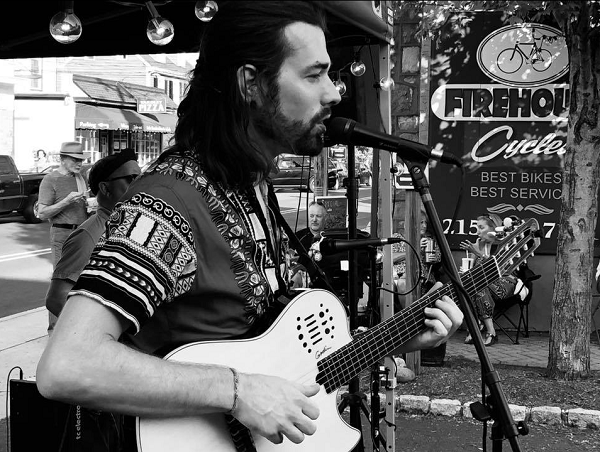
De Tierra Caliente playing
De Tierra Caliente playing live in Yardley

Read also: Latin jazz and mambo trumpeter Jonathan Powell and his great collaborations

  • « Go to Previous Page
  • Page 1
  • Interim pages omitted …
  • Page 6
  • Page 7
  • Page 8
  • Page 9
  • Page 10
  • Interim pages omitted …
  • Page 24
  • Go to Next Page »

International Salsa Magazine (ISM) is a monthly publication about Salsa activities around the world, that has been publishing since 2007. It is a world network of volunteers coordinated by ISM Magazine. We are working to strengthen all the events by working together.