• Skip to primary navigation
  • Skip to main content

International Salsa Magazine

  • HOME
  • Previous editions
    • 2026
      • ISM / April 2026
      • ISM / March 2026
      • ISM / February 2026
      • ISM / January 2026
    • 2025
      • ISM / December 2025
      • ISM / November 2025
      • ISM / October 2025
      • ISM / September 2025
      • ISM / August 2025
      • ISM / July 2025
      • ISM / June 2025
      • ISM / May2025
      • ISM / April 2025
      • ISM / March 2025
      • ISM / February 2025
      • ISM / January 2025
    • 2024
      • ISM / December 2024
      • ISM / November 2024
      • ISM / October 2024
      • ISM / September 2024
      • ISM / August 2024
      • ISM / July 2024
      • ISM / June 2024
      • ISM / May 2024
      • ISM / April 2024
      • ISM / March 2024
      • ISM / February 2024
      • ISM / January 2024
    • 2023
      • ISM / December 2023
      • ISM / November 2023
      • ISM / October 2023
      • ISM – September 2023
      • ISM – August 2023
      • ISM July 2023
      • ISM Edition June 2023
      • ISM – May 2023
      • ISM April 2023
      • ISM March 2023
      • ISM February 2023
      • ISM January 2023
    • 2022
      • ISM December 2022
      • ISM November 2022
      • ISM October 2022
      • ISM September 2022
      • ISM August 2022
      • ISM July 2022
      • ISM June 2022
      • ISM May 2022
      • ISM February 2022
      • ISM January 2022
    • 2021
      • ISM December 2021
      • ISM November 2021
      • ISM October – 2021
      • ISM September 2021
      • ISM August 2021
      • ISM July 2021
      • ISM May 2021
      • ISM April 2021
      • ISM June 2021
      • ISM March 2021
      • ISM February 2021
      • ISM January 2021
    • 2020
      • ISM December 2020
      • ISM November 2020
      • ISM October 2020
      • ISM September 2020
      • ISM August 2020
      • ISM July 2020
      • ISM June 2020
      • ISM May 2020
      • ISM April 2020
      • ISM March 2020
      • ISM February 2020
      • ISM January 2020
    • 2019
      • ISM December 2019
      • ISM November 2019
      • ISM October 2019
      • ISM Septembre 2019
      • ISM August 2019
      • ISM July 2019
      • ISM June 2019
    • 2016
      • ISM December 2016
  • Spanish
  • Download Salsa App
    • Android
    • Apple

Search Results for: Héctor Lavoe

That’s how the Latin Grammys were

The 21st edition of the Latin Grammy

As expected, due to the global pandemic situation that hit us this year, the awarding of the 21st edition of the Latin Grammy was held online. In this way, neither the public nor the red carpet had participation this year. Some creatives recreated them in their homes and took the opportunity to take their respective photography.

The gala was held in the city of Miami with headquarters in other cities in Latin America. Several of the artists’ participations were also carried out under this modality.

The musical presentations were opened by the J Balvin show, one of the great favorites of the night. Who also broke a Guinness record for more nominations, surpassing the title obtained by Calle 13 in 2011. To receive his gramophone, he was dressed in black and then appeared in white. He interpreted the song “Rojo” and dedicated it to those who have had to fight against the COVID-19 virus. Balvin has recognized that this situation has affected him seriously and he has been immersed in depressive pictures.

“My heart is crying,” Balvin commented.

To the surprise of many, his heart actually turned the color of blood. His suit was dyed through some internal mechanism but leaving a large red stain on Balvin’s suit. Really, it seemed like his chest was bleeding incessantly.

J Balvin bled in the stage of the Latin Grammys

“Music humanizes us” was the theme of this year’s meeting. With the singer’s presentation, many were stunned and very sensitive. What did you think of his form of expression?
Natalia Jiménez paid tribute to Julio Iglesias, while the great Hector Lavoe also received recognition. Ricardo Montaner, Ivy Queen and Rauw Alejandro led the tribute.

Jesús Navarro, Ricardo Montaner, Victor Manuelle, Ivy Queen and Rauw Alejandro gave life to the song ‘El Cantante”’ in homage to Héctor Lavoe. Each of the interpreters, from their respective rhythms, created a perfect harmony and joined in a very emotional show. They quickly went viral and comments on social media grew by leaps and bounds. The spectators were pleased by a presentation that moved fibers.

Winners of the night

Natalia Lafourcade, Alejandro Sanz, René Residente, Mike Bahía, Ricky Martín, Caminlo, Rosalía, Bad Bunny, J Balvin, Ozuna, Carlos Vives, Grupo Niche, Eddy Herrera and Daniel Santacruz were the winners of the night. The winners’ social networks were filled with videos of celebration and appreciation. A different night but full of many emotions!

In the Mejor Canción Tropical category, singer-songwriter Carlos Vives shone with his song “Canción para Rubén Blades”, in which Blades participated as a composer. Vives was excited, he did not hesitate to thank Rubén Blades for his support.
“This award with Rubén, congratulations to all the nominees, all the participants, Kany a very big kiss, thank you Sony, thank my entire team, our producers, the artists, Andrés Leal, thank you,” he said in the middle of happiness.

In his social networks he also wanted to dedicate his award to La Academia, his country, his people, each of his followers, his wife and his entire production team. He was also shown celebrating from home, together with family and friends.

In the Mejor Álbum de Salsa category, Grupo Niche shone. Album 40 is a tribute to the group’s musical trajectory. It is the first Latin Grammy that Colombian salseros receive, after having been nominated twice, in 2001 and in 2016.

“We have won the @LatinGRAMMYs for best salsa album for ’40’ our most recent musical production. With great emotion we say to you: Salseros and Nichistas of the world, infinite Thanks! Long live Latin music, salsa, long live the teacher # JairoVarela and long live Colombia!”, They expressed on their Twitter account.

The winning album was recorded for almost a year in studios in Miami, Cali and Puerto Rico. They wanted to maintain the musical guidelines of Jairo Varela and thus remember his roots, without losing his essence.

As Mejor álbum de Merengue/Bachata we have two winners, two Dominicans. A historical event that both celebrate with great fury. Eddy Herrera and Daniel Santacruz were the lucky ones. They tied in one of the closest categories!

Two Dominican Winners
Both Dominicans won the Latin Grammy in the same category

Eddy Herrera has a long history in the genre, known as “El Galán del Merengue”. The followers of his career also celebrated this achievement, being the singer’s first Latin Grammy. “Eddy Herrera Ahora” contains some of his most recent songs.

“It is an immense joy that I also want to share with all my followers and lovers of my performances. Thank you for supporting me throughout these years where you have been faithful to my musical productions ”, he expressed.

The Dominican did not hide his happiness and dedicated himself to thanking those who have supported him during so many years of journey.

“I am extremely grateful to the entire production team, as well as my fans, who are always the impetus to keep going. To achieve this magnificent product, we had, as in other opportunities, the dedication of one hundred percent of our great team, who gave themselves with the charisma, vocation and professionalism of always, an essential symbol of our artistic productions ”, said Eddy Herrera.

For his part, Daniel Santacruz will fondly remember the day that “Larimar” made him the recipient of his first Academy Award. After several nominations, his long-awaited moment finally arrived. In fact, his brother Manny Cruz was also among the nominees.

Even though he was born in the United States, he is of Dominican descent and grew up on its streets. He learned about its culture, its influences and is very proud of its roots.
“Grateful to God, to the Recording Academy and to all those responsible for participating in this important production that represents the sacrifice of many years of career and effort,” expressed the artist.

Santacruz was also part of the singers who entertained the meeting. He appeared from Boca Chica, Dominican Republic to the rhythm of “Larimar”, the promotional song for his album.
The young Dominican posted a video on his Instagram account where he is very happy. He thanked his family, wife, mother and his brother Manny Cruz. To its engineers, musicians, fans and manager. As well as his country, the people who listen and dance bachata, merengue and all his followers. Long live the Dominican Republic!

The event was one of total innovation and, surely, it will become a starting point for other awards. Of course, the dedication and effort on the part of the organization cannot be denied; as well as the artists involved, all left their hearts on stage and showed that better times are to come. So be it!

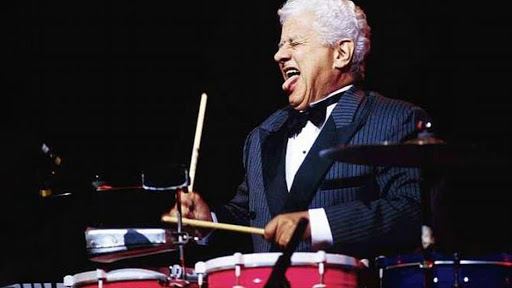
Tito Puente’s must-hear: Records you won’t be able to forget

North America / Unites States

The best and more emblematic Tito Puente’s records

Ernesto Antonio Puente, better known as Tito Puente, El Rey del Timbal, was a recognized percussionist in the music industry. He was born in Harlem, New York on April 20, 1923.

Those who knew him as a child considered him very active. He was always looking for objects to generate sounds and make noise. The New Yorker, of Puerto Rican parents, began his music studies too young. At an early age he learned to play percussion and piano.

He was heavily influenced by jazz artists and Gene Krupa, considered the most influential drummer of the 20th century. Puente participated in various local bands and was part of the Machito group; musician and singer of Cuban origin who contributed to the creation of Afro-Cuban jazz.

Remember the great percussionist
Tito Puente made history with his unique style

Their first steps

At the age of fifteen he made his debut in a Miami orchestra. He amazes everyone with his ability for Latin perc battledussions.
For seven years he studied piano and drums. He then attended the Juilliard School, a conservatory of the arts located in New York. His musical training was very solid, which led him to become a great figure of the genre.

It was part of the development of rhythms and fusions that led to the success of salsa. However, he wasn’t a big fan of that term. Although he was known as a “salsa ambassador”, when asked about it, he responded in a humorous way:

“Salsa is what I put in spaghetti. What I play is Cuban music”, he repeated over and over again, extolling the roots of Afro-Caribbean music.
In the 1940s, he decided to form his own band, the Picadilly Boys, specializing in Latin jazz. They received the support of Tico Records to make their first musical recording. His career was just beginning. At the end of the 50s, “Dance Manía”, one of the artist’s most popular albums, was released.

Puente walked among the mambo, bossa nova and Afro-Cuban jazz. In the 60s, he ventured into salsa, without leaving behind other rhythms that characterized him.

The timbalero did not hesitate to support talented young people, Sophy from Puerto Rico recorded his first productions under the recommendations of Puente. Puente was in charge of the production, arrangements and instruments. It was a pleasure for her to receive the affection that he gave her. He treated her like a daughter and learned a lot from him; Celia Cruz was another of the artists who had the honor of working with “El Maestro”.

The sound of their timpani was known worldwide. He recorded more than a hundred albums, received a star on the Hollywood Walk of Fame in 1969, as well as the key to New York City and different nominations: Grammy Award for artistic career, Grammy Hall of Fame Award, Latin Grammy Award for Best Salsa Album, Grammy Award for Best Traditional Tropical Latin Album, Latin Grammy Award for Best Traditional Tropical Album, Grammy Award for Best Salsa Album and Grammy Award for Best Latin Recording.

Throughout his career, he had the opportunity to work with several record labels including: Charly Records, BMG, RCA Victor, Fania Records, Sony Discos and Concord Picante.

Most recognized albums:

Dance Mania, 1978.

Dance Manía, 1958 was the artist’s first album. Considered the most famous percussionist. The study work, entered in 2002, in the National Recording Registry; list of recordings that are considered important and part of the culture and history of the United States. It is also found in the 1001 Albums You Must Hear Before You Die, a music reference book founded in 2005.

The history of Latin music in the United States took a cultural turn after the appearance of Dance Manía. It was recorded under the voice of the Puerto Rican Santos Colón, in Spanish. They were generally performed in the native language of the United States or only as instrumental music.

Tito Puente wanted to break down barriers and have the American public listen to the pieces in Spanish. The album is positioned as the most famous Latin album of all time, surpassing successful artists of the time like Héctor Lavoe and Celia Cruz.

Homenaje a Beny, 1978.
Tito Puente made history with this album, by obtaining his first Latin Grammy. It was the winning album for Best Latin Music Album. With the help of his orchestra, he created an unprecedented album, full of flavor; an album that highlighted Cuban origins and fusions. A heartfelt tribute to the remembered Benny Moré, Cuban singer and musician who died in 1963. “Homenaje a Beny” featured 17 pieces of music.

Tito Puente - Nobody will have his wonderful character
Tito Puente ‘s grimaces while performing

Cuba y Puerto Rico son…, 1966.
The career of the remembered Cuban singer Celia Cruz was on the rise. In 1966, Tito Puente decided to contact her to work together. They established a kind of association that was maintained through the years. In addition, they became very close friends, a bond that went beyond the musical realm.

Cruz appreciated him and was saddened after his death. In her autobiography “Celia, mi vida” she recalled the day she received the terrible news. She considered him an authority on Cuban music and admired his career.“Tito was always in charge of the arrangements, and he liked to work at dawn. We would go out to dinner, and when we returned, Tito would stay until four in the morning composing arrangements for what we were going to record the next day.

Although we were not very lucky with our recordings, Tito and I did very well with the tours. Together we travel to many countries. It was during those trips that we developed that great friendship that we had, ”said La Guarachera del Mundo.

In addition to “Cuba y Puerto Rico Son”, they recorded five more albums: Quimbo Quimbumbia (1969), Etc., Etc., Etc. (1970), Alma con alma (1971), En España (1971) and Algo especial para memoria (1972).

Timbalero Tropical (1998)
One of the last works of the artist and that featured fifteen songs. He worked hand in hand with the RCA label. The album stood out with works such as: El Timbal, Mi Guaguancó, Lo Dicen Todo, Mambo Macoco, Mambo and Preparen Candela. Topics that were very popular at the time and that today continue to sound at family gatherings. They are classic salseros that do not go out of style.

“Oye como va” was a song written by Puente in 1963. However, it was rock guitarist Carlos Santana who popularized it. The song went international and was positioned on the Billboard Hot 100, a list that ranks the best-selling hits in the United States. However, he was not the only one to cover it: Celia Cruz, rapper Gerardo Mejía, Bobby Hutcherson, Joe Cuba Sextette and Cheo Feliciano. When he presented the theme on stage he affectionately presented Santana as its author.

This 2020 marks the 20th anniversary of the physical disappearance of the great: Tito Puente. He passed away on May 31, 2000. His Caribbean flavor, his big smile and his white hair left a great void in the entertainment world. Puente left a great legacy. He contributed to the expansion of Latin music in the United States and served as a composer, percussionist, conductor, and performer.

His exaggerated grimaces, his style, energy, and his skill with the instrument earned him worldwide recognition. In addition to positioning him as an admirable figure among colleagues and young people who want to follow in his footsteps. Simply unforgettable!


Home

Johnny Cruz – Let’s support the artists who continue working

North America / United States

The latin music from the Johnny Cruz view

We are about to end this 2020 so atypical and challenging for everyone. Especially for artists who make a living from shows and entertainment. I want to congratulate all those who keep up working despite adversity. I also take advantage of the season to thank those who accompany us to make each and every one of our projects possible, and of course, to God, for the health and recovery of those who have had relapses throughout this year. Thank you all!

Johnny Cruz from New York
Johnny Cruz is the president of Spanish Harlem Salsa Gallery

My recognition goes to Ismael Miranda.

This Puerto Rican artist became famous during the salsa explosion of the 70s in New York, his fans called him “El niño bonito de la salsa”. Miranda was still a teenager when he recorded with the Larry Harlow Orchestra and joined the Fania All Stars.

Then came a solo career of extraordinary quality. Known for his professionalism and healthy habits, Miranda continues to record and perform concerts with his voice as vital as ever.

He recorded his first album at 16 with the Joey Pastrana orchestra. Then he went to Larry Harlow and began to seek his own identity and have more respect for music. He confesses that at first he did not take his music career so seriously, and although there were women and drugs, he never disrespected his directors or the public.

“When fame falls on you and you are not prepared, you become a person who is not very nice, who thinks that he is more than anyone else. I was an inexperienced baby, but I was catching up little by little.

Friends like Cheo Feliciano and Pete “El Conde” Rodríguez watched over me. Adalberto Santiago was always by my side. Santitos Colón — Tito Puente’s singer — became my compadre. With all those people that surrounded me, I had to start doing things as God intended so as not to lose their support,” he said in an interview. Given the good impression his performances with Andy Harlow made, his brother, Larry Harlow, called the Judío Maravilloso, decided to recruit him to his orchestra.

Ismael Miranda began his recording cycle with the album El exigente. Convinced of the potential of the young singer, in 1968, Larry launched a new production entitled Harlow Orchestra presents Ismael Miranda.

The successes were repeated with the recordings Electric Harlow, Tribute to Arsenio Rodríguez, Abran paso and Oportunidad. With Larry Harlow, Ismael also ventured into the field of composition, sharing credits with him on the songs “La revolucion”, “Guasasa”, “Arsenio”, “El malecón” and “Lamento de un guajiro”, among others.

He has also stated that the most unpleasant thing about his career is that being so young in the beginning, he has had to see iconic characters and great friends like Héctor Lavoe, Celia Cruz, La Lupe pass away.

Find it difficult to be alone after having so many friends. “Today the world is each one by his side. La Fania was not just a record company. We were a big family in which we all loved each other very much. Every time I hear another musician leave, my soul breaks. ”

In the 1980s he recorded several productions with his independent record label. He recorded in 1984 with the prestigious Cuban group Sonora Matancera for his old record company Fania.

In 1986 his album Versos de Nuestra Cultura, together with singer-songwriter José Nogueras, was one of the great successes of the Christmas season of that year. In 1988 he announced his intention to retire from the artistic media. But that idea never came to fruition. Ismael has recorded with his own record label, IM Records, and with the RMM company.

He has a very close family. He has been with his second marriage for 25 years and has also been with his first wife for another 25 years. All of his children are married and have their own businesses. He has 13 grandchildren and two great-grandchildren. Recently Ismael Miranda and José Alberto “El Canario” joined Daniel Peña in “Hijo Del Cañaveral” Daniel Peña, Dominican based in the city of Miami.

He is recognized for his percussion skills and for being a music producer. Peña has worked with music greats such as Tito Puente Jr., pianist Marlow Rosado, Ismael Miranda, pianists Richie Ray and Larry Harlow, Celia Cruz and Giovanni Hidalgo. In 2014, he made his debut with the album “Eleven”, dedicated to his children; and three years later I have released “Sancocho”, a project with eleven songs.

The Dominican presents his new single “Hijo del Cañaveral”, a production that he made together with two great masters of salsa, Ismael Miranda and José Alberto “El Canario”.

Gerardo Rivas releases his first solo single.

Gerardo Rivas first solo single
New song for this talented artist

Puerto Rican Gerardo Rivas delights his followers with the launch of his first solo song. “A derretir el hielo” is a salsa, composed by Juan José Hernández and Victor Sanabria López, with musical production by Marcos Sánchez.

A few weeks after its premiere, the video clip has almost thirty thousand views on YouTube. The work leads to mysticism and contains a refreshing proposal. The direction was the work of Giova González and was filmed in San Juan, Puerto Rico. “Vamos a juntar los cuerpos bella, vamos a subir al cielo, vamos a prender la vela bella, vamos a derretir el hielo” the chorus quotes.

After more than a decade belonging to the group NG2, Puerto Rican salsa duo Rivas decided to try it on their own. “With great humility I present my first solo work. All my life I have been involved in music and daring to do a solo project feels very good “, declared Rivas. The singer is the son of Jerry Rivas, who belongs to “El Gran Combo”. From a very young age he has been immersed in the musical world. He was the vocalist of the group “Gerardito y los rockolos”.

In addition, it has around twenty-five years of experience. Rivas has always been a believer in salsa, bets on it and defends it in each presentation. A faithful representative of the genre!

The new success of Papo Rosario with Luisito Carrion and Isidro Infante!

This is the land where I was born. Papo Rosario is a world-class artist who has put the name of Puerto Rico high. Rosario, who withdrew in 2019 from the group considered the “Universidad de la salsa”, El Gran combo de Puerto Rico, after having an accident and presenting health problems, affirms that he already feels ready to resume his musical career with the Launch of his first solo production by producer Isidro Infante.

From this new album, we have their second single that cannot be missed. Without jumping on stage as before, but maintaining the grace of his movements, the singer Papo Rosario continues to work on his return to salsa with maestro Isidro Infante, who was the musical director of Fania All Stars. Rosario retired from El Gran Combo de Puerto Rico in 2019, after 38 years, as a result of a tumor in the spine, with which he battled since 2000, when he was operated on for the first time. This was followed by a second surgery in 2005, a third in 2017, and a fourth and fifth in 2018.

“They took out the whole tumor, which shot up as it pleased. In 2017 they removed 70% of the tumor on my right side, equivalent to a football. In 2018 they rebuilt my spine because the tumor ate a lot. I have a titanium spine, a scaffold on my back with rods that keep me on my feet. They removed 30% of the tumor on my left side in 2018,”, explained the singer. The medical prognosis indicated that he would not walk again.

“After so much therapy, I feel super good. After the operation, he said: let it be the will of Father God, it was not known if he was walking or not. I am up in the fight and grateful to God and to all the people for their prayers, which have contributed greatly to my health ”, the now soloist has stated in recent interviews. Rosario’s relationship with Infante dates back to adolescence, when they studied at Central High School in Santurce.

“I have always been an admirer of Isidro. We met around the world, he with the Fania and I with the Combo. People told me: ‘You have to do something’, I made up my mind and wanted Isidro to make a couple of arrangements for me”, he revealed. He has also stated that: “We come with traditional sauce, eventually something will be done with more mischief. The topics are everyday, nothing hurtful, but motivational in the middle of the quarantine. We do not want to come with bochinches, but to bring joy and give thanks ”. I wish you success today and always!

Gran Combo in concert

The Gran Combo de Puerto Rico announce concert (more artists)
The concert will be this November 14th ith more artists

El Gran Combo de Puerto Rico announced its first virtual concert for this November 14th from the Centro de Bellas Artes in Santurce. After almost eight months of inactivity due to the paralysis of the entertainment and events industry caused by the COVID-19 pandemic.

The “Mulatos del Sabor” have remained “bien guardados” during this period, but they understand that it is now “time to remove the mold and offer the sauce that we are asking for,” according to Jerry Rivas, vocalist of the veteran group. The so-called “Universidad de la Salsa” will offer on Saturday, November 14 at 9:00 p.m. the virtual show from the stage of the Centro de Bellas Artes (CBA), Luis A Ferré in Santurce. The mulatos have named the concert “El Gran Combo para el mundo”, since from the Spyntyx.com platform it can be enjoyed from any corner of the planet.

“The pandemic arrived and the whole world was paralyzed. But in the face of people’s requests and the messages that reached us about when they are going to do a show, we ventured into this format, which is new to us, but it is still an opportunity to reach more people anywhere in the world. In addition, we are going to present some of the themes of what will be our new record production “, mentioned Willie Sotelo, musical director of the group.

Sotelo and Rivas indicated that the founder of El Gran Combo, Rafael Ithier welcomed the virtual format, since like the rest of the members he is eager to return to the stage. Ithier turned 94 years old in August this year and has been very careful and cautious in preventing the spread of the coronavirus. So much so that for the birthday celebration the mulattoes surprised him with a sound bus at his house.

The musicians arrived at the front of Ithier’s residence and greeted him from the outside, and according to Rivas, days later the older mulato was tested for COVID-19 to verify that he is in good health. The virtual show will be prerecorded in some parts to avoid any mistakes. Tickets can be pre-purchased through spyntyx.com at a cost of $ 8.00.

The presentation will be a musical journey through hits such as: “Arroz con habichuelas”, “Sin salsa no hay paraíso”, “El problema está en el coco”, “Es la mujer”, “Achilipú”, “Colombia tierra querida”, “A mí me gusta mi pueblo”, “La espuma y la ola”, “El comején”, “La receta de amor”, “Alguien que me quite tu amor”,”Si la ves por ahí”, “Te veo, nena” y “No hay manera”, among others.

The group will integrate to the repertoire about three new songs as part of the musical production that they have worked in the months of the pandemic and that they hope to release before the end of 2020. “We had started the album before the pandemic, but these months have been perfect because by not traveling we have been able to dedicate ourselves to finishing the nine songs on the album. We are already in negotiations with record companies and the launch should be in December”, said Sotelo.

The group is invited every year to participate in the Feria de Cali at the end of December. This year, the invitation came to make the presentations in a small format capacity and in various tents that can maintain social distancing. The salsa orchestra has not confirmed its participation, so they are still evaluating the possibility of traveling to Colombia. Even so, in Puerto Rico they have six dates of Drive-In events and closed circuits confirmed for the holiday season. This never stops!

Adaberto Santiago 65th Anniversary

And if we are talking about incredible careers in this edition, I can’t stop talking about Adalberto Santiago and the new projects of the 65th anniversary with great artists of the genre. This time I can tell you about Cuco Peña’s string arrangements, the participation of Nelson Jaimes and, of course, the help of my friend Freddy Miranda. At 83 years old, he is still in the rumba. There is less and less to show the world this historical piece for the world of salsa.

Some invitations

The invitation to tune in to the new Fm / Internet radio station on Live365.com continues: Salsagallery. Good music, interviews with the artists and much more.

As always, remember that Spanish Harlem Salsa Gallery is in 1708 Lexington ave New York N.Y. 10029. Open free to the public all Thursdays & Fridays from 4 to 7 pm and Saturdays from 1 to 8 pm. Check the updates in our website: spahasalsagallery.com.

Also, The Johnny Cruz Show, the # 1 Salsa Show on television on all 5 Boroughs of New York on CH67. Saturdays from 3:30 to 4:30 pm.

Contact: Johnny Cruz. 917-747-8505. [email protected].

Home

International Salsa Magazine Celebrates 2020 Latin Grammy Nominees

North America / United States

Latin Grammy Awards

The Latin Grammy Awards were created to honor Spanish-speaking artists. They are awarded by the Latin Academy of Recording Arts & Sciences, created from the National Academy of Recording Arts & Sciences, an American organization specializing in music and production in general. The Latin version was broadcast for the first time in 2000, through the CBS network.

The Academy was founded by Michael Greene and Mauricio Abaroa. The first Grammy ceremony was held in 1959. 41 years later the Latin version was inaugurated. They are not awarded by popularity but by the number of votes received by members of the academy.

The award for excellence in Latin recording achievements is a gramophone. Its base is red and the gramophone is gold. For its part, the statuette of “Awards for Musical Excellence” has a copper-colored gramophone. As you might imagine, its creation goes through a long process, it is composed of a zinc alloy and is plated in 24-karat gold.

Latin Grammy Nominees were announced recently
The Latin Grammy 2020 Edition will be soon

The ceremony is held annually in the United States, in the third week of November. The locations have varied through the years between Los Angeles, Miami, New York, Houston, Las Vegas for the last nine years and in 2020 is returning to Miami, at the American Airlines Arena.

The presenters have been a true parade of stars: Jennifer López, Gloria Estefan, Antonio Banderas, Lucero, Eugenio Derbez, Patricia Manterola and Ricky Martin, among others. In this opportunity, the honor will go to the Dominican Carlos de la Mota and the Polish, nationalized in Mexico, Ludwika Paleta.

On September 29, the names of the candidates for the awards were announced.

Among the nominees are:

Best Salsa Album

40 Años De Power
Luisito Ayala y La Puerto Rican Power
Record Label: Musical Productions, Inc.

Tentaciones Vol. 1
Charlie Cruz
Record Label: Get Crazy Note, LLC

40
Grupo Niche
Record Label: PPM USA

Memorias De Navidad
Víctor Manuelle
Record Label: Sony Music Entertainment US Latin LLC

Un Gallo Para La Historia
Tito Rojas
Record Label: J&N Records, LLC

Some of these nominees belong to JN Music Group, J&N Records and Musical Productions Disquera, a company that for more than thirty years has been in charge of producing Latin music for the whole world. Tito Rojas and Luisito Ayala and La Puerto Rican Power have received the support of the record company and their directors are very proud of their representatives.

The emblematic band Puerto Rican Power
Pure energy of Puerto Rican Power

Puerto Rican Power was born in the 70s by the hand of its founder Jesús Castro. Later Luis Ayala, assumed the role of director and trumpeter of the band. They became known quickly, thanks to the participation they had with greats of the show such as Ismael Miranda, Cheo Feliciano, Héctor Lavoe, among others. The group has mixed the roots of Puerto Rican folklore with its great performance on stage; becoming known in the United States and Latin America. This is his first Latin Grammy nomination.

Charlie Cruz, a Dominican salsa singer, also competes in this category. He has collaborated with greats of the genre such as Tito Nieves. Cruz is proud to be Latino and to work with his heart. He thanked his producer, work team and members of the academy for their support in reaching his nomination.

For its part, Grupo Niche is enjoying its third nomination for the Awards. They proudly represent their home country, Colombia. 40, his latest production, refers to the number of years since his birth. The album was recorded between Puerto Rico, Cali and Miami.

Victor Manuelle participates with his album “Memorias De Navidad”, he sought to rescue the traditions of the Christmas season and remember two loved ones. In early 2018, he lost his father Victor Manuel Ruiz and last year his younger brother, Héctor Gustavo.

To finish the round of nominees, we find Tito Rojas, known for his salsa songs. He began his artistic career in the early 70s. He has more than thirty record productions (one with La Puerto Rican Power). Rojas thanked through his social networks for the support of his career.

Best Merengue and / or Bachata Album

The Genetics Of Bachata
José Manuel Calderón
Record Label: Baile Records

Bailando Contigo
Manny Cruz
Record Label: Manny Cruz / La Oreja Media Group, Inc

Los Conquistadores
Grupo Manía
Record Label: Mania Music, Inc.

Ahora
Eddy Herrera
Record Label: Intermusic

Larimar
Daniel Santacruz
Record Label: Penluis Music

Thanks to Diario Libre, we could know that Latin Grammy Awards were evaluating the possibility of eliminating this category. This, due to the lack of submitted proposals. This warning activated the exponents of the genre. The academy received around 40 applications. The competition is very close between artists with a long history and young people who have come to give a new air to the genre.

José Manuel Calderón is considered the pioneer of bachata. Most of his hits are his own and he has also dabbled in merengue. The artist is very happy with this recognition for so many years of experience. He considers it “a great blessing.”

Manny Cruz receives his fourth Grammys nomination in two different categories. “Bailando Contigo” is the singer’s second album and it took him more than a year to produce. The Dominican was very happy and sent his thanks through his Instagram account. He became the Dominican with the most Latin Grammy nominations.

For its part, Grupo Manía celebrates its tenth nomination. The Puerto Rican singers released their album “Los Conquistadores” to celebrate their twenty-five years of artistic career.

Eddy Herrera, renowned merengue singer, has been nominated for the fifth time and, within the framework of his virtual concert, he expressed his happiness.
“Being nominated in normal times is wonderful, but being nominated within this world of the pandemic is doubly great. This has fallen from my soul, from heaven, “he said.

Daniel Santacruz, has his eighth Latin Grammy nomination for his album “Larimar”, his seventh musical production. The artist was in charge of all the elaboration of the disc that counts on eleven subjects.

Best Tropical Song

Among the 5 nominees are:
Imaginarme Sin Ti
Elvis Crespo & Maribel Vega, songwriters (Elvis Crespo y Manny Cruz)
Record Label: Flash Music

Quédate
Paula Arenas, Debi Nova & Juan Pablo Vega, songwriters (Debi Nova & Pedro Capó)
Record Label: Sony Music Entertainment US Latin LLC

Y Basta Ya
Pavel Nuñez, songwriter (Pavel Nuñez)
Reco Grrd Label: La Oreja Media Group, Inc

Tropical Music is present in the Latin Grammy
Manny Cruz and Elvis Crespo

Elvis Crespo by the hand of his wife and manager Maribel Vega and the composition of Manny Cruz, received a nomination for the album “Imaginarme Sin Ti”. The promotional theme was dedicated to Crespo’s daughter. The singer thanked through his social networks and made special mention of his label and the singer Manny Cruz.

Debi Nova, a Costa Rican singer-songwriter, bet on romantic bachata and had the collaboration of Paula Arenas and Juan Pablo Vega. The promotional theme of the album talks about taking advantage of time with our loved ones.

We finished the round with the Dominican Pavel Núñez, a young man who has surprised with the amount of Sovereign Awards obtained, a total of eleven; took advantage of the global pandemic to make music. With his album “Y Basta Ya” he adds his third nomination for Los Premios.

The 21st edition of the Latin Grammy will be held on November 19, in the city of Miami. Although it is an achievement to be on the coveted list, everyone wants to be recognized.

Who will be the winners?

Home

Jimena Verano present Orquesta de Camino al Barrio

Latin America / Colombia / Bogotá

This time we have Miss Jimena Verano, the director of “VERANOPRODUCCIONES”, who gave us the opportunity to meet the Venezuelan Colombo Orchestra “De Camino al Barrio”, which was born in the city of Bogotá, Capital of Colombia.

Through Jimena Verano, a Colombian artist entrepreneur and promoter, she presents it to us, giving us the opportunity to make them known and emerge them in this great world of music at an international level.

The Orchestra emerged as a tribute to the singer of the singers Héctor Pérez Lavoe; and she tells us that it has been easy for her to lead (as a woman) this working group; her musicians have been willing and ready to meet any request made by her, to get this musical project off the ground.

Soon they are ready to record their first single in the city of Cali Colombia, for which they are making the necessary adjustments for said musical production.

So if you want to meet or contact the orchestra, or find out more about their new recording, you can contact them through [email protected] or through Facebook, known as Jime Verano (La Chica Fitness de la Salsa).

Jimena Verano
Jimena Verano
  • « Go to Previous Page
  • Page 1
  • Interim pages omitted …
  • Page 25
  • Page 26
  • Page 27
  • Page 28
  • Go to Next Page »

International Salsa Magazine (ISM) is a monthly publication about Salsa activities around the world, that has been publishing since 2007. It is a world network of volunteers coordinated by ISM Magazine. We are working to strengthen all the events by working together.