• Skip to primary navigation
  • Skip to main content

International Salsa Magazine

  • HOME
  • Previous editions
    • 2026
      • ISM / March 2026
      • ISM / February 2026
      • ISM / January 2026
    • 2025
      • ISM / December 2025
      • ISM / November 2025
      • ISM / October 2025
      • ISM / September 2025
      • ISM / August 2025
      • ISM / July 2025
      • ISM / June 2025
      • ISM / May2025
      • ISM / April 2025
      • ISM / March 2025
      • ISM / February 2025
      • ISM / January 2025
    • 2024
      • ISM / December 2024
      • ISM / November 2024
      • ISM / October 2024
      • ISM / September 2024
      • ISM / August 2024
      • ISM / July 2024
      • ISM / June 2024
      • ISM / May 2024
      • ISM / April 2024
      • ISM / March 2024
      • ISM / February 2024
      • ISM / January 2024
    • 2023
      • ISM / December 2023
      • ISM / November 2023
      • ISM / October 2023
      • ISM – September 2023
      • ISM – August 2023
      • ISM July 2023
      • ISM Edition June 2023
      • ISM – May 2023
      • ISM April 2023
      • ISM March 2023
      • ISM February 2023
      • ISM January 2023
    • 2022
      • ISM December 2022
      • ISM November 2022
      • ISM October 2022
      • ISM September 2022
      • ISM August 2022
      • ISM July 2022
      • ISM June 2022
      • ISM May 2022
      • ISM February 2022
      • ISM January 2022
    • 2021
      • ISM December 2021
      • ISM November 2021
      • ISM October – 2021
      • ISM September 2021
      • ISM August 2021
      • ISM July 2021
      • ISM May 2021
      • ISM April 2021
      • ISM June 2021
      • ISM March 2021
      • ISM February 2021
      • ISM January 2021
    • 2020
      • ISM December 2020
      • ISM November 2020
      • ISM October 2020
      • ISM September 2020
      • ISM August 2020
      • ISM July 2020
      • ISM June 2020
      • ISM May 2020
      • ISM April 2020
      • ISM March 2020
      • ISM February 2020
      • ISM January 2020
    • 2019
      • ISM December 2019
      • ISM November 2019
      • ISM October 2019
      • ISM Septembre 2019
      • ISM August 2019
      • ISM July 2019
      • ISM June 2019
  • Spanish
  • Download Salsa App
    • Android
    • Apple

Search Results for: Havana

Benny More

Latin America / Cuba

Benny More. The story of the biggest crowd idol that Cuba has given.

Benny More. He is not just another musician, he is unanimously the greatest popular artist that has ever existed in Cuba. It is the symbol, the myth, the legend, as the summary of Cuban popular music that is very rich and abundant. Benny symbolizes the peasant party, the sarao, the bohemia, the download, the coffee, the bar, the theater, the party, the carnivals, the show. El Bárbaro del Ritmo is the best of popular music.
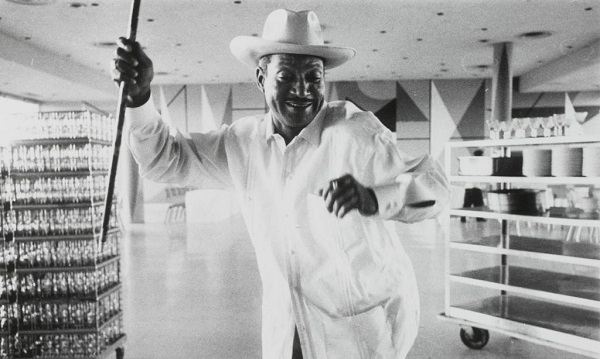
Benny More
Benny More

Born on August 24, 1919 at 7:00 a.m. m. in the Pueblo Nuevo neighborhood of the town of Santa Isabel de las Lajas, belonging to the Cienfuegos province. His parents were named Virginia Moré and Silvestre Gutiérrez, and Benny was the oldest of 18 siblings. His surname Moré came from Ta Ramón Gundo Moré (a slave of Count Moré), who according to the tradition of the Congos, was their first king in Santa Isabel de las Lajas.

He was gifted with a flowing tenor voice that he colored and phrased with great expressiveness.

This context was definitive for his future career in music, he learned to play the insundi, the yuka drums, those of Makuta and Bembé, invokers of deities, with whom he sang and danced perfectly, but also to interpret the son, the guaracha and the rumba.

Since he was a child he manifested his great vocation for music, as he would spend all day humming a popular song or improvising and directing ensembles made up of machetes, bongos made from milk cans, guitars made from a board and nails made from strings of string. sew, two sticks as keys, etc. And when he was ten years old, he “grated” a “real” three that had been lent to him, with which he would escape from his mother to the parties near his house.
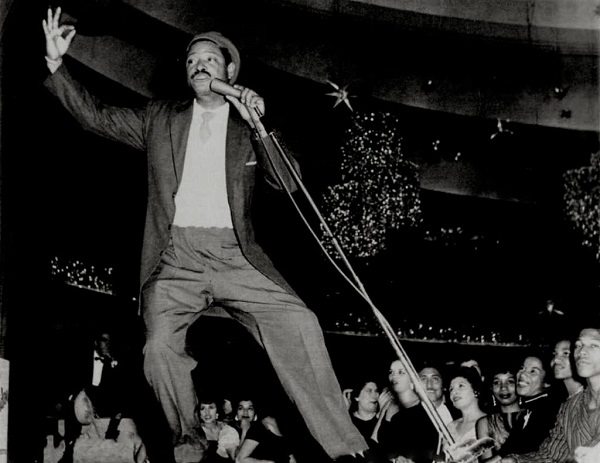
Benny More in concert

Moré was a master in all genres of Cuban music.

He could always be found standing on a table singing and reciting a son manigüero, surrounded by listeners. He spent his childhood and adolescence as Bartolomé, without the opportunity to study or get a permanent job. Like his brother Teodoro, Bartolomé was enrolled in the José de la Luz y Caballero School of Public Instruction, where he always stood out for his conduct and application.

He was gifted with a flowing tenor voice that he colored and phrased with great expressiveness.

This context was definitive for his future career in music, he learned to play the insundi, the yuka drums, those of Makuta and Bembé, invokers of deities, with whom he sang and danced perfectly, but also to interpret the son, the guaracha and the rumba.

Since he was a child he manifested his great vocation for music, since he would spend all day humming a popular song or improvising and directing ensembles made up of machetes, bongos made with milk cans, guitars made with a board and nails with strings of thread. cook, two sticks as keys, etc. And when he was ten years old, he “grated” a “real” three that had been lent to him, with which he would escape from his mother to the parties near his house.

Why is the Bacardi symbol a bat?

Moré was a master in all genres of Cuban music.
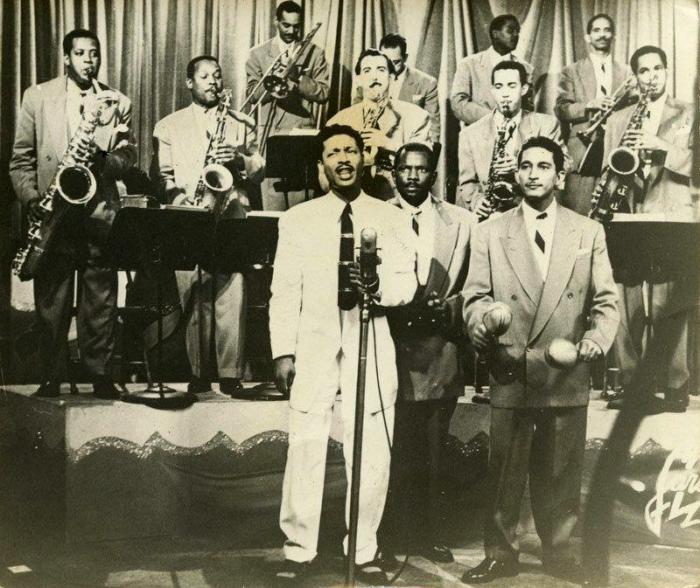
Benny More with the orchestra

He could always be found standing on a table singing and reciting a son manigüero, surrounded by listeners. He spent his childhood and adolescence as Bartolomé, without the opportunity to study or get a permanent job. Like his brother Teodoro, Bartolomé was enrolled in the José de la Luz y Caballero School of Public Instruction, where he always stood out for his conduct and application.

His voice particularly stood out in the son montuno, the mambo, and the bolero.

Since he was a child, his aptitude for singing and improvisation stood out, which he demonstrated when, barely seven years old, he escaped to entertain Guateques and parties nearby and stayed singing notes with his mother to prevent him from sleeping while ironing until late at night. .

Benny went through a complicated life, but he was willing to do anything to achieve his dreams of success. With almost twenty years of age, in 1940 Bartolomé said goodbye to his mother at the Ritz Hotel in Central Vertientes, where she worked, and traveled hidden, indistinctly, on a train and in a truck, to the City of Havana. He was definitely coming to try his luck in the bustling city. Since then he would be seen in the famous neighborhood of Belén, with a guitar acquired in a pawnshop, wandering through cafes, bars, hotels, restaurants, and even brothels.

That same year he told his cousin, a fellow downloader: “I’ll stay in Havana, here I get up or I sink.” From then on the saga of the downloads began in the bars on the avenue of the port. Once, recalling those times, he confessed: “I went out into the street with a guitar on my shoulder to sing to the tourists. I am not ashamed of it; Carlos Gardel also did it in Argentina and he is the king of tango”

At that time, the Supreme Court of Art began to be broadcast on the CMQ station. Bartolomé Maximiliano Moré appeared on that program animated by Germán Pinelli and José Antonio Alonso. After presenting it and at the moment of starting his presentation, the bell rang for him. Later Bartolomé returned to Monte y Prado to the Supreme Court and on this second occasion he won the first prize. Possessor of a fresh voice, with a beautiful timbre, sensual and evocative, of a black peasant, despite his misery, Bartolo continued to sing with all the inner strength that Cuban rhythms demanded of him.

One of his escapades Siro Rodríguez, a member of the famous Trio Matamoros, heard him sing in the bar of El Templete restaurant, on Avenida del Puerto, and was very impressed by the boy’s voice and tuning. Bartolomé’s entry into the group led by Miguel Matamoros can be considered his true debut as a professional singer, since with said group he had a stable job for the first time as a musician and made his first recordings on 78 revolutions per minute records.

Benny knew he had a voice, an atche (luck), and a destiny. Perhaps he sensed it, intuited it, or simply trusted in his triumph. When he started with Miguel Matamoros and his group, he already wanted to make changes to the picket line. In Mexico, when Miguel got sick, he was able to direct the group, took command and made the friends enjoy themselves at the El Patio cabaret.

When the contract ended, the Matamoros group returned to Havana, but without Bartolomé, who decided to try his luck alone in Mexico. When communicating his decision to the famous author of the son El que sowing his corn, Miguel Matamoros would reply: “It’s very good, but you have to change your name from Bartolo, which is very ugly. You’re not going anywhere with him. You’re right, Bartolo replied, from today I’ll be called Benny, yes, Benny Moré.

The owner of the business was hypnotized by the tasty atmosphere that Benny created as a manager. After singing with several leading orchestras in Mexico, he stood up nicely with the most famous band of the 20th century: Pérez Prado and the Cuban mambo.

With this meeting, two geniuses came together: in Benny Moré there was talent and natural intuition; in Pérez Prado, in addition to all that, mastery of technique and an enormous facility for making music.
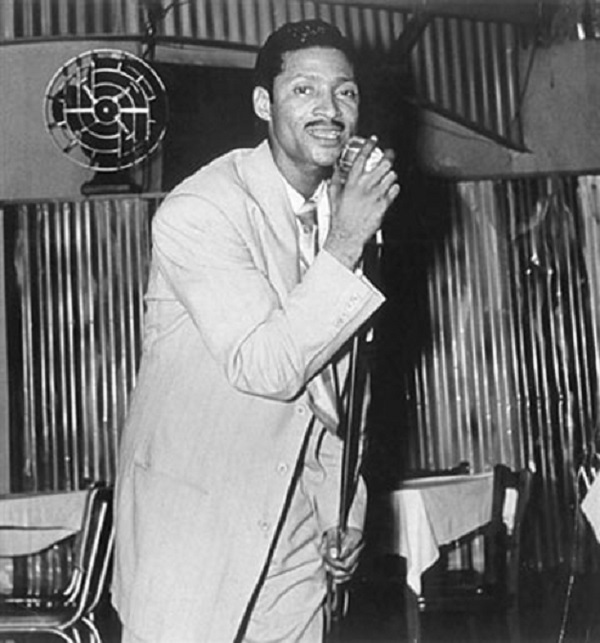
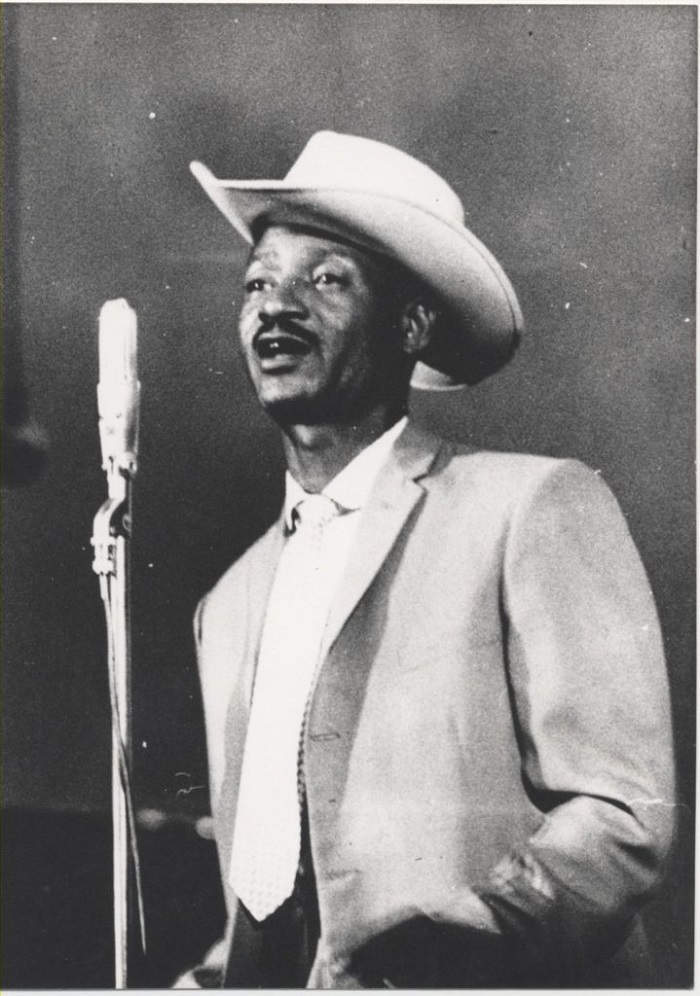
Benny More singing
Benny More singing

With Pérez Prado he conquered the noble Aztec people on tours of different states of that sister country. Due to the success achieved by Benny, the town awarded him the title of “Prince of the mambo” and Pérez Prado that of “King of the mambo”. He sang like no one else in the world and began his international rise.

By that time Benny’s voice was already known in Panama, Colombia, Brazil, Puerto Rico, Haiti, Venezuela, and of course, in his native Cuba. In the lively world of nightlife in Mexico City, the Cuban singer performed in countless theaters, among others the Margo, the Blanquita, the Folliers and the Cabaret Waikiki, alternating with renowned artists such as the legendary vedette Yolanda Montes (Tongolele ), the Mexican Toña la Negra, and the prominent Cuban pianist and composer Juan Bruno Tarraza, for whom Benny sang the bolero Ya son las doce. He participates in many films and upon his return to Cuba, he was already sure that he had to be counted on.

Nostalgia for his family, friends, for the Homeland, and the desire to obtain laurels on his Island, where he considered that he was not well known, made him return to his beloved Lajas at the end of 1950. The older sonero was definitely in Cuba, he had left behind comforts, material and spiritual satisfactions, friends and even the loves that winners usually do not lack.
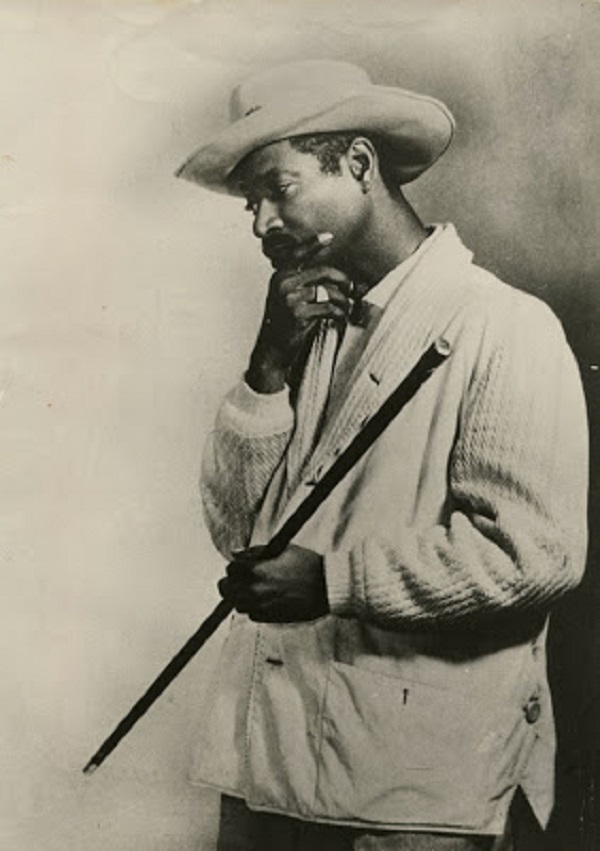
Benny More Photo
Benny More Photo

For the next two years, he performed by contract for a program called “De fiesta con Bacardi”, which aired on the Cadena Oriental radio station with the Mariano Mercerón orchestra, and the singers Fernando Álvarez and Pacho Alonso.

As Benny Moré was an exclusive artist for RCA Víctor, this firm demanded his presence in Havana to make different recordings. To fulfill this commitment, he made alternate trips to Havana and thus maintained his commitment to the eastern radio network. After the engagement at Casa Bacardí and master Mercerón, in 1952 Benny Moré returned to Havana.

Certainly Benny concluded an era, closed a chapter of Cuban musical life, that stage of nightlife that was already declining. Benny’s life was related to a world that has already disappeared. Then everything became myths and legends. Benny kept singing, but now it would be on scratch records, which were digitized.

Today’s “oidores” (listeners) must travel back in time, abstract themselves, imagine those seedy bars in the Havana port full of curious tourists. Of Chinese inns that sold “complete” for poor people who passed the hat, after singing through the streets of Havana.
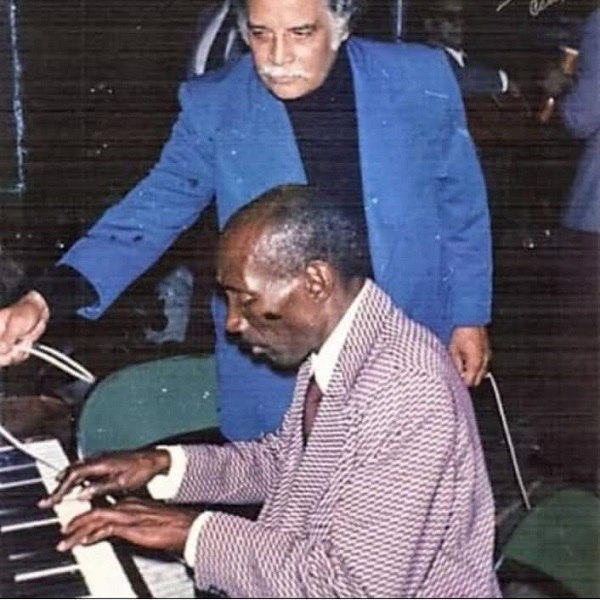
Benny More
Benny More

Ezequiel Lino Frías Gómez was an excellent musician, pianist, arranger and composer.

Ezequiel Lino Frías Gómez was born on April 10, 1915 in Havana, Cuba.

Lino Frías y Daniel Santos

Musician, Pianist, Arranger, Composer. He began his artistic career in the early 30’s, working with singer and composer Joseito Fernandez, in the orchestra of Raimundo Pla.

Later he became part of the Fantasía Orchestra.

At the end of the decade he worked with the Septeto Carabina de Ases.

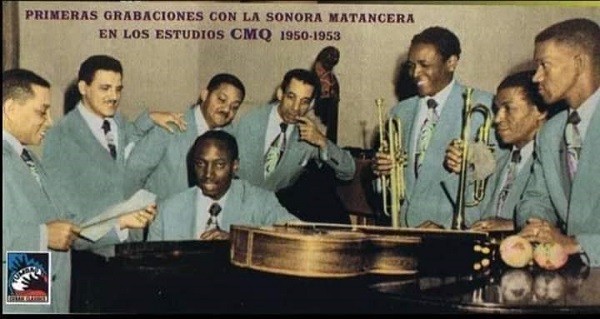
Some time later he joined Arsenio Rodríguez’s Conjunto Todos Estrellas in September 1940, remaining in it until November 1943, leaving his place to Adolfo Oreilly Panacea, to join the Sonora Matancera in 1944, until 1976, where he contributed in an important way both in the composition and musical arrangements, imposing his particular piano solos.

In 1974 he helped found with Armando Sánchez the Conjunto Son de la Loma.

Upon his retirement from La Sonora Matancera, the Puerto Rican producer René López invited Lino, together with Israel “Cachao” López, to revive the descargas he had already recorded in the fifties, assembling a Típica together with “Cachao”.

Sonora Matancea
Sonora Matancea

In his independent years Lino worked with Johnny Pacheco and Carlos “Caito” Diaz.

He accompanied great artists in recordings, in that period in New York, such as La Lupe, Olga Guillot, Daniel Santos, Carmen Delia Dipini, Bobby Capo, among others.

He died on May 22, 1983 in New York, USA.

Lino Frías, who for twenty-two years was the pianist of the Sonora Matancera, composed the very popular Mata Siguaraya in 1951.

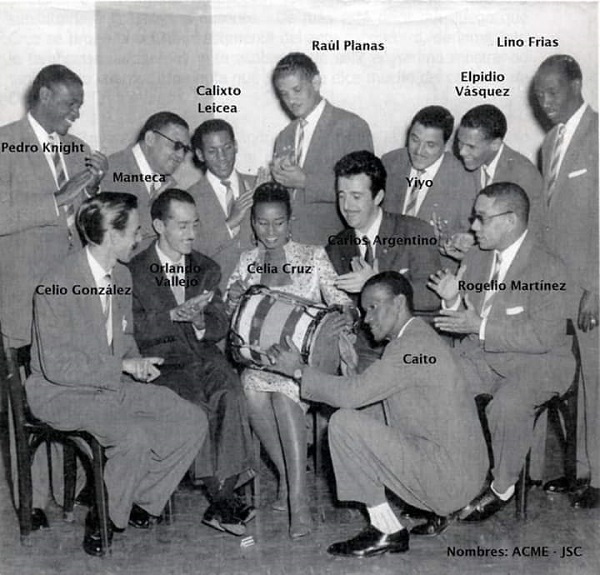
One of the most popular photos of the Sonora Matancera.

In it we can see Lino Frías from his piano looking at Celia Cruz, great interpreter of Mata Siguaraya, together with Benny Moré and Oscar D’León.

Ezequiel Lino Frías Gómez was born in Havana and died in New York in 1983.

Lino studied piano at the Havana Conservatory. For a time, in the 1930s, he played in the Raimundo Pia y Rivero Orchestra, whose singer was Joseito Fernandez. He would later play in the Orquesta Fantasía.

In 1939 he joined the Septeto Carabina de Ases, led by Mariano Oxamendi, guitarist and second voice, and with Bienvenido Grande, singer and harpsichord player, Nilo Alfonso, double bass, José Bergerey, maracas and third voice, Ramón Liviano Cisneros, tres player, Florencio Coco Morejón, bongos player, and Félix Chappotín, trumpet player.

In 1944, Lino joined the Sonora Matancera as a pianist, where he remained until 1976.

In the 1960s, Frías joined the movement that created the so-called salsa music, alongside Fania All Stars, Johny Pacheco, Bobby Rodríguez, Carlos Patato Valdés y Caíto, Carlos Manuel Díaz (Matanzas 1905-New York 1990), among others.

Don Adolfo, a Puerto Rican timbalero, worked with Lino Frías in a group that included some of the most renowned musicians and singers of the 1950s and 60s: Olga Guillot, Daniel Santos, Lucecita Benítez, Bobby Capó, Marco Antonio Múñiz, Carmen Delia Depiní, Chucho Avellaneda, Sergio González Siaba and La Lupe, among others.

In 1974, parallel to his work as a pianist in the Sonora Matancera, Lino Frías created the ensemble Son de la Loma, with the participation of Cuban-Niuyorquinos such as Marcelino Guerra, Rapindey (Cienfuegos 1914-Spain 1996), author of Convergencia, and Pedro Rudy Calzado (Santiago de Cuba 1929-New York 2002).

Celia Cruz y La Sonora Matancera

Due to arthritis, in 1976 Lino left the Sonora. His place is taken by Javier Vázquez, (Matanzas 1936), son of the double bass player Pablo Vázquez.

It is said that the death of Lino Frías, in 1983, was a hard blow for his great and faithful friend Celia Cruz (Havana 1925-New Jersey 2003).

In addition to Mata Siguaraya, Lino Frías composed Pan de piquito, Óyela, gózala, Vamos todos de panchanga, Cañonazo, Vive la vida hoy, Suena mi bajo, Convencida, Afecto y cariño, Has vuelto a mí, Baila Yemayá.

Also Read: Israel “Cachao” López Sobrado en fama y respeto en los años setenta se dedicó a mantener la tradición a nivel supremo

Coming Soon … Chuchito Valdés

West Coast – California – Oakland

Are you ready for 2019? Start January with the best of Latin Jazz in one of the most important and recognized genre clubs in Oakland- CA, Yoshi’s. Two musicians of world fame of Latin Jazz: Chuchito Valdés and Poncho Sánchez will be performing in this big place with the best of their repertoire for the enjoyment of all the attendees.

Now, you know…

YOU CAN’T MISS ANY OF THESE TWO AMAZING EVENTS!

Chuchito Valdés

Wednesday, January 2nd

Show: 8:00PM                                            Tickets $24 – $59

Jesus “Chuchito” Valdés, Pianist, arranger, composer and bandleader, was born in October 10, 1964 in the Havana Cuba. Chuchito Valdes comes from one of the most distinguished musical families in Cuba. He is the Chucho Valdes’ son and Grandfather, Bebo Valdes.

He led the world renowned band, Irakere for several years, in which his father was the founder. He has performed at festivals, clubs and concerts throughout the world, mainly performing in the United States to large Latin Jazz audiences as well as South America and Europe.

Chuchito is recognized by a lot of people as a master at Cuban music including: Mambo, Danzón, Cuban Timba and “Guaguanco”. In his latest project called Reflections, he shows his versatility in his original compositions and arrangements, drawing on classical harmonic and structural techniques.

Chuchito Valdés
Chuchito Valdés

Poncho Sanchez | All Dates

Friday, January 25th & Saturday, January 26th

Fri, Shows: 8:00PM & 10:00PM         Tickets $29 – $69

Sat, Shows: 7:30PM & 9:30PM          Tickets $35 – $69

Poncho Sánchez was born in Laredo, Texas, in 1951 and grew up in a suburb of L.A., where he was raised on an unusual cross section of sounds that included: Straightahead Jazz, Latin Jazz and American Soul. He taught himself to play guitar, flute, drums and timbales, but eventually settled on the congas.

Poncho - Yoshis
Poncho – Yoshis

His sound is a mixture of different rhythms: Salsa, Straightahead Jazz, Latin Jazz, and even elements of Soul and Blues. “… We put it all together in a pot, boil it together and come out with a big stew… These are the sounds I grew up with. So when I play this music, I’m not telling a lie. I’m telling my story. This is the real thing.” Said Poncho.


Venue: 510 Embarcadero West, Oakland, CA 94607

Box Office: (510) 238-9200


For more information, please visit https://www.yoshis.com/

Asia / June 2024

Calibrated maracasBill Martinez

Japan circular flag
JAPAN
DIRECTORY OF NIGHTCLUBS

Bar Mirage
Bar Mirage
5F VORT Roppongi Briller, 3-14-14 Roppongi, Minato-ku
Tokyo 106-0032, Japan
+03-5860-6946

Fiesta
Fiesta Latin Spot Bar
3F, 1 Chome-14-6 Kabukicho, Shinjuku City
Tokyo 160-0021, Japan
+81 90-1086-2878

El Cafe Latino Tokyo
El Cafe Latino
3 Chome-15-24 Roppongi, Minato City
Tokyo 106-0032, Japan
+81 3-3402-8989

JBA
Studio JBA
11-8 HAT Chuo-ku
Chuo City, Tokio 103-0011, Japan
+81 3 62310638

jsdc
Japan Social Dance Club
1-19-5-705 Shibuya-ku
Tokyo 150-0042, Japan
+81 3 5939-7262

Studio Pepe
Studio Pepe
7-17-12 Minato-ku
Tokyo106-0032, Japan
+81 090-4705-715

La Tropi Azabu
La Tropi Azabu
3F Roppongi Azelea Bldf. 1-3-6 Nishi-Azabu, Minato-ku
Tokyo1060031, Japan
+81 3 6804-5776

Latin Club Leon
Latin Club Leon
5-17-6 B1 Shinjuku, Shinjuku-ku
Tokyo 160-0022, Japan
+81 90-6474-5638

Hong Kong `circular flag
HONG KONG
DIRECTORY OF NIGHTCLUBS

PCL
Petticoat Lane
8F, California Tower, 30-32 D’Aguilar Street, Central
Hong Kong, Hong Kong
+852 2808 2893

DANCETRINITY
Dancetrinity
8/F, Fung Woo Centre, 279-281 Des Voeux Road Central
Hong Kong, Hong Kong
+852 9634 9770

Sole Mio Restaurant
Sole Mio
Upper Ground Floor, 51 Elgin Street, Soho. Central
Hong Kong, Hong Kong
+852 5508 8244

Solar LKF
Solar LKF
+2F, Ho Lee Commercial Building, 38-44 D’Aguilar Street
+Central District, Hong Kong 0000
+852 65467339

After Work Salsa Party
Pong, 1st Floor, Ho Lee Commercial Building, 38-44 D’Aquilar Street, Lan Kwai
Fong Central & Western District, Hong Kong
+852 6389 6213

ISRAEL
DIRECTORY OF NIGHTCLUBS

Havana Music Club
Havana Music Club
Yigal Alon St 126
Tel Aviv-Yafo, Israel
+972 3-562-3456

Salsa Carlos
Salsa Carlos
Yegi’a Kapayim St 10, Tel Aviv-Yafo, Israel
+972 54-573-7173

Thailand circular flag
THAILAND
DIRECTORY OF NIGHTCLUBS

bAFROS lOUNGE
Bafros
Sugar Club Complex Sukhumvit Soi 11
Bangkok 10110, Thailand
+66 63 039 8700

Havana Social Cocktail Bar
Havana Social
1/1 Sukhumvit Rd. Soi 11
Bangkok, Thailand
+66 2 821 6111

MillionSpace
MillionSpace Rooftop Bar & Bristro
Soi Sukhumvit 32, Khlong Tan, Khlong Toei
Bangkok 10110, Thailand
+66 83 898 9939
ASIA 2024 FESTIVAL by Karina Bernales

Sotn Korea
SOUTH KOREA
Korea Festival 62024

Jeju Latin Culture Festival

Jun 20 / 23 2024

Ebenezer Jeju Hamdeok
504, Johamhaean
Jeju-si, South Korea

The Cuban pianist Chucho Váldes launched his new album “Jazz Batá 2”

East Coast – New York – New Jersey

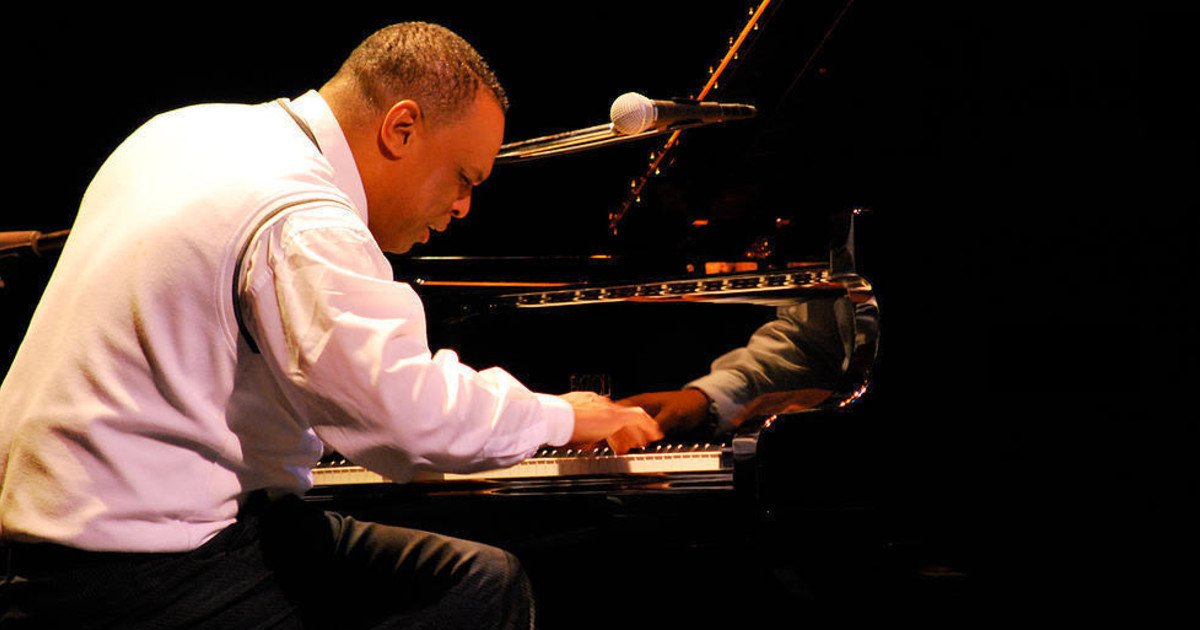
Chucho Váldes. This virtuous pianist, composer and arranger brings to the music market the sequel of his album Jazz Batá after four decades

Musicians: Chucho Valdés (Piano), Yelsy Heredia (Double Bass) – Dreiser Durruthy (Voice and Superaron Batá) & Yaroldy Abreu Robles (Congas & Percussion) – and Guest artist: Regina Carter (Violin). 

After (Forty Six) 46 years, Chucho Valdés returns to the musical arena with Jazz Batá 2, an album that once again shows the creativity of this imposing Cuban music artist.

Jazz Batá 2 of the Latin Jazz genre contains eight tracks recorded in two and a half days in the John Lee´s studio in New Jersey. This ten-handed CD is the mix of classical music from West Africa impregnated in the piano solos with the Jazz Batá (sacred drums, with the hourglass shape of the Yoruba religion in Cuba), Violin, Bass and Percussion that give a sound with personality, rhythmic and lyrical at the same time.

The band in small format for this record production has four supporting musicians: Yaroldy Abreu Robles, Dreiser Durruthy Bombalé, Yelsy Heredia and Regina Carter. The first three belong to the Guantánamo region and they have deep roots in the Cuban musical culture, in addition to having studied at the conservatory.

Chucho Váldes
Chucho Váldes

Likewise and it should also be noted that Chucho Valdés, influential star of the contemporary Afro-Cuban Jazz, established this experimental format to three instruments (Piano, Bass and Batá) for the first time in 1972 with his album Jazz Batá.

The Jazz Batá 2‘s first single, “100 Años de Bebo”, is an unpublished melody whose composition was by Bebo and it’s a tribute to his centenary. This Danzón-Mambo is played by Regina Carter with an introduction and a “Tumbao” final, added by Chucho Valdés.

The tracks: “Obatalá”, “Oshun” and “El Güije” are themes inspired by the Yoruba religion of Cuba (Santería). Oshun is a Haitian merengue with the incursion of the violin, while El Güije is based on a rhythm created by the percussionist Dreiser Durruthy, and he presents it by speaking the sacred language, derived from the Afro-Cuban religion known as “palo”.

“Son XXI” from this new studio album, is a song by the deceased Cuban composer, Enrique Ubieta, who played with rhythmic clusters of Jazz. The first time that Chucho Valdés interpreted this theme was in the Musical Theater of Havana at the beginning of the 60s.

“Luces” is the first Bolero that incorporates Congas and Batá, as well as the harmonies of increased chords. And the single seven: “Chucho Valdés humor” is a “Descarga”, built on a rhythmic three notes (G, B, and C). According to the Valdés’ Words, “It’s like a twister”.

Finally, the eighth track: “El Payaso” is a piano solo, dedicated to Maurice Ravel. This melody was composed by Chucho Valdés when he was a member of the Cuban Orchestra of Modern Music (Founder in 1967). “… I’m a bit avant-garde, I play Batá on the Piano …”, said Chucho Valdés .

With this record production, Chucho Valdés marks a new milestone in his career, a beginning with the record label: Mack Avenue Records, and a significant chapter of his past.

TRACKS:
  1. Obatalá
5. El humor de chucho
  1. Son XXI
6. 100 Años de Bebo
  1. Luces
7. El Güije
  1. Oshun
8. El payaso


Release: November 16th 2018

Label Record: Mack Avenue Records


Available NOW to download in the entire world!


For more information, please visit:

Web Site: https://www.valdeschucho.com/

Or Follow him for his Social Channel: https://www.facebook.com/valdes.chucho

For more information visit this social medias:

Facebook: https://www.facebook.com/valdes.chucho/?locale=es_LA 

Instagram: @chuchovaldesmusic

X (Twitter): https://x.com/chuchovaldes?lang=en&mx=2 

Spotify: https://open.spotify.com/artist/27mRThsZ9K1BYmz0rioxwp

  • « Go to Previous Page
  • Page 1
  • Interim pages omitted …
  • Page 10
  • Page 11
  • Page 12
  • Page 13
  • Page 14
  • Interim pages omitted …
  • Page 38
  • Go to Next Page »

International Salsa Magazine (ISM) is a monthly publication about Salsa activities around the world, that has been publishing since 2007. It is a world network of volunteers coordinated by ISM Magazine. We are working to strengthen all the events by working together.