|
|
|
|
|
|
|
|
|
|







|
|
|
|
|
|
|
|
|
|
|
|
|
|
|
|
|
|
|
|
|
The Latin music scene in Canada is growing every day thanks to the large number of artists who have decided to move to this beautiful country to try their luck with their talent. Such is the case of Cuban musical director, arranger, composer and singer Julio Avila and the members of his great band Julio Avila Cuban Band.
Given that we thought his career was very interesting, we decided to contact him to learn more about his work and he was kind enough to accept the invitation. Here are the issues we touched on during this fascinating interview.
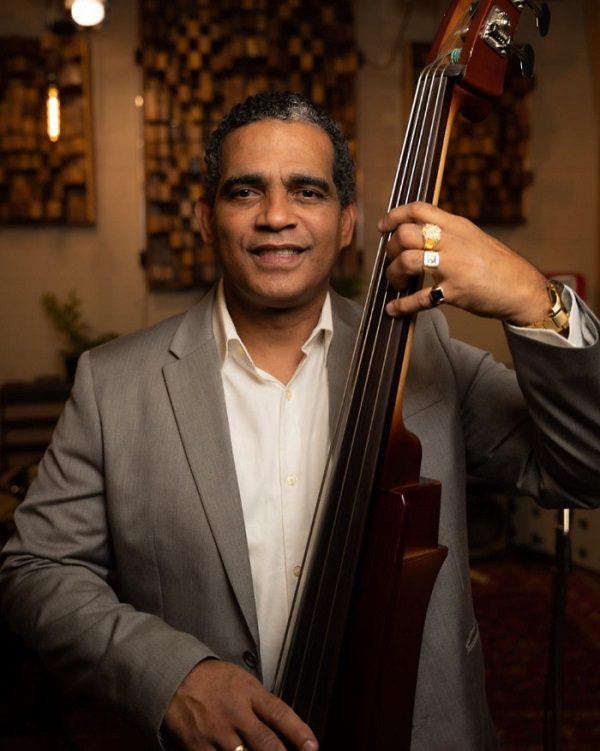
Contrary to the answer we might expect, Julio told us that making music in Cuba at that time was not difficult, as life was not so expensive and the economic crisis was not as severe as it is now.
In his particular case, things were easier because his mother worked in a radio station and his father was a professional musician and the musical director of the popular music group Por Nuestros Campos for many years until he sadly passed away. It was undeniable that art ran through his veins.
His sister Isabelita was also involved in popular music for many years and was even awarded on several occasions at the local Eduardo Saborit Festival. Today she is retired, but she was very successful locally at the time.
Because all the brothers had a penchant for music, they decided to create a group called Los Hermanos Avila until they all went their separate ways and dedicated themselves to their own professions.
Julio considers that today they would not have been able to devote to this branch of the arts due to the political and economic situation that the island is enduring, and he is thankful that it was not so.
According to his words, the money was enough to buy the instruments in those times, but things become so complicated that developing an artistic career in the Caribbean country is much more difficult.

Although he says he has played changüí because of his Guantanamo origins, he was never in a group that based its music on this traditional Cuban dance, as the artist has always liked popular music and salsa.
”Changüí is a genre born in the province of Guantánamo that did not get much popularity, but today, it is impressive the large number of young people who play this dance, since they got a taste for it. In spite of all the years after it was created, there are guys who do not let it die, which makes me very happy” said Julio on this issue.
When we wanted to know why he thinks that these young musicians have opted for this genre and not for other more modern ones such as trap or reggaeton, he replied that the latter two sound a lot in Cuba, but there have been music teachers and schools that have not let changüí die. They continue to teach it to their students and promote it whenever they can.
In addition, there are always groups interested in preserving it in time and uniting it with son and other traditional Cuban genres. They even add flutes and violins, which were not present in the original changüí, in order to give it a unique and modern touch.
Julio started playing the guitar being a child of five years old, as he had always seen his parents and older brothers involved in everything that had to do with music. Therefore, it all started in a very natural way and basically on instinct. It was later that both he and his siblings decided to educate themselves in order to become more complete professionals.
In Guantánamo itself, he studied at a music school to become a bassist and began working fully on popular music, which had always been to his liking.
With all that gained knowledge, he decided to move to the city of Havana, to get involved in other projects there and to compose his own material.
Since he was 16, he earned a living as a bassist in a popular music group, which activity he alternated with his secondary education. It can be said that this is the formal beginning of Julio’s musical career.

Before forming his own orchestra, Julio worked with La Sonora Universal and Brisas Del Palmar, which were his first opportunities to shine in the music world.
When the artist was working in a quintet, a trio from the city of Santiago (Brisas Del Palmar) went to a music festival in Guantanamo and thet had the opportunity to meet in a club in 1999. ‘’The musical director of the trio saw us playing and liked the way I played the bass. He told me about the possibility of playing with them, but it did not happen until 2001 when I went to Havana and we met by chance,” Julio said.
After having some time worked with the trio, this musical director met the talented tresista Cesar Echevarría, director of Sonora Universal, who needed a bassist because his stayed in Germany. It was then that he told him about Julio and asked him to see him play, which led them to meet and start working together.
Within a few weeks, Julio was already traveling to Europe with Cesar to tour Germany, Denmark, Holland, Austria and Czechoslovakia. This trip is the one that began to open new doors for him and make him develop as an artist.
When Julio had some time with La Sonora Universal, the director of Brisas Del Mar again asked him to join the group for a tour of Canada in 2005. When he was included, the group went from being a trio to a quartet.
Receptivity from Canadian businessmen was so good that he decided to stay with Brisas Del Palmar permanently until he decided to move from Cuba in 2014 due to the situation which the island was going through.
The latter coincided with the beginning of his love relationship with the Serbian citizen Natasha Marjanovic, who today is his wife, manager of his orchestra and a great life support. It was she who convinced him to stay in Vancouver, a decision he says it was the right one.
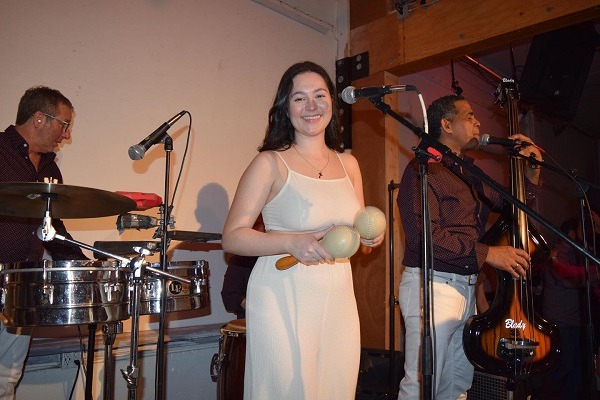
It all started when Julio needed a pianist for Brisas Del Mar and hired Ernesto Benitez, who, once in Canada, told him that he was not going back to Cuba. That is when he saw the opportunity to start creating his own orchestra from himself and this musician.
The next to be included was percussionist Norman García, with whom Julio and Ernesto formed a trio and began performing at festivals until Isidora Bosanovic, singer and his wife Natasha’s niece, arrived. Her case is very particular because she did not speak Spanish, but she learned it so she could sing in the orchestra. Today, she speaks and sings in Spanish very well.
Finally, the band included Denis Barzaga, another musician originating from Guantánamo, who currently lives in Spain, but when required, travels to Canada to play with the orchestra in Vancouver.
Recently, kettle – drum player Julio Paredes was included to replace Barzaga, who was unable to travel for the time being.
Read also: Puerto Rican singer and talented sonero Charlie Maldonado
Latin talent has expanded all over the world to the point that there is a significant presence of these groups in Hawaii. Today we have talked to Eddie Ortiz, one of its leaders, who tells us his interesting story.
Eddie Ortiz, a New Yorker of Puerto Rican descent, began his journey through music when still a child, which led him to become the musical director of one of the main Latin orchestras in Honolulu.
The following are the most salient aspects of his life and musical career.
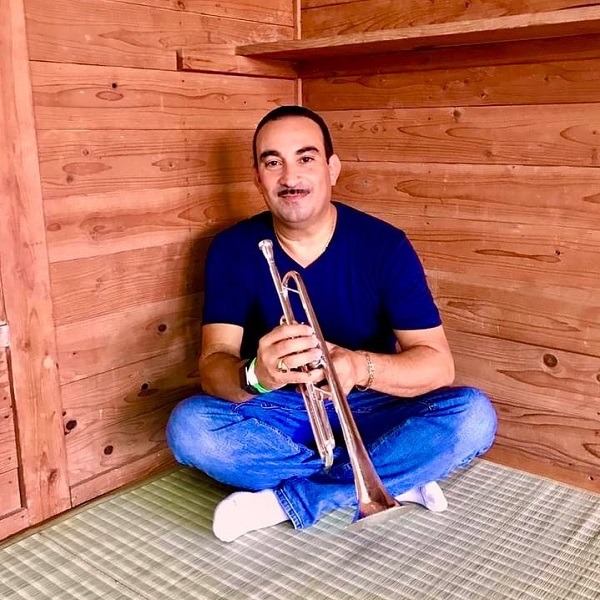
Eddie’s first contact with music was in school, when he began taking trumpet lessons for a few years until he moved with his family to Tampa, Florida, where his life would change radically.
While there, he joined the Navy and served for more than 20 years, time in which the artist took the opportunity to join the Marine band and hone his skills as a musician.
It was in those years he served as a trumpet player and played for several military bands being in the armed forces.
During his military career, he was forced to visit many countries and Hawaii was his last stop. About three years before retiring, he decided to create Eddie Ortiz & Son Caribe, a group he still plays with today.
As for Hawaii, he liked the place, the weather and the people so much that he did not want to return to the United States. That was over 27 years in total. He still thinks it was the best decision he could have made personally and professionally.
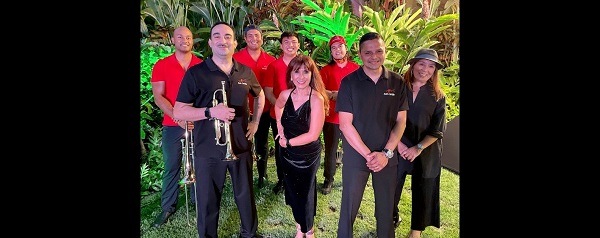
Something very interesting about Eddie Ortiz & Son Caribe is that they play Latin music, but most of the members are not Latino. The group has people from Japan, China, Portugal and Hawaii. In fact, some of them were with Eddie in the navy and, today, support him in this great project.
A very particular case is that of Cynthia Romero, the band’s vocalist, who was born in Manila, Philippines, and speaks six languages, but Spanish is not one of them. However, she is perfectly capable of singing in that language without any problem, since she practices a lot the songs at the phonic level to avoid mistakes.
Whenever there are original songs, Cynthia usually asks Eddie what a song is about and he explains it to her in detail so she can perform it and live out it properly. She also takes the trouble to translate all the content and learn it to avoid any failure in the studio or on stage.
In the case of the genres, a different level of preparation for each one is always required, so Eddie and Cynthia always rehearse alone at first, while the musicians prepare themselves separately. It is then that they all join together to see how the band sounds as a whole.

The members of Eddie Ortiz & Son Caribe have had the opportunity to share the stage with Ismael Miranda, Celia Cruz, Johnny Polanco, Tito Puente Jr, Luisito Rosario, and many more. When asked what he and his musicians have learned from these great artists, Eddie replied that the opportunity to accompany these personalities and open their shows have been a blessing and an immense honor.
”Each one of these artists has a very unique style and, whenever we accompany one of them, there are always new things to learn in order to be able to interpret those styles in the future. All of these things that we see in others are incorporated into our own music as we see fit” said Eddie.
With respect to the media, Eddie Ortiz & Son Caribe has had a presence in various magazines and channels such as Honolulu Magazine, KS TV, 88 Tee, University of Hawaii Sports Television, among others.
Eddie said they did not expect this media exposure, but it has been very well received. They have been asked to make music for one or two radio stations or channels, which has given them the opportunity to demonstrate their talent and be known among a wider audience.
The best thing is that this gave them the opportunity to explore other genres, as the aforementioned media have asked for pop, traditional Hawaiian music and other genres requested at that time.
Eddie also told us that his band usually performs live on various entertainment places about four times a week, so they should try to have a repertoire as different as possible every night so as not to bore the audience.
Regarding covers, there are always certain songs that people usually ask for, so the band always takes them into account to satisfy those attending.
They also try to make a balance of all the genres they play such as salsa, bachata, merengue, cha cha chá, cumbia, Latin pop and many more.
Although the band’s strength is in Hawaii, their audience is not centred on the island and they have also managed to tour Asian countries such as Japan, Korea and the Philippines. In those places, the reception of the public towards Eddie Ortiz & Son Caribe has been phenomenal because there are many lovers of Latin music and culture in general there.
Because of this, these countries usually have relatively large salsa events and festivals where they always take this band and other groups of this kind into account. Of course, they are also supported by dancers and DJs in order to liven up the atmosphere even more.
Eddie remembers attending an event called ”Isla De Salsa”, which featured El Gran Combo De Puerto Rico, Juan Luis Guerra, Havana De Cuba and many others. This shows how much Latin music is valued in those places and the large number of followers it gathered.
To end the conversation, Eddie pointed out that they have a large audience in Colombia, Ecuador and Mexico, so they also have plans and are making the appropriate arrangements to go there soon and meet their fans. They will also perform an anniversary concert to celebrate the 25th anniversary of the foundation of the orchestra and will have Luisito Rosario as a guest.
Read also: Jimmy Rodríguez ”El Salsero Mexicano” talked to ISM about his career
Medejazz 2023, to delight the ears, Music and Art in Medellin.
The Medearte Corporation has developed projects where the main objective is the dissemination and promotion of the arts in its various manifestations, the institution is recognized nationally and internationally for its business management in favor of culture in Colombia and to support projects of young musicians and artists in the cultural work of the city of Medellin.

The 27th version of the “International Jazz and World Music Festival” will be held from September 6 to 16. Continuing with the tradition that the Festival has consolidated over the years, our city will host a wide range of artists, performers and groups, who thanks to their talent and creativity, will radiate their music and sounds on the public of Medellin.
The MedeJazz 2023 program, with the support of the Ministry of Culture, the Mayor’s Office of Medellín and La Fiesta del Libro y la Cultura, will offer six in-person concerts, five of which will be free admission. In addition, the Festival will offer four free master classes, as a contribution to the academic-musical training of young musicians.
The Festival will also offer four free master classes as a contribution to academic-musical education, and young people from music schools will have the opportunity to nurture this knowledge. The Festival will be held from September 8 to 17
– Eleven concerts in Medejazz 2023
– Ten concerts with free admission
– Groups and members from France, Holland, Cuba, Brazil, Colombia, the United States, Puerto Rico and Venezuela.
– Four master classes with free admission.
Groups from France, Holland, Brazil, Cuba, Colombia, the United States, New York, Venezuela and Puerto Rico will grace the nights of Medellín.
For Colombia, the six winning groups of the 2023 calls: Sara Elisa Villa, Geografías, Mulatas, Groovato, Luis Bernardo Jazz Project and Tomate’s.
Three large stages will witness these great nights: Tarima Carabobo within the Festival of Books and Culture, Plazoleta del Museo de Arte de Medellín MAMM and the Great Hall of Plaza Mayor.
Starting Friday, August 25, you can visit the updated website with all the information about Medejazz 2023.
MEDEJAZZ 2023 PROGRAM
Sara Elisa Villa (Colombia). Friday, September 8 – 6:30 pm – Tarima Carabobo Fiesta del Libro y la Cultura. FREE ENTRANCE.
Geografías (Colombia). Saturday, September 9 – 6:30 pm. – Tarima Carabobo Fiesta del Libro y la Cultura. FREE ENTRANCE.
Mulatas (Cuba-Colombia). Saturday, September 9- 8:00 pm- Tarima Carabobo Fiesta del Libro y la Cultura. FREE ENTRANCE.
Groovato (Colombia). Sunday September 10 – 6:30 pm- Tarima Carabobo Book and Culture Festival. FREE ENTRANCE.
Luis Bernardo Jazz Project (Colombia). Tuesday, September 12- 8:00 p.m. Tarima Carabobo- Book and Culture Festival. FREE ENTRANCE.
Tomate’s (Colombia). Thursday, September 14- 7:30 pm. Plazoleta Museo de Arte Moderno de Medellín- MAMM. FREE ENTRANCE.
Samy Thiébault (France). Friday, September 15- 8:00 pm. Tarima Carabobo- Book and Culture Festival. FREE ENTRANCE.
New Manteca (Holland). Friday, September 15 – 7:30 p.m. Plazoleta Museo de Arte Moderno de Medellín- MAMM. FREE ENTRANCE.
Eloudie Bouny and Iara Ferreira (Brazil). Saturday, September 16- 6:30 p.m. Tarima Carabobo- Book and Culture Festival. FREE ENTRANCE
Lavoe Orquesta + Joseph Amado, Moncho Rivera y Mulatas (New York, Puerto Rico, Venezuela, Cuba and Colombia). Saturday, September 16 -8:00 p.m. Gran Salón de Plaza Mayor. Information: Ticket Express.

Havana in the Grand Manner with Ernán López Nussa (Cuba). Sunday, September 17- 5:00 p.m. Plazoleta del Museo de Arte Moderno de Medellín- MAMM. FREE ENTRANCE
INFORMATION
Social Networks
Facebook: (Medearte- Festival Internacional Medejazz)
YouTube: Festival Medejazz
Twitter: (@MedeJazz) https://twitter.com/MedeJazz
Instagram: (@MedeJazz)

Also Read: Henry Benavides surprises with “Por Cuenta Propia,” his new project