• Skip to primary navigation
  • Skip to main content

International Salsa Magazine

  • HOME
  • Previous editions
    • 2026
      • ISM / March 2026
      • ISM / February 2026
      • ISM / January 2026
    • 2025
      • ISM / December 2025
      • ISM / November 2025
      • ISM / October 2025
      • ISM / September 2025
      • ISM / August 2025
      • ISM / July 2025
      • ISM / June 2025
      • ISM / May2025
      • ISM / April 2025
      • ISM / March 2025
      • ISM / February 2025
      • ISM / January 2025
    • 2024
      • ISM / December 2024
      • ISM / November 2024
      • ISM / October 2024
      • ISM / September 2024
      • ISM / August 2024
      • ISM / July 2024
      • ISM / June 2024
      • ISM / May 2024
      • ISM / April 2024
      • ISM / March 2024
      • ISM / February 2024
      • ISM / January 2024
    • 2023
      • ISM / December 2023
      • ISM / November 2023
      • ISM / October 2023
      • ISM – September 2023
      • ISM – August 2023
      • ISM July 2023
      • ISM Edition June 2023
      • ISM – May 2023
      • ISM April 2023
      • ISM March 2023
      • ISM February 2023
      • ISM January 2023
    • 2022
      • ISM December 2022
      • ISM November 2022
      • ISM October 2022
      • ISM September 2022
      • ISM August 2022
      • ISM July 2022
      • ISM June 2022
      • ISM May 2022
      • ISM February 2022
      • ISM January 2022
    • 2021
      • ISM December 2021
      • ISM November 2021
      • ISM October – 2021
      • ISM September 2021
      • ISM August 2021
      • ISM July 2021
      • ISM May 2021
      • ISM April 2021
      • ISM June 2021
      • ISM March 2021
      • ISM February 2021
      • ISM January 2021
    • 2020
      • ISM December 2020
      • ISM November 2020
      • ISM October 2020
      • ISM September 2020
      • ISM August 2020
      • ISM July 2020
      • ISM June 2020
      • ISM May 2020
      • ISM April 2020
      • ISM March 2020
      • ISM February 2020
      • ISM January 2020
    • 2019
      • ISM December 2019
      • ISM November 2019
      • ISM October 2019
      • ISM Septembre 2019
      • ISM August 2019
      • ISM July 2019
      • ISM June 2019
  • Spanish
  • Download Salsa App
    • Android
    • Apple

Search Results for: Havana

Profile of Raimundo Elpidio Vázquez Lauzurica: The Guardian of the Rhythm in Sonora Matancera

The heir to a musical dynasty that defined the sound of the “Dean of Latin Ensembles”

On March 15, 1934, the Jesús María neighborhood in Havana saw the birth of one of the most solid figures in Cuban syncopation: Raimundo Elpidio Vázquez Lauzurica. Known worldwide as “Elpidio Vázquez,” his destiny was written between the strings of a double bass and the mystique of Cuba’s most iconic musical group.

As the son of the legendary Pablo Vázquez Gobín (“Bubú”) and the older brother of master pianist Javier Vázquez, Elpidio did not just inherit an instrument he inherited a historical responsibility.
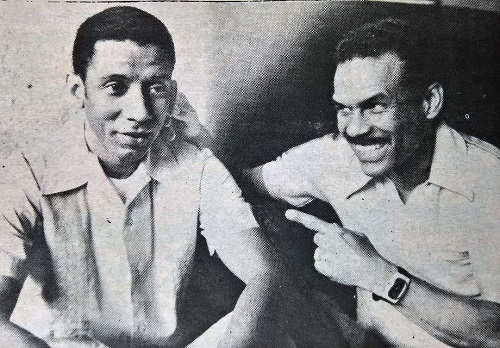
Javier Vazquez y Elpidio Vazquez

His formal connection with Sonora Matancera began in 1952, when he started subbing for his father. It didn’t take long for his talent to secure him the permanent spot, becoming the rhythmic backbone of the institution until the end of his career.

Legacy and Musical Contributions: Beyond the Double Bass

Elpidio Vázquez was not just a performer; he was a sonic architect. His ability to maintain a precise tumbao allowed Sonora Matancera to preserve that unmistakable harmonic signature that captivated the entire continent.

In addition to his technical prowess, Elpidio shined as a composer, contributing tracks that became essential hits:
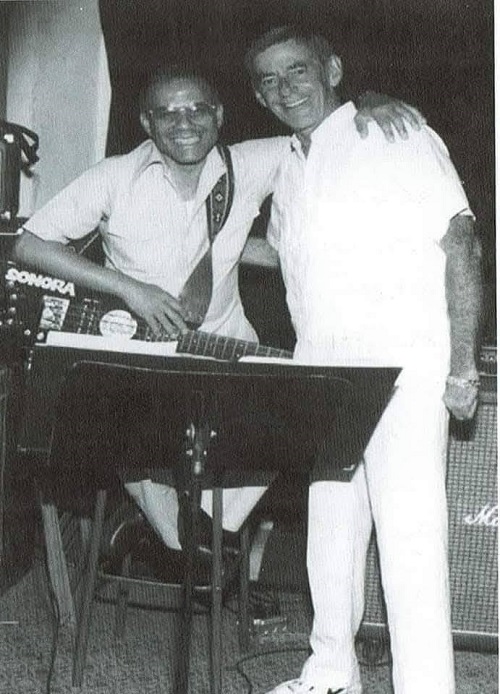
Elpidio y Vazquez y Celio Gonzalez
  • “Le dio con la sartén”: A guaracha recorded by the “Flaco de Oro” (The Golden Thin Man), Celio González, in late 1959.
  • “La negrita inteligente”: A gem performed by the Queen herself, Celia Cruz, in 1961.

His versatility led him to explore other musical horizons. He participated in the vibrant Cuban descarga (jam) sessions alongside Osvaldo “Chihuahua” Martínez and collaborated on historic recordings with giants of salsa and bolero, such as Ismael Rivera, Daniel Santos, Johnny Pacheco, Justo Betancourt, and Roberto Torres.

The Double Bass: Unlike many bassists of the salsa era who quickly transitioned to the Baby Bass or the electric bass, Elpidio is remembered for his mastery of the acoustic double bass, maintaining that organic, deep sonority of traditional, evolved Cuban son.

Recognition and Saying Goodbye to the Stage

One of the most memorable chapters of his career took place in 1989, during the 65th-anniversary celebration of Sonora Matancera. Organized by Gilda Mirós, Elpidio rocked world-renowned stages like Carnegie Hall and New York’s Central Park, reaffirming the band’s timeless relevance.
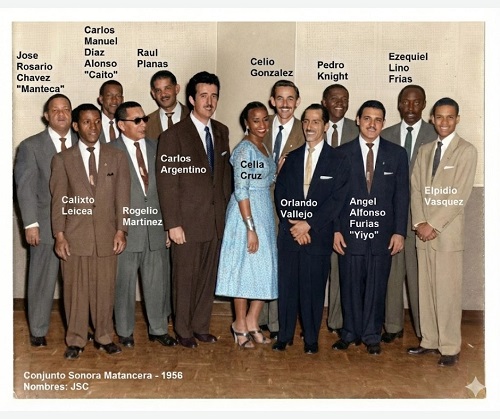
La Sonora Matancera en el año 1956

Career with Sonora Matancera

  • The Historic Handover: In 1952, Elpidio took on the responsibility of replacing his father on the double bass for Sonora Matancera. This was no small task, as he had to maintain the characteristic tumbao that had defined the group’s sound for decades.
  • Sonic Signature: He is credited with imprinting a robust harmonic stamp and a rhythmic stability that allowed Sonora to back the biggest stars of the era (Celia Cruz, Nelson Pinedo, Bienvenido Granda, etc.) with flawless precision.
  • Exile and Continuity: Like the rest of the group, he left Cuba in 1960, continuing his career abroad and participating in Sonora’s prolific New York era and their international tours.

A historical footnote: After the death of Rogelio Martínez, it is said that Elpidio was designated as the group’s musical director by public deed. However, in a gesture of humility and after decades of dedication, he preferred to retire in New Jersey, letting his brother Javier take the helm for the orchestra’s new era.
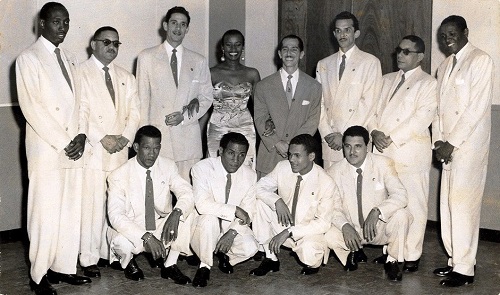
Sonora Mattancera
Sonora Mattancera

Today, the figure of Elpidio Vázquez remains a symbol of artistic fidelity and musical excellence the bridge between the tradition of “Bubú” and the modernity of New York salsa.

Also Read: La Sonora Matancera musical congregation of long trajectory and its sound quality, is one of the most popular in the Caribbean island “Cuba”

10th Festival Salsa Cubana

Europe / Germany / Munich

Circulo Events presents 10th Festival Salsa Cubana

Circulo Events presents 10th Festival Salsa Cubana
Munich - Germany / January 27th - 29th 2017

“In January 2017, Munich will be able to experience a high class weekend full of dance and music, again. Inspired by “Baila en Cuba”, the annual dance and music event in Havana (Cuba), we brought this festival to life. And moreover we want to import a part of the wonderful atmosphere of its big Cuban counterpart to Munich”…

Cuban atmosphere and total joy of life!

Let yourself get carried away and dive into the world of Salsa & Co.

“Salsa Cubana is more than a dance – it’s an attitude towards life! Who does not inevitably associate typical Cuban music, Cuban ambience and Son cubano (the most traditional of all Cuban dances) with these words?

Festival Salsa cubana stands for this very diversity. No matter if dancer, music lover or just fancier of the Caribbean atmosphere – you will get your money’s worth!

This year again with the Percussion Ensemble Live: Drums Secret”

http://www.festival-salsa-cubana.de/en.html

This winter’s music and dance event!

  • Top event for all dancers in and around Munich! • Salsa, Afro, Reggaeton and a lot more!
  • Great party with show acts!
  • Taster’s session Salsa Cubana
  • Rueda de Casino: Dancing Salsa with other couples in a circle. Nice combinations with the exchange of the dance partners provide pure fun!
  • Up to 50 workshops with the best in class instructors • For all dancers and future dancers a “must do”: authentic teaching with guest instructors! From beginner to masterclass!
  • Awesome and high class parties and show acts!

http://www.festival-salsa-cubana.de/en/the- festival.html

WORKSHOPS

WORKSHOPS - 10th Festival Salsa Cubana
WORKSHOPS – 10th Festival Salsa Cubana

Up to 70 lessons in 5 rooms. Be inspired by the best teachers and artists and enjoy a weekend very special cuban weekend!See the workshops schedule at:

http://www.festival-salsacubana.de/en/festival/kursplan.html

Workshop Topics and ContentFestival Salsa Cubana offers up to 70 high class workshops and training lessons!

  • Salsa elegante / Musicalidad en la Salsa
  • Salsa figuras / Nudos en la Salsa
  • Salsa con rumba – Rumba en la Salsa!
  • Salsa con pasitos / Pasitos en la salsa • Rueda de Casino
  • Son cubano
  • Manstyling
  • Ladystyling
  • Salsa suelta
  • Cubaton/Reggaeton
  • Afro – Movimientos afrocubanos • Afro-cuban Dances (ACD)
  • Makuta / Palo
  • Guaguancó – black soul of the Cuban Salsa!
  • Columbia
  • Bantu
  • Shangó
  • Ογά
  • Kizomba
  • Semba

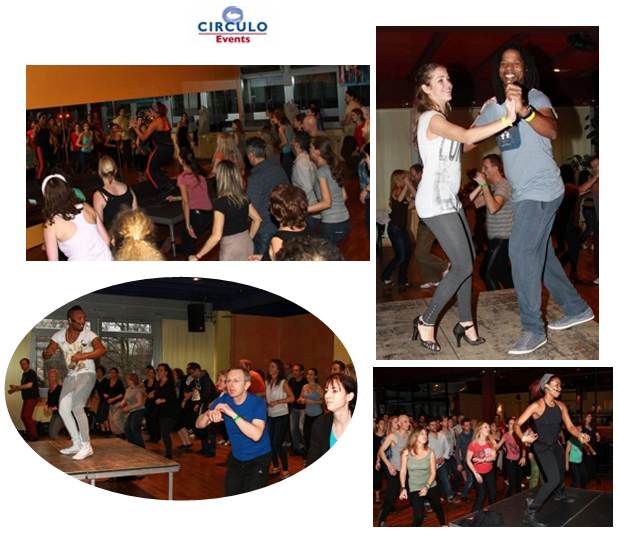
Photo 1: 10th Festival Salsa Cubana

Photo 2: 10th Festival Salsa Cubana

See the information about workshop content and topics at: http://www.festival-salsa-cubana.de/en/festival/kursinhalte.html

Location

The festival is located in the rooms of the CIRCULO. CIRCULO is the biggest dance shoool for Salsa Cubana in Munich. Additionally, as a salsateca, with legendary salsa parties and a lot of Salsa live concerts, CIRCULO is an integral part of Munich’s salsa scene. CIRCULO’s address is Rosenheimerstrasse 139, in Munich. With its seven, highly equipped rooms, it is predestined for the realization of all classes and parties that are part of the Festival Salsa Cubana.http://www.festival-salsa-cubana.de/en/location.html

See more information at:

  • http://www.circulo.de/
    http://www.festival-salsa-cubana.de/en.html
    https://www.facebook.com/events/1121917691219559/

Los Van Van Orchestra

European Union

Los Van Van Orchestra. The Flavor in Zurich

1960-1969

Vital to the success and peculiar sound of Van Van, was the career of its director Juan Formell. Before founding it on December 4, 1969, ventures as bassist in several groups, from the Orchestra of the Cuban Institute of Radio and Television, to several groups are and jazz, these multiple experiences conditioned their future.

Its passage by the Orquesta Reve marked a turning point in the search for the style I wanted to achieve. He tested his innovative spirit giving it some sound and format solutions.

It incorporates bass, organeta, electric guitar, violins and flute replaced the five by the system. The vocal work was replaced by mounting quartets own voices. This experiment served as a starting point for, once created the VAN VAN, their contagious rhythm patterns sit in popular dance music.

Los Van Van Orchestra

1970-1979

Earlier this decade important critics and connoisseurs of the subject could notice the successful future of the Van Van. Juan Formell maintaining the contributions made to the previous group (The Revé), enriched the set with other instruments such as percussion, that an exceptional and unique way, were weaving what would define as the SONGO.

This mode of address are elements taken from jazz and rock, it consists of a rhythmic design combined with a figurative percussion piano and bass. Then creating harmonic and melodic different timbres.

José Luis Quintana (Changuito), Raul Cardenas (the Yulo), Cesar Pedroso (Pupi), Fernando Leyva, Jesus Linares, Orlando Canto, José Luis Cortés (The rough), Julio Noronha, Gerardo Miró, William Sanchez, Jose Luis Martinez Miguel angel Rasalps (Lele), together with its director, explored all possible ways and then came to this rhythm that becomes the basis of its sound.

It is for these years that begin recording their first five albums and debuted on several international stages.

1980-1989

This represents an important period for the orchestra. They break their own style incorporating the bronco and cracking of the trombones sound. Turn introduced synthesizers, keyboards with multiple sound possibilities. The use of synthesized saxophone and electric violins draw much attention at the time. In addition to his recording material have new triumphs as: Báilalo eh! Ah! (1982), Come, see and move (1984), Havana itself (1985), Eso que anda (1986), We the Caribbean (1987), wanting (1988) is over, and finally Songo gives way to a new stage.

Van Van Orchestra collash 1980-1989

A hallmark of the group is the use of the picaresque, irony, manners in their songs. Becoming a sort of chronicle of the Cuban reality, his writings offer a social circumstance, themes that recreate the jocular of everyday life.

In these years his music transcends borders and Latin American venues like the Empire in London, England, Austria, Switzerland and Germany are witnessing a pace capable of passing the most skeptical of the dancers.

1990-1999

90 start with a tour around the country celebrating its 20 years, evolving into the contemporary timbre and go in search of more complex and preciosistas as the father expressions.

Their latest results leave no doubt that reach maturity. Pieces like “Give him cadela” and “That’s my problem” Disco Sugar (1993), “I am normal, natural” and “What a surprise” the latest in vivo (1994), “Let anger” and “De equals “Ay ampárame god (1995) and” This puts you bad head “and” Take her to your vacilón “Te puts the bad head (1997) are some of the records that predate came VAN VAN ( 1999) containing “Van Van arrived Permit”, “the black is cooking” and “Temba tomb timba”, works that have ravaged mercilessly in the context of salsa, for their contagious rhythm, joy and good taste. All retain the seal of the group even when using other orchestral resources.

Los Van Van Orchestra collash 1990-1999

2000

Thanks a work of more than thirty years with the Grammy award with Disco Van Van is here or Llego Van Van. Award for best salsa album recorded by soloists, duos and vocal and Instrumentalist groups. (It’s worth noting that the award received is not the Anglophone Grammy Latino) Such award is the result of its continued making magic for over thirty years.

Los Van Van Orchestra in concierto

Clubs Tour in Tennessee

North America / USA / Tenessee

Do you want to party in Tennessee? Then, this tour is made for you! It is the perfect opportunity to meet people and dance Latin tropical music all night in the best clubs of the moment.

The Rumba Room

The tour starts with The Rumba Room nightclub every Friday and Saturday from 9:30 pm to 3:00 am. Remember to bring your ID and try the mojitos. Guys first shot is on the house.

The Rumba Room is the first salsa nightclub located in downtown Memphis! Their mission is to introduce Latin culture to the Greater Mid-South through food, music, and dance.

The Rumba Room specializes in Latin food, tropical mixed drinks and live entertainment. They feature salsa lessons, live salsa bands, dance competitions, shows, concerts, after- parties, and reservations for private events.

THE RUMBA ROOM

There’s a swanky bar area, a colorful mural, a menu full of Cuban and Latin-inspired appetizers, and a large dance area that pulses with a salsa beat. Primarily a DJ-driven dance club, the Rumba Room offers salsa music every Friday and Saturday night, with an occasional live band featured. Free salsa lessons are offered both evenings starting at 09:30pm. On Friday nights starts at 07:00 p.m until salsa time. The minimum age is 21; entry for salsa nights is 18 and up; ladies over 21 are free until 10 p.m., and there’s a $10 cover for all others.

The Rumba Room
The Rumba Room

Website: www.memphisrumba.com Address: 303 S. Main Street, Memphis, TN 38103, USA.

FRIDAY

Bachateame Fridays

  • 9:30pm – 3:00am Free bachata lesson at 9:30pm. Ladies free all night. Guys first shot is on the house.
  • The Rumba Room - Bachateame Fridays
    The Rumba Room – Bachateame Fridays

SATURDAY

Salsa Saturdays

  • 9:30pm – 3:00am Free lesson at 9:30pm. Best DJs in town.
  • The Rumba Room - Salsa Saturdays
    The Rumba Room – Salsa Saturdays

Salsa Puerto Rican And Latin Cuisine

Explore the limits of your Nashville experience by dancing in this most important nightclub in Tennessee! You will know why Salsa is the queen of the parties and you will meet many people with the same passion as you for this tropical rhythm.

In January of 2013 Salsa Puerto Rican and Latin Cuisine opened its doors to the public in the heart of this city, bringing new flavors to Music City and adding the Caribbean taste to the great cultural variety of Nashville, with Latin dancing evenings and special events.

Salsa Puerto Rican And Latin Cuisine

FREE Salsa Dancing Lessons are presented every Tuesday, starting at 8pm. Aquí el instructor Francisco te ensenara los pasos básico de la Salsa, si eres principiante, para que aprendas a bailar esta música con facilidad y adoptes este ritmo rápidamente. La meta de Francisco es que tú aprendas a bailar Salsa. Es sencillo, te divertirás y socializarás a la vez. No Cover. Free Parking.

  • Address: 818 Palmer Pl, Nashville, TN 37203, USA.
  • Website: www.salsarestaurantnashville.com

404 BAR & GRILL

No queuing, no stress, just one of the best experiences of your life in the nightlife town of Nashville. EVERY SATURDAY, Sexy Salsa Dancing, 08:00pm. As always, on the main floor, we will be playing the hottest mix of Salsa and Bachata with just a splash of Cha Cha, Merengue, and Cumbia. It’s a mix that is proven to keep you on the dance floor all night long, so join for great music, people, and a cool time!

Joining for a very special Havana Nights! They will also be opening up the back patio for Kizomba by Moonlight, a separate area strictly kizomba and some afrohouse. (Weather permitting)

404 Bar & Grill
404 Bar & Grill

It has a small parking lot, but there is also plenty of free parking in the lot across the street.

  • Ticket: 8,00 USD/per person
  • 9:00pm Salsa Lesson
  • 10:00pm-01:00am Open Dancing
  • $8 cover charge
  • Website: www.404barandgrill.net
  • Address: 404 Elysian Fields Rd, Nashville, TN 37211, USA.

IBIZA NIGHT CLUB

And finally, take a walk on Ibiza Nightclub. A Club with 11 years of experience and great reputation in South Nashville. Their owners are Colombians and they put 100% Latin music: Salsa, Merengue, Bachata, Reguetón, etc…, punctured by Djs. They have a great musical repertoire that walks you from the great old successes until the present time. You dance all night and the safety is best.

Ibiza Night Club
Ibiza Night Club
  • Parking: In the street or beach
  • Open: Thursdays – Saturdays: 21:00-03:00 & Sundays: 22:00-03:00
  • Address: 15128 Old Hickory Blvd, Nashville, TN 37211, USA.
  • Facebook: Ibiza Night club

Rey Ruíz visits the Salsa Museum and talks about his prolific career

The Salsa Museum is celebrating the tremendous and valuable support of Cuban singer-songwriter Reinerio Ruíz Santiago, known to the world as Rey Ruíz, whom I had the pleasure to interview along with El Rubio Boris on our show Salsamania.

The artist was not only in our facilities to tell us important details about his career and share some of his time with us, but he also granted us the honor of gifting us one of the suits he used to wear for several of his most important shows. We are very grateful for the distinction he has made with us, and now let us mention some of the most important topics we discussed with the salsa singer.

Rey posing for the camera
Cuban singer-songwriter Rey Ruiz posing for the camera

Rey’s life in Cuba

Rey sang since his childhood to the point that his parents said he sang songs without words and started imitating the sounds his father taught him. He began to study music in sixth grade in his native Cuba, but his interest went far beyond simple childlike curiosity, so his parents enrolled him at the music conservatory in Havana so that he could have a more formal training. 

Soon after, he appeared on Cuban television and sang for the orchestras “La Riverside” and “Los Dadas” at the then Habana Hilton.

Rey’s beginnings in music

Among many interesting things, Rey told us that he left his country at the age of 24, turned 25 in Miami, and arrived in Puerto Rico at 26. Shortly after arriving in Miami, he took a salsa demo to a record label, since Puerto Rican salsa was experiencing a long boom at the time, so they advised him to choose that genre. 

Then, he got down to work with his producer Toby Villarini, recently deceased, to create the album.

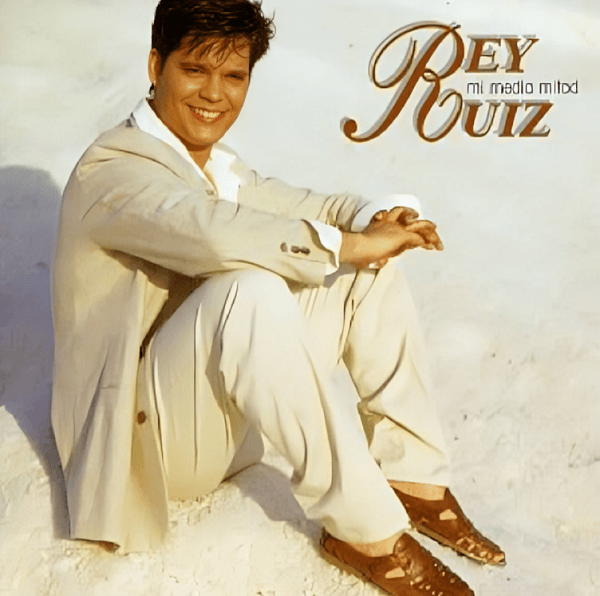
Mi Media Mitad
Cover of the album ”Mi Media Mitad’’

Following the success obtained, the record label asked him to move to Puerto Rico, where they got him an apartment for about six months so he could make a life there and focus on his music. He then began working with musical director Guillermo Calderón’s orchestra, until Rey felt confident enough to say that the orchestra was his about a year later.

In 1994, he released his second album ”Mi Media Mitad” and the cover includes a very young Rey on a mountain of salt posing for the camera in a beige outfit and with a big smile on his face. The arrangements were made by Ernesto Sánchez, who also passed away recently at a very young age.

What Ray Ruiz is doing now

When El Rubio and I wanted to know what Rey is doing now, the singer confessed that he had chosen a career in which work never ends and that always makes him seek progress. “You’re always looking for ways to produce something new and show people what you’re doing at the recording and show production level.” In fact, the day after the interview, on February 14, he had a concert to celebrate Valentine’s Day at the Lehman Center for the Performing Arts in New York City. 

Johnny and Rey
Johnny Cruz and Rey Ruiz at the Salsa Museum

He told us that it was the first time he performed as a solo artist at this venue, something he wanted to do for many years and finally got it. Never before has he performed in New York without the company of another artist or orchestra, so he was very happy and excited about living that new experience in his career.

Opinions about the Salsa Museum

Rey Ruiz had to leave soon to make final arrangements for the next day’s show, but we could not let him go without asking for his honest opinion about the Salsa Museum. When we asked him, he told us that he loved the place and that seeing what the museum exhibits was like seeing history. The history of salsa and all the artists who have been part of that genre. He also said that being here was like going to school because, even he who has been in this business for so many years, he has learned a lot from what he has seen.

He concluded by saying goodbye and thanking us for the opportunity to share with us and be on our platform.

Johnny Cruz ISM


Read also: Caoba Y Bambú, Tito Rivera’s first discographic production

  • « Go to Previous Page
  • Page 1
  • Page 2
  • Page 3
  • Page 4
  • Interim pages omitted …
  • Page 38
  • Go to Next Page »

International Salsa Magazine (ISM) is a monthly publication about Salsa activities around the world, that has been publishing since 2007. It is a world network of volunteers coordinated by ISM Magazine. We are working to strengthen all the events by working together.