• Skip to primary navigation
  • Skip to main content

International Salsa Magazine

  • HOME
  • Previous editions
    • 2026
      • ISM / March 2026
      • ISM / February 2026
      • ISM / January 2026
    • 2025
      • ISM / December 2025
      • ISM / November 2025
      • ISM / October 2025
      • ISM / September 2025
      • ISM / August 2025
      • ISM / July 2025
      • ISM / June 2025
      • ISM / May2025
      • ISM / April 2025
      • ISM / March 2025
      • ISM / February 2025
      • ISM / January 2025
    • 2024
      • ISM / December 2024
      • ISM / November 2024
      • ISM / October 2024
      • ISM / September 2024
      • ISM / August 2024
      • ISM / July 2024
      • ISM / June 2024
      • ISM / May 2024
      • ISM / April 2024
      • ISM / March 2024
      • ISM / February 2024
      • ISM / January 2024
    • 2023
      • ISM / December 2023
      • ISM / November 2023
      • ISM / October 2023
      • ISM – September 2023
      • ISM – August 2023
      • ISM July 2023
      • ISM Edition June 2023
      • ISM – May 2023
      • ISM April 2023
      • ISM March 2023
      • ISM February 2023
      • ISM January 2023
    • 2022
      • ISM December 2022
      • ISM November 2022
      • ISM October 2022
      • ISM September 2022
      • ISM August 2022
      • ISM July 2022
      • ISM June 2022
      • ISM May 2022
      • ISM February 2022
      • ISM January 2022
    • 2021
      • ISM December 2021
      • ISM November 2021
      • ISM October – 2021
      • ISM September 2021
      • ISM August 2021
      • ISM July 2021
      • ISM May 2021
      • ISM April 2021
      • ISM June 2021
      • ISM March 2021
      • ISM February 2021
      • ISM January 2021
    • 2020
      • ISM December 2020
      • ISM November 2020
      • ISM October 2020
      • ISM September 2020
      • ISM August 2020
      • ISM July 2020
      • ISM June 2020
      • ISM May 2020
      • ISM April 2020
      • ISM March 2020
      • ISM February 2020
      • ISM January 2020
    • 2019
      • ISM December 2019
      • ISM November 2019
      • ISM October 2019
      • ISM Septembre 2019
      • ISM August 2019
      • ISM July 2019
      • ISM June 2019
  • Spanish
  • Download Salsa App
    • Android
    • Apple

Search Results for: Havana

Carlos “Patato” Valdés one of the best percussionists in the history of Latin Jazz.

On November 4, 1926 in the Los Sitios neighborhood of Havana, Cuba, Carlos “Patato” Valdés was born. Known as Patato, he is, quite simply, one of the best percussionists in the history of music.

Patato was born into a very santera and very musical family, his father was a tres player of Los Apaches, the port germ of two illustrious sonera groups: the Sexteto Habanero and the Sexteto Nacional.

He learned to play the tres and the botijuela before turning to percussion, first on the cajones and finally on the congas.

He was an extraordinary percussionist of outstanding participation with the “Conjunto Kubavana”, “La Sonora Matancera”, “Conjunto Casino” and the “Orquesta de Tito Puente”, among other groups, both Son and Latin Jazz.

Formed in rumbero gatherings and carnival groups, Valdés became a professional in the early forties, after trying his luck as a boxer and dancer.
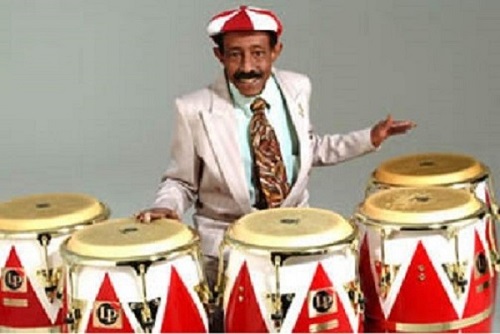
Carlos “Patato” Valdés uno de los mejores percusionistas en la historia del Jazz Latino

He played with Conjunto Kubavana, La Sonora Matancera and El Conjunto Casino. He accumulated nicknames: Zumbito (for his performances at the Zombie Club), Pingüino (for a dance he did on television) and Patato (for his small size), and in those days, dedicating oneself to music in Cuba guaranteed hardship. Besides, Patato wanted to experiment and that was not possible playing for dancers or tourists.

In 1954, he emigrated to New York, like his leather friends: Cándido Camero, Armando Peraza, Mongo Santamaría and the pioneer Chano Pozo (murdered there in 1948).

He immediately began working with Tito Puente. His first recording in the United States was the album Afro-cuban, by trumpeter Kenny Dorham, which opened with the intoxicating Afrodisia. Those were good times for tropical music.

He was the first percussionist to improvise “Solos” with 3 or more Congas at the same time. In addition, he was the creator of the “Congas Afinables”, instruments on which he would ride to dance making them sound rhythmically.

Patato Valdes was an excellent musician, an unforgettable person. Nervous and diminutive, he spoke with an impenetrable Cuban accent; he dressed elegantly, hiding the necklaces and bracelets of Changó and other “orishas”. He looked like a living caricature, but when he hit the percussions he became a divine creature: he had power, spectacularity, sense of melody.

Those skills made him an ambassador of Afro-Cuban rhythms in the jazz world, although he will also go down in history for his extraordinary rumba recordings.

In 1956, Patato appeared in the film Y Dios creó a la mujer, teaching the dances of his homeland to Brigitte Bardot. A great moment, although an implacable Guillermo Cabrera Infante criticized the actress’s movements: “she seems to commit suicide by dancing a cross between mambo and chachachá, a really toxic cross between mambo and chachachá”.

A flexible musician, Valdés sounded as comfortable playing with Machito’s big band as with Herbie Mann’s group. However, he felt indebted to the “rumba de solar” and in 1968 he recorded a revolutionary album with his friend Eugenio Arango, alias Totico.

The exuberant Patato & Totico had genuine Havana flavor, but enriched the basic percussion instrumentation with Cachao’s contrabass and Arsenio Rodriguez’s tres.Patato expanded the creative possibilities for percussionists by playing with three or more congas.

He also made their lives easier by developing a tunable conga: fed up with the traditional method (heating the leather over fire), he installed a metal hoop and keys for tensioning.
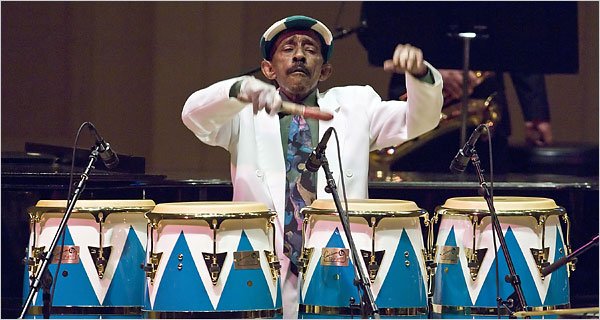
Carlos "Patato" Valdés
Carlos “Patato” Valdés

The LP company mass-produced his model, which was to become the standard for conga players. To promote it, he formed the Latin Percussion Jazz Ensemble with Tito Puente, Jorge Dalto and Alfredo de la Fé, among others, an orchestra that would end up becoming Puente’s big band in the early 80s.

It was during this period with Dalto that the album we have chosen for today began to take shape. It was titled “Patato, Master Piece” and it synthesizes all of Patato’s genius.

“Masterpiece” is an album that travels first class through tango, jazz, descarga, guaguancó and bolero, always in a masterful way and with a luxury crew made up of names like Jorge Dalto, Artie Webb, Michel Camilo, Jerry and Andy González, Nicky Marrero, Ignacio Berroa, Joe Santiago, Néstor Sánchez, Vicentino Valdés, and Sabú Martínez, among others.

The Art of Flavor.

Unfortunately Dalto had already passed away when in 1993 the project was released by the venerable German label Messidor, the same label that had already financed some impressive sessions of Patato with Mario Bauzá or Bebo Valdés, with whom he would later record the famous El Arte del Sabor.
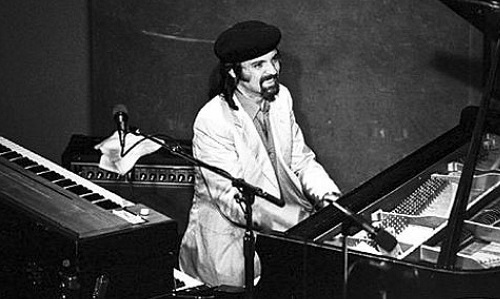
Jorge Dalton
Jorge Dalton

In fact, the great Argentine pianist had to be replaced for the last recording sessions that were made 6 years ago since his illness was too advanced, but he left us some incredible arrangements that were kept in the great majority of the themes.

Dalto left us in 1987 when he was only 39 years old. His replacement was nothing more and nothing less than a very young Michel Camilo.formed by 9 cuts among which we especially want to highlight the huge versions of Cute and Nica’s Dream, Masterpiece is an essential album for all lovers of Latin-jazz with capital letters and that is why we wanted to share it on a day as special as today.

Already recognized as a legend, Patato became more visible in the last 25 years: he had his own band, Afrojazzia, although The Conga Kings, with Cándido and Giovanni Hidalgo, turned out to be more popular.
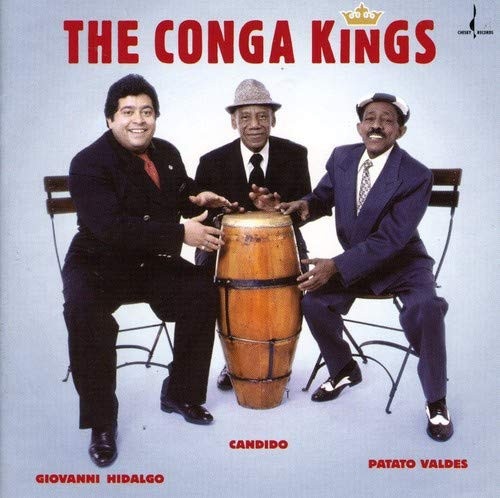
The Conga Kings Giovanni Hidalgo, Cándido Camero y Patato Valdez

He even made his way onto the modern dance floors, with a remix of San Francisco tiene su propio son. Just as he was returning from playing in California with the Conga Kings, his breathing began to fail.

The plane he was on had to make an emergency landing in Ohio to admit him to a hospital. The 81-year-old percussionist, a heavy smoker, was on his way to his beloved New York, but he would never get there. According to his relatives, he held out until December 4, the day of Santa Barbara, the Afro-Cuban equivalent of Changó, when the cables and tubes that kept him alive were removed.

Valdés died in Cleveland, USA, on December 4, 2007.

Fuentes: http://www.herencialatina.com/Patato/Patato_Valdes.htm

Imágenes: Martin Cohen de Congahead.com
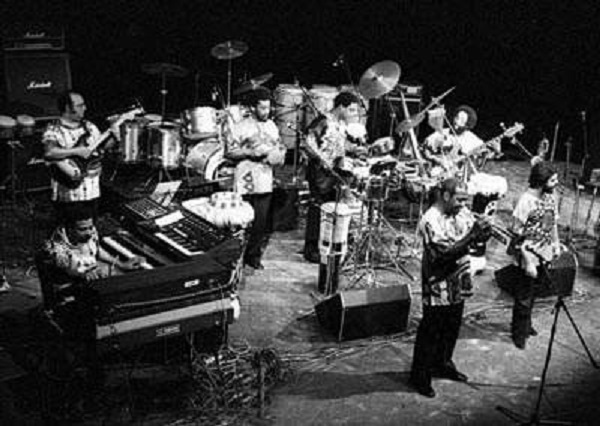
Carlos “Patato” Valdés

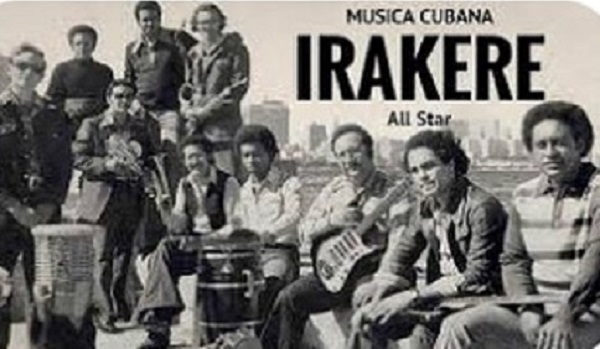
You can read: Irakere was a Cuban group that developed an important work in Cuban popular music and Latin Jazz under the direction of Chucho Valdés

Irakere was a Cuban group that developed an important work in Cuban popular music and Latin Jazz under the direction of Chucho Valdés

Irakere was formed as such in 1967 but had begun to work much earlier; in that year precisely they went to a selection called in Havana to organize with the best musicians of that time the Cuban Orchestra of Modern Music; already in 1972 they were approaching to what they currently produce deciding in 1973 to call it Irakere, which in Yoruba language means Vegetation and that is how, starting from its name, they work based on the Afro-Cuban musical roots.

In this way, through the combination, mixture and interrelation of classical, impressionism, jazz, rock and various compositional techniques they managed to walk through all styles such as dance music, concert, traditional and popular Cuban music.

Thanks to the impulse of pianist Chucho Valdés, the Cuban group Irakere took off in 1973, nourished by Thelonious Monk’s bop.

Founders

Grupo Irakere: It was founded in Havana in 1973, by:

Jesús Valdés(Chucho) composer, director and pianist;

Paquito D’Rivera (Paquito), alto and tenor saxophone, flute and clarinet;

Carlos Averhoff, tenor saxophone, soprano, flute and bass clarinet;

Jorge Varona, trumpet, trombone and percussion;

Carlos del Puerto, bass, bass guitar and tuba;

Carlos Emilio Morales, guitar;

Bernardo García, drums and batá drums;

Jorge Alfonso, batá drums;

Enrique Plá, drums;

Carlos Barbón, güiro, chekeré and tambourine; and

Oscar Valdés, singer, tumbadora (conga), batá drums and bongo.

Irakere, fue un grupo cubano que desarrolló un importante trabajo en la música popular cubana y el Jazz Latino

On the founding of Irakere, Chucho Valdés expressed:

“For us the group always existed, it was present at all times; it was like something pending. At the beginning it had no name, it was just an idea we were working on: to use Cuban folkloric percussion in dance music, and to look for different timbres with a common characteristic: “ours”.

Then Oscar Valdés came up with the idea of combining the not easy and little known batá drum with the tumbadora, güiro and cowbell and so, step by step we arrived at the current group…”.

About Irakere’s first stage, the musicologist Leonardo Acosta points out: “one of the successes of Irakere had been not to try to invent and identify itself with a “new rhythm”, according to the old guidelines of advertising so much used from the forties to the sixties.

The slogan about the “new rhythm” was until recently the “open sesame” on which the musicians counted to become famous overnight, and by that way sometimes quite commercial results were achieved.

Apart from the fact that no “new rhythm” is so new, they all come from the alteration or amalgamation of pre-existing rhythms.

Irakere’s only alchemy comes from the spontaneous creativity of its members. Since there is no commercial endeavor, laboratory practices are unnecessary, and the group can perform a contradanza, a danzón, a son montuno or a cha cha chá without fear of seeming “old-fashioned”, since they are in fact playing something else at the same time. And without setting themselves the goal, nor having to invent a “pega” name, almost by an imperative of the material they are working on, new rhythmic combinations are emerging, to the point that Irakere’s rhythm is unmistakable among Cuban listeners or dancers.

Grupo cubano Irakere

Certainly, and in spite of their triumphs in international jazz festivals, Irakere is not a jazz group. But these successes are not gratuitous either, because as we have seen, they have formidable musicians with great experience in the jazz field, especially in the aspect of improvisation, the great discovery of jazz and perhaps its greatest contribution to the music of the 20th century.

“Paquito D’Rivera: Irakere was born against the will of the Cuban authorities”.

When talking about Cuban music, the name of one of the most emblematic groups in the country’s musical history comes to mind, Irakere, which in Yoruba language means vegetation, jungle.

Irakere became the seed that would germinate a lush forest of rhythms and sounds, a school through which many of the great stars of Cuban music have paraded.

Founded more than four decades ago, this legendary band has been a pioneer of Afro-Cuban jazz and the initiator of the musical revolution in the seventies.

Gracias al impulso del pianista Chucho Valdés, el grupo cubano Irakere levantó vuelo en 1973

Irakere emerged at a time when, due to political demands on the island, music and culture were treated as an instrument of revolutionary identification and jazz was branded as imperialist music.

It was at this time, in the late sixties and early seventies, that a group of great musicians founded a band whose main goal was to enrich Cuban popular dance music with Latin jazz as essential elements.

Under the direction of the outstanding pianist Jesús “Chucho” Valdés, excellent musicians came together in search of a different sonority, based on the use of Afro-Cuban folkloric percussion together with the renewed timbres of the popular rhythms of the time that fused jazz, rock, funk and popular Cuban rhythms such as son, mambo or cha cha chá, together with classical or concert music.

“Irakere was the Musical Generation of change”.

Sources:

https://www.ecured.cu/Irakere

Leonardo Acosta

Radio Televisión Marti

Mirna Guerra

Irakere

You can read: Israel Kantor was an excellent bassist, arranger and composer who achieved great popularity in Cuba for his vocal technique and original “Sonear” style

3 Reasons To Stay In Paris This Season

We show you the different places to visit with authentic Salsera fun

Paris (France) has always been a popular tourist destination with musical tradition, and the rhythm of Salsa is no exception. There are plenty of places to dance if you like this Afro-Caribbean tune, but what makes it especially appealing this season? We show you three reasons why you will want to spend more time in the capital of this beautiful Western European country during December 2022.

Latin New Year’s At Cabaret Sauvage

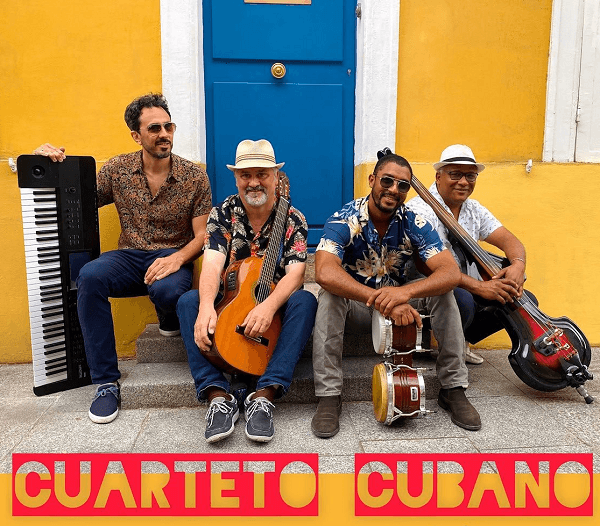
Cuarteto Cubano has toured France’s stages for four years

The biggest Latin New Year’s Eve in Paris will be at Cabaret Sauvage with the live presentation of Cuarteto Cubano playing the great classics of Cuban and French music that will make you travel through old Havana and give French hits an air of partying and joy. The Cuban Quartet www.cuartetocubano.com has toured the stages of France since 2018, always with the same goal of “making people dance and smile”.

Then, the wild mixes by DJ El Dany, DJ Hot Rod, and DJ El Cuco will begin with the best of Salsa, Merengue, Bachata, Guaracha, Reggaeton, Dembow, Funk, and Cumbia together with the magical voice of Cuban singer Denis Mora.

All of this is accompanied by the show of the Latin Cabaret and intelligent Pitshow that will take you into the idyllic atmospheres of the Latin American carnivals with the performances of the divine Cuban dancers Roima and Diane Alcalá who form the duo “Las Mulatas del Sabor” that will transport you to a paradise of the burning party of Havana, Cuba.

Cabaret Sauvage will open its magical doors on Saturday, December 31st, 2022, from 10 PM to 5:30 AM on Sunday, January 1st, 2023. Tickets are already available for reservation, but if you want to purchase them at the box office, they will have a value of €50 all night. Cabaret Sauvage is located at 59, bd MacDonald – Parc de La Villette – Paris 19 M° Porte de La Villette.

¡Vamos Pa’ La Rumba!

Cabaret Sauvage starts Christmas on December 3rd

If you like to dance Salsa, then you can go to Cabaret Sauvage https://www.cabaretsauvage.com/agenda throughout this season. Yes, we continue with the Latin party in this magnificent place.

The ingredients are assembled on the table to make La Rumba an unmissable event for all lovers of Latin music and Latin American culture in a unique party experience in Paris.

The Salsa Concerts will present the best current and classic pieces from the orchestras that make life in the capital of this country, renowned for its wines and haute couture brands.

On the stage of Cabaret Sauvage on Saturday, December 3rd, you will satisfy your Salsa cravings with Salsa Caleña classes with Calisabor instructors, a performance by the Jim López & La Nueva Edición orchestra, and tonight will be enlivened by the Show Super Heroes of Salsa and the mixes of DJ El Dany, DJ Dominicano, and DJ El Cuco de la Salsa.

On the second Saturday of the month (December 10th), the Rumba continues with the second edition of El Perreo de Navidad: Mega Reggaeton Party with the opening of its doors at midnight. Here, you will find until 6 AM the best selection of this urban rhythm that has guaranteed its permanence at the top of popularity among the youngest in France and the world. The DJs present will be DJ El Dany, DJ Ortega Dogo, DJ Lina, and DJ Driver MC. The ticket price at the box office is €20.

France’s  Clubs

Le Balajo nightclub
Le Balajo nightclub

This season you can have fun in Paris with its landscapes, winter climate, cultural offer, sophisticated gastronomy, and above all in the various clubs that offer a palette of Afro-Caribbean colors and Salsa enjoyment, among which the Le Balajo nightclub stands out https://www.balajo.fr/ open since 1936. Every Tuesday there are Salsa and Bachata classes for beginners and intermediate level dancers followed by a Latin party hosted by DJ Karim until 2 AM.

The Parisian Restaurant/ Bar/ Nightclub Pachamama https://www.pachamama-paris.com/index.php/en/home-alt-2/ is located at 46-48 rue du Faubourg Saint Antoine, 75012, in a historic building from the 19th century designed by Gustave Eiffel in the neo-vintage colonial style. It has three levels and is open from Thursday to Saturday from 8 PM to 5 AM with resident DJs lighting up the dance floor (Ground Floor) with harmonious mixes between Latin Music, Soul, Pop, and Deep House.

Finally we bring you the Bar/ Restaurant/ Club La Pachanga https://www.lapachanga.fr/, a place of reference for lovers of Salsa, it is located near the Eiffel Tower at 8, rue vandamme 75014.

At La Pachanga you can attend two-hour Cuban Salsa and Puerto Rican Salsa dance classes from Tuesday to Thursday from 7:30 PM to 9:30 PM, continuing with social dancing and a DJ set until 2 AM. On Saturdays La Pachanga closes its doors at 5 AM.

You Can Also Read: Where To Go Dancing Salsa In Paris?

Sweden Will Live November With Swing

3 events that will warm your days during winter

Going out on winter nights in Sweden (the fifth coldest country in Europe) can be a truly daunting task. Temperatures during the eleventh month of the year are around 5 °C during the day and 1 °C at night. Most people yearn for the scarce two hours of radiant sunshine a day, however, we bring you three Latin music events that accompany the beautiful northern lights that cover the sky during this date and that will make you vibrate and get warm during these days of lively freezing.

The Showtime with some of the best dancers in the world will start at 9 PM

We begin with a weekend full of Salsa parties with Hot Salsa Weekend, the largest Salsa and Bachata festival in Sweden will be celebrating its twentieth edition from November 4th to November 6th.

This festival will bring together dancers from the US, Italy, Mexico, Norway, and Stockholm. It will also feature inspiring workshops in Salsa L.A Style, Salsa On2, Salsa Cubana, and Bachata, impressive shows, and nightly parties accompanied by seven international and national DJs.

The workshops will take place on Friday from 4:30 PM at SSD Studio (Adolf Fredriks Kyrkogata 13, Stockholm) while on Saturday (11 AM) and Sunday (11 AM) they will take place in the beautiful building located in the heart of Stockholm Norra Latin (Drottninggatan 71b).

The themed parties (White Gala Party, Glitter & Glamor Gala Party, and Farewell Party) will take place from 10 PM to 5 AM on three dance floors (Salsa, Salsa Cubana & Bachata) at the Norra Latin a short distance from the central station Stockholm. Tickets for the three days of learning and fun are worth 2000 SEK. So get ready to be a part of Sweden’s biggest weekend party, Hot Salsa Weekend 2022. https://hotsalsaweekend.com/

Max Alton (Drums/Timbal), Raciel Garcés (Vocals), Rapson Espinosa (Vocals), Jonás Pomo (Piano), Homero Álvarez (Guitar), Aleks Brdarski (Bass), Rickard Valdés (Congas), Rickard Lindgren (Trumpet), Nikolas Viisanen (Trombone)

We continue with the Cuban band La Liga Habanera. This group formed 15 years ago in Havana (Cuba) has toured Europe and mainly has infected every corner of Sweden with its music. Its melody lies in a mixture of modern Cuban Timba with elements of traditional Son, Salsa, Soul, and Funk. The voices create a nuance that adorns the brass section that, together with the bass and the piano, recreates the Son montuno. The Havana League will be presented at the emblematic Fasching Club https://www.fasching.se (Kungsgatan 63, 111 22 Stockholm) on Friday, November 11th at 9 PM, and tickets are now available for 260 SEK (standing places). The age limit is 18 years.

The beginners’ course in Salsa starts at 4:30 PM

We end with the free dance party with Swing, Salsa, and Tango at the Merjeriet cultural center https://g.page/Mejeriet (Stora Södergatan 64, 222 23 Lund). This great event on Sunday, November 27th will now be free and open to all those over 13 years. The dance rhythms will range from an intense Salsa set through Lindy Hop (Swing) to Tango with surprises on stage and on the dance floor with three different DJs.

The evening will begin with workshops for each rhythm and three rounds of courses so you can try the three dance styles and choose the one you prefer. The party will be from 5:30 PM until 7 PM while the courses for beginners will be gradually every hour starting at 2:30 PM.

The Dance Party with Swing, Salsa, and Tango is organized in collaboration with the extensive program of new and recurring events in the center of Lund known as vinterlund https://vinterlund.se/

The main objective of this vast program is to fill the inhabitants of this city in the province of Scania with joy through cultural life during the dark winter months.

Directory of Salsa Clubs in North America

Here you will find the directories of Clubs with Salsa events in North America.

CALIFORNIA

Alameda

Yoshi’s Trilliant Studios LLC Salsa With Juan
Just Dance Ballroom Zanzi Oakland La Peña Cultural Center
The UC Theatre Taube Family Music Hall

Contra Costa

Vinnie’s Bar & Grill Sizzling Latin Dance Studio Rhythm and Flo
Allegro Ballroom and club Gaucho Brazilian Steakhouse & Nightclub Retro Junkie
Tip Top Ballroom

Los Angeles

The Granada LA  Steven’s Steak House   Room 2 Dance
ArtBox Studio By CrystalArts En Pointe Dance & Fitness PCH Club
The Mayan El Floridita Restaurant ViBE – dance studio & creative space
Ballet Hollywood MNR Dance Factory Soho Dance LA
VLounge Bar And Night Club La Clave Salsa Club Quiet Cannon
Black ‘N Blue The Victorian Ocean Towers
State Social House
Marin Salinas Seaside
Sausalito Seahorse Dance Arts Jeanne Robinson Deja Blue Soul Food Restaurant & Club

Orange

Sevilla Nightclub of Costa Mesa Club One Studio OC Salsa with Esteban Conde
Spectrum Dance Center LINE-X of South Coast

Riverside Craft Brewing Company

Sacramento Cantina Azteca Eagles Hall Aerie 9FOE

San Bernardino

The Canyon Salsa Cumbia & Bachata RhythmAddict Dance Studio Cosmos Taverna

San Diego

McCann Dance Sevilla Nightclub of San Diego
Tango Del Rey Queen Bee’s Art and Cultural Center

San Francisco

El Valenciano The Cigar Bar & Grill Space 550
Roccapulco Verdi Club Rockwell
DecoDance Bar Kimbara 1015 Folsom
Skylark Bar Bar Fluxus

San Mateo Motion Arts Center

Santa Barbara Leslie Sack Dance Studio

Santa Clara

Charley’s Bar LG Alberto’s Night Club Cascal Restaurant
Stone Stew 1 San Jose Center for the Performing Arts Aura Kitchen + Bar
Dance Boulevard Starlite Ballroom Studio M Ballroom Club

Ventura Studio M Ballroom Club

New York

The Bronx Havana Café

New York

Copacabana Nightclub Gonzalez y Gonzalez Birdland Jazz Club

Queens Nieves Latin Dance Studio

Chicago Vintage Bar

Las Vegas, Nevada Hard Rock Café

Worcester County Palladium

Fairfield County La Vista Bistro

Pinellas County Acropolis Greek Taverna – St. Petersburg

Houston Texas Sable Gate Winery

  • « Go to Previous Page
  • Page 1
  • Interim pages omitted …
  • Page 23
  • Page 24
  • Page 25
  • Page 26
  • Page 27
  • Interim pages omitted …
  • Page 38
  • Go to Next Page »

International Salsa Magazine (ISM) is a monthly publication about Salsa activities around the world, that has been publishing since 2007. It is a world network of volunteers coordinated by ISM Magazine. We are working to strengthen all the events by working together.