• Skip to primary navigation
  • Skip to main content

International Salsa Magazine

  • HOME
  • Previous editions
    • 2026
      • ISM / March 2026
      • ISM / February 2026
      • ISM / January 2026
    • 2025
      • ISM / December 2025
      • ISM / November 2025
      • ISM / October 2025
      • ISM / September 2025
      • ISM / August 2025
      • ISM / July 2025
      • ISM / June 2025
      • ISM / May2025
      • ISM / April 2025
      • ISM / March 2025
      • ISM / February 2025
      • ISM / January 2025
    • 2024
      • ISM / December 2024
      • ISM / November 2024
      • ISM / October 2024
      • ISM / September 2024
      • ISM / August 2024
      • ISM / July 2024
      • ISM / June 2024
      • ISM / May 2024
      • ISM / April 2024
      • ISM / March 2024
      • ISM / February 2024
      • ISM / January 2024
    • 2023
      • ISM / December 2023
      • ISM / November 2023
      • ISM / October 2023
      • ISM – September 2023
      • ISM – August 2023
      • ISM July 2023
      • ISM Edition June 2023
      • ISM – May 2023
      • ISM April 2023
      • ISM March 2023
      • ISM February 2023
      • ISM January 2023
    • 2022
      • ISM December 2022
      • ISM November 2022
      • ISM October 2022
      • ISM September 2022
      • ISM August 2022
      • ISM July 2022
      • ISM June 2022
      • ISM May 2022
      • ISM February 2022
      • ISM January 2022
    • 2021
      • ISM December 2021
      • ISM November 2021
      • ISM October – 2021
      • ISM September 2021
      • ISM August 2021
      • ISM July 2021
      • ISM May 2021
      • ISM April 2021
      • ISM June 2021
      • ISM March 2021
      • ISM February 2021
      • ISM January 2021
    • 2020
      • ISM December 2020
      • ISM November 2020
      • ISM October 2020
      • ISM September 2020
      • ISM August 2020
      • ISM July 2020
      • ISM June 2020
      • ISM May 2020
      • ISM April 2020
      • ISM March 2020
      • ISM February 2020
      • ISM January 2020
    • 2019
      • ISM December 2019
      • ISM November 2019
      • ISM October 2019
      • ISM Septembre 2019
      • ISM August 2019
      • ISM July 2019
      • ISM June 2019
  • Spanish
  • Download Salsa App
    • Android
    • Apple

Search Results for: Havana

Cache Orchestra in United Kingdom

Europe / United Kingdom / Holanda

Cache Orchestra in United Kingdom. The Best Mix for Salsa!

Cache Orchestra it’s known for its Salsa sound and is considered to be one of the finest bands of its kind in the UK. Their passion for the music is infectious and gets both Salsa enthusiasts and those new to the sensuous Latin American rhythms straight on the dance floor.

Cache Orchestra has thrilled audiences throughout the UK and internationally, playing authentic Latino rhythms that come straight from the streets of San Juan and Havana. The band is a lively and accessible mix that brings a vibrant spark to all the different rhythms that make up Salsa – mambo, rumba, chacha, bomba, merengue, bolero.

Cache Orchestra in United Kingdom- Integrans

Cache Orchestra has thrilled audiences throughout the UK and internationally, playing authentic Latino rhythms that come straight from the streets of San Juan and Havana. The band is a lively and accessible mix that brings a vibrant spark to all the different rhythms that make up Salsa – mambo, rumba, cha-cha, bomba, merengue, bolero.

“UK’s very own Buena Vista band….absolutely tremendous…. music like that and we’re all feeling terrific. If you don’t start to move to this there is no hope for you. Extraordinary music.” Sean Rafferty, BBC Radio 3

“Most of the band members hail from Santiago De Cuba, the birthplace of Cuban son…. and have the effortless musicianship that comes from being to the manor born…..a set infused with rhythm changes and infectious melodies and grooves. ….the best band playing Cuban son.” Jane Cornwell, Songlines (Homegrown)

“Band were great, intoxicating music and a great crowd – all of which made for a fabulous vibe. Thank you!”Cecile Jackson “Please pass on my thanks to the band who were brilliant at our event and were just what was needed to get the party going. My only regret was that I did not have more time to enjoy the band myself!” Anne Davis, Asylum Productions

“….the acoustic septet with the real sound of Santiago De Cuba.” Simon Broughton, CD of the week, Evening Standard.

“A big thank you to the band for an exceptional wedding party. Everyone was very impressed with the sound and impeccable musicianship and is still talking about the band.” Jessica Garland Communications & Events Manager .

Cache Orchestra in United Kingdom

“Thank you to you, the band and dancers for a fantastic evening at the Chanel Conference. Everyone had a great time and they were still talking about it when they left the next day!” Emma Stoker – World Event Management Ltd

“I just wanted to let you know how much we enjoyed the band on Saturday. The music was superb and everyone was so complimentary about the group. So, thank you for helping to make our day so memorable.” Linda Marks – Harrison Parrott Ltd, Project Management.

“Please pass on my thanks to the whole band who were great on Friday and really got everyone going in the Vodafone Village. I look forward to working with you again.” Dee Goldstraw – Business Development Manager, Liz Hobbs Group

For tours and more stay tuned with us and check their website

https://www.facebook.com/OrquestaCach%C3%A9-320982197917226/

“An Argentinian with a taste of Cuba,” Rogelio Martínez told Carlos Argentino, the King of La Pachanga

On June 23, 1929, in Buenos Aires, Argentina, Israel Vitenszteim Vurm, better known in the music world as “Carlos Argentino,” was born. He was an excellent Argentinian tropical music singer who was part of the Cuban band Sonora Matancera. He was also known in musical slang as “The King of Pachanga.”

Born in the La Paternal neighborhood of Buenos Aires, his parents were in the textile manufacturing business, and from an early age, he showed an entrepreneurial spirit. Despite belonging to a socially and economically well-off family, he worked as a street vendor, selling newspapers, magazines, and even coffee on trams and at racetracks.

Un argentino con sabor a Cuba, dijo Rogelio Martínez a Carlos Argentino, el Rey de La Pachanga Imagen Discogs
An Argentinian with a Cuban flavor, said Rogelio Martínez to Carlos Argentino, the King of La Pachanga Discogs Image

Ignoring his parents’ wishes for his professional future, he ventured into singing under the pseudonym Carlos Torres. In 1946, at just seventeen years old, he traveled to Brazil with an unknown orchestra. Problems quickly arose, as he had to ask for the intervention of the Argentinian ambassador to return to Buenos Aires, with the intention of studying medicine at Otto Krausse University, as his parents wished.

While there, he completed his mandatory military service, and upon finishing it, he returned to the music scene, definitively abandoning his professional career. He joined the orchestras of Luis Rolero and Raúl Marengo, performing in Peru and Chile. He then traveled to Colombia with Efraín Orozco’s orchestra. Something very curious happened on that trip: there was a Colombian singer named Carlos Torres, and to differentiate himself, he added his patronymic, becoming Carlos Torres Argentino, before artistically consecrating himself as Carlos Argentino.

Carloa Argentino También fue conocido en el argot musical como «El Rey de la Pachanga».

In 1952, he also traveled to Havana, where he worked with the orchestras of Felo Bergaza, Arnoldo Nalli, and Julio Cuevas. He studied singing with the Italian professor Eduardo Bonessi.

In June 1954, he visited Bogotá, and in December, he traveled to Medellín. In February 1955, Sonora Matancera (from Cuba) went on tour in Colombia. They met at the Teatro Colombia in Bogotá. According to Carlos himself, Rogelio Martínez, director of Sonora, asked him if he was from Cuba, and Carlos replied, “I am Argentinian!” Martínez retorted, “Well, you’re an Argentinian with a taste of Cuba; you have to get on the vehicle!” “What vehicle?” Carlos asked. “Ours!” Don Rogelio replied and proposed that he travel to Havana, to which he agreed.

After several months of rehearsal, on August 17, 1955, they recorded their first 78 RPM record. His first single was the bolero-tango “Una canción” (by Aníbal Troilo), and on the other side, the guaracha “Las muchachas caraqueñas” (by Billo Frómeta). Later, he would record other songs such as: “Ave María Lola,” “El solterito,” “Cuartito 22,” “¡Ay, cosita linda!”, “Un poquito de cariño,” “Tu rica boca,” “En el mar,” “Boquita golosa,” “El novio celoso,” “Apambichao,” “Lamento náufrago,” and “La mamá y la hija,” among others; in addition to the boleros: “Alma Vendida,” “No pidas más perdón,” “El amor no existe,” “Cruel indiferencia,” and “Cuando tú seas mía.”

El Rey de la Pachanga

With Sonora Matancera, he traveled throughout Latin America and remained with the group until November 1959. In 1960, he left Cuba and traveled to Mexico. After this, in 1961, he returned to Argentina, where he was received with joy. He settled back in his native neighborhood of La Paternal, in Buenos Aires.

As a distinguished horseman, he became the owner of several thoroughbred horses, which he named after his songs: “Pachangueando,” “La Espumita,” and “El Manotón.” Apart from horse racing, Carlos was a football fan and supported his neighborhood club: Argentinos Juniors (the club where Diego Armando Maradona was born), and Boca Juniors, to whom he dedicated “Pachanga de Boca,” celebrating the title the “Xeneize” team won in 1962, and the album Somos la mitad más uno, celebrating Boca’s Metropolitano championship with Maradona in 1981. He also dedicated songs to other teams, for example, “Equipo de José” (the Racing champions of 1966-67); the one he recorded when Estudiantes de la Plata became world champions in 1968, under the technical direction of Osvaldo Zubeldía; or Chacarita Juniors (Metropolitano champions of 1969), among others.

Throughout his life, he resided – in addition to Cuba – in Colombia, Mexico, and Venezuela, where in 1978 he performed as a singer with the orchestra Los Solistas de Renato Capriles, and participated in their first two LPs, but he always returned to his Argentina.

On a memorable afternoon, July 1, 1989, he reunited with Sonora Matancera in Central Park, New York, to celebrate the group’s 65th anniversary with his old recording companions. On that occasion, he shared the stage with Celia Cruz, Daniel Santos, Vicentico Valdés, Welfo Gutiérrez, Leo Marini, and Nelson Pinedo, among other figures.

Argentino El Rey de la Pachanga con La Sonora Matancera

It was the last time he would be seen in performances, as on June 20, 1991, he died of a myocardial infarction while watching a horse race in Buenos Aires. May he rest in peace and eternal glory!

Also Read: Argentina y sus géneros musicales de origen y los tropicales

By:

Dj. Augusto Felibertt

Los Mejores Salseros del Mundo

Asia / July 2025

Apocalypse Now 2025Guia Fu 2025

Karina Bernales present

July 2025

FESTIVALS

United Arab Emirates
UNITED ARAB EMIRATES
Latin Crazy Tribe 2025

Latin Crazy Tribe Dance Festival

Jul 02 / 07 2025

Millennium Lakeview Hotel
Apt 814
Dubai, United Arab Emirates,
From AED 450

Calibrated maracasBill Martinez

Karina Bernales present

May 2025

FESTIVALS

Turkey circle flag
TURKEY
Vivafest Bodrum 2025

Vivafest Bodrum

May 07 / 14 2025

La Blanche Island Bodrum
Meşelik, Milas, Pina Yarimadasi
Bodrum, Turkey 48450

From € 100

Directory of Asian nightclubs

Hong Kong `circular flag

HONG KONG

Graffiti LKFGraffiti LKF
G/F, 17-18 Lan Kwai Fong, Central
Central, Hong Kong
Solar LKFSOLAR LKF
Central 2nd Floor, Ho Lee Commercial Building, 38-44 D’Aguilqr Street, Lang Kwai Fong Central
HKI Hong Kong
Sole Mio RestaurantSole Mio
Upper Ground Floor, 51 Elgin Street, Soho
Central Hong Kong, Hong Kong

ISRAEL

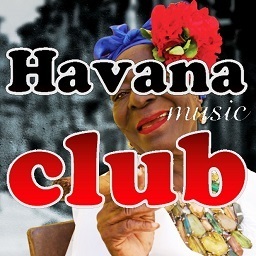
Havana Music Club
Havana Music Club
Yigal Alon St 126
Tel Aviv-Yafo, Israel
+972 3-562-3456

Japan circular flag
JAPAN

Egoland
Egoland Bar Akihabara
Chiyoda City, Kanda Sakumacho, 4 7-3 2F
Tokyo, Japan
Bar MirageBar Mirage
5F VORT Roppongi Briller, 3-14-14 Roppongi, Minato-ku
Tokyo 106-0032, Japan
+03-5860-6946
FiestaFiesta Latin Spot Bar
3F, 1 Chome-14-6 Kabukicho, Shinjuku City
Tokyo 160-0021, Japan
+81 90-1086-2878
El Cafe Latino TokyoEl Cafe Latino

3 Chome-15-24 Roppongi, Minato City
Tokyo 106-0032, Japan
+81 3-3402-8989

Latin Club Leon
Latin Club Leon
5-17-6 B1 Shinjuku, Shinjuku-ku
Tokyo 160-0022, Japan

La Tropi Azabu
La Tropi Azabu
3F Roppongi Azelea Bldf. 1-3-6 Nishi-Azabu, Minato-ku
Tokyo1060031, Japan

Thailand circular flag
THAILAND

bAFROS lOUNGE
Bafros
Sugar Club Complex Sukhumvit Soi 11
Bangkok 10110, Thailand
+66 63 039 8700

Havana Social Cocktail Bar
Havana Social
1/1 Sukhumvit Rd. Soi 11
Bangkok, Thailand
+66 2 821 6111

Vietnam circle flag
VIETNAM
Apocalypse Now Vietnam
Apocalypse Now Sai Gon
2F Thi Sach
Ho Chi Minh City, Vietnam 70000
+84 799 741 261


La Habanera Vietnam
La Habanera
Basement 81 xuân diệu Tay Ho
Hanoi 100000, Vietnam
+84 35 320 7220

La Pachanga Saigon
La Pachanga Club Saigon
3rd Floor, 39A Co Bac Street, Cau Ong Lanh Ward, District 1
Ho Chi Minh City 700000, Vietnam
+84 93 855 79 21

Ilhe Habana

Latin America / Colombia / Bogota

Ilhe Habana. Little Havana in Colombia

Ilhe Habana
Ilhe Habana

The Macarena Sector in Bogotá – Colombia offers us a great variety of gastronomic spaces, a reference sector for international food, for this reason we could not help but bring us closer to the best Cuban food space in the city, the great Ilhe Habana, a space of great tradition that takes you to enjoy a themed plaza of old Havana.

Ilhe Habana - inside
Ilhe Habana – inside
Ilhe Habana - inside - 2
Ilhe Habana – inside
– 2

From Sunday to Sunday from 12:00 to 4:00 pm, it opens its doors to a particular base of high caliber typical Cuban foods, we can get a great gourmet line, it is easy to get dishes such as old clothes, black beans, Moorish rice and Christians, yucca with mojo, habanero mincemeat, habanero shrimp, sea bass, squid rings, among others that delight your palate, arrival night from Wednesday to Saturday from 6:30 p.m. to 10:00 p.m.

Ilhe Habana - Cymbals
Ilhe Habana – Cymbals

It offers us a space decorated with groups and singers of the music of the island, letting the enjoyment roll until 12:00 am on Fridays and Saturdays to enjoy boleros, sones, danzones and even guarachas of this Latin American musical icon.

Ilhe Habana - live music
Ilhe Habana – live music
Ilhe Habana - live music - 2
Ilhe Habana – live music – 2

Ilhe refers to the word house or land according to the Yoruba language, something well defined with the Afro-Cuban culture, for this reason Ilhe Habana seeks a concept of old Havana, with a cozy space with brightly colored walls, wooden furniture and a house facade taken of the best Cuban roots.

Ilhe Habana - the kitchen
Ilhe Habana – the kitchen

During our visit we were able to talk with… the owner and cause of this gastronomic fever, he allowed us to enjoy the house specialty, the much-followed Roast Pork, although we noted that the fried cow was highly requested, as was the pork escalope. Located near the city center, on Carrera 3A, # 26B – 72, this Caribbean center offers us a space full of delicious dishes, visit www.ilhehabana.com and find out about a whole world of flavors, surely during your visit to Bogota you will not be able to forget going through this great restaurant.

Beatriz Márquez Castro, an exponent of romantic songs, “Feeling” and Bolero

Beatriz Márquez Castro is a singer, composer, and pianist, born on February 17, 1952, in Havana.

Beatriz Márquez Castro. Cantante, compositora y pianista

She is the daughter of the prestigious composer and performer René Márquez. She began her artistic career in 1968.

An exponent of romantic songs, “feeling,” and bolero, she gracefully delved into these genres, performing pieces by prolific authors such as René Márquez, Marta Valdés, Juanito Márquez, Silvio Rodríguez, and Germán Nogueira, among others.

Her mezzo-soprano range has enabled her popular “descents” to low tones, as well as her unexpected and no less appreciated “ascents” to much higher tessituras, without losing her defining style. This style is very appropriate for songs and boleros, genres in which she has remained one of Cuba’s leading cultivators.

She is known as “La Musicalísima.”

We are witnessing the realization of a long-cherished project with which the performer, pianist, and composer Beatriz Márquez settles a debt both on a family level and within Cuban discography.

After several years of searching through archives and old recordings, thanks to the collaboration of Cuban audiovisual producer Felipe Morfa, it was possible to prepare “Este encuentro” (Colibrí Productions, 2023). This album features a selection of known and unreleased pieces by singer and composer René Márquez Rojo (1914-1986), some of which were popularized in their time by internationally renowned figures like Antonio Machín or the Puerto Rican Daniel Santos, to name just two examples.

Beatriz Márquez Castro, an exponent of romantic songs, "Feeling" and Bolero
Beatriz Márquez Castro, an exponent of romantic songs, “Feeling” and Bolero

Given the influence René had on the career of his daughter and grandchildren, this is an album full of love and, above all, gratitude.

While he was best known for his songwriting, it is important to highlight the mark he left as a charanga singer.

Among others, we can mention his work with the charangas of violinist Cristóbal Paulín, Oscar Muñoz Bouffartique, and René Touzet.

He debuted at the Mil Diez radio station with the group led by Julio Cueva, to which he dedicated himself for ten years.

From the late 1930s onwards, the lyrics by the artist from Villa Clara quickly resonated with the public.

“El Inquieto Anacobero” recorded “El disgusto de bigote” with the Sonora Matancera in 1949 and also sang other Cuban songs such as “Soltando chispas,” “A San Lázaro,” and “El granito de maíz.”

René’s songs, among which “El quinqué” cannot be missed, speak of his natural ingenuity for storytelling.

Upon his death at 72, he left a musical legacy that has since been defended by his descendants.

In over five decades of her artistic life, Beatriz has become her father’s most faithful interpreter, having recorded songs for several albums such as “No respondo,” “Explícame por qué,” and the now famous “Espontáneamente,” initially included in the LP “Es soledad” (Egrem, 1970) and re-recorded on multiple occasions.

In “La Musicalísima”‘s discography, prior to this material, there were only two phonograms exclusively dedicated to the work of a single author: “Beatriz canta a Juan Almeida” (Egrem, 1978), followed forty years later by “Libre de pecado” (Colibrí Productions, 2018), a tribute to maestro Adolfo Guzmán, thus contributing to the rescue of the island’s musical memory.

“Este encuentro” spans traditional trova and moves from guaracha to son, without forgetting some of the composer’s most notable boleros.

It also allows us to appreciate René Márquez’s interpretive qualities by hearing his voice, rescued from old recordings.

The special participation of singers Evelyn García and Michel Maza, continuators of the family saga, is noteworthy.

Now, the 2015 National Music Award winner and the main architect of this phonogram invites us to explore René Márquez’s immense body of work, one that will by no means be forgotten, across eleven tracks._ Jaime Masó

Beatriz Márquez - Este Encuentro (2023)
Beatriz Márquez – Este Encuentro (2023)

Beatriz Márquez – Este Encuentro (2023)

Tracks:

  1. Este Encuentro
  2. La Vida Es Un Momento
  3. Muchachito Inocente
  4. No Respondo
  5. Nunca Habrá Distancia
  6. Soltando Chispas
  7. En El Cielo De Mi Vida
  8. Imposible Amor 09. Popurrit 10. Espontáneamente 11. Mi Placer

By:

L’Òstia Latin Jazz

Augusto Felibertt

Ecured

Instituto Cubano de la Música

Also Read: Enrique “Culebra” Iriarte, master of the piano and musical composition

  • « Go to Previous Page
  • Page 1
  • Interim pages omitted …
  • Page 4
  • Page 5
  • Page 6
  • Page 7
  • Page 8
  • Interim pages omitted …
  • Page 38
  • Go to Next Page »

International Salsa Magazine (ISM) is a monthly publication about Salsa activities around the world, that has been publishing since 2007. It is a world network of volunteers coordinated by ISM Magazine. We are working to strengthen all the events by working together.