
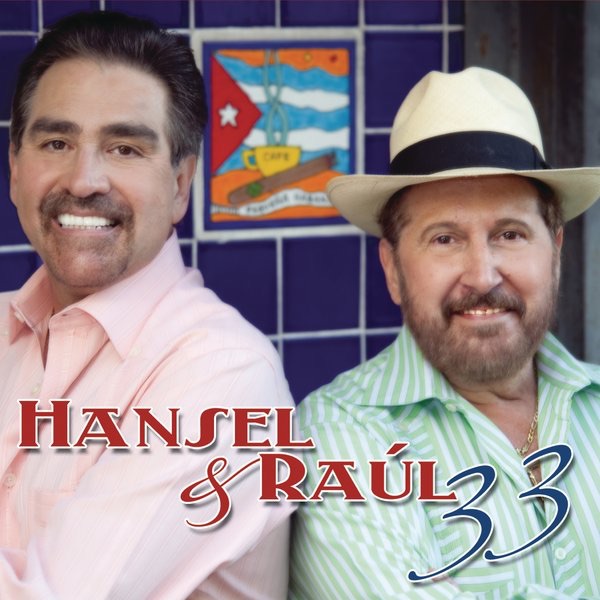
Hansel and Raúl is a charismatic and transgressive Charanga duo of the line of romantic lyrics of the time. They positioned the Cuban “Charanga” rhythm on the top of global popularity, a danceable genre that they imposed on each stage they were invited to and which incorporated their unique Caribbean essence.
This particular duo with three decades of trajectory was born in Miami in 1984 after breaking from the orchestra “Charanga 76”, where they were co-founder members and their main vocalists. With this New York orchestra, born in Brooklyn, they won international recognition and their first Grammy for the album “Encore” in 1978.

“Many of the artists who recorded with them during their stay in “Charanga 76” include the renowned pianist – for many years – by Héctor Lavoe, Gilbert Colón and the first Jewish-American flutist woman, Andrea Brachfeld.”
Very pleasant memories come to Hansel‘s mind during this interview, especially his first composition “Si no te encuentras tú” for Charanga 76, his voice took a turn and he showed nostalgia as well as pride in remembering it: “I don’t sit to write a song with a guitar or piano. The Inspiration comes to me alone, there is nothing personal”.
Each anecdote that he tells us is remembered as facts that have led to their musical maturity. Each fun fact has been defined as part of their career, such was the case of the great master, Israel “Cachao” López, who with all his musical wisdom and mastery of his instrument, the Double Bass, taught the rhythmic base to the orchestra. “The conguero and the timbalero even the güirero he taught them to play well. He was a teacher of all, including us who learned a lot from him. R.I.P, he was a glory of music”, Hansel said to us.
But that wasn’t all he told us about the legend of Cuban music, “Cachao”, who was the Double Bassist of the “Charanga 76” orchestra for 12 years, also he told us that every time they wen a tour the “Inventor of Mambo” had them buy a plane seat to his Double Bass, he sat it next to him and even put the belt on the string instrument, as is dictated by airline regulations.
The funniest thing would come later when the Double Bass received the same attention as each member of the orchestra. Amazing! The Double Bass also had its portion of food during each trip as each musician of the orchestra, and when the flight attendant brought it was when the offer was presented by each musician for that fabulous portion, although the end was always the same, the trumpeter won!
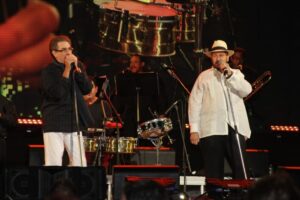
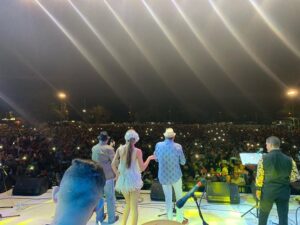
Each experience with Charanga 76 made them evolve in music and although with this orchestra they made themselves renowned professionally, as a duo they flew the fence. They have received multiple musical awards, their sympathetic lyrics, and in some cases, satirical or burlesque have won the applause, admiration, and respect of colleagues in the music industry and the general public on three continents: America, Europe, and Asia.
“The Jersey Boys” was their first youth musical group with only 5 members and although the musical instruments they played were the basics of Rock, their rhythmic concept was Cuban music.
“María Teresa y Danilo” was one of the compositions that brought many satisfactions to this duo. Nowadays it’s still preferred by the fanatical public of the genre. Many debates and speculations were made about this song, but here we tell you the true story. “María Teresa y Danilo” dates its beginnings to the 80s when soap operas like “Dallas” were in fashion.
Hansel came up with the idea of diving and writing on this topic. He magically composed the lyric during the plane trip with San Francisco – Miami trajectory and the rest we already know, multiple copies sold, and hundreds of awards granted to them for the feeling that caused this popular theme.
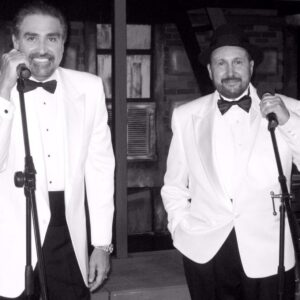
After such overwhelming success as a duo, Hansel and Raúl decides to separate in 1988. What was the reason?
Everyone wanted to make another kind of music. Each one followed a different path, for his part, Hansel recorded five solo albums including metals, more trumpets and trombones, and in three of these albums, he included neither the violin nor the flute, assuming almost completely the end of the Charanga rhythm in his music. However, a short time later he realized that this Caribbean rhythm was what identified with his audience and two years later he joined Raúl again to continue their successful career.
Hansel and Raúl has a total of 330 songs recorded and on December 31 this Charanga duo will have a performance in Los Angeles, CA and you may be lucky and they play your favorite single and if don’t you can ask for it. Classics such as “Soy”, “Se me nota”, “El ayer”, “María Teresa y Danilo”, “Kukucha kucha”, “Balancea mi corazón” (Yordano), “Ojos Verdes” (Alfredo Gutiérrez), among many others, will be present at this 1: 45min show.
Purchase your Tickets quickly before it´s sold out
We hope to see them there singing each of their hits and if you later travel to New York, don’t be surprised to see Hansel in that city because he and his family will be celebrating their daughter’s sweet sixteen, on the second day of January 2020.
Is Hansel a stage name?
Although some may consider that Hansel is a characteristic name of the children’s story “Hansel and Gretel”, this name comes from Germany and it’s of Jewish origin. Hansel Enrique is the name of this singer and songwriter “Charanguero” and he is named so to differentiate himself from Hansel Horacio (father). In Cuba, the tradition is maintained that every male child must bear the name of his grandfather; this is the reason for all his cousins are called Hansel.
More Details visiting:
Social Channel:
https://www.facebook.com/pg/HANSELYRAUL/

North America / Dominican Republic / Santo Domingo

On this occasion, the new song by Charlie Pérez was launched on the page salsaconsabor.net, who called it “Salsa Con Sabor”. This cut is for the enjoyment of the dancers and you can find it available on all digital platforms.
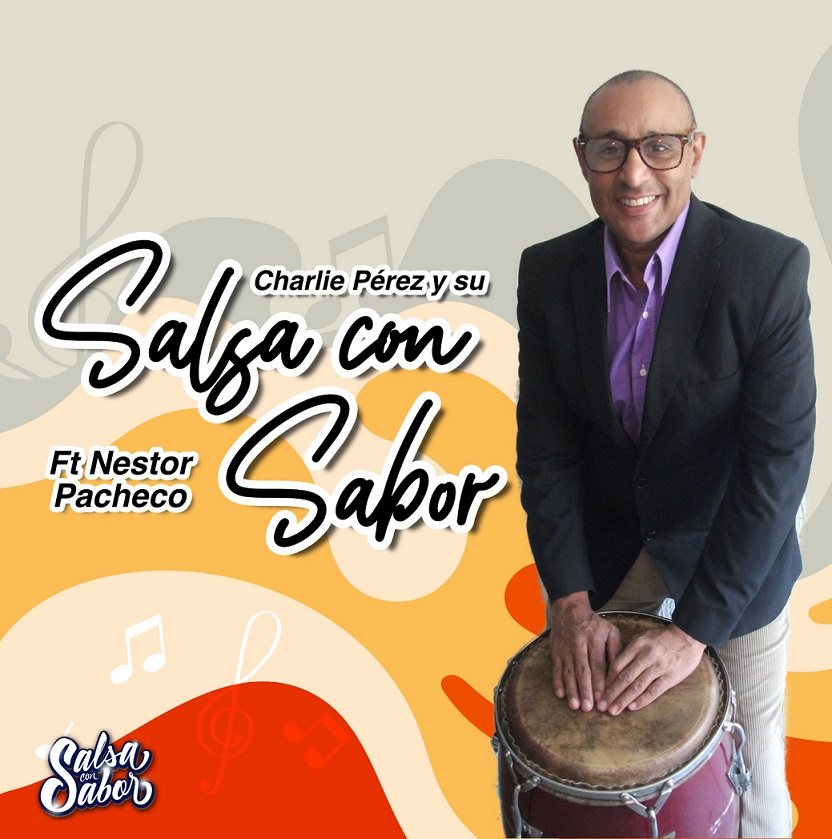
“Salsa Con Sabor” is a theme that emerged with the collaboration of:
Graphic design and edition: Kelvin Pérez
Co-Production, Executive Production, Marketing and Public Relations: Charlie Pérez and Wilendy Rosario
For more information:
Correo: [email protected]
Twitter: https://twitter.com/SalsaconSabor_
WebSite: https://salsaconsabor.net/
Facebook: https://www.facebook.com/salsaconsaborr/
Instagram: https://www.instagram.com/salsaconsabor_/
YouTube: https://www.youtube.com/channel/UCVusywkzJbH8soalxDfK0qA/featured
Latin America / Cuba / Havana
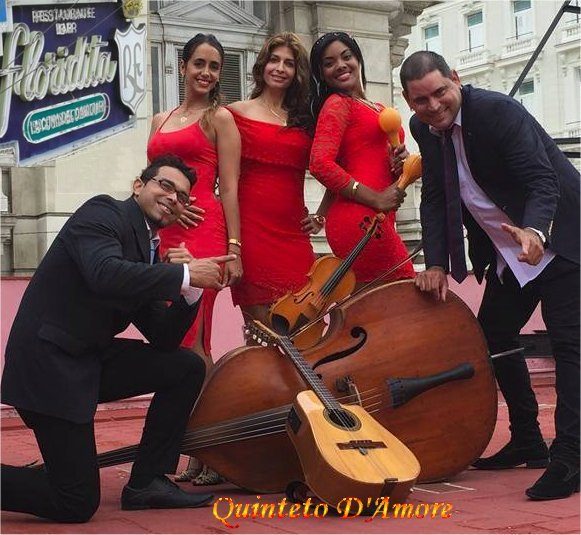
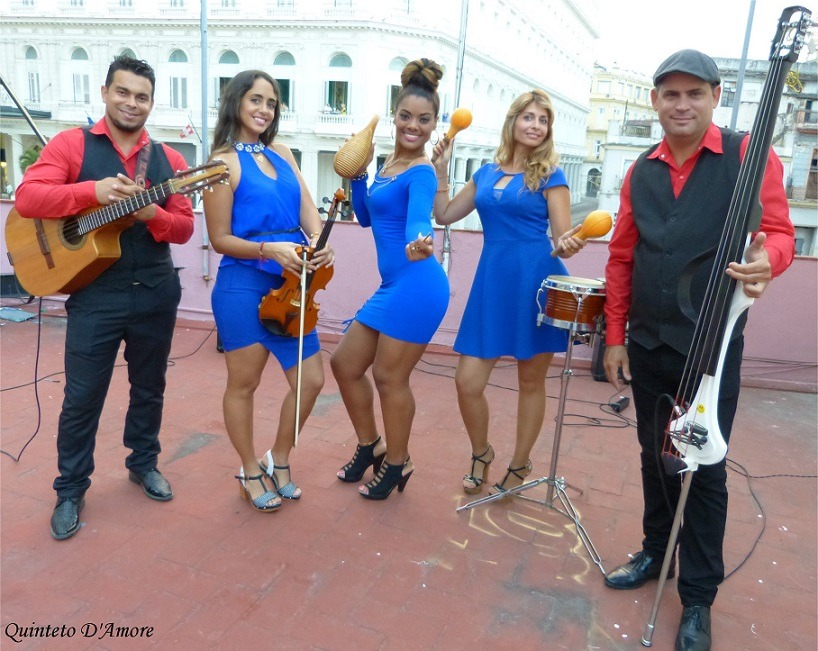
Quinteto D’Amore was founded in 2000 with an acoustic format, cultivating traditional Cuban music, although its repertoire includes international themes, it has made various national and international presentations.
In all these years different musicians have integrated the group, currently two years ago the group has been renewed and is composed of Bass, Tres, Violin, bongo, minor percussion and soloist.
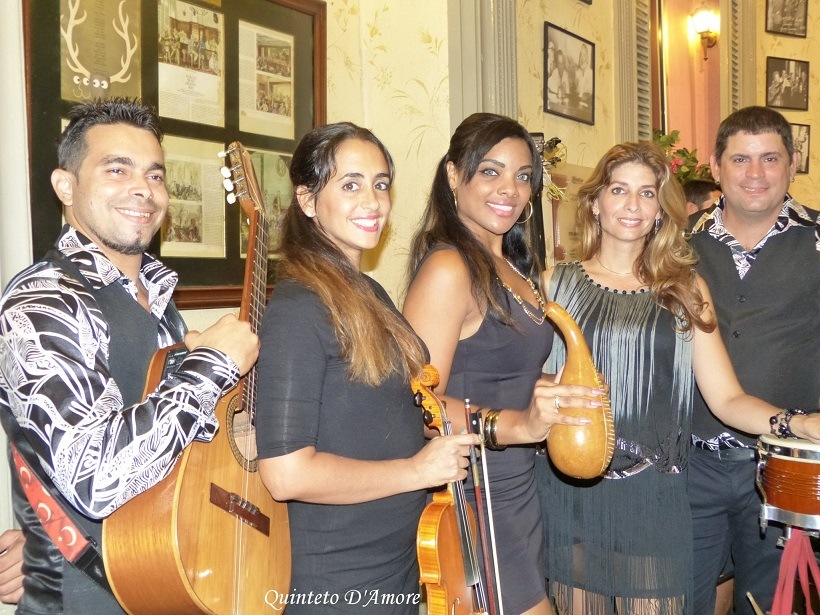
They are characterized by combining music, voices and choreography in some of their songs, filling those who can enjoy their show with joy and energy.
Yasney (violin): Graduated from the Higher Institute of Art in the specialty of Violin (ISA). Member of the UNEAC, he was a member of the National Symphony Orchestra of Cuba, has participated in record recordings of outstanding groups and soundtracks, as well as in the CD “Mi Querido Pablo II” with Pablo Milanés and his guests: Milton Nacimiento, Lucecita Benítez,
Fito Páez, Joaquín Sabina, Alberto Cortes, and in the concert offered at the National Auditorium of Mexico.
He has made numerous artistic tours and concerts with the band “Mambo Así”, the group “Sol y Arena”, “Piel Morena” among others in various countries such as: Moscow, Spain, Thailand, Hong Kong, Isla San Martín and Guadalupe, Italy. , Angola. yasney joined D’Amore in May 2014.

Yonel (three/four Cuban guitar) I started in music at the age of 6 when I learned to play the guitar since then I sang some songs and accompanied others like my brother. At the age of 7 I started at the art school of Sgt.
From Cuba to study the violin for more or less three years, over time I got to know other instruments such as the piano, percussion until I got to the bass with which I spent several years with the group Son Chévere de Matanzas.
Then I came to Havana and started playing the tres until I transformed it into a CUATRO, adding a couple more strings and it is the instrument I currently work with in Quinteto D’Amore.
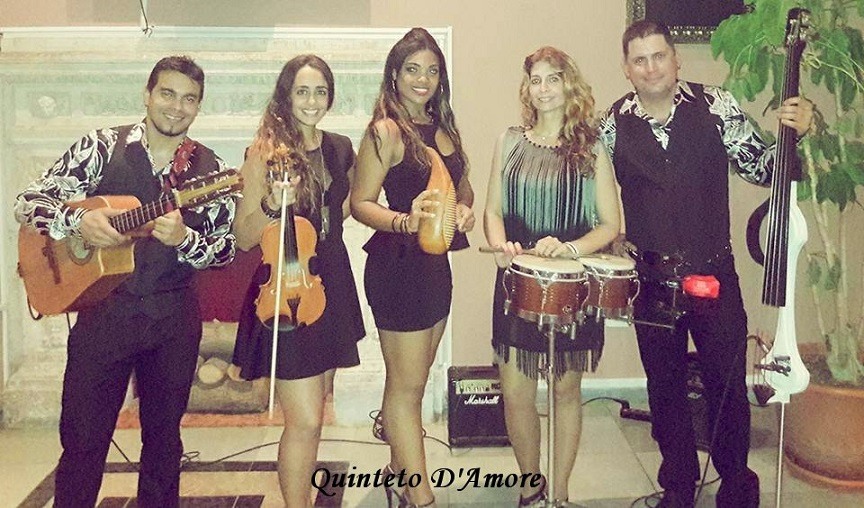
Evelyn (soloist), began studying music when she was little, receiving piano and music theory lessons at age 11, she received her first prize as a solo singer awarded by the pioneer organization, she also received dance classes at the National Ballet School of the Havana and contemporary dance workshops, integrating several dance companies and performing in the 2nd Tropicana Show. She is a mid-level micro operator graduate. I study at the school of art instructors.
As a singer, he began his professional career integrating several groups such as: Lady Salsa Mix, Cuban Salsa Orchestra, Las Canelas, Ketlman Ferrer and his orchestra, etc. She is currently the solo singer of the Quinteto D’Amore.
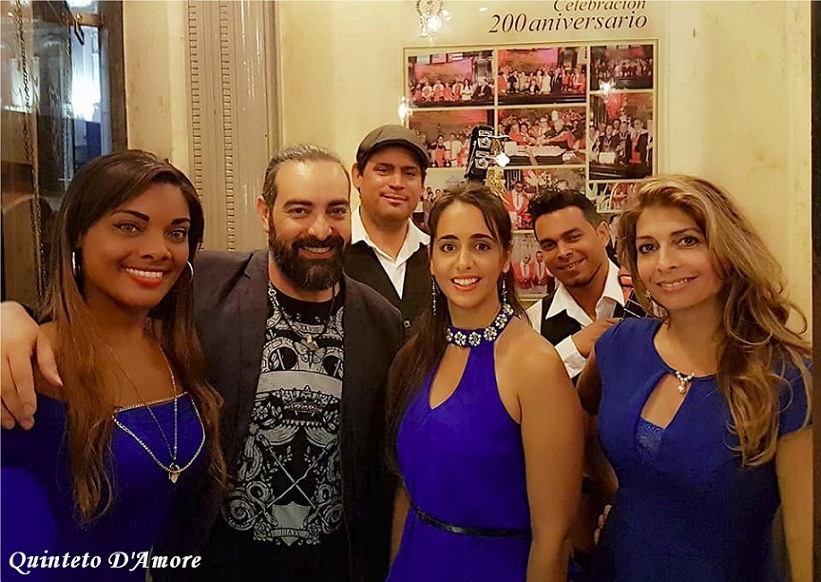
Orley (Bass): He studied Bass and Double Bass, he began his musical career in Ciego de Ávila as part of different groups of small and large format such as: Orquesta Eclipse, Conjunto Campesino “Campo Lindo”, among others, later he joined groups in Havana as the Tradition Septet, the group of the singer Leyanis López traveling to France (Paris) under the record label “Luz Africa”, from 2007 to 2011 in the Maykel Blanco Orchestra and its Salsa Mayor making several international tours by Italy, Sweden, Denmark, Germany, Poland, Switzerland, Belgium and Peru, thus participating in the recording of their 2 albums.
From 2011 to 2013 he was a member of the groups “Amor y el Son”, Pepitín y su CumBachá”, and Habana Midic, performing in Egypt, Jordan, Tunisia and Lebanon. Orey joined D’Amore in May 2014.
Daymé (Director, tres and bongó): Graduated in Telecommunications and Electronics Engineering at ISPJAE, and in intermediate level in music in the specialty of “Tres”, she belonged to the movement of amateur artists for 14 years, participating in international festivals, more Later as a professional, he joined several small-format groups performing in Cuba at the “Dos Gardenias” complex, La Bodeguita del Medio, at the Floridita Restaurant and in various hotels, abroad he has fulfilled various contracts in Jamaica, Qatar, United Arab Emirates (Abu Dhabi, Dubai and Al Ain), Jordan, Egypt, Japan, Spain, Turkey and China, she is currently the bongo player and director of the DÁmore Quintet.
Maria Carla (2nd violin) She began her music studies at the “Alejandro García Caturla Conservatory” where she reached the level of Junior High School and the 7th year of violin.
In 2006 he entered the “Amadeo Roldán Conservatory” to continue his studies up to the upper middle level of violin. During his student stage he was part of the orchestras of the respective schools participating in meetings, competitions and concerts both as an instrumentalist and as a vocalist in choirs.
Upon graduation, he taught in the province of Pinar del Río and for two years taught at the Vocational School of Art in the city of Pinar del Río.
Since 2010 he has been part of the National Symphony Orchestra of Cuba, collaborating simultaneously with various groups of both classical music and popular music with groups such as “La Camerata del Son”, “Ensemble Alternativo”, “Quinteto D Amore”, “Orquesta Panorama”, “Quinteto Doble Sabor”.
María Carla also participated in several events and festivals: National Meeting of Symphony Orchestras, International Fair
Cubadisco, Encounter of Choirs, -Festival América Canta, Festival of Contemporary Music, Festival of Young Pianists,
Danzón Festival, International Book Fair of Havana as well as in various recordings of phonograms with artists such as José María and Sergio Vitier, Toni Pinelli, Rafael Guedes, Aldo López-Gavilán.
He has also accompanied renowned soloists such as pianists Lang Lang, Chucho Valdés, Frank Fernández, Aldo López Gavilán, singer Omara Portuondo, violinists Ryu Goto, Francesco Manara, clarinetist Keisuke Wakao, guitarist Joaquín Clerch.
I work under the baton of directors such as Yoshikazu Fukumura, Marin Alsop, Francesco Belli.
Quintet D’Amore Repertoire
Latin/English Recent Hits
Havana – Camila Cabello
Someone Like You ‐ Adele
Don’t You Remember ‐ Adele
Unbreak My Heart ‐ Tony Braxton
Rehab ‐ Amy Winehouse
Whenever Whatever ‐ Shakira
Dancing – Enrique Iglesias,
Lambada‐Kapma,
Macarena ‐ Those of the River,
Mambo No 5 ‐ Lou Bega,
Nossa Nossa ‐ Miechl Telo
I Have Your Love ‐ Si7e
I just want to give you a kiss – Prince Royce
Despacito – Luis Fonsi & Daddy Yankee
English Pop, Rock, Blues, Jazz, R&B
Stand By Me ‐ Ben E. King
Yesterday ‐ The Beatles
Only You (And You Alone) ‐ The Platters
New York New York ‐ Frank Sinatra, Liza Minelli
Misty ‐ Errol Garner & Johnny Burke / Johnny Mathis
Girl From Ipanema ‐ Pery Ribeiro, Frank Sinatra
Flying To The Moon ‐ Frank Sinatra, Doris Day, Tony Bennett, Diana Krall
Summertime ‐ Ella Fitzgerald, Janis Joplin, Billie Holiday …
Autumn Leaves ‐ Nat King Cole, Andrea Bocleli, Eric Clapton …
My Way – Jacques Revaux, Paul Anka / Claude Francois, Frank Sinatra, Elvis Presley
I Just Called To Say I Love You ‐ Stevie Wonder
Somewhere Over the Rainbown ‐ Harold Arlen and Yip Harburg / Judy Garland, Israel
For Ever And Ever ‐ Demis Roussos
Hotel California – Eagles …
Cuban/Latin Salsa, Son, Rumba, Cumbia, Bolero
The Modern Yerbero ‐ Celia Cruz,
Quimbara ‐ Celia Cruz
Life is a Carnival – Celia Cruz
Idyll ‐ Wilie Colon
El Cartero ‐ Buena Vista Social Club
Tula Room ‐ Buena Vista Social Club
Discreet Kisses ‐ Compay Segundo
Chan chan ‐ Compay Segundo
Goodbye, Commander ‐ Carlos Puebla
Husbands Majaderos ‐ Perdro Luis Ferrer
Yolanda ‐ Pablo Milanes
I’ll be back – Diego Verdaguer
Pile of Stars ‐ Polo Montañez
Cariñito ‐ The Children of the Sun
Hey How It Goes ‐ Tito Puente / Carlos Santana
Nel blu dipinto di blu (Volare) ‐ Dean Martin …
Cocoon of Aleli ‐ Catean Veloso
Dos Gardenias ‐ Daniel Santos, Buena Vista Social Club
The Pale Flower ‐ Polo Montanez / Marc Anthony
Perfidia ‐ Alberto Domínguez / Los Panchos, Perez Prado, Nat King Cole, Ben E. King,
Luis Miguel
Guantanamera ‐ Celia Cruz, Compay Segundo, Tito Puente, Joan Baez
Black Tears ‐ Trio Matamorros, Omara Portuondo, Celia Cruz, Compay
Segundo/Cesaria Evora
Grinding Coffee ‐ Jose Manzo Perroni / Mario Suárez, Xiomara Alfaro, Ricardo
Montaner
El Manisero ‐ Rita Montaner, Antonio Machin, Mistinguett, Louis Armstrong
Story of a love ‐ Carlos Eleta Almaran, Guadalupe Pineda
Besame Mucho ‐ Consuelo Velasquez / Los Panchos, Pedro Infante, Louis Arnstrong,
Andrea Bocelli
Maybe Maybe Maybe ‐ Osvaldo Farres / Bobby Capo, Celia Cruz, Nat King Cole
The cumbanchero ‐ Rafael Hernandez / Tito Puente
Que Sera, Sera ‐ Jay Livingston and Ray Evans / Connie Francis, Natalie Cole
Pink Cherry ‐ Los Tecolines

www.quintetodamore.com
www.facebook.com/QuintetoDAmore
Youtube Quinteto D’Amore
Contact us at [email protected]
Europe/ Israel / Galilee
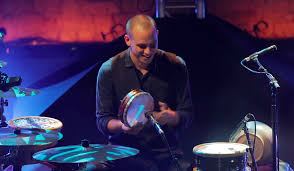
Itamar Doari is an international percussion artist who has spent most of his adult life traveling around the world giving concerts, recording albums, appearing at music conferences and most importantly studying the ancient art of rhythm and drumming. He began his musical journey at the young age of six, when he played his first drum in the Israeli desert oasis of Wadi Farran.
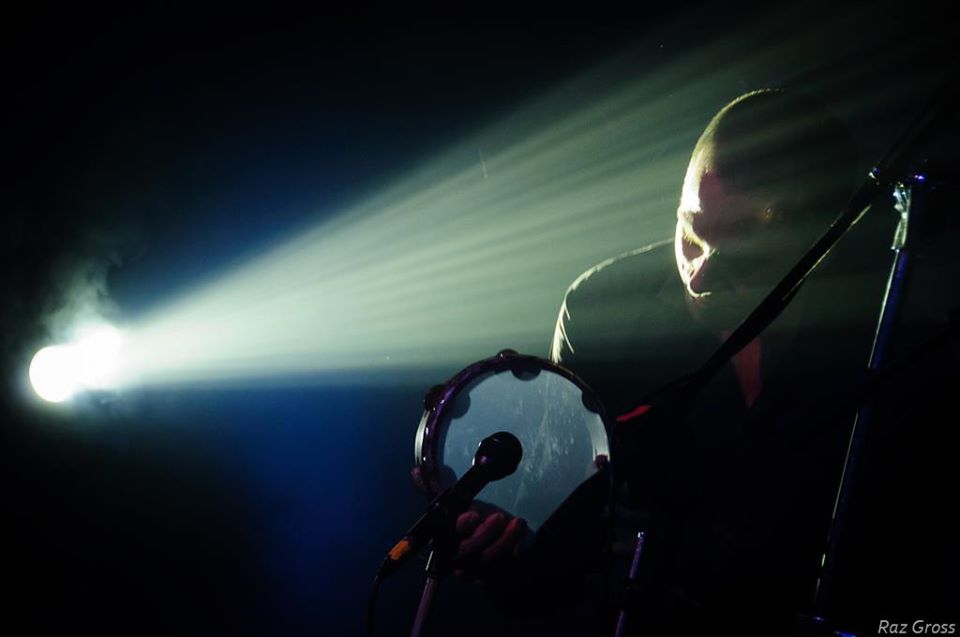
Itamar, born and raised in Galilee, grew up surrounded by a variety of musical traditions: Arabic, Sephardic, Turkish, Persian, Bedouin and many others which had a huge influence on his musical persona. During his early years of playing, he had the privilege of learning from some of the most prestigious teachers in percussion and hand drum technique in the world, among them; Zohar Fresco, Glen Vallez, Sallem Darwish and Ahmed Taher. Doari plays a wide range of instruments, including the Darbuka, Dohola and a variety of frame drums such as Bandir, Tar, Riq, Udu, and Cajon alongside Cymbals, bells, shakers and many others.
Itamar Doari’s wide ranging techniques have led him to work with an eclectic mix of some of the world’s finest musicians. Including prominent Jazz musician Avishai Cohen, with whom Doari has performed and recorded three albums, both as a musician and as a musical producer.
He was at the forefront of the Idan Raichal Project, which gained international success due to the unique Ethiopian musical exploration.
He has a continuing musical association with mandolinist and Grammy nominee Avi Avital, with whom Doari has collaborated in several projects including the “Between Worlds” Trio and with orchestras around the world. The great Ladino singer Yasmin Levy, Israeli Rock legend Berry Sakharof, oud player Samir Mekhul,Esther Ofarim, Yoni Rechter, Eviatar Banai, Amal Murcus, Ahuva Ozeri, Shotei Hanevuah, Nitin Sawhney, Omer Faruk, Tekbilek and Radiohead guitarist and composer Johnny Greenwood.
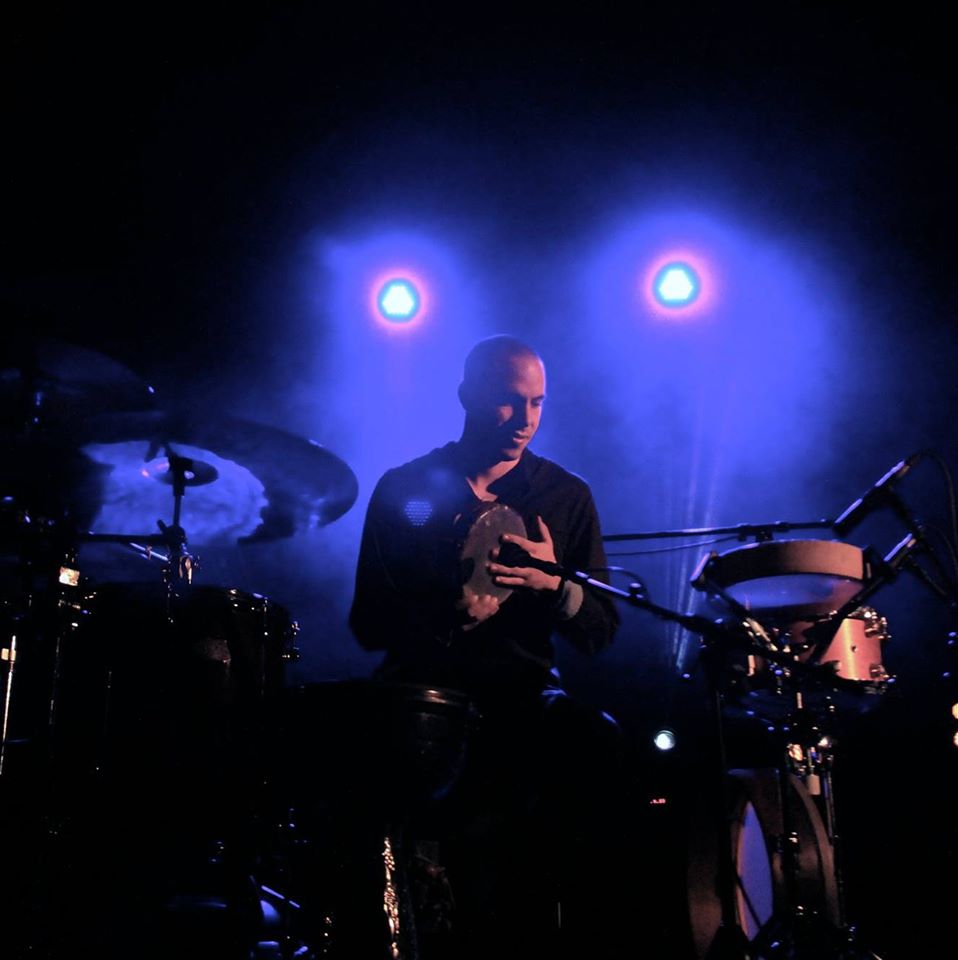
In 2010, Itamar became one of the founding members of the band Yemen Blues along with singer & composer Ravid Kahalani, the band explores music from a variety of different cultures from Yemen to West Africa inflected with contemporary grooves of funk, Arabic Music and the deep soul of old chants. A project particularly close to Itamar’s heart is one he created entitled WadiAtma.
In 2015, he put together a band of virtuoso musicians from the Flamenco and Middle Eastern traditions which created a musical melting pot of ancient art forms.
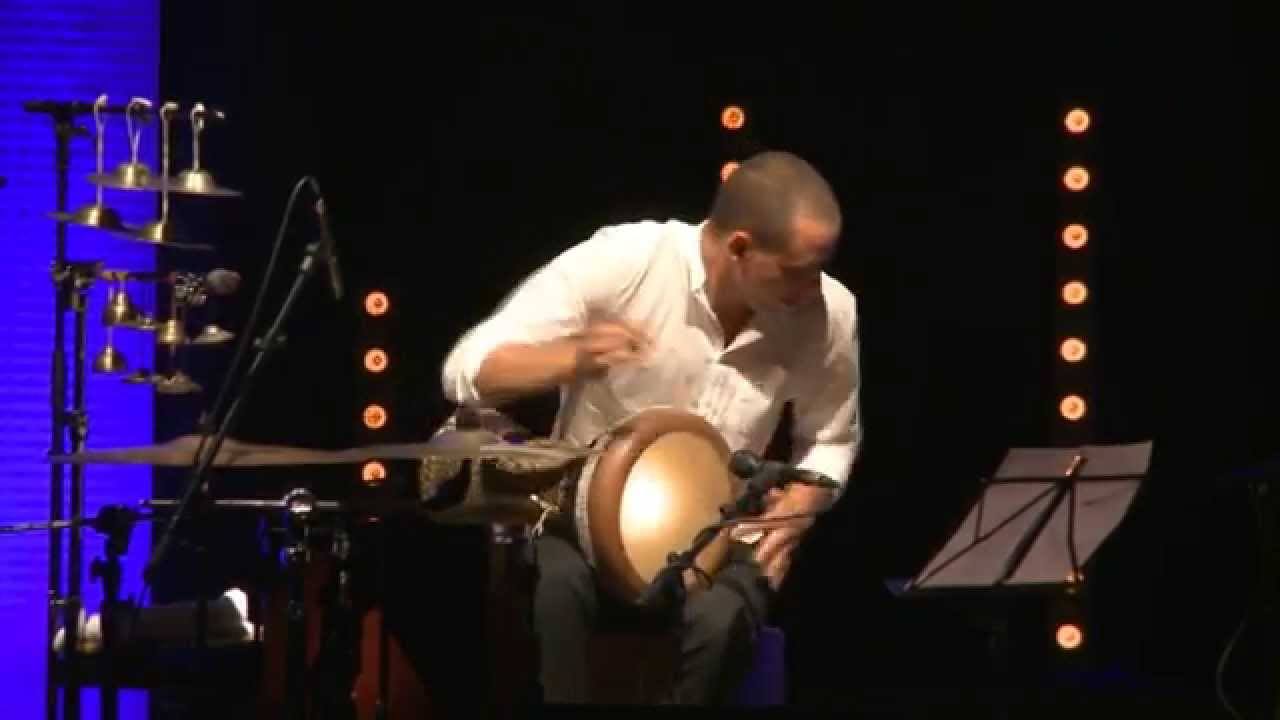
The name of the project unites souls (Atma in Sanskrit) with the wadi (originally an Arabic word that found its way to Spain via Andalusia) in a way that describes, in the best possible way, the meeting on stage: The Valley of the Souls. His collaborations have seen him perform on some of the world’s most prestigious stages and Festivals.
Itamar has recorded with several notable record labels, such as; Universal, EMI, Deutsche Grammophone, Sony, Helicon, Blue Note, Decca