• Skip to primary navigation
  • Skip to main content

International Salsa Magazine

  • HOME
  • Previous editions
    • 2026
      • ISM / March 2026
      • ISM / February 2026
      • ISM / January 2026
    • 2025
      • ISM / December 2025
      • ISM / November 2025
      • ISM / October 2025
      • ISM / September 2025
      • ISM / August 2025
      • ISM / July 2025
      • ISM / June 2025
      • ISM / May2025
      • ISM / April 2025
      • ISM / March 2025
      • ISM / February 2025
      • ISM / January 2025
    • 2024
      • ISM / December 2024
      • ISM / November 2024
      • ISM / October 2024
      • ISM / September 2024
      • ISM / August 2024
      • ISM / July 2024
      • ISM / June 2024
      • ISM / May 2024
      • ISM / April 2024
      • ISM / March 2024
      • ISM / February 2024
      • ISM / January 2024
    • 2023
      • ISM / December 2023
      • ISM / November 2023
      • ISM / October 2023
      • ISM – September 2023
      • ISM – August 2023
      • ISM July 2023
      • ISM Edition June 2023
      • ISM – May 2023
      • ISM April 2023
      • ISM March 2023
      • ISM February 2023
      • ISM January 2023
    • 2022
      • ISM December 2022
      • ISM November 2022
      • ISM October 2022
      • ISM September 2022
      • ISM August 2022
      • ISM July 2022
      • ISM June 2022
      • ISM May 2022
      • ISM February 2022
      • ISM January 2022
    • 2021
      • ISM December 2021
      • ISM November 2021
      • ISM October – 2021
      • ISM September 2021
      • ISM August 2021
      • ISM July 2021
      • ISM May 2021
      • ISM April 2021
      • ISM June 2021
      • ISM March 2021
      • ISM February 2021
      • ISM January 2021
    • 2020
      • ISM December 2020
      • ISM November 2020
      • ISM October 2020
      • ISM September 2020
      • ISM August 2020
      • ISM July 2020
      • ISM June 2020
      • ISM May 2020
      • ISM April 2020
      • ISM March 2020
      • ISM February 2020
      • ISM January 2020
    • 2019
      • ISM December 2019
      • ISM November 2019
      • ISM October 2019
      • ISM Septembre 2019
      • ISM August 2019
      • ISM July 2019
      • ISM June 2019
  • Download Salsa App
    • Android
    • Apple
  • Spanish

Search Results for: Jazz Festival

Luis Perdomo one of the most avid pianists of the Jazz in New York

Luis is one of the most active jazz pianists in New York.

Originally from Venezuela, he began playing piano at the age of 10, and by the age of 12 was playing professionally on radio and television, as well as in concerts and clubs. Luis later moved to the United States.

To attend the Manhattan School of Music on scholarship, he graduated in 1997 and went on to earn a master’s degree at Queens College, where he was a student of the great pianist Sir Roland Hanna.

Shortly after moving to New York, he quickly established himself as an in-demand pianist amassing an impressive resume.

Some of the artists Luis has recorded and/or performed include Ravi Coltrane, David Sanchez, Tom Harrell, John Patitucci, Ray Barretto, Brian Lynch, Miguel Zenon, Dave Douglas, David Weiss and The Cookers, David Gilmore, Ralph Irizarry and Timbalaye, Henry Threadgill and Steve Turre, among others; a list that is as remarkable for its high level as it is for its diversity.

To attend the Manhattan School of Music on scholarship, he graduated in 1997 and went on to earn a master's degree at Queens College.
Luis Perdomo One of the most avid pianists of the Jazz in New York

Luis is also recognized as a member of several bands, especially the groups led by Ravi Coltrane, with whom he spent 10 years and Miguel Zenon, with whom he has had a collaboration that is currently in its 18th year.

Luis has also made a mark as a performer. Composer and arranger on recordings by Ray Barretto, Ignacio Berroa, John Benitez and Ralph Irizarry. He has also been commissioned as a composer by the Jazz Gallery, The Afro Bop Alliance and Arturo O’Farrill’s Afro Latin Jazz Orchestra.

He can be heard most recently on Ravi Coltrane’s Grammy nominated “Spirit Fiction” and Miguel Zenón’s “Típico”. In 2002 he won the 2nd Grand Prize at the “3rd Martial Solal Jazz Piano Competition” in Paris, among a group of 66 international pianists.

He can be heard more recently in Ravi Coltrane’s Grammy nominated “Spirit Fiction” and Miguel Zenón’s “Tipico”. In 2002 he won the 2nd Grand Prize at the “3rd Martial Solal Jazz Piano Competition” in Paris, among a group of 66 international pianists.

As a sideman, Luis has performed at most of the major music festivals and venues in over 50 countries, and as a leader, he has toured Europe, Japan, South America and the United States.

Luis has also been very active around the world in recent years as a teacher, soloist and as leader of his own trio: The Controlling Ear Unit and various other projects, and has released nine highly praised recordings as a leader: “…Focus Point “.

Luis has performed at most major music festivals and venues in more than 50 countries.
Luis Perdomo has also participated in more than 200 recordings as a sideman.

Focus Point “. (2005),” Awareness ” (2006), and the highly acclaimed ” Universal Mind ” with Drew Gress and Jack Dejohnette (2012) for Ravi Coltrane’s RKM Music label. ” Pathways ” in 2008, the ” Childhood ” project in 2012 and ” Links ” in 2013 were recorded for Criss Cross Jazz.

His ” Twenty – Two ” project, with ” Controlling Ear Unit “, was released in 2015 on the Hot Tone Music label.

This high octane CD unites Luis with bassist / vocalist Mimi Jones and drummer Rudy Royston. The two most recent CD’s:” Montage “; Luis’ first piano outing and” Spirits and Warriors “; a quintet release for the Criss Cross Jazz label featuring drumming legend Billy Hart, was released in May 2016.

Luis Perdomo has also participated in over 200 recordings as a sideman.

As an educator, Luis has taught master classes at conservatories in Amsterdam and Paris, Princeton University, Hochschule Fur Musik und Theatre (Munich, Germany), Berklee (Valencia, Spain), IUDEM (Caracas, Venezuela), Esmuva (Madrid, Spain) ; and the School of Jazz in Berkeley, California, among others.

He has taught summer jazz camps, including “Jazz in July” at the University of Massachusetts, Langnau Jazz Nights in Switzerland; The Banff International Workshop and the University of Manitoba in Canada, Badajoz Jazz Worshop in Spain; Universidad EAFIT in Medellin; Tonica Jazz Festival in Guadalajara, Mexico and Guimaraes Jazz Workshops in Portugal, among others.

In 2016, Mr. Perdomo served as artistic director of the Langnau Jazz Workshops in Switzerland. Luis has also taught at the New School for Social Research, and currently serves as an adjunct professor of piano at Queens College in New York City.

In 2016, Mr. Perdomo served as artistic director of the Langnau Jazz Workshops in Switzerland.
Luis is one of the most active jazz pianists in New York.

For more information, visit www.luisperdomojazz.com

Home

Latin America – January 2017

Panama Jazz Festival 2017 thubnails - Latin America - January 2017

Argentina Tango Salón Festival thubnails - Latin America - January 2017

Salsa Viva & Tango Vivo thubnails - Latin America - January 2017

Azucar Club Cubano thubnails - Latin America - January 2017

Venetur Canaima Camp thubnails - Latin America - January 2017

Carlos Jimenez offers his talent and passion to charm the audience in universities, hotels, and restaurants all over New York

We are very happy because this beginning of the year has brought us a very friendly conversation with brilliant bandleader, composer, vocalist, and flutist Carlos Jiménez, who kindly answered the questions we had for him. 

The New Yorker has many interesting things to tell, so we hope that everyone will enjoy the material below.

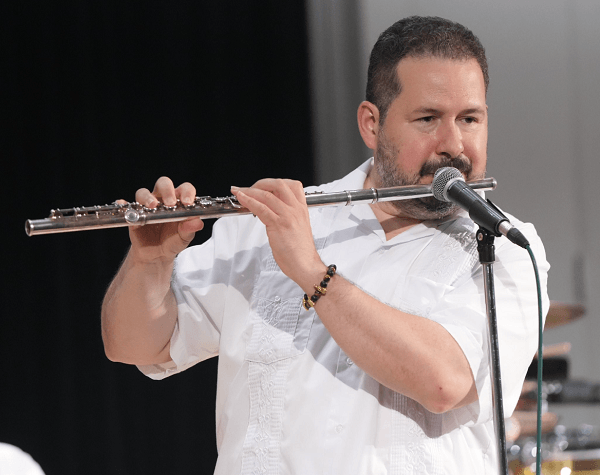
Carlos Jimenez playing
Carlos Jimenez playing the flute live

Carlos’ beginnings in music

Carlos was born in New York City, but moved to Puerto Rico with his family when he was six years old. It was on the Island of Enchantment that he discovered his inclination toward music thanks to his trumpeter father William, and his cuatrista grandfather Cruz, who encouraged him to take music lessons. Therefore, he also began to receive musical training and built competence for playing percussion instruments such as the timbales, bongos, and congas. 

His first lyrical instrument was the trumpet, which he learned to play under the tutelage of Professor Pablo León at Francisco Zayas Santana High School. However, inspired by Mongo Santamaría and his musical arrangements for his song “Song For You,” he decided to switch instruments and start playing the flute, which he has continued to do.

Carlos’ return to New York

As a young man, he decided to return to his hometown highly motivated by the vibrant Latin music scene there, which he describes as “the city where all our dreams come true.” While there, he enrolled at the Music Conservatory of Westchester to study classical flute, but his training have not been completed. 

He also studied jazz harmony and voicing with piano teacher Michael Longo, who he describes as a good friend and teacher to the point of making a recording together. Unfortunately, Longo was one of the many victims of the COVID-19 pandemic, which was an immense sadness for Carlos and those who had the privilege of knowing him. 

Orlando Marín and Carlos Jimenez
Orlando Marín ”El último Rey del Timbal” and Carlos Jimenez

Results of his prolific career

After more than 20 years of successful career, Carlos has built a great reputation in the industry at the point of passion and hard work. He himself says that his good name comes as a result of his responsibility, reliability, and, most importantly, his ability to play good music.

His great skills as a professional and musician have led him to play at corporate events for companies such as Victoria’s Secret, Nike, ScotiaBank, Regeneron, and many others. In addition to that, he has also been able to play and lead orchestras in performances for universities and cultural institutions such as Lehman College, Sarah Lawrence College, New York Botanical Garden, Columbia University, and many more. 

Likewise, Carlos’ band has performed in so many festivals such as West Harlem Jazz Festival, Harbour Jazz Festival, Fall Harvest Fishkill Farm Festival, Lake George Festival, Summer Sound Festival, and many others. 

Altruistic side

In addition to the above, Carlos has also earned the respect of his colleagues thanks to the numerous galas, charity events, and community activities the artist has been involved in recent years, which has made him worthy of numerous awards for his community service. This shows that the flutist is not only passionate about his craft, which is music, but also uses it to do good to those in need. We can also add that he has headlined numerous shows at well-known restaurants and hotels such as Casa Cipriani Hotel, The Marriott, Ritz Carlton, The Lexington Hotel, among others.

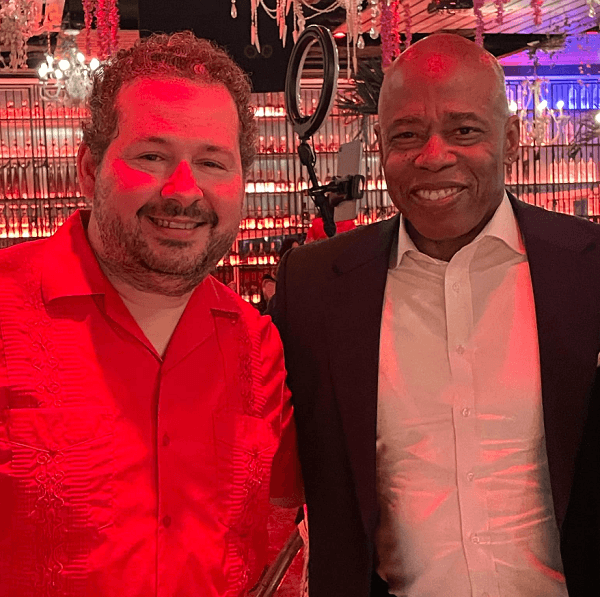
Carlos Jimenez and Eric Adams
Carlos Jimenez and former New York Mayor Eric Adams

The Carlos Mambo Dulcet

Together with his orchestra, Carlos has released several albums, including “Red Tailed Hawk Vol. 1,” “Red Tailed Hawk Vol. 2,” and “Despierta Boricua,” among others. The artist closed the conversation by saying that his group continues to be formed and has more than 100 musicians and all are are wonderful.

Read also: La Nota Band showcases the best of Venezuelan talent

Music reviewer and photojournalist Ricky Ricardo describes his work from the last 35 years

Ricky Richardson, better known as Ricky Ricardo, is one of those important figures who should be taken notice of for his significant contribution to Latin music, even if it is often not quite appreciated by the public. The Tampa-born photographer, writer, and music reviewer has honoured us by talking about his career and experience covering events related to Latin culture and music, so we invite our readers in the beginning of the year to enjoy the revelations of our talented guest.

Ricky Richardson at the festival
Ricky Richardson at the New Orleans Jazz & Heritage Festival entrance

How Ricky got started in the coverage and review to Latin music and cultural events

First of all, Ricky thanked us for the interview and went on to tell us that he started as a photographer for a local newspaper called California Crusader News. Over time, his superiors asked him to start writing articles to accompany his photographic work, resulting in music reviews based on his attendance at numerous events and festivals throughout Los Angeles and beyond.

His work also included meetings with newspaper and magazine publishers who were always searching for content for their own publications, which led Ricky to send reviews and photos to all kinds of publications.

Major publications Ricky has worked with

Among the most important publications Ricky has collaborated with is Latin Beat, which was the main means of communication related to Afro-Cuban music. The photographer met Rudy and Yvette Mangual many times at various concerts and festivals. They met backstage at the Hollywood Bowl during the Blue Note Jazz Festival, an event he covered just like all the artists who performed there.

He also covered events in other parts of the United States, such as the New Orleans & Jazz Heritage Festival and the French Quarter Fest.

Kathy, Lázaro, and Nelson. Photo by Ricky
Kathy “La Rumbera” Diaz, Lázaro Galarraga and Nelson Rodriguez (Photo by Ricky Richardson)

In the case of Vidasalsera, Ricky first heard that name coming out of a musician’s mouth at a Puerto Rican festival in Long Beach, where he often ran into Cal Sakaniwa, the photographer and videographer for this media outlet. That is when he reached out to the webmistress of Vidasalsera.com Dena Burroughs and began providing photo galleries for her website, even though they have never met in person.

What made Ricky fall in love with Afro-Cuban music

During his childhood and youth in Tampa, Ricky was very exposed to Latin music due to the large Cuban population living in the Ybor City area, and he and several of his friends used to frequent many places and stores where this music was played. 

When the young man heard Afro-Cuban music for the first time on radio stations KACE and KKGO (nowadays known as KJAZZ) was a point of no return for him. His love for this kind of music was greatly strengthened by radio programs such as Alma Del Barrio, Jazz on the Latin Side, Canto Tropical, Groove Time, and Canto Sin Fronteras. Not to mention that many international artists were constantly giving concerts at venues and festivals. 

Events covered by Ricky to date

Throughout his career as a photographer, Ricky covered a huge number of events, including the Long Beach Jazz Festival, Monterey Jazz Festival, Central Avenue Jazz Festival, Los Angeles Street Scene, San Diego Street Scene, Simon Rodia Watts Towers Jazz Festival, Watts Towers Day of The Drum Festival, Cuban-American Festival, Puerto Rican Festival, and many others. 

When we wanted to know more about his experiences at these events, he replied that he felt very honored to have been able to share with established and emerging artists over the past 35 years. He also feels very lucky to have been able to witness such wonderful performances by artists who always greet him and spend warm smiles at him whenever they meet him.

Kathy, Lázaro, and Nelson. Photo by Ricky
Kathy “La Rumbera” Diaz, Lázaro Galarraga and Nelson Rodriguez (Photo by Ricky Richardson)
Dionne, Monica, and James. Photo by Ricky
Councilwoman Dionne Faulk, Monica Bracho, Mayor James T. Butts Jr., Councilwoman, and Brendt Stallings, Chief Executive Officer & Chief Investment Officer-Inglewood Park Cemetery (Photo by Ricky Richardson)

Alma Del Barrio Fest 2025

Ricky told us that he had the honor of attending the first and second iteration of the Alma Del Barrio Salsa Festival, which took place at different locations at Loyola Marymount University. Future attendees got really excited about the current venue chosen by the organization to host the event, which is Lawton Plaza with its amphitheater, seating arrangement, abundance of grass, and the dance floor. 

“I love the fact that many people get to meet and greet some of Alma Del Barrio Program Hosts (DJ’s) in person. I like the fact that Alma Del Barrio Salsa Festival attracts several generations of salseros, that are diverse, multi-cultural, and from all walks of life.,” Ricky said on the subject.

Why Ricky retired last year

Last year, Ricky finally made the decision to retire from music critics and photography after covering the Latin music scene for so many years in order to allow new generations of talented journalists to take over and keep Afro-Cuban music alive. 

He is currently looking for opportunities to work in public relations and marketing for sporting events that will be held in the next three years such as the NBA All-Star Weekend, the FIFA Worzld Cup, the Super Bowl, and the Olympic Games. 

Read also: Cache Live Music puts Miami to dance to traditional Latin music

Dominican bandleader and singer Papo Ross is triumphing in Montreal

Canada continues to give us something to talk about when it comes to Latin music, and our daring guest is firm proof of this. Dominican bandleader and singer Jorge “Papo” Ross has given us the great honor of talking about his interesting career both in his native country and Montreal, where he currently resides and moves forward with his musical projects.

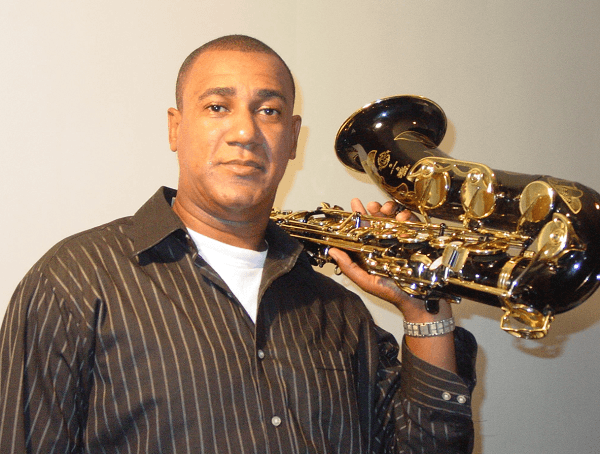
Papo Ross with his saxophone
Dominican bandleader, singer, and musician Papo Ross posing with his saxophone

Papo’s beginnings in the Dominican Republic

Papo’s musical beginnings were in his hometown of San Pedro de Macorís by playing instruments made of tin or wicker that he and his friends themselves created so they could play, which led him to learn to play percussion, albeit in a very crude manner. Among the first instruments he played were the guiro, the tambora, and the conga.

Seeing his interest in music, his late brother, who was a saxophonist and led a band at the time, took him along to play with him so he could learn the trade through practice. However, the young man did not want to stop there and also began creating his own bands, such as Grupo Enriquillo, in which he and the rest of the members used homemade instruments and a marimba, which doubled as the bass. 

He also played with La Moderna de San Pedro, with which he served as the musical director during rehearsals and earned two percent of the orchestra’s contracts. In addition, he founded the group Sui Generis, played with the late merengue musician July Mateo “Rasputín,” and, before leaving the country, played with the recently deceased Rubby Pérez in the 1990s.

Academic training prior to his trip to Canada

After having played with several orchestras, Papo realized that, while it is true that he had gained some experience and knowledge, it was not enough and he needed to train more. That is why he was admitted to study at the Escuela de Música Patria Logroño at the elementary level and the Conservatorio Nacional de Música in Santo Domingo.

Papo Ross & Pambiche
Papo Ross & Orquesta Pambiche as a whole

At the academy, he learned spoken and sung solfeggio and took some saxophone lessons there in the same place. As for the conservatory, he studied percussion, but did not finish his training in this area, as he was also studying law at the Universidad Central del Este in San Pedro de Macorís. Then when the time came for him to choose one or the other, he obviously opted against university, although he did not get to exercise this career either because he missed a few semesters to complete it.

Moving to Canada

Before arriving in Canada, Papo had already traveled to other places such as Puerto Rico and New York as part of his work and had the opportunity to live there for a few seasons, but the Orquesta Tambora invited him to go to Canada to lead the group, which the artist accepted.

Although it was the best decision, it certainly was not easy, as he had to deal with language barriers and the process of adapting to a music scene completely different from that of his native country. 

The latter and the fact that he belonged to a minority like the Latino community, limited him a lot at first, but he says he keeps no regrets about his decisions and does not complaint about what he has already accomplished.

Rafael Ithier and Papo Ross
Rafael Ithier from El Gran Combo de Puerto Rico and Papo Ross

Papo Ross & Orquesta Pambiche

In 1992, he finally decided to break through his own and create his own orchestra, Papo Ross & Orquesta Pambiche, thanks to all the skills he had developed so far. After having learned to lead an orchestra, compose, arrange, and sing, he felt more than ready to carry out his own project consisting of 13 members, including two trumpeters, a trombonist, two saxophonists, a percussionist, and three singers, among others. None of the original group remain, and Papo practically does not use the big band, but a slightly smaller format called Papo Ross Meren Latin Jazz Approach. 

This band offers its services for private parties and drinks receptions, where Papo sometimes sings with a minus-one and even includes dancers in his shows.

Together with his orchestra, he has played at the Montreal International Jazz Festival on a few occasions, but they have also played in several other cities like Toronto, Regina, Saskatchewan, Victoria, Saint Pierre, Saint John, and many more. He has also collaborated with several other groups and musicians such as Pablo Ramos and the group Calipso.

Outside of Canada, they have played in various places in the United States such as Detroit, Wellington, and Vermont.

Eduardo, Papo, and Dave
Trumpeter Eduardo Sanchez, Papo Ross, and Trombonist Dave Grott

Read also: Colombian dancer and instructor Camila Cepeda takes salsa caleña to Canada

  • « Go to Previous Page
  • Page 1
  • Interim pages omitted …
  • Page 5
  • Page 6
  • Page 7
  • Page 8
  • Page 9
  • Interim pages omitted …
  • Page 41
  • Go to Next Page »

International Salsa Magazine (ISM) is a monthly publication about Salsa activities around the world, that has been publishing since 2007. It is a world network of volunteers coordinated by ISM Magazine. We are working to strengthen all the events by working together.