• Skip to primary navigation
  • Skip to main content

International Salsa Magazine

  • Home
  • Previous editions
    • 2026
      • ISM / January 2026
      • ISM / February 2026
    • 2025
      • ISM / December 2025
      • ISM / November 2025
      • ISM / October 2025
      • ISM / September 2025
      • ISM / August 2025
      • ISM / July 2025
      • ISM / June 2025
      • ISM / May2025
      • ISM / April 2025
      • ISM / March 2025
      • ISM / February 2025
      • ISM / January 2025
    • 2024
      • ISM / December 2024
      • ISM / November 2024
      • ISM / October 2024
      • ISM / September 2024
      • ISM / August 2024
      • ISM / July 2024
      • ISM / June 2024
      • ISM / May 2024
      • ISM / April 2024
      • ISM / March 2024
      • ISM / February 2024
      • ISM / January 2024
    • 2023
      • ISM / December 2023
      • ISM / November 2023
      • ISM / October 2023
      • ISM – September 2023
      • ISM – August 2023
      • ISM July 2023
      • ISM Edition June 2023
      • ISM – May 2023
      • ISM April 2023
      • ISM March 2023
      • ISM February 2023
      • ISM January 2023
    • 2022
      • ISM December 2022
      • ISM November 2022
      • ISM October 2022
      • ISM September 2022
      • ISM August 2022
      • ISM July 2022
      • ISM June 2022
      • ISM May 2022
      • ISM February 2022
      • ISM January 2022
    • 2021
      • ISM December 2021
      • ISM November 2021
      • ISM October – 2021
      • ISM September 2021
      • ISM August 2021
      • ISM July 2021
      • ISM May 2021
      • ISM April 2021
      • ISM June 2021
      • ISM March 2021
      • ISM February 2021
      • ISM January 2021
    • 2020
      • ISM December 2020
      • ISM November 2020
      • ISM October 2020
      • ISM September 2020
      • ISM August 2020
      • ISM July 2020
      • ISM June 2020
      • ISM May 2020
      • ISM April 2020
      • ISM March 2020
      • ISM February 2020
      • ISM January 2020
    • 2019
      • ISM December 2019
      • ISM November 2019
      • ISM October 2019
      • ISM Septembre 2019
      • ISM August 2019
      • ISM July 2019
      • ISM June 2019
      • ISM May 2019
      • ISM April 2019
      • ISM March 2019
      • ISM February 2019
      • ISM January 2019
    • 2018
      • ISM December 2018
      • ISM November 2018
      • ISM October 2018
      • ISM September 2018
      • ISM August 2018
      • ISM July 2018
      • ISM June 2018
      • ISM May 2018
      • ISM April 2018
      • ISM March 2018
      • ISM February 2018
      • ISM January 2018
    • 2017
      • ISM December 2017
      • ISM November 2017
      • ISM October 2017
      • ISM September 2017
      • ISM August 2017
      • ISM July 2017
      • ISM June 2017
      • ISM May 2017
      • ISM April 2017
      • ISM March 2017
      • ISM February 2017
  • Download Salsa App
    • Android
    • Apple
  • Spanish

Search Results for: Jazz Festivals

Goodbye to José Antonio Abreu, the most beloved Master – Part 2

Latin America / Venezuela / Caracas

José Antonio Abreu. The Venezuelan musical miracle

BY ANA ROSA MASSIEU

The pedagogical plan of El Sistema contemplated, since 1980, approximately, the foundation of exemplary pedagogical structures and models as scenarios for the training and improvement of musicians. As the demand for children entering El Sistema and its nuclei has grown, projects for the construction of new educational centers are on the rise.

José Antonio Abreu - On the European stage
José Antonio Abreu – On the European stage

Among them, the Simón Bolívar Conservatory, the Montalbán Children’s Academic Center, the Center for Social Action for Music, the Academic Center for Luteria and the twelve Latin American Academies for the instruments of Violin, Viola, Cello, Flute, Horn, Contrabass, Clarinet , Classical Harp, Trumpet, Oboe, Bassoon and Trombone.

http://www.musicabancaribe.com/Publicaciones /Libro_digital/VenezuelaEnElCielo/info/capitulo6 /i/index.php#prev

The Simon Bolivar Conservatory

The Simón Bolívar Conservatory offers training of the highest pedagogical and artistic rank to the ever-increasing number of students, with a very complete curriculum of studies in which orchestral practice accounts for approximately 70%. The title of Performing Musician is awarded, an important endorsement that allows graduates to continue higher studies at universities.

“…the Simón Bolívar Conservatory has emerged as the head and model of a network of conservatories already established in Yaracuy, Carabobo, Aragua, Guárico and Ciudad Bolívar. However, I am excited and pleased with the new challenge we are facing: broadening the musical and artistic horizon of that large contingent of students that El Sistema has and of those who will join in the future.

These are the new contents: the Venezuelan Popular Music Teaching Program, in all its aspects, including that of Afro-Venezuelan roots; the Urban Music Program; the Jazz Program, which is already in progress with our Simón Bolívar Big Band Jazz Symphony and the Latin and Caribbean Music Program, which especially includes the salsa genre.

Cambiando Vidas - flyers
Cambiando Vidas – flyers

This is already underway with the creation of more than 15 pilot nuclei and the formation of a body of teachers specialized in these genres. The idea is that these programs capture and channel the talent of many musicians and students who have greater virtues for these musical currents, always pursuing and achieving the same level of excellence as those who perform symphonic music in our orchestras”.

Valdemar Rodriguez. Taken from the interview with Valdemar Rodríguez, clarinetist, Director of the CSB, creator of the Latin American Clarinet Academy, among other titles and positions, by Chefi Borzhacchini in the digital book Venezuela en el Cielo de Los Escenarios. Caribbean Bank, 2010

Latinocaribe2014-02-03

http://www.musicabancaribe.com/Publicacio nes/Libro_digital/VenezuelaEnElCielo/info/c apitulo6/ii/

Diversification of teaching, orchestras and festivals

In the same way that teaching has been diversified, including different musical genres –popular, urban, jazz, Latin Caribbean, salsa– other orchestras have emerged dedicated to developing each of these genres, as well as festivals to promote them at the regional level.

These events, organized by El Sistema, revolve around an artist, musician, composer, instrument, or arise for the meeting between musical talents from various regions, local or international.

Among them are the FIP-Llanos International Percussion Festivals, the Spain Venezuela Festival, the Festival of New Venezuelan Clarinetists, the Chamber Music Festival (in Mérida and Caracas), the International Flute Festival, the International Bassoon Festival, and the International Clarinet Festival. , International Oboe Festival, Young Virtuosos Festival, Youth Festival, Young Directors Festival and Latin American Music Festival, among others.

Simón Bolívar Symphony Orchestra of Venezuela

The Simón Bolívar Symphony Orchestra of Venezuela (OSSBV) was founded by maestro José Antonio Abreu and is currently the apex ensemble of the National System of Youth and Children’s Orchestras and Choirs of Venezuela.

Concert directed by Dudamel 40th anniversary Feb 2015

Under the musical direction of maestro Gustavo Dudamel, its 180 young musicians, whose ages range between 18 and 28 years old, named Ambassadors of Peace by UNESCO, have been trained in the Orchestral Academic Program of the Simón Bolívar Musical Foundation, through the which have received master classes with outstanding world-class teachers and soloists, including teachers from the Berlin Philharmonic, the Sibelius Academy in Finland, the Bach Academy in Stuttgart and the New England Conservatory in Boston.

His performances with internationally renowned directors include Simon Rattle, Claudio Abbado, Daniel Baremboim, Krzysztof Penderecki, Essa Pekka-Salonen, and Lorin Maazel, among many others.

Other Orchestras

  • Simón Bolívar Afro-Venezuelan Orchestra
  • Simón Bolívar Youth Baroque Orchestra
  • Youth Orchestra of Caracas
  • Youth and Children’s Orchestra Alma Llanera of Guárico State
  • Simón Bolívar Latin Caribbean Orchestra
  • National Flute Orchestra of Venezuela
  • National Children’s Orchestra of Venezuela
  • Simón Bolívar Symphonic Rock Orchestra
  • Francisco de Miranda Youth Symphony Orchestra
  • Carabobo Youth Symphony Orchestra
  • Prison Symphony Orchestras
  • Teresa Carreño Youth Symphony of Venezuela

Bands

  • Youth Symphonic Band
  • Simon Bolivar Simon Bolivar Big-Band Jazz

Assemblies

  • Assembly 7/4
  • Carabobo Metal Assembly
  • Metal Ensemble of Venezuela

Chamber Groups

  • Simón Bolívar String Quartet
  • Liberators Quartet
  • Teresa Carreño Quartet
  • Yaracuy Quartet

Choirs

Choir of White Hands Simón Bolívar National Youth Choir of Venezuela Network of Prison Orchestras and Choirs

More information at: http://fundamusical.org.ve/agrupaciones/

The system in the world

The philosophy and methodology of El Sistema has had an almost magical ability to inspire artists, educators, and social activists across the globe, as Tricia Tunstall puts it in her book Changing Lives…

Play, sing and fight

“its guiding principles—the orchestra as school of civility and the passage from a vision centered on music to a humanistic vision of social change through music” have been taken as a model to follow and El Sistema has been implemented or adapted in more than 66 countries in which five continents Programs inspired by El Sistema have emerged in:

  • AMERICA: Argentina, Barbados, Bolivia, Brazil, Canada, Chile, Colombia, Costa Rica, Ecuador, El Salvador, United States, Guadeloupe, Guatemala, Haiti, Honduras, Jamaica, Mexico, Panama, Paraguay, Peru, Puerto Rico, Republic Dominican Republic, Saint Lucia, Trinidad and Tobago, Uruguay.
  • AFRICA: Angola, Kenya, South Africa, Uganda.
  • EUROPE: Germany, Armenia, Austria, Bosnia, Croatia, Denmark, Scotland, Slovakia, Spain, Finland, France, Wales, Greenland, England, Ireland, Iceland, Italy, Luzembourg, Norway, Netherlands, Portugal, Czech Republic, Romania , Serbia, Sweden, Switzerland, Turkey.
  • ASIA: Afghanistan, Japan, South Korea, Philippines, India, Taiwan, Vietnam, Singapore.
  • OCEANIA: Australia, New Zealand. More than 66 countries on five continents.
Venezuela Sembrada de orquestas Coros Cortesía FundaMusical

More information can be found at:

http://www.elsistemausa.org/el-sistemaaround-the-world.htm http://sistemaglobal.org/ http://www.sistemaeurope.org/ http://fundamusical.org.ve/category/elsistema/el-sistema-en-el-mundo

Momotombo SF with former members of Malo and Santana

There is no doubt that The Bay Area has many talents, so there are always groups and people to talk about. Today it was the turn of the talented American percussionist of Nicaraguan origin Leo Rosales, with whom we had the pleasure of chatting about his life and projects with both the group Malo and his current band Momotombo SF.   

This Latin rock legend has so much to tell and we are happy to hear him and make known his success and great struggles in the world of music.   

Leo was born in San Francisco
Percussionist Leo Rosales was born in San Francisco, but his family is Nicaraguan

Leo’s beginnings in music 

Leo’s interest in music began at home with his parents, who, as we have already said, come from Central America, which greatly the young man and the steps he would take a few years later.   

It turns out that his father was a radio host at the station Radio Mundial and his uncle was a musician in the 1940s in Nicaragua, where both developed their careers linked to music for a long time. However, they decided that the Central American country did not offer them the opportunities they were seeking and decided to move to San Francisco and build their families there. 

It was in San Francisco where Leo was born, his father decided to return to his job as a radio host at the station Coffee and his uncle met important musicians who helped him adapt to the musical environment in that place. All this coupled with the numerous family parties held at Leo’s house with Latin music aroused an enormous interest in the child for this world. 

Tradictional music, salsa and Latin jazz inspired him to listen to all kinds of genres and bands, but not only in Spanish. He also became a big fan of The Beatles, The Rolling Stones, James Brown, among others. 

He loved what he heard so much he even decided to learn to play the drums on his own by ear. Then, he started using cooking pots and sticks to rehearse at home in an improvised way until he had the opportunity to use professional instruments.  

Leo playing
Leo Rosales playing the drums

Leo’s start in music professionally 

Leo was so hell-bent on making a name for himself in music that he got yogether with some friends and colleagues with the same interests to create an improvised group with which he gradually managed to play at parties and small street festivals. 

They also began to perform in larger events and to meet more and more important people in the industry. Also Leo and the other young people began to make friends with other groups, which led to new job opportunities for several of them.   

Around the same time they met the world famous businessman and concert promoter Bill Graham, who stated taking musicians to all over to San Francisco. This gave Leo the opportunity to play at the Fillmore West as well as other famous bands such as Chicago, Cold Blood, The Doors, The Gratful Dead, among others.   

There was a night when a friend invited him to see a band play that would completely change the vision Leo Rosales had of music because they did not just play rock, but also conga, timbales and other Latino-oriented instruments. That group turned out to be Carlos Santana’s band in 1968. 

Leo was so impressed with the group that the way he conceived music changed completely and he decided that this was the same direction he wanted to pursue. That is how he started playing Santana’s songs in various nightclubs, which led him to meet his brother Jorge Santana. 

Grupo Malo 

By the time Leo met Jorge, he was leading the group Malo. It all happened when the young man was about 17 or 18 years old and the same friend who took him to see Carlos invited him to see Jorge play with his band. At the request of the friend’s brother, Leo was given the opportunity to play the timbales, which he learned to play in the rock genre thanks to having listened to Santana for so long. 

After having played in several places with the group Malo and thanks to his high level as a musician, he was invited by one of the founders of the group, Arcelio García, to rehearse with the rest of the members. After rehearsing with them for a while, Leo became a permanent member of Malo and, shortly thereafter, he began touring the United States with them.  

All these performances helped the artist to become much more professional in his trade and to meet many other prestigious musicians.  

Gabriel Manzo
Co-founder of Malo and guitarist Gabriel Manzo

Momotombo SF  

After being in the group Malo for a long time, the priorities of some of its members changed. While Arcelio and Jorge continued with the Malo project, Leo and one of the ex-guitarists, Gabriel Manzo wanted to continue playing the same music, but did not want to continue using the group’s name out of respect for those who were still there and in order to avoid legal problems.  

That is when Leo talked to Arcelio and Jorge to ask for their opinion about it and they agreed that there was no problem with the birth of a new group, but it needed its nae changed. For this reason, the percussionist and his bandmates used one of Malo’s songs called Momotombo to refer to the new band they created. 

`‘Momotombo” is a song written by composer Pablo Tellez that pays homage to the Nicaraguan volcano near the town of the same name. Then, they began to refer to themselves as ”Momotombo with former members of Malo & Santana” to make it clear where its members come from. This was more than five years ago. 

”What we want is to keep alive the essence of Malo and Santana’s music with the same love with which we did it years ago, while respecting the original founders and those who were still there. On the contrary, we want to honor them and make it clear where we come from” said Leo, who evidently has full respect to Malo and its founders, who gave him the opportunity of his lifetime. 

Read also: The Bolivian charango with Spanish roots 

Today we talk with Susana Y Su Orquesta Adelante

There are so many descendants of Latinos who have fallen head and ears for their parents’ culture, so they always seek to leave their countries of origin on high with the tools they have at hand, especially music.   

One of them is multi-instrumentalist Suzanne Cortez, who currently conducts Susana Y Su Orquesta Adelante and has many interesting things to say about her career.   

Suzanne is a bassist
Suzanne is a multiinstrumentalist, but her main instrument is the bass

How Suzanne got interested in music in the first place   

Suzanne became interested in music at a very young age when she saw her mother listening to many records of all genres, but her favorite group was Trio Los Panchos, which was very popular at the time. However, her mother also listened to The Beatles very often, to the point that Suzanne imitated them and pretended she was a member of the group.   

From so much listening to music of varying genres, Suzanne learned to play herself, and it was the variety of genres she listened to that trained her to interact with all of them.   

The artist enjoyed all types of music, but emphasized that her favorite genre was salsa. She assures that she can play any rhythm such as classical music, jazz, Latin jazz, Latin rock, R&B and many others, but none of them can be compared to what salsa makes her feel.    

How her musical career began 

Before forming what would become her own group Susana y Su Orquesta Adelante, she had a very interesting journey that prepared her to lead her own project later on.  

At school, she took a few classical music lessons and her teacher called her one day to ask her if she was trained to learn to read music, to which she said no and that she had learned everything by ear and nothing else. This pleasantly surprised the educator and encouraged her to pursue a musical career beyond the boundaries of the classroom.   

Suzanne playing
Suzanne playing during a live event

After that, Suzanne had the opportunity to be part of the women’s band Orquesta Sabrosita, in which she was the youngest of all the members. At that time, an all-female band was something very fresh in the Bay Area, so they drew a lot of attention from the public at the time. There were many female artists already, but they did not play salsa yet.   

About this, the artist points out that reactions to them were mostly positive, although there were always people who still preferred all-male orchestras, which was the norm at the time.   

Susana Y Su Orquesta Adelante   

Suzanne officially created her own musical project Susana Y Su Orquesta Adelante in 2009. However, this was not her first attempt to form her own band, but in 2000. In that year, Suzanne and the rest of the musicians who accompanied her played in churches since for her the praises of God were very important and music was her vehicle to communicate with the Almighty.   

In view of the great talent the band demonstrated every time they played one of their songs, some club owners wanted to invite the group to play in a café of their property and they did not have any problem with them having a repertoire based on Christian salsa.   

It took Suzanne a while to make up her mind until finally, in 2009, she started playing with her group in cafes, clubs, restaurants, festivals, among other places.   

There was also a point when the orchestra stopped playing purely Christian music, as the members wanted to vary their repertoire. In addition to that, Suzanne knew that, although they were not always playing religious music, God would be happy that they were making their listeners happy.    


Suzanne rehearsing
Suzanne rehearsing in her studio

Challenges faced by Suzanne on this path 

As much as Suzanne has achieved great things with her music, she has also had to face certain challenges that caused her to move away from her goals for some time. 

Unfortunately, as with many artists, Suzanne turned to alcohol and drugs, which sent her into a deep depression and to left aside music for many years. These problems and her subsequent rehabilitation kept her away from the stage for more than 28 years, until she realized that it was time to try her luck once again with her great passion.    

Unfortunately, most of the musicians who accompanied her in the beginning were making their lives out the music scene or had become part of other bands, so she had to look for new members for the orchestra she wanted to form.    

However, the artist has absolutely no regrets about how things have turned out in her career and is grateful for the path she has traveled, despite the circumstances. 

Read also: My mother sang tango 

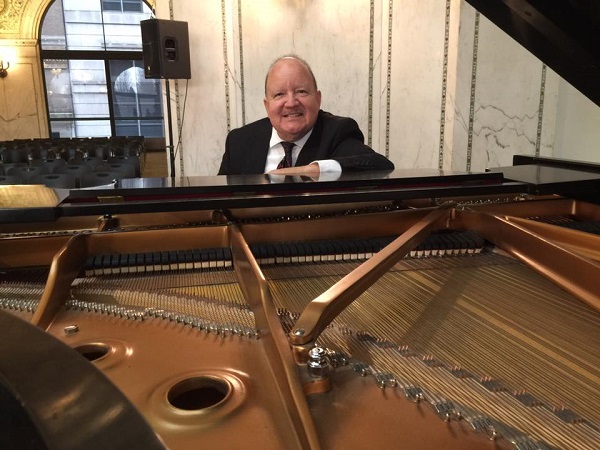
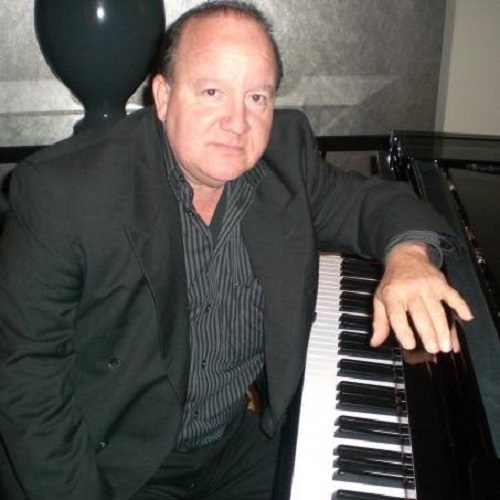
Samuel del Real was an excellent pianist, orchestra conductor, arranger and educator

Born on August 22, 1953 in Barranquilla, Colombia, he was a well-known pianist, orchestra conductor, arranger and educator.

Samuel del Real was an excellent pianist, conductor, arranger and educator.Samuel del Real was an excellent pianist, conductor, arranger and educator.
Samuel del Real was an excellent pianist, conductor, arranger and educator.

He was part of renowned orchestras such as Pacho Galán, La Dimensión Latina and El Trabuco Venezolano and participated in a series of record productions in Caracas, Venezuela.

In 1983 he recorded his first album with his own band. His first hit “Ella No Baila Sola” became the theme song in every night club in Colombia, Venezuela, Peru, Panama, USA among other countries.

In 1985, Samuel moved to Chicago, USA, where he quickly formed his orchestra with members of different nationalities resulting in a mixed sound for his music.

Since then Samuel del Real and his orchestra participated in many festivals, concerts, private events in cities such as Chicago, London, New York, Minneapolis, St. Paul, Detroit, Indianapolis, Miami and more. “Piano Caliente”, ‘Piano Jamboree’ and ‘Piano Navideño’ are the most recent albums that include selections from his extensive Latin jazz repertoire, as well as new interpretations of Afro-Cuban classics from his album entitled Piano Caliente.

Samuel In 1985, Samuel moved to Chicago, U.S.A.

Samuel has ventured not only into the salsa genre, but also into Latin jazz that surprises even those who don’t know him.

It doesn’t take much to realize that Samuel was “El Maestro del Buen Ritmo” and that his music is here to stay.

Samuel del Real: the artist from Barranquilla who triumphed in the United States.

He trained musically and academically, open to the idea of expanding his artistic horizons.

“I began my musical studies in Fine Arts, among my teachers I remember Günther Renz.

In Venezuela I attended the Juan José Landaeta Conservatory and the Caracas Philharmonic Conservatory with the pianist Paul Rosenbloo.

I studied harmony and counterpoint. With maestro Antonio Lauro, composer and guitarist, I completed my academic training”.

At the age of 15 he began his professional career as a pianist in the Pacho Galán Orchestra. There he learned the tricks of popular dance music of the Colombian Caribbean, and the possibilities of sharing with national musicians opened up for him.

DiegoDel Real, my first piano teacher, my advisor, my partner in producing, arranging and recording music.

With him I learned the routine of Caribbean music, he had a very positive attitude towards me. He would summon me before rehearsals to teach me how to play, he would take the score and sit with me at the piano: ‘Play like this’, he would tell me, and ‘play the acor-des this way, this is the tumbao, this is the phrasing’, all with a lot of patience”, he recounted.

“There was Pi¬chirilo on bass, Jorge Pérez on timbales and drums; and Joaquín Pérez on congas. Chicho Sarmiento, Clí¬maco Sarmiento’s son, played the alto saxophone; Pacho Aragón played the tenor saxophone. On trumpets Armando Galán, Raúl Lastra and Chino Acosta.

Rosendo on trombone. Maestro Pacho Galán would arrive to conduct the first set and then he would leave, Armando would be in charge of the orchestra. That’s when my interest in Caribbean folklore began.

I did not record with Pacho’s orchestra because he did not record in that period, but I played a lot of his music and I still play it in Latin jazz.

“For me it was a great school,” he said.

Although he has lived outside the country for many years, when he returns to Barranquilla it is as if he had never left.

It shows in his confidence to walk the streets, to visit places, to call friends, to exchange anecdotes with people he barely knows.

He is a man who lives for music, to which he has dedicated a contagious enthusiasm. That is why when he comes, it is a pleasure to review his career.

“I come to take a little hot temperature and to bring my latest albums for the local public to get to know them,” he said.

In 1975 he formed an orchestra in Venezuela with which he worked at the Hotel Tamana¬co Internacional, while at the same time he was a pianist, administrator and producer of various musical projects in the recording industry of that country.

In 1979 he joined Dimensión Latina, an aggregation with which he recorded Di¬mensión desconocida (1979), el número uno con la núme¬ro uno (1980), Para siempre (1980), Combinación latina Nº 4 (1980), and Cuerda para rato (1981).

“In Dimensión Latina I spent three years with Andy Montañez, Argenis Carruyo and Gustavo Carmona, then I started the orchestra project with my name.

I also recorded with Andy Montañez as a soloist, and made arrangements in recordings for Velvet de Venezuela”.

Samuel also participated in the extraordinary Trabuco Venezolano, led by drummer Alberto Naranjo.

“With Trabuco Venezolano I participated in many concerts in Venezuela.

With them I recorded Irakere and Trabuco, in a live performance at the Poliedro de Caracas. I also recorded Imágenes Latinas.

The Flor y Nata, themes: No me engañes, Rosa de la Noche, Brujería, Almas Blues, Desilusión, (there I do a piano solo that has been highly praised), a pesar de Usted, Orquesta de moda, No quiero Confusión. Retrospectiva del Trabuco Venezolano Vol. 2 (1977- 1984)”.

El Trabuco Venezolano – La Flor y Nata 1984

In 1983 he recorded his first album with his orchestra, the hit was the song Ella no baila sola, which became his letter of introduction.

In 1984 he recorded his second album, repeating his success with the song Cara de Domingo, by the niuyorrican flautist Lou Perez.

The third album with his orchestra was produced in 1987, when he was already living in Chicago.

“When I left Dimensión Latina, Gustavo Cardona, Oscar D’León’s bass player, encouraged me to start my own orchestra.

One of the numbers was Ella no baila so¬la, and when it was played, people stopped to dance. That is why we decided to record that song.

I brought Frankie Paz, a boy from Maracaibo who had auditioned with Dimensión Latina as a replacement for Argenis Carruyo, but César Monje didn’t like it.

I told the boy, I’m going to have my orchestra soon and I’m going to bring you with me”.

Referring to his piano influences, Samuel recalls Noro Morales, Eddie and Charlie Palmieri, Richie Ray and Lino Frias.

Others such as Bud Powell, Thelonious Monk and Oscar Peterson, shaped his vision.

“I liked Noro Morales a lot, I had only one record of his, ‘Maria Cervantes’, which caught my attention since I was a child. One day I decided to arrange it a little differently. I still play it in my Latin concerts.

Del Real took up residence in Chicago in 1985. There he has continued his work moving between Latin dance music and Latin jazz.

I’ve been living there for 32 years, I have my orchestra, I give Latin jazz concerts, and I’ve also worked for other organizations in other cities like Minneapolis and Cleveland.

We do salsa and different Latin American rhythms. The music business has changed, it’s a big investment to make a record, and you have to project it to the singer, limiting the possibility of moving.

That’s why I decided to make Caribbean Latin jazz instrumentals; with that I expose my music without the need to write ten arrangements for a singer with whom you run the risk of him leaving”.

His recent recordings include the Pianos del Caribe series, which includes the discs Piano caliente, Piano jamboree and Piano navideño.

“The first disc of the series, Piano Caliente, brings songs from the 50’s such as Mata Siguaraya, El que siembre su maíz, Besitos de coco…. I made the themes a little more progressive with jazz, but preserving their essence.

I subtly changed the harmonic structures, without distorting them. There the singer is the piano.

Then came Pia¬no Jamboree, with some of my own themes. I do more complex things, trying to penetrate Latin jazz, looking for a space for my musical identity.

It is an interesting work that I would like music lovers from Barranquilla to listen to.

The third album also in the same series is entitled Piano Navideño,

“The first album in the series, Piano Caliente, brings songs from the 50’s like Mata Siguaraya, El que siembre su maíz, Besitos de coco…. I made the themes a little more progressive with jazz, but preserving their essence.

I subtly changed the harmonic structures, without distorting them. There the singer is the piano.

Then came Pia¬no Jamboree, with some of my own themes. I do more complex things, trying to penetrate Latin jazz, looking for a space for my musical identity.

It is an interesting work that I would like music lovers from Barranquilla to listen to.

The third album also in the same series is entitled Piano Navideño, I took as a reference the themes of Christmas. Christmas is very important to me. I am a lover of that celebration.

I took several themes from the international Christmas repertoire and put them in Latin jazz”.

No one doubts that Barranqui jazz or the International Carnival of the Arts would be the perfect setting for his work. Plus, it would be a homecoming in style.

“I think it would be a great opportunity to showcase my music in my city. I am glad that in Barranquilla they are creating spaces like the Carnival of the Arts and the Caribbean Cultural Park, so that people have access to that part of the culture that is music”.

He passed away at the age of 67 on December 10, 2020.

Samuel del Real, who suffered from diabetes, died in Chicago, United States, where he had settled 35 years ago.

Also Read: Thank you Rafael for all you have done for Salsa. Without you many of us would not be salseros

Source and Collaboration By: Marino de Jesus (15889 of Historia Salsera
Republica Dominicana

Anacaona Orchestra

Latin America / Cuba / Havana

Anacaona Orchestra. Women of Cuba Since 1932

Genesis Founded in 1932

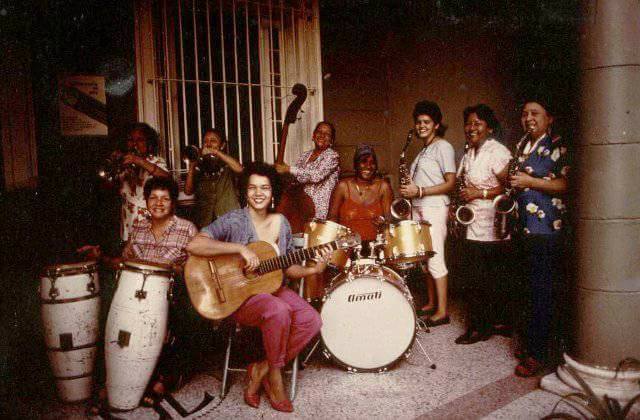
Anacaona Orchestra founded on February 19, 1932 by Concepción Castro Zaldarriaga and her sisters, being then the first female sextet of Son Cubano and in 1934 expanded to the Jazz Band and Charanga Típica format, projecting itself to the world from the famous ¨Aires Libres of the Saratoga Hotel. ¨ in the Havana Prado.

Anacaona Orchestra
Anacaona Orchestra

Between the 1940s and 1960s, these talented women toured throughout North to South America, the Caribbean and France.

In Mexico, one of the countries most visited by the orchestra at this stage, its images and sounds were recorded in some film of Mexican Cinema, such as: ¨the night is ours¨, ¨I do not deny my past¨ and ¨Women of theater¨ in which they alternated with film and music artists from that country. Also at that same time they recorded with the RCA Víctor label.

Anacaona Orchestra photo

The Aguirres

The sisters Giorgia and Dora Aguirre, with a solid musical background, specializing in Double Bass and Saxophone, recently graduated from the ¨Amadeo Roldan¨ Music Conservatory, joined the Anacaona Orchestra with its original founders in 1983, under the direction Alicia Castro, with whom they learned the most genuine genres of Cuban popular music, the rigor and discipline in this profession.

Anacaona Orchestra
Anacaona Orchestra

3rd Generation


After the retirement of the Castro sisters in December 1987, she assumed the direction of the Georgia Aguirre Orchestra, who, together with her sister and other young women who had also graduated from music schools, continued the work begun by the founders, consolidating a style that combines tradition with modernity, to preserve and enhance the history of Anacaona.

Anacaona Orchestra
Anacaona Orchestra

Tours

Internationally, they have traveled to more than 30 countries in Europe, Asia, Africa, America and the Caribbean, performing at important festivals and multiple stages, among which the most outstanding are:

Anacaona Orchestra
Anacaona Orchestra

The tour of 34 countries in the People’s Republic of China; his participation in the play ¨El Burgués Tropical¨ under the direction of Gerome Sabarì, inspired by Moliere’s classic, El Bourgeois Gentleman”; the tour made through some cities in the United States in which they also had a very emotional meeting with Graciela Pérez, singer and founder of Anacaona and the show “Sabor de la Habana” that opened the season of Cuban shows at the Cabaret Del Gran Casino Monte Carlo of the Principality of Monaco,

In addition to other important jazz and summer festivals in Spain, Germany, Belgium, Sweden, Holland, Canada, Jamaica, Aruba, Curacao, French Guiana, Guadeloupe, Martinique, Saint Lucia, Peru, Honduras, Venezuela and Mexico, among others.

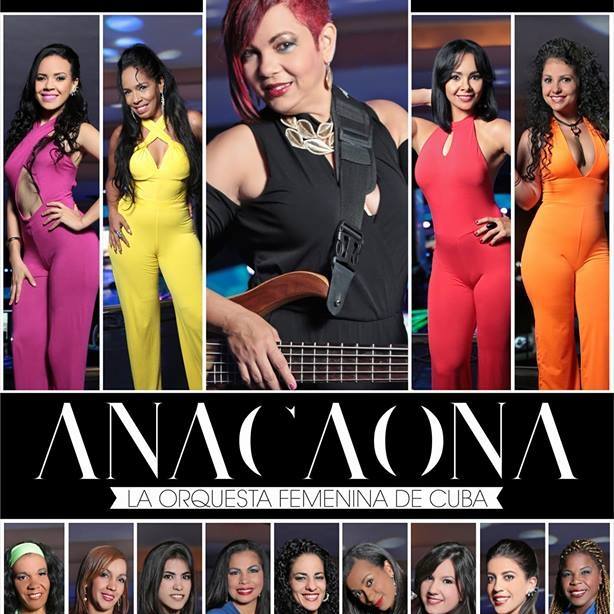
Anacaona Orchestra flyer
  • « Go to Previous Page
  • Page 1
  • Interim pages omitted …
  • Page 8
  • Page 9
  • Page 10
  • Page 11
  • Page 12
  • Interim pages omitted …
  • Page 21
  • Go to Next Page »

International Salsa Magazine (ISM) is a monthly publication about Salsa activities around the world, that has been publishing since 2007. It is a world network of volunteers coordinated by ISM Magazine. We are working to strengthen all the events by working together.