• Skip to primary navigation
  • Skip to main content

International Salsa Magazine

  • HOME
  • Previous editions
    • 2026
      • ISM / March 2026
      • ISM / February 2026
      • ISM / January 2026
    • 2025
      • ISM / December 2025
      • ISM / November 2025
      • ISM / October 2025
      • ISM / September 2025
      • ISM / August 2025
      • ISM / July 2025
      • ISM / June 2025
      • ISM / May2025
      • ISM / April 2025
      • ISM / March 2025
      • ISM / February 2025
      • ISM / January 2025
    • 2024
      • ISM / December 2024
      • ISM / November 2024
      • ISM / October 2024
      • ISM / September 2024
      • ISM / August 2024
      • ISM / July 2024
      • ISM / June 2024
      • ISM / May 2024
      • ISM / April 2024
      • ISM / March 2024
      • ISM / February 2024
      • ISM / January 2024
    • 2023
      • ISM / December 2023
      • ISM / November 2023
      • ISM / October 2023
      • ISM – September 2023
      • ISM – August 2023
      • ISM July 2023
      • ISM Edition June 2023
      • ISM – May 2023
      • ISM April 2023
      • ISM March 2023
      • ISM February 2023
      • ISM January 2023
    • 2022
      • ISM December 2022
      • ISM November 2022
      • ISM October 2022
      • ISM September 2022
      • ISM August 2022
      • ISM July 2022
      • ISM June 2022
      • ISM May 2022
      • ISM February 2022
      • ISM January 2022
    • 2021
      • ISM December 2021
      • ISM November 2021
      • ISM October – 2021
      • ISM September 2021
      • ISM August 2021
      • ISM July 2021
      • ISM May 2021
      • ISM April 2021
      • ISM June 2021
      • ISM March 2021
      • ISM February 2021
      • ISM January 2021
    • 2020
      • ISM December 2020
      • ISM November 2020
      • ISM October 2020
      • ISM September 2020
      • ISM August 2020
      • ISM July 2020
      • ISM June 2020
      • ISM May 2020
      • ISM April 2020
      • ISM March 2020
      • ISM February 2020
      • ISM January 2020
    • 2019
      • ISM December 2019
      • ISM November 2019
      • ISM October 2019
      • ISM Septembre 2019
      • ISM August 2019
      • ISM July 2019
      • ISM June 2019
  • Download Salsa App
    • Android
    • Apple
  • Spanish

Search Results for: Johnny Cru

Great Christmas salsa songs and their stories

Christmas is a time of joy where one of the most important elements is music, so we believe this is the best opportunity to feature some of the best Christmas salsa songs that we can remember. Here are the most cheerful songs in Latin music to listen to during the most beautiful time of the year.

Aires de Navidad by Héctor Lavoe and Willie Colón

”Aires de Navidad” is a great song which is part of the Christmas album ”Asalto Navideño Vol. I” from 1971. In the same year, Lavoe and Colón were already making preparations to record an album entirely dedicated to the festivities, indeed, they already had some songs recorded, but they knew that there were still details to finish. 

Then, Héctor asked musician Roberto García to join the project that was underway, as they needed a guitarist to accompany them. Garcia accepted the proposal almost immediately and got excited about the project that he even proposed Yomo Toro to join them, to which Hector and Willie agreed with no problems.

The day they agreed to record the material, Toro came in first and began playing a Puerto Rican cuatro when he was scheduled to play the electric guitar. However, Johnny Pacheco, upon hearing the sounds, liked the arrangement and approved it without question. 

That is how the four artists set out and recorded what would soon become one of the greatest Christmas hymns in recent times, and it will surely be in thousands of homes around the world this month.

Aires de Navidad
One of the photos taken during the recording of ”Aires de Navidad”

La Fiesta de Pilito by El Gran Combo de Puerto Rico

”La Fiesta de Pilito” is included in the album ”Nuestra Música” by El Gran Combo de Puerto Rico, which was recorded in 1985 as a tribute to the most beautiful and endearing of the Island of Enchantment during the Christmas holidays. Back then, any musical work created by El Gran Combo always became a resounding success once it was released and its members were sure that this would be no exception.  

It is then when the composer of one of the main songs of ”Nuestra Música” came on the scene, and we are talking about Luis ”Pilito” Cruz, who would become part of the internationally acclaimed salsa group that same year.

What is known in the first instance about the song is that it did not have a specific name, so it was baptized as ”La Fiesta de Pilito” honoring the composer of its first two verses. Subsequently, the piece was completed with pregones and soneos created by the rest of the orchestra members.

Additionally, they received the support and collaboration from ‘‘El Caballero de La Salsa” Gilberto Santa Rosa, who served as a guest artist for the legendary recording.

Nuestra música at Christmas
Cover of the Christmas album ”Nuestra Música”

Bembé en Casa de Pinki by Richie Ray and Bobby Cruz

”Bembé En Casa de Pinki” is a Christmas song written by the famous duo Richie Ray and Bobby Cruz, which was released in 1971 and is the first single from the Christmas album ”Felices Pascuas”.

The song’s title comes from someone who would be very important in the career of the two aforementioned artists and that was the Panamanian-born diplomat named José Rogelio ”Pinki” Arias. The gentleman was a close friend of Richie and Bobby and, at the same time, director of the Panamanian Institute of Tourism. He used his friendship with the vocalists to invite them to various events in his country, knowing that they would be a complete success with the presence of the duo.

Such was the affection both exponents had for ”Pinki” that they dedicated to him two songs from their extensive repertoire, which were ”Bembé en Casa de Pinki” and one belonging to the album ”El Diferente”. 

Among other songs, ”Felices Pascuas” also includes tracks such as ”Bomba en Navidad”, ”Mi Niñez”, ”San José”, and ”Aguinaldo Navideño”.
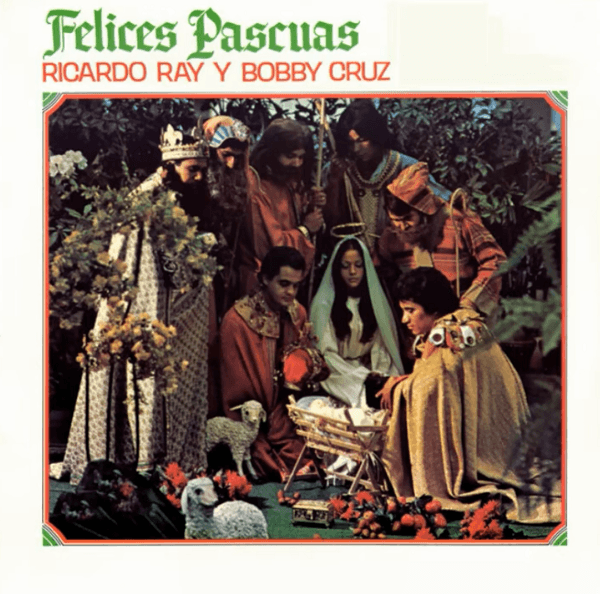
Felices fiestas at Christmas
Cover of the Christmas album ”Felices Fiestas”

Estelita by La Sonora Ponceña

Another group that never misses a chance to offer their talent to please their fans and make them enter the Christmas atmosphere during the holiday season, leaving great classics that can not be missing every year in our homes and one of them is ”Estelita”.

Something that can never be missed in a Christmas album is that colorful character who always brings playfulness and good humor to the atmosphere. In this case, it is Estelita, who is a party neighbor who always sneaks into the Christmas parrandas in her neighborhood, something that many people will surely feel identified with in various parts of Latin America.

The song was written by the late maestro Joe Torres and was part of the album ”Otra Navidad Criolla!” along with ”Opera Gandinga”, ”Vamonos Pa’l Campo”, ”La Vengo Siguiendo”. 

Read also: Luis Guillermo Rangel the great friend of everyone

ISM / November 2024

Cover-L November 2024 Cover-R November 2024
SalsaApp-L SalsaApp-R
N.A. November 2024
L.A. November 2024
Europe November 2024
Africa November 2024
Asia November 2024
Oceania November 2024
Chairman of the Board
Artist November 2024
Letter to the edtor

“We are the Latin music world network”

Do you enjoy Latin music? Would you like to get more involved in this genre and share your passion for Salsa, Bachata, Kizomba, Merengue and more. Why not joint our Global Team of volunteers as a correspondent?
You can ask for more details with no obligation and we’ll be happy to talk to you about the benefits that come with the role [Read more…] about ISM / November 2024

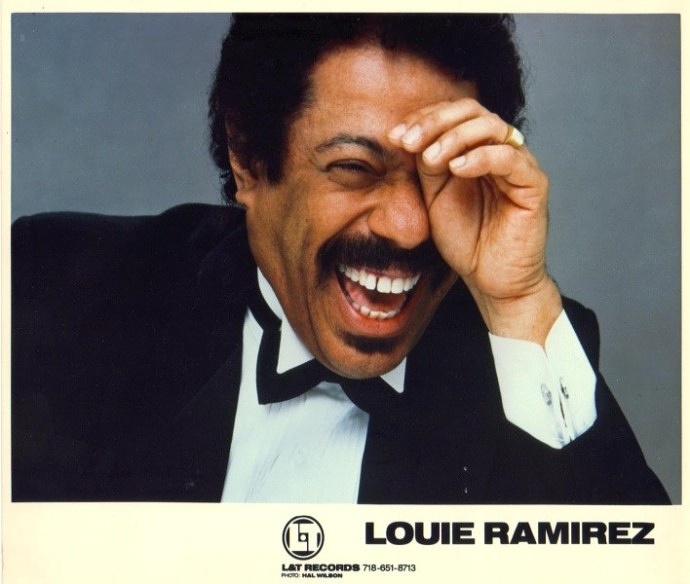
Louie Ramírez. The Hidden Talent of Salsa Ahead of its time

North America / USA / New York

Louie Ramírez.

Music often requires characters who are always behind the scenes and support the work of singers and performers with their talent, who are ultimately the ones who “put on their face” and become popular. Sometimes, however, these anonymous characters rise to fame in order to perform their own work and even become more popular than any popular singer.

In the case of Pop, this character is called Quincy Jones, of whom it is enough to say that he has been an arranger for Frank Sinatra and a producer for Michael Jackson. A nobody”. In the case of Salsa, these characters have been symbolized by Jones’ emulator, a guy named Louie Ramírez who has done everything with everyone.

Louie Ramírez
Louie Ramírez

One afternoon in 1994, Ramírez was driving his car down the highway that would take him to Variety Studios in New York. It was going to be a quick session since he only needed one song to complete his 20th album as conductor. Perhaps that was why he was nervous and that filled him with anxiety. Minutes later he couldn’t resist the feeling and had to pull over to the side of the car. He had not finished doing it when a cardiac arrest ended his life.

Louie Ramírez
Louie Ramírez

Louie Ramirez was a genius. The classic man to whom everyone turns for advice and solutions to their problems. It didn’t matter if they were young or old musicians. The fact was, Louie had the answer, and visiting him was like rubbing Aladdin’s lamp. That was a characteristic that always accompanied him, from that first recording “Conozca a Louie Ramírez” in 1963.

He was 20 years old at the time and had already stood out for composing some pachangas and arranging for Pete and Tito Rodríguez’s orchestras. The commentator Dick Sugar then presented it like this: Ramírez breaks the image of the director of a group that uses the talent of other composers and becomes a follower of a rhythm. No, Louie Ramírez is a creator in his genre.

Louie Ramírez Photo
Louie Ramírez Photo

That talent did not go unnoticed by the new Czar of Latin music in New York, Jerry Masucci, who hired him as a star for Fania Records and at the same time, as an arranger for the orchestras and ensembles that belonged to the record company. Ramírez was soon involved in work and was only able to record two albums during the sixties, “Good news” and “Alí Babá”.

On that last album appeared the hit that allowed him to be a famous artist, El Títere, a true Salsa classic. The theme was sung by Rudy Calzado, the third of the soneros that Louie had used without finding the ideal. That was a burden that accompanied him as a director during the seventies, when he used singers of the stature of Pete Bonet, Tito Allen, Jimmy Sabater, “Azuquita” Rodríguez, Adalberto Santiago, and even Rubén Blades.

Louie Ramírez
Louie Ramírez

It was with Blades, precisely, that he made an anthological album, “Louie Ramírez and his friends”, in which the song Paula C was included, with an arrangement of those that deserve -hats off-. By then, Ramírez was considered in New York as the most progressive arranger that Salsa had, thanks to the brilliant work done for the Fania All Stars. An excellent job had been the instrumental arrangement of Juan Pachanga, to be sung by Blades, of Canta Canta for a performance by Cheo Feliciano, and of the entire album “Algo nuevo” that Tito Rodríguez sang with Louie’s orchestra.

But the high point of Ramírez’s career came in 1980 when Joni Figueras, representative of the K-Tel International label, hired him to arrange the ballads Todo se derrumbó and Estar Enamorado de Manuel Alejandro. The album, which included these and other tracks, was released two years later under the title “Hot Night” and was recorded by Louie’s own orchestra.

Louie Ramírez - Salsa Progresiva
Louie Ramírez – Salsa Progresiva

This is how the Salsa-ballad or Salsa-romántica was born in a job that Ramírez continued until his death, making attempts at Latin Jazz from time to time, which he loved. That is why he recorded an album in tribute to Cal Tjader, where Louie was director, producer, composer and arranger, in addition to playing the timpani and his favorite instrument: the vibraphone.

Louie Ramírez was a genius in arranging, in a career where those of Guantanamera and Isadora stand out for Celia Cruz, El Guiro de Macorina for Johnny Pacheco and El Caminante for Roberto Torres. Apart from this, there are his works for the Alegre and the Cesta All Stars. Regarding this profile of Ramírez, the critic Eleazar López defined it very well:

Louie Ramírez - salsero
Louie Ramírez – salsero

It is not easy to arrange for a dance band, especially when it comes to a group that cultivates the hot tropical genre. Many musicians feel influenced by Jazz and the result of their orchestrations leaves a void in the dancer. Others arrange simple, but so simple that they repeat and copy themselves, and the result is tiresome music, without any degree of creativity: music that says nothing, that leaves nothing. Louie Ramírez has found the perfect balance… that’s why he always stays current.

Louie Ramírez flyers

Juan Karlos Jiménez talks about his orchestra Salsa Nueva Band and freelance career

Los Angeles is an inexhaustible source of Latin talent and this is proven every day with a large number of singers, musicians and groups that give all for all in each of their performances, with which they manage to earn a privileged place in the city and California’s music scene.    

On this occasion, we talked with the great Mexican percussionist Juan Karlos Jimenez, with whom we had the privilege of making contact to learn more about his career and contributions to Latin music in US territory.   

percussionist Juan Karlos
This is gifted Mexican percussionist Juan Karlos Jiménez, with whom we talked in this occasion

Juan Karlos’ beginnings in music   

Juan Karlos was born in Veracruz, place he describes as ”one of the most salsa-loving cities in Mexico”. The first musical influence in the artist’s life has been his own father, who played a lot of Cuban music of the time when Juan Karlos was still a child, and among his favorite groups and artists were La Orquesta Aragón and Tito Puente. 

Of his four brothers, he was the only one who devoted himself to music professionally and wanted to take salsa as a foundation, being something exceedingly rare for a Mexican, since most of the population does not usually see this genre as part of the typical music of the country. However, Juan Karlos also points out that, since Veracruz is located in the tropical part of the country, the city has a lot of Caribbean musical influence. This was one of the reasons that led the artist to become so passionate about salsa. 

In addition to music, he also studied a degree in communication and graphic design at the Universidad del Valle de Atemajac, Guadalajara. As for the communication part, being a 13-year-old boy, he began working at a radio station, which would be the beginning of interest he would have in the not too distant future for locution in a much more formal way. This led him to work in very prestigious places in Mexico such as Televisa Radio, giving him the necessary experience to know how to handle himself as a musician in relation to the media when he would promote his orchestra years later.   

While I was university studying, I worked in a music store and one day I had to serve to the Cuban Afro-jazz singer Rosalía de Cuba, who invited me to attend Cuban nights of which she was part of in restaurants and clubs in Guadalajara. One night, I was encouraged to go and started playing with one of the trios that performed that day and the leader of the group was so fascinated with my skills as a percussionist that he hired me permanently in exchange for 150 Mexican pesos per performance” said Juan Karlos about his time as a student.   

He also pointed out that in order to reach such a good level, he took a few classes with the late Cuban arranger, composer and bongocero Adalberto Alvarez, leader of the group Son 14, thanks to whom he was able to play percussion so efficiently.   

Today, he exercises his skills as a graphic designer with his orchestra Sangre Nueva Band, since he is the one who creates the album covers, flyers and artwork in general related to his musical project.  

Juan Karlos posing
Juan Karlos Jiménez posing for camera

Moving to the United States   

When Juan Karlos was just going to form his first band in Guadalajara, he met Maika Miller, who played for the Mexico’s Philharmonic orchestra and would be his partner for several years. Some time after they married, Milka was offered a master’s degree in Los Angeles and asked her husband to go with her, to which he gladly accepted because of the new opportunities he would have in his new home.   

A few years later, he retried creating his group in her new city of residence after 15 years of hard work. And while Juan Karlos and Milka are no longer a couple, they continue to be part of the same musical project, which they have baptized Sangre Nueva Band.   

However, in order to reach that point, he had to gain a lot of experience playing and perfecting his technique, but fortunately, many groups gave him the opportunity to make a living and be better every day at what he did, such as Conjunto Son 14, Carache, Santiago de Cuba, Rosalía de Cuba, Johnny Blas Y Afro Libre Orquesta, La Orquesta de Yari Moré, Tabaco y Ron, among others. 

His first attempt at creating an orchestra was Jazz Son, which he founded with Maika in Mexico with the idea that his music would be based on the fusion of jazz and son, but his plans were postponed with their sudden move to the United States. Finally, in 2009, he managed to found the orchestra he has today, which he called Sangre Nueva Band. 

Even so, he never stopped playing independently for other artists such as Gilberto Santa Rosa, Victor Manuelle, Ruben Blades, Cheo Feliciano and many more.  

Juan Karlos playing
Juan Karlos Jiménez playing and recording in a studio

Salsa Nueva Band   

One of the things that led Juan Karlos to create his own orchestra in Los Angeles was his desire to be the leader of his own project. He says he feels fortunate and grateful to be able to play with other orchestras, but in his own words ”it is better to be the head of mouse than the tail of a lion”. For the same reason, the idea of working in his own business without having to rely on other orchestras or singers was always in his head. 

When he decided it was time, he had a chance encounter with an Armenian musician who, from the street, saw his congas in the back of his car, asked him if he was a musician and invited him to play at a nightclub next Saturday. By that time, he had managed to gather six musicians playing three congas, a trumpet and a bongo. On the same day, a music entrepreneur asked him to play at another venue, so he ventured to enlarge the group and was asked to name the band, which he called ”Sangre Nueva”.  

Today, Juan Karlos is very happy with all the musicians who accompany him on this adventure and hopes that they will stay with him for a long time. 

Read also: Raúl Vargas and his flamenco rumba duo Dos Bandoleros 

Isidro Infante is one of the most successful producers and arrangers in the history of Salsa

Born August 12, 1952, San Juan, Puerto Rico) is a professional pianist, arranger, composer and music producer, working in genres such as Classical Music, Rock, Pop Rock, Latin Ballad, Rock in Spanish, Salsa, Latin Jazz etc.

Isidro Infante is one of the most successful producers and arrangers in the history of Salsa

In addition, he has 5 awards and 47 Grammy nominations and several Billboard projects, Lo Nuestro Awards and Ace & Paoli Awards.

His parents were Dr. Isidoro Infante and Carmen Santiago.

From a young age Isidro was influenced by listening to his father play the violin, getting involved with music at age 14 when he participated in a band that played songs by Santana and Chicago.

At the age of 15 he formed his band “Carpe Diem” (Live Life), a Rock/Salsa group that played Rock’n’Roll, Pop, Salsa and included Tommy Villarini on trumpet, Cuto Soto on trombone and guitarist Manolo Sastre.

With this band Isidro wrote his first arrangement “Tiempo De Ti”.

Two years later, Infante was in charge of the background music for Myrta Silva’s television show.

After taking private piano lessons with the famous pianist Carmen Socorro Duclerc, he studied at the Conservatory of Music of Puerto Rico and at the University of Puerto Rico, obtaining bachelor’s degrees in music and chemistry.

Although he was inclined towards medicine because it was his father’s profession, he decided to delve into music and graduated in composition and arrangements at Temple University in Philadelphia in the late 1970s.

In 1995, Isidro Infante and ‘La Élite’ signed a contract with RMM Records as an exclusive artist. Isidro also signed as A&R director for RMM records.

With him he gained experience, quality and evident success in his productions for the label. His work with La India earned him double platinum sales and a Grammy nomination for their album “Sobre El Fuego.”

Within just four years of its founding, La Élite became a dominant force in the Salsa music industry. The band’s first release earned a gold record as well as awards from AS, Paoli and Diplo.

Isidro Infante He also has 5 Grammy awards and 47 nominations and several Billboard projects, Lo Nuestro Awards and Ace & Paoli Awards.

The hit songs “Que Tengo de Ti,” “Nave de Papel,” “Ganas” and “Has Quedado Retratada” all topped the Tropical Salsa charts.

On Isidro Infante y La Élite II, the group’s second production, Isidro added vocalist Maggie Ramos. This helped him create an album with an exceptional variety of music.

Songs like “Quítame ese Hombre” and “Santo Militar y Montuno” made Isidro Infante a favorite of many.

Along with Louie Ramírez, Infante was credited as one of the creators and pioneers in the Salsa movement. Romantic Salsa.

In 1998, his production “Licencia Para Engañar” was released, which was the result of his creativity and flexibility as a musician. In his orchestra, Isidro Infante y La Élite, Jennifer Jiménez and Guillermo Duval participate as vocalists.

In his first album “Secretos”, Kevin Ceballo made his debut as a soloist in “Licencia Para Engañar”, produced by Isidro Infante.

His work as a producer earned his album “India’s Sola” a Grammy nomination. Venezuelan Oscar D’León also received a nomination for “La Fórmula Original” which Isidro also produced.

Isidro’s commitment to everything related to the Latin community prompted him to produce the event “Canto Para La Guaira”.

The concert was held with the purpose of raising funds for the victims of the disaster that affected thousands in Venezuela and thus “Poliedro de Caracas” has been filled to full capacity.

Among the RMM artists who performed were Kevin Ceballo, Ray Sepúlveda, Cheo Feliciano, Tito Nieves, Roberto Avellanet, Michael Stuart and Tony Vega.

In 1981, Ramírez and Infante were approached with the idea of ​​producing an album of famous ballads with Salsa arrangements.

Both found the project interesting and ambitious, so they accepted the challenge. Isidro added his experience in the field of ballads, acquired through his work with José Luis Rodríguez, Camilo Sesto and Yolandita Monge, to Ramírez’s knowledge of Latin jazz.

The result was “Noche Caliente”, the first album in the genre to sell over a million copies.

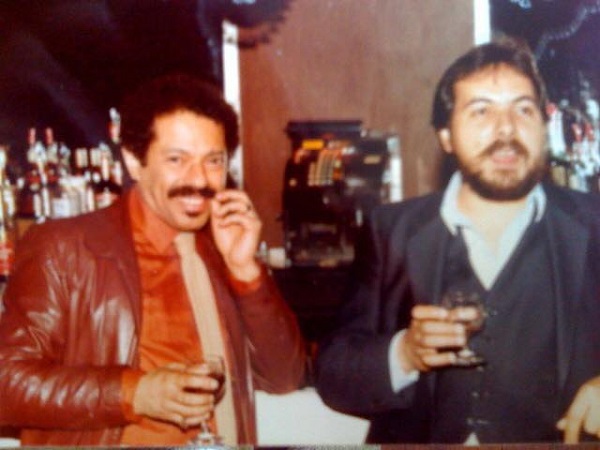
Memories at El Corso Night Club in New York City with my friend and mentor, Master Louie Ramirez, producer, arranger, vibraphonist, timpanist, marimba player

Isidro Infante is one of the most sought-after arrangers in Salsa.

Venturing into a genre other than salsa, he also participated in Willennium, Will Smith’s most recent recording where Isidro played piano and keyboards.

Isidro Infante was working with artists such as Stevie Wonder, Herb Alpert, Gloria Estefan, Dizzy Gillespie, Dionne Warwick, Patty La Belle, Will Smith, Wyclef Jean, Clark Terry, Jon Anderson & Yes, Vangellis, Sheila E., Tito Puente, Celia Cruz, Machito, Marc Anthony, La India, Fania All-Stars, Oscar D’Leon, Hector Lavoe, Willie Colon, Larry Harlow, Roberto Roena, Johnny Pacheco, Pete El Conde Rodriguez, Louie Ramirez, Ray De La Paz, Jose Alberto “El Canario”, Adalberto Santiago, Eddie Santiago, Lalo Rodriguez, Paquito Guzman, Marvin Santiago, Domingo Quinones, Camilo Azuquita, Kako, Rafael Cortijo, Ismael Rivera, Manny Manuel, Raul Marrero, Vitin Aviles, Papaito, Tony Vega, Puerto Rico All Stars, Ralphy Leavitt & La Selecta, The Latin Corporation, Jose Mangual Jr,Jr. Gonzalez, Ramon Rodriguez,Orquesta La Terrifica, German Olivera, Wichy Camacho, Johnny Ventura, Sergio Vargas, Cuco Valoy, Ramon Orlando, Los Hermanos Rosario, Los Niches, Los Fabulosos Cadillacs, Little Louie Vega, Robert Avellanet, Michael Stuart, Yanko, Kevin Ceballo Danny Rivera, Sophy, Mirta Silva, Ivy Queen, Tego Calderon, Mickey Perfecto, TNT and many more.

Among his compositions are “Viejo Pachanguero”, “Vicio de Quererte”, “Esa Niña” etc.

With more than 2,500 arrangements in his resume, Isidro is one of the most successful producers and arrangers in the history of Salsa.

Isidro Infante has been working for major record labels such as Sony BMG (Epic, Sony Discos, Sony International, etc.), Universal EMI Capitol TH Records Salsa International Velvet (Venezuela), Co Discos (Colombia), J&N Records, Univision Poligram, Luna Records Fonovisa, Sono Tone, Caiman Records, Faisán Records, GB Records, Ibero- Records, Salsoul Records and many more.

Isidro Infante produced the Special for Banco Popular 2010: Truibuto Al Gran Combo on CD & DVD which achieved platinum sales.

The project included the participation of El Gran Combo, Ismael Miranda, La India, José Alberto, Isaac Delgado, Michael Stuart, Domingo Quiñones, NG2, Luisito Carrión, Sammy García and El Sabor de Puerto Rico.

He was sharing the Fania All-Stars as musical director with maestro Johnny Pacheco in several concerts throughout Latin America and was involved in musical projects with the Mexican singer-songwriter Juan Gabriel.

In 2010, Isidro Infante and Iván Joy established the new company Artist System Inc. which is in collaboration with Diamond Music and has gained important positions in the market of digital production and promotion and also has a lot of experience in the creation and management of digital content.

Con India y La Cantante cubana, Laritza Bacallao

The company is working with such artists as Isidro Infante, Lucecita Benítez “La Voz Nacional De Puerto Rico”, Lunna, Lourdes Robles, Conjunto Canayón, Сorporación Latina, Manolo Lezcano, Lou Briel, Jowell & Randy, Arcángel, Tego Calderón, Jadiel, Endo, Guelo Star, Kastrofobia, Los Metalicoz and many more.

Awards

5-time Grammy winner

47 Grammy nominations and several Billboard projects

Premios Lo Nuestro and Ace & Paoli Awards.

Also Read: Ezequiel Lino Frías Gómez was an excellent musician, pianist, arranger and composer.

Source and Collaboration: Marino de Jesus (1588) from Salsa History of the Dominican Republic

  • « Go to Previous Page
  • Page 1
  • Interim pages omitted …
  • Page 24
  • Page 25
  • Page 26
  • Page 27
  • Page 28
  • Interim pages omitted …
  • Page 42
  • Go to Next Page »

International Salsa Magazine (ISM) is a monthly publication about Salsa activities around the world, that has been publishing since 2007. It is a world network of volunteers coordinated by ISM Magazine. We are working to strengthen all the events by working together.