• Skip to primary navigation
  • Skip to main content

International Salsa Magazine

  • HOME
  • Previous editions
    • 2026
      • ISM / June 2026
      • ISM / May 2026
      • ISM / April 2026
      • ISM / March 2026
      • ISM / February 2026
      • ISM / January 2026
    • 2025
      • ISM / December 2025
      • ISM / November 2025
      • ISM / October 2025
      • ISM / September 2025
      • ISM / August 2025
      • ISM / July 2025
      • ISM / June 2025
      • ISM / May2025
      • ISM / April 2025
      • ISM / March 2025
      • ISM / February 2025
      • ISM / January 2025
    • 2024
      • ISM / December 2024
      • ISM / November 2024
      • ISM / October 2024
      • ISM / September 2024
      • ISM / August 2024
      • ISM / July 2024
      • ISM / June 2024
      • ISM / May 2024
      • ISM / April 2024
      • ISM / March 2024
      • ISM / February 2024
      • ISM / January 2024
    • 2023
      • ISM / December 2023
      • ISM / November 2023
      • ISM / October 2023
      • ISM – September 2023
      • ISM – August 2023
      • ISM July 2023
      • ISM Edition June 2023
      • ISM – May 2023
      • ISM April 2023
      • ISM March 2023
      • ISM February 2023
      • ISM January 2023
    • 2022
      • ISM December 2022
      • ISM November 2022
      • ISM October 2022
      • ISM September 2022
      • ISM August 2022
      • ISM July 2022
      • ISM June 2022
      • ISM May 2022
      • ISM February 2022
      • ISM January 2022
    • 2021
      • ISM December 2021
      • ISM November 2021
      • ISM October – 2021
      • ISM September 2021
      • ISM August 2021
      • ISM July 2021
      • ISM May 2021
      • ISM April 2021
      • ISM June 2021
      • ISM March 2021
      • ISM February 2021
      • ISM January 2021
    • 2020
      • ISM December 2020
      • ISM November 2020
      • ISM October 2020
      • ISM September 2020
      • ISM August 2020
      • ISM July 2020
      • ISM June 2020
      • ISM May 2020
      • ISM April 2020
      • ISM March 2020
      • ISM February 2020
      • ISM January 2020
    • 2019
      • ISM December 2019
      • ISM November 2019
      • ISM October 2019
      • ISM Septembre 2019
      • ISM August 2019
      • ISM July 2019
      • ISM June 2019
    • 2016
      • ISM December 2016
      • ISM November 2016
      • ISM October 2016
  • Spanish
  • Download Salsa App
    • Android
    • Apple

Search Results for: La Sonora Matancera

Manhattan Latin Music by Jon Horn

In the year after the big war ended, a terrific hurricane tore across the island, and in the town of Santa Barbara de la Loma the Catholic church was destroyed, but the modest compound of Senora– devotee of the seven powers and gifted daughter of Yemaya, spirit of the seas – went untouched by the storm. The people of Santa Barbara were not surprised. They called Senora “La Poderosa,” the powerful one, for she could heal the sick better than doctors, break and cast spells – but only for good – and see beyond the now and here. Believers in the natural religion came weekly to the walled yard behind her neat, two-room bohio to praise the mighty spirits who might possess them as they danced and chanted to the inspired drumming of the tumbadores.

On the next full moon, Senora called her gente to a special midnight ceremony. Dressed as always in immaculate white robe and turban, smoking a long cigar and swigging from a flask of rum, she told the assembly that Hate was hard at work everywhere, and worse things than hurricanes or even the war just fought were soon to come. Now they must all concentrate their prayerful energies and send goodness in the guise of music to an evil world. The native rhythms of their island, produced from the potent mix of slaves, colons, and indios, could bring people of all kinds and colors together. As dark hands beat out on taut skins a deep, steady roll like distant thunder, Senora called up into the moonlit sky: “May the babies born of Mambo be bringers of justice and peace where there is none! Go, my Mambo! Go now and work your musical magic at the center of the biggest city in the strongest nation on the earth!”
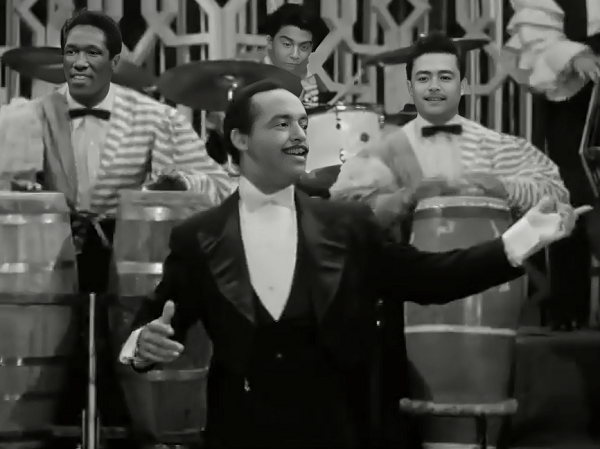
Damaso Pérez performing Latin music
The King of Mambo Damaso Pérez Pardo performing live

And the Mambo went and did all this, and much, much more…

Story goes that a certain midtown Manhattan dancehall was dying a slow death at the tag end of the Big Band era, just after the so-called “Good War.” The guy who was managing this musical venue (maybe for the Mob) was bemoaning the lack of customers to a canny Broadway promoter who poked a sallow finger at the bemoaner and said “Hey! If you don’t mind spics and
niggers in the joint, I can fill it six nights a week!” “At this point I don’t mind if it’s spics, niggers, or little green men!” “Done deal!”

Twas the season of Jackie Robinson “integrating” baseball’s major leagues. Smart money knew that American apartheid couldn’t last forever, at least not overtly. And where else would the winds of change blow first and hardest but in the Empire City, aka Nueva York? So the Palladium opened with a hot mambo policy, the best Afro-Cuban bands were hired, and lines formed around the block. Harlem and Spanish Harlem were now welcome in a big midtown venue. And not only “spics” and “niggers” showed up, but “wops” and yids” as well, the bridge-and-tunnel “mamboniks.” The word spread, and whitebread cafe-society mavericks came to check it out and stayed to shake a tail feather. For the next couple of decades it was the “place to be, thing to do” in NYC, if you wanted to move to and be sent by the best hot Latin sounds.

Around 1954/’55, the mambo crested in the Pop consciousness, with “Papa Loves Mambo,” “Mambo Italiano,” and “What The Heck is the Mambo?” on the mainstream Hit Parade. Perez Prado even took “Cherry Pink and Apple Blossom White” to Number One on the charts. But the real mambo, cha-cha- cha, guaracha, charanga, and son stayed underground, a niche thing, ethnic dance
music for Manhattan Latins and the cool cognoscenti. Raided and harassed by authorities who didn’t cotton to Mambo’s miscegenating powers, the Palladium lost its liquor license in the early ’60s and closed for good in ’66, just as the “new breed” wave of Latin Soul & Bugalu was making noise on the mean streets. And the beat goes on…

The Mamboniks were cool-looking Italian & Jewish guys & gals, out of high school but not in college, who hung out around Dubrow’s on the Hiway. If one of them had a dented sportscar or an old but flashy convertible, they’d congregate around the car at the curb, the dash radio loudly broadcasting Dick“Ricardo” Sugar’s mambo show of an evening, trying out hip-swinging cha-cha steps, casually dap guys and foxy girls in tight skirts; and tho the guys were not really hoods, they’d hang with future felons down the poolroom sometimes, and push a little weed to the hipper highschoolers, who whispered that these guys rolled queers in the Village for bucks and kicks…. but the big kick for the Mamboniks was the Latin Kick, hitting the Palladium at least once a week to hobnob with Ricans and Cubans and dap Harlem dudes and debs, all dressed up in continental suits and cocktail gowns, moving & grooving to the hot, blaring rhythms of Tito Puente and Tito Rodriguez, Eddie Palmieri, Joe Cuba, Orquesta Aragon, the La Playa Sextet, and many more smokin’ outfits who played en clave. Rest of the time they hung outside the cafeteria almost
under the BMT El, hanging on the Hiway but vibing they were too hip for the Hiway, still living at home in Brooklyn only ’cause it was free, but definitely on the way out and on up – or so it appeared to those a few years younger, hung up in mundane Midwood and Madison scenes. I didn’t really know the Mamboniks, but I knew who they were (the distance between 15 and 18 being even greater than between the Hiway and Broadway): one of them would fall with the felons and do time… another would marry his little sexpot cha-cha partner and go into the restaurant business downtown… yet another would become a musician/dope dealer, accent on the dope dealer. I only glimpsed these Mamboniks passing by Dubrow’s, but they called me (while ignoring me) to a more magical city than the one I knew as yet.
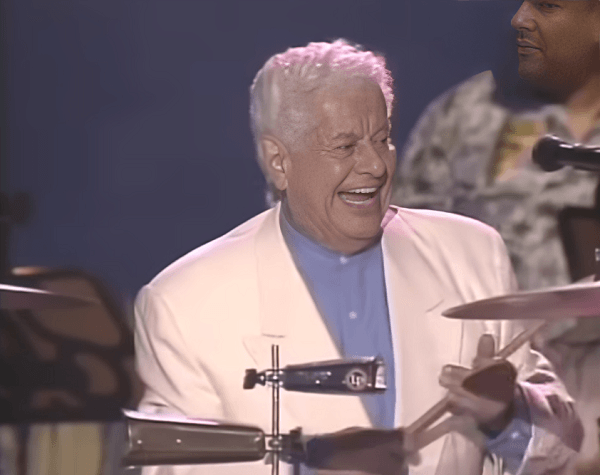
Tito Puente performing Latin music
Tito Puente performing ”Oye Como Va”

Jose de la Subway Speaks of Working the Mountains

There’s one or two agents book all the bands, and you best not get on their bad side! This guy I know from El Barrio, he plays timbales – he’s no Puente but he’s still young – he pulled me into this gig, subbing for the guy who was too fucked up on duji to make the job. We all meet at the bus terminal near the Dixie Hotel on the Deuce. Takes a couple hours to get up there and it’s real country, you can smell the trees! There’s these big Jewish hotels, they all book one Latin band to alternate with whatever square Pop band they got, and of course the biggest hotels get the big name bands and the smaller hotels get the cheaper bands who sometime hire kids just breaking in who look eighteen and can play some but don’t expect no union scale. You got this shack full of bunk beds to crash in, you eat leftover childrens’ meals – if there’s a hip Rican or Soul working in the kitchen you may get extras – and they don’t want to see your face around the place till showtime. Maybe they let you take a rowboat out on the lake, but you best stay away from the pool till you’re sent out there to play a cocktail set. They always call it an ‘Olympic-sized pool’ even if it’s four foot
deep! All these white chicks are out there in bikinis trying to get as dark as the people they don’t want in the pool with them. You play some cha-chas poolside late in the afternoon and you get to check out these chicks, some of them are hot, some give you the eye, but you wear shades and keep a stone face, and of course you’re high ’cause everybody be smokin’ weed in the band, that’s all you do, and you keep the job by keeping your distance from the hotel’s clientele. Some hustling bands be doubling, tearing around those mountain roads from one little hotel to another, making two jobs a night, wearing those ridiculous rhumba shirts with the big ruffled sleeves. After the last set everybody goes to eat and hang at Corey’s Chinese Restaurant in Liberty. When it’s Mambo Night at the Raleigh you sit in. And if you fuck up, or when the contract’s over, you’re back on the Hound to the Deuce, and you don’t have much loot to show for it. You’re paying your dues, you’re getting experience.

Musically, the late ’50s/early ’60s were dynamic times in NYC. Monk with Trane at the Five Spot, Ornette Coleman introducing “the new thing” aka “Free Jazz,” the hard-bop funk of “Moanin’” by Art Blakey’s Jazz Messengers, “Kind of Blue” by Miles, Trane’s classic quartet coming into its own with “Giant Steps” and “My Favorite Things.” And the Folk boomlet peaking in the Village
with Baez and Dylan, Paxton, Van Ronk, Ochs, and many more. R&B was in a slump and the Top 40 sucked bigtime… but over in Brooklyn and the Bronx, a new generation of Nuyoricans was coming of age, and tho they still dug the Afro-Cuban sounds, the mambo and the cha-cha-cha belonged to the (recent) past, so they were experimenting: Bronx Pachanga was revved-up charanga… trombones lent a harder edge to a conjunto like Eddie Palmieri’s La Perfecta… and “Latin Soul” was Doowop (a big influence en la calle) mated with the bolero feel and the bongo/congas beat. Joe Cuba knew he was onto something when his “To Be With You” (a bolero in English) became a street fave circa ’62/’63. Ace Cuban conguero Mongo Santamaria had a crossover hit of sorts with a jazzy horn chart on “Watermelon Man.” And Ray Barretto charted nationally with a speeded-up charanga featuring a streetwise Spanish rap superimposed: “El Watusi.” The times they were a-changin’ in the barrio. Joe Bataan was “Singin’ Some Soul.” Willie Colon was getting “Jazzy.” Eddie Palmieri’s hot, eight-minute jam on “Azucar Pa’ Ti” was a breakthru, played in its entirety on the radio by Symphony Sid and even by Dick Ricardo Sugar. Pete Rodriguez came on strong with the irresistible “I Like It Like That”… and the Latin Bugalu was a mid-’60s sub-genre (e.g. Johnny Colon’s “Boogaloo Blues”). But by the early ’70s, the newly branded “Salsa” hyped by Fania Records (the Latin Motown) prevailed, and Latin Soul’s swan songs were sung by Ralfi Pagan (“Make It With You”), and Paul Ortiz (“Tender Love & Sweet Caresses,” produced by “Subway Joe” Bataan). Musical artifacts remain, but as for the vibe, “You hadda be there, folks!”

That Latin Thing

The Afro-Cuban sounds, and the extensions and variations on those templates by their New York inheritors, were the hottest and coolest Latin sounds. Musicians have big ears, and there was always cross-fertilization between the seemingly segregated genres of Latin and Jazz (eventually producing – wait for it – Latin Jazz). So why aren’t more jazz buffs, and other musically savvy civilians, into the rich “Spanish Tinge” heritage? (They’ve always been into it in their own way down in Norlins.) Different languages as well as divergent styles, plus the commercial priorities of bottom-line execs who package musical product, perpetuate musically exclusive marketing niches, even unto today. But many stateside Jazz greats especially groovitated towards the Latin
thing. Dizzy Gillespie with Chano Pozo creating Cubop… Charlie Parker’s jams with Machito… Cal Tjader with Eddie Palmieri… Herbie Hancock’s “Watermelon Man” definitively rendered by Mongo Santamaria: these are some of the finest fruits of the Jazz + Latin marriages, and there have been many more in recent years. Yet the hardcore tipico and original classics are still all but unknown to generations of US Americans, and that’s a lowdown dirty shame.

Tio Jonny to the rescue! If you dig rhythms that won’t let you sit or stand still, or love to love a great love song, I’ve got two Latin strains to introduce into your musical bloodstream: superlative slow jams of yearning, ecstasy, betrayal, and loss in the best bittersweet boleros… and hip-shaking, toe-tapping dance classics of musica caliente. Maestro Cachao wasn’t just boasting when he titled one of his signature jam sessions in miniature “Como mi ritmo no hay dos.” There’s nothing quite like this Latin thing. But don’t take my word for it. Go check it out for yourselves, sis & bro!
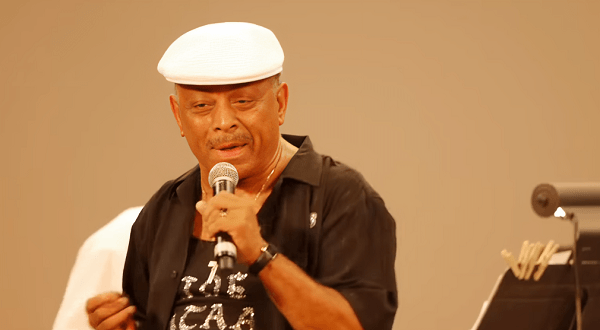
Joe Bataan singing Latin music
Joe Bataan singing ‘ ‘Gypsy Woman” some years ago

Musica Caliente 101

Salsa dura? Salsa Brava? Salsa romantica? Such consumer designations are so much caca de toro. To quote el rey Tito Puente, “Salsa is something you put on your food.” As a brand, “Salsa” moved a lot of units for Fania and other smaller labels in their heyday. But it was still music with Afro-Cuban roots, refined (or, purists might aver, debased) by Puerto Ricans and Nuyoricans, as insiders and aficionados well know. It was a music all about rhythm (we’ll consider the beautiful boleros shortly), pegged to the clave beat, where the Afro drums could sing melodiously while the Euro piano, violins, and horns remade themselves into rhythm instruments ( the repetitive, tension-building keyboard montunos, twin charanga fiddles, or twin trombones).

As the music morphed from Havana to New York, it got faster and louder (como no?), but the rhythms certainly didn’t cool down, tho they could sound hot and cool at the same time when vibes were featured, as in the ’50s party classic “Chop Suey Mambo” by Alfredito (Al Levy) or on many jams by T.P., Joe Cuba, or Latin-converso Cal Tjader. Anyone who felt this music in their bodies and souls (which are most definitely not separated in this art) would know this was musica caliente – and, as Ray Barretto titled one of his best workouts: “Que Viva la Musica.”

Say you’ve heard some of the great old school sounds and want to hear more? Tio Jonito is going to start you off with a sampler of the best (or at least some of my favorites) from the great days of this musica caliente, sometime in the late ’40s on into the ’70s. You go online and find these smokers on my list and you’ll not only get a little musical education but you’ll swing your butt off and have a ball. Vaya!

Orq. Casino de la Playa w/Miguelito Valdes: “Bruca Manigua”
Arsenio Rodriguez Orq.: “Dame un Cachito pa’ Huele”
Machito & his Afro-Cubans: “Tanga”
Chano Pozo: “El Pin-Pin” (nice later version by El Gran Combo)
Los Astros: “Que Lindo Yambu”
Arcano y sus Maravillas: “Rico Melao”
Sonora Matancera w/Celia Cruz: “Caramelos”
Sexteto La Playa: “Jamaiquino”
Randy Carlos: “Smoke” (“Humo”)
Fajardo y sus Estrellas: “Ay! Que Frio” (+ jazzy ’70s cover by Ocho)
Cortijo y su Combo w/Ismael Rivera: “El Negro Bembon”
Orquesta Aragon: “Caimitillo y Maranon”
Cachao y su Ritmo: “Malanga Amarillo”
Chappotin y sus Estrellas w/Miguelito Cuni: “Alto Songo”
Mongo Santamaria: “Afro Blue” “Para Ti”
Mongo Santamaria w/La Lupe: “Canta Bajo”
Tito Puente: “Oye Como Va” “Ran Kan Kan”
Eddie Palmieri & Cal Tjader: “Picadillo”
Tito Rodriguez & Orq.: “Mama Guela” “Ave Maria Morena”
Joe Cuba Sextet w/Cheo Feliciano: “El Raton”

Mon Rivera: “Lluvia con Nieve”
Orquesta Broadway: “Como Camino Maria”
Ray Barretto: “Cocinando”
Pete “Conde” Rodriguez w/Johnny Pacheco Orq.: “Azuquita Mami”
Willie Colon Orq. w/Hector LaVoe: “Abuelita”
Eddie Palmieri w/Charlie Palmieri: “Vamanos pa’l Monte”
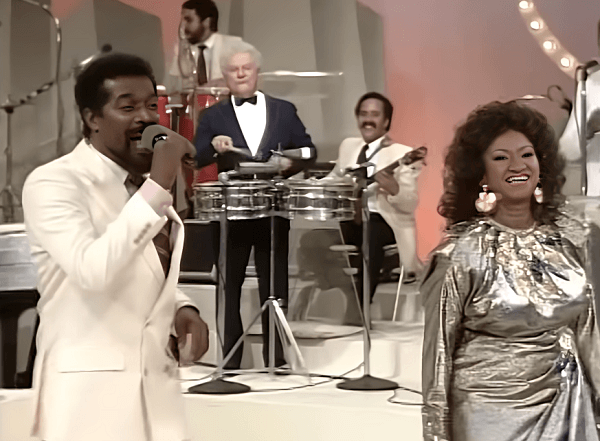
Pete, Celiz, and Tito performing Latin music
Pete El Conde Rodríguez, Tito Puente, and Celiz Cruz performing ”Qué Bueno Baila Usted”

Boleros 101

Boleros are Latin love songs, and the best are equal to any operatic aria, Broadway show-stopper, or Pop ballad, especially those written and sung from the 1940s through the ’60s, the era of the bolero. Behind even the slowest bolero there’s a rhythmic roll (maintained by bongos, congas, or light timbales taps), analogous to the roll of “r” in spoken Spanish. Can’t abide musica romantica? The bolero, friend, is not for you. Latin America – notably Cuba, Mexico, and Puerto Rico – turned out great boleristas in the epica de oro, and the tunes they sang were world-class, true standards which sound just as strong today as ayer. But leave me not wax rapturous; rather let me share some of my fave boleros with you, and point you YouTubeward to hear them all.

Beny More: “Como Fue” “Hoy Como Ayer”
Olga Guillot: “Mienteme” “Tu Me Acostumbraste”
Trio Los Panchos: “Nosotros” “Sabor a Mi” “Los Dos”
Vicentico Valdes: “Tus Ojos” “La Montana”
Tito Rodriguez: “Inolvidable” “En La Soledad”
Los Tres Ases: “Delirio” “Estoy Perdido” “El Reloj”
Cheo Feliciano (w/Joe Cuba sextet): “Como Rien” “Incomparable”
La Lupe w/Tito Puente Orq.: “Que te Pedi”

Santos Colon w/Tito Puente Orq.: “Ay Carino”
Armando Manzanero: “Mia”
Los Tres Diamantes: “La Gloria eres Tu”
Javier Solis: “Si Te Olvides (La Mentira)”
Los Tres Caballeros: “La Barca” “Regalame Esta Noche”
Los Tres Reyes: “No Me Queda Mas”
Pedro Infante: “Contigo en la Distancia” “No Me Platiques Mas”
Jacaranda Castillon: “La Gata Bajo La Lluvia”

Read also: Dominican bandleader and singer Papo Ross is triumphing in Montreal
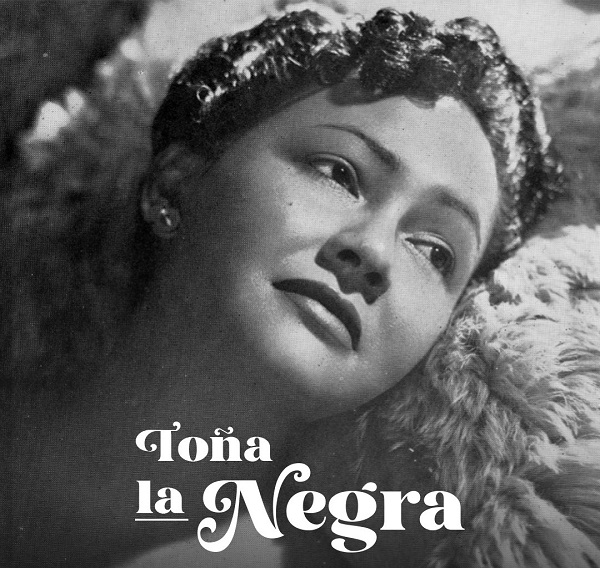
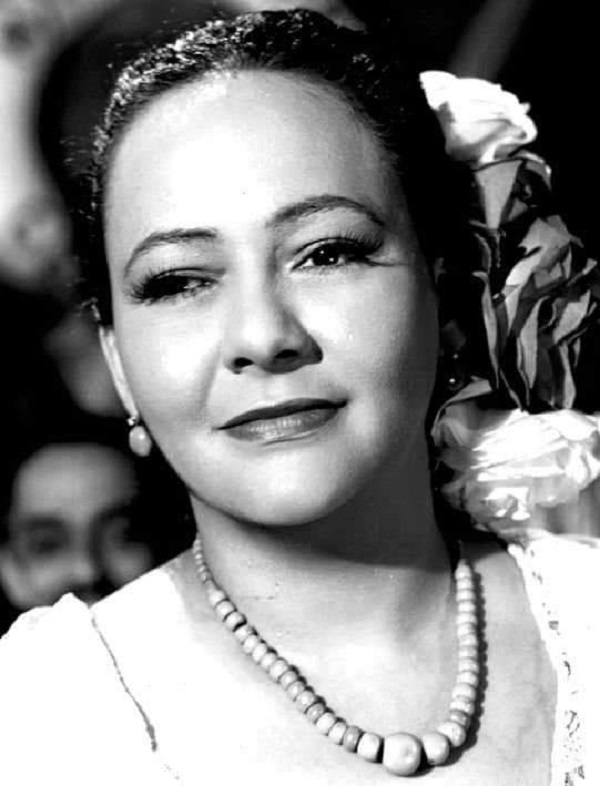
Toña La Negra The Unequaled Velvet Voice of Tropical Song

On November 19, 1982, in Mexico City, Antonia del Carmen Peregrino Álvarez, better known as “Toña La

Toña la Negra, passed away. She was a prominent Mexican singer and actress of African descent, famous for her interpretations of boleros and tropical songs by the composer Agustín Lara, who considered her “the greatest female singer of all time” due to her “highly personal style,” “the power of her expression, and the velvet of her privileged throat.”

Toña La Negra The Unequaled Velvet Voice of Tropical Song

Antonia Peregrino was born in the city of Veracruz, in the La Huaca neighborhood, on November 2, 1912.

Her father, Don Timoteo Peregrino Reyes, played the guitar and worked as a freight opener for the crates arriving at the port; he was also one of the founders of the Veracruz Port Commercial Loaders and Openers Guild.

Her mother, Doña Daría Álvarez Campos, sang at family gatherings.

Her paternal grandfather, Don Severo Peregrino, was Haitian and had emigrated to Mexico in the 19th century.

By 1927, she had married Guillermo Cházaro Ahumada, who took her to Mexico City with their first child, who was only forty days old.

On July 16, 1929, she debuted at the cabaret El Retiro. While performing there, where she was known as La Peregrina, she met Don Emilio Azcárraga Vidaurreta. It was Azcárraga, along with Enrique Contel, who christened her “Toña La Negra.”

On November 19, 1982, in Mexico City, Antonia del Carmen Peregrino Álvarez, better known as “Toña La Negra”, passed away.

She began to gain recognition with her interpretation of the song “Enamorada” (In Love) by Agustín Lara. Lara also produced tracks for her such as “Lamento Jarocho,” “Veracruz,” “Noche Criolla” (Creole Night), “Oración Caribe” (Caribbean Prayer), “Palmera” (Palm Tree), “La Clave Azul” (The Blue Key), and “La Cumbancha.” They presented these together in a musical revue at the Teatro Esperanza in December 1932, achieving such success that they had to extend their performances for a long time.

Her voice tone was rather deep, with a velvety and rounded sound, and impeccable vocal techniquecharacteristics that became her interpretive signature.

Azcárraga added her to the cast of the XEW radio station, where she sometimes performed accompanied by Lara and other times by the Alfredo Girón orchestra.

Shortly thereafter, her spectacular performances began at the Teatro Politeama, across from Las Vizcaínas and next to San Juan de Letrán street.

Her recordings for the RCA Victor label constitute one of the most precious musical legacies in the history of the bolero.

One of the first records she cut for this label contained the song «El Cacahuatero» (The Peanut Vendor); this recording dates back to the 1930s. For RCA Victor, she recorded several long-play albums, including Caleidoscopio musical con Toña la Negra (Musical Kaleidoscope with Toña la Negra), Noche Criolla, vol. II, and La Sensación Jarocha, vol. III (The Jarocha Sensation, vol. III).

In the mid-sixties, she signed an exclusive contract with Discos Orfeón, where she recorded the last albums of her career.

“Este amor salvaje” (This Wild Love), “Por qué negar” (Why Deny It), “Obsesión,” “Mentiras tuyas” (Your Lies), “Y sin embargo te quiero” (And Yet I Love You), “Noche criolla,” “Pesar” (Grief), “Vereda tropical” (Tropical Path), “Cada noche un amor” (A Love Every Night), “Angelitos negros” (Little Black Angels), “Lágrimas de sangre” (Tears of Blood), “Estás equivocado” (You Are Wrong), “De mujer a mujer” (From Woman to Woman), “Como golondrinas” (Like Swallows), “Diez años” (Ten Years), and “Cenizas” (Ashes) are some of her successful titles recorded on over 75 LP records, some of them for the Peerless label. Already famous for many years, she recorded two songs with the legendary Sonora Matancera in 1974.

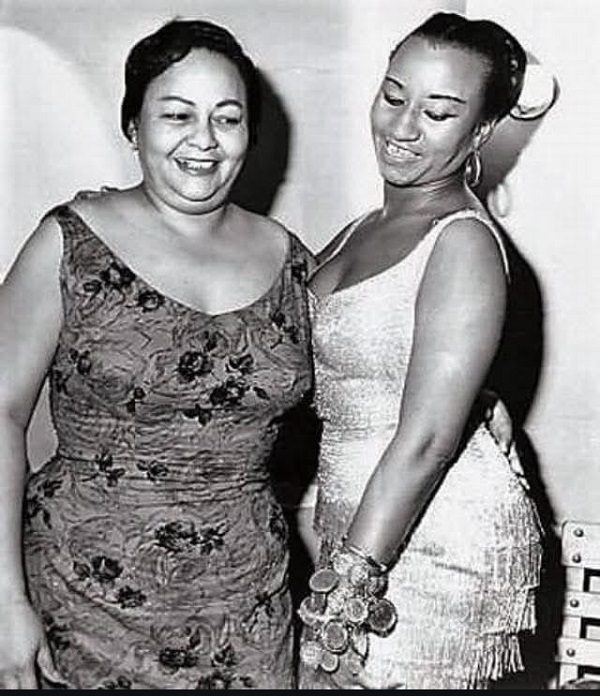
Toña La Negra y La Reyna Celia Cruz

In her final years, due to some health issues, she gradually withdrew from the stage and recording.

Toña La Negra always maintained a very reserved personal life. With her first husband, the musician Guillermo Cházaro Ahumada, she had three children: Ramón (b. 1932), Guillermo (b. 1933), and Ernesto (1935–1979). Toña and Cházaro Ahumada separated in 1945.

Later, in 1955, she remarried the Veracruz-born bassist Víctor Ruiz Pazos, known as “Vitillo.” This marriage lasted until 1963. In an interview, Ruiz Pazos spoke about Toña’s artistic qualities:

Her commitment, her feeling when she sang, her style, the way she did it, how she expressed things musically; I have lived a long time, I have heard many fabulous singers, but none of them come close to Doña Toña.

The German filmmaker Christian Baudissin made a documentary about Toña La Negra for television in 1993, featuring interviews with her ex-husband, the musician Vitillo (Víctor Ruiz Pazos), and other artists who knew her during her lifetime.

Collaborators:

Los Mejores Salseros del Mundo

Dj. Augusto Felibertt

Also Read: Santa La Salsera and Diva of Mexico with her unique voice and style will continue to conquer us all

“An Argentinian with a taste of Cuba,” Rogelio Martínez told Carlos Argentino, the King of La Pachanga

On June 23, 1929, in Buenos Aires, Argentina, Israel Vitenszteim Vurm, better known in the music world as “Carlos Argentino,” was born. He was an excellent Argentinian tropical music singer who was part of the Cuban band Sonora Matancera. He was also known in musical slang as “The King of Pachanga.”

Born in the La Paternal neighborhood of Buenos Aires, his parents were in the textile manufacturing business, and from an early age, he showed an entrepreneurial spirit. Despite belonging to a socially and economically well-off family, he worked as a street vendor, selling newspapers, magazines, and even coffee on trams and at racetracks.

Un argentino con sabor a Cuba, dijo Rogelio Martínez a Carlos Argentino, el Rey de La Pachanga Imagen Discogs
An Argentinian with a Cuban flavor, said Rogelio Martínez to Carlos Argentino, the King of La Pachanga Discogs Image

Ignoring his parents’ wishes for his professional future, he ventured into singing under the pseudonym Carlos Torres. In 1946, at just seventeen years old, he traveled to Brazil with an unknown orchestra. Problems quickly arose, as he had to ask for the intervention of the Argentinian ambassador to return to Buenos Aires, with the intention of studying medicine at Otto Krausse University, as his parents wished.

While there, he completed his mandatory military service, and upon finishing it, he returned to the music scene, definitively abandoning his professional career. He joined the orchestras of Luis Rolero and Raúl Marengo, performing in Peru and Chile. He then traveled to Colombia with Efraín Orozco’s orchestra. Something very curious happened on that trip: there was a Colombian singer named Carlos Torres, and to differentiate himself, he added his patronymic, becoming Carlos Torres Argentino, before artistically consecrating himself as Carlos Argentino.

Carloa Argentino También fue conocido en el argot musical como «El Rey de la Pachanga».

In 1952, he also traveled to Havana, where he worked with the orchestras of Felo Bergaza, Arnoldo Nalli, and Julio Cuevas. He studied singing with the Italian professor Eduardo Bonessi.

In June 1954, he visited Bogotá, and in December, he traveled to Medellín. In February 1955, Sonora Matancera (from Cuba) went on tour in Colombia. They met at the Teatro Colombia in Bogotá. According to Carlos himself, Rogelio Martínez, director of Sonora, asked him if he was from Cuba, and Carlos replied, “I am Argentinian!” Martínez retorted, “Well, you’re an Argentinian with a taste of Cuba; you have to get on the vehicle!” “What vehicle?” Carlos asked. “Ours!” Don Rogelio replied and proposed that he travel to Havana, to which he agreed.

After several months of rehearsal, on August 17, 1955, they recorded their first 78 RPM record. His first single was the bolero-tango “Una canción” (by Aníbal Troilo), and on the other side, the guaracha “Las muchachas caraqueñas” (by Billo Frómeta). Later, he would record other songs such as: “Ave María Lola,” “El solterito,” “Cuartito 22,” “¡Ay, cosita linda!”, “Un poquito de cariño,” “Tu rica boca,” “En el mar,” “Boquita golosa,” “El novio celoso,” “Apambichao,” “Lamento náufrago,” and “La mamá y la hija,” among others; in addition to the boleros: “Alma Vendida,” “No pidas más perdón,” “El amor no existe,” “Cruel indiferencia,” and “Cuando tú seas mía.”

El Rey de la Pachanga

With Sonora Matancera, he traveled throughout Latin America and remained with the group until November 1959. In 1960, he left Cuba and traveled to Mexico. After this, in 1961, he returned to Argentina, where he was received with joy. He settled back in his native neighborhood of La Paternal, in Buenos Aires.

As a distinguished horseman, he became the owner of several thoroughbred horses, which he named after his songs: “Pachangueando,” “La Espumita,” and “El Manotón.” Apart from horse racing, Carlos was a football fan and supported his neighborhood club: Argentinos Juniors (the club where Diego Armando Maradona was born), and Boca Juniors, to whom he dedicated “Pachanga de Boca,” celebrating the title the “Xeneize” team won in 1962, and the album Somos la mitad más uno, celebrating Boca’s Metropolitano championship with Maradona in 1981. He also dedicated songs to other teams, for example, “Equipo de José” (the Racing champions of 1966-67); the one he recorded when Estudiantes de la Plata became world champions in 1968, under the technical direction of Osvaldo Zubeldía; or Chacarita Juniors (Metropolitano champions of 1969), among others.

Throughout his life, he resided – in addition to Cuba – in Colombia, Mexico, and Venezuela, where in 1978 he performed as a singer with the orchestra Los Solistas de Renato Capriles, and participated in their first two LPs, but he always returned to his Argentina.

On a memorable afternoon, July 1, 1989, he reunited with Sonora Matancera in Central Park, New York, to celebrate the group’s 65th anniversary with his old recording companions. On that occasion, he shared the stage with Celia Cruz, Daniel Santos, Vicentico Valdés, Welfo Gutiérrez, Leo Marini, and Nelson Pinedo, among other figures.

Argentino El Rey de la Pachanga con La Sonora Matancera

It was the last time he would be seen in performances, as on June 20, 1991, he died of a myocardial infarction while watching a horse race in Buenos Aires. May he rest in peace and eternal glory!

Also Read: Argentina y sus géneros musicales de origen y los tropicales

By:

Dj. Augusto Felibertt

Los Mejores Salseros del Mundo

Federico Betancourt “Pioneer of Salsa in Venezuela”

Latin America / Venezuela / Carabobo

Jesús Federico Betancourt was born in the city of Valencia, Carabobo state, on March 22, 1940. He was always attracted to music from a very young age.

Photo of Federico Betancourt on stage

In his adolescence, he liked Cuban rhythms, being influenced by Sonora Matancera, Mon Rivera, Eddie Palmieri and Joe Cotto. Before entering the entertainment world, he works at the Bank of Venezuela.

He affirms that he has not carried out formal studies at the musical level, learning the necessary theory to be able to perform as an orchestra conductor, but without interest in interpreting any instrument, but with a well-tuned ear, which has allowed him to remain in the music business for decades. , in fact on certain occasions he is named as the King of the Güiro.

Photo by Federico Betancourt

His career began when he entered the Los Selectos Orchestra, where they played songs by the Billos Caracas Boy’s and the Los Melodicos Orchestra, which were at their peak in the 1960s, all this in a particular way, said Orchestra did not go beyond that.

In 1965, Federico Betancourt decides to satisfy his artistic restlessness and founds a band called Federico y su Combo Latino. The members that made up this band were chosen from among the founder and together with Roberto Monserrat.

But it was not until the middle of 1966, when the twenty-six (26) year old undertook the recording of the LP that would make him famous forever. This record production entitled LLEGO LA SALSA, would mark an important stage in Venezuelan Salsa, because it was the first LP that made use of the word SALSA in the country.

Federico Betancourt
Federico Betancourt

Federico Betancourt himself recounts that the Venezuelan announcer Phidias Danilo Escalona had a Radio Program called LA HORA DE LA SALSA, EL SABOR Y EL BEMBÉ, where all the Cuban and Puerto Rican Caribbean rhythms that were fashionable at the time were placed, among those who highlighted La Sonora Matancera with Celia Cruz, Tito Puente, Joe Cuba, Tito Rodríguez among others, and who was the one who supported them the most in terms of recording the album.

The production was recorded under the Palacio label, and the LP was titled LLEGÓ LA SALSA, he affirms that the title was chosen without taking into account the importance that it would revert in the future, he also affirms that it was not the name that gave him success , the album was a “bump” in sales, since all the songs were the most requested at the time, using his words: “The album sold like hot cakes”.

The music lovers of the time requested it on specialized sites such as the LA SALSA album. Federico says: “The father of the word SALSA was Phidias Danilo Escalona, ​​he used it for the first time in his radio program, and I, humbly, with the success of my LP, gave him the push for its mass use.”

Federico Betancourt - Photo
Federico Betancourt – Photo

In Venezuela, the word SALSA was welcomed by the public willingly, since it suggested a mixture of flavors, which was exactly what happened in the Phidias program, but at the level of rhythms. After the appearance of Federico’s album, all the shows that were performed at the level of Caribbean and Cuban rhythms, carried the name of SALSA.

It is important to name the musicians who took part in this historic production: The musicians are: Ali Rojas Bongo and Cencerro, Roberto Monserrat Music Director and Timbal, Pedro Medina Congas, Alfredo Arcas Trombone, César Pinto Trumpet, Enrique Iriarte Piano, Rafael Prado Bass, Carlín Rodríguez Singer and maracas, Dimas Pedroza Singer, Federico Betancourt Güiro and Director of the Orchestra. The musical arrangements were by the famous trumpeter Eduvigis Carrillo (RIP). Production themes:

Llego la Salsa CD - Federico su Combo Latino
Llego la Salsa CD – Federico su Combo Latino
1.- Cocolía

2.- Conmigo
3.- El Pachanguero

4.- Sancocho Caliente
5.- Guaguancó Manía

6.- Celosa

7.- Despierta Rumbero

8.- No Critiquen
9.- Saoco

10.- Baila Yemaya
11.- Café Y Pan

12.- Que Me Querías

After the success obtained with the record work, the time came for the first international outing, which was to Colombia, in 1969. It happened because the singer of Los Melodicos, Víctor Piñero, informed Betancourt that he was stuck in Cartagena and Barranquilla with the themes El Cobrador and Federico Boogaloo. After the information, the young musician went to the neighboring country and got a contract for the famous Reina del Mar parties, in Cartagena, on November 11, 1969.

The experience of the band was so good, that in 1970 they returned to visit the country. From then until our days Federico y su Combo continues to be an emblematic and legendary band in Venezuela, for this reason the WEB of the classy salsero SALSA BRAVA, offers its respects to such an important salsa figure.

Discography
1966 Llegó La Salsa Palacio (LPS-6171)
1966 Salsa y Sabor Palacio (LPS-6185)
1967 Más Salsa Palacio (LPS-6205)
1967 Durísimo – Vol. 4 Palacio (LPS-6216)
1968 Federico Boogaloo Palacio (LPS-6228)
1968 Psicodélico Con Salsa Gilmar (LPG-110)
1969 Mejor Que Nunca Gilmar (LPG-111)
1969 Vibración y Ritmo Sonus (102-17080)
1970 Dos Sets Velvet (LPV-1539)
1970 La Machaca Velvet (LPV-1539)
1973 Federico Si Te Pone A Bailar Palacio (LPS-6332)
1975 Derrape De Salsa BASF (10.068)
1976 Siguelo Ahí…. a Lo Cortico BASF (10.070)
1977 Ayer y Hoy BASF (10.076)
1977 Esto Es Lo Mejor Palacio (LPS-6372)
1978 Mis Exitos y Más BASF (10.079)
1978 Sabor Foca (LPF-10.037)
1979 Federico y Su Combo Foca (LPF-10.120)
1979 Federico y Su Orq. – El Maestro Discomoda (DCM-1128)
1980 Federico y Su Orq. con Memo Morales Discomoda (DCM-1148)
1982 No Le Digan Integra (PF-14.075)
1983 Nuevamente Palacio (LPS-66.541)
1984 SaaaBroooSo! Palacio (LPS-66.552)
Compilation
1996 Mis Exitos y Más…Vol.1 Sonograma
1996 Mis Exitos y Más…Vol.2 Sonograma
1996 Mis Exitos y Más…Vol.3 Sonograma
2005 El Pionero De La Salsa Palacio
2008 Salsa De Oro Gilmar


Andy Gonzalez started as a musician at the age of 13 in the Latin Jazz Quintet in New York

Andrew “Andy” Gonzalez passed away on April 9, 2020.

Virtuoso bassist, arranger and musical director of Don Manny Oquendo’s “El Conjunto Libre” and Eddie Palmieri’s “La Perfecta”.

Andy has worked throughout his extensive artistic career that spans almost 50 years, with approximately 800 recordings, where he has had the opportunity to be as co-leader, producer, musical director or sideman.

Andy began as a musician at the age of 13 in the Latin Jazz Quintet, a group inspired by the music performed by vibraphonist Cal Tjader and in which he shared with his brother Jerry.

Although long before that, Gerardo Gonzalez, Gonzalez’s father, had already begun his son’s musical

Gerardo was the vocalist of Augie Melendez y Su Combo, an ensemble influenced by the sound of Sexteto La Playa.

Andy Gonzalez virtuoso Bajista, Arreglista y Director musical de “El Conjunto Libre” de Don Manny Oquendo y de “La Perfecta” de Eddie Palmieri

It is worth mentioning that during their time in the Latin Jazz Quintet, the Gonzalez brothers met a person who would change their lives: pianist Llewellyn Matthews, with whom they learned the discipline necessary to “graduate” as professional musicians, both were part of the big band of this decisive leader.

Later came Eddie Palmieri’s La Perfecta, his brother’s Fort Apache Band, the Grupo Folklorico Experimental Nuevayorquino and Manny Oquendo y Libre, 4 groups that changed forever the perception of the music we know today as Salsa.

He collaborated with The Fort Apache Group, Dizzy Gillespie, Tito Puente, Eddie Palmieri, Astor Piazzolla and Ray Barretto.

Andy González is a fundamental reference in the history of Caribbean music and Latin jazz. He has played with almost mythological musicians at times when they left a deep mark on both Latin jazz and dance music.

Andy González se inició como músico a los 13 años en el Latin Jazz Quintet en New York

He has been bassist for Eddie Palmieri, Ray Barreto, Conjunto Libre, Grupo Folklorico Experimental Nuevayorquino, Fort Apache Band, and on some occasions for Ismael Rivera y sus Cachimbos, Cortijo y su Combo and Sonora Matancera.

In this conversation, held in Santiago de Compostela -during the Compostela Millenium Festival in August 2000- he vibrates when talking about his record collection, he declares himself a fan of the study of the roots of the music he makes and reviews his artistic life since when with his band, at the age of 13 and together with his brother Jerry, they imitated the sound of Cal Tjader.

Passion for music      

I’m as much a music fan as I am a musician. Just like any music lover. I’m a fan of the things I appreciate that are important in the history of music. I have studied a lot and that has allowed me to notice the quality and quantity of artists that this music has produced. Great artists, people who have contributed a lot. When you have and study a collection of records like the one I have, you realize that now there are few.

Andrew “Andy” González muere El 9 de abril de 2020ººº
Andrew “Andy” González muere El 9 de abril de 2020

Inspiration

Cal Tjader was my inspiration when I started. Also for Fort Apache Band, because their music had a strong jazz component, but with Cuban rhythms. Good rhythms. We had a great interest in what Cal Tjader was doing.

When we started playing we were copying what Tjader was doing. We were little kids of 13 and 14 years old. We had a very similar repertoire with the same quintet, where Jerry played congas.

Once we even had a dance next to the place where Tjader played, doing the same music. Armando Peraza played congas for Tjader and once he saw us and congratulated us. We always had the support of musicians with more experience, veterans of other generations.

Dj. Augusto Felibertt, Andy Gonzalez, Rafael Muro y Omar Mejias. Centro Cultural La Estancia en Caracas

Main Source: Pablo Larraguibel

Also Read: Roberto Rodríguez fue un trompetista y compositor cubano, autor del éxito de Ray Barreto «Que viva la Música»

  • « Go to Previous Page
  • Page 1
  • Page 2
  • Page 3
  • Page 4
  • Interim pages omitted …
  • Page 10
  • Go to Next Page »

International Salsa Magazine (ISM) is a monthly publication covering salsa activities around the world and has been publishing since 2007. It is a worldwide network of volunteers coordinated by ISM Magazine. Together, we work to strengthen salsa events around the world.