
Search Results for: Latin Dance
North America / September 2024
UNITED STATESDIRECTORY OF NIGHTCLUBS |
||
| CALIFORNIA | FLORIDA | ILLINOIS |
| MICHIGAN | NEW JERSEY | NEW YORK |
| OHIO | PENNSYLVANIA | TEXAS |

| VIRGINIA | WASHINGTON | |
My mother sang tango
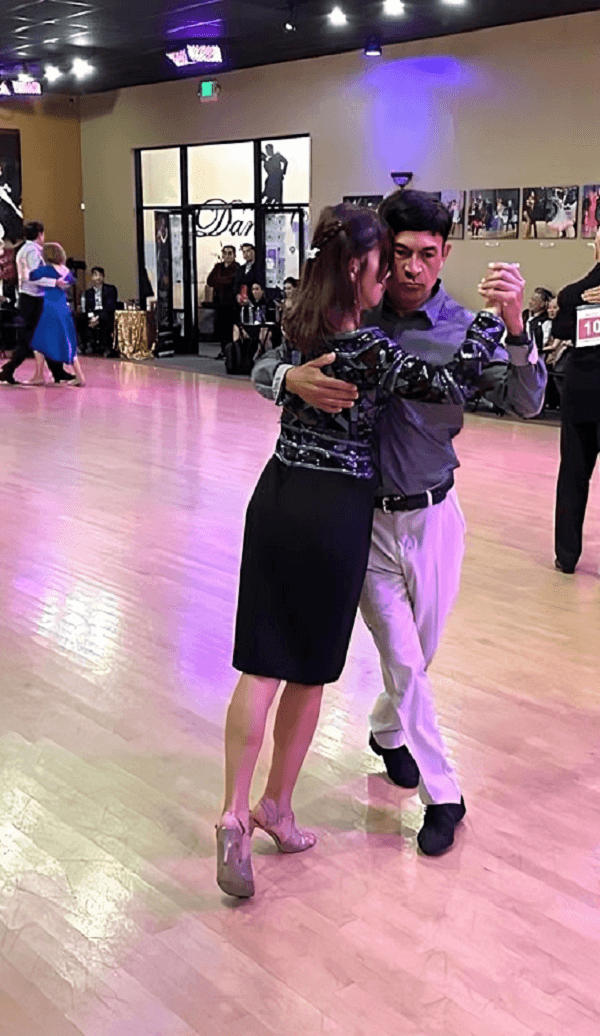
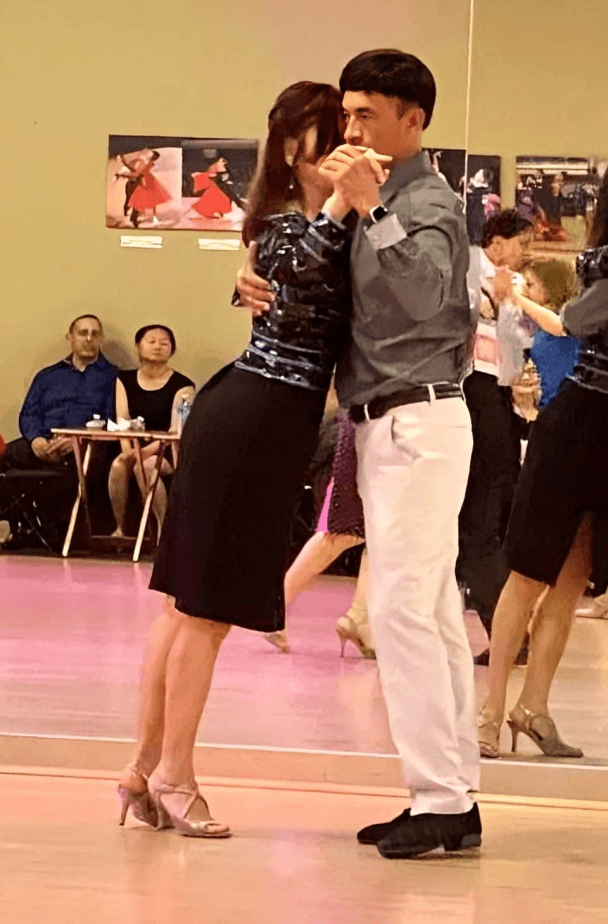
One of the Latin genres that is currently on the rise is tango, so it is common to find more and more people linked to it. There are even many who have made tango one of the most important passions of their lives, as in the case of Carlos Álvarez Guevara, with whom we have had the fortune to talk exclusively about this and other interesting topics.

Childhood with a tango singer mother
Carlos’ contact with tango began during his early childhood thanks to his mother, who was a tango singer and dancer.
Carlos describes his early live in El Salvador and points out that, back then, there were no cassettes or CD players with which to listen to music, so people had to make do with what they heard on the radio. His mother went to a well-known radio station to take part in singing competitions.
It is then that the boy would listen to his mother rehearse for the competitions with old tango songs, which made him memorize them perfectly and be able to sing them in full. The rest is history.
How Carlos sees tango today
Today Carlos is a tango and salsa dancer, a genre that has also been important in his musical journey. However, he sings the songs he dances to at amateur level.
For many years, he left aside music to devote himself to become a mechanic, a job from which he recently retired after more than 40 years of hard work. It was when he turned 45 that he fully resumed his love for tango and enrolled in dance classes to remember everything he had learned with his mother.
This is why Carlos says that he is much more professional in dancing than in singing, since he dedicated much more time and effort to the former to become an expert in the field. Dancing, of course, is accompanied by singing, but it has less hierarchy in terms of the artist’s priorities.
He has reached such a level of excellence in these disciplines that some friends of his put him in touch with Eduardo Guilarte, director of International Salsa Magazine, so that he could talk to us and his talents would become better known.

Time dedicated to mechanics and dance
Regarding the time dedicated to his formal work and dancing, Carlos claims he never had any problems, since he knew how to organize very well in this aspect.
He always devotes his time to dance on weekends, days where he frequented, and still frequents, nightclubs with friends with whom he dances and spends very pleasant moments that clear his mind of everyday life.
In addition to that, he also has a karaoke machine at home with which he also sings and practices his repertoire to delight anyone who wants to hear him on any nightclub stage.
What Carlos has learned from tango
Just as Carlos has been dedicated to singing and dancing tango, he has also invested time in learning about its history to give more depth to the knowledge he has about this genre and he wanted to share with us a little of what he has learned.
He told us that one of the things he was most fascinated to learn is that tango has roots from many places and times around the world, although nowadays it is seen as an Argentine genre. Something that many do not know is that it has its origins in the arrival of Africans in the ”New World”, which played a fundamental role in the emergence of tango in Argentina and Uruguay, which were under Spanish rule.
Both countries were transit ports for slave traffic, so the new inhabitants of these places brought with the their music and customs, which were mixed with the local music and customs to give rise to what is known today as tango.
A very interesting detail he told us is that, when European sailors stopped in these countries and went to bars to look for drinks and some company, so the ladys in these places danced tango to seduce and provoke them. At that time, this kind of music was perceived as the lowest level of society to the point that the Catholic Church demanded its parishioners not to dance tango, but it turns out that the genre was pleasing to the people and nothing could be done about it.
In the end, puritans had no choice but to embrace this wonderful dance and, today, people of all social classes, ages and races enjoy it without any complex.

The lyrics and references of tango
Since Carlos has very extensive knowledge of everything about the genre and its lyrics, we wanted to know what he has studied about it.
‘‘Tango can be many things at the same time. It can touch on issues related to the moral conduct of the individuals and, like many Latin genres, it also serves to mock and criticize politicians. It can also be an ode to love, spite and regret for having lost the loved one” Carlos shared with us on the subject.
‘‘This genre can deal with many subjects at the same time, but one of the most recurrent is frustration with failed love and I don’t think that will change in a long time” said Carlos.
Regarding the issue of the greatest artists who have inspired him to dance and sing tango, he mentioned Carlos di Sarli, Carlos Gardel, Oswaldo Pugliese and Enrique Rodríguez.
What Carlos feels at singing and dancing tango
Carlos describes listening to any tango song as ”listening to your own national anthem in a foreign country”. For him, listening to any piece sung by his parents in the past is a source of pride and takes him back to the most beautiful moments of his childhood.
Carlos pointed out that ”when you are driven by loving emotions and some thoughts are trapped, you can express them through singing and dancing, which is what I always do”.
The artist pointed out that he loves this world and it is one of the things that fills him the most in life, so he is grateful to be able to talk about it in International Salsa Magazine and express what it makes him feel to the world.
Read also: Bolivian guitarist Gabriel Navia and his love for music
Cubanoson
Northeast – Middle Atlantic- New Jersey
Cubanoson is a traditional Cuban dance orchestra as created by pianist and composer, Leonel “Papo” Ortega. This Orchestra unites the “Punto Cubano” and the “Son Montuno” bringing danceable Cuban music to any public or private event.
In 2006, Cubanoson released their debut album “Recordando a Cuba” which contain 10 tracks. Four years after, this NY’s Cuban orchestra presented their second album “Rumba Nueva” with 13 singles including 7 originals in Spanish, English and French. Likewise, Cubanoson has the purpose to unite the talent and dedication of excellent contemporary musicians, (true exponents of Latin roots), to offer and express the traditional Cuban music to all cultural venues! Please, visit them in https://www.facebook.com/cubanoson

Next Event: Tuesday, August 7th
Time: 7:00 PM
Venue: National Night Out Festival. Bergenline Ave and 43rd St, Union City, 07087.
Come and dance with Cubanoson for the 13th straight year LIVE!
This is a great festival free to all over a span of 3blocks.
Support of the Police.
Nanette Hernández promotes the bomba and plena in New Jersey
We know that the most of our Latin countries have historically become known for genres such as salsa, merengue, bachata and more recently reggaeton and trap. However, the popularity of the aforementioned genres made us leave aside other more local rhythms that also deserve exposure.
On this occasion, we wanted to talk about the bomba and plena, so we resolved to interview Nanette Hernandez, who is one of its main proponents here in the United States, more specifically in New Jersey.

How Nanette became interested in the bomba and the plena
Nanette began by telling us that her interest in music was born thanks to her parents, who are Puerto Rican and moved to the United States, Pennsylvania, during the 1950s to continue their life in this new country. However, his home was built based on Puerto Rican culture and, of course, that included language and music. Her father had an ensemble that played jibaro music and Nanette grew up watching this, so this musical environment was always very familiar to her.
As she grew up, Nanette also became very interested in dancing and discovered that she really liked salsa when she was just a teenager. She remembers listening to Celia Cruz, Johnny Pacheco, El Combo de Puerto Rico and many of the most popular groups and musicians of the time, who also inspired her to keep dancing. She felt that she was encouraged just by dancing, so she continued to do so over the years, but not professionally.
After marrying Juan Cartagena and seeing that she and her husband shared a taste for Latin music, they began to frequent places where Puerto Rican music groups performed. That is how they were in a show of the dance and drum ensemble ”Los Pleneros de la 21”. They were so fascinated by what they saw and heard that both Nanette and Juan began to study the plena and bomba because they wanted to know everything about these rhythms. Their interest was such that they were even in contact and consistently et with the Cepeda family, which is a cultural institution with many years of experience in everything to do with the bomba and plena.
She also mentions that Roberto Cepeda, part of the aforementioned family, was very important in her decision to devote herself to promoting the bomba and plena and feels that he saw something in her that even herself was not able to see, so she decided to search for expert teachers in these genres to become more professional in the dancing and instrumental part in order to be able to teach them to others.

Differences between the bomba and plena
When we asked Nanette about the differences between the bomba and plena, she made it very clear that people often think that they are almost the same, but they are not. They are extremely different and have many differences from each other.
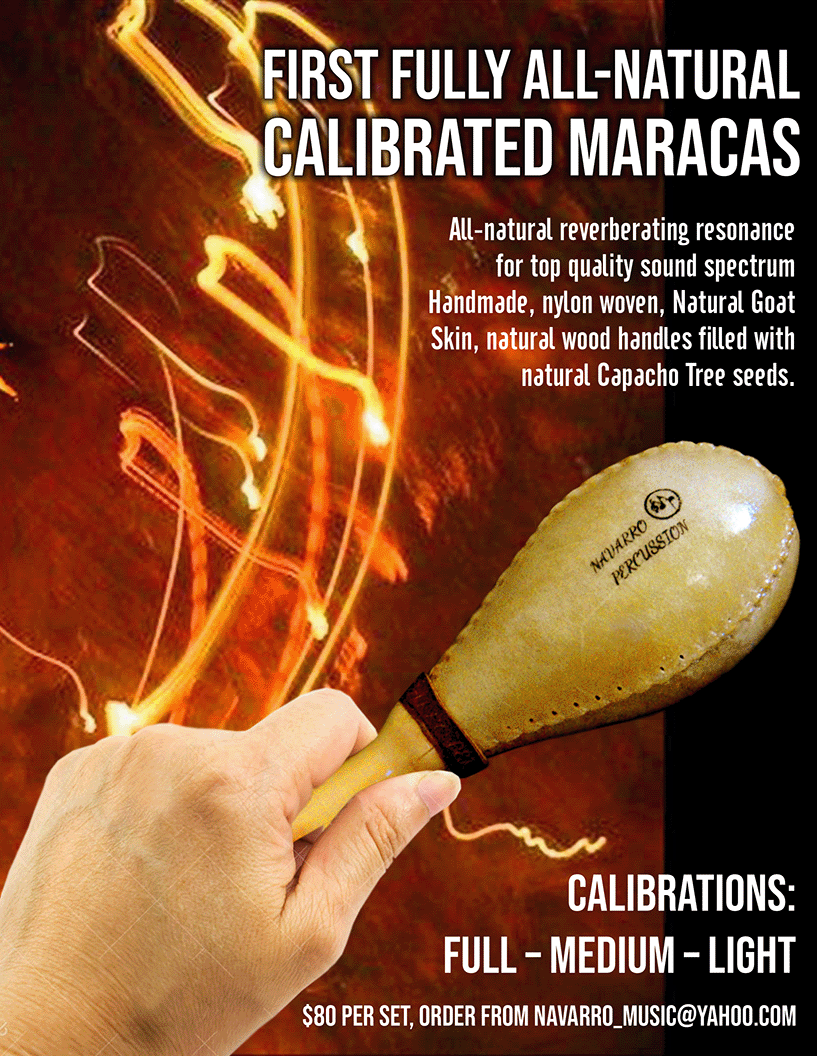
In the case of the bomba, it has re than 400 years of existence and originated in Africa. The genre arrived in America along with the slaves who were brought to the New Continent and the new inhabitants of these lands brought their improvised instruments with them such as the so-called ”barrels”, which have a great resemblance to drums. They are often accompanied by maracas.
In the case of the plena, this rhythm uses the pandero, the güiro and other smaller hand instruments with which they make a completely different sound from the bomba. To complement what Nanette told us, we can also say that the plena is believed to originate in Ponce, Puerto Rico, and its lyrics are very focused on comedy, activism and denunciation. In addition, it is also seen as a very peculiar mix between African and European music.
Another difference between the bomba and plena is that, in the bomba, it is the dancer who leads and guides the musicians, while in plena the opposite happens. These genres are very different from each other, but that does not change the fact that both complement each other perfectly well in any show or class.

How Segunda Quimbamba came about
Segunda Quimbamba is a project initiated in 1989 by Juan Cartagena, Nanette’s husband, which was born as a result of the couple’s interest in promoting two of the most important ancestral rhythms from Puerto Rico and preserving the most important musical traditions on the Island of Enchantent, such as the ”parrandas”. A few years later, they began introducing the bomba and plena until they became the center of the project.
In 1997, Nanette and Juan founded the Segunda Quimbamba Folkloric Center, which is a non-profit arts organization that seeks to promote the bomba and plena in New Jersey and the rest of the United States so that those interested can learn more about Puerto Rican music and culture in general. The organization also seeks to offer music and dance workshops at solidarity prices and even for free at times.
Nanette and Juan have been invited to participate in numerous events and have been recognized for the role they have played in promoting Latin music, especially that of Puerto Rico. For example, in 2023, The New Jersey State Council of The Arts recognized the couple with the New Jersey Heritage Fellowship Award in honor of what they have accomplished with this wonderful and ambitious musical project.
Read also: Edwin Ortiz y La Mafía del Guaguancó is present in ISM