• Skip to primary navigation
  • Skip to main content

International Salsa Magazine

  • HOME
  • Previous editions
    • 2026
      • ISM / March 2026
      • ISM / February 2026
      • ISM / January 2026
    • 2025
      • ISM / December 2025
      • ISM / November 2025
      • ISM / October 2025
      • ISM / September 2025
      • ISM / August 2025
      • ISM / July 2025
      • ISM / June 2025
      • ISM / May2025
      • ISM / April 2025
      • ISM / March 2025
      • ISM / February 2025
      • ISM / January 2025
    • 2024
      • ISM / December 2024
      • ISM / November 2024
      • ISM / October 2024
      • ISM / September 2024
      • ISM / August 2024
      • ISM / July 2024
      • ISM / June 2024
      • ISM / May 2024
      • ISM / April 2024
      • ISM / March 2024
      • ISM / February 2024
      • ISM / January 2024
    • 2023
      • ISM / December 2023
      • ISM / November 2023
      • ISM / October 2023
      • ISM – September 2023
      • ISM – August 2023
      • ISM July 2023
      • ISM Edition June 2023
      • ISM – May 2023
      • ISM April 2023
      • ISM March 2023
      • ISM February 2023
      • ISM January 2023
    • 2022
      • ISM December 2022
      • ISM November 2022
      • ISM October 2022
      • ISM September 2022
      • ISM August 2022
      • ISM July 2022
      • ISM June 2022
      • ISM May 2022
      • ISM February 2022
      • ISM January 2022
    • 2021
      • ISM December 2021
      • ISM November 2021
      • ISM October – 2021
      • ISM September 2021
      • ISM August 2021
      • ISM July 2021
      • ISM May 2021
      • ISM April 2021
      • ISM June 2021
      • ISM March 2021
      • ISM February 2021
      • ISM January 2021
    • 2020
      • ISM December 2020
      • ISM November 2020
      • ISM October 2020
      • ISM September 2020
      • ISM August 2020
      • ISM July 2020
      • ISM June 2020
      • ISM May 2020
      • ISM April 2020
      • ISM March 2020
      • ISM February 2020
      • ISM January 2020
    • 2019
      • ISM December 2019
      • ISM November 2019
      • ISM October 2019
      • ISM Septembre 2019
      • ISM August 2019
      • ISM July 2019
      • ISM June 2019
  • Download Salsa App
    • Android
    • Apple
  • Spanish

Search Results for: Latin Dance

Son del Monte

North America / United Stated / New York

Son del Monte, Something more than a “Charanga”

It was one of those nights of meeting with friends, those friends with whom you share the same musical preferences among other things, you know, of those gatherings where only you and your friends can spend hours discussing the best songs of Héctor Lavoe or remembering the best hits of the Fania, and in which there is no other way to end the evening than with the deities that brings the good Salsa music from a live band to close the night with a flourish.
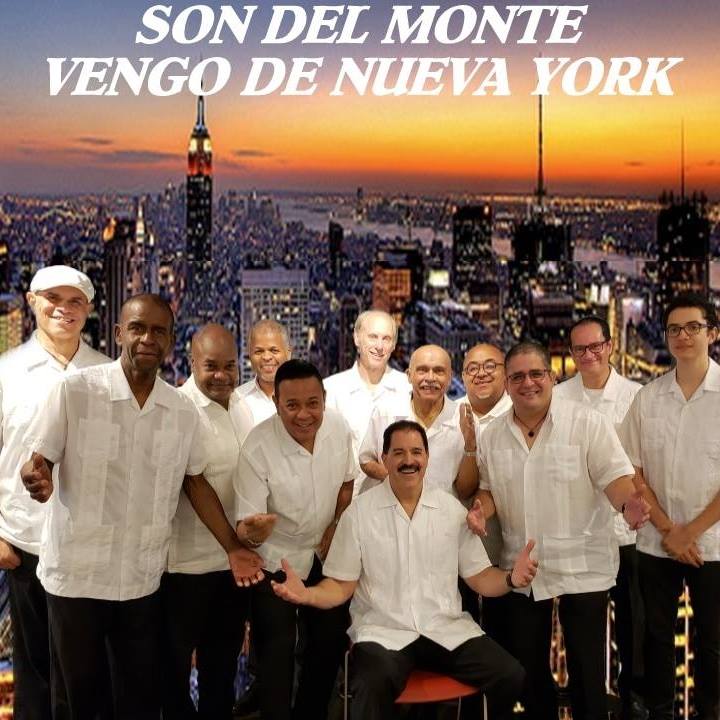
Son del Monte
Son del Monte from New York

And so that was, when with the hours passed we came across one of these charming Latin clubs that fill the streets  and every day prevail more in the city of New York, where, of course, they offered Live Salsa. Eureka! If you allow me to say it … It was the perfect place to “Echarnos un Pie” (colloquial term that we usually give in some Latin countries when we refer to dance).

Upon entering, the characteristic sound of the band wrapped up the entire venue, no doubt, captivated us. It was the harmony of an orchestra that played the typical Cuban music: “La Charanga“, which had its maximum exposure in the 20th century. We were all enthralled or if you want to say “delighted”, it was the mixture of wind instruments with percussion instruments but especially with the string instrument that most caught our attention, the Violin.

When we asked for the name of the orchestra, they told us: “Son del Monte”. It’s the ideal name for an orchestra of 12 Latin musicians who project their virtuosity before an audience eager for Caribbean Music that bathes the senses and awakens the joy of living.
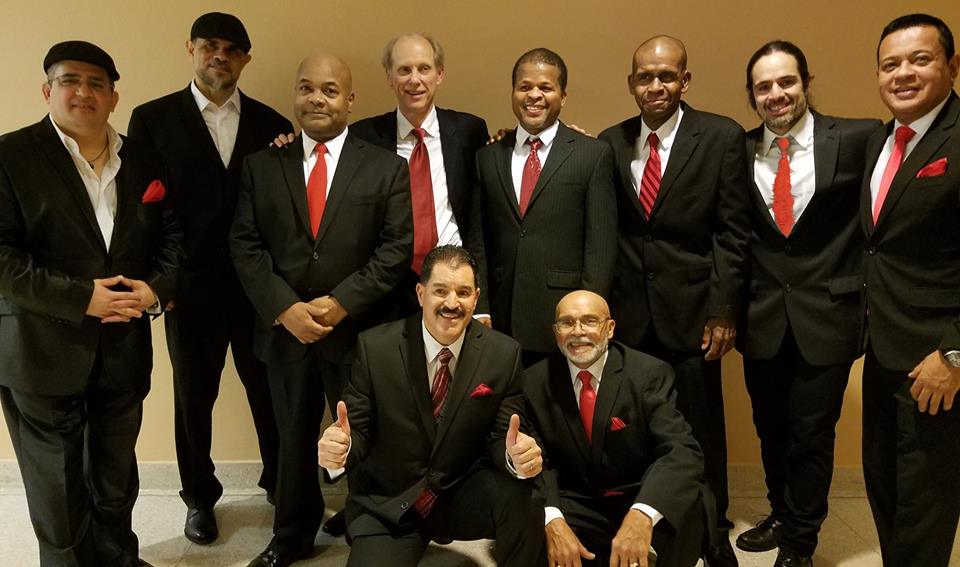
Son del Monte
Son del Monte

Son Del Monte is a band based in New York City that presents unique tunes from various artists. This orchestra was born from the musical director and timbalero, Manny Rivera whose aspiration was to create a Charanga band with a hard New York sound that paid homage to the orchestras of the 60s, 70s and 80s. “Our music is captivating for the listeners and dancers. Fans from all over the world have come to love Son Del Monte: Una Charanga Con Algo Más and our incredible musical swing”, said Manny Rivera.

This band that combines the typical sound of Cuba with the mixture of flute, violins and trombones with three singers that create a distinctive harmony of three parts, have performed in so popular Salsa venues, such as: Maryland Live Casino, the Baltimore´s Latino Festival, the boardwalk of Coney Island, SOB’s, Empire City Casino in Yonkers, Gonzalez y Gonzalez, La Marqueta, the Latina Hats Society, Industry City, Harlem Mist, among other recognized Salsa venues.

The members of this Charanga orchestra with “Sabor” and electrifying sound are: Mauricio Smith Jr. (Flute), Eric Roberto Salazar and David Rimelis (Violins), Michael Pallas, Juanga Lakunza and Charlie Garcia (Trombones), Eli Rivera (Piano), Bert Castro (Bass), Joe Gonzalez (Conga), Manuel Rivera (Timbales / Musical Director / Leader) and Luis Ayala, Armando Jiménez Sonji and Luis Soto (Singers).

Since the beginning of this year (2019), Son del Monte has been working on their record proposal for the Latin market with unpublished themes, rhythmic and unique sound – contemporary. To date they already have two singles: “Rumba Omelenko” and “Vengo de Nueva York” availables in: CD Baby, Deezer, iTunes, Apple Music, and Spotify. Likewise, the song “Herman” is in the process of recording. So, get ready because this Charanga orchestra promises their CD ended with great compositions for the public later this year.

Undeniable, the acceptance of Son del Monte has been so extensive on the part of New Yorkers and all who are Salsa lovers that they were recently awarded with the TANAE Digital Media Award for Band of the Year 2018, giving recognition to an arduous musical performance, but above all of great cultural value that keeps alive our Latin idiosyncrasy.

Son del monte - Premios Tanae
Son del monte – Premios Tanae

Manuel Rivera (Musical Director / Manager/  Timbales):

Manuel Rivera, have been a professional musician for more than 40 years and now Son Del Monte’s Leader/ Musical Director.  His musical career started playing Bongo in a Latin Workshop band which eventually became Orchestra Yambu.  Yambu was known for its Latin Jazz style and Disco Hit “Sunny”, his first recording.  Subsequently, I joined the original Charanga Orchestra Sublime of New York City, doubling up on Bongo and Timbales. He recorded on Sublime’s first two albums in 1977 and 1979.

In 2001, he rejoined Orchestra Sublime now known as “Sonsublime”. Manuel recorded on Sonsublime’s Gran Reserva and Bailando Con Sonsublime, their latest CDs. He studied various folkloric rhythms, Bata drums and sight reading at the Harbor’s Conservatory of Music in El Barrio in New York City under the guidance of the Master Louie Bauzo.

Manuel Rivera has performed with the Bassist: William Millan, of the original Conjunto Saoco, singers: Henry Fiol, Ray Ramos, and Luis Ayala.  Also, he performed with Yerason and the MTG All Stars Orchestra under the direction of Hector Leguillow, Joe Quijano at Lincoln Center and other various artists throughout his musical career.


Next Shows:

Monday, Jult 15TH   

Venue: Cunanele Restaurant and Lounge. 1 Route 46 W, Totowa, NJ 07512

Saturday, August 17TH   

Venue: La Placita de la Marqueta.  North trains between 111th and 112th Streets in East Harlem, “El Barrio” and uptown Manhattan, NY.


For more information, please visit:

https://www.SONDELMONTE.com

Or Follow them for their Social Channel:

https://www.facebook.com/MRSONDELMONTE/

Mimi Ibarra singer-songwriter from Colombia to the world

Latin America / Colombia / Bogota

Mimi Ibarra Colombian singer-songwriter. Her talent makes Latin American women proud

Elizabeth “Mimi” Ibarra was born in Colombia in the department of Choco. Since she was a child she dreamed of being able to venture into music as a performer, but “Mimi” was far from imagining that she would first become known internationally as a composer.

It all started when “Mimi” Ibarra dedicated herself to writing melodies, she felt happy doing it and as she describes it “it was definitely a gift from God” she kept the songs she wrote. She composed some songs for a record label in her native Colombia.

Mimi Ibarra - Tu no me mandas
Mimi Ibarra – Tu no me mandas

Her first song as a composer “Amor ingrato” was recorded in Puerto Rico by Milly, Jocelin y los Vecinos for the Musical Productions label.

“Mimi” Ibarra wrote songs that were definitely hits such as: “Señora”, “Nobody’s Toy”, “Déjala”, “Morena Linda”, “Tell him” and “Te Propongo” in the voices of well-known salsa performers like Tito Rojas, La Puerto Rican Power, Tito Gómez, Anthony Cruz, Maelo Ruiz among others.

“Mimi” Ibarra, romantic par excellence… a woman who has the virtue of writing beautiful songs dedicated to love, but who in turn considered that it was time to offer the public songs with romantic lyrics that were also danceable.

After becoming known as a composer “Mimi” Ibarra, she makes her most cherished dream come true… to become a performer. In the first production, the eight songs are of his inspiration, among them “así”, “que tiene ella”, “Para Quererte” and “No puede ser” in duet with Anthony Cruz.

In the second production the themes “hurts” (a duet with Tito Rojas), “I love you like this”, “Private Property” were heard.

These productions have taken her with her music to different places such as Panama, Colombia, the Dominican Republic, Puerto Rico; and cities like New York, Houston and Los Angeles, among others.

Now, he presents us with his fourth record production, with a very varied repertoire to satisfy all his followers.

The bachata “because I loved you so much” stands out, a theme that in turn was recorded as a ballad, in addition to “the Tun Tun dance, which is an indigenous rhythm of Colombia.

All songs are authored by Mimi Ibarra, arranged by Rafael “Bodo” ​​Torres, Ramón Sánchez and Julio “Gunda” Merced.

Mimi Ibarra singer-songwriter
Mimi Ibarra singer-songwriter – Colombia

Hit compositions by Mimi Ibarra

  • Nobody’s Toy – Puerto Rican Power
  • Déjala – Tito Rojas in duet with Tito Gómez
  • I propose – Hector Rey
  • I need you my love – Maelo Ruiz
  • Why do I love you so much – Tito Rojas
  • For that woman – Tito Rojas
  • Lady – Tito Rojas
  • It also hurts us – Tito Rojas
  • I will cry – Tito Rojas
  • Why do you refuse – Roberto Roena
  • Compare me – Roberto Lugo
  • If you let me love you – Roberto Lugo
  • I couldn’t help it – La Mulenze Orchestra
  • Blame Me – Luisito Carrion
  • Your way of loving – Pedro Conga
  • You are the only one – Nino Segarra
  • Win – Tito Gomez
  • Never let you down – Anthony Cruz
  • Tell Him – Anthony Cruz

Son Rumbero, Colombia Offers You Authentic Salsero Tourism

Norte America / Colombia / Bogota

Son Rumbero, Colombia Offers You Authentic Salsero Tourism

“Come and enjoy classes, dance and local tourism”

Jose Perez - Son Rumbero, Colombia
Jose Perez – Son Rumbero, Colombia

The Son Rumbero Academy continues to focus on salsa tourism in Colombia. This prestigious academy offers us the opportunity to unite the tourism of this beautiful country with the best classes of Latin rhythms that you are looking for, all nested in a single package, an opportunity to schedule 24 hours a day in activities willing to know, enjoy and above all. all dance.

The offer is made to enjoy the service in the main cities of the country since they have qualified personnel who provide classes from the capital Bogotá, passing through Cali, Barranquilla, Cartagena, Medellín, Pereira, Popayán among other cities.

The cycle of classes ranges from 2, 4, 6, 8 or more hours of personalized instruction, with qualified and highly experienced professionals, this leads to an almost guaranteed successful result, live the experience of learning salsa in any of its styles, Merengue, bachata, urban rhythms, a little bit of everything, only you have the power to determine the line you want to take, all these dance activities taught in ideal spaces, from discos, classrooms to hotels in the cities.

This cycle of classes is nested in the visit to the best nightclubs in the city where you are, this to take the classes to the practical cycle, an idea that allows you to learn much more effectively by sharing with the same teachers who instruct you.

Class in Son Rumbero, Colombia

We have a unique salsa tourism program in the country, the academy offers you the opportunity to get to know the most emblematic tourist sites in the area where you are, whether historical, cultural, social, recreational or other that interests the client.

The classes are scheduled weeks in advance where the academy sends you the itinerary of classes and walks in a tourist guide that organizes the days of your visit, always leaving a space for those interested to also determine the activities you want to do, it is like have a tourist assistant who additionally dances.

For more information on plans and costs, be sure to contact them at the numbers +573022582306 and +573196432329, through their social networks @sonrumbero on Instagram and Facebook, email [email protected] or [email protected] and through their website www.sonrumbero.com

Orchestra “Real Expression”

Latin America / Venezuela / Caracas

Orchestra “Real Expression”. Relay youth in Afro-Caribbean music

The “Real Expression” Orchestra was born under the initiative of a group of friends who converged during the 90’s as part of their free time and to liven up their family parties.

Empirical musicians moved by the passion for the salsa genre and their musical preferences chose a series of songs to inspire their repertoire of “hard sauce” paying homage to orchestras such as: Los Satélites, Fruko y sus Tesos, Dimensión Latina, Roberto Blades, among others.

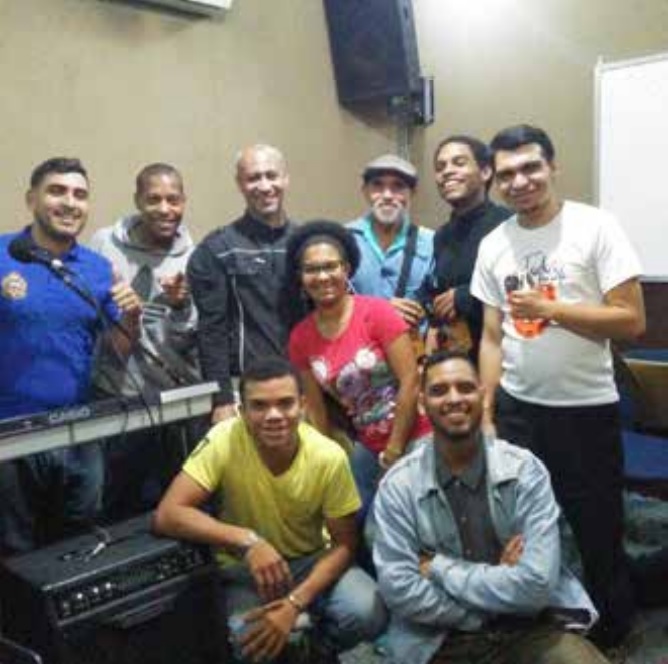
Real Expression" Orchestra
Real Expression” Orchestra

Relaunching

The “Real Expression” Orchestra in 2016 had an unexpected loss. Its founder Oswaldo García and pianist of the group, exercising his role as a GNB official, lost his life in a confrontation.

This moment marked a silence in the Royal Expression Orchestra, which after the physical disappearance of Oswaldo, could not find a path to musical growth and there was no longer reason to celebrate.

After a year, his son Wladimir A. García, who learned the magic of the piano from his father, decides again to summon these friends of his father to continue the legacy that was Oswaldo’s passion in life.

During the year 2018, the “homemade” rehearsals and the desire to consolidate the group continued and in December of that year Wladimir Alexander formally decided to start piano lessons with the teacher Alberto Crespo, a Venezuelan pianist recognized in the salsa scene for his participation. in Bands such as Bailatino, and professionalize their innate skills in order to take on the challenge of Musical Direction of the Orchestra, under a concept of varied salsa repertoire and coupling talents of different ages in order to capture audiences of all ages.

With this impetus and desire, “Orquesta Real Expression” was born with a group of musicians of all ages and periods, a fresh and original repertoire with a “street tumbao”, extolling what is born at night in the Caracas parish “23 de January” cradle of salsa par excellence and in homage to all “street and guataca” dancers.

Real Expression" Orchestra
Real Expression” Orchestra

Musicians

After the call, many musicians were encouraged to participate, including Gilberto Gil (tumbadoras) who has been supporting Wladimir Alexander since he took over the orchestra, we consider him “the brother of the house”.

There is also Gonzalo Ribas (singer) of the old school with an original soneo and a musician by vocation formally dedicated to the business of selling spare parts. In the voice is also part of this project Jeanmicet Canónico, singer with a career in traditional Venezuelan music.

Jeanmicet is currently part of the “Francisco Pacheco y su Pueblo” Project and his son, also renowned percussionist Roland Orozco, decided to join the percussion base for “Real Expression” with Luis Urbina.

On bass we are accompanied by “Yimmito León” from the family of the great Oscar D’ León, son of Yimmy Leon. The sax is represented by Javier José Torres Perez (saxophonist and flutist).

Following the line of brass Meyderson Rada (trumpet) who also belongs to the project of Francisco Pacheco y su Pueblo, and as arranger and bass Premmlim Villamizar of the new generation of, under the direction of Wladimir Alexander singer and piano.

Repertoire

The repertoire includes songs covered by orchestras such as Los Satélites, Grupo Canela de Colombia, Spanish Harlem, Hildemaro, Eddy Santiago, Eddie Palmieri, Oscar D’ León, among others.

Real Expression Orchestra. Musical Direction: Wladimir Alexander Garcia. Phone (0414)3175583. email: [email protected] Instagram: orchestrarealexpression / twitter: @ExpressionReal / Facebook: Real Expression Orchestra.

Under the production of: La Negrix Salsera

Email: [email protected]. Instagram: Yohelia Acosta / Facebook: Yohelia Acosta.

Guantanamo music director, arranger and composer Julio Avila

Julio Avila Cuban Band 

The Latin music scene in Canada is growing every day thanks to the large number of artists who have decided to move to this beautiful country to try their luck with their talent. Such is the case of Cuban musical director, arranger, composer and singer Julio Avila and the members of his great band Julio Avila Cuban Band.   

Given that we thought his career was very interesting, we decided to contact him to learn more about his work and he was kind enough to accept the invitation. Here are the issues we touched on during this fascinating interview.  

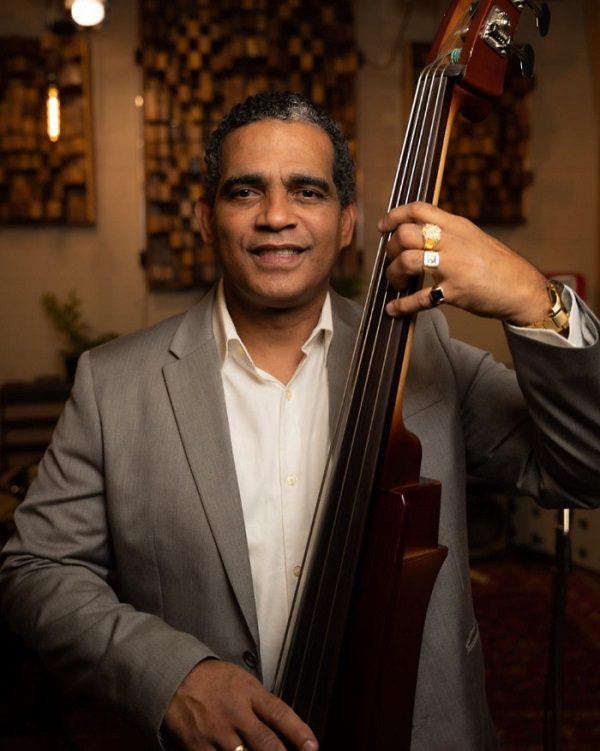
Julio Avila Cuban Band
Julio Avila, musical director of Julio Avila Cuban Band

Life for Julio in Guantanamo, Cuba  

Contrary to the answer we might expect, Julio told us that making music in Cuba at that time was not difficult, as life was not so expensive and the economic crisis was not as severe as it is now.   

In his particular case, things were easier because his mother worked in a radio station and his father was a professional musician and the musical director of the popular music group Por Nuestros Campos for many years until he sadly passed away. It was undeniable that art ran through his veins. 

His sister Isabelita was also involved in popular music for many years and was even awarded on several occasions at the local Eduardo Saborit Festival. Today she is retired, but she was very successful locally at the time.   

Because all the brothers had a penchant for music, they decided to create a group called Los Hermanos Avila until they all went their separate ways and dedicated themselves to their own professions.   

Julio considers that today they would not have been able to devote to this branch of the arts due to the political and economic situation that the island is enduring, and he is thankful that it was not so. 

According to his words, the money was enough to buy the instruments in those times, but things become so complicated that developing an artistic career in the Caribbean country is much more difficult.  

All the members
All the band members with their instruments

Changüí 

Although he says he has played changüí because of his Guantanamo origins, he was never in a group that based its music on this traditional Cuban dance, as the artist has always liked popular music and salsa.   

”Changüí is a genre born in the province of Guantánamo that did not get much popularity, but today, it is impressive the large number of young people who play this dance, since they got a taste for it. In spite of all the years after it was created, there are guys who do not let it die, which makes me very happy” said Julio on this issue. 

When we wanted to know why he thinks that these young musicians have opted for this genre and not for other more modern ones such as trap or reggaeton, he replied that the latter two sound a lot in Cuba, but there have been music teachers and schools that have not let changüí die. They continue to teach it to their students and promote it whenever they can. 

In addition, there are always groups interested in preserving it in time and uniting it with son and other traditional Cuban genres. They even add flutes and violins, which were not present in the original changüí, in order to give it a unique and modern touch.  

Academic background 

Julio started playing the guitar being a child of five years old, as he had always seen his parents and older brothers involved in everything that had to do with music. Therefore, it all started in a very natural way and basically on instinct. It was later that both he and his siblings decided to educate themselves in order to become more complete professionals. 

In Guantánamo itself, he studied at a music school to become a bassist and began working fully on popular music, which had always been to his liking. 

With all that gained knowledge, he decided to move to the city of Havana, to get involved in other projects there and to compose his own material.   

Since he was 16, he earned a living as a bassist in a popular music group, which activity he alternated with his secondary education. It can be said that this is the formal beginning of Julio’s musical career. 

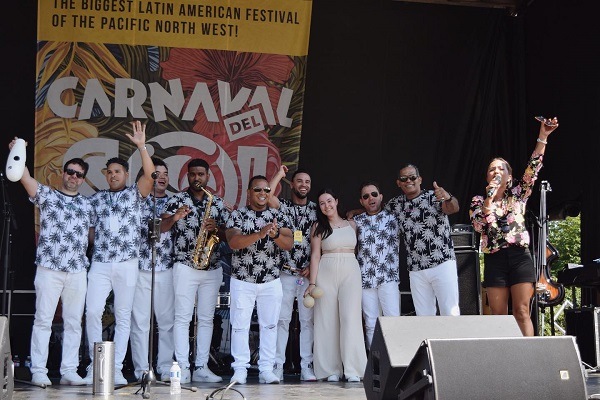
Julio Avila Cuban Band performing
Julio Avila Cuban Band performing at The Carnaval Del Sol in July 2023

Sonora Universal and Brisas Del Palmar 

Before forming his own orchestra, Julio worked with La Sonora Universal and Brisas Del Palmar, which were his first opportunities to shine in the music world.   

When the artist was working in a quintet, a trio from the city of Santiago (Brisas Del Palmar) went to a music festival in Guantanamo and thet had the opportunity to meet in a club in 1999. ‘’The musical director of the trio saw us playing and liked the way I played the bass. He told me about the possibility of playing with them, but it did not happen until 2001 when I went to Havana and we met by chance,” Julio said. 

After having some time worked with the trio, this musical director met the talented tresista Cesar Echevarría, director of Sonora Universal, who needed a bassist because his stayed in Germany. It was then that he told him about Julio and asked him to see him play, which led them to meet and start working together. 

Within a few weeks, Julio was already traveling to Europe with Cesar to tour Germany, Denmark, Holland, Austria and Czechoslovakia. This trip is the one that began to open new doors for him and make him develop as an artist. 

Definitive departure from Cuba 

When Julio had some time with La Sonora Universal, the director of Brisas Del Mar again asked him to join the group for a tour of Canada in 2005. When he was included, the group went from being a trio to a quartet.   

Receptivity from Canadian businessmen was so good that he decided to stay with Brisas Del Palmar permanently until he decided to move from Cuba in 2014 due to the situation which the island was going through. 

The latter coincided with the beginning of his love relationship with the Serbian citizen Natasha Marjanovic, who today is his wife, manager of his orchestra and a great life support. It was she who convinced him to stay in Vancouver, a decision he says it was the right one. 

Singer of Julio Avila Cuban Band
Singer of Julio Avila Cuban Band Isidora Bosanovic

Beginnings of Julio Avila Cuban Band 

It all started when Julio needed a pianist for Brisas Del Mar and hired Ernesto Benitez, who, once in Canada, told him that he was not going back to Cuba. That is when he saw the opportunity to start creating his own orchestra from himself and this musician. 

The next to be included was percussionist Norman García, with whom Julio and Ernesto formed a trio and began performing at festivals until Isidora Bosanovic, singer and his wife Natasha’s niece, arrived. Her case is very particular because she did not speak Spanish, but she learned it so she could sing in the orchestra. Today, she speaks and sings in Spanish very well. 

Finally, the band included Denis Barzaga, another musician originating from Guantánamo, who currently lives in Spain, but when required, travels to Canada to play with the orchestra in Vancouver.   

Recently, kettle – drum player Julio Paredes was included to replace Barzaga, who was unable to travel for the time being.  

Read also: Puerto Rican singer and talented sonero Charlie Maldonado 

  • « Go to Previous Page
  • Page 1
  • Interim pages omitted …
  • Page 82
  • Page 83
  • Page 84
  • Page 85
  • Page 86
  • Interim pages omitted …
  • Page 137
  • Go to Next Page »

International Salsa Magazine (ISM) is a monthly publication about Salsa activities around the world, that has been publishing since 2007. It is a world network of volunteers coordinated by ISM Magazine. We are working to strengthen all the events by working together.