• Skip to primary navigation
  • Skip to main content

International Salsa Magazine

  • HOME
  • Previous editions
    • 2026
      • ISM / April 2026
      • ISM / March 2026
      • ISM / February 2026
      • ISM / January 2026
    • 2025
      • ISM / December 2025
      • ISM / November 2025
      • ISM / October 2025
      • ISM / September 2025
      • ISM / August 2025
      • ISM / July 2025
      • ISM / June 2025
      • ISM / May2025
      • ISM / April 2025
      • ISM / March 2025
      • ISM / February 2025
      • ISM / January 2025
    • 2024
      • ISM / December 2024
      • ISM / November 2024
      • ISM / October 2024
      • ISM / September 2024
      • ISM / August 2024
      • ISM / July 2024
      • ISM / June 2024
      • ISM / May 2024
      • ISM / April 2024
      • ISM / March 2024
      • ISM / February 2024
      • ISM / January 2024
    • 2023
      • ISM / December 2023
      • ISM / November 2023
      • ISM / October 2023
      • ISM – September 2023
      • ISM – August 2023
      • ISM July 2023
      • ISM Edition June 2023
      • ISM – May 2023
      • ISM April 2023
      • ISM March 2023
      • ISM February 2023
      • ISM January 2023
    • 2022
      • ISM December 2022
      • ISM November 2022
      • ISM October 2022
      • ISM September 2022
      • ISM August 2022
      • ISM July 2022
      • ISM June 2022
      • ISM May 2022
      • ISM February 2022
      • ISM January 2022
    • 2021
      • ISM December 2021
      • ISM November 2021
      • ISM October – 2021
      • ISM September 2021
      • ISM August 2021
      • ISM July 2021
      • ISM May 2021
      • ISM April 2021
      • ISM June 2021
      • ISM March 2021
      • ISM February 2021
      • ISM January 2021
    • 2020
      • ISM December 2020
      • ISM November 2020
      • ISM October 2020
      • ISM September 2020
      • ISM August 2020
      • ISM July 2020
      • ISM June 2020
      • ISM May 2020
      • ISM April 2020
      • ISM March 2020
      • ISM February 2020
      • ISM January 2020
    • 2019
      • ISM December 2019
      • ISM November 2019
      • ISM October 2019
      • ISM Septembre 2019
      • ISM August 2019
      • ISM July 2019
      • ISM June 2019
  • Spanish
  • Download Salsa App
    • Android
    • Apple

Search Results for: Latin Jazz

Carlos “Patato” Valdés one of the best percussionists in the history of Latin Jazz.

On November 4, 1926 in the Los Sitios neighborhood of Havana, Cuba, Carlos “Patato” Valdés was born. Known as Patato, he is, quite simply, one of the best percussionists in the history of music.

Patato was born into a very santera and very musical family, his father was a tres player of Los Apaches, the port germ of two illustrious sonera groups: the Sexteto Habanero and the Sexteto Nacional.

He learned to play the tres and the botijuela before turning to percussion, first on the cajones and finally on the congas.

He was an extraordinary percussionist of outstanding participation with the “Conjunto Kubavana”, “La Sonora Matancera”, “Conjunto Casino” and the “Orquesta de Tito Puente”, among other groups, both Son and Latin Jazz.

Formed in rumbero gatherings and carnival groups, Valdés became a professional in the early forties, after trying his luck as a boxer and dancer.

Carlos “Patato” Valdés uno de los mejores percusionistas en la historia del Jazz Latino

He played with Conjunto Kubavana, La Sonora Matancera and El Conjunto Casino. He accumulated nicknames: Zumbito (for his performances at the Zombie Club), Pingüino (for a dance he did on television) and Patato (for his small size), and in those days, dedicating oneself to music in Cuba guaranteed hardship. Besides, Patato wanted to experiment and that was not possible playing for dancers or tourists.

In 1954, he emigrated to New York, like his leather friends: Cándido Camero, Armando Peraza, Mongo Santamaría and the pioneer Chano Pozo (murdered there in 1948).

He immediately began working with Tito Puente. His first recording in the United States was the album Afro-cuban, by trumpeter Kenny Dorham, which opened with the intoxicating Afrodisia. Those were good times for tropical music.

He was the first percussionist to improvise “Solos” with 3 or more Congas at the same time. In addition, he was the creator of the “Congas Afinables”, instruments on which he would ride to dance making them sound rhythmically.

Patato Valdes was an excellent musician, an unforgettable person. Nervous and diminutive, he spoke with an impenetrable Cuban accent; he dressed elegantly, hiding the necklaces and bracelets of Changó and other “orishas”. He looked like a living caricature, but when he hit the percussions he became a divine creature: he had power, spectacularity, sense of melody.

Those skills made him an ambassador of Afro-Cuban rhythms in the jazz world, although he will also go down in history for his extraordinary rumba recordings.

In 1956, Patato appeared in the film Y Dios creó a la mujer, teaching the dances of his homeland to Brigitte Bardot. A great moment, although an implacable Guillermo Cabrera Infante criticized the actress’s movements: “she seems to commit suicide by dancing a cross between mambo and chachachá, a really toxic cross between mambo and chachachá”.

A flexible musician, Valdés sounded as comfortable playing with Machito’s big band as with Herbie Mann’s group. However, he felt indebted to the “rumba de solar” and in 1968 he recorded a revolutionary album with his friend Eugenio Arango, alias Totico.

The exuberant Patato & Totico had genuine Havana flavor, but enriched the basic percussion instrumentation with Cachao’s contrabass and Arsenio Rodriguez’s tres.Patato expanded the creative possibilities for percussionists by playing with three or more congas.

He also made their lives easier by developing a tunable conga: fed up with the traditional method (heating the leather over fire), he installed a metal hoop and keys for tensioning.
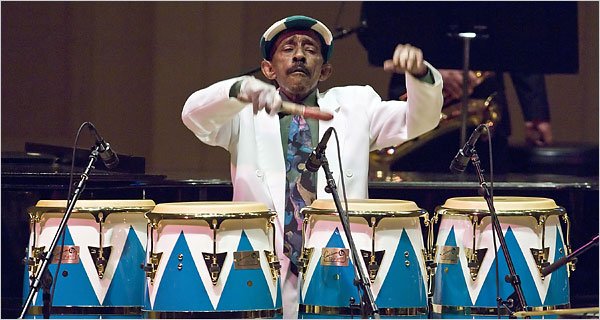
Carlos "Patato" Valdés
Carlos “Patato” Valdés

The LP company mass-produced his model, which was to become the standard for conga players. To promote it, he formed the Latin Percussion Jazz Ensemble with Tito Puente, Jorge Dalto and Alfredo de la Fé, among others, an orchestra that would end up becoming Puente’s big band in the early 80s.

It was during this period with Dalto that the album we have chosen for today began to take shape. It was titled “Patato, Master Piece” and it synthesizes all of Patato’s genius.

“Masterpiece” is an album that travels first class through tango, jazz, descarga, guaguancó and bolero, always in a masterful way and with a luxury crew made up of names like Jorge Dalto, Artie Webb, Michel Camilo, Jerry and Andy González, Nicky Marrero, Ignacio Berroa, Joe Santiago, Néstor Sánchez, Vicentino Valdés, and Sabú Martínez, among others.

The Art of Flavor.

Unfortunately Dalto had already passed away when in 1993 the project was released by the venerable German label Messidor, the same label that had already financed some impressive sessions of Patato with Mario Bauzá or Bebo Valdés, with whom he would later record the famous El Arte del Sabor.
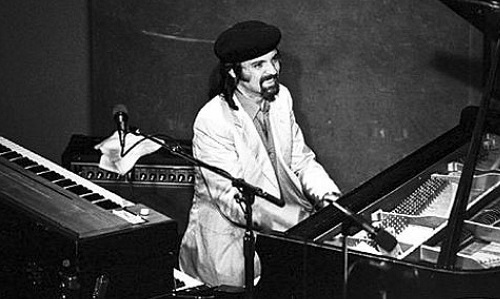
Jorge Dalton
Jorge Dalton

In fact, the great Argentine pianist had to be replaced for the last recording sessions that were made 6 years ago since his illness was too advanced, but he left us some incredible arrangements that were kept in the great majority of the themes.

Dalto left us in 1987 when he was only 39 years old. His replacement was nothing more and nothing less than a very young Michel Camilo.formed by 9 cuts among which we especially want to highlight the huge versions of Cute and Nica’s Dream, Masterpiece is an essential album for all lovers of Latin-jazz with capital letters and that is why we wanted to share it on a day as special as today.

Already recognized as a legend, Patato became more visible in the last 25 years: he had his own band, Afrojazzia, although The Conga Kings, with Cándido and Giovanni Hidalgo, turned out to be more popular.
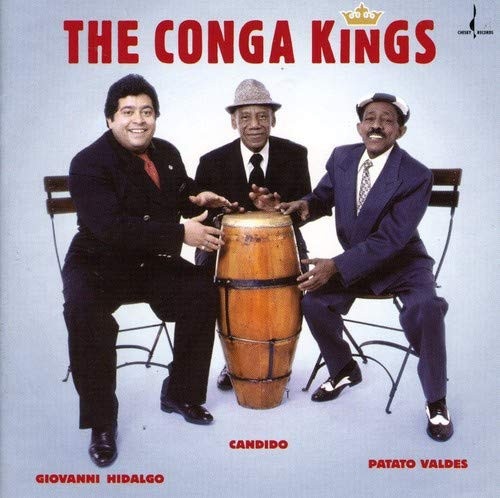
The Conga Kings Giovanni Hidalgo, Cándido Camero y Patato Valdez

He even made his way onto the modern dance floors, with a remix of San Francisco tiene su propio son. Just as he was returning from playing in California with the Conga Kings, his breathing began to fail.

The plane he was on had to make an emergency landing in Ohio to admit him to a hospital. The 81-year-old percussionist, a heavy smoker, was on his way to his beloved New York, but he would never get there. According to his relatives, he held out until December 4, the day of Santa Barbara, the Afro-Cuban equivalent of Changó, when the cables and tubes that kept him alive were removed.

Valdés died in Cleveland, USA, on December 4, 2007.

Fuentes: http://www.herencialatina.com/Patato/Patato_Valdes.htm

Imágenes: Martin Cohen de Congahead.com
Carlos “Patato” Valdés

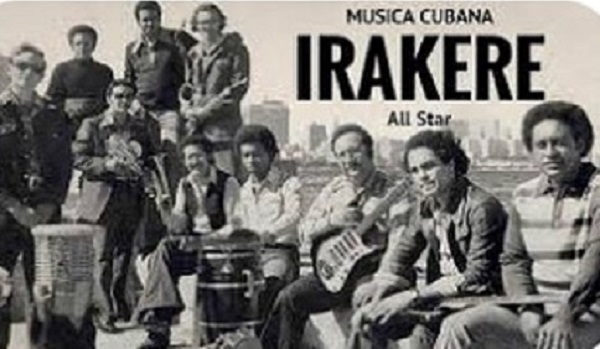
You can read: Irakere was a Cuban group that developed an important work in Cuban popular music and Latin Jazz under the direction of Chucho Valdés

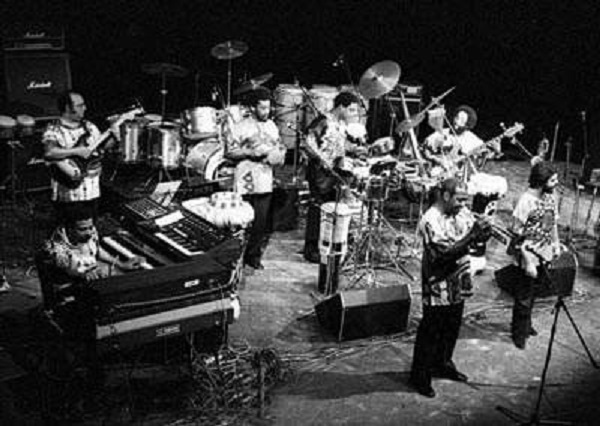
Irakere was a Cuban group that developed an important work in Cuban popular music and Latin Jazz under the direction of Chucho Valdés

Irakere was formed as such in 1967 but had begun to work much earlier; in that year precisely they went to a selection called in Havana to organize with the best musicians of that time the Cuban Orchestra of Modern Music; already in 1972 they were approaching to what they currently produce deciding in 1973 to call it Irakere, which in Yoruba language means Vegetation and that is how, starting from its name, they work based on the Afro-Cuban musical roots.

In this way, through the combination, mixture and interrelation of classical, impressionism, jazz, rock and various compositional techniques they managed to walk through all styles such as dance music, concert, traditional and popular Cuban music.

Thanks to the impulse of pianist Chucho Valdés, the Cuban group Irakere took off in 1973, nourished by Thelonious Monk’s bop.

Founders

Grupo Irakere: It was founded in Havana in 1973, by:

Jesús Valdés(Chucho) composer, director and pianist;

Paquito D’Rivera (Paquito), alto and tenor saxophone, flute and clarinet;

Carlos Averhoff, tenor saxophone, soprano, flute and bass clarinet;

Jorge Varona, trumpet, trombone and percussion;

Carlos del Puerto, bass, bass guitar and tuba;

Carlos Emilio Morales, guitar;

Bernardo García, drums and batá drums;

Jorge Alfonso, batá drums;

Enrique Plá, drums;

Carlos Barbón, güiro, chekeré and tambourine; and

Oscar Valdés, singer, tumbadora (conga), batá drums and bongo.

Irakere, fue un grupo cubano que desarrolló un importante trabajo en la música popular cubana y el Jazz Latino

On the founding of Irakere, Chucho Valdés expressed:

“For us the group always existed, it was present at all times; it was like something pending. At the beginning it had no name, it was just an idea we were working on: to use Cuban folkloric percussion in dance music, and to look for different timbres with a common characteristic: “ours”.

Then Oscar Valdés came up with the idea of combining the not easy and little known batá drum with the tumbadora, güiro and cowbell and so, step by step we arrived at the current group…”.

About Irakere’s first stage, the musicologist Leonardo Acosta points out: “one of the successes of Irakere had been not to try to invent and identify itself with a “new rhythm”, according to the old guidelines of advertising so much used from the forties to the sixties.

The slogan about the “new rhythm” was until recently the “open sesame” on which the musicians counted to become famous overnight, and by that way sometimes quite commercial results were achieved.

Apart from the fact that no “new rhythm” is so new, they all come from the alteration or amalgamation of pre-existing rhythms.

Irakere’s only alchemy comes from the spontaneous creativity of its members. Since there is no commercial endeavor, laboratory practices are unnecessary, and the group can perform a contradanza, a danzón, a son montuno or a cha cha chá without fear of seeming “old-fashioned”, since they are in fact playing something else at the same time. And without setting themselves the goal, nor having to invent a “pega” name, almost by an imperative of the material they are working on, new rhythmic combinations are emerging, to the point that Irakere’s rhythm is unmistakable among Cuban listeners or dancers.

Grupo cubano Irakere

Certainly, and in spite of their triumphs in international jazz festivals, Irakere is not a jazz group. But these successes are not gratuitous either, because as we have seen, they have formidable musicians with great experience in the jazz field, especially in the aspect of improvisation, the great discovery of jazz and perhaps its greatest contribution to the music of the 20th century.

“Paquito D’Rivera: Irakere was born against the will of the Cuban authorities”.

When talking about Cuban music, the name of one of the most emblematic groups in the country’s musical history comes to mind, Irakere, which in Yoruba language means vegetation, jungle.

Irakere became the seed that would germinate a lush forest of rhythms and sounds, a school through which many of the great stars of Cuban music have paraded.

Founded more than four decades ago, this legendary band has been a pioneer of Afro-Cuban jazz and the initiator of the musical revolution in the seventies.

Gracias al impulso del pianista Chucho Valdés, el grupo cubano Irakere levantó vuelo en 1973

Irakere emerged at a time when, due to political demands on the island, music and culture were treated as an instrument of revolutionary identification and jazz was branded as imperialist music.

It was at this time, in the late sixties and early seventies, that a group of great musicians founded a band whose main goal was to enrich Cuban popular dance music with Latin jazz as essential elements.

Under the direction of the outstanding pianist Jesús “Chucho” Valdés, excellent musicians came together in search of a different sonority, based on the use of Afro-Cuban folkloric percussion together with the renewed timbres of the popular rhythms of the time that fused jazz, rock, funk and popular Cuban rhythms such as son, mambo or cha cha chá, together with classical or concert music.

“Irakere was the Musical Generation of change”.

Sources:

https://www.ecured.cu/Irakere

Leonardo Acosta

Radio Televisión Marti

Mirna Guerra

Irakere

You can read: Israel Kantor was an excellent bassist, arranger and composer who achieved great popularity in Cuba for his vocal technique and original “Sonear” style

In Barrio Marianao in Havana, Cuba was born Armando Peraza was a Latin jazz percussionist

Peraza (May 30, 1924-April 14, 2014) was a Cuban Latin jazz percussionist.

Thanks to his collaborations with guitarist Carlos Santana, jazz pianist George Shearing and vibraphonist Cal Tjader between 1950 and 1990, he is internationally recognized as one of the most important figures in the field of Latin percussion.

Known primarily as a conguero and bongocero, Peraza is also a skilled dancer and composer. He has appeared on recordings by Pérez Prado, Machito, George Shearing, Charlie Parker, Tito Puente, Cal Tjader and Carlos Santana. Performances with Santana, Shearing and Tjader brought him international fame.

He was inducted into the Smithsonian Institute and had three “Armando Peraza Days” from the city of San Francisco.

One of the most important and respected figures in the world of percussion.

He is a legendary master on both congas and bongoes, whose unorthodox style and story are an inspiration to countless young musicians.

He began his artistic career in the early 1940s, played with singer Alberto Ruiz’s Kuvabana ensemble where he played the bongo and moved to San Francisco in 1949.

At the New York World’s Fair he played congas in an African pavilion with a Nigerian.

This African arrives and says to me: “Man, what part of Africa are you from? I told him, I am from Cuba. He said: “Don’t tell me” He later worked with the orchestras of Paulina Álvarez and Dámaso Pérez Prado, and the Bolero group.

In 1947 he moved to Mexico, where he joined with Mongo Santamaría the ensemble Clave de Oro, and in 1948 they both traveled to New York as percussionists accompanying the dance couple Pablito y Lilón.

At the end of that year, Peraza joined Slim Gaillard’s jazz combo with which he traveled throughout the United States. After arriving in New York in 1949, Armando became a sought-after musician, especially in the contemporary Bebop and Latin Jazz scenes.

Armando built a reputation for impressively fast and complex hand technique, experimental techniques and great talent for entertaining. He flourished in progressive atmospheres that combined jazz with Afro-Cuban styles and was at the center of a new expression called “Cubop”.

He has played on more than 100 albums and is the composer of more than 40 songs. Some of these works include collaborations with Mongo Santamaria, George Shearing, Cal Tjader and Carlos Santana.

Settled in San Francisco, California, in the early 1950s, Peraza began working with pianist George Shearing’s quintet, where he demonstrated his mastery as a player of the tumbadora and bongo; also in this period he recorded several albums of Cuban folk music with Mongo Santamaria.

In the 60’s he joined the quintet of vibraphonist Cal Tjader, with whom he remained for several years and with whom he popularized Chano Pozo’s Guachi guaro. In the 1970s, he joined Mongo Santamaría’s orchestra, with which he participated in the Montreaux Jazz Festival in Switzerland.

Later he worked with Carlos Santana’s rock band, in which he remained for 17 years, until his retirement from artistic life in the 90s.

He possessed a great capacity to obtain the most unusual sounds of the bongo and the tumbadora, and distinguished himself for his extraordinary solos on both instruments.

He died on April 14, 2014 in California, United States, as a result of pneumonia.


Fuente: https://kripkit.com/armando-peraza/

2nd Annual Bay Area Latin Jazz Festival brings news

Castro Valley will be the scene of the best jazz event you can find

After so many months of confinement due to the pandemic, which has ravaged the world, Castro Valley, California, will become the scene of a spectacular event that will make jazz and music lovers in general very happy. It turns out that, later this month, the second edition of the Annual Bay Area Latin Jazz Festival will take place, whose surprises will blow attendees out of water. 

This is the logo of the Bay Area Latin Jazz Festival
The logo of the Bay Area Latin Jazz Festival

In this new edition, the event is expected to be an important contribution to jazz as a musical genre, but it will not be the only musical style that attendees will enjoy, as organizers have made every effort to make the festival as varied and diverse as possible. This means that there is a planned special emphasis on the Latin American and Caribbean influences that have made this genre what we know today, so the mixture of cultures that will be present there will be unbelievable. 

The space destined for sales positions and counters will include businesses, food sales, handicrafts, community organizations, among many other things. However, the main attraction will be the great group of artists who have been invited to the Annual Bay Area Latin Jazz Festival, among which we can include Oscar Hernandez and his quintet Alma Libre, Bobi Cespedes, Carlos Rosario, Ricky’s Grupo Afro-Nativo, Rene Escovedo Latin Jazz Ensemble and much more. In addition, the festival will be attended by broadcaster Luis Medina, who kindly spoke with us and provided us with all this valuable information. 

Mr. Medina from KPFA Radio’s Con Sabor and WorldSalsaRadio.com’s Sabiduria Con Tumbao will be the master of ceremonies for the event and DJ during breaks, which will allow those who attend to see Luis in one of his most exciting musical facets. 

This is Luis Medina
Luis Medina, Master Of Ceremonies, DJ and musicologist

Montuno Productions and its role in this

Montuno Productions will be the entertainment services provider that will organize this great festival, which guarantees that it will be a success. It must be remembered that this corporation specializes in offering all kinds of services related to Latin music, including promotion, marketing, representation of artists of various genres, assistance in obtaining tickets, website creation and many other things. Without a doubt, this provider is highly reliable and respected in the industry, so it is a fact that its work will not disappoint. 

One of the great achievements of Montuno Productions in this time has been the coming together of local small businesses, community organizations and music lovers in one place to create a positive contribution to arts, economy and culture. Benefits to the community, attendees and music lovers will be incalculable. 

As for the place, this Latin jazz festival is expected to take place at Rowell Ranch, Castro Valley, California. It is a lovely area surrounded by hills whose access by motorway is quite easy for those who wish to go by car. The place is quite accessible for those coming from Livermore, Dublin and Pleasanton. Those coming from Hayward can be there in just 10 minutes.   

With respect to entry costs, this event is a very economical option for those who do not want to spend too much, but want to have a lot of fun. General admission has a value of $30, but can amount to $35 for those who bring their vehicle.   


Stage at the Bay Area Latin Jazz Festival
Stage at the Bay Area Latin Jazz Festival in the last edition

Link to the event’s website: https://www.facebook.com/events/rowell-ranch/2nd-annual-bay-area-latin-jazz-festival/595551574740975/  


Cost of tickets:  

General admission: $30  

Parking: $5


Home    

Israel Tanenbaum from The Latinbaum Jazz Ensemble in ISM

The Island of Enchantment never ceases to amaze us and we continue to marvel at the fact that this small territory has been able to give the world so much talent, especially in music. Today, it is up to talk about Puerto Rican producer, arranger, composer and pianist Israel Tanenbaum and the enormous contribution that this great artist has made to Latin music over the last few decades.   

Israel Tanenbaum is also a bandleader who has produced more than 50 albums and participated in over a hundred recordings throughout his career, so his experience in this field is more than proven. We were fortunate to talk to him in just over half an hour and we will proceed to cover the most important issues in the following lines.   

Producer Israel Tanenbaum
This is Puerto Rican producer, arranger, composer and pianist Israel Tanenbaum

Israel and his passion for the piano 

Although Israel is widely known for his piano skills, this was not the first instrument he started playing, but the organ. As a child, he was given a toy organ and that was how he made up his mind and train his ear for music.   

In addition to that, he told us an anecdote about how one day he went to a music store with his parents and they left him alone for a while, time that little Israel used to play a huge object that caught his attention: an organ much bigger than the one he used to play at home. It was by watching the organist that he decided to position himself in front of the instrument and started imitating what the musician was doing with his little hands. 

He waited until the organist moved away from the instrument to sell it to a customer and Israel took the opportunity to get into the seat and start playing the instrument’s keys and foot pedal. After playing the five or six songs he knew, he noticed that he had a silent multitude watching what he was doing and once he finished playing, people started clapping their hands furiously at such a waste of talent in a child this small.  

That was when his parents decided to buy him an organ and a piano. A few years later, namely when he was 12 years old, Israel was already playing on the streets in a more professional way.  

Israel’s self-taught formation in music 

Israel’s initial training as a musician was entirely self-taught for the first few years. In fact, he says that when he started studying the craft for real when he had already been earning a living as a musician for more than 10 years.   

With regard to sound engineering, Israel says he had to become professional in this area ”in self-defense”, as he had problems with several sound engineers who did not have a good musical ear, so they ended up damaging some of his recordings unintentionally. This led him to learn to work on the engineering himself so that this kind of thing would not happen again.   

On the other hand, the arrangements and production process had to do with some experiences he had had. One of them happened when, at the age of 16, a friend’s father, an important person in the industry, on one occasion, introduced him to Machito, who very kindly invited Israel to go on stage and sit next to him to learn from what he saw that night. This experience marked the pianist so much that he said to himself: ”this is what I definitely want to do for the rest of my life”. 

Israel playing the piano
Israel Tanenbaum playing the piano during a performance

Colombia’s role in Israel’s career 

Colombia has been key to Israel’s career for several reasons and one of them is that his most productive time of life was spent in the coffee-growing country. The artist had already traveled to that country to accompany artists such as Pete ”El Conde”, Marvin Santiago and Arabella, but the situation was different when he had to tour with the group Batacumbele. This tour was scheduled to last about 10 days, but it was prolonged for 10 years. 

In those days, it turns out that he met by chance with Alexis Lozano, director of Orquesta Guayacán, who proposed him to stay in Colombia a longer time to produce the orchestra’s second album and he accepted. After this, he continued to receive proposals of this style and, almost without realizing it, he already had 10 years living in Colombia and more than 80 albums produced. In addition to Orquesta Guayacán, he worked with Grupo Niche, Cheo Acosta, Alfredito de La Fé and many more.    

”My real professional growth took place in Colombia, but my love for production began in Puerto Rico from the hand of percussionist Roberto Roena, whose orchestra was led by me for about two years. When we were recrding the album ‘El Regreso’, I spent many hours with Roberto in the studio and, seeing how dedicated, detail-oriented and precise he was with every chord and note, I was inspired to do the same at some point. That’s how I accepted all the opportunities to produce that arose in Colombia some time later. I owe all of that to Roberto” Israel said about his time as a producer in the South American country.    

In addition to his work side, Israel also says that Colombia means a lot to him on a personal level, since this country makes him feel at home and he has many friends there. Not to mention that his own wife is Colombian and one of his children was born there, so he is more than attached to that land for life. 

Israel during an interview
Israel Tanenbaum during an interview on the radio

Life in Puerto Rico and Hawaii    

In addition to Colombia, Israel also lived in Puerto Rico and Hawaii. He assures that from each of the places he has been, he has extracted something from their folklore and roots to add to his musical work. He says it is the best way to understand that country and the taste of its people.    

”If you want to understand the people of a country, you have to go back to their folklore and assimilate it. I lived in Venezuela for about six months and, being there, I became familiar with the quitiplás (a typical percussion instrument of Venezuela), the sangueo, the llanera music and many other elements of the musical culture of that country” Israel said on this issue.   

”I lived in Hawaii for almost three years, during which time I founded my first salsa orchestra. I served in the army with Quique Peña, a nephew of maestro Lito Peña, an eminence in Puerto Rico. The young man, whose classical training was extremely intense, taught me to transcribe what each instrument plays in detail. This was an invaluable lesson that served me well for what came later in my career. I also had the opportunity to study with maestro Eddie Palmieri, Papo Luca, José Milé, Jorge Milé, José Febles, among others. I transcribed music for all of them” Israel added on the issue.   

Israel Tanenbaum & The Latinbaum Jazz Ensemble   

”Impressions”, Latinbaum’s most recent album, was the result of an extensive musical stry that tells a wide experience with genres, styles and musicians of all kinds. Israel started this recording nine years ago, but he was always very busy with the rest of the recordings he was producing, so he always ended up abandoning this project.   

Once he had the album ready, but one day Israel had a catastrophic loss of equipment and recordings that led him to practically start the album from scratch, from which he could only save a single song. In the end, he opted to tear up and throw away the arrangements he had in order to start all over again. It took about eight more months to have the album ready again, and today, the musician is grateful that things went down like this, since this material represents the artist he is today for being more current.   

It is then when he sought out the artists and musicians who would accompany him in this new production, which would be his first solo album after having produced more than 100 other people’s albums.    

From now on, he wants to release a Latin Jazz production with his own orchestra every year and all of them under his new label, Latinbaum Records.    

Read also: Grupo Batachá, Houston’s Premier Latin band 

  • « Go to Previous Page
  • Page 1
  • Page 2
  • Page 3
  • Page 4
  • Page 5
  • Interim pages omitted …
  • Page 95
  • Go to Next Page »

International Salsa Magazine (ISM) is a monthly publication about Salsa activities around the world, that has been publishing since 2007. It is a world network of volunteers coordinated by ISM Magazine. We are working to strengthen all the events by working together.