• Skip to primary navigation
  • Skip to main content

International Salsa Magazine

  • HOME
  • Previous editions
    • 2026
      • ISM / April 2026
      • ISM / March 2026
      • ISM / February 2026
      • ISM / January 2026
    • 2025
      • ISM / December 2025
      • ISM / November 2025
      • ISM / October 2025
      • ISM / September 2025
      • ISM / August 2025
      • ISM / July 2025
      • ISM / June 2025
      • ISM / May2025
      • ISM / April 2025
      • ISM / March 2025
      • ISM / February 2025
      • ISM / January 2025
    • 2024
      • ISM / December 2024
      • ISM / November 2024
      • ISM / October 2024
      • ISM / September 2024
      • ISM / August 2024
      • ISM / July 2024
      • ISM / June 2024
      • ISM / May 2024
      • ISM / April 2024
      • ISM / March 2024
      • ISM / February 2024
      • ISM / January 2024
    • 2023
      • ISM / December 2023
      • ISM / November 2023
      • ISM / October 2023
      • ISM – September 2023
      • ISM – August 2023
      • ISM July 2023
      • ISM Edition June 2023
      • ISM – May 2023
      • ISM April 2023
      • ISM March 2023
      • ISM February 2023
      • ISM January 2023
    • 2022
      • ISM December 2022
      • ISM November 2022
      • ISM October 2022
      • ISM September 2022
      • ISM August 2022
      • ISM July 2022
      • ISM June 2022
      • ISM May 2022
      • ISM February 2022
      • ISM January 2022
    • 2021
      • ISM December 2021
      • ISM November 2021
      • ISM October – 2021
      • ISM September 2021
      • ISM August 2021
      • ISM July 2021
      • ISM May 2021
      • ISM April 2021
      • ISM June 2021
      • ISM March 2021
      • ISM February 2021
      • ISM January 2021
    • 2020
      • ISM December 2020
      • ISM November 2020
      • ISM October 2020
      • ISM September 2020
      • ISM August 2020
      • ISM July 2020
      • ISM June 2020
      • ISM May 2020
      • ISM April 2020
      • ISM March 2020
      • ISM February 2020
      • ISM January 2020
    • 2019
      • ISM December 2019
      • ISM November 2019
      • ISM October 2019
      • ISM Septembre 2019
      • ISM August 2019
      • ISM July 2019
      • ISM June 2019
  • Spanish
  • Download Salsa App
    • Android
    • Apple

Search Results for: Latin Jazz

We welcome Patricio Angulo from Rumbaché to ISM

The San Francisco Bay Area, California, has a lot of talented artists, many of which we have had the privilege to interview in this section to learn all kinds of details about the Latin music scene in this area of the United States. This time, we managed to have an interesting conversation with Patricio Angulo, leader and founder of the orchestra Rumbaché, who kindly answered all the questions we had.

Rumbaché is one of the most important salsa and timba bands in the Bay Area and has a varied repertoire of salsa and contemporary Cuban music that enchants any audience that hears the group perform. 

The following are some of the most important issues related to this Latin band and its history.
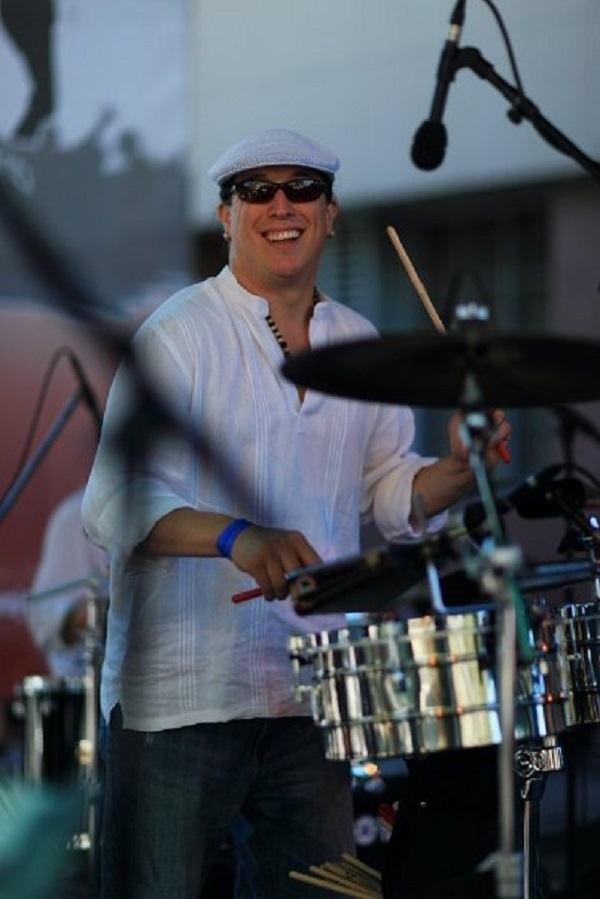
Patricio playing the timbales
Patricio Angulo playing the timbales on stage

Patricio Angulo’s beginnings in the music world

Patricio has had a long interest in music, which he developed by himself, since he did not have family musicians to encourage these activities in the little boy.

He started playing violin and trumpet, but it was not long before the young boy found he liked drums and orchestral percussion better. He also played some classical music and learned a lot about instruments used in this genre.

When he went to high school, there were several music programs from which Patricio could choose to develop this branch of art depending on his tastes and finally decided on a jazz group with which he started learning to play congas and timbales. This group wanted an extra Latin touch in their music and the boy was chosen for the role. 

The musician was very inclined to Latin Jazz at the time, but then, he was listening to other Latin genres until he discovered Cuban and Caribbean Salsa, which would be very important in the musical future of the artist.

Recruiting talent for Rumbaché

For years, he group Rumbaché, previously called Quimbombó, was forming from musicians Patricio considered played well, since for him this is most important. 

However, he emphasized that each orchestra has its own needs and highlighted the vocals as an example of that, as they are very necessary for dance music like the one they play. Likewise, professionalism and experience are two aspects taking into account by him when evaluating a candidate. 

In another order of ideas, the musician considers that Latin roots are not a key element in playing salsa or other genres of this type very well, since there are many singers and musicians who have never had contact with Latin genres or instruments can learn to play them without any problem. It is a matter of effort and discipline. 
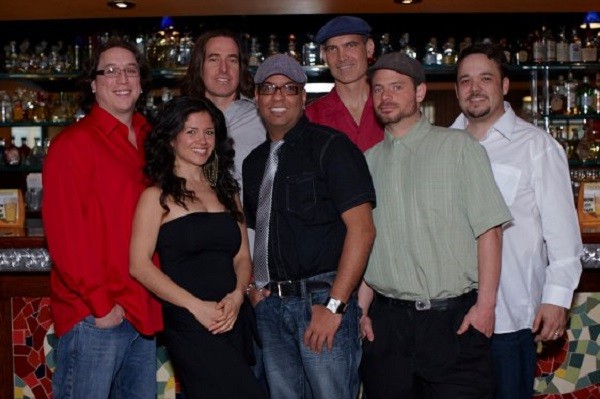
Whole orchestra Rumbaché
This is the whole orchestra Rumbaché posing for the camera

Origin of the name Rumbaché and the Yoruba Religion

From what we have read about Rumbaché, the origin of the name and its relation with the Yoruba religion caught our attention. Rumbaché is a combination of the words ”rumba” (This word can mean ”party” and ”celebration”) and ”ache” (in the Cuyuní language, ”ache” is something very good and pleasant).

Something that Patricio wanted to clarify is that the music of his orchestra is not religious and has nothing to do with the Yoruba religion beyond some choruses and words as there are in many Cuban songs. In fact, they try to have a varied repertoire so as not to bore the audience.

Rumbaché’s activity in clubs

Rumbaché has featured heavily in festivals and renowned clubs in the San Francisco Bay Area such as Sausalito Seahorse, The Cigar Bar & Grill, Rassela’s Jazz Club, Moe’s Alley, Blue Note, among others. It is undeniable that the group has ample experience in performing in these types of venues. 

That is why we took this opportunity to ask Patricio how the movement is going in these places when it comes to hiring orchestras in recent years, to which he replied that the presence of orchestras in local venues has decreased dramatically in recent years, especially after the pandemic.

Likewise, because of this same situation, there were many clubs that began to close their doors indefinitely, making it very difficult for Rumbaché to play live regularly. 

Once the pandemic was relaxed, Patricio says that a few venues survived, but there were too many orchestras for the few available stages. This led them to opt for festivals, concert series and private shows. 

Every night there was a pen club, but that has changed radically and Patricio and the other members of Rumbaché have had to adapt to the circumstances. 
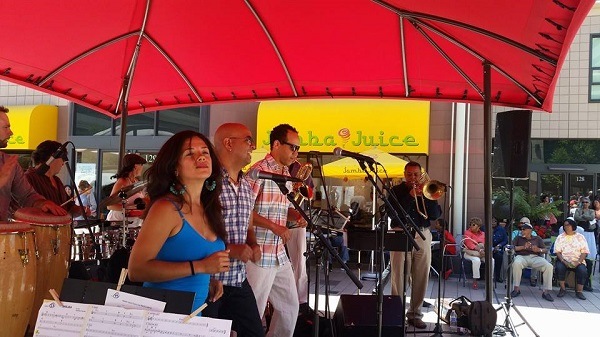
Rumbaché live
Rumbaché performing live

Oye Productions

In addition to Rumbaché, Patricio also has his own entertainment company called Oye Productions, with which he is responsible for providing live music for all kinds of events. Obviously, he gives priority to Rumbaché, but he also offers the services of guitarists, trios and all sorts of musicians.

What the company seeks to focus on is providing musical entertainment for private parties such as a business meeting or something more personal such as a wedding.

He always tries to hire musicians who play all kinds of instruments and genres to perform varied shows for each event. He also seeks to look for artists he knows beforehand and who he is sure will do an excellent job. 

Activities outside Rumbaché

Patricio also indicated that one of his most important occupations outside Rumbaché was teaching congas, timbales and drums. He also teaches drums to children once a week. 

These activities bring happiness to the musician and he always looks for the opportunity for these youngsters he teaches to have some knowledge of Latin percussion and get to know our music much better.

Read also: René Latin Soul and his journey into music from his home country
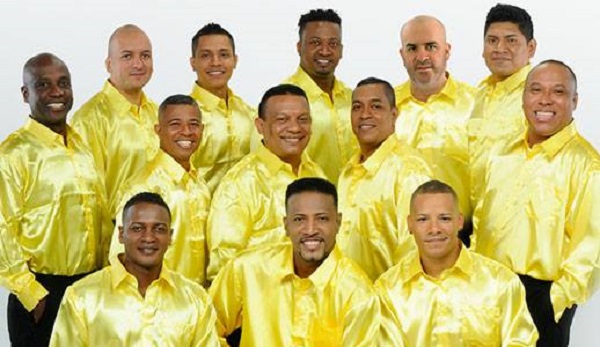
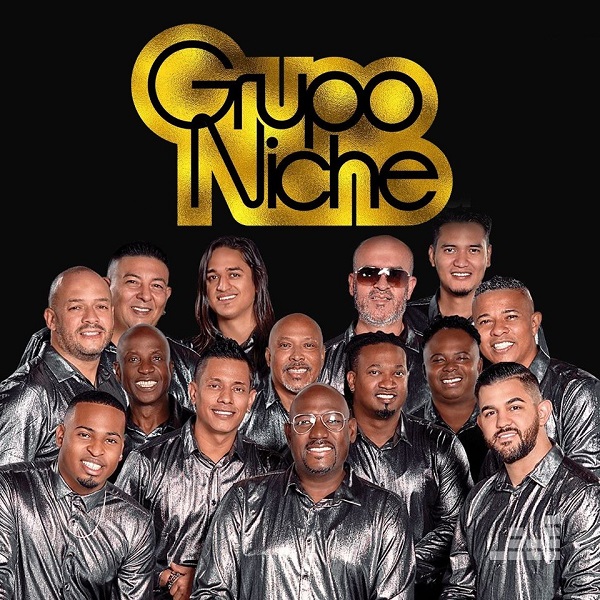
Colombia’s legendary Grupo Niche and its founder Jairo Varela

Grupo Niche was founded in 1979 in Bogotá, Colombia, by Jairo Varela, born on December 9, 1949 in Quibdó, Chocó, and Alexis Lozano, who played trombone and was an arranger, later leaving Grupo Niche to form Orquesta Guayacán de Colombia.

That same year, the group released its first album under the Daro label, entitled Al Pasito, with Jairo Varela and Alexis Lozano as directors, Nicolás Cristancho “Macabí” on piano, Francisco García on bass, Luis Pacheco on congas and singers Jorge Bazán, Saulo Sánchez and Héctor Viveros.

Two years later, Niche’s second production, Querer es poder, was released. The song “Buenaventura y Caney”, included in the album, became the first composition of the group to become a hit in Colombia, said Jairo Varela.

The legendary Grupo Niche of Colombia 2023

In 1983 After a tour of the United States in which they performed before several colonies of Colombians and a short stay in Buenaventura, the group decided to settle in Cali in 1983.

In 1984 and after releasing the albums Prepárate (1982) and ¡Directo desde Nueva York! (1983), Jairo Varela composed and produced the song “Cali Pachanguero”, which brought the group to national and international stardom.

The song, included in the 1984 album No hay quinto malo, was chosen as the official song of the Cali Fair.

After the success of No hay quinto malo, the group began to tour constantly throughout Colombia and other Latin American countries, becoming the most important orchestra in Colombia.

The album Triunfo, Niche’s sixth discographic production, was released in

1985 The song “Ana Milé”, sung by Jairo Varela, became a radio hit. A year later the group incorporated the renowned Puerto Rican singer Tito Gómez, who had previously worked with La Sonora Ponceña and Ray Barretto, the godfather of Latin jazz.

The inclusion of Gómez further boosted the group’s career throughout Latin America. That same year the album Me huele a matrimonio was released, with Gómez and Varela sharing the lead vocal duties.

Colombia's legendary Grupo Niche 2020
Colombia’s legendary Grupo Niche 2020

Later, another Puerto Rican joined the group, pianist Israel Tanenbaum, who would eventually leave the group to join a parallel group to Niche, Orquesta Guayacán.

Taking advantage of the group’s growing popularity, in 1987 an album of new versions of songs previously released by the group entitled Historia Musical was released.

That year, the director Jairo Varela fired a group of musicians due to their claims for high fees.

Varela hired some new musicians and recorded the album Tapando el hueco, a production that became an instant hit especially for the songs “Nuestro sueño” and “Cómo podré Disimular”.

After the release of the album, Grupo Niche became a sensation in Latin America, especially in countries such as Venezuela and Peru.

In 1989, the group gave a concert at the Campo de Marte in Lima, where it attracted more than one million people, a record number in that country.

To thank the Peruvian people for their incredible welcome, the band released the album Me sabe a Perú that same year.  1989 also saw the release of the album Sutil y contundente, a production that revalidated the group’s good form, especially with songs such as “Mi hijo y yo” and “Miserable”.

In 1990, after the departure of singer Tito Gómez, the group released the album Cielo de tambores, Grupo Niche’s most successful production to date. The same year of its release, Cielo de tambores ranked third on Billboard magazine’s tropical music chart in the United States.

The album’s success was based on the quality of compositions such as “Busca por dentro”, “Sin sentimiento”, “Debiera olvidarla” and “Cali ají” and the massive popularity of the song “Una aventura”. Charlie Cardona and Javier Vásquez provided the vocals for the album.

From that moment on, the group enjoyed international popularity, touring constantly in countries such as the United States, Peru, Mexico and Colombia, as well as making some presentations in Europe.

In 1992 the group released another successful album entitled Llegando al 100% with Charlie Cardona as lead vocalist. The songs “Hagamos lo que diga el corazón” and “No tuve a quién decirle amor” stand out from this production.

After the release of two compilation albums, the group released Etnia, an album recognized especially for the compositions “La Canoa ranchá” and “La magia de tus besos”. The vocalists on this production were Willy García, Álvaro Granobles and Javier Vásquez.

Jairo Varela was captured and imprisoned in 1995 after returning from a tour of the United States.

The musician was accused of front man and illicit enrichment for allegedly receiving payments from the account of a sister of drug trafficker Miguel Rodríguez Orejuela, corresponding to the presentations of Grupo Niche at the Caseta Carnaval del Norte, an event where artists such as Sergio Vargas and Oscar D’León el sonero del mundo also performed.

His experience in jail was reflected in the lyrics of several songs on the next Niche album. 1997’s A prueba de fuego became another commercially successful production for the group.

Colombia's legendary Grupo Niche 2015
Colombia’s legendary Grupo Niche 2015

The song “Eres”, sung by Willy García, achieved strong radio airplay and its video clip was equally popular.

A year later the album Señales de humo was released, which could not match the success of the previous production.

The group closed the 1990s with the release of the album A golpe de folklore, an album in which the group returned to its musical roots, exploring the folklore of the Pacific coast and emphasizing the “salsa brava dura”.

In 2001, Jairo Varela decided to move Grupo Niche’s headquarters to Miami in order to better focus on the group’s international touring demands.

That year the group published Propuesta, an album that was nominated for a Latin Grammy in the “Best Salsa Album” category, along with productions by prominent artists such as Isaac Delgado, Oscar D’León, Tito Puente, Gilberto Santa Rosa and Tito Rojas, great salsa artists.

In 2005 the group performs for the first time in Japan. That same year the album Alive was released.

In 2007 Varela suffers a heart attack that forces him to quit smoking. Two years later he released a new album entitled Robando sueños, promoted by the single “Un día después” with Elvis Magno on lead vocals. Jairo Varela stated that it was the best song he had ever written in his life.

The death of Jairo Varela.

On August 8, 2012 Jairo Varela suffered another heart attack in his apartment in southern Cali, dying at the age of 62, while he was writing a novel titled “Luces negras”, a story based on the Colombian Pacific that he was unable to finish.

Jairo Varela Founder of Grupo Niche in Colombia

After his death, a large number of songs were recorded on demos and written down on sheets of paper.

Some of these compositions were recorded and included in the posthumous 2013 album Tocando el cielo con las manos.

Yanila Varela, Jairo’s daughter, succeeded him as the group’s director.

At the end of 2014, the group shared the stage with the Gran Combo de Puerto Rico at Madison Square Garden in New York City.

In August 2015 José Aguirre took over the musical direction of Grupo Niche replacing Richie Valdés. That same year the idea of releasing an album with songs composed by Varela that failed to become hits arose.

The idea was finally embodied in a new record production released on October 2, 2015 titled 35 Aniversario, promoted with the single “Niche como yo”, a song composed by Jairo Varela in 1978.

The album received a Grammy nomination for Best Traditional Tropical Latin Album, a Latin Grammy nomination for Best Salsa Album and a Lo Nuestro Award nomination for Album of the Year in the Tropical category.

New stage 2020

Grupo Niche is currently formed by singers Alex Torres, Luis Araque and Alejandro Iñigo, percussionists Juanito Murillo, Fabio Celorio and Diego Camacho, pianist Víctor González, bassist Sergio Munera and musicians Edgardo Manuel, Edward Montoya, Carlos Zapata, Oswaldo Salazar and Paul Gordillo on wind instruments, under the direction of José Aguirre. At the end of the year, Grupo Niche won a Latin Grammy award for the best salsa album of 2020 with “40” and in March 2021 they will win the Anglo Grammy.

Also Read: Leo Pacheco Sonero del barrio and beloved example of father and friend was lead vocalist of the Orquesta Renovación under the direction of the tumbador Nico Monterola.

Son del Monte

North America / United Stated / New York

Son del Monte, Something more than a “Charanga”

It was one of those nights of meeting with friends, those friends with whom you share the same musical preferences among other things, you know, of those gatherings where only you and your friends can spend hours discussing the best songs of Héctor Lavoe or remembering the best hits of the Fania, and in which there is no other way to end the evening than with the deities that brings the good Salsa music from a live band to close the night with a flourish.

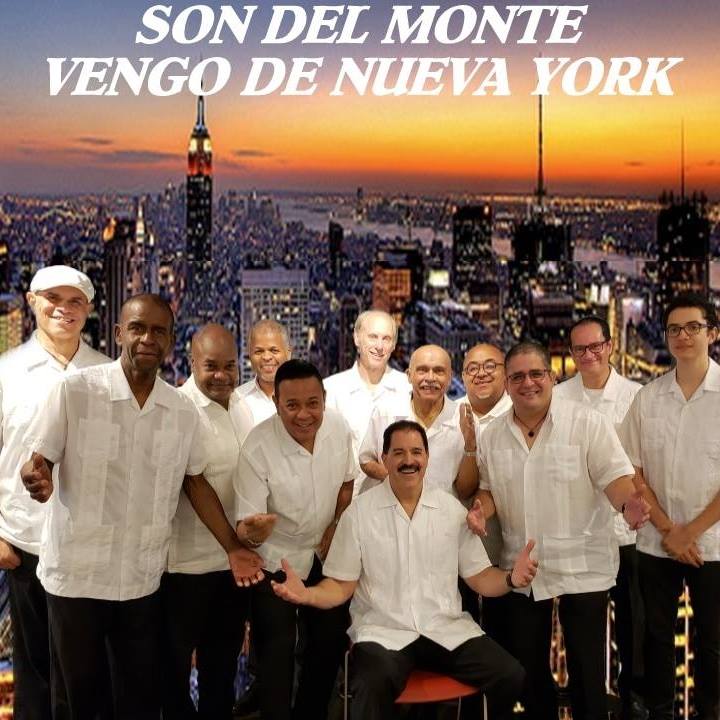
Son del Monte
Son del Monte from New York

And so that was, when with the hours passed we came across one of these charming Latin clubs that fill the streets  and every day prevail more in the city of New York, where, of course, they offered Live Salsa. Eureka! If you allow me to say it … It was the perfect place to “Echarnos un Pie” (colloquial term that we usually give in some Latin countries when we refer to dance).

Upon entering, the characteristic sound of the band wrapped up the entire venue, no doubt, captivated us. It was the harmony of an orchestra that played the typical Cuban music: “La Charanga“, which had its maximum exposure in the 20th century. We were all enthralled or if you want to say “delighted”, it was the mixture of wind instruments with percussion instruments but especially with the string instrument that most caught our attention, the Violin.

When we asked for the name of the orchestra, they told us: “Son del Monte”. It’s the ideal name for an orchestra of 12 Latin musicians who project their virtuosity before an audience eager for Caribbean Music that bathes the senses and awakens the joy of living.

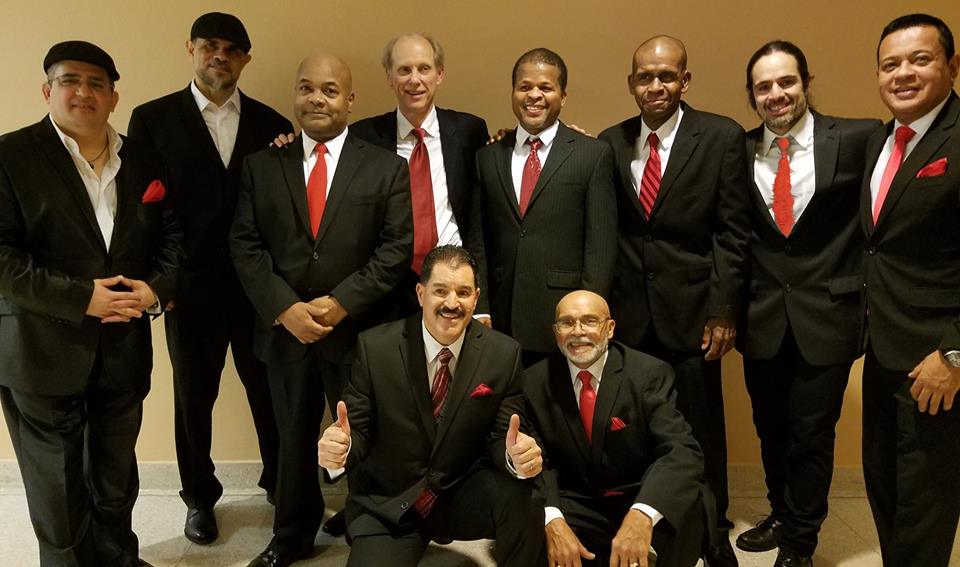
Son del Monte
Son del Monte

Son Del Monte is a band based in New York City that presents unique tunes from various artists. This orchestra was born from the musical director and timbalero, Manny Rivera whose aspiration was to create a Charanga band with a hard New York sound that paid homage to the orchestras of the 60s, 70s and 80s. “Our music is captivating for the listeners and dancers. Fans from all over the world have come to love Son Del Monte: Una Charanga Con Algo Más and our incredible musical swing”, said Manny Rivera.

This band that combines the typical sound of Cuba with the mixture of flute, violins and trombones with three singers that create a distinctive harmony of three parts, have performed in so popular Salsa venues, such as: Maryland Live Casino, the Baltimore´s Latino Festival, the boardwalk of Coney Island, SOB’s, Empire City Casino in Yonkers, Gonzalez y Gonzalez, La Marqueta, the Latina Hats Society, Industry City, Harlem Mist, among other recognized Salsa venues.

The members of this Charanga orchestra with “Sabor” and electrifying sound are: Mauricio Smith Jr. (Flute), Eric Roberto Salazar and David Rimelis (Violins), Michael Pallas, Juanga Lakunza and Charlie Garcia (Trombones), Eli Rivera (Piano), Bert Castro (Bass), Joe Gonzalez (Conga), Manuel Rivera (Timbales / Musical Director / Leader) and Luis Ayala, Armando Jiménez Sonji and Luis Soto (Singers).

Since the beginning of this year (2019), Son del Monte has been working on their record proposal for the Latin market with unpublished themes, rhythmic and unique sound – contemporary. To date they already have two singles: “Rumba Omelenko” and “Vengo de Nueva York” availables in: CD Baby, Deezer, iTunes, Apple Music, and Spotify. Likewise, the song “Herman” is in the process of recording. So, get ready because this Charanga orchestra promises their CD ended with great compositions for the public later this year.

Undeniable, the acceptance of Son del Monte has been so extensive on the part of New Yorkers and all who are Salsa lovers that they were recently awarded with the TANAE Digital Media Award for Band of the Year 2018, giving recognition to an arduous musical performance, but above all of great cultural value that keeps alive our Latin idiosyncrasy.

Son del monte - Premios Tanae
Son del monte – Premios Tanae

Manuel Rivera (Musical Director / Manager/  Timbales):

Manuel Rivera, have been a professional musician for more than 40 years and now Son Del Monte’s Leader/ Musical Director.  His musical career started playing Bongo in a Latin Workshop band which eventually became Orchestra Yambu.  Yambu was known for its Latin Jazz style and Disco Hit “Sunny”, his first recording.  Subsequently, I joined the original Charanga Orchestra Sublime of New York City, doubling up on Bongo and Timbales. He recorded on Sublime’s first two albums in 1977 and 1979.

In 2001, he rejoined Orchestra Sublime now known as “Sonsublime”. Manuel recorded on Sonsublime’s Gran Reserva and Bailando Con Sonsublime, their latest CDs. He studied various folkloric rhythms, Bata drums and sight reading at the Harbor’s Conservatory of Music in El Barrio in New York City under the guidance of the Master Louie Bauzo.

Manuel Rivera has performed with the Bassist: William Millan, of the original Conjunto Saoco, singers: Henry Fiol, Ray Ramos, and Luis Ayala.  Also, he performed with Yerason and the MTG All Stars Orchestra under the direction of Hector Leguillow, Joe Quijano at Lincoln Center and other various artists throughout his musical career.


Next Shows:

Monday, Jult 15TH   

Venue: Cunanele Restaurant and Lounge. 1 Route 46 W, Totowa, NJ 07512

Saturday, August 17TH   

Venue: La Placita de la Marqueta.  North trains between 111th and 112th Streets in East Harlem, “El Barrio” and uptown Manhattan, NY.


For more information, please visit:

https://www.SONDELMONTE.com

Or Follow them for their Social Channel:

https://www.facebook.com/MRSONDELMONTE/

Roberto Quintero

North America / United Stated / New York

Roberto Quintero, The Master in the Congas, Bongo & Timbales NY

Roberto Quintero was born in Caracas, Venezuela, surrounded by Afro-Venezuelan and Afro-Cuban rhythms and music.

Roberto Quintero
Roberto Quintero – New York

His father, a respected composer, singer and percussionist, tutored and encouraged Roberto Quintero on percussion throughout his adolescent years.

Roberto Quintero comes from a long line of outstanding musicians, including his Uncle Carlos Nene Quintero and cousin Luisito Quintero.

Roberto Quintero and his congas

Roberto Quintero studied at the Conservatory of Music in Caracas, Venezuela and Sinfonica Orchestra Juvenil from Venezuela.

Besides his skillful Congas work, Roberto is also well known for his work on Bongos, Drum set, Djembe, Timbales and a wide variety of assorted percussion instruments.

He (Roberto Quintero) has played with Dave Samuels, Dave Weckl, Chicago, Gato Barbieri, David Sanchez, Roy Hargrove, David Sancious, Eddie Palmieri, Jack DeJohnette, Roy Haney, Marc Anthony, Timbalaye, Celia Cruz and countless other high-profile music acts in all genres, from symphonic to Jazz, Latin Jazz and Latin House.

Roberto Quintero
Roberto Quintero

Argenis Carruyo is known in the music scene as “El Volcán de América” (The Volcano of America) due to the power of his voice

Carruyo He was born in Maracaibo on August 22, 1953 at the Chiquinquira Hospital in Maracaibo, located in the same sector where he grew up.

Argenis Carruyo he had the good fortune of being a neighbor of Los Blanco, who 12 years after his birth hired him as an instrument picker, an experience that served to awaken in him the love for music, a feeling that was nurtured when he discovered in him an unmistakable talent to make singing his life support.

“The Volcano of America” because the power of his voice makes the senses of those who have the opportunity to listen to him rumble; so sings Argenis Carruyo, from Zulia, who from a very young age began to demonstrate the vocal quality that characterizes him.

Argenis Carruyo is known in the music scene as "El Volcán de América" (The Volcano of America) due to the power of his voice
Argenis Carruyo is known in the music scene as “El Volcán de América” (The Volcano of America) due to the power of his voice

He has stood out as an interpreter of the gaita zuliana and during the 1970s and 1980s belonged to the Dimensión Latina.

The 80’s was a very busy decade for this multifaceted character; he sang with Orlando y su Combo, and did a duet with Ender Carruyo in the orchestra “Los Hermanos Carruyo” and then again with the Super Combo Los Tropicales, until 1985 when he decided to found his own group called “Argenis Carruyo y su Orquesta”.

He began his musical career with the youth group Los Larkings. Later, he was part of Los Juglares and Los Casinos.

In 1973, he joined the ranks of Súper Combo Los Tropicales and in 1977 he was recruited by Dimensión Latina, with whom he sang until 1981. Later he joined the group Los Melódicos.

During the 1980s he had an intense artistic activity in which he sang with Orlando y su Combo, duetted with Ender Carruyo in the orchestra Los Hermanos Carruyo, worked again with the Súper Combo Los Tropicales and, in 1985, formed his own group: Argenis Carruyo y su Orquesta.

Argenis Carruyo and his Orchestra

Sabor a Gaita:

Apart from his work with rhythms such as guaracha and salsa, Carruyo has also performed the gaita zuliana.

The Volcano of America has not only stood out among the great interpreters of the Caribbean for playing rhythms such as the guaracha, he has also honored his land by making famous great gaita compositions.

During his time in the genre he worked with groups such as El Número Uno, Rincón Morales, Guaco, Los Morillo and Gaiteros de Pillopo.

He owes part of his fame to the gaita, because the Zulian melody accompanied him on stages and still accompanies him in his veins as it does to anyone who appreciates being a worthy Maracaibero.

During his artistic life he has received numerous recognitions, as well as the publication of a book with his biography.

In 1975 he won the Festival de Cantantes y Compositores Zulianos and has received the Mara de Oro (1993, 1994, 1995) and Gran Cacique de Oro awards as best singer, the Gran Aguila de Venezuela as best singer and dance orchestra (1995, 1996, 1997, 1998, 1999, 2001), and the Catatumbo de Oro as best popular singer (1993) among others.

"The Volcano of America"
“The Volcano of America”

His orchestra received the Orden Ciudad de Maracaibo in its first class as best dance group.

He has performed in the most important nightclubs in Maracaibo, the country and abroad, alternating with the most recognized figures of the song, which is why he is considered one of the most genuine interpreters of tropical Caribbean genres in the Zulian region, such as salsa, guaracha, cumbia, merengue and bolero.

With a prolific career of more than twenty-five years that has served to demonstrate his talents as a vocalist and his own characteristic style, which gives him his most authentic identity.

Argenis Carruyo, with pride from Maracaibo, proclaims that he owes to Zulia the success and fortune that always accompanied him since he discovered the enormous talent he carried in his blood, his homeland became his main fan, to Maracaibo he owes his life and to its inhabitants the affection and the memory that will always keep him alive through his songs.

For 2023 Argenis was specially invited to participate in the excellent group Quintero’s Salsa Project – Tributo A La Dimension Latina directed by New York based percussionists Luisito Quintero and Robert Quintero.

Luisito Quintero grew up in the Latin and African percussion tradition. His father is as percussive as his uncle Carlos Nene Quintero and cousin Roberto Quintero. He became a member of the Venezuelan Symphony Orchestra, but soon joined ensembles such as Grupo Guaco and El Trabuco Venezolano and toured with Oscar D’León.

He then moved to New York, where he met Latin jazz musicians like Willie Colon, Eddie Palmieri, Tito Puente and Celia Cruz worked. He then turned to the fusion of jazz, funk, salsa and African music and played with George Benson, Herbie Hancock, Ravi Coltrane and Toshiko Akiyoshi, but also with pop musicians such as Gloria Estefan and Marc Anthony. Louie Vega produced his first album with him.

Quintero’s Salsa Project – Tribute To The Latin Dimension

Tracks: Ya Tu Lo Véras; Sin Tu Cariño; Cara de Guabina; Sigue Tu Camino; Irimo; Dulce Cantar; De Quintero a Dimensión; Ahi Nama; Te Conocí; Parampampam; Arroz Con Manteca; Frutas del Caney.

Musicians: Argenis Carruyo; Jimmy Bosch; Marcial Istúriz; Roberto Quintero, Luisito Quintero.

Record labels in which Argenis Carruyo has participated.

Top-Hit (TH), Maracaibo Record’s, Argenis Carruyo, Discos VRZ, SonoVen Records, L. G. Record’s C. A; iMusician | EDGARSARMIENTO, Palacio, among others.

Argenis Carruyo y Dj. Augusto Felibertt

Sources:

La Buena Musica: Argenis Carruyo

La Salsa es mi vida: Quintero´s Salsa Project – Tributo A La Dimension Latina

Also Read: Víctor Porfirio Baloa Díaz, more commonly known as Porfi Baloa

  • « Go to Previous Page
  • Page 1
  • Interim pages omitted …
  • Page 35
  • Page 36
  • Page 37
  • Page 38
  • Page 39
  • Interim pages omitted …
  • Page 95
  • Go to Next Page »

International Salsa Magazine (ISM) is a monthly publication about Salsa activities around the world, that has been publishing since 2007. It is a world network of volunteers coordinated by ISM Magazine. We are working to strengthen all the events by working together.