• Skip to primary navigation
  • Skip to main content

International Salsa Magazine

  • HOME
  • Previous editions
    • 2026
      • ISM / April 2026
      • ISM / March 2026
      • ISM / February 2026
      • ISM / January 2026
    • 2025
      • ISM / December 2025
      • ISM / November 2025
      • ISM / October 2025
      • ISM / September 2025
      • ISM / August 2025
      • ISM / July 2025
      • ISM / June 2025
      • ISM / May2025
      • ISM / April 2025
      • ISM / March 2025
      • ISM / February 2025
      • ISM / January 2025
    • 2024
      • ISM / December 2024
      • ISM / November 2024
      • ISM / October 2024
      • ISM / September 2024
      • ISM / August 2024
      • ISM / July 2024
      • ISM / June 2024
      • ISM / May 2024
      • ISM / April 2024
      • ISM / March 2024
      • ISM / February 2024
      • ISM / January 2024
    • 2023
      • ISM / December 2023
      • ISM / November 2023
      • ISM / October 2023
      • ISM – September 2023
      • ISM – August 2023
      • ISM July 2023
      • ISM Edition June 2023
      • ISM – May 2023
      • ISM April 2023
      • ISM March 2023
      • ISM February 2023
      • ISM January 2023
    • 2022
      • ISM December 2022
      • ISM November 2022
      • ISM October 2022
      • ISM September 2022
      • ISM August 2022
      • ISM July 2022
      • ISM June 2022
      • ISM May 2022
      • ISM February 2022
      • ISM January 2022
    • 2021
      • ISM December 2021
      • ISM November 2021
      • ISM October – 2021
      • ISM September 2021
      • ISM August 2021
      • ISM July 2021
      • ISM May 2021
      • ISM April 2021
      • ISM June 2021
      • ISM March 2021
      • ISM February 2021
      • ISM January 2021
    • 2020
      • ISM December 2020
      • ISM November 2020
      • ISM October 2020
      • ISM September 2020
      • ISM August 2020
      • ISM July 2020
      • ISM June 2020
      • ISM May 2020
      • ISM April 2020
      • ISM March 2020
      • ISM February 2020
      • ISM January 2020
    • 2019
      • ISM December 2019
      • ISM November 2019
      • ISM October 2019
      • ISM Septembre 2019
      • ISM August 2019
      • ISM July 2019
      • ISM June 2019
    • 2016
      • ISM December 2016
  • Spanish
  • Download Salsa App
    • Android
    • Apple

Search Results for: Latin Jazz

Young promise of music Sofia Grace Doellefeld tells us about her dreams

During our long journey in the world of music, we have had the enormous privilege of meeting fascinating people who show us that talent can come in many ways and at many ages. One of these people is Sofia Grace Doellefeld, a 15-year-old drummer with deeply held family and religious values that are not common in someone her age.

The young teenager, whose greatest hero and supporter is her father, aspires to go to college after finishing high school, but hopes to combine her academic activities with music as she has done so far. Here is what friendly and kind Sofia shared with us in pleasant and fluid conversation.

Sofia playing
Sofia playing the drums live

Who is Sofia

Sofia is a girl with many dreams and aspirations who is currently in ninth grade, while taking music lessons and playing in her school’s jazz band. The student of a Protestant Christian family has the support of everyone around her, especially her father, whom she describes as her greatest mentor and inspiration in life.

Despite being the first musician in her family, they have been a tremendous support to Sofia, to the point that they always accompany her to her events and performances so she knows they are there for her. Although they have not talked about a formal career in the entertainment industry, she knows they will support any decision she makes.

For now, she aspires to attend Full Sail University to study sound engineering so she can learn how to get involved in music production and all technical aspects related to her art because she thinks her academic background has prepared her for it.

Sofia wants to study
Sofia wants to study sound engineering at Full Sail University in the future

When did Sofia start playing music?

Sofia’s interest in music began when she was 10 years old with the electric guitar, as she felt it would be interesting to replicate the notes she always heard from her favorite artists. The problem was that she never truly connected with the instrument as much as she tried, so she switched to the drums, which she quickly noticed she enjoyed much more and inspired her to try increasingly complex songs and melodies.

Her greatest source of inspiration on a musical level came from various jazz drummers such as Buddy Rich and Max Roach, but they were not the only ones. In the Latin sphere, the artist also enjoys great singers such as Selena Quintanilla and Juan Luis Guerra, and her favorite Latin genre is Latin rock. In fact, she really likes Santana’s songs and other groups of this kind.

Sofia had many inspirations
Two of the most important inspirations for Sofia were Buddy Rich and Max Roach

The drums as a traditionally male instrument

Considering that the drums were traditionally played by men, it is interesting that a young girl like Sofia chose this instrument to take her first steps into the world of music. When we wanted to know her view on the matter, she confessed that one of her biggest motivations for choosing the drums was precisely the fact that it was seen as a male instrument, as she wanted to break that unspoken rule and prove that a girl could play as well as any male musician.

She really thinks she is doing a great job, is very passionate about what she does with music and hopes to continue improving every day to keep breaking the mold.

Although she is proud of what she does alone, many of her closest friends also play instruments and she would like to form a band with them or other musicians in the future, though she feels it is still too early to even consider that possibility. 

And speaking of friends, one of Sofia’s great musical inspirations in the real world is one of her best friends, who plays nine instruments and is excellent at each and every one. This makes her a great motivation for her friend and she always tries to keep pace with her peers when it comes to playing.

Sofia chose the drums
Sofia chose the drums precisely because she wants to demonstrate that a girl can play as well as a male musician

Other instruments

Sofia would also like to play several instruments as her friend and one she really likes is the piano, as it is applicable for almost any genre or song, making it very versatile and easy to include.

The pianist should know a lot about music theory, rhythms and many other things that provide a very complete training for any artist, which makes it an ideal choice for anyone wishing to know more about music on a deeper level.

Concluding comments on music and interests in this area 

To finish with our talk, we asked Sofia for some final comments regarding music in general and the interests she has with it, to which she states word for word that ”music is a great way to connect with oneself and others. It’s also a great way to discover who you are and who you want to become. It’s a blessing to be able to play music”.

Read also: This is Indiana composer, arranger, music teacher, and trumpet player David Hardiman

This is Indiana composer, arranger, music teacher, and trumpet player David Hardiman

Our interviewee today is very special because of the talent and the enormous academic background he has, so we are very pleased to have been able to talk with him. We are talking about the arranger, composer, trumpeter, pianist and music teacher David Hardiman, whom we welcome to International Salsa Magazine.

This is David Hardiman
Music teacher and musician David Hardiman holding his trumpet

A little bit of David’s story

The artist from Indianapolis, Indiana, began his tale telling us a little bit about how he started getting interested in music, which was when he was in fourth grade. That is when he started learning to play the trumpet and piano, taking advantage of the fact that he had one at home.

Unlike other children and young people who find other interests and hobbies besides music, David never stopped and kept playing the trumpet until high school, during which time he played in the marching band, the orchestra, the jazz band and the concert band of the institution.

Years later, he attended Indiana University where he also played in the marching band and concert band. He received his bachelor of music education through which he obtained a lot of classical training that he would later apply to his artistic career, but he did not stop there, as he also began to participate in ensembles with which he played R&B and jazz.

When he returned to his hometown Indianapolis, he was hired by a band with which he started playing blues, tap and jazz at parties, weddings and other events of this type.

In addition to that, he also taught instrumental music for over 11 years at the elementary level. He also taught flute at the fourth grade level and prepared children of those ages to be introduced to instruments until their formation in high school, something very similar to his case when he got started in this world.

The young musician already wanted to expand his horizons and thought about leaving the nest and moving from his home state to try his luck elsewhere, but first he obtained his master’s degree in music education in 1970. This was the final step that would make him realize that he was ready to take flight farther away from home.

David playing the trumpet
David Hardiman playing the trumpet live

Berkeley

In 1971, David went to Berkeley, California, where he began to teach at King Junior High School, which he describes as an excellent experience that taught him a lot about music at the educational and practical level. His teaching specialized in the orchestral and symphonic part of classical-oriented music. At the same time, he spent much of his time playing for clubs and private parties with various orchestras and bands. 

One of his fellow teachers at King Junior High School named Grey Gomez taught at the elementary level and was a trombone player. Gomez told David that he needed a trumpet player for a group called ‘’The Aliens’’, so he proposed him to join the band and play with him at The New Yorker club. This would be the first time the musician played Latin music, more specifically salsa.

Introduction to Latin music in San Francisco

By then, David was looking for new challenges, so he decided that he could not teach at low levels at King Junior High School for life, so he began working part-time at the City College of San Francisco. Parallel to this, he played with another band for various basketball and soccer games during breaks.

Soon after, the musician began directing the big band in the aforementioned institution and teaching at the middle college level outside of San Francisco. When he became a full-time professor at the City College, he was much more exposed to Latin music and genres, which was contrasted with his hometown, as Indiana is not known for its large number of Latin orchestras and musicians. 

David at 12 years old
Young David Hardiman playing the trumpet at 12 years old

In the Bay Area, he began to have much more contact with people from other nationalities and cultures, especially Latinos, which made him listen to various Latin music groups and play with others. He even opened up for great artists such as Celia Cruz and the Fania All Stars.

He also played with the group Café Canela, whose genres are a very interesting combination of salsa, chá chá chá and many more.

San Francisco All Star Big Band 

About 50 years ago, parallel to what he did with other orchestras, he created his own big band named San Francisco All Star Big Band, with which he has played for all kinds of events such as festivals, university parties, religious services, weddings, birthdays, charity balls, nightclubs, among others. 

With this orchestra, he has a few albums which can be found on YouTube and other similar platforms and they are ‘’It’ll be alright’’, ‘’Portrait of David Hardiman’’, and ‘’Music Around The World’’.

Portrait of David Hardiman
Cover of the album ”Portrait of David Hardiman”

Read also: Puerto Rican singer Max Rosado and what he had achieved in Washington DC

Oscar Dudamel continues to achieve dreams and presents “La Rumba Me Llama”

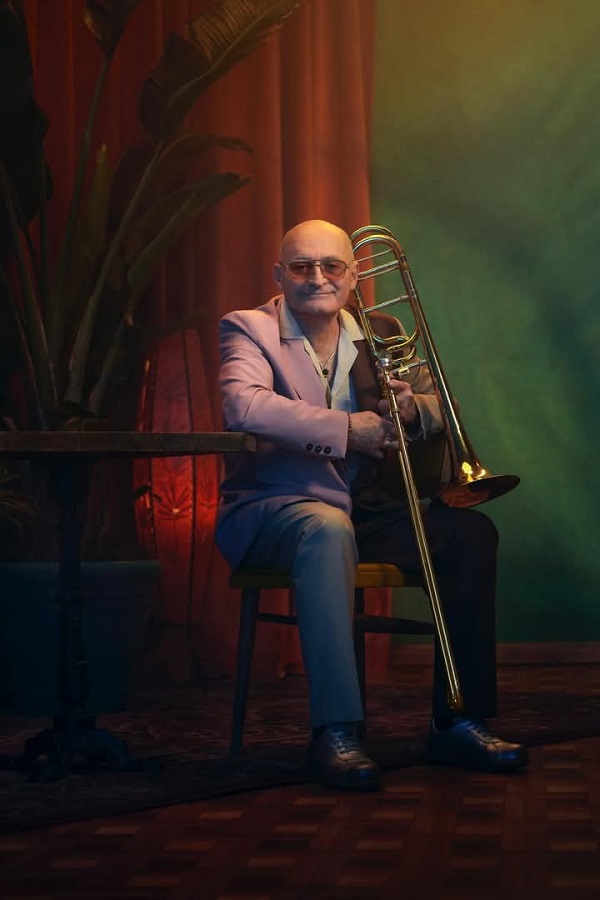
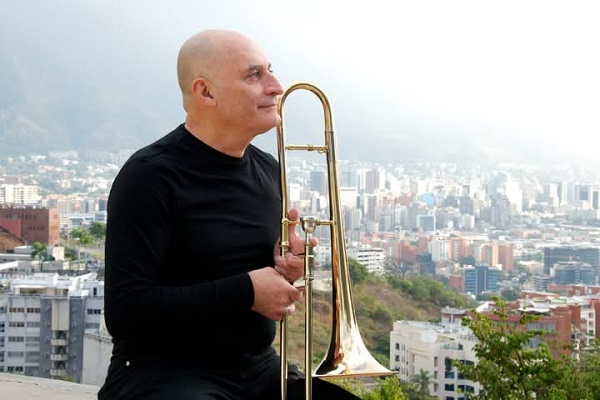
Legendary Venezuelan trombonist Oscar Dudamel expands his musical vision with a new single that fuses the essence of classic salsa with his unmistakable style, which is why he does not hesitate to express “La Rumba Me Llama”.

This song is part of his upcoming album “Sueño Alcanzado”, a production that will be released on May 30 and represents the culmination of years of musical research, fusing the classic salsa sound with jazz influences and the romantic tradition of boleros.

El legendario trombonista venezolano Oscar Dudamel

In “La Rumba Me Llama”, Dudamel brings his trombone to the forefront of a vibrant composition that captures the essence of the rumba as an inescapable call. With a musical structure that evokes the great salsa orchestras and an impeccable instrumentation.

The piece stands out for its meticulous arrangements, powerful brass and an irresistible cadence, faithful to the spirit with which Dudamel has approached his music. The track is an invitation to the dance floor and a testament to the rhythmic power that has defined his career.

The album Sueño Alcanzado not only takes its name from a personal concept of triumph, but also from one of his most significant pieces.

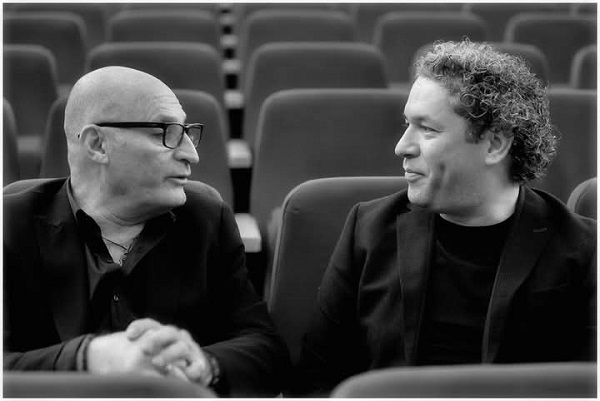
The title track was born in an intimate creative encounter in Caracas, Venezuela, with Maestro Alberto Crespo, composer Eliel Rivero and Solange Ramírez, mother of his son Gustavo Dudamel.

Oscar y Gustavo Dudamel

Dedicated to her son and with her special participation on violin, this piece encapsulates the spirit of a project that transcends the musical to become a testimony of life.

More than a nostalgic production, “Sueño Alcanzado”, of which the song “La Rumba Me Llama” is part, is the reflection of an evolution. The music that accompanied him since his childhood now takes a new form under his direction, in a creative process that has brought together talented musicians with whom he shares the same vision.

His orchestra, based in Madrid, has become the vehicle to continue taking his proposal to international stages, demonstrating that salsa is still alive in every note and every drum beat.

“La Rumba Me Llama” is now available on all digital platforms and is just a preview of ‘Sueño Alcanzado’, Oscar Dudamel’s new album, consolidating his legacy with authenticity and mastery.

Oscar Dudamel Virtuoso Musician, Trombonist and Orchestra Conductor.

Oscar Dudamel, a Venezuelan trombonist, discovered his passion for salsa as a child when he first heard “La Murga” by Willie Colón. Although his formal musical training began with Maestro Pablo Canela and later continued within El Sistema as a classical musician, that early experience left a profound mark on him, inspiring his dream of playing the trombone and solidifying his love for salsa as his ultimate passion.

Dudamel was born on January 14, 1961, in Barquisimeto, Venezuela. He grew up in a musical family where every gathering was celebrated with music, fostering his passion for the art from a young age. His parents purchased him a trombone, and he began his studies at the Yamaha Music Academy.

Oscar Dudamel sigue alcanzando sueños

At the age of 7, he was enrolled in a music academy under the guidance of Maestro Pablo Canela, a composer and prominent figure in the music of the Lara State region of Venezuela.It was there that he started his training with the Cuatro, the traditional Venezuelan instrument, and the guitar, which became his first instruments.

In addition to his Cuatro training, Dudamel began studying and playing various percussion instruments, further broadening his musical repertoire.

His academic training took place at the Lara State Conservatory in Barquisimeto, and at the National System of Youth and Children’s Orchestras and Choirs of Venezuela, also known as El Sistema.

During his teenage years, he became a member of the Youth Orchestra of Lara State (El Sistema Lara) and the Liceo Mario Briceño Iragorry Band, where he had the opportunity to expand his musical knowledge and explore various genres.

Dudamel entered a new phase of his life when he enrolled at the Vicente Emilio Sojo Music Conservatory to study theory and solfège, continuing his trombone studies under the guidance of his maestro, Óscar Vivenes.

Over the years, he became a member of the Lara Youth Symphony Orchestra of Lara, part of the national network of Venezuela’s El Sistema orchestras, actively participating in classical music.

However, his fascination with the Caribbean rhythms of salsa never disappeared. Thus, he combined his classical training with his passion for salsa, performing with renowned artist and sharing the stage with legends of the genre, such as Héctor Lavoe, Ismael Rivera, Ismael Miranda, Celia Cruz, Justo Betancourt, Marvin Santiago, and other great artists.

In Caracas, Venezuela, he founded his own orchestra, with which he had the opportunity to share the stage with notable figures such as Rubén Blades, Gilbert Santa Rosa, Luis Enrique, Guaco, Oscar D’ León, and many others.

Dudamel’s surname is synonymous with music. He is the father of Gustavo Dudamel, one of the most acclaimed classical music conductors in the world. Gustavo’s well-known fondness for salsa stems from his father, who recently fulfilled his lifelong dream of releasing a solo album titled Sueño Alcanzado, dedicated to his son.

Dudamel currently resides in Madrid, Spain, where he leads his ensemble, Oscar Dudamel y su Orquesta, performing salsa alongside his Venezuelan musician friends and colleagues at Café Berlín Madrid.

Oscar Dudamel y Dj, Augusto Felibertt

‍Research Sources:

Contact: Katie Baloian of Radio Notas (Compartiendo Ideas)

Alberto Crespo (Pianist and Arranger)

Dj. Augusto Felibertt

Café Berlin in Madrid

Also Read: Mariana “The Sonera of Venezuela and for the world”

Burju Pérez

North America / USA / Boston

Burju Pérez. From Dance to the Fashion Industry

Turkey is considered one of the countries with the most successful traders in the world and with a big musical influence of the Islamic and Western culture, well, from this country come the wonderful professional salsa dancer Burju Pérez, an entrepreneur who fused the tempo with the comfort and fashion of footwear.

Burju Pérez Shoes - Photo
Burju Pérez Shoes – Photo

Born in Turkey but arrived from 2 years old to Boston, Massachusetts. From very young, Burju began in the world of rhythmic gymnastics and dance. “My parents say I danced before I walked, or at least I started them both at the same time. I always had a wiggle and a bop”, said Burju for an American media.

Over the years, she learned other rhythms such as: Hip hop, Jazz and classical. Once at the university, she really dabbled in Latin dance, there a dance group was formed and she met her current husband Víctor, whose roots from Puerto Rico and who by that time was already an expert in Salsa dancing.

Dancers in workshop
Dancers in workshop

Once associated both personally and professionally, Burju and Víctor embarked on their way to conquer the most important congresses and festivals in the country as qualified Salsa dancers, starting with the nation’s largest annual convention, LA SALSA FEST, which for that time was only made in two cities of the world: one in San Juan (Puerto Rico – original headquarters) and the other in Los Angeles, (US).

Russia, China, Japan, Turkey, Lithuania, Germany and all Western Europe were also witnesses to the rage of the audience that generated this duo on the dance floor, who stepped on the best stages, generating great respect in the salsa community for being a couple of high competitive range.

Burju Pérez on the show - Photo 2
Burju Pérez on the show – Photo 2

Burju during the decade of the 90s began to add her identity to the attire, painting his shoes and creating her own style. By 2003, this regular salsa girl from the stages of Boston and New York had the opportunity to belong to Juan Matos’ Fogarate Dance Project, which was held every weekend in New York. For the same period, Matos came up with another project, this time in Italy and Turkey and for which he had no partner dance so Burju was the ideal candidate to make this tour with him for a month, working full time.

Burju Shoes

Burju Shoes
Burju Shoes

Once in Milan, this choreographer and professional dancer began to create her own project, an idea that would satisfy the needs of the dancers, simply a hybrid between dance and fashion, was the creation of Burju Shoes. In Milan, where I was based for the project, there is this very high fashion and lots of people not wearing dance shoes when they dance.

I was like, “Oh, I’m not trying to be left out.” So when I was social dancing I was rocking these hot fashion shoes I bought there, but every night I was nearly crying because I was in so much pain. That’s when I was like, OH MAN! I want to combine fashion with comfort for dance shoes. She explained in an interview.

Burju Shoes (created in December 2010) are the perfect combination between the avant-garden design, contrast of colors, versatility and comfort, made to highlight the distinctive beauty in each dress and coziness when dancing.

Burju decided to create this company in his home, Boston, a very welcoming place where the scenes and the Latino community has grown exponentially.

Burju Shoes Types
Burju Shoes Types

When I first started my business, I asked a lot of ladies that were well known (in the dance and salsa world) to help me with a collective push with the brand. These girls not only endorsed it, but became part of the brand and helped with the designs. I even named shoes after them!, said she. I had my own following, but it was so wonderful to have all these girls supporting me and spreading the word.

When I felt weak, I had people to lean on who were not just friends but collaborators in the scene… I’m so grateful for the love and support here. She added. The Burju Shoes business was the change in the footwear industry’s perception for the ladies. The belief for years that the beauty of the shoe was synonymous with pain and tiredness of the feet was in the past.

Burju Pérez on the show - Photo 4
Burju Pérez on the show – Photo 4

Burju Shoes offer you elegant shoes that you can use to do your dailies and go to work, they are also perfect for a dinner, cocktail and especially for a night of total fun and a lot of Latin dance.

Burju also cared about brides, and created a wide selection for them for that special day.

Burju thanks to his experience as a professional dancer with 14 years of career, travel and in addition to her creative intuition, she has created great innovative designs in each shoe, which are flexible for the comfort of the user and functional for each occasion.

Burju Pérez on the show - Photo 3
Burju Pérez on the show – Photo 3

The construction of each pair of shoes is derived from custom made patterns, high-end manufacturing and high quality materials: satins, leathers, sparkle, faux animal prints and other synthetic or man-made materials.

For the outer soles, the options of suede (more traditional for dance shoes) to the street sole which is great for indoor and outdoor use. I think people appreciate that we put a higher standard on presentation… At the end of the day, selling is not my main mission. But I will educate you and help you find what’s right for you, and help you feel good about yourself. I think this draws people in, said

Even though I don’t dance as much as I used to (since I got pregnant four years ago), and went the fashion and entrepreneur route, I’m still connected to this dance scene through my work and like giving back to the community… I want to show people that arts and business can function together. Burju Perez

Burju Pérez on the show - Photo
Burju Pérez on the show – Photo

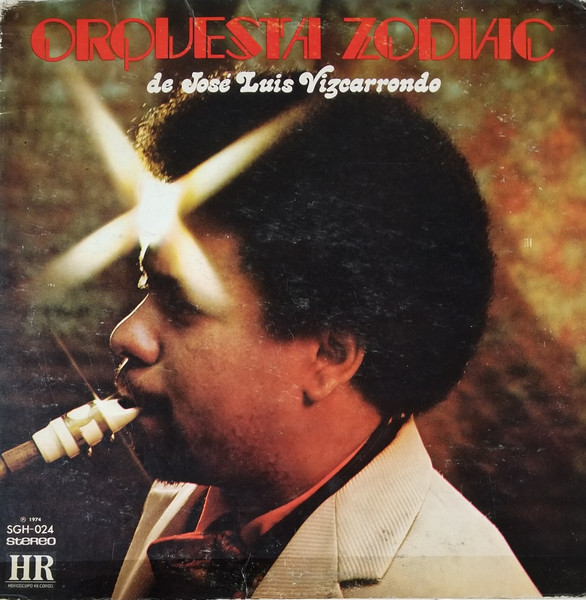
“Orquesta Zodiac” Its name came about due to the fact that in the early 70’s the ‘Walter Mercado’ program and the Zodiacal Signs were all the rage

In June 1971 what we know today as the Zodiac Orchestra was organized in the town of Loíza. Its name came about due to the fact that in the early 1970’s the Walter Mercado and the Zodiacal Signs program, which was broadcast on Channel 2 in Puerto Rico, was in vogue.

Tony Escobar’s uncle (the orchestra’s declamationist) suggested the name because it was an eye-catching and “new” name.

The Zodiac Orchestra was organized with members of a group called Loíza Power directed at that time by Paquito Pérez, who was 14 years old. In addition, it was nurtured with the best musicians of Loíza Sound of Javier Calcaño.

“Orquesta Zodíac” Su nombre surgió debido a que para principios de la década del '70 estaba de moda el programa de “Walter Mercado” y los Signos Zodiacales
“Orquesta Zodíac” Su nombre surgió debido a que para principios de la década del ’70 estaba de moda el programa de “Walter Mercado” y los Signos Zodiacales

The idea of recruiting these musicians was Paquito’s, since he grew up with José Luis Vizcarrondo and Tony Escobar.

Through Loiceño composers Carlos José Cirino (Tata) and Floren Ayala, the recording was achieved, as they approached Dario Gonzalez of Borinquen Record who contributed to make possible the release of the first 45 and LP. Tata’s “El Adiós” and José Feliciano’s “Las Costumbres” (1971) were part of this musical proposal that was very well received by the public.

This album became one of the best selling LPs. Other musical proposals of the group that would become hits were: “Panteón de Amor”  by Angel Laureano (1973), “Sinceridad” by Samuel Cirino, “Mi Guitarra” by Angel Laureano, among others. These great hits are frequently requested today on the Salsa Z-93 radio station.

After the initial success, many of the musicians dedicated themselves to work and to finish their studies, since they were married and were looking for security and economic stability for their respective families.

The Zodiac had the opportunity to travel to different cities in the United States such as: Boston, Connecticut, Philadelphia, New York, among others. They also traveled to other countries such as Colombia and others.

Orquesta Zodiac
Orquesta Zodiac

During these years, several orchestras were at their peak, such as: La Fania, La Selecta, Lebron Brother, La Corporación Latina, El Gran Combo, La Lupe, Chivirico Davila, Bobby Valentín, Tomy Olivencia, Ismael Miranda, Ricardo Rey, Roberto Rohena, Roberto Anglero, Justo Betancourt, among others.

In 1997 Paquito decided to retake and regroup the orchestra, and for some years he dedicated himself to reunite with the musicians and organize them again.

In 1999 he managed to restart La Orquesta Zodiac at the Z-95 festival in Mayagüez. Later they performed at the National Salsa Day dedicated to Cheo Feliciano in 1998.

These two presentations were made at the invitation of Pedro Arroyo (director of Z-93) to Paquito, and were a great success. El Gran Combo, Rubén Blades, Jimmy Zabater, La Solución, among others, also played in the tribute to Cheo.

The members of the current orchestra are young, and most of them were music students of Paquito Pérez, who worked as a music teacher for 30 years in the town of Loíza (before retiring).

José Luis Vizcarrondo, Tony Escobar and Paquito Pérez were schoolmates for years. The director of the orchestra in the beginning was José Luis, also collaborating with him were Tony Escobar (saxophonist and declamation player), Freddy Ayala (conguero) and Paquito Pérez (singer). All of them contributed ideas for the arrangements. Currently Víctor Pérez (Paquito’s brother) is the director of the wind section.

Orquesta Zodiac en el pueblo de Loíza

In 2010 the orchestra played in the National Salsa Day and in 2012 the orchestra played again in the same activity, but this time the activity was dedicated to La Orquesta Zodiac and La Corporación Latina. In which Z-93 gave them a well-deserved recognition and Paquito, José L, Tony, Tata, Laureano, and the rest of the new members of the orchestra were present.

Currently the orchestra meets periodically to practice, and are available for all kinds of activities.

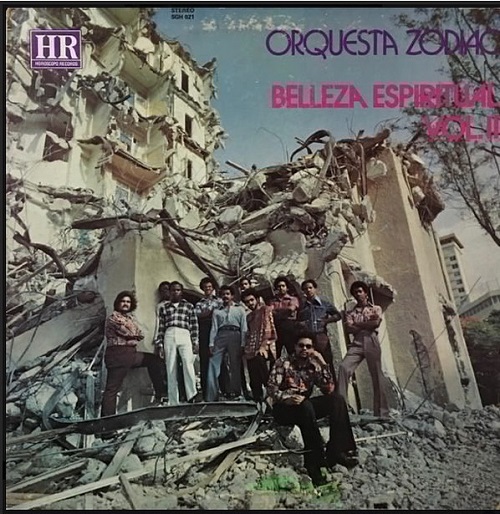
Did you know that…! In June 1971 what we know today as the “Zodiac Orchestra” was organized in the town of Loíza in Puerto Rico. Its name came about due to the fact that in the early 70’s the program “Walter Mercado” and the Zodiacal Signs, which was broadcasted on channel 2 in Puerto Rico, was in fashion. Tony Escobar’s uncle (declamationist of the orchestra) suggested the name because it was a striking and “new” name …Referring to the image of the post belongs to the second production of this Puerto Rican group entitled “Spiritual Beauty Vol. II” published in 1973 under the label “Horóscopo Récord” and directed by the founder, arranger, pianist and saxophonist Mr. José Luis Vizcarrondo. It is worth mentioning that this production includes the classics: Montuno de Oriente, Vicio de Amor and Belleza Espiritual”. Another important fact about the group is that it is still in force with musicians of the new generation, but with the same Swing and musical concept.

Segunda producción de dicha agrupación boricua titulada “Belleza Espiritual Vol. II” publicada para el año 1973

It is worth mentioning that the main responsible for making Orquesta Zodiac publicly known in Venezuela, Latin America and the Caribbean was Mr. Ali Delgado. Mr. Ali Delgado, for the year 1985 under the record label Performance Records, Delgado comments in detail that for the date of publication of this production the only popular sector (neighborhood) of Caracas where the Zodiac Orchestra was known was in Pinto Salinas.

Orquesta Zodiac De José Luis Vizcarrondo

Delgado is a music producer, music lover, collector, director and founder of the projects Salsa de La Mata and Jazz con Clave in Caracas.

Dj. Augusto Felibertt y Ali Delgado

Also Read: Sessions from La Loma brings together salsa fans from all over the world in Puerto Rico

  • « Go to Previous Page
  • Page 1
  • Interim pages omitted …
  • Page 63
  • Page 64
  • Page 65
  • Page 66
  • Page 67
  • Interim pages omitted …
  • Page 95
  • Go to Next Page »

International Salsa Magazine (ISM) is a monthly publication about Salsa activities around the world, that has been publishing since 2007. It is a world network of volunteers coordinated by ISM Magazine. We are working to strengthen all the events by working together.