• Skip to primary navigation
  • Skip to main content

International Salsa Magazine

  • HOME
  • Previous editions
    • 2026
      • ISM / April 2026
      • ISM / March 2026
      • ISM / February 2026
      • ISM / January 2026
    • 2025
      • ISM / December 2025
      • ISM / November 2025
      • ISM / October 2025
      • ISM / September 2025
      • ISM / August 2025
      • ISM / July 2025
      • ISM / June 2025
      • ISM / May2025
      • ISM / April 2025
      • ISM / March 2025
      • ISM / February 2025
      • ISM / January 2025
    • 2024
      • ISM / December 2024
      • ISM / November 2024
      • ISM / October 2024
      • ISM / September 2024
      • ISM / August 2024
      • ISM / July 2024
      • ISM / June 2024
      • ISM / May 2024
      • ISM / April 2024
      • ISM / March 2024
      • ISM / February 2024
      • ISM / January 2024
    • 2023
      • ISM / December 2023
      • ISM / November 2023
      • ISM / October 2023
      • ISM – September 2023
      • ISM – August 2023
      • ISM July 2023
      • ISM Edition June 2023
      • ISM – May 2023
      • ISM April 2023
      • ISM March 2023
      • ISM February 2023
      • ISM January 2023
    • 2022
      • ISM December 2022
      • ISM November 2022
      • ISM October 2022
      • ISM September 2022
      • ISM August 2022
      • ISM July 2022
      • ISM June 2022
      • ISM May 2022
      • ISM February 2022
      • ISM January 2022
    • 2021
      • ISM December 2021
      • ISM November 2021
      • ISM October – 2021
      • ISM September 2021
      • ISM August 2021
      • ISM July 2021
      • ISM May 2021
      • ISM April 2021
      • ISM June 2021
      • ISM March 2021
      • ISM February 2021
      • ISM January 2021
    • 2020
      • ISM December 2020
      • ISM November 2020
      • ISM October 2020
      • ISM September 2020
      • ISM August 2020
      • ISM July 2020
      • ISM June 2020
      • ISM May 2020
      • ISM April 2020
      • ISM March 2020
      • ISM February 2020
      • ISM January 2020
    • 2019
      • ISM December 2019
      • ISM November 2019
      • ISM October 2019
      • ISM Septembre 2019
      • ISM August 2019
      • ISM July 2019
      • ISM June 2019
    • 2016
      • ISM December 2016
  • Spanish
  • Download Salsa App
    • Android
    • Apple

Search Results for: Latin Jazz

Tribute to Johnny “Dandy” Rodríguez Jr. His first recording was professionally with Tito Puente in 1964 and was titled “Exciting Rhythm of Tito Puente”

Johnny “Dandy” Rodriguez, (September 11, 1945, United States August 17, 2024) son of Johnny Rodriguez Sr. who was nicknamed “La Vaca”, remembered percussionist who was part of the orchestras of Tito Puente and Tito Rodriguez, among others; as we can deduce, music for Johnny Rodriguez is something clearly hereditary given that as a child he attended his father’s rehearsals and his mother was a dancer.

Johnny Dandy Rodriguez Foto By Miguel Martillo

To get an idea of ​​the musical family, let’s say that Johnny Rodriguez Sr. also took part in performances and recordings with musicians and singers of the stature of: Alfredito Levy, Joe Quijano, Jose Curbelo, Lou Perez Louie Ramirez, Machito, Miguelito Valdes, Noro Morales, Orlando Marin, Pete Terrace, Pupi Campo and Xavier Cugat.

The father’s enormous musical background was emulated in a great way with ample merits by the son.

Dandy Rodriguez grew up in Spanish Harlem in Manhattan, his home was very musical and when he was in high school he learned the details of percussion represented by the bongos, congas, timbales and drums. Influenced by his father he became interested in music and so in 1962 he joined the band of maestro Tito Puente.

His first professional recording was with Tito Puente and was titled Excitante Ritmo De Tito Puente; after this first album with Puente, “Dandy” Rodriguez began to deepen his musical studies listening and learning from leading musicians such as: José Mangual Senior bongosero from Machito, Rogelio “Yeyito” Iglesias bongosero from Cachao and Vitin Palacio bongosero from Johnny Segui.

He worked with the King of Timbales for more than three decades, initially in the sixties, more specifically from 1962 to 1972, then he rejoined Tito Puente’s band at the end of the seventies and was part of it practically until the death of the famous King of Timbales.

In the extensive career of our Johnny Rodriguez in music we must mention his internship with Joe Cuba’s orchestra, with whom “Dandy” Rodriguez himself says he participated in seven or eight albums since the mid-sixties; the first of them titled Joe Cuba Sextette – Comin’ At Yous; without forgetting to mention that in those albums the name of Johnny Rodriguez Jr. does not appear in the credits due to issues related to contracts with record companies.

His stay with Puente was not a limitation for him to be part of other musical groups, so he also worked for several years with another great of Latin music, the remembered Tito Rodríguez. He was also part of the band of the famous conguero Ray Barreto, replacing Tony Fuentes, and was one of the founders of the famous Típica 73 in 1972 and even took part in a couple of albums with Machito.

In the seventies, during the Salsa Boom, “Dandy” Rodriguez left his mark on recordings with: Jose “Cheo” Feliciano, Charlie Palmieri, Roberto Torres, Willie Rosario, Ismael Quintana, Celia Cruz & Johnny Pacheco, Louie Ramirez, Richie Ray & Bobby Cruz, Fania All Stars, Alfredo De La Fe, Conjunto Clásico, Henry Fiol and Tito Allen.

As we mentioned before, John Rodriguez returned to the band of maestro Tito Puente in 1978 and was part of the band until Ernesto Antonio Puente’s death in 2000 at the age of 77; he participated in this cycle in at least twenty musical works apart from a large number of concerts and performances on tours in different countries around the world.

During those two decades with Tito Puente he also worked with other musicians, singers and groups such as: Miguel Quintana, Roberto Torres, Charlie Rodriguez, Tito Allen, Alfredo De La Fe, Azuquita Y Su Melao, Charlie Palmieri, Celia Cruz & Johnny Pacheco, Paquito D’ Rivera, Raulin, The Bronx Horns and Angelo Vaillant.

Luisito Quintero, Johnny Rodriguez y George Delgado

During the first two decades of the new century, the musical work of maestro Johnny Rodriguez continued and his musical mark has remained in other publications with The Latin-Jazz Coalition, Frankie Morales, Eddie Palmieri, Gilberto Santa Rosa, George Delgado, Victor Manuelle, Rick Arroyo, Orestes Vilato, Mitch Frohman, Cita Rodriguez, Doug Beaver, Adalberto Santiago and Jeremy Bosch.

Also, special mention must be made of the participation of maestro Johnny Rodriguez with a group called The Latin Giants Of Jazz, in the best style of the classic Big Bands made up of great teachers, including some of the former members of maestro Tito Puente’s band; with this group they have published four albums; this project gave rise to another band called The Mambo Legends, who recorded the album entitled: Watch Out! Be careful!

John Rodriguez is without a doubt one of the most prolific percussionists in the world of Latin music called Salsa. The nickname “Dandy” dates back to his childhood when the car he was driven in was bought at a store or shop called “Dandy” and people said look how cute “Dandy” is and from there he stuck with that nickname. In music he is better known as Johnny instead of John.

In (the year 2022) the experienced Johnny Rodriguez had three or four groups with which he is playing, including Dandy Rodriguez and his Dream Team, while teaching percussion classes online.

He is one of the true legends of Latin music, not to mention that his talent has also been reflected in recordings for other musical genres such as: Electronic, Folk Rock, Folk, World & Country, Funk / Soul, Heavy Metal, Jazz, Stage & Screen, Jazz-Funk, Merengue and Pop.

Johnny Rodriguez y George Delgado

In his very extensive artistic career, maestro Johnny Rodríguez was part of historic and iconic recordings of our musical culture, some of these albums have been worthy of awards such as the Grammy Award, among which are:

Tribute to Beny Moré – Year 1978

On Broadway – Year 1983

El Rey: Tito Puente & His Latin Ensemble – Year 1984

Mambo Diablo – Year 1985

Goza Mi Timbal – Year 1990

Mambo Birdland – Year 1999

Masterpiece / Obra Maestra Tito Puente & Eddie Palmieri – Year 2000.

“In 2008, Johny entrusted LP’s Research and Development Department with the design of the John “Dandy” Rodriguez Jr. Legends Series bongos. John is proud that these drums, which bear his name, feature such outstanding sound and visual characteristics.”

Johnny Rodriguez’ “Dream Team”

Also Read: Jerry Ferrao says in salsa key: “My life is a drum”

Collaboration: Marino de Jesus (1588) from Salsa History from the Dominican Republic

ISM / September 2024

ISM september -2024 Left ISM September-2024 Right
SalsaApp-L SalsaApp-R
North America September 2024
Latin America September 2024
Europe September 2024
Africa September 2024
Asia September 2024
Oceania September 2024
MedeJazz
Cover donate September 2024

“We are the Latin music world network”

Do you enjoy Latin music? Would you like to get more involved in this genre and share your passion for Salsa, Bachata, Kizomba, Merengue and more. Why not joint our Global Team of volunteers as a correspondent?
You can ask for more details with no obligation and we’ll be happy to talk to you about the benefits that come with the role [Read more…] about ISM / September 2024

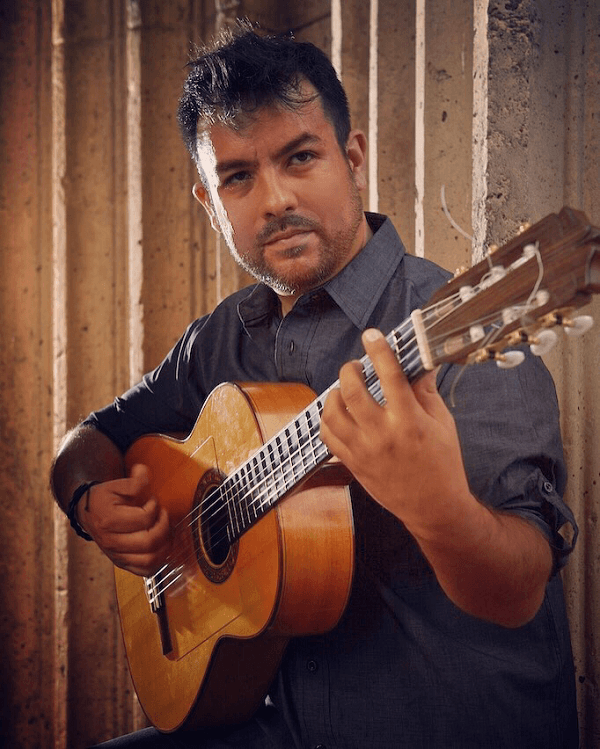
Bolivian guitarist Gabriel Navia and his love for music

We have had any number of Latin music artists of various nationalities in this section, but we are pleased to announce that, for the first time, we will tell the story of a Bolivian who brings pride to his flag with his great talent. 

We are talking about Bolivian producer, composer and guitarist Gabriel Navia, with whom we were fortunate enough to talk by Zoom about the most important details of his fruitful career. In the following lines, some of the most important issues addressed in the conversation.  

Bolivian guitarist Gabriel
This is Bolivian producer, composer, and guitarist Gabriel Navia

How Gabriel’s love for music began 

Gabriel tells us that the love he has always felt for music was instilled in him by his parents, especially his father, who was professionally dedicated to it to the point of having his own band. In the 70’s, Eddy Navia, Gabriel’s father, was in an iconic Bolivian band called Sal Y Andina that played instrumental music, much of which was composed by him at the time.   

In his mother’s case, she had a great sense of rhythm and a beautiful voice, so she did her best to make her son learn as much as possible about the fundamentals of music and how to play various instruments. This shows that she was also a key piece in his training as an artist. 

Gabriel also points out that, at home, he and his family listened to music of all kinds, but New York salsa was very important in the path the young man would later take.   

Gabriel and the charango 

When reading a little of Gabriel’s history, we found that he played with his father in the group Sukay, with which he experimented a lot with the charango that, as he explains, is a five-stringed instrument very similar to the banjo. It was the first instrument he played in his life and the one that would inspire him to play the guitar later on.   

After his parents split, his father went to live in the United States and met his second wife, with whom he runs Sukay. That is when Gabriel began to visit the country and, soon after, he was playing in a theater for more than 2000 people. Then, he knew that this was what he wanted to devote the rest of his life to.    

Gabriel played the charango
Gabriel started his career by playing the charango with the group Sukay

Multi-instrumentalist   

While it is true that the instrument for which Gabriel is best known today is the guitar, it is not the only one he is dedicated to.    

The artist can be defined as a multi-instrumentalist, that is, someone who plays a considerable number of musical instruments with excellence such as piano, saxophone, quena and many others. ”I have always been curious to learn how to play new instruments and learn new things every day. That’s how I’ve managed to specialize in so many at the same time” Gabriel said about this.   

He has become more dedicated to playing the guitar since, during his time with the group Sukay, he had to replace the guitarist who was not available at the time, which makes him feel a special affection for the instrument as he used it. 

Not to mention that some of his instruments were robbed in his native Bolivia and one of the stolen objects was his charango. This event left him so depressed that he put the charango aside for years and devoted himself fully to the guitar, during which time he studied it in detail at a theoretical and practical level. He also began to listen to jazz and flamenco records in which the guitar is widely used, making him experiment with new styles. In this sense, an artist who inspired him a lot was Spanish guitarist Paco de Lucia.   

Gabriel playing live
Gabriel Navia playing his guitar live

Music education   

Gabriel has had the opportunity to study in several of the most important musical institutions in the world, which have been fundamental in the professional training of the artist.   

The first thought that came into his head was the Instituto Eduardo Laredo in Cochabamba. He described it as an arts school that has a very traditional style during the mornings, while the afternoons its teachers focus on the musical part. It is here where Gabriel learned all about theory, solfege, harmony, scores and many other important details.    

Some time later, in the United States, he entered the San Francisco Conservatory, where he studied with the famous classical guitarist Scott Tennant. In the same country, he won a scholarship to study some courses at Berklee College of Music.   

In Barcelona, he also received a scholarship to study a master’s degree in flamenco at the Conservatori del Liceu thanks to Fundación Carolina, whose main beneficiaries are Latin American applicants without the resources to study there.    

”I feel very fortunate to have been able to study in all these institutions which have been very important in my career, but I believe that a musician learns the most important things on stage. You can learn all the theory in the world, but if you haven’t had street experience and gone to practice, you will be an incomplete artist” Gabriel remarked on this subject.   

”In fact, I believe that many of the most prodigious musicians in the world have not been trained in academies, but in the streets, because they have had to make themselves from the beginning. Academic education is important, but the main place where music is born is in the heart” he continued.   

Navia Productions, LLC   

Gabriel had always worked as an independent artist, but there came a point in his career when he realized he needed something more to level up.   

Given that the best way to do business in the United States is through registered companies and brands, Gabriel created his own music company which he named NAVIA PRODUCTIONS, LLC, so that his project could be identified with a legally registered entity and avoid any legal problems.    

The company was basically created with the purpose of giving a legal basis to Gabriel’s work to stand on, but he still considers himself an artist as independent as the first day. 

Read also: Exclusive with tres player Iván Camblor from the group Pellejo Seco 

Edwin “El Calvito” Reyes. From combat to Beats

North America / USA

After participating in the largest military coalition in the history of the United States, Edwin “El Calvito” Reyes has shown that the phrase “If you dream that you can achieve it” is totally true. Dreams are achievable with perseverance, dedication and talent, qualities that this dreamy Sonero has, who will launch his record label soon for all Salseros lovers who support the new blood of the Salsa.

Edwin was born in Trujillo Alto (Puerto Rico) in 1974 and when he was 19 years old, he began his artistic career, playing and doing concerts of Plena (Folkloric Puerto Rican Music) in his hometown. Five years later “El Calvito” Reyes enlisted in the US Army in order to give a better future to his family, after a terrible work accident in his previous job (He was an Electrician).

Edwin “El Calvito” Reyes - Photo
Edwin “El Calvito” Reyes – Photo

During this year of change (1997) Edwin had his first opportunity in front of the American public as vocalist leader in a consolidated orchestra in these lands, “Papo salsa and his Tumbao” in Fort Stewart Army Post, GA, thanks to the expert eyes of Víctor Paris and Mr. Godreau, “Papo Salsa”.

From March 2003 to 2007, Edwin “El Calvito” Reyes went to combat four times in Iraq and once fought in Afghanistan, but he always felt the need to help relieve the stress of all the soldiers who were in those circumstances like him. In this way he created Saturdays of Salsa in combat for which he received help in the first instance from an U.S. civilian specialist in communications, Mr. Pérez, who contributed a large part of the necessary sound equipment to carry out this incredible idea at the beginning.

Later, Edwin with his percussionist and DJ skills in 2005 returns to Iraq but this time better prepared to carry out the Saturdays of Salsa parties during the fight. During this year he had his first performance in front of a crowd of soldiers and civilians accompanied by an orchestra of 14 musicians live, among which were: the Puerto Rican and master pianist José Pomales, Willie Báez, Julio De La Rosa, and Javier Solivan, among others …

Edwin “El Calvito” Reyes in concert

Everyone playing outdoors in the main dining room at Camp Liberty where the stage was. From this success, the band continued its touches until 2007 in this warlike country with an orchestra of more than 15 pieces: Piano, Bass, Trumpets, Trombones, Tenor Sax, Conga, Timbale, Bongo / Bell, Drums, Vocalists and a sound master, with which this wonderful orchestra made a total of 25 presentations.  “We were flown like true artist, in helicopters from one base to another, to just perform and then return back to our original base… Playing at Saddam’s Palace (a true palace made of concrete and marble) was the highlight. Also, at Camp Slayer where the biggest dancing crew gathered was an adrenaline rush for us… All with the help of great people who really felt like I felt; boost our own moral in combat!” told us Edwin.

In parallel to his military career, “El Calvito” Reyes participated in the Latin Music Orchestra in the city of Savannah, GA, “Ron con Anís” by the dead musician David Mercado and of which in 2006 he would be its owner under the new name “Orquesta con Clase” reaching objectives such as: leading the Latin American Services Organization (LASO) Festival in Savannah with more than 6,000 attendees; They were the “Guests of Honor” for the Fiesta Atlanta Festival at the Olympic Centennial Park in Atlanta, Georgia, performing in front of 10,000 people. Also, they served as the backup band for: Salsa Legend, Larry Harlow, the 2011 Hotalanta Salsa Congress, and many more.

Edwin “El Calvito” Reyes on the radio

In 2011 he is part of a selection of elite musicians of the U.S. Army to form a Latin music band called “One & Only” idea of creation by The Army Marketing & Research Group (AMRG) and carried out by the musicians Carlos Negrón and Albert Sánchez. This band, similar to U.S. Army Jazz Ambassadors sang Salsa, Merengue, Bachata and other Latin rhythms for the entertainment of their audience. During his tenure in this band he performed at the annual conventions of the League of United Latin American Citizens (LULAC), which is the largest nonprofit organization in America. He helped many Latinos obtain millionaire scholarships, he was master of ceremonies on three occasions contributing with his knowledge on “The importance to stay positive and reach that goal” and “How the army life will impact your life”.

From 2012 to 2016, he was the Official in charge of the Ensemble. He achieved the inclusion of more musicians to the group including female talent. He had the privilege of meeting political figures such as Michelle Obama, Hillary Clinton and Ricky Rosello (current Puerto Rico’s Governor), as well as acting in front of world-renowned stars such as: his idol Gilberto Santa Rosa, Olga Tañón, Tito Nieves, Jennifer Lopez, and many luminaries of the country’s Hispanic television.

Edwin “El Calvito” Reyes, leader, visionary and humble was also the host of a radio show called “My Salsa Show” in WHCJ 90.3fm at Savannah State University. From there derives his nickname “El Calvito”, thanks to one of his fellow broadcasters of the station and since then he is known as Edwin “El Calvito” Reyes by all his fans.

Edwin “El Calvito” Reyes

“ … I play Timbales, Conga, Bongo, Bata, Campana and all minor percussion… I ask not to be considered a master percussionist, as I’m learning the craft of all, but so far I have mastered the playing and singing simultaneously.”

This Sonero, percussionist has composed several songs and has made numerous covers. “You are My Wife” (2016) with arrangements by Castor Ugarte was his first composition with lyrics inspired by his wife.

His most recent single “Mi Tierra Querida”, al Son de Bolero, (2018) showed that doing what he loves has been one of his best keys to his resounding ascent in this career. This composition of the “Virtuoso de la Salsa” Rey Torcat with arrangements of the same Edwin with Eric Maldonado (Owner and Master Engineer at Paris Recording Studios, Tampa, FL) and on the piano, Adam Perez, has been a symbol of hope for all Puerto Rican emigrants based in the U.S. “Mi Tierra Querida” was awarded by the Akademia Music Award for Best Song back in April 2018.

“Mi Ritmo se llama Zalsa” is a theme that he launched this year and invites the dancers to perform their best steps on the track with its fast paced. Lyric by Rey Torcat, produced by Eric Maldonado, and with the participation of: Archie Pereira (piano), Kevin Pagan (Bass), Luis Chafalote (trumpets), José León (trombones) and Ricardo Rodríguez (saxophone Bari). This song currently ranks # 1 in Salsa Tune in Barcelona, Spain, based on the Record Pool of “Gussi DJ” on Tune in Radio.

Photo of Edwin “El Calvito” Reyes

“Soneros de Sangre Nueva” is another song of his authorship and the third that works in conjunction with Rey Torcat. In this single they share together the interpreters: Josean Rivera “El Nuevo Amolador”, Edwin Lebron “Xtraordinario”, Nandy “El Sinsonte” (Conquistador Del Elemento) and Gumbay Navedo (Carmen Sol). Also, the musicians of great trajectory, such as: Banny Maldonado, Grammy Winner, (Timbales), Edwin “Pirulo” Reyes (Congas) and Kokoand Take (Bongo / Bell) and in the choirs the Lead vocalist of the legendary CORPORACION LATINA, Edgardo “Bambino” Otero participated in this hit. Similar to his two previous unreleased tracks “Mi Tierra Querida” and “Mi Ritmo se llama Zalsa”, “Soneros de Sangre Nueva” has had a great acceptance and support from the public knowledgeable appreciative about the new Salsa representation worldwide.

The covers “Ya te Olvide” (2017) original song by the successful Mexican singer Marco Antonio Solis, recorded in the state of Kansas with arrangements by Carlos Ugarte and “RAN KAN KAN. Just for the King”(2009), tribute to Tito Puente under the production of one of the best percussionists, David Lugo with different choirs, Xilofono or Marimba, Trombones, and solos by Conga and Timbal, have screened” El Calvito “Reyes at the top of the most outstanding relief Soneros Salseros today.

Edwin “El Calvito” Reyes performing at the concert

With 25 years of musical experience and more than 10,000 presentations around the world, Edwin has stepped on the best stages including the World Peace Festival at the Olympic Stadium in Seoul (South Korea) in front of 82,000 people. He also had appearances in more than 20 Salsa Social events in many clubs throughout the peninsula, participated in the Salsa Beach Festival in Pusan and in two Asia Salsa Congreses with the master trombonist’s band, Greg Peña.

“Salsa is my therapy,

Edwin, who currently resides in Palm Coast, Florida, and after 22 years of service in the U.S. Navy and retired as Chief Warrant Officer, is preparing his debut album to be released in 2019 and doesn’t discard in the future to continue working on behalf of Hispanic communities around the world as a motivational coach, always bringing optimism and hope for a better future for the Latins.

Edwin “El Calvito” Reyes - A New Design - Made with PosterMyWall
Edwin “El Calvito” Reyes – A New Design – Made with PosterMyWall

All his music can be downloaded NOW on all digital platforms.

For more information, please visit www.ElCalvitoReyes.com or follow him in all his social networks as Edwin El Calvito Reyes.

Video: https://youtu.be/XMRTsFvpT0A

Papo Lucca. The Giant of the South

Latin America / Puerto Rico

Papo Lucca born in Ponce, Puerto Rico on April 2, 1946, Enrique ‘Papo’ Lucca began playing the piano at age 11 with his father’s orchestra. Initially, La Ponceña played versions of tropical hits of the moment by bands like Cortijo y su Combo and La Sonora Matancera.

Papo Lucca. The Giant of the South

In the late 1960s, Papo became the orchestra’s musical director, beginning a profound transformation that would eventually establish la Ponceña as one of the most progressive groups in the history of Afro-Caribbean music. Papo’s orchestrations were bold, experimenting with elements of jazz, rock, and Brazilian music. Representing the authentic spirit of Puerto Rican salsa, his piano solos were velvety, displaying elegance, restraint, and infinite swing.

During the mid-’70s, La Ponceña began to enjoy unprecedented success with critics and the public. The band recorded for the Inca label, which eventually became part of the Fania empire. Papo was invited to arrange and play on sessions for the company’s biggest artists, including Johnny Pacheco, Celia Cruz and Cheo Feliciano. He also recorded and toured with the Fania All Stars.

This compilation pays tribute to the art of Papo Lucca through 14 classic songs recorded between 1967 and 1981. Although Lucca has recorded as a solo artist and also collaborated with a multitude of salsa stars, it is his work with La Ponceña that best expresses the clarity of his vision.

The music we make has to make people happy, as well as make them dance. That’s what it’s all about, says Lucca from her home in Puerto Rico. When the public can dance, no matter how complicated the music is. The first theme that this genre had was to divulge the things that happened in the different communities, as if it were a newspaper.

Our journey begins with two fiery songs from the beginnings of La Ponceña: “Hachero Pa’Un Palo” and “Fuego En El 23” are versions of songs by Cuban Arsenio Rodríguez. La Ponceña always had a soft spot for Puerto Rican folklore, but she also found inspiration in the golden age of Cuban music.

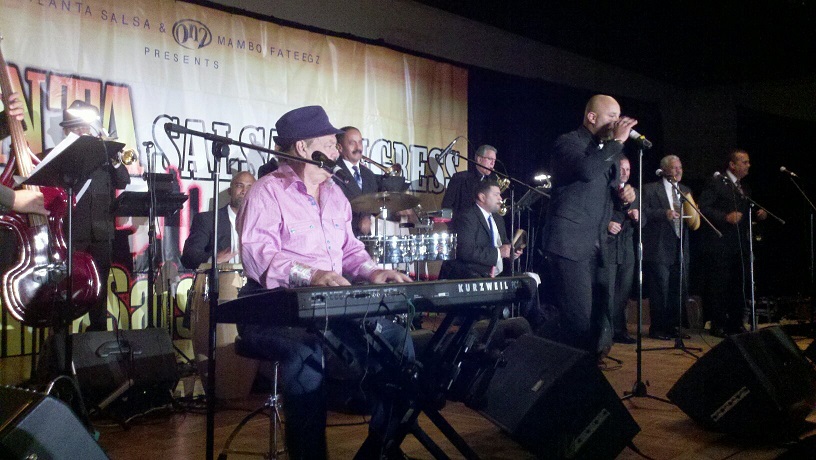
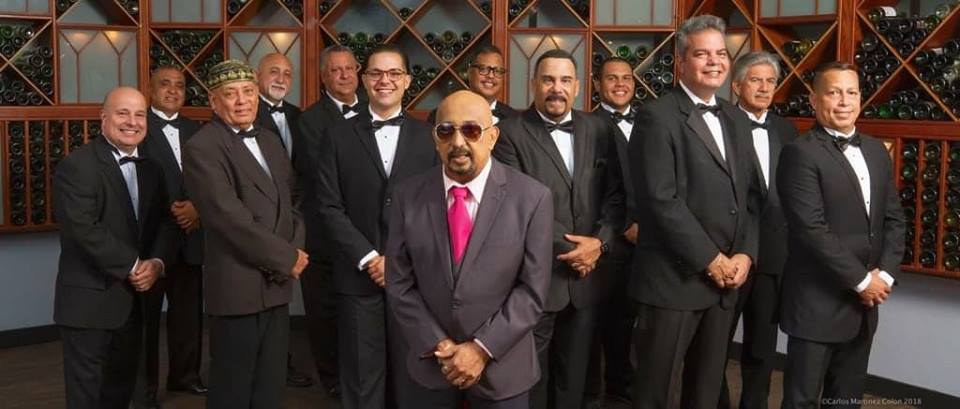
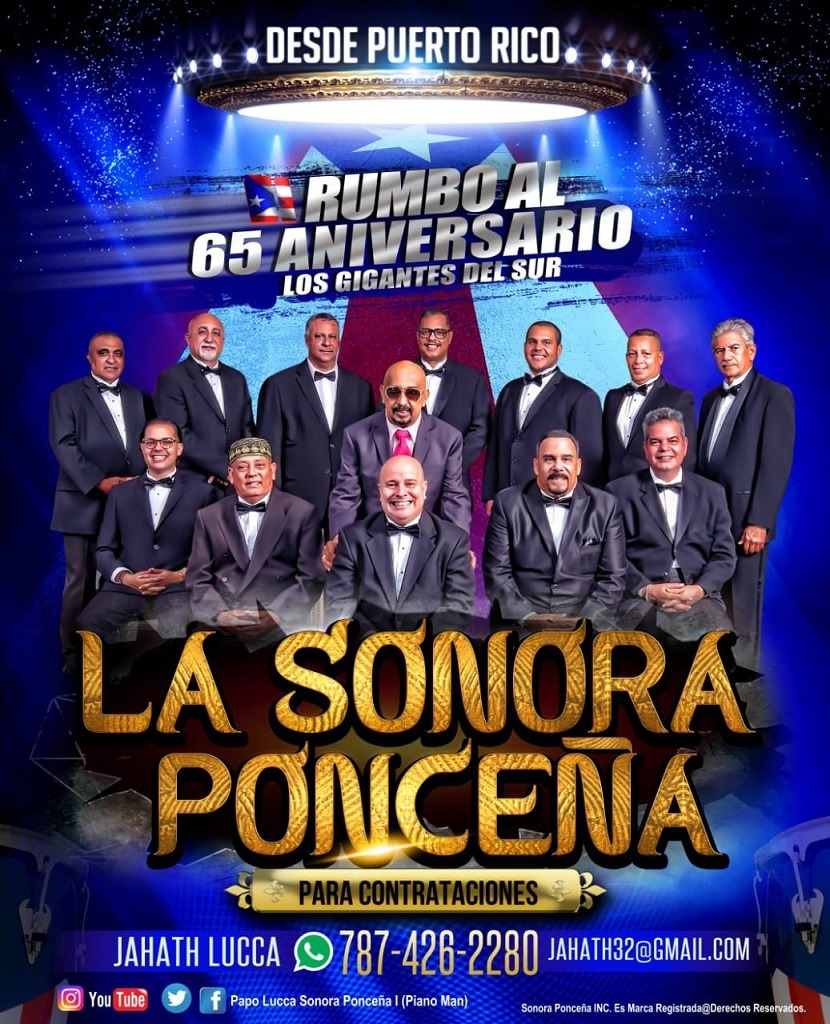
La Sonora Ponceña
La Sonora Ponceña

The precise moment in which La Ponceña becomes a mature orchestra in total control of its aesthetics can be found in the six songs from the Musical Conquest/Conquista Musical and El Gigante Del Sur albums. Launched on the market in 1976 and 1977 respectively, they represent the pinnacle of the salsa movement.

These songs combine a musical skill that approaches virtuosity with deep lyrics and a generous sense of humor. “Ñáñara Caí” is a hilarious narrative of pure magical realism, describing a world where everything is turned upside down (my favorite phrase: I saw a cow/Hit with Pacheco). Also included in Musical Conquest, “El Pío Pío” achieves the perfect cross between Afro-Cuban rhythm and contagious pop. This hit is a mandatory part of all La Ponceña concerts.

The opening theme of the El Gigante Del Sur album, “Boranda” seems to offer a salsa version of progressive rock. Its lyrics contain an important sociopolitical message, and the sophistication of its arrangement is a slap in the face for all those who believe that this music is only for dancing. “Soy Tan Feliz” combines bolero climates with an electric piano solo that recalls the psychedelic sound of jazz-rock from the ’70s. “Noche Como Boca ‘E Lobo” creates a tasty collision between salsa fever and Brazilian rhythms.

Lucca was not alone in his mission to reinvent the rules of Puerto Rican dance music. It was also benefited by the prowess of some of the best instrumentalists on the island. Furthermore, his instinct for choosing singers was always irreproachable.

Some of the vocalists of la Ponceña that appear here are Tito Gómez, who would later find fame with the Grupo Niche de Colombia; the inimitable Luigi Texidor, who gave a sense of placidity to all the songs he performed; and Yolanda Rivera, who added variety to the band’s sound with her unique timbre.

One of Rivera’s happiest moments is included here: Coming from 1980’s Unchained Force, Johnny Ortiz’s “Borinquen” is a soulful anthem to Puerto Rico, blessed with a sinuous melody and subtle instrumental arrangement–one of Rivera’s happiest moments. transcendental within the Ponceña canon.

The golden days of salsa are a distant memory in the new millennium, but Papo Lucca hasn’t stopped shining. Perhaps precisely because he continues to record new music, he refuses to idealize the past when I ask him what his favorite album with “La Ponceña.”

The last one, the most recent, he explained in his characteristically introverted tone. All the albums are very important in the career of the orchestra. They all fulfilled their mission at the time, which was to reaffirm the previous one. That’s the way to maintain a pool after 50 years.

Papo Lucca
Papo Lucca

The teacher was a little more direct when I asked him about his favorite concert of all time.

It was my first concert with the Fania All Stars at Madison Square Garden, back in 1974, he said. All the stars of the Fania were still alive. A few years later we played in front of 47,000 people in Cali. My knees always shake before I go on stage, but this time they shook a little more.

  • « Go to Previous Page
  • Page 1
  • Interim pages omitted …
  • Page 68
  • Page 69
  • Page 70
  • Page 71
  • Page 72
  • Interim pages omitted …
  • Page 95
  • Go to Next Page »

International Salsa Magazine (ISM) is a monthly publication about Salsa activities around the world, that has been publishing since 2007. It is a world network of volunteers coordinated by ISM Magazine. We are working to strengthen all the events by working together.