• Skip to primary navigation
  • Skip to main content

International Salsa Magazine

  • HOME
  • Previous editions
    • 2026
      • ISM / April 2026
      • ISM / March 2026
      • ISM / February 2026
      • ISM / January 2026
    • 2025
      • ISM / December 2025
      • ISM / November 2025
      • ISM / October 2025
      • ISM / September 2025
      • ISM / August 2025
      • ISM / July 2025
      • ISM / June 2025
      • ISM / May2025
      • ISM / April 2025
      • ISM / March 2025
      • ISM / February 2025
      • ISM / January 2025
    • 2024
      • ISM / December 2024
      • ISM / November 2024
      • ISM / October 2024
      • ISM / September 2024
      • ISM / August 2024
      • ISM / July 2024
      • ISM / June 2024
      • ISM / May 2024
      • ISM / April 2024
      • ISM / March 2024
      • ISM / February 2024
      • ISM / January 2024
    • 2023
      • ISM / December 2023
      • ISM / November 2023
      • ISM / October 2023
      • ISM – September 2023
      • ISM – August 2023
      • ISM July 2023
      • ISM Edition June 2023
      • ISM – May 2023
      • ISM April 2023
      • ISM March 2023
      • ISM February 2023
      • ISM January 2023
    • 2022
      • ISM December 2022
      • ISM November 2022
      • ISM October 2022
      • ISM September 2022
      • ISM August 2022
      • ISM July 2022
      • ISM June 2022
      • ISM May 2022
      • ISM February 2022
      • ISM January 2022
    • 2021
      • ISM December 2021
      • ISM November 2021
      • ISM October – 2021
      • ISM September 2021
      • ISM August 2021
      • ISM July 2021
      • ISM May 2021
      • ISM April 2021
      • ISM June 2021
      • ISM March 2021
      • ISM February 2021
      • ISM January 2021
    • 2020
      • ISM December 2020
      • ISM November 2020
      • ISM October 2020
      • ISM September 2020
      • ISM August 2020
      • ISM July 2020
      • ISM June 2020
      • ISM May 2020
      • ISM April 2020
      • ISM March 2020
      • ISM February 2020
      • ISM January 2020
    • 2019
      • ISM December 2019
      • ISM November 2019
      • ISM October 2019
      • ISM Septembre 2019
      • ISM August 2019
      • ISM July 2019
      • ISM June 2019
    • 2016
      • ISM December 2016
  • Spanish
  • Download Salsa App
    • Android
    • Apple

Search Results for: Latin Jazz

Paquito D’Rivera supports the salsa museum

There have been many legends of whom we have spoken in this section of International Salsa Magazine and today it is the turn of the bandleader, composer, clarinetist, and saxophonist born in Havana, Cuba, Paquito D’Rivera.  

Today, we want to dedicate the following lines to one of the main references in Cuban music and everything he has contributed to the Latin music scene, which is growing every day in the United States.   

Paquito smiling
Paquito D’Rivera smiling for the camera

Paquito’s beginnings in music 

Francisco de Jesús Rivera Figueras, who is artistically known as Paquito D’Rivera, was born in the city of Havana, Cuba and is the son of orchestra director and saxophonist Tito D’Rivera, from whom he inherited his great artistic vein and love for music. 

At just five years old, Paquito began studying music formally and, two years later, he was already performing on stage in front of large audiences, which prepared him for what he would do as an adult. That same year, Selmer (a musical instrument company) hired him, which was a very important step in the boy’s path to becoming an artist. 

A few years later, he performed at the National Theater of La Habana, which was a very important moment for the young man, who shortly after began studying at the Havana Conservatory, where he specialized in areas of music such as clarinet, composition and harmony. 

His first media appearance was during his debut in the National Symphony Orchestra of Cuba, an event that was nationally televised so that the whole country could appreciate the talent of the young choir boys.  

A year later, when he was only 18 years old, Paquito and Chucho Valdés founded the Orquesta Cubana de Música Moderna, while working for the Orquesta Nacional and the Banda del Ejército Cubano. 

Paquito playing
Paquito D’Rivera playing the saxophone

Some time later, he founded the Orquesta de Música Moderna with some of his colleagues at the time, and then created the group Irakere, which integrated jazz, traditional Cuban music, classical music and rock in ways never seen before. Together with Irakere, he toured Europe and the United States and earned several Grammy Award nominations.   

Leaving Cuba 

Like so many Cubans, Paquito became tired of the situation experienced by the island and knew he had to make a final decision on the subject. He took advantage of a stop in Spain and sought asylum at the American embassy in the European country. Once in the United States, his process of adaptation to his new country of residence was not easy, but there were artists who gave him a lot of support such as Mario Bauza, Dizzy Gallespie, David Amram, among others. 

It did not take him too long before he earned the love and respect of many members of the jazz music community.  His place in the Latin music scene was consolidated thanks to his first two solo albums called ”Paquito Blowin” and ”Mariel”. His popularity was also benefited from a Time magazine article that talked about his great work and his appearance on the famous ”Sunday Morning” show.   

He also collaborated with artists such as Artur Sandoval, Michel Camilo, Bebo Valdés, Claudio Roditi, among others. He also participated in the founding of the United Nations Orchestra, Paquito D’Rivera Big Band, Paquito D’Rivera Quinquet and many other groups.  

More recently, in 2027, he was in Europe with the Orquesta de Valencia at the Palau de La Música promoting ”The Elephant and The Clown” of his own.   
Paquito and Johnny
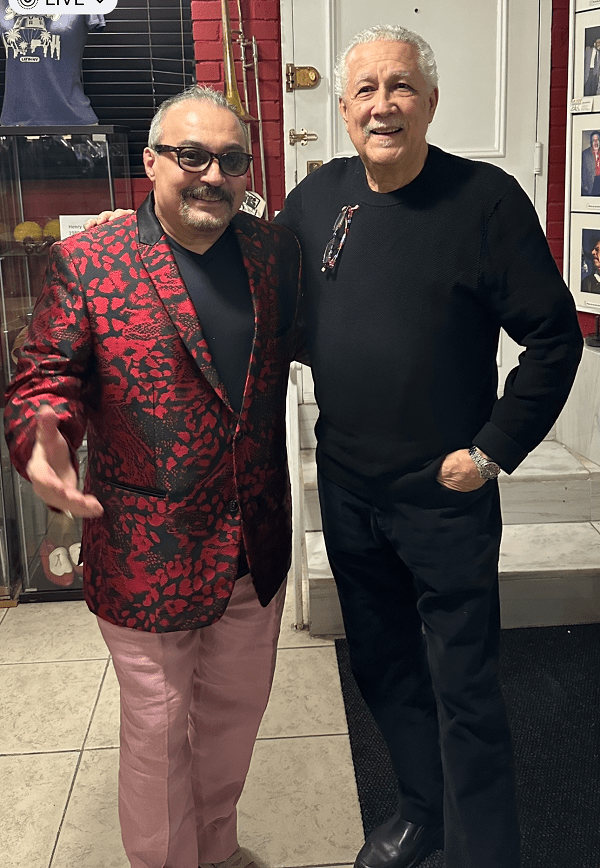
President of the Spaha Harlem Salsa Museum Johnny Cruz and Paquito D’Rivera

Paquito and the Spaha Harlem Salsa Museum 

In December 2023, Paquito visited the Spaha Harlem Salsa Museum to see the huge collection of personal items belonging to world-renowned Latin artists and, once there, he expressed his surprise at the large number of items that both stars and their families have donated to the famous museum.   

In a post by Johnny Cruz, the museum’s president, on his Facebook account, Paquito said he was very impressed by all the items housed in the institution while supporting the work done by the museum’s staff and expressing his admiration for the effort devoted to the collection. 

Johnny Cru ISM corresponde in New York City


Read also: Poncho Sanchez visited us at the Salsa Museum 

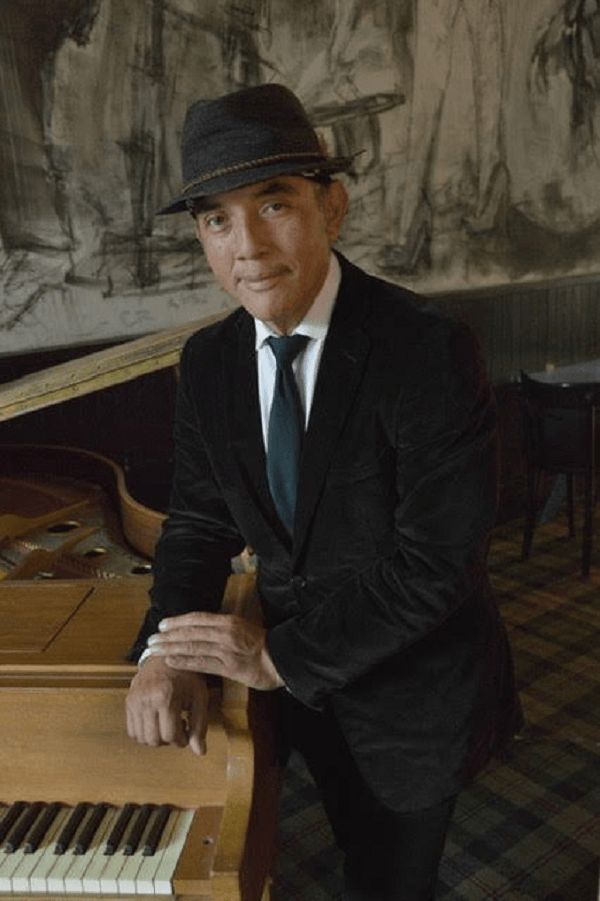
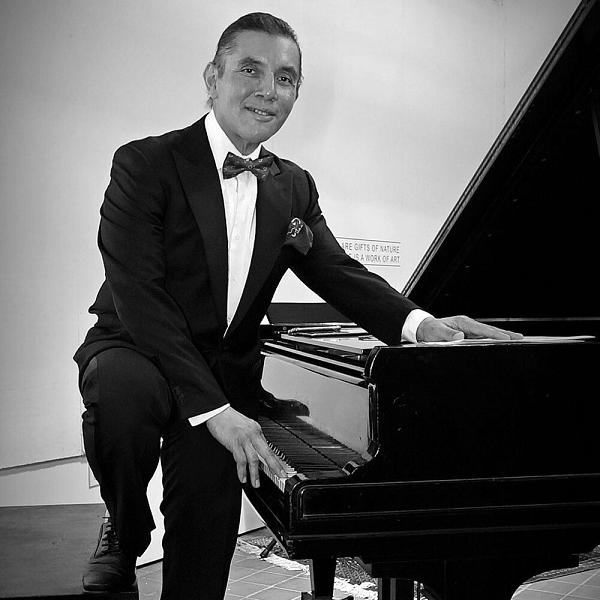
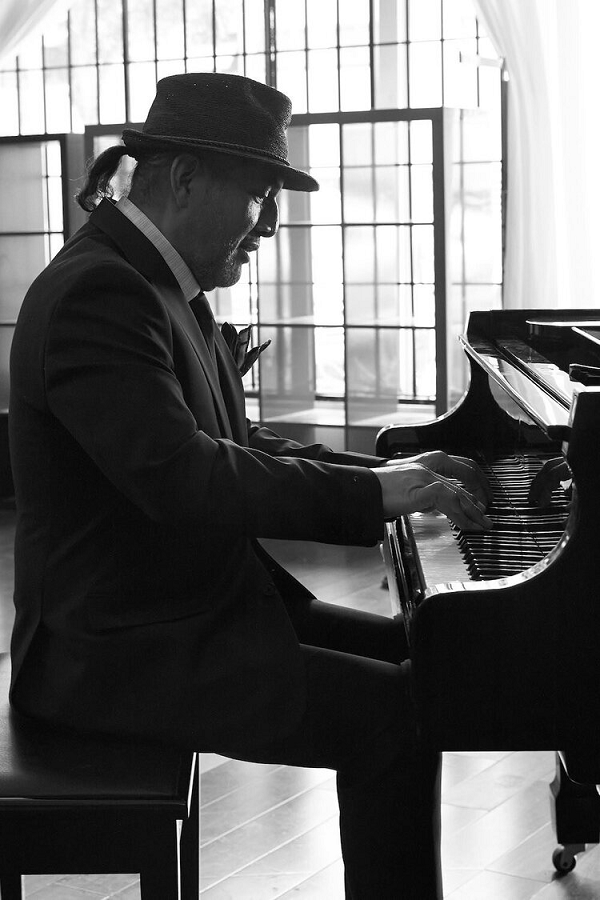
Large projects of Mexican pianist and composer Irving Flores

It is always a pleasure for us to talk with important figures from the Latin music industry in the United States and today it was the turn of the incredibly talented producer, arranger, composer and pianist Irving Flores, who has been kind enough to connect via Zoom and talk a little about his career and personal life. 

After the usual greetings and introductions, Irving started talking about what inspired him to get started in music which, in his case, was his father.   

Pianist Irving Flores
Mexican producer, arranger, composer and pianist Irving Flores

Irving’s father as a source of inspiration 

Irving’s first important contact with music was his father, who was a professional saxophonist in the 60’s and even worked for a big band in Tamaulipas, Mexico, the artist’s native country. 

He was his first musical maestro and the one who helped him take his first steps in this complicated world, to the extent that Irving also started playing the saxophone encouraged by his father. The young man always wanted to learn how to play piano, but the high level of salinity in the city of Tampico damaged this type of instruments. It is then that he chose the organ which, being electronic, withstood the weather conditions, but he never discarded the instrument he was most passionate about. 

Once he began his career as an orchestrator and arranger, he was exploring all wind instruments such as the saxophone, trumpet, and trombone and string instruments such as the guitar. He played the saxophone professionally for some years, studied at the National Conservatory of Music and received private music lessons to strengthen his knowledge.  

Roles as a producer, an arranger and a composer 

So, as was the case with many other Latin musicians, Irving perceived music as a job in which experience has been much more important than the academic part. In fact, he told us that, as a child, he saw his father sitting writing music and making arrangements, which led him to imitate him and do the same.  

When he has beraly 15, he was perfectly capable of arranging at a professional level, an experience that served him well in Mexico City when dealing with the best composers of his native country, such as Luis Demetrio, Vicente Garrido, Eugenia León and maestro Armando Manzanero. He was also Paulina Rubio’s musical director for many years. 

For years, Irving spent three or four days each week in a studio, which gave him the necessary experience to prepare for what was to come in his professional future.  

Irving worked with many figures
Irving has worked with many important figures in the music industry

San Diego 

Irving married a U.S. citizen and had a daughter with her, which made it much easier for him to get a visa to travel to the United States. After he split up with his wife, he specifically chose the city of San Diego because his daughter lives here and he wanted to see her grow up.  

Although that was the primary reason for his move there, he immediately noticed that there was much scope for him to work on his own stuff and make many contacts. One of them was Dave Scott, thanks to whom he was able to write music for the San Diego Symphony Orchestra. 

The artist assures that, regardless of the place he used to live, he never lost his way and never stopped learning everything he could about music. 

One of the greatest experiences he had in this city had to do with taking the place of Oscar Hernandez in the Spanish Harlem Orchestra. It turns out that Hernandez lost his luggage and passport on a flight, so someone had to take his place in the concert the band would have the next day in Mexico City. It was then that Gilbert Castellanos recommended Irving for this task.  

Hernandez and Irving met, each one put their terms and reached an agreement. The founder of the orchestra bought the artist a plane ticket and went to assume the role of pianist that Hernandez could not take that night and the result could not be better. Since then, Irving and the orchestra has been on excellent terms and both he and the world famous pianist became good friends.   

Irving and his piano
Irving next to his greatest passion, his piano

Working for great artists 

According to Irving, one advantage Latin musicians have is that they are able to play all styles of music, which gives them a greater range of action compared to other artists. We are also influenced by Latin music, Afro-Antillean music and Afro-Cuban music. These elements help us a lot to do our job. American musicians tupically specialize in a single context or genre, but Latinos don’t have those limitations,” Irving said on the subject.   

Although the pianist specializes in makings arrangements for jazz, the above mentioned shows that he is perfectly capable of entering any other genre, which has led him to work with great artists with many styles.   

One of the most interesting cases was Luis Miguel. One of his most important producers, Alejandro Carvallo, spent some time in Los Angeles, where he and Irving met and forged a friendship. That is how he started writing arrangements for ”El Sol de Mexico” and had a very good experience working for him and his team.  

In the case of the San Diego Chamber Orchestra, a composer working for the institution (and Irving’s friend) named Dave Scott needed an urgent arrangement at that time, but they did not have the budget for the relevant work. So, he asked Irving what they could do, to which he replied that he needed a few days to write a new arrangement. The following two weeks, the pianist had no time even to sleep, but he achieved the goal and wrote ”A Tribute to Frank Sinatra”. According to Irving himself, this has been one of the most important projects he has had in his entire career.  

Irving worked with Luis Miguel
Irving worked with many talented Mexican artists such as Luis Miguel and Paulina Rubio

American Citizen 

In the year 2021, Irving became an American citizen, which is certainly a great honor for anyone who lives in that country and also a great responsibility. The artist seems to know this very well.   

When we asked Irving about this topic, his answer was not so much based on the artistic aspect, but on everything that involves the acquisition of citizenship as a Latino. In this sense, the artist emphasized that the cultural and even judicial environment in which we grew up in most of our countries are completely different from those of the United States, so adapting to this country is a real challenge, but well worth it.   

In his case, the pianist also says that he was as disciplined as possible in each of his decisions to be able to get to the point where he is now. In that sense, he has always done his best to exercise his career as a musician with excellence, but always respecting U.S. laws at all times. He said this because he knows many talented people who were unfortunately imprisoned or deported for making mistakes in this regard.  

On the same subject, he also said that it is very important to follow the rules for American society to accept you as a member and give you all the opportunities you are given as a citizen with all the letters. 

Musically speaking, having a U.S. passport has provided him with the possibility to travel and tour anywhere in the world without any problem, which is extremely important for the growth of an artist’s career. 

Read also: The Rumba Madre and its roots in Basque culture 

The Rumba Madre and its roots in Basque culture

The Rumba Madre is a Nashville-based group whose characteristics are very interesting and make it different from many other artists and orchestras that have appeared in this section over the past few years.   

On this occasion, we had the pleasure of talking with Basque guitarist and tresero David Vila, who revealed the most important details about the creation of The Rumba Madre and his own musical career before and after the group, so just sit tight because there is a very interesting story coming on. 

guitarrist David Vila
Basque guitarist and tresero David Vila, who kindly talked to us

Music in David’s childhood 

When David was just a little boy, in his entire family, only his grandfather liked to sing. In contrary to the case of many other artists we have had the pleasure of interviewing here, David does not come from a family of musicians, but that did not keep him from developing a taste for this artistic side over time. 

Being very small, his parents moved from Galicia to the Basque Country to work and seek a new life. In this autonomous community, the cultural environment turned very lively and punk and other similar rhythms were at their peak of popularity, which got him interested in the tuna guitar and other instruments. He also started listening a lot to jazz and blues, which became fashionable in those years. 

Since David had no possibility to be formally educated in music, he just listened carefully and imitated the sounds the best he could until he decided that he needed to go one step further in his budding career as a musician. It was then when he moved to London, England, to study his degree in guitar. He had already worked as a musician in Spain, so this work experience was very useful to what he would do later on.   

Aside from having obtained his degree in music, David also toured around Europe with some local bands, which he continued to do in the United States when he moved to Nashville.  

Currently, he is a Hispanic popular music professor at the university level, so he teaches everything he has learned to young people who want to follow his same path.   

Rubén Darío, Benjamín Alexander, and David Vila
Nicaraguan guitarist Rubén Darío, Puerto Rican bassist Benjamín Alexander, and Basque guitar player David Vila

Nashville  

The first U.S. city David went to live in was Chicago because he was very interested in exploring the blues and other genres from that part of the country, but David did not have the visa required for entry into the U.S. at the time, so his plans to go there were inevitably postponed. When he was finally able to travel, he had no choice but to go to Nebraska and stay there for about two years for lack of a better option.   

Subsequently, he chose the city of Nashville as his final destination because of the large amount of musicians who live and work there. He even went so far as to call this place ”The Disneyland of musicians” because of all the opportunities it presents in this area.   

Another positive aspect for artists is that there are a lot of well-known record labels and studios to work with, making it an excellent choice for artists looking for a place to start or continue their careers. The locals themselves call it ”the music city” and have a saying that goes ”the worst waiter is a better musician than you,” making it clear how music is perceived in Nashville.   

David’s inclination for Latin music 

In England, David had already been studying some flamenco and, while it is true that he was not an expert yet, there were not many musicians in Nebraska who played that genre, so he caught the attention of many of his colleagues and groups that requested his services. The same thing happened in Nashville and the fact that he spoke Spanish reinforced the idea that he played Latin music.   

The above led many to believe that David was capable of playing both Flamenco and Cuban music without any problem, which was not entirely certain at the time. This is how he ended up playing guitar in a Cuban son band, thanks to which he had to learn to play the Cuban tres in order to be in the band.   

Although at first, it was too complicated for him, he focused on practicing a lot and listening to recordings of treseros to be able to imitate them as well as possible. Thanks to his effort and commitment, David learned how to play it and he spent five or six years doing it until he created his own group, The Rumba Madre.   

David laughingly recalls that his goal when moving to Nashville was to play country music as he did in England, but there were so many country musicians that he chose to explore another niche and ended up studying and playing Latin and Caribbean music.   

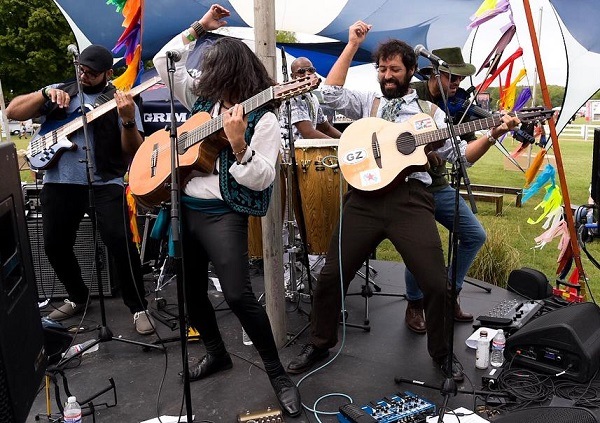
The Rumba Madre
The Rumba Madre playing live

The Rumba Madre  

After all the experience gained by David in those years, he thought it was time to create his own project and, for this, he chose two colleagues he met in that same musical context in Nashville, Nicaraguan guitarist Rubén Darío and Puerto Rican bassist Benjamín Alexander.   

The three artists coincided many times in different bands and concerts in which they played together, so they already knew each other’s styles very well. Since they were all Spanish-speaking, migrants and musicians, they saw that they had many things in common and established a friendship that led to a band.  

Both David and Ruben took advantage of the many compositions they had made in recent years and used them as repertoire for the project that was coming. Not much time would pass before music venues and festivals began to take them into account. 

On one such occasion, they met Cultura Profética keyboardist and composer Iván Gutiérrez Carrasquillo, who had lived in Miami his whole life, but decided to try his hand in Nashville, Gutiérrez was so impressed with the music made by The Rumba Madre that he proposed them to make an album. He also acted as a contact point for The Rumba Madre to be in touch with companies and labels that would be key to the success of the group later.   

They were going to release their first album in 2020, but could not present and promote it due to the pandemic, so they had no choice but to wait for things to die down.   

So far, The Rumba Madre has experimented with rumba, punk, Cuban son, salsa, flamenco, tango and many other genres. 

Read also: We welcome Patricio Angulo from Rumbaché to ISM 

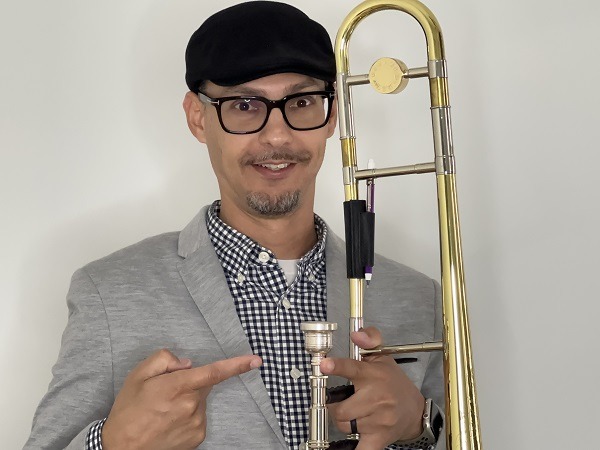
We bring trombonist Félix O. Rodriguez from Santurce to ISM

The beautiful island of enchantment Puerto Rico has always given birth to many of the best salsa exponents of all time and the source of talent that has come out of that place has been inexhaustible. It is always a pleasure to be able to talk with a boricua of those who continue to leave their Latin heritage on high and, this time, it was the turn of the arranger, composer, sound engineer and trombonist Félix O. Rodríguez from Santurce. 

It was very kind of the artist to give us a few minutes of his time to answer some questions for International Salsa Magazine and then we will be elaborating a bit on the topics we discussed with the salsa exponent.   

Félix from Santurce
Trombonist and sound enginer Félix O. Rodríguez from Santurce

Félix’s beginnings in the music world 

Félix’s first contact with music was at home, as his parents listened a lot to salsa, merengue, bachata and Latin music in general. While listening to this music, one of the things that attracted him the most was the sound of the trombone, especially in artists such as Willie Colón, Oscar D’ León, Gilberto Santa Rosa and many others. 

Once he reached the seventh grade in school, he decided to take music lessons and chose that instrument to start his training due to his fascination with it, something that today he does not complain about because he assures that he has done very well.   

In this learning process, noticing Félix’s interest in the trombone, his father, who was a professional orchestra musician, invited him to rehearsals so that he could soak up this whole atmosphere from an early age. It just so happened that the trombonist of this orchestra could not attend a rehearsal, so they gave the opportunity to the young boy to take his place for that night.   

After two or three shows, Félix was selected as house trombonist when he was only thirteen years old. Although he was not old enough to enter nightclubs, he was allowed to be present because he was part of the orchestra that would play there.  

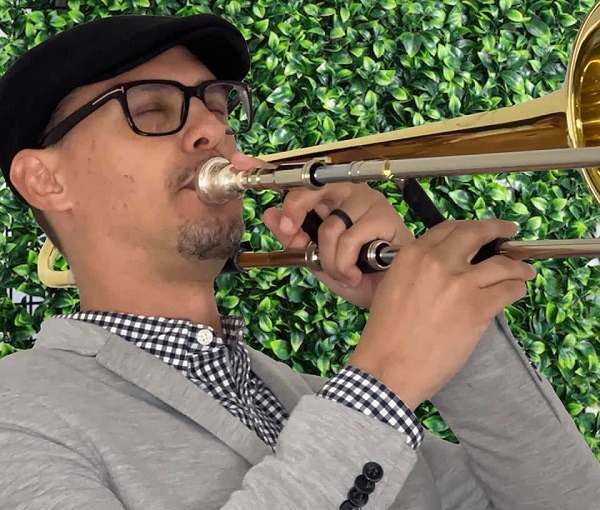
Félix playing
Félix playing the trombone

Orquesta Innovación and musical arrangements 

When he entered high school, Félix began to study a bit about music theory and related topics such as chords, writing for a specific instrument, percussion and other subjects. 

The young man worked so hard to train that, at only 15 years old, he was already perfectly capable of making musical arrangements, starting with transcriptions of music existing so far and copying notes from those songs. After several years on it, he finally started writing his own original music.  

In fact, he went on to record a couple of songs with Orquesta Innovación (the second orchestra he was in), a couple of original songs that unfortunately were never released, but served as experience for what would follow.   

University of South Carolina 

Félix acknowledged with laughter that this was the only university he applied to, so it was almost an obligation for him to be admitted. Fortunately for him, it was. 

He had to perform some tests with instruments and show examples of material of his own authorship to prove his musical skills. Everything he had learned so far was mostly based on salsa.   

Thanks to his effort and dedication in previous years, he was admitted to the University of South Carolina, where he studied music theory and trombone for five years. While there, the musician learned everything necessary about the historical aspects of all variants of classical music, jazz, marching band, orchestral symphony and many more. 

The formation obtained in his studies is still useful to Félix in the arrangements he makes today. However, he made it clear that his passion was and still is salsa and Latin music in general.   

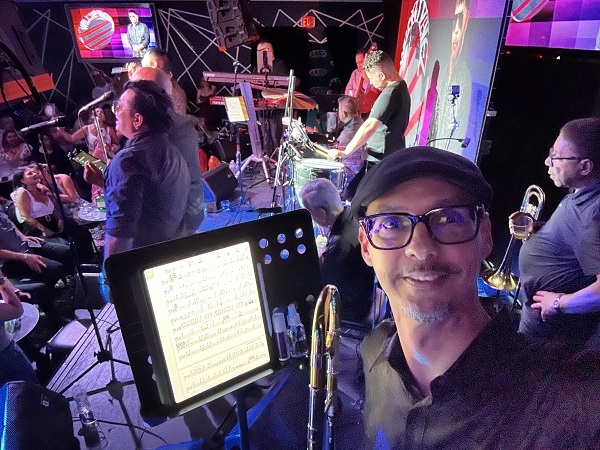
Félix during a performance
Félix during a live performance

Military life and musical activities during those years 

Upon graduating from the university, Félix was commissioned as an officer in the U.S. Army, following his father’s example, who was perfectly capable of meeting his obligations in the military and continuing to exercise his passion for music without having to give up either.   

As fate would have it, the artist met up with a former colleague from Orquesta Innovación, which led them to revive their passion for music and to create Orquesta Ideal, with which he spent eight years at Fort Bragg (U.S. military installation), North Carolina, his first stop as an officer.   

Over the years, he was assigned to units in Spain, Germany and Korea. It didn’t matter where he went because there were always Puerto Ricans and Latinos eager to get together to make music, which Felix took advantage of to be in touch with music, whether as a trombonist or a DJ. 

When asked if these events in which he was involved in were open to the public, he said yes in most cases, as military bases allowed entry to anyone, but unfortunately that changed with the Twin Tower Bombings on 9/11.  

Berklee College of Music 

During the last years of his military career, Felix studied production, mixing and remastering at Berklee College of Music in order to go preparing for his return to music once his retirement was official.   

In addition to playing the trombone and arranging, the musician also loved production, editing, mixing and mastering, so he wanted to learn much more about all of these areas and thus have more control over his own work.   

Given that the Covid-19 pandemic was starting at that time, his hours at the military base where he worked were significantly reduced, which he took full advantage of to dedicate more time to school and continue growing as a professional musician.  

Félix recording
Félix in a recording studio

‘‘Con La Música Por Dentro’’ 

In the year 2021, Felix released his first EP titled ”Con La Música Por Dentro”. In a world still hit by the pandemic, the artist found it very difficult to record and promote his first solo musical work. 

He wanted to record with live musicians, but because of this same situation, it was not possible, so there were endless backing vocals he had to do and instruments he had to play himself in order to make the EP happen, so his name is the one that predominates in almost all the credits of the material.   

Fortunately, he succeeded to establish a recording studio at home and was supported his friend and singer João José, who recorded voices, piano and bass for the three tracks that make up the EP.   

Atlanta 

When we wanted to know why he chose Atlanta as his final destination to settle permanently, he told us that he did it to support his wife, who has got a good job in that city. He remembered the time when he started in the army and his wife and daughter always followed him wherever he traveled for his military duties, so he considered that it is time to return everything his partner has done for him and decided to follow her this time. 

He had to look a little to meet musicians and re-weave those connections in the industry and the Latino community in Atlanta, so he had to start from scratch in that sense. The good thing is that everything worked out for him and, as soon as he arrived in Atlanta, he was contacted to play with Willie Gonzalez. The bandleader liked his skills as a musician and offered him to continue playing with them, and so it has been to this day. 

Read also: Four nationalities united in Ladama 

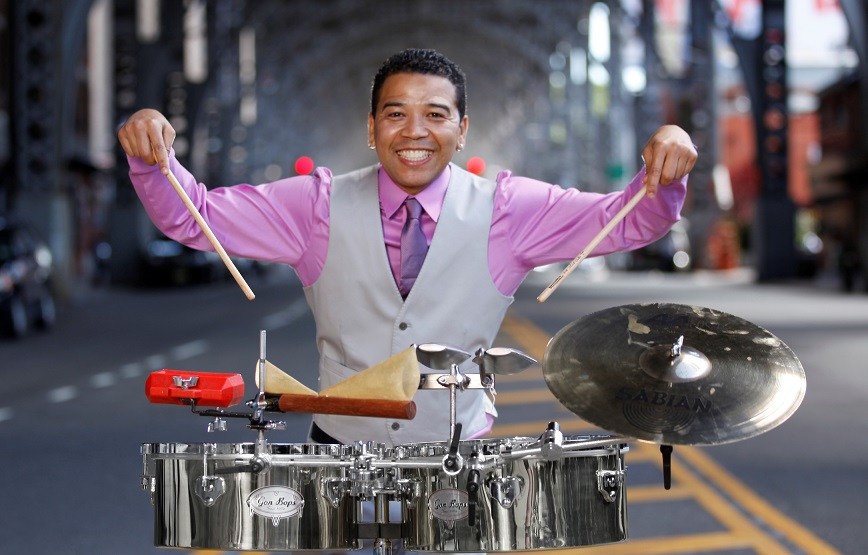
Master Timbalero Luisito Quintero

North America / United States / New Jersey

Master Timbalero Luisito Quintero hails from Caracas, Venezuela.

Where his father, a respected percussionist in his own right, tutored and encouraged his son to become one of music’s best percussionists.

Luisito comes from a long line of outstanding musicians including his uncle, Carlos Nene Quintero and cousin Robert Quintero.

He studied at the respected Orquesta Sinfonica de Venezuela (The Symphonic Orchestra of Venezuela) and his percussion technique soon garnered attention from his colleagues.

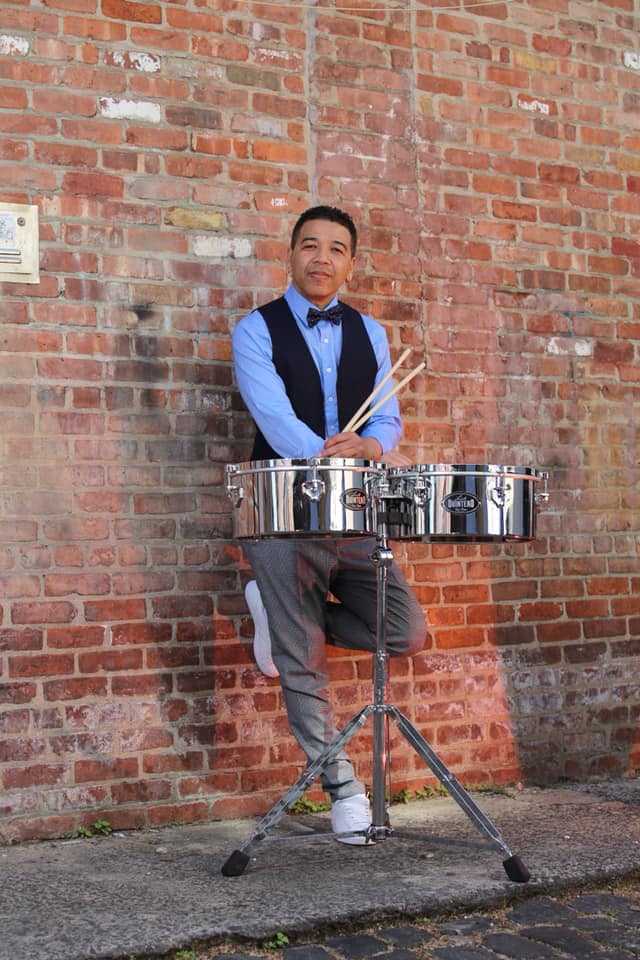
Master Timbalero Luisito Quintero
Master Timbalero Luisito Quintero – Photo

Luisito joined the popular music ensembles Grupo Guaco and Oscar D’Leon, where he enjoyed worldwide acclaim.

Luisito Quintero has worked and recorded with many of music’s legends including The Rolling Stones, Vanessa Williams, Paul Simon, Santana, Jack De Johnette, David Sanborn, George Benson, Joe Sample, Bill Cosby, the late Celia Cruz and Tito Puente, Cachao, Eddie Palmieri, Marc Anthony, Gloria Estefan, Richard Bona, Ravi Coltrane, Nathalie Cole, Diana Krall, Giovanni Hidalgo, Toshiko Akiyoshi, Spanish Harlem, Willie Colon and countless others.  One of his recent projects finds him as musical director for Louie Vega and the Elements of Life Band, as well as extensive work with Jack DeJohnette’s Latin Project.  He has also had the privilege to tour and record with the Tony & Grammy award winning Jazz artist, Dee Dee Bridgewater.

Quintero himself has earned more than thirteen Grammy certificate awards for his participation in numerous recordings.

Luisito Quintero has two solo projects under Vega Records/BBE, entitled “Percussion Maddness” and “Percussion Maddness Revisited”.

Timbalero - Luisito Quintero
Master Timbalero Luisito Quintero – Photo

Scheduled for release in the spring of 2013, his upcoming production entitled “3rd Element”, features guest artists Gato Barbieri, Oscar Hernandez, Doug Beavers, Richie Flores, Steve Khan, Reynaldo Jorge and his cousin Roberto Quintero.  Currently, Luisito is the touring & recording percussionist for the legendary jazz pianist Chick Corea and for Spanish Harlem.

  • « Go to Previous Page
  • Page 1
  • Interim pages omitted …
  • Page 73
  • Page 74
  • Page 75
  • Page 76
  • Page 77
  • Interim pages omitted …
  • Page 95
  • Go to Next Page »

International Salsa Magazine (ISM) is a monthly publication about Salsa activities around the world, that has been publishing since 2007. It is a world network of volunteers coordinated by ISM Magazine. We are working to strengthen all the events by working together.