• Skip to primary navigation
  • Skip to main content

International Salsa Magazine

  • HOME
  • Previous editions
    • 2026
      • ISM / May 2026
      • ISM / April 2026
      • ISM / March 2026
      • ISM / February 2026
      • ISM / January 2026
    • 2025
      • ISM / December 2025
      • ISM / November 2025
      • ISM / October 2025
      • ISM / September 2025
      • ISM / August 2025
      • ISM / July 2025
      • ISM / June 2025
      • ISM / May2025
      • ISM / April 2025
      • ISM / March 2025
      • ISM / February 2025
      • ISM / January 2025
    • 2024
      • ISM / December 2024
      • ISM / November 2024
      • ISM / October 2024
      • ISM / September 2024
      • ISM / August 2024
      • ISM / July 2024
      • ISM / June 2024
      • ISM / May 2024
      • ISM / April 2024
      • ISM / March 2024
      • ISM / February 2024
      • ISM / January 2024
    • 2023
      • ISM / December 2023
      • ISM / November 2023
      • ISM / October 2023
      • ISM – September 2023
      • ISM – August 2023
      • ISM July 2023
      • ISM Edition June 2023
      • ISM – May 2023
      • ISM April 2023
      • ISM March 2023
      • ISM February 2023
      • ISM January 2023
    • 2022
      • ISM December 2022
      • ISM November 2022
      • ISM October 2022
      • ISM September 2022
      • ISM August 2022
      • ISM July 2022
      • ISM June 2022
      • ISM May 2022
      • ISM February 2022
      • ISM January 2022
    • 2021
      • ISM December 2021
      • ISM November 2021
      • ISM October – 2021
      • ISM September 2021
      • ISM August 2021
      • ISM July 2021
      • ISM May 2021
      • ISM April 2021
      • ISM June 2021
      • ISM March 2021
      • ISM February 2021
      • ISM January 2021
    • 2020
      • ISM December 2020
      • ISM November 2020
      • ISM October 2020
      • ISM September 2020
      • ISM August 2020
      • ISM July 2020
      • ISM June 2020
      • ISM May 2020
      • ISM April 2020
      • ISM March 2020
      • ISM February 2020
      • ISM January 2020
    • 2019
      • ISM December 2019
      • ISM November 2019
      • ISM October 2019
      • ISM Septembre 2019
      • ISM August 2019
      • ISM July 2019
      • ISM June 2019
    • 2016
      • ISM December 2016
  • Spanish
  • Download Salsa App
    • Android
    • Apple

Search Results for: Latin Music

Where To Go Dancing Salsa In Madrid?

We will tell you about five Salsa clubs to enjoy this summer in the Spanish capital

Discover the essence of nightlife in Madrid city with five incredible clubs to dance Salsa until dawn. We suggest that you plan your next dance date so that you can practice your Salsa skills and enjoy this social trend that is invading this summer.

Azúcar Salsa Disco

Azúcar is open on Fridays, Saturdays, and the eve of holidays from 11 PM to 6 AM

This Salsa and Bachata room is one of the most recognized and popular in Madrid. This place offers from Thursday to Saturday the most current Salsa hard on the American continent. Its doors open from 11 PM and in the first hour, the entrance for the ladies is free. Ticket prices range from €12 to €16, and parking is free for the first two hours. Classes run over these three days from 10 PM to 11 PM cost €9 and include a drink and entry to the social session. On Fridays and Saturdays, they close at 6 AM, while on Thursdays they close at 5:30 AM. Azúcar Salsa Disco https://azucarsalsadisco.com/ is located at Calle Atocha 107, 28012, Madrid, Spain.

The Host Club

The Host Club has an excellent lights set

It is one of the leading clubs on the Latin scene in the city of Madrid. It has excellent light and sound equipment, and has a capacity for 550 people. During the week they bring varied proposals with attractive sessions in the various Latin musical styles of the moment: Salsa, Bachata, Salsa Hip-Hop, Merengue, Kizomba, Afro-rumba, Tango, or Street Dance. So, get ready to dance with a wide Afro-Caribbean musical repertoire at The Host Club http://www.thehostclub.es/ .They are open from Tuesday to Saturday, and you can find it at Calle Ferraz nº 38, 28008, Madrid, Spain.

Sala Templo

Sala Templo has close and familiar attention

It is a space that offers joy, culture, and close attention. In each dance sesión, they have teachers and dancers who liven up the room and also help new clients to enter the world of Salsa, Bachata, Merengue, Cha Cha Cha, and Kizomba. Its Bailamos training program for students and teachers is directed by Fredy Bedoya and has dance professionals in constant updating, mirrors, and teaching material. Salsa (9 PM) and Bachata (8 PM) classes are one hour long, and the established days are Monday and Tuesday. Salsa Templo https://www.salatemplo.com/ is located at Bravo Murillo 52, 28003, Madrid, Spain.

Pincel

In Pincel you can also learn Ballroom Dance

It’s a club to dance Salsa and Bachata on Fridays and Saturdays. On Fridays, it is Bachata Night with an irresistible workshop with Ruth and Pablo (Dancers) at 11 PM and is followed by the social Bachata with Dj Chino in the booth. On Saturdays, it gets involved in a Salsa atmosphere from 11 PM with the Salsa class taught by Ivan and Sheila, then the social with DJ Pituelve in the booth. Pincel http://www.discotecapincel.es/ is located at Calle Doctor Raso, nº 1 (Húmera), 28223, Pozuelo de Alarcón, Spain.

Zeus

Zeus holds contests and travel raffles for the best salseros of the season

It is one of the most recommended rooms in the south of Madrid to go out and dance Cuban Salsa, Bachata, and Kizomba. Here, you can find authentic professional dancers of these Caribbean rhythms on 200 meters of the dance floor. Zeus has its dance school, and together with the MDD academy, they teach Salsa and Bachata classes from Monday to Thursday for all levels, and you can try the first class for free. The Zeus room https://www.facebook.com/zeusmostoles is located at Calle Bécquer, nº3, Móstoles, 28932.

Oscar D’ León Will Celebrate his 50th Anniversary In Europe

50th Anniversary Europa Tour 2022 will start on July 10th in Bulgaria

In 1997, the album Sonero del Mundo, in collaboration with Willy Chirino, was nominated for a Grammy.

Salsa legend Oscar D’ León “El Sonero del Mundo” will celebrate his half-century of a uninterrupted artistic career with a tour of six European countries, and tickets don’t exceed € 70, so hurry up because there are few left.

The 50th Anniversary Europe Tour 2022 will start on July 10th in Bulgaria (Latin Beach Boom Festival), and he will continue in Germany (Frankfurt – July 12th, Munich – July 13th, and Berlin – July 16th). After, he will visit the city of Milan in Italy on July 14th, then land in Spain for a concert in Barcelona on June 15th, Tenerife (June 23rd), and Madrid (June 27th – The last live of the tour). Oscar D’ León will continue his Tour through Paris (France) on July 17th and Amsterdam (Netherlands) on July 22nd at Kwaku Festival.

“Who will share this tour of Europe loaded with hits and #Saborrr?” The Sonero de la Salsa wrote on his Facebook page on June 7th.

The king of Salsa, Oscar D’ León http://oscardleon.net/ was born on July 11th, 1943. His youth grew up in the popular area of ​​western Caracas (Antímano). This singer and self-taught bassist, since his debut in Latin music, has become one of the most representative artists of the Afro-Caribbean genre. He has been praised for his participation in orchestras such as La Dimensión Latina and his work as a soloist.

His first jobs were as a driver of a school bus and a taxi during the day, along with his apprenticeship in the execution of the string instrument, double bass, and his numerous night performances in different clubs in the Venezuelan capital. His success came in 1972 with the orchestra La Dimensión Latina and since then, D’ León has remained at the top of popularity as one of the most respected and admired Salsa artists of his time, with more than four decades of experience in unsurpassed live performances and more than 50 albums of their own and collaborations.

Oscar D’ León sang “Mundo Perfecto”. Song in Spanish from the animated movie The Emperor’s New Groove (Disney – 2003)

He paved the way for musicians of his genre by being one of the pioneers to tour the Asian continent (Japan) and the first Latino to sign a record deal with the British Broadcasting Corporation in the United Kingdom.

Between the 1980s and 1990s, Oscar recorded the hit “Ariel” with the Billo’s Caracas Boys orchestra as a tribute to Billo Frometa and Benny Moré. He launched the version “Qué bueno baila usted” with the Venezuelan orchestra Los Blanco. He was a special and permanent guest at important Salsa and Latin Jazz festivals, in addition to sharing the stage and recordings with famous artists such as Celia Cruz, Eddie Palmieri, and Tito Puente. Starting in 1998, every March 15th is celebrated in New York City as “Oscar D’ León Day”, and for seven years (May 14th, 2015) it has been “Oscar D’ León Day” but this once in the California state (USA).

In 2013 he received the Award for Musical Excellence awarded by the Latin Recording Academy and two years later he dazzled with his presentation in Viña del Mar (Chile) taking the Gold and Silver Gaviotas (Seagulls).

This year the master Oscar D’ León celebrates 50 years of trajectory and will celebrate it with you in Europe. So don’t miss this opportunity to sing his greatest hits such as El Frutero (1976), Llorarás (1986), Detalles (1986), Mi bajo y yo (1990), Frenesí (2001), and La Mazucamba (2002).

Puerto Rican singer Wito Rodríguez talks about his success and career

How his career starts

We are here with the very talented Irwin Wito Rodriguez (https://www.facebook.com/nmjrecords). Pleased to meet you, Mr. Rodriguez, such a pleasure to have you here. How are you?

Thank you very much, Karina. Thank you for the invitation. Quite well, thanks to God. I am in Florida at the moment, where the temperature is very pleasant.

Talented Puerto Rican singer Wito Rodríguez

Your beginnings in the musical world occured in a rock band, which is very common in many of your colleagues. Many of them start as boleristas and rockers. How did you go from a rock band to singing salsa and other genres like this?

I was born in Chicago and my parents are Puerto Rican, so I was raised American and tended to speak more English than Spanish. I listened only to music in English, but I also listened to Daniel Santos, Los Panchos and Tito Rodriguez at hore since I was a little boy. However, they were my parents’ favorite artists, not mine. As the years went by, my dad bought me my first guitar, so I joined a rock band of four or five kids and we started playing very cool songs. This lasted until I was 14 years old, when my father decided to send us to Puerto Rico and it was a very drastic change for me because now I was going to be in a school where Spanish is spoken and my Spanish was very bad. When I arrived in Puerto Rico, it was very nice to see the island in person because I only knew it from what my dad told me.

Five or six months after I arrived in Puerto Rico, I started singing with another rock band until I turned 16, which was when a very famous percussionist named Chacón (he had a band called Chacón Y Sus Batirítmicos) heard me sing and told me that he would like me to sing with them. He lived near me, so I could go to his place. I started going about twice a week to learn to play the conga and the clave. Around that time, I started learning everything related to salsa and typical Puerto Rican rhythms.

So I started playing in a nightclub, but I wasn’t supposed to do that because I was still 16 years old. So, they got me a jacket, hid me and I started singing there. When I turned 17, I moved to Chicago to finish school and speak English again. Three months later, I started singing salsa with the first orchestra in Chicago whose name was La Orquesta La Justicia from 1971.

So, you didn’t like salsa, but you developed a taste for it.

That’s correct. I didn’t have the joy of attending music school, so I just tried to learn as much as I could from what I saw. If I saw someone playing on a stage, I would approach the musicians, ask questions and clear my doubts. I learned a lot of things on my own.

Image taken from his video clip You’ll Never Find Another Love Like Mine

Military service and his first orchestra

You were part of the German orchestra Conexión Latina while serving in the army. How did the idea of starting a Latin music group in such a country arise?

When I was in the Orquesta La Justicia, I met many salsa stars like La Lupe, Ismael Rivera, Larry Harlow, Ray Barreto, El Gran Combo de Puerto Rico, La Sonora Ponceña and many others. All these artists helped me and taught me many things.

When I joined the U.S. Army, I had the opportunity to sing with an orchestra in Puerto Rico, but I was in Chicago. I accepted and prepared everything to return to the island, but the orchestra had already gone on tour when I arrived and they didn’t take me. It was very sad for me because I left everything in Chicago, since I wasn’t thinking of returning.

From there, I decided to join the U.S. Army and wanted to be sent as far away as possible. A week later, I reveived word that I passed the test and that I would be sent to Germany. That’s when I started a band called Wito Y Su Conjunto Sabor in 1977 along with other Puerto Ricans who also sang or played instruments. We were the only salsa band in Germany at that time. In 1981, I already had an orchestra called La Sonora Antillana and we played for the German audience, which was very tough.

In 1983, I left the army. Then, Luis García, an excellent tres player, and Cano Robles from Conjunto Canayon, Puerto Rico, made my first album called Calorcito. The following year, I released my first album and it was awesome because it led me to release another record production that took me to tour all around Europe.

In 1992, I went back to Tampa, where my dad lived. I came back to be in need because nobody knew who I am there. It was very difficult, so I had to start working until I returned to the Army and was sent to Pennsylvania. In 2007, I finally retired with 30 years of service.

In 2013, I started making my first solo album whose name was Qué Mundo Maravilloso. In 2016, I moved to Orlando, where I finished my other three albums I released later.

Art for the song Qué Mundo Maravilloso

You took opera classes. How did this help you in salsa?

Those classes taught me how to stabilize my voice, know how to modulate, know how to breathe, know how to feel the tone in one part of the body (under your nose), know what tone comes after the previous one and all kinds of things. I also learned some very good exercises to warm up my voice.

Another thing these classes taught me was resistance. Spending an hour singing on stage is not easy.

A lot of singers have a good voice, but they don’t have the necessary training to get to the right tone for them and avoid singing off-key.

I read that you have been nominated for the Hollywood Media Music Awards and the Miami Fox Music Awards for both English and Spanish songs. Which songs are the most successful? English or Spanish?

I try to include even a salsa song in English in all my albums. My last song focuses more on the American audience than the Latin audience. It was a good choice because the video has about 42,000 views on YouTube, which means it attracks more attention than my other work.

One of the things that has done musicians in general most harm has been Covid-19. Many are recovering, but others had to get a job because they could no longer make a living from music.

Many of his songs are related to his Puerto Rican roots

Spanish Harlem Salsa Gallery and its role towards salsa

Spanish Harlem Salsa Gallery and Latin music

The Spanish Harlem Salsa Gallery (https://salsagoogle.com/north-america/the-spaha-salsa-gallery-and-the-johnny-cruz-show-to-the-order-of-salsa/) is one of those places where every salsa lover in New York should visit since there is plenty to see here. This museum has all kinds of items donated by many renowned artists or relatives of some who had passed away. This collection of valuable possessions has resulted in a set of priceless objects that will bow anyone visiting the facilities of such a special institution out of water.

The Spanish Harlem Salsa Gallery, also known as Spaha Salsa Gallery, can be defined as an institution of a cultural nature whose main purpose is to serve as a reminder of how great our culture is, especially our music. Both residents and visitors of East Harlem, New York, can learn about the salsa genre and its roots as long as they desire. All thanks to a lot of tools, information and many initiatives with which those interested will know all kinds of interesting facts about salsa first hand.

Another of the great objectives pursued by this place is the quest for knowledge about Latin music and the artists involved to offer it to anyone who decides to visit its facilities. That is why both its president Johnny Cruz and the team that helps him have been responsible for creating an inclusive and diverse gallery in which you can appreciate how far Hispanic talent has come by the hand of its top stars.

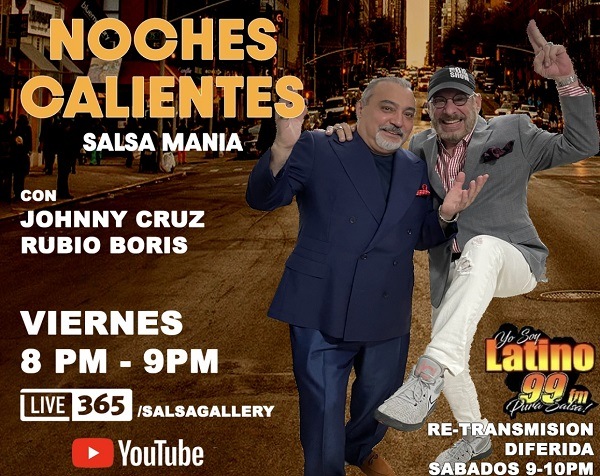
Johnny Cruz and Rubio Boris presenting their show

Role of the Spaha Salsa Gallery in the dissemination of Latin culture

The role played by the Spaha Salsa Gallery in the dissemination of Latin culture is very important, since these institutions are the ones that manage to arouse the interest of the inhabitants of Harlem and other nearby sectors towards one of the most representative musical genres of Latinity. This has made many other cultural institutions to use this gallery in order to awaken a higher interest in its own activities, which shows extensive cooperation between those who seek to promote anything Latin-related at all costs.

Fortunately, our work is not that complicated to carry out because too many tourists visit New York every day and many of them know that this city was the birthplace of the biggest salsa movement in history, so they are always looking for cultural sports in which you can find information about this set of rhythms and how it emerges in the public arena.

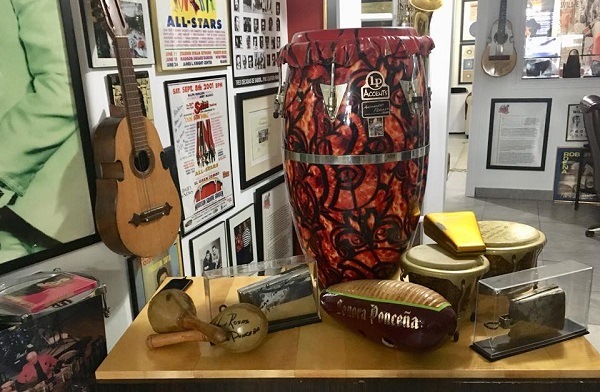
Some instruments donated by La Sonora Ponceña

Who Johnny Cruz is

Johnny Cruz is the founder of the Spaha Salsa Gallery, but there are many other facets by which this talented Puerto Rican is known in the entertainment industry. Cruz is a famous musician and record producer who has worked and make friends with a wide number of artists from all genres, by providing him with the platform to create a true sanctuary for Latin music lovers.

One interesting fact about the museum is that it is located on the plot where a hardware business owned by Johnny’s father used to function, which was made into something completely different thanks to the genius of his son long after. Today, that place contains several of the most invaluable objects in the history of salsa and whose relationship with some of the greatest figures of the genre is legendary.

Link to the official website of the Spaha Salsa gallery: spahasalsagallery.com

        By Johnny Cruz, ISM Correspondents, New York, New York City


On March 19, 1928, in Guaynabo, Puerto Rico, Rafael Viera Figueroa was born.


Excellent Music Promoter. Remembered for promoting the LP Siembra by W Colón and R Blades. He founded Viera Discos, “Cathedral of Latin Music”.

He was considered one of the main disseminators of salsa in Puerto Rico, Rafael Viera, also creator of Viera Discos, one of the most important points of the movement until 2016, year in which it was closed.

Viera Figueroa was, from the late sixties to the eighties, Fania’s representative on the island. Why? He was the one who brought the music of the label founded by Pacheco and Masucci to the land of Ismael Rivera, when it was mainly distributed in the United States.

He was the promoter of the first Fania All Stars concert in Puerto Rico in 1973 and was in charge of bringing to Puerto Rico the films ‘Our Latin Thing’ and ‘Salsa’, which packed the local theaters in the seventies. According to Primera Hora, he was the one who inaugurated the Roberto Clemente Coliseum in San Juan.

In 2014 Viera suffered a stroke that kept him in intensive care. On that occasion his son, Richie Viera, gave these words to the aforementioned media: “I am a man of faith, and in God I trust that Dad will recover and will be able to continue with us for many more years, offering us his wisdom, his anecdotes and promoting and collaborating so that new talents will have a place in Latin music”.

Viera was known for the famous Casa del Coleccionista store, which he ran for more than 60 years in Santurce, for Viera Discos and for the Catedral de la Música.

He was also one of the driving forces behind the salsa boom at the time of Fania Records, where he worked as producer and promotion manager of the conglomerate of record labels; Fania Records, Vaya Records, Tico Records, Alegre Records, Cotique Records, Éxito Records, International Records and Música Latina, among others.

He was also involved in the success of the careers of artists such as Willie Colón, Larry Harlow, Cheo Feliciano, Richie Ray and Bobby Cruz, Celia Cruz, Ismael Miranda, Sandro, Sabú, Willie Rosario, Miki Vimari, Sonora Ponceña, Tommy Olivencia, La Lupe, Tito Puente, Eddie Palmieri, Ismael Quintana, Justo Betancourt, Héctor Lavoe, Tito Rojas, Frankie Ruiz, Corporación Latina, Junior Toledo, Viti Ruiz, Guillo Rivera, Ray Barreto, Willie Rosario, Orquesta La Terrífica, Roberto Roena y su Apollo Sound, Johnny Pacheco, Pete “El Conde” Rodríguez, Impacto Crea, Ismael Rivera, Raphael, Wilkins, Trio Los Condes, Joan Manuel Serrat and the most important conglomerate of musicians in the history of Latin music known as Fania All Stars, among others. In 1973, he was the promoter of the first Fania All Stars concert in Puerto Rico, which inaugurated the Roberto Clemente Coliseum in San Juan.

In the field of cinema, Viera brought to Puerto Rico the film “Our Latin Thing” and Salsa, films that crowded the local movie theaters.

He passed away on January 13, 2019 in Puerto Rico, may he rest in peace and eternal glory to Rafael Viera!


By Bella Martinez, ISM Correspondents, San Juan, Puerto Rico


  • « Go to Previous Page
  • Page 1
  • Interim pages omitted …
  • Page 111
  • Page 112
  • Page 113
  • Page 114
  • Page 115
  • Interim pages omitted …
  • Page 246
  • Go to Next Page »

International Salsa Magazine (ISM) is a monthly publication about Salsa activities around the world, that has been publishing since 2007. It is a world network of volunteers coordinated by ISM Magazine. We are working to strengthen all the events by working together.