• Skip to primary navigation
  • Skip to main content

International Salsa Magazine

  • HOME
  • Previous editions
    • 2026
      • ISM / March 2026
      • ISM / February 2026
      • ISM / January 2026
    • 2025
      • ISM / December 2025
      • ISM / November 2025
      • ISM / October 2025
      • ISM / September 2025
      • ISM / August 2025
      • ISM / July 2025
      • ISM / June 2025
      • ISM / May2025
      • ISM / April 2025
      • ISM / March 2025
      • ISM / February 2025
      • ISM / January 2025
    • 2024
      • ISM / December 2024
      • ISM / November 2024
      • ISM / October 2024
      • ISM / September 2024
      • ISM / August 2024
      • ISM / July 2024
      • ISM / June 2024
      • ISM / May 2024
      • ISM / April 2024
      • ISM / March 2024
      • ISM / February 2024
      • ISM / January 2024
    • 2023
      • ISM / December 2023
      • ISM / November 2023
      • ISM / October 2023
      • ISM – September 2023
      • ISM – August 2023
      • ISM July 2023
      • ISM Edition June 2023
      • ISM – May 2023
      • ISM April 2023
      • ISM March 2023
      • ISM February 2023
      • ISM January 2023
    • 2022
      • ISM December 2022
      • ISM November 2022
      • ISM October 2022
      • ISM September 2022
      • ISM August 2022
      • ISM July 2022
      • ISM June 2022
      • ISM May 2022
      • ISM February 2022
      • ISM January 2022
    • 2021
      • ISM December 2021
      • ISM November 2021
      • ISM October – 2021
      • ISM September 2021
      • ISM August 2021
      • ISM July 2021
      • ISM May 2021
      • ISM April 2021
      • ISM June 2021
      • ISM March 2021
      • ISM February 2021
      • ISM January 2021
    • 2020
      • ISM December 2020
      • ISM November 2020
      • ISM October 2020
      • ISM September 2020
      • ISM August 2020
      • ISM July 2020
      • ISM June 2020
      • ISM May 2020
      • ISM April 2020
      • ISM March 2020
      • ISM February 2020
      • ISM January 2020
    • 2019
      • ISM December 2019
      • ISM November 2019
      • ISM October 2019
      • ISM Septembre 2019
      • ISM August 2019
      • ISM July 2019
      • ISM June 2019
  • Download Salsa App
    • Android
    • Apple
  • Spanish

Search Results for: Latin Music

Eduardo Herrera. The Man Behind Every Song – The Story of His Music

Latin America / Puerto Rico / Puerto Rico

Eduardo Herrera
Eduardo Herrera

“There’s a wide variety of artists, singers, and famous orchestras in different parts of the world, but that doesn’t mean you can’t discover new artists who have the motivation and desire to boost their musical talent. Here, we have as our guest Eduardo Herrera, a salsa and ballad singer.

Eduardo is the son of Puerto Rican parents, raised in New York with a ‘boricua sazón’ (Puerto Rican flavor/style). From a very young age, he fell in love with music, and over time, he gained many musical experiences in different genres with Latin nuances and foreign fusions.

He mentions that when he was younger, he participated in youth choirs on stages and attended concerts of great artists, learning the lyrics of urban music. As time passed, he captivated the perfect school that shaped his unique style; it includes spiritual music, Latin rhythms, and the influence of American styles without abandoning his Puerto Rican roots. He also mentions that he had the opportunity to share and collaborate with very famous artists who influenced him with their exceptional style and talent, even to this day.

Eduardo Herrera comments that his music is a collection of life experiences that many people identify with. It has no age or time; it has ‘sazón,’ Caribbean rhythm, and soulfulness.

When you hear the melody, you fall in love; when you pay attention to the lyrics, you are captivated; when you listen to it again, you turn it into something that identifies you, regardless of your age, race, condition, or gender.

It simply identifies what no one else sees or knows in or about you. In fact, his songs tell stories; they tell your life, his, and mine. Each story on a bus or train in New York, each event in family life or with a stranger, the stories of the fans, among others.”

“Eduardo Herrera comments that his music is a collection of life experiences that many people identify with. It has no age or time; it has ‘sazón,’ Caribbean rhythm, and soulfulness.

When you hear the melody, you fall in love; when you pay attention to the lyrics, you are captivated; when you listen to it again, you turn it into something that identifies you, regardless of your age, race, condition, or gender. It simply identifies what no one else sees or knows in or about you. In fact, his songs tell stories; they tell your life, his, and mine. Each story on a bus or train in New York, each event in family life or with a stranger, the stories of the fans, among others.

Eduardo Herrera - El Amor
Eduardo Herrera – El Amor

In the course of his life, he mentions that it was a transition as he went through many positive and negative life experiences, which allowed him to gain different meanings for the emotions he felt, whether real or false. All these experiences helped him help others, such as in personal growth.

In ‘Salsa‘ and ‘Balada,’ he has found his perfect space to express what he carries in his life’s baggage. Hoping that many couples will have a happy life to the rhythm of his music. Eduardo told us, ‘To achieve that emotional catharsis that lifts you up from any tragedy, it is necessary to LOVE YOURSELF BEFORE LOVING SOMEONE.’ So remember that when you listen to Eduardo Herrera’s music: ‘LOVE YOURSELF BEFORE LOVING SOMEONE.’

Recognizing the value of an individual and appreciating their abilities while learning from mistakes, that is what defines every song you will hear from Eduardo. The message will arrive; it’s up to you for the outcome to be happy. Because you learn from the difficulties in the process, the final result depends on how you handle the ‘tests’ to qualify yourself in feelings for the life you choose to live.

If you wish to know more about him:

  • Facebook: https://www.facebook.com/eduardoherrerasalsa
  • Instagram: eduardoherrerasalsa
  • Email: [email protected]
  • Phone: 787 399 5064


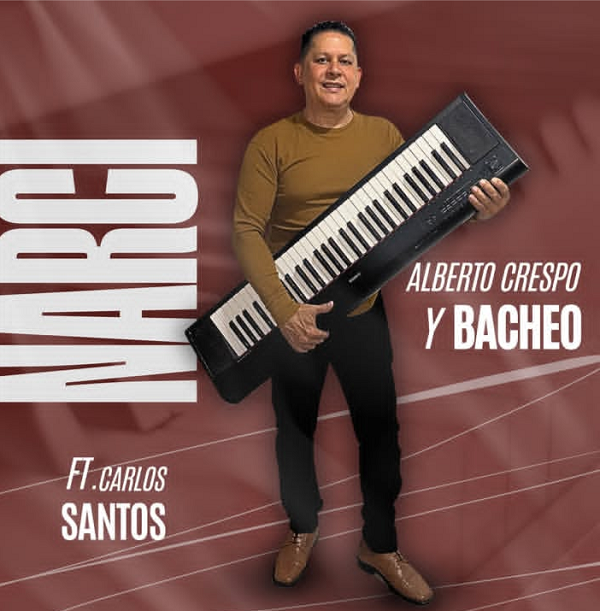
Alberto Crespo and Carlos Santos Release Their Latest Single “Narci” with Grupo Bacheo to the Latin Market

On November 7, 2025, the vibrant Latin music scene celebrates a stellar collaboration that promises to ignite dance floors.

The acclaimed Venezuelan pianist, arranger, and music producer Alberto Crespo joins legendary Puerto Rican sonero Carlos Santos and the talented Grupo Bacheo to present their latest musical track titled “Narci.”

Alberto Crespo and Carlos Santos release their latest song, titled Narci, to the Latin market with Grupo Bacheo

This original composition by Ali Delgado and José Granados, featuring arrangements by Alberto Crespo himself, fuses a modern sound with the unmistakable rhythm of salsa, guaranteeing a musical experience that will delight dancers.

Alberto Crespo: A Piano Master with an International Career.

From his beginnings at the “José Ángel Lamas” Music Conservatory in Caracas, Alberto Crespo demonstrated exceptional passion and talent. His deep immersion in harmony, counterpoint, orchestration, and improvisation has established him as a versatile and well-rounded musician.

By age seventeen, he was already touring with renowned orchestras, sharing the stage with icons such as Naty y Su Orquesta, Celia Cruz, Bobby Capó, Carmen Delia Depini, Carlos Cano Estremera, Andy Montañés, Ismael Miranda, Pete Conde Rodríguez, and José Mangual Jr., among many others.

Alberto Crespo A Piano Master with an International Career

With over three decades of experience in salsa and Latin Jazz, Crespo has consolidated his reputation as a highly prestigious producer, arranger, and pianist. His impressive list of collaborations includes national and international artists such as Maikel Stuart, Frankie Morales (former singer for Tito Puente), Orquesta Bailatino, Grupo Mango, Herman Olivera, Rumberos de Callejón, Gilberto Santa Rosa, and Naty y Su Orquesta. His versatility has led him to be part of the most prominent musical groups in Venezuela.

Carlos Santos: A Classy Sonero with a Legendary Trajectory.

Born on March 13, 1946, in Cataño, Puerto Rico, Carlos Santos is a true sonero whose career took off with Joey Pastrana’s band. His powerful voice and unmistakable salsa flair led him to perform and record with emblematic salsa orchestras, including “Kako y su Trabuco,” “Los Kimbos,” “Conjunto Candela,” and Roberto Roena’s “El Apollo Sound,” in addition to special performances with Ray Barreto and El Conjunto Libre.

Santos has left classics for posterity such as “Chacaboom,” “Las cosas de la vida” and “Amor verdadero” with Joey Pastrana, as well as “Flores para tu altar” and “Me imagino” with Conjunto Candela. His voice also enriched productions by Eddie Palmieri and Los Kimbos with tracks like “Caridad” and “Todo el mundo.” During his time with El Apollo Sound, he garnered hits such as “El Progreso” and “Háblame ahora.”

Carlos Santos Un Sonero con Clase y una Trayectoria Legendaria

Carlos Santos currently resides in Florida, United States, and continues to delight audiences with his international and local performances.

The union of these two pillars of salsa, under the production of Chongo Producción (from New York) and Juancho Producción (in Cali), promises to be a memorable event for Latin music.

Ali Delgado (Caracas) y Juancho Producción (Cali)

Note: “45 RPM is for sale in Cali by Juancho Producción, and will be presented with great fanfare on December 30 at 10:00 a.m. at the Meeting of Music Lovers and Collectors (Encuentro de Melómanos y Coleccionistas) of the Cali Fair, Colombia. 2025.”

Production Credits

General Production

  • Production: Alberto Crespo & Chongo Productions LLC

Musical Team

  • Composer: Ali Delgado / José Granados
  • Vocalist: Carlos Santos
  • Arrangements: Alberto Crespo

Musicians

  • Timbal: Carlitos Padrón
  • Tumbadoras (Congas): Manuel “Manny” Márquez
  • Bongó / Bell: Carlitos Padrón
  • Trumpets: Jorge Maestre “Pitufo”
  • Baritone Saxophone: José Antonio Fariñas
  • Bass: José Soto “Mortadelo”
  • Percussion: Carlitos Padrón, Carlos Crespo
  • Chorus / Background Vocals: Heyzer Cabrera & José Soto “Mortadelo”

Recording and Post-Production

  • Recording Studios:
    • Chongo Estudios (New York)
    • A Tempo Estudios (Caracas)
    • París Recording Estudios (USA)
  • Mixing: Heyzer Cabrera / Alberto Crespo
  • Mastering: Heyzer Cabrera

Important Note by Alberto Crespo:

I was working on the arrangement for the song NARCI, and when I reached the chorus, I wanted to find a beautiful melody with a different harmony, like a chorus of angels singing from heaven. I was pacing around my workspace and the areas near my house, searching for ideas.

My wife, Adriangela, was listening to what I was developing to achieve a final connection, and all of a sudden, she sang that beautiful melody to me. I immediately copied it and added the chords, and honestly, it was something magical, very spiritual… “Ya no estás más a mi lado, cómo te extraño, mi amor, cómo te extraño…” (You are no longer by my side, how I miss you, my love, how I miss you…) That final unison of the chorus is very subtle and sentimental.

Video

Video: Chongo Productions LLC

Carlitos Padron Director de Chongo Producción (desde New York)

Listen to “Narci” on YouTube:

Alberto Crespo y Bacheo

[email protected]

+58 4142521642

Also Read: The Conjunto Bailatino “La Resistencia Salsera” again “Antes los ojos del Mundo” and here, “No hay quinto malo”

Brian Lynch is known for his versatility, excelling in Jazz (primarily post-bop and hard bop) and notably in Latin Jazz

Brian Lynch is a top-tier jazz trumpet, flugelhorn player, and arranger, highly respected for his work in both traditional jazz and his fusion with Afro-Cuban and Latin rhythms.

Lynch has been on the jazz scene for the better part of the last three decades. He is known primarily for his work as a sideman for many of the top musicians in jazz and as co-leader of a major Latin ensemble alongside Eddie Palmieri. For a long time, he has championed the music of the great trumpet players who preceded him.

Brian Lynch is a top-notch jazz trumpeter, flugelhorn player, and arranger

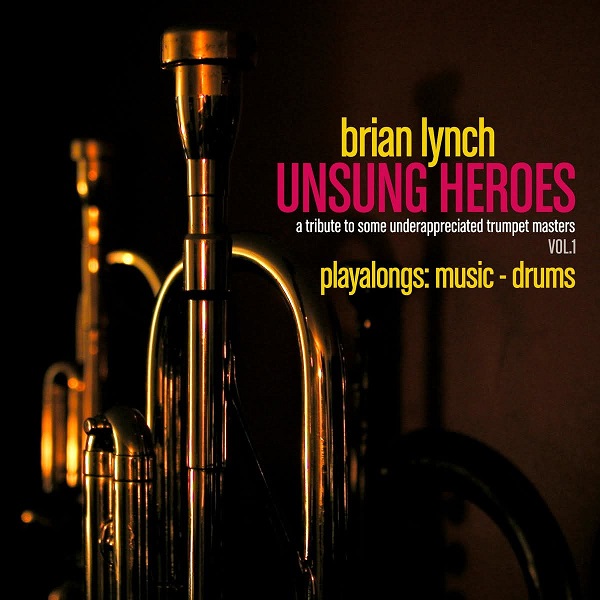
On this album, which is a natural follow-up to his 2000 album, Tribute to the Trumpet Masters, Lynch pays homage to the works of some of the most prominent, yet undeservedly unknown, jazz trumpeters, such as Joe Gordon, Claudio Roditi, Tommy Turrentine, Louis Smith, Idrees Sulieman, Charles Tolliver, and Kamal Adilifu (also known as Charles Sullivan).

Some of the tributes consist of performing compositions by these artists. In other cases, Lynch performs a tune he composed in the artist’s honor. In all cases, Lynch and his team, which includes Vincent Herring and Alex Hoffman on saxes and Rob Schneiderman on piano, are more than up to the task. They make each of the honorees proud.

Lynch ha estado en la escena del jazz durante la mayor parte de las últimas tres décadas

While there isn’t a single bad track on the album, standouts include Gordon’s “Terra Firma Irma,” which moves along to the potent beat of Pete Van Nostrand, along with excellent solos from all three horn players; Turrentine’s “Big Red” and Sulieman’s “Saturday Afternoon at Four,” both part of a treasure trove of unreleased compositions that were part of the Turrentine and Sulieman estates and that Lynch was able to tap into for these sessions; the hard bop of Tolliver’s “Household of Saud” (again, Van Nostrand’s drumming blew me away) and Lynch’s “RoditiSamba,” a tribute to the Brazilian master.

In short, Unsung Heroes is Brian Lynch’s best album as a leader in his long career. The musical mastery is top-notch, the compositions are always interesting, and the backstory of the whole project is a compelling history lesson for jazz trumpet fans who want to dig deeper than Miles, Diz, and Satchmo. The best news is that there’s more where that came from: this is only Volume 1 of the project; Volumes 2 and 3 are currently available online as downloads.

Paying tribute to the unsung masters of the jazz trumpet is a natural project for trumpeter and flugelhorn player Brian Lynch (the original text mentioned “Bryan Lynch” in this section, it is assumed to be a typo), who has been immersed in the hard-bop lineage since he was part of Horace Silver’s band in the 1980s.

He is accompanied by a mid-sized group that includes Vincent Herring on alto saxophone, Alex Hoffman on tenor saxophone, Rob Schneiderman on piano, David Wong on bass, Pete Van Nostrand on drums, and Vicente “Little Johnny” Rivero on congas.

Herman Olivera El Sonero del Siglo XXI voz líder de La Perfecta II de Eddie Palmieri, Dj. Augusto Felibertt y Brian Lynch un trompetista de jazz ganador de varios premios Grammy.

Moving through rhythms ranging from ballads to riffs and Latin jazz, the band masterfully navigates the material with solo and ensemble passages executed with great fluidity. The title suggests that there may be more installments in this series, and hard-bop fans will certainly hope so. Lynch has a wealth of material to draw inspiration from and a talented band with which to make an indelible mark.

Brian Lynch – Unsung Heroes Vol. 1 (2011)

Brian Lynch - Unsung Heroes Vol. 1 (2011)
Brian Lynch – Unsung Heroes Vol. 1 (2011)

Tracks:

  1. Terra Firma Irma
  2. I Could Never Forget You
  3. Further Arrivals
  4. Saturday Afternoon At Four
  5. Household Of Saud
  6. Roditisamba
  7. Big Red
  8. Unsung Blues
  9. Wetu

Musicians: Brian Lynch (Trumpet, Flugelhorn) Vincent Herring (Alto Sax) Alex Hoffman (Tenor Sax) Rob Schneiderman (Piano) David Wong (Bass) Pete Van Nostrand (Drums) Little Johnny Rivero (Congas 1-3, 1-6, 3-5)

Recorded October 12-13, 2008 and December 22, 2009 at Knoop.

Also Read: Oskar Cartaya “My Music, My Friends, My Time” Featured collaborations with illustrious friends such as Eddie Palmieri, Giovanni Hidalgo, Dave Valentin, and Justo Almario

Salsa Latin Bar London

Europe / England / London

All the sound and flavors (not only food) in one incredible place! Salsa is a South American bar/restaurant/nightclub. The food menu is a delicious selection of Latin infused dishes with something to suit everyone and our cocktail menu has a fantastic selection of classic and specialty cocktails. It is available for private hire everyday of the week and we can arrange food, drink and entertainment packages specific to your party needs including DJs, the best Salsa music, dancers and more!

Salsa Latin Bar London - Photo1
Salsa Latin Bar London – Photo1

Salsa Latin Bar London Address:

Salsa!, 96 Charing Cross Road, London, London, WC2H 0JG.

Opening Hours Salsa Cafe Mon-Sat 10.00-17.00pm.

Restaurant, Bar and Club Mon-Thu 17.00pm-02.00am Fri-Sat 17.00pm-03.00am Sunday 17.00pm-02.00am

Salsa Latin Bar London - Photo2
Salsa Latin Bar London – Photo2

Spain is reborn in new Cuban music by Yalil Guerra

The immense Hispanic legacy is usually relegated to the background, while being a key part of our sound identity.

Reference Image about Spain
Reference Image
Yalil talking about Spain
Composer, bandleader, and Latin GRAMMY winner Yalil Guerra.
Image courtesy of RYCY Productions

By YALIL GUERRA

The birth of the Cuban nation, after gaining its independence from its former colonizer, Spain, marked a break that transcended political concerns and entered strongly in the cultural aspect. Cubans were “denaturalized” after the Treaty of Paris in 1898, leading to a profound metamorphosis of identity that was inevitably reflected in our music. Out of that process a fresh and powerful sound expression emerged: a vibrant fusion between European, African, and North American influences, something that had already begun in the 19th century but was driven by a growth music industry and the cultural magnet of its northern neighbor, the United States.

For years I have listened to, studied, and enjoyed Cuban popular music — both the old and contemporary— and what I notice is that most productions tend to highlight the folklore—especially the Afro-descendant roots and the imprint of jazz — while the immense Hispanic legacy is usually relegated to the background, while being a key part of our musical identity.

In Cuban music today, both on and off the island, the record business is committed to a modern and bold sound. Compositions explore contemporary harmonies, bitonality, and extended chords — resources that come from both classical music and jazz — entwined with surprising and refreshing harmonic cycles. In wind instruments, melodic lines and musical motifs reveal the virtuosity and creativity of a new generation of musicians and arrangers, who are raised in solid academic traditions but open to global influences. The percussion stands out for its polyrhythm and the number of sophisticated tutti that require a unique expertise, but the Spanish influence is quite absent or just present in the language.

In contrast, What caught my attention was the newest music of singer, composer, and multi-instrumentalist Alain Pérez on his new album Bingo, where Spain resonates powerfully and recognizably. I find this gesture very special, as it vindicates a Spanish legacy in Cuban music that is often forgotten or minimized. I also highlight the case of pianist and composer José (Pepe) Rivero and his new album Estampas y Raíces where he pays tribute to classical Spanish composers, mixing their works with his unique interpretive style, bringing it closer to the language of Cuban jazz that is so familiar to him.

What about the large mass of Cuban artists and musicians who do not pay homage to the mother country? It is that we lost our historical memory or has it been erased? Is the omission of certain elements of our Spanish traditions a symptom of what some call the “Spanish Black Legend,” a myth that has seeped into our musical history and present?

I remember when Juan Perón said:

“And through the figure and work of Cervantes, Argentina pays tribute to the mother country, fruitful, civilizing, eternal, and to all peoples who have emerged from its maternal womb.” “And through the figure and work of Cervantes, Argentina pays tribute to the mother country, fruitful, civilizing, eternal, and to all peoples who have emerged from her maternal womb.”

Cuba is no exception.

Over the years, in response to the previously exposed, I have tried to make Spain present in my work: incorporating harmonious colors, Andalusian cadences, and the Phrygian mode—so tied to the Iberian sound—creating compositions devoted specifically to Spanish culture, especially my new string quartet entitled “Noches de España”, following the line of our great composer Ernesto Lecuona, who knew how to bring to life both African and Spanish things. As for me, I seek to keep alive that heritage and project it onto 21st-century Cuban music, without forgetting our important African legacy.

Today, rescuing the Spanish heritage in Cuban music is not just an act of memory: it is also an opportunity to rediscover the richness of crossbreeding that continues to define who we are and how our history sounds. Contemporary Cuban music not only looks to the future: it sings to its African roots, but it also needs to reconnect with that other essential part of our identity. After all, we think, love, and communicate in Spanish. Every note, every guitar or lute that sounds, will evoke that heritage and bring us near to the fullness of what we are.

It does not matter the color our skin is, or whether our grandfather was from Asturias or the Congo: cultural fusion is what forged our identity and will remain the essence of Hispanic America. Mexican writer, philosopher, and politician José Vasconcelos said: “I am Hispanic, and nothing about Hispanic is alien to me.”

At this crucial time, Cuban music has the challenge—and the opportunity—to sing its entirety. And in doing so, it shows us that, beyond styles or labels, what unites us is the sound of a common history.

DMA Yalil Guerra

Read also: Yalil Guerra and the musical roots of his talent

  • « Go to Previous Page
  • Page 1
  • Interim pages omitted …
  • Page 12
  • Page 13
  • Page 14
  • Page 15
  • Page 16
  • Interim pages omitted …
  • Page 241
  • Go to Next Page »

International Salsa Magazine (ISM) is a monthly publication about Salsa activities around the world, that has been publishing since 2007. It is a world network of volunteers coordinated by ISM Magazine. We are working to strengthen all the events by working together.