• Skip to primary navigation
  • Skip to main content

International Salsa Magazine

  • HOME
  • Previous editions
    • 2026
      • ISM / April 2026
      • ISM / March 2026
      • ISM / February 2026
      • ISM / January 2026
    • 2025
      • ISM / December 2025
      • ISM / November 2025
      • ISM / October 2025
      • ISM / September 2025
      • ISM / August 2025
      • ISM / July 2025
      • ISM / June 2025
      • ISM / May2025
      • ISM / April 2025
      • ISM / March 2025
      • ISM / February 2025
      • ISM / January 2025
    • 2024
      • ISM / December 2024
      • ISM / November 2024
      • ISM / October 2024
      • ISM / September 2024
      • ISM / August 2024
      • ISM / July 2024
      • ISM / June 2024
      • ISM / May 2024
      • ISM / April 2024
      • ISM / March 2024
      • ISM / February 2024
      • ISM / January 2024
    • 2023
      • ISM / December 2023
      • ISM / November 2023
      • ISM / October 2023
      • ISM – September 2023
      • ISM – August 2023
      • ISM July 2023
      • ISM Edition June 2023
      • ISM – May 2023
      • ISM April 2023
      • ISM March 2023
      • ISM February 2023
      • ISM January 2023
    • 2022
      • ISM December 2022
      • ISM November 2022
      • ISM October 2022
      • ISM September 2022
      • ISM August 2022
      • ISM July 2022
      • ISM June 2022
      • ISM May 2022
      • ISM February 2022
      • ISM January 2022
    • 2021
      • ISM December 2021
      • ISM November 2021
      • ISM October – 2021
      • ISM September 2021
      • ISM August 2021
      • ISM July 2021
      • ISM May 2021
      • ISM April 2021
      • ISM June 2021
      • ISM March 2021
      • ISM February 2021
      • ISM January 2021
    • 2020
      • ISM December 2020
      • ISM November 2020
      • ISM October 2020
      • ISM September 2020
      • ISM August 2020
      • ISM July 2020
      • ISM June 2020
      • ISM May 2020
      • ISM April 2020
      • ISM March 2020
      • ISM February 2020
      • ISM January 2020
    • 2019
      • ISM December 2019
      • ISM November 2019
      • ISM October 2019
      • ISM Septembre 2019
      • ISM August 2019
      • ISM July 2019
      • ISM June 2019
    • 2016
      • ISM December 2016
  • Spanish
  • Download Salsa App
    • Android
    • Apple

Search Results for: Latin Music

Irakere was a Cuban group that developed an important work in Cuban popular music and Latin Jazz under the direction of Chucho Valdés

Irakere was formed as such in 1967 but had begun to work much earlier; in that year precisely they went to a selection called in Havana to organize with the best musicians of that time the Cuban Orchestra of Modern Music; already in 1972 they were approaching to what they currently produce deciding in 1973 to call it Irakere, which in Yoruba language means Vegetation and that is how, starting from its name, they work based on the Afro-Cuban musical roots.

In this way, through the combination, mixture and interrelation of classical, impressionism, jazz, rock and various compositional techniques they managed to walk through all styles such as dance music, concert, traditional and popular Cuban music.

Thanks to the impulse of pianist Chucho Valdés, the Cuban group Irakere took off in 1973, nourished by Thelonious Monk’s bop.

Founders

Grupo Irakere: It was founded in Havana in 1973, by:

Jesús Valdés(Chucho) composer, director and pianist;

Paquito D’Rivera (Paquito), alto and tenor saxophone, flute and clarinet;

Carlos Averhoff, tenor saxophone, soprano, flute and bass clarinet;

Jorge Varona, trumpet, trombone and percussion;

Carlos del Puerto, bass, bass guitar and tuba;

Carlos Emilio Morales, guitar;

Bernardo García, drums and batá drums;

Jorge Alfonso, batá drums;

Enrique Plá, drums;

Carlos Barbón, güiro, chekeré and tambourine; and

Oscar Valdés, singer, tumbadora (conga), batá drums and bongo.
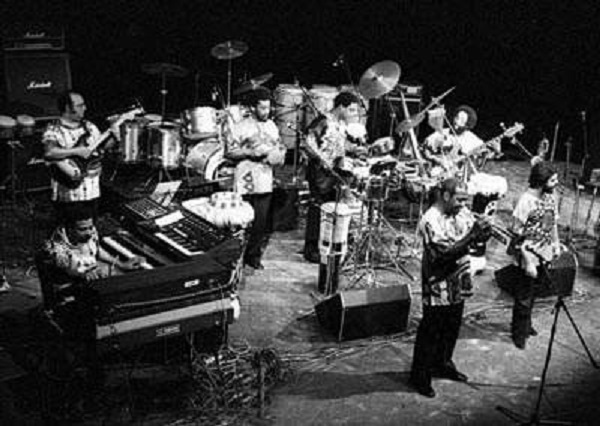
Irakere, fue un grupo cubano que desarrolló un importante trabajo en la música popular cubana y el Jazz Latino

On the founding of Irakere, Chucho Valdés expressed:

“For us the group always existed, it was present at all times; it was like something pending. At the beginning it had no name, it was just an idea we were working on: to use Cuban folkloric percussion in dance music, and to look for different timbres with a common characteristic: “ours”.

Then Oscar Valdés came up with the idea of combining the not easy and little known batá drum with the tumbadora, güiro and cowbell and so, step by step we arrived at the current group…”.

About Irakere’s first stage, the musicologist Leonardo Acosta points out: “one of the successes of Irakere had been not to try to invent and identify itself with a “new rhythm”, according to the old guidelines of advertising so much used from the forties to the sixties.

The slogan about the “new rhythm” was until recently the “open sesame” on which the musicians counted to become famous overnight, and by that way sometimes quite commercial results were achieved.

Apart from the fact that no “new rhythm” is so new, they all come from the alteration or amalgamation of pre-existing rhythms.

Irakere’s only alchemy comes from the spontaneous creativity of its members. Since there is no commercial endeavor, laboratory practices are unnecessary, and the group can perform a contradanza, a danzón, a son montuno or a cha cha chá without fear of seeming “old-fashioned”, since they are in fact playing something else at the same time. And without setting themselves the goal, nor having to invent a “pega” name, almost by an imperative of the material they are working on, new rhythmic combinations are emerging, to the point that Irakere’s rhythm is unmistakable among Cuban listeners or dancers.

Grupo cubano Irakere

Certainly, and in spite of their triumphs in international jazz festivals, Irakere is not a jazz group. But these successes are not gratuitous either, because as we have seen, they have formidable musicians with great experience in the jazz field, especially in the aspect of improvisation, the great discovery of jazz and perhaps its greatest contribution to the music of the 20th century.

“Paquito D’Rivera: Irakere was born against the will of the Cuban authorities”.

When talking about Cuban music, the name of one of the most emblematic groups in the country’s musical history comes to mind, Irakere, which in Yoruba language means vegetation, jungle.

Irakere became the seed that would germinate a lush forest of rhythms and sounds, a school through which many of the great stars of Cuban music have paraded.

Founded more than four decades ago, this legendary band has been a pioneer of Afro-Cuban jazz and the initiator of the musical revolution in the seventies.
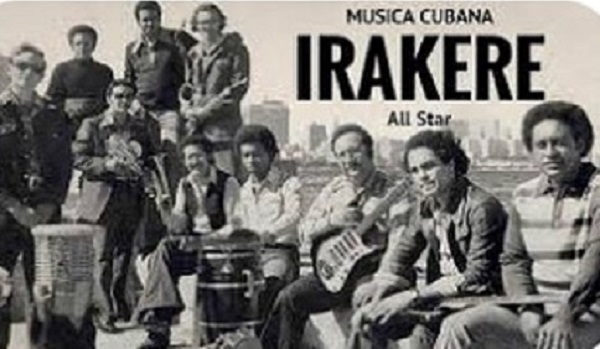
Gracias al impulso del pianista Chucho Valdés, el grupo cubano Irakere levantó vuelo en 1973

Irakere emerged at a time when, due to political demands on the island, music and culture were treated as an instrument of revolutionary identification and jazz was branded as imperialist music.

It was at this time, in the late sixties and early seventies, that a group of great musicians founded a band whose main goal was to enrich Cuban popular dance music with Latin jazz as essential elements.

Under the direction of the outstanding pianist Jesús “Chucho” Valdés, excellent musicians came together in search of a different sonority, based on the use of Afro-Cuban folkloric percussion together with the renewed timbres of the popular rhythms of the time that fused jazz, rock, funk and popular Cuban rhythms such as son, mambo or cha cha chá, together with classical or concert music.

“Irakere was the Musical Generation of change”.

Sources:

https://www.ecured.cu/Irakere

Leonardo Acosta

Radio Televisión Marti

Mirna Guerra

Irakere

You can read: Israel Kantor was an excellent bassist, arranger and composer who achieved great popularity in Cuba for his vocal technique and original “Sonear” style

Yma America “We have done a good job, making our Music and Latin Culture known”

“Every time I go out to play, to sing, I show my training and above all I put the name of Venezuela up high and without talking too much”.

She reaffirms that; We have done a good job, making our music and Latin culture known.

It is indisputable the mark that many Venezuelan artists who have decided to settle abroad leave on their way around the world, because they are distinguished by their achievements and place the name of Venezuela in great, making their fellow citizens feel proud of their successes, such is the case of Yma America Martinez, born in Caracas and based in Germany for almost 30 years.

With a musical vein that she inherited from her parents who, she points out, were the fundamental pillar in her formation and career, and why not, for having grown up in one of the most musical parishes of Caracas, the San Agustin del Sur neighborhood, Marin sector, from where great characters have emerged including her uncle, the choreographer and dancer Carlos Enrique Orta (+), who toured with his dance company Coreoarte great stages around the world.

His musical beginnings were with a group created by his father “Los Azulitos Juveniles” where he sang aguinaldos with his sisters and neighbors, to later join the San Agustin Choir at the Don Pedro School “Fe y Alegria”. She received her academic preparation at the “José Ángel Lamas” Music School and at the “Simón Bolívar” National and Youth Orchestra, to continue her cello studies in Paris at the “Ecole Normale de Musique de Paris” and singing and composition at the CODARTS of the World Conservatory of Music in Rotterdam.

It reaffirms that; We have done a good job, making our music and Latin culture known.
Yma America “Every time I go out to play, to sing, I show my training and above all I put the name of Venezuela up high and without talking too much.”

Yma America is a singer, musician, composer, arranger, plays the cello and the cuatro. Her clear and powerful voice makes her very sought after throughout Europe. She has worked with different groups; Kimbiza, Latin Sampling, Francisco Zumaqué, Conexión Latina, Mirta & The Goalgetters, Dúo Ymaya, Cubop City Big Band, among others. He has participated in major jazz and classical music festivals such as the Ruhr Guitar Festival, the North Sea Jazz Festival, the RuhrTriennale, the MusikTriennale Köln, and the Elblandfestspiele. In 2004 her perseverance made her the winner of the international competition “Voice and Guitar” in Saarbrücken-Germany, where she won the first prize together with the Colombian guitarist Andrés Mendoza Villamil.

Another relevant fact in the life of this artist can be seen in the song “Juégalo”, a song she composed and sang for the Bacardi company commercial, which became a hit in the summer of 1998 and 2000. He participated in the musical “King of The Lions”, with WDR Big Band in the main role of the Lilipuz children’s concert “Die schlaue Mama Sambona”; and has performed more than 30 times with the production “Adventure Weltumrundung” of the Fly & Help Foundation.

She has on her shoulders the responsibility of a great project that she is carrying in Germany and wishes to realize in her native country, making music with percussion for deaf people called “FEEL SOUNDS”, because of this proposal in 2010 she was awarded with the Disability Policy of the Innovation Prize of Cologne (KIB).

She assures us that; “The language of music is the same all over the planet”, with this phrase we enter to discover the virtues, dreams, and desires of the interviewee.

How does Yma America define herself?

“It is not easy to answer this, but I think I am a very patient and calm person, too much I would say. I don’t give myself a bad life, fortunately, I have done what I have wanted and desired, thanks to the support of my parents and family in general.” “I am a character to whom, thank the god’s things and opportunities have been offered to me, some I have taken advantage of, others not, there are some which I have not realized in time that they have been there waiting for me and I have lost them. But I can say that I have lived my life, with the ups and downs, good and bad, without involving anyone and that is how I have been leading it and learning”.

Yma America is a singer, musician, composer, arranger, plays the cello and the cuatro.
His musical beginnings were with a group created by his father “Los Azulitos Juveniles”.

Part of his training was obtained through the “José Ángel Lamas” Conservatory of Music and the “Simón Bolívar” National and Youth Orchestra. What do you thank them for and how do you give back your training with them?

“I thank them for part of my training as a musician than I am, because the other part I owe to my family and my people where I come from.” “-Give back-“, I think that every time I go out to play, to sing, I show my training and above all I put the name of Venezuela up high and without talking too much”.

What do you think of the phrase “No one is a prophet in his own land”?

“-I honestly don’t know what it means-“. “I don’t think I would have started singing professionally if I had stayed in Venezuela. I played cello in the National and Youth Orchestra of Venezuela, I played and substituted for the cellists in the Philharmonic Orchestra of Venezuela and in the Municipal Orchestra of Caracas, I sang solo at every party and family celebration, and in reality, I was very quiet at home”.

“I don’t think I am a “prophet” where I am, I always do the best I can and people value it and many times also criticize it, of course”.

Why did you choose Germany and not another Latin American country? How many years have you been living in Cologne?

“I left Caracas in 1986 for Paris-France, thanks to the fact that my grandmother worked for a wealthy family and they offered to help a relative to study abroad, specifically in France because they had relatives there. First, my uncle Carlos Enrique Orta, a choreographer-dancer with a long international career, went many years before, and then I wanted to “take him up on it” after a while”.

“Actually I wanted to study cello for 1 year in Paris and return to Venezuela, but when I finished my 1st year of study at the “Ècole Normale de Musique de Paris”, they offered me to stay and I didn’t refuse. The last year of studies in Paris I didn’t have much money to live and in Köln-Germany lived the musicians of COREOARTE (a Dance Company created by my uncle Carlos Enrique Orta with dancers and musicians from San Agustin), at that time I went every weekend, on Fridays after classes, from Paris to Köln and I returned on Mondays at 6 am and arrived directly to classes in the afternoon, I did that because we played; Renis Mendoza, Felipe “Mandingo” Rengifo, Charles Peñalver, Orlando “El Diablo” Blanco and me in the street to collect a little money and cheer up the streets and faces of the Germans, and with that I could buy food for the whole week in Paris until the following Friday when I returned to Köln. … and so on for many months until when I finished my studies, I decided to move to Köln and the first months I lived with Renis Mendoza who shared his apartment with another boy from Corporate and then I got my room sharing an apartment with a German girl”.

Part of his training was obtained through the "José Ángel Lamas" Conservatory of Music and the "Simón Bolívar" National and Youth Orchestra.
Part of his training was obtained through the “José Ángel Lamas” Conservatory of Music and the “Simón Bolívar” National and Youth Orchestra.

“I lived first in Paris from 1986 until 1990, 4 years and from 1990 until today in Köln, next year I will be 30 years based in Germany, I say “I have my bed in Köln”, because in reality I am almost never at home, thanks to music and life that has given me so much.”

“I never thought, nor have I ever imagined living in another Latin American country, I think that from here, I’m going home… To Venezuela!”.

How has the German public been receptive to Latin rhythms, has there been no resistance?

“At this moment there is a stagnation in the development of activities with Latin music, but in the same way there is more and more receptivity, I know we have done a good job, making known our music and Latin culture, there are several Salsa bands with German musicians, there are more and more dancers, more dance classes, many have understood the message and others interpret it to their wave but there is much atmosphere and places with Latin music, with Dj of Salsa-Merengue and the crap they call Reggaeton music”.

“I must say that some years ago there were more Salsa orchestras with German musicians and there were more Salsa Festivals that unfortunately has been reduced by the phenomenon “Salsa Dj” I think and I’m almost sure, because it is cheaper and people dance the same. That has done a lot of damage to live music”.

What memories do you have of being under the baton of these great maestros Abreu, Aldermaro Romero, Carlos Riazuelo and Yehudi Menuhin?

“I don’t really remember at the moment any particular experience or directly with them. Although I had more contact with maestro José Antonio Abreu, the experience was the same as with many of the members of the ONJV.   But of all of them I was always struck by the confidence with which they could dominate and control the number of musicians that an orchestra has and above all that in classical style and pieces the feeling that is transmitted is that of the conductor and not that of the musician or the performer. Of course, they were wonderful experiences”.

How many compositions have you made?

“Honestly, not many, approximately 12 but that have been arranged, played and recorded, only 4.”

Your parents have been promoters of your career, what do you thank them for?

-Chacha!

“My parents are the reason for my profession, it is from them that this Yma America that you are interviewing for my work has come out. Thanks to their way of being, to their offspring, to their education, I thank them for what I am and what I have done… My life”.

Are you still constantly growing, what anecdotes do you have from your time at the “Ecole Normale de Musique de Paris” and the “Conservatoire de Musique du Monde”?


“In Paris, I think, having to change the mentality of learning everything little by little and without haste in Venezuela, to the need to put my batteries because here they do not wait, you have to give it hard and meet daily, plus that prompted me to learn French faster”. “And in Holland to go from being a student to being the singer of the Cubop City Big Band of the conservatory Prof. Martin Verdonk (percussion), Leslie Lopez (bassist) and directed by Prof. Lucas van Merkwijk drums that was strong, especially at the beginning that was to understand how they interpreted Latin music that is something other than Latin Jazz, then we started with Mambo de una, and as Leslie Lopez was the bassist of Puerto Rico there was a balance and there we were learning and getting experiences all equally”.

Working with Lucas and with those wonderful musicians, people with an extraordinary musical level, is very relaxed, zero stress, we have all learned there, the failures and successes have gone hand in hand with everyone.
She works alongside Dutch percussionist and producer Lucas Van Merwijk and is the lead singer of the successful “Cubop City Bing Band”.

How does it feel to work alongside Dutch percussionist and producer Lucas Van Merwijk and to be the lead singer of the successful “Cubop City Bing Band”?

-It’s great!

“Working with Lucas and those wonderful musicians, people with an extraordinary musical level, is very relaxed, zero stress, we have all learned there, the failures and successes have gone hand in hand with everyone. Next year (2020), with CUBOP CITY Big Band we will celebrate 25 years together and for sure something good will be done, something wonderful is being cooked, with the maestro Edy Martinez -pianist, composer and Colombian arranger-, of course, also thanks to Lucas’ wife, Roosje who does a great job, she is the organizer/manager of that crowd and of all the tours”.

Have you surrounded yourself and trained with musicians that due to their quality and trajectory are considered the best, what do you think you have yet to do?

“I have done and learned many things in life, both personally and musically, I think and I know that I still have a lot to do and to learn”.

Hasn’t the language been an obstacle?

“No, musically speaking, no, the language of music is the same all over the planet.”  “The French language I had to learn quickly because I came from Venezuela directly to the Conservatory of music, in Holland the classes are in English and I did not have to learn Dutch and the German language has been strong in other daily situations or life in general.”

In which festivals have you participated both in Europe and Venezuela?

-I can’t tell you exactly how many, but in these 30 years living in Germany and making music professionally there have been many, in almost all of Europe”.

You have a project with deaf people in Germany, which we hope can also be realized in Venezuela. Tell us about this musical project and why did you decide to make this the theme?

“TO FEEL – SOUNDS, but as a proper name I named it “FEEL SOUNDS” in view of the fact that the sense of touch is much more developed in deaf people and my work is based on making music with percussion, so the vibration of the sound is what they feel.”

Gestern abend war sehr schön !!! Yma America and Marco Antonio Sanchez Ramirez

“It is a project that I have had in mind for many, many years, exactly 1980, when I was studying “Hotel and Tourism Administration” at the University College of Caracas and doing field work in San Jose de Rio Chico, at the end of my activity and visiting people, they made me a party, drums and fulias until dawn, they were 5 drummers, the father and 4 children and at the end the father tells me that one of them was deaf. And the young man played very well, I never imagined that he could be deaf, he played perfectly and we even danced salsa. And from there I had the idea of working and teaching percussion to the deaf.”

“After all that time, in one of those twists and turns of life, I had courage and started to study “German Sign Language” and planned my workshops, I went to the deaf schools in Köln, many percussionist friends helped me, Renis lent me his drums and plays with us every presentation at the end of the workshops, other friends lent me their rehearsal room to give the classes, my Sign Language teacher supported me looking for money to keep going. … and so, this year I celebrate 10 years of having developed it here in Germany and the experience has been wonderful, every day I learn more and more of this world that I can not imagine, but to see the face of everyone when they feel the vibration of the sound when playing a drum, even hearing people, people without hearing problems, that feeling is unique, fascinating!

Working with children and adults with special conditions is a great challenge, how does it feel to see this experience become a reality?

“I have already been invited to several cities in Germany, Holland and Poland and I want to continue doing it, take it to my country and fulfill my desire to develop it there, carry it out, execute it and make it known in my Venezuela. Although several years ago I attended a conference held by FEVENSOR Federation of the Deaf of Venezuela, with the assistance of several Latin American countries, Spain and Australia, I made an exhibition and presentation of several young deaf people who attended, with the participation and collaboration of Naifer Hernandez and Juan Carlos “El Indio” Betancourt percussionists of San Agustin / Marin, but everything stayed there. Of course I must always be present to be able to move forward, that’s how it is. I lack the economic support because the program, the project, the subjects, the desire, the yearning and the yearnings are already there, but I keep moving and insisting, searching and “curucuteando” until I find the proper support”.

What new projects are on the way?

“We recently started a new Latin American Music Trio project, let’s say from Mexico to Argentina, with Prof. Thomas Böttcher, German pianist, Renis Mendoza, Venezuelan percussionist, also from San Agustín/Marín and me singing and playing Violoncello, we are in the preparations, making videos, propaganda, looking for a program and composing, also in conversations and looking for an agency to sell it and take it forward. The 25th anniversary of Cubop City Big band next year, finish looking for the musical program for those celebration concerts.”

“Continue with my musical project “FEEL SOUNDS”, giving my classes and music workshops to groups of deaf children, youth and adults and from January I start to give talks about this new proposal to students of “Special Education and Pedagogy” to continue moving forward with this and take it forward until I get to Venezuela and the whole world.”

What does St. Augustine Parish mean to you?

“It is the neighborhood where I was born, there is all my childhood and adolescence, I love and respect its inhabitants very much, besides my family whom I love with all my being, there have always been many valuable people there and that multiplies more and more, thanks to the work that artists have been doing and all that educated and fighting generation that lives and has always maintained that contact of training and information with the new generations. San Agustín is the good people who live there, the rest is everywhere on the planet”.

 Venezuela in one word?

 “-MUSIC-” in capital letters.

Facebook: Yma América

By: Eiling Blanco Correspondent in Venezuela

Article of Interest: Renis Mendoza “San Agustín is like a continent and Marín is its capital”.

Johnny “Dandy” Rodríguez Jr. Growing Up in Latin Dance Music and Jazz

Johnny “Dandy” Rodriguez Jr. is a salsa legend and world-renown, pioneering bongocero.

His “Dream Team” is currently regarded as the hottest salsa “conjunto” performing In New York City.

It is rare, and ever increasingly so, that a musician would spend a lifetime in a band. But percussionist Johnny “Dandy” Rodríguez Jr. who was a teenager when he was allowed to sit in with the Tito Puente Orchestra and be an apprentice for a few months before earning a place in its rhythm section, was also there at the end, playing alongside Puente until his death, after a concert on May 31st, 2000.

“I went from being a kid, coming into the band as a 16-year-old to being the man running the band at the end,” said Rodríguez, 70, in a conversation from his home in Las Vegas.

Johnny "Dandy" Rodriguez Jr. Growing up in Latin dance and jazz music
Johnny “Dandy” Rodríguez Jr.

Between that beginning and end, Rodríguez also contributed, in prolonged stints, to the sound of the Tito Rodríguez Orchestra, Ray Barretto, his own band, Típica ‘73, and more.

The son of Johnny “La Vaca” Rodríguez Sr., a respected percussionist who also played with the Puente and Rodríguez orchestras, “Dandy” Rodríguez is one of those essential musicians who have created and shaped the sound of contemporary Latin Jazz yet are little known by the public at large.

"When they called me to talk about the concert I thought it was a great idea," Rodriguez says.
Johnny “Dandy” Rodríguez Jr. y Pedro Bermúdez en New York

While some of the great players in Duke Ellington or Count Basie bands have long been recognized for their contributions, their counterparts in the Latin orchestras, for the most part, have not.  Rodriguez will be honored by Arturo O’Farrill & the Afro Latin Jazz Orchestra in their concert “Tribute to the Great Sidemen of Latin Jazz” alongside Sonny Bravo, Ray Santos, Papo Vázquez, Reynaldo Jorge, José Madera, Joe González, and Bobby Porcelli at Symphony Space, in New York City, January 29th and 30th.

“When they called me about the concert I thought it was such a great idea,” says Rodriguez.

Johnny Rodríguez
Johnny “Dandy” Rodriguez Jr. is a salsa legend and a world-renowned pioneer bongocero.

“Usually people just know the name of the bandleader and it’s fine,” he says. “But they must remember that there is a good team behind that leader which makes him look so much better.

There’s a way of playing that music that makes it sound the way they wrote it and the way they wanted it and these guys knew it and they knew how to do it.”

Rodríguez grew up in Spanish Harlem, Manhattan, in a house with “a great music collection, a good, what was then called, hi-fi system and always full of musicians,” he recalls.

“It was great but I was interested in baseball, in stickball. I didn’t get involved with music until later, but the music was always in the background, in my house.” By the time he was in junior high, Rodríguez played bongos, congas, timbales, and set drums and, as he puts it, “started to get into it.”

“Remember, I lived in El Barrio and back in those days, in that area, there was a lot of music in the air.

There would be speakers outside the furniture store or the bodega or the record shop, and music would be playing. This shop would be playing this radio station, the butcher would have another, so walking one block you’d be hearing three different pieces of music. It was an environment full of music.”

During the first two decades of the new century, the musical work of maestro Johnny Rodriguez continued; thus, his musical imprint has remained in other publications with The Latin-Jazz Coalition, Frankie Morales, Eddie Palmieri, Gilberto Santa Rosa, George Delgado, Victor Manuelle, Rick Arroyo, Orestes Vilató, Mitch Frohman, Cita Rodriguez, Doug Beaver, Adalberto Santiago and Jeremy Bosch.

In addition, special mention must be made of the participation of maestro Johnny Rodríguez with a group called The Latin Giants Of Jazz, in the best style of the classic Big Bands, made up of great teachers, among them, some of the former members of the band of maestro Tito Puente; with this group they have released four albums; this project gave rise to another band called The Mambo Legends, who recorded the album titled: Watch Out! ¡Ten Cuidao!

John Rodriguez is, without any doubt, one of the most prolific percussionists in the world of Latin music called Salsa; the nickname “Dandy” goes back to his childhood, when the car in which he was taken was bought in a warehouse or a store called “Dandy”, and people said: look how cute the “Dandy”, and from there he kept that nickname. In music he is better known as Johnny instead of John.

In the (year 2022) the experienced Johnny Rodriguez had three or four groups with which he is playing, among them Dandy Rodriguez and his Dream Team, and at the same time he teaches percussion classes over the Internet. He is part of the true legends of Latin music, not to mention that his talent has also been reflected in recordings for other musical genres such as: Electronic, Folk Rock, Folk, World & Country, Funk / Soul, Heavy Metal, Jazz, Stage & Screen, Jazz-Funk, Merengue and Pop.

In his very extensive artistic career, the master Johnny Rodriguez took part in historical and iconic recordings of our musical culture, some of these albums have been worthy of awards such as the Grammy Award, among which are:

Homenaje a Beny Moré – Year 1978.
On Broadway – 1983
El Rey: Tito Puente & His Latin Ensemble – Year 1984
Mambo Diablo – 1985
Goza Mi Timbal – Year 1990
Mambo Birdland – Year 1999
Masterpiece / Masterpiece Tito Puente & Eddie Palmieri – Year 2000.

“In 2008, Johhny entrusted LP’s Research and Development Department with the design of the John “Dandy” Rodriguez Jr. bongoes in the Legends series. John is proud that these drums, which bear his name, feature such outstanding sound and visual characteristics.”

He died on August 17, 2024 in New York City of a stroke.


Facebook: John Rodriguez(Dandy)

Article of Interest: José Madera Timbal de Machito and his Afro-Cubans, Tito Puente, Mambo Legends Orchestra and Fania Record Co.

Johnny "Dandy" Rodríguez Jr. y Frankie "El Sonero del Barrio" Vázquez
Johnny “Dandy” Rodríguez Jr. y Frankie “El Sonero del Barrio” Vázquez

Home

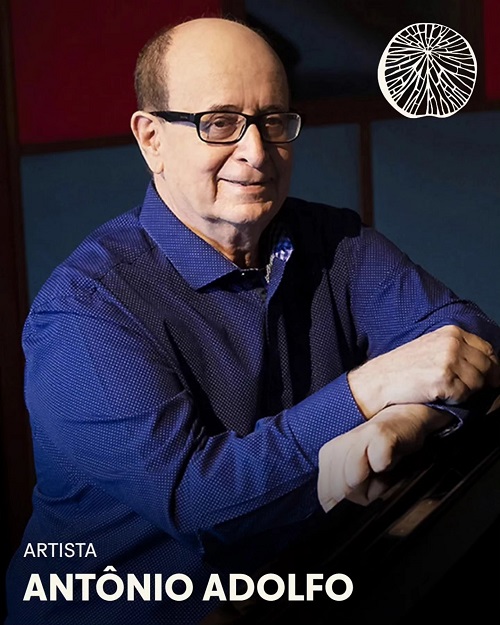
Antonio Adolfo: The Indelible Master of Brazilian Music

From Classical Cradle to the Jazz and Bossa Nova Revolution

That musical heritage is essential to understanding the greatness of Antonio Adolfo.

Being born into a home where the violin from the Rio de Janeiro Municipal Theater orchestra was part of the daily landscape shaped his sensibility from the cradle.

Although he grew up surrounded by the classical discipline of his father, his destiny lay within the keys, jazz, and the revolution of Brazilian popular music (MPB).

De la Cuna Clásica a la Revolución del Jazz y la Bossa Nova

The son of a classical violinist, Antonio Adolfo was born in the bohemian neighborhood of Santa Teresa, Rio de Janeiro, under the sign of Aquarius in 1947. At the young age of 16, the young pianist was already part of the exclusive bossa nova club brewing in the famous Beco das Garrafas alley, leading ensembles that stood at the forefront of the scene, such as Conjunto Cinco and the Samba Trio 3-D.

Shortly after, he participated in the iconic musical Pobre menina rica by Carlos Lyra and Vinicius de Moraes, beginning to make a name for himself in the industry.

Starting in 1967, by forming a creative partnership with lyricist Tibério Gaspar, Adolfo became one of the great catalysts of modern melody in Brazil, composing massive hits like “Sá Marina” and “Juliana.”

Antonio Adolfo El Maestro Imborrable de la Música Brasileña

At the same time, leading the group Brazuca, he established an electronic pop tone that was highly sophisticated for its time (with tracks like “Teletema” and “Ana Cristina”), culminating in the blistering musical highway of “BR-3″—a song that sparked great controversy and shook the core of the era’s music festivals.

A Pioneering Spirit and International Acclaim

After playing as a member of the backing band for the legendary Elis Regina on two European tours, and refining his technique in Paris with the renowned classical maestro Nadia Boulanger—in addition to studying in Brazil under masters Guerra-Peixe and Esther Scliar Antonio Adolfo was ready to take another giant leap.

In 1977, in an act of bravery and pioneering spirit, he released the album Feito em Casa (Homemade) under his own record label, Artezanal.

This was the opening kickoff for a liberating movement: the independent record industry in Brazil, triggering the rise of artistic dynamics that diverged from traditional market rules. Under this self-managed system, Adolfo recorded both original material (including children’s music that promoted free play) and foundational revisions of pianeiro classics, transforming the works of Ernesto Nazareth and Chiquinha Gonzaga for the contemporary piano.

This versatility proved that, as a performer and creator, Adolfo had achieved a rare distinction: mastering contemporary language from a place of timelessness.

Since 1985, the maestro has focused much of his energy on his music school, the Centro Musical Antonio Adolfo, while also participating in international events as an educator, without ever setting aside his stage career.

His profound work with the music of Chiquinha Gonzaga and jazz has earned him prestigious awards and nominations. Furthermore, he is the author of seven textbooks on Brazilian music published by Lumiar, a video lesson, and two books published abroad. For eight years, he proudly served as the Latin American representative for the IAJE (International Association for Jazz Education).

In recent years, Antonio Adolfo has returned to the stage more frequently, performing either in a solo piano format or with a group. From one of his performances at a U.S. university alongside his daughter, singer Carol Saboya, came an acclaimed live album released both in Brazil and abroad: Antonio Adolfo & Carol Saboya Ao Vivo / Live. This success has been followed by recording productions highly praised by international critics, such as Here and There / Aquí y Allá.

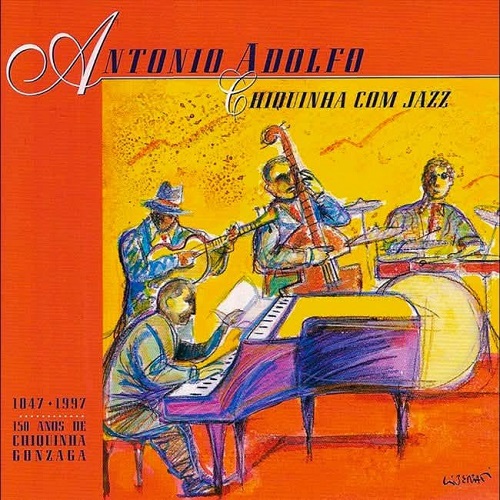
Chiquinha Com Jazz (1997)

Discographic Gem: “Chiquinha Com Jazz” (1997)

A perfect example of his genius for fusing Brazilian roots with the freedom of jazz is his 1997 album dedicated to the pioneer Chiquinha Gonzaga.

Tracklist:

Atraente

Cordão Carnavalesco

Lua Branca

Angu

Gaúcho (Corta-Jaca)

O Forrobodó

Corte Na Roça

Satan

Ismênia

Faceiro

O Abre Alas

          Personnel:

Antonio Adolfo: Piano and musical arrangements

Gabriel Vivas: Double bass

Ivan Conti: Drums

Claudio Spiewak: Acoustic guitar

Contributor:

L’Òstia Latin Jazz

Dj. Augusto Felibertt

Also Read: Carlos “Nene” Quintero comes from a family of musical prodigies

Steel pan percussionist Brad Shores shows us the best of Caribbean music in Florida

Brad Shores is an American musician whose love for tropical music has led him to undertake some truly interesting and successful projects, so we know this article will be of our readers’ liking, so they cannot miss it. 

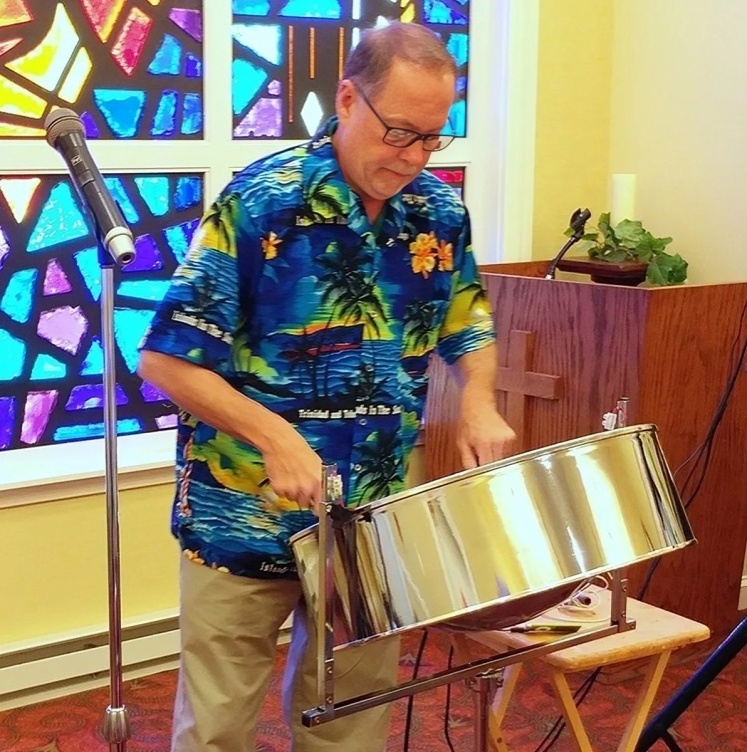
Brad at a church
Percussionist Brad Shores at a church in Newton, KS

How Brad got his start in music

Brad began his story by explaining that his parents were musicians. His mother taught music, while his father loved playing the drums and had been in various bands throughout his life, which caused the boy to be exposed to that world from the earliest age and end up falling in love with it just as his parents did. 

He tells that one day his mother used to lend him the sticks she used to play the drums and teach him to read and understand music when he was just in third grade, so from an early age, it was made easier for him to learn everything regarding music. Around the same time, he understood that music would quite possibly have a very special place in his life, since he had always enjoyed playing and loved it so much.

He was studying music theory in high school, and in college, he earned his degree in music education at Fort Hays State University in Kansas. He focused primarily on drums and percussion, but thanks to all the professional experience he has gained over the years, he plays almost all instruments competently. He also had the opportunity to teach others to play from very early in his own bands and now in a little more formal way, so he had to learn to play everything up to a certain level.

Previous experience to his current group Tropical Shores Steel Drum Band

Before starting his own project, Brad had the opportunity to play with groups in all genres and sizes, so he has a not inconsiderable background.

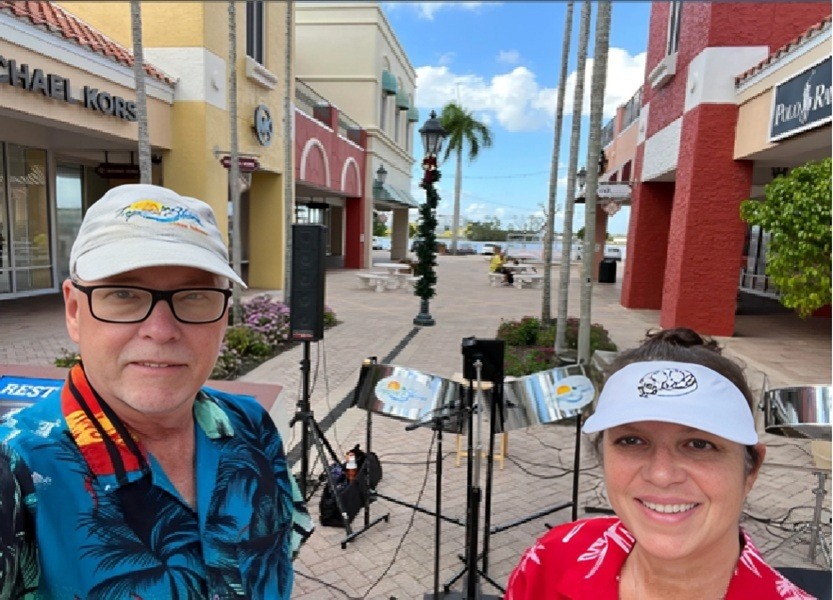
Brad and Erica
Brad and Erica at Moxi Junction

He remembers a jazz trio he was able to be part of in high school, which could be considered one of his first significant professional experiences, but that was just the beginning. He also remembers being part of many projects in college, such as an opportunity in which he played for some Germans and another in which he was in a rock band, showing that the artist was not limited to anything and was perfectly capable of crossing into all genres and adapting to them as it suited him.

Once he moved to Phoenix, he also played with many other bands and continued to experiment until he finally tried steel drums, which is primary instrument to this day and for which he is best known.

Contact with tropical and Latin music 

Being already in Phoenix, Brad told us that he was in a band where there was a steel pan percussionist who played a kind of music Brad had never heard before in his life. It was Caribbean music that had really caught Brad’s attention, and he definitely wanted to learn to play it as skillfully as that guy, so he listened carefully to every note that came from his instrument. With his lack of training in those genres, it was a bit difficult for him, but he finally succeeded and got very good.

In the case of Erica, his current wife, her mother played the organ at a church in Chicago, where she grew up. Before he met Brad, she was a salsa, merengue, and cha-cha-cha dancer, so she had a very different background from her husband’s with regard to rhythms. She also had a master’s degree in music, so her education in this discipline was wide, even if she had not had plenty of practice yet. It is worth mentioning that she is his second wife, since Linda, his first wife and mother of his three children, died from lung cancer in 2014.

Brad teaching
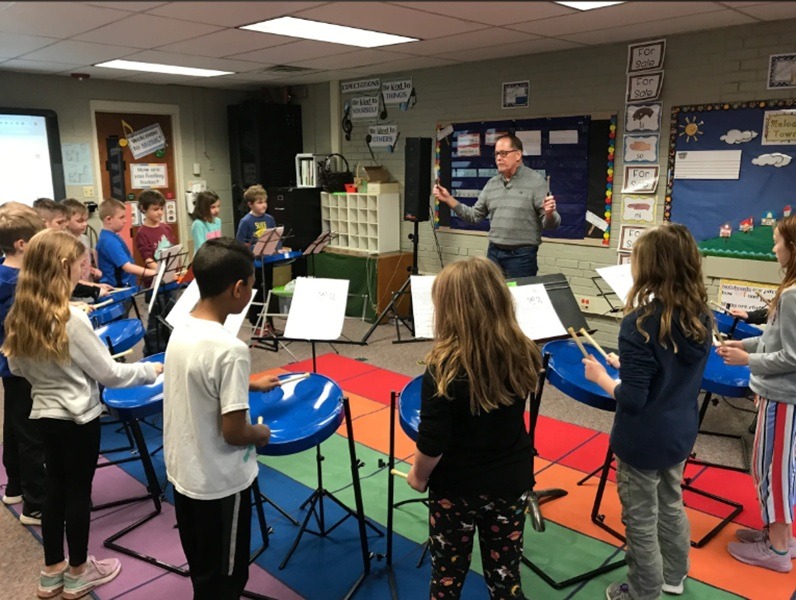
Brad teaching mini pans to grade school students

Tropical Shores Steel Drum Band 

A handicap Brad and all the musicians of the day had to face was the impossibility of finding and repeating a lot of music, since there was still no internet. Therefore, he could only pay attention to what their peers and colleagues were doing at the time to be able to imitate them and learn how to play the steel drums.

When Brad and Linda moved from Phoenix to Kansas, they had to start looking for local musicians who could suit the project they were making and finding places to play, since many people in Kansas were not used to hearing the type of music they played. For this reason, they would start their sets by playing other genres to which the audience was accustomed to, so that they would be more open to their tropical songs.

Tropical Shores Steel Drums and Teaching

In addition to playing, the Tropical Shores Steel Drums Band has a very important component: teaching. Brad decided it was not enough just to learn to play steel drums and many other instruments, but rather had to share his knowledge with others, especially children. They love music and enjoy the challenge of learning to play an instrument they may never have heard before.

He has also taught at the university level. After having taught for a time at Collier County Schools in Naples, he accepted the assistant band director position at Ave Maria University in Florida, where he currently resides with his family. 

Read also: Ray Rodríguez and The Colao Band promote Latin music in San Antonio, Texas

  • « Go to Previous Page
  • Page 1
  • Interim pages omitted …
  • Page 10
  • Page 11
  • Page 12
  • Page 13
  • Page 14
  • Interim pages omitted …
  • Page 246
  • Go to Next Page »

International Salsa Magazine (ISM) is a monthly publication about Salsa activities around the world, that has been publishing since 2007. It is a world network of volunteers coordinated by ISM Magazine. We are working to strengthen all the events by working together.