• Skip to primary navigation
  • Skip to main content

International Salsa Magazine

  • HOME
  • Previous editions
    • 2026
      • ISM / April 2026
      • ISM / March 2026
      • ISM / February 2026
      • ISM / January 2026
    • 2025
      • ISM / December 2025
      • ISM / November 2025
      • ISM / October 2025
      • ISM / September 2025
      • ISM / August 2025
      • ISM / July 2025
      • ISM / June 2025
      • ISM / May2025
      • ISM / April 2025
      • ISM / March 2025
      • ISM / February 2025
      • ISM / January 2025
    • 2024
      • ISM / December 2024
      • ISM / November 2024
      • ISM / October 2024
      • ISM / September 2024
      • ISM / August 2024
      • ISM / July 2024
      • ISM / June 2024
      • ISM / May 2024
      • ISM / April 2024
      • ISM / March 2024
      • ISM / February 2024
      • ISM / January 2024
    • 2023
      • ISM / December 2023
      • ISM / November 2023
      • ISM / October 2023
      • ISM – September 2023
      • ISM – August 2023
      • ISM July 2023
      • ISM Edition June 2023
      • ISM – May 2023
      • ISM April 2023
      • ISM March 2023
      • ISM February 2023
      • ISM January 2023
    • 2022
      • ISM December 2022
      • ISM November 2022
      • ISM October 2022
      • ISM September 2022
      • ISM August 2022
      • ISM July 2022
      • ISM June 2022
      • ISM May 2022
      • ISM February 2022
      • ISM January 2022
    • 2021
      • ISM December 2021
      • ISM November 2021
      • ISM October – 2021
      • ISM September 2021
      • ISM August 2021
      • ISM July 2021
      • ISM May 2021
      • ISM April 2021
      • ISM June 2021
      • ISM March 2021
      • ISM February 2021
      • ISM January 2021
    • 2020
      • ISM December 2020
      • ISM November 2020
      • ISM October 2020
      • ISM September 2020
      • ISM August 2020
      • ISM July 2020
      • ISM June 2020
      • ISM May 2020
      • ISM April 2020
      • ISM March 2020
      • ISM February 2020
      • ISM January 2020
    • 2019
      • ISM December 2019
      • ISM November 2019
      • ISM October 2019
      • ISM Septembre 2019
      • ISM August 2019
      • ISM July 2019
      • ISM June 2019
    • 2016
      • ISM December 2016
  • Spanish
  • Download Salsa App
    • Android
    • Apple

Search Results for: Latin Music

Bailatino & Negramenta

Latin America / Venezuela / Caracas

Bailatino & Negramenta

Bailatino & Negramenta Flyers

This December, Hard Salsa Bar—the go-to spot for themed parties dedicated to spreading, promoting, and enjoying Latin music—invites you to experience an incredible atmosphere in their top-notch facilities.

They have just announced their year-end bash taking place on December 17th. The event features a New Year’s dance hosted by Hard Salsa Bar and Christian Paul Escobar (Splinter), starring two of the best Venezuelan orchestras today: Bailatino and Negramenta. It will be an authentic “mano a mano” (head-to-head) performance featuring their greatest hits.

The night will be soundtracked by DJs Augusto Rafael Felibert Palacios and Jesús Adrán, who will keep the energy high with stellar musical repertoires. It’s a night designed to satisfy true salsa aficionados and keep everyone dancing until dawn. Get ready for a world-class celebration as we gear up to say a grand goodbye to 2016 in the coming days.

This exciting event will take place on the second floor of Posada del Pollo on Panteón Avenue, Caracas. The party kicks off at 8:00 PM and will keep going until 6:00 AM the following morning. For all those attending this great event, guaranteed security will be provided, along with free on-site parking (limited to 50 vehicles).

Bailatino & Negramenta

Starting December 1st, tickets will be priced at 6,000 Bs. Please note that tickets will not be sold at the door, and availability is limited.

Affordable drink prices are guaranteed throughout the night; however, there are certain entry requirements and house rules to keep in mind:

  • Prohibited Items: No weapons, t-shirts, caps, backpacks, or luggage allowed.
  • Age Limit: Must be at least 21 years old with a valid ID (cédula).
  • Dress Code: Semi-formal attire.
  • Seating: Tables cannot be reserved (first-come, first-served).
  • Admission: We reserve the right of admission; disruptive or intoxicated individuals will not be permitted.

“By following these guidelines, we can all enjoy the long-awaited dance that Hard Salsa Bar has put together for the community.”

Hard Salsa Bard
Hard Salsa Bard

For more information or to purchase/reserve your tickets, contact:

  • Phone: (0414) 396-3465 / (0412) 589-5160
  • Email: [email protected]
  • Facebook: @hardsalsabarcaracas
 

Jairo Varela Music, Identity, and Social Narrative

The BE MORE publishing house is proud to announce the release of the new book by journalist and music researcher Robert Téllez M.

The work offers a deep dive into the social and narrative dimensions of the compositions of Jairo Varela, founder of the world-renowned Grupo Niche. It illustrates how his lyrics transcend music to become chronicles that interpret Latin American reality.

More than just a repertoire of songs, Jairo Varela’s legacy serves as a testament to memory and identity, born from his profound Afro-descendant roots. From this perspective, the book develops a discourse analysis that explores the symbols and meanings structuring his lyrics within a historical and social context.

Categorized within the field of ethnomusicology, the literary work proposes a rare perspective in Salsa studies: understanding Jairo Varela as a narrator of social reality.

“Through his lyrics, Jairo Varela challenged indifference, exposing what many preferred to keep silent,” states author Robert Téllez M.

To develop this research, the author brought together an interdisciplinary team of specialists in anthropology, communication, law, education, history, linguistics, music, journalism, and poetry from across Latin America. This diversity shapes a study organized into seven chapters, where symbols, metaphors, and narrative structures within Varela’s songwriting are analyzed and deconstructed.

“With an honesty that never yielded to artifice, Jairo Varela mapped the social landscape of everyday life; he narrated the intimate without betraying the collective, all in an effort to better understand the world,” Téllez notes.

As an innovative feature, the book Jairo Varela: Music, Identity, and Social Narrative incorporates QR codes that lead directly to Maestro Varela’s compositions. Each code allows the reader to use their mobile device to access the songs analyzed via Grupo Niche’s profile on Spotify, enhancing the connection between the written word and musical creation.

The publication also includes a prologue by writer Bella Martínez, illustrations by Frank Rosado, and photographs from the Varela family archive—elements that provide essential context to the composer’s creative universe.

Jairo Varela: Music, Identity, and Social Narrative is now available to the public on Amazon, with worldwide shipping.

The Book: Jairo Varela. Music, Identity, and Social Narrative

Jairo Varela (1949–2012)

Varela was the creator and founder of the iconic Grupo Niche and one of the most influential figures in Colombian Salsa. It was Jairo Varela who built the prestige of this orchestra through his artistic vision and his talent as a composer and director. With those five letters Niche Varela changed the course of Salsa made in Colombia, elevating it to a level of international respect.

Jairo Varela. Música, Identidad y Narrativa Social

Throughout his musical career, Jairo Varela wrote hundreds of songs and produced dozens of albums for his group. His compositions including “Cali Pachanguero” (recognized by Billboard magazine as one of the 50 most important songs in the history of Latin music), “Buenaventura y Caney,” “Mi pueblo natal,” “Ana Milé,” “Un caso social,” and “Han cogido la cosa” have traveled the world and become classics. In his lyrics, Varela portrayed everyday Latin American stories and the identity of Afro-descendant communities.

When Grupo Niche’s music plays, there is something for every listener. Behind that diversity lies the creative intuition of Jairo Varela, a composer who knew how to turn local stories into universal emotions. For this reason, from its beginnings in the late seventies to its international acclaim, the group has brought the rhythmic power, joy, and character of its culture to stages worldwide.

About the Author

Robert Téllez M. is a social communicator, radio and TV broadcaster, and producer with over 20 years of experience. He is an accomplished interviewer, journalist, and music researcher.

His analyses and reflections have been published in outlets such as Revista Semana, El Espectador, El Tiempo, El País, La República, and Agencia EFE, among others. He has also contributed to the scientific journal Nómadas of the Universidad Central de Colombia.

Robert Téllez is also the author of Ray Barretto: Giant Force (2016), whose English translation won a silver medal for Best Translation (Spanish to English) at the 2021 International Latino Book Awards.

In 2019, he presented the authorized biography Willie Rosario: The King of Rhythm, with a second edition released in 2024. He served as a judge for the annual international minimalist poetry contest for the anthology titled Siglema 575: Say What You Want to Say (2024).

As a result of his extensive research, Robert Téllez serves as a consultant and lecturer on topics related to the appreciation of Salsa music.

Press Contact: [email protected]


Roberto Tellez

Also Read: Willie Rosario, El Rey del ritmo by journalist and music researcher Robert Téllez M.

Puerto Rican bandleader and musician Diana Sosa talks about her many projects in Nashville, Tennessee

We had a wonderful and very nice conversation with Puerto Rican percussionist, timbalera, conga player, and cuatro player Diana Sosa, who kindly told us about all the projects she has in the pipeline. Her husband and bandmate, guitarist and vocalist Chuck Nelson, put us in touch with her so we could learn more about both the project they share and the one she has undertaken on her own.

Then these are the things the talented Puerto Rican shared with us on this warm Sunday before Easter.

Diana Sosa is playing
Diana Sosa is posing for the camera while playing the timbales

How Diana got into the world of music

Diana was born and raised in Puerto Rico, where she began to love music and play, but not professionally yet. She was just experimenting with some traditional instruments of her homeland, such as the Puerto Rican cuatro, which she even studied with a private teacher. 

At the age of 39, she moved to Nashville, Tennessee, where she finally got her first big opportunities in music, and the background she brought for years helped her a lot. It all started with a short rehearsal she was invited to, and from there, she has done nothing but prove what she is really made of. 

Of course, she keeps studying and preparing to improve every day. When she is not learning to play with fellow musicians like John Santos, she is taking online courses to solve any doubts she may have.

Diana’s first opportunity with The Bicho Brothers

The first serious group that gave Diana the opportunity to develop professionally—and with which she keeps to playing to this day is The Bicho Brothers, a classic rock band whose members really appreciated the contribution provided by Diana. For this reason, it is she who brings that Latin flavor, the product of her heritage and years of training in these genres.

Something that really attracted the audience was that she was the only woman in the group and, incidentally, she played the timbales, which was uncommon back then. In addition, she added atypical sounds to certain well-known songs, which was also remarkable.

Diana Sosa and the rest of the Bicho Brothers
The Bicho Brothers from left to right: Jeff Krinks (guitar and vocals), Ron Krasinski (drums), Diana Sosa (timbales, congas, percussion, and Puerto Rican cuatro), Chuck Nelson (guitar and vocals), and Kenny Zarider (keyboards and vocals)

Another important personality who encouraged her to follow this route was the great producer Bill Cuomo, who told her she was very good at playing but needed to improve her technique. Twenty years later, it can be said that she took him at his Word seeing all she has achieved since then. From that point on, there have been many other projects and opportunities that make her very happy and keep her fulfilled.

Soul Sacrifice

Soul Sacrifice is a Santana tribute band founded in 1969 that has won a high reputation in Nashville by becoming one of the best tributes to Santana to date. The mix of familiar melodies and infectious rhythms they play at every show transports audiences to the biggest classics of the legendary Latin rock group created by Carlos Santana.

The band also includes some of the same members of The Bicho Brothers, such as the cases of Diana and Chuck due to all the years they have spent playing together, but including Cuban musician John Santos. He plays a fundamental role in making people feel they are listening to the original Santana rather than an imitation, which is why both he and Diana are key to the band’s performance.

Diana Sosa with Diana's Mambo Maniacs
Diana Sosa playing with Diana’s Mambo Maniacs

Diana’s Mambo Maniacs

Diana also has her own project, which she decided to call Diana’s Mambo Manics. This Latin music group was founded in the early summer of 2025 as part of Hispanic Heritage Month. In that time of year, there are always many festivals dedicated to Hispanic and Latin music in the United States and around the world, so Diana and a group of musicians she had been in contact with for some time took the opportunity to play wherever they were able to make themselves known.

Among some of the musicians in the band we can mention John Santos as singer and timbalero, whose presence is essential at every show. The group also includes conga player Josvany Cordero, bassist Isoel Villareal, pianist Kenny Zarider, trumpeter Joe Mercado, and trombonist Huge Lindsay.

The main difference between this band, The Bicho Brothers and Soul Sacrifice is that it plays exclusively Latin music, but of the great artists in the 1950s and 1960s who performed at the Palladium Ballroom, the Copacabana, El Corso, Chez José & 3 and 1, among many others. Diana feels that, to a certain extent, she pays tribute to her parents, who used to go dancing and enjoying these rhythms to some of these places in their youth.

However, not all are covers. She is about to release an original song featuring Puerto Rican cuatro player Prodigio Claudio, but she did not have the details to share with us yet.

Diana and Tito Puente Jr.
Diana Sosa Playing with Tito Puente Jr.

Read also: Bandleader and bongosero Ray Degaldo is here to talk about his life and career

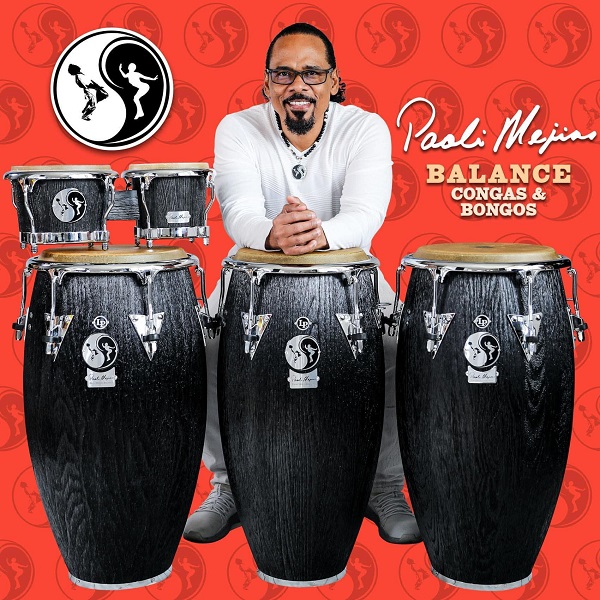
Paoli Mejías A Talent Forged in the Streets and Discipline with a New Sound in Latin Jazz

From legendary sideman to the leader of a limitless musical vanguard.

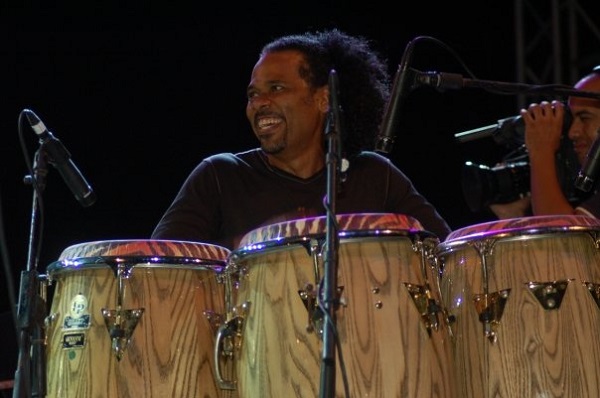
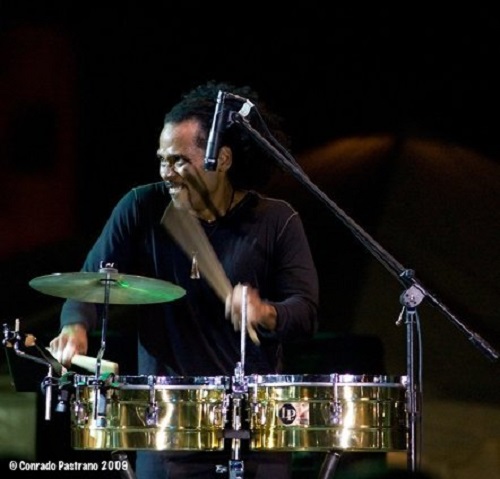
Paoli Mejías is a pivotal figure in the evolution of contemporary percussion, renowned for his seamless fusion of Latin jazz with masterful conga technique.

Paoli Mejias: From accompanying legends to leading a musical vanguard without borders

Paoli Mejias: From accompanying legends to leading a musical vanguard without borders

While he is an exceptional multi-percussionist, his command of the congas has established him as one of the most in-demand soloists in the world.

He is distinguished by a melodic style; he doesn’t just keep time he makes the drums “sing,” utilizing precise tuning and astonishing speed.

After touring the globe alongside icons such as Eddie Palmieri, Tito Puente, Seis del Solar, Chick Corea, and Marc Anthony, Mejías has solidified his status as an international benchmark. His vast musical, folkloric, and cultural knowledge positions him today not only as a percussion virtuoso but as a visionary leading his own quintet.

With a career marked by success, Mejías has produced three high-caliber independent albums: Mi Tambor (2004), which received a Latin Grammy nomination, Transcend (2006), and Jazzambia (2008).

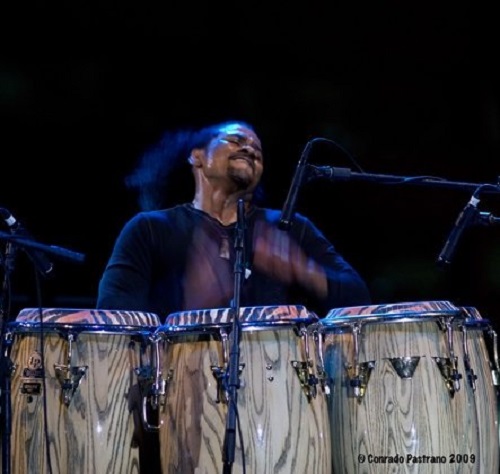
Paoli Mejías, a talent forged in the streets and through discipline

Paoli Mejías, a talent forged in the streets and through discipline

These works have placed the Puerto Rican percussionist at the forefront of the genre, earning glowing reviews in the world’s most influential publications, including JazzTimes, DownBeat, Jazziz, and Modern Drummer.

A Talent Forged in the Streets and Discipline

Born in Río Piedras, Puerto Rico, on March 7, 1970, Paoli discovered his calling at the age of twelve. Inspired by the records of Carlos “Patato” Valdés and Ray Barretto, and the innovation of groups like Batacumbele and Irakere, he bought his first conga and began a self-taught journey.

Without formal teachers, he learned the language of percussion by mimicking the sounds emanating from his favorite vinyl records.

Paoli Mejía with Nuevo Sonido en el Jazz Latino

Paoli Mejía with Nuevo Sonido en el Jazz Latino

His true training took place in the effervescent musical atmosphere of San Juan, absorbing the styles of his mentors in street rumbas.

His professional debut came via Rafú Wagner (former vocalist for Bobby Valentín), and while still a teenager, he was already collaborating with renowned local artists such as José Nogueras, Glenn Monroig, and Charlie Sepúlveda.

The Leap to the Global Stage

His impeccable technique and melodic sensitivity quickly made him the preferred sideman for the greats. For over eight years, he was a key member of maestro Eddie Palmieri’s orchestra, recording on historic projects like Masterpiece/Obra Maestra (with Tito Puente), which won a Grammy Award.

Paoli Mejías is a fundamental figure when discussing the evolution of contemporary percussion

His discography now exceeds 20 commercial productions, including the nominated Acuarela de Tambores.

This exposure to world music enriched his creative fire. As Elmer González noted in Latin Beat: “Through Mi Tambor, Paoli achieves a watercolor of rhythms and textures that make this album one of the best Afro-Latin jazz productions released as a leader, and he aspires to continue a career forged on the stages of the world’s most important festivals.”

Beyond the Traditional Genre

Today, Paoli Mejías’ group offers a style that transcends labels. His proposal fuses the “Salsa Gorda” of the big orchestras with Puerto Rican bomba and plena, incorporating nuances of Greek, Flamenco, Indian, and African music. The result is a vibrant experience where the audience ceases to be spectators and becomes participants.

His versatility was cemented at the Heineken Jazz Festival, where critics highlighted his absolute mastery of minor percussion, timbales, bongos, and ethnic instruments like the Nigerian Udu, hailing him as one of the most complete percussionists of our time.

Paoli was there: Eddie Palmieri, Tito Puente, Seis del Solar, Chick Corea and Marc Anthony

Paoli was there: Eddie Palmieri, Tito Puente, Seis del Solar, Chick Corea and Marc Anthony

Beyond his role as a performer, the “Maestro” shares his knowledge by conducting clinics at prestigious institutions such as the University of Washington, the University of New Mexico, and the Puerto Rico Conservatory of Music.

Sponsored by leading brands like Latin Percussion and Sabian, Paoli Mejías continues to elevate the legacy of Latin jazz into exciting new dimensions.

Member of Santana

Paoli Mejías is a world-renowned percussionist who was a member of the band Santana, led by Carlos Santana.

Joining Santana: Paoli joined the group in 2013, taking over the conga chair. His arrival brought an impressive technical energy and rhythmic depth, establishing him as a fundamental piece of the band’s world tours for several years.

Source: Paoli Mejías

Photos: Paoli Mejías Archives / © Martin Cohen

Also Read: Carlos “Patato” Valdés: One of the Greatest Percussionists in Latin Jazz History

Latin America / April 2026

José Mangual - BuyúElpidio Vázquez LauzuricaRalph MercadoPaoli Mejías 04 2026Manolito Rodríguez DebutsJairo Varela

April 2026 – Festivals

Cuba circular flag
CUBA

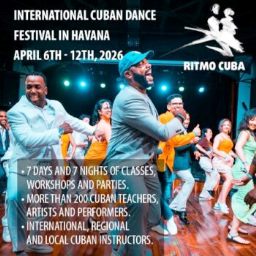
Dance Festival in Cuba 2026

International
Cuban Dance Festival

Apr 6 / 12, 2026

Hotel Nacional de Cuba
Calle 21 y O, Vedado, Plaza La Habana 10400
La Hanana, Cuba

€ 536

Bella MartinezCalibrated maracas

DIRECTORY OF NIGHTCLUBS

Argentina flag
ARGENTINA

Aruba circular flag
ARUBA

Belize circular flag
BELIZE

Bolivia circular flag
BOLIVIA

Brazil flag
BRAZIL

Chile circular flag
CHILE

Colombia
COLOMBIA

Costa Rica circular flag
COSTA RICA

Cuba circular flag
CUBA

Dominican Republic
DOMINICAN REPUBLIC

Ecuador circular flag
ECUADOR

Guatenala circular flag
GUATEMALA

Mexico Circular flag
MEXICO

Panama circular flag
PANAMA

Peru circular flag
PERU

Puerto Rico circular flag
PUERTO RICO

Venezuela circular flag
VENEZUELA


  • « Go to Previous Page
  • Page 1
  • Interim pages omitted …
  • Page 12
  • Page 13
  • Page 14
  • Page 15
  • Page 16
  • Interim pages omitted …
  • Page 246
  • Go to Next Page »

International Salsa Magazine (ISM) is a monthly publication about Salsa activities around the world, that has been publishing since 2007. It is a world network of volunteers coordinated by ISM Magazine. We are working to strengthen all the events by working together.