• Skip to primary navigation
  • Skip to main content

International Salsa Magazine

  • HOME
  • Previous editions
    • 2026
      • ISM / April 2026
      • ISM / March 2026
      • ISM / February 2026
      • ISM / January 2026
    • 2025
      • ISM / December 2025
      • ISM / November 2025
      • ISM / October 2025
      • ISM / September 2025
      • ISM / August 2025
      • ISM / July 2025
      • ISM / June 2025
      • ISM / May2025
      • ISM / April 2025
      • ISM / March 2025
      • ISM / February 2025
      • ISM / January 2025
    • 2024
      • ISM / December 2024
      • ISM / November 2024
      • ISM / October 2024
      • ISM / September 2024
      • ISM / August 2024
      • ISM / July 2024
      • ISM / June 2024
      • ISM / May 2024
      • ISM / April 2024
      • ISM / March 2024
      • ISM / February 2024
      • ISM / January 2024
    • 2023
      • ISM / December 2023
      • ISM / November 2023
      • ISM / October 2023
      • ISM – September 2023
      • ISM – August 2023
      • ISM July 2023
      • ISM Edition June 2023
      • ISM – May 2023
      • ISM April 2023
      • ISM March 2023
      • ISM February 2023
      • ISM January 2023
    • 2022
      • ISM December 2022
      • ISM November 2022
      • ISM October 2022
      • ISM September 2022
      • ISM August 2022
      • ISM July 2022
      • ISM June 2022
      • ISM May 2022
      • ISM February 2022
      • ISM January 2022
    • 2021
      • ISM December 2021
      • ISM November 2021
      • ISM October – 2021
      • ISM September 2021
      • ISM August 2021
      • ISM July 2021
      • ISM May 2021
      • ISM April 2021
      • ISM June 2021
      • ISM March 2021
      • ISM February 2021
      • ISM January 2021
    • 2020
      • ISM December 2020
      • ISM November 2020
      • ISM October 2020
      • ISM September 2020
      • ISM August 2020
      • ISM July 2020
      • ISM June 2020
      • ISM May 2020
      • ISM April 2020
      • ISM March 2020
      • ISM February 2020
      • ISM January 2020
    • 2019
      • ISM December 2019
      • ISM November 2019
      • ISM October 2019
      • ISM Septembre 2019
      • ISM August 2019
      • ISM July 2019
      • ISM June 2019
  • Spanish
  • Download Salsa App
    • Android
    • Apple

Search Results for: Latin Tribute

Argenis Carruyo is known in the music scene as “El Volcán de América” (The Volcano of America) due to the power of his voice

Carruyo He was born in Maracaibo on August 22, 1953 at the Chiquinquira Hospital in Maracaibo, located in the same sector where he grew up.

Argenis Carruyo he had the good fortune of being a neighbor of Los Blanco, who 12 years after his birth hired him as an instrument picker, an experience that served to awaken in him the love for music, a feeling that was nurtured when he discovered in him an unmistakable talent to make singing his life support.

“The Volcano of America” because the power of his voice makes the senses of those who have the opportunity to listen to him rumble; so sings Argenis Carruyo, from Zulia, who from a very young age began to demonstrate the vocal quality that characterizes him.

Argenis Carruyo is known in the music scene as "El Volcán de América" (The Volcano of America) due to the power of his voice
Argenis Carruyo is known in the music scene as “El Volcán de América” (The Volcano of America) due to the power of his voice

He has stood out as an interpreter of the gaita zuliana and during the 1970s and 1980s belonged to the Dimensión Latina.

The 80’s was a very busy decade for this multifaceted character; he sang with Orlando y su Combo, and did a duet with Ender Carruyo in the orchestra “Los Hermanos Carruyo” and then again with the Super Combo Los Tropicales, until 1985 when he decided to found his own group called “Argenis Carruyo y su Orquesta”.

He began his musical career with the youth group Los Larkings. Later, he was part of Los Juglares and Los Casinos.

In 1973, he joined the ranks of Súper Combo Los Tropicales and in 1977 he was recruited by Dimensión Latina, with whom he sang until 1981. Later he joined the group Los Melódicos.

During the 1980s he had an intense artistic activity in which he sang with Orlando y su Combo, duetted with Ender Carruyo in the orchestra Los Hermanos Carruyo, worked again with the Súper Combo Los Tropicales and, in 1985, formed his own group: Argenis Carruyo y su Orquesta.

Argenis Carruyo and his Orchestra

Sabor a Gaita:

Apart from his work with rhythms such as guaracha and salsa, Carruyo has also performed the gaita zuliana.

The Volcano of America has not only stood out among the great interpreters of the Caribbean for playing rhythms such as the guaracha, he has also honored his land by making famous great gaita compositions.

During his time in the genre he worked with groups such as El Número Uno, Rincón Morales, Guaco, Los Morillo and Gaiteros de Pillopo.

He owes part of his fame to the gaita, because the Zulian melody accompanied him on stages and still accompanies him in his veins as it does to anyone who appreciates being a worthy Maracaibero.

During his artistic life he has received numerous recognitions, as well as the publication of a book with his biography.

In 1975 he won the Festival de Cantantes y Compositores Zulianos and has received the Mara de Oro (1993, 1994, 1995) and Gran Cacique de Oro awards as best singer, the Gran Aguila de Venezuela as best singer and dance orchestra (1995, 1996, 1997, 1998, 1999, 2001), and the Catatumbo de Oro as best popular singer (1993) among others.
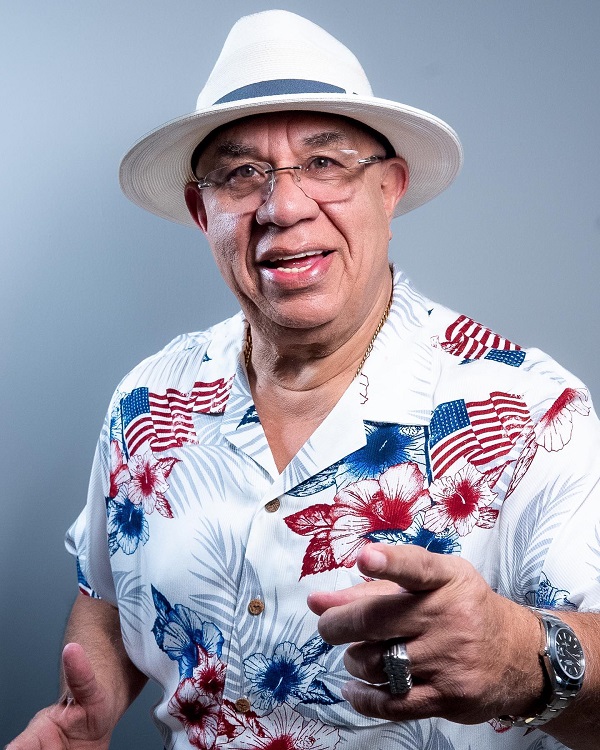
"The Volcano of America"
“The Volcano of America”

His orchestra received the Orden Ciudad de Maracaibo in its first class as best dance group.

He has performed in the most important nightclubs in Maracaibo, the country and abroad, alternating with the most recognized figures of the song, which is why he is considered one of the most genuine interpreters of tropical Caribbean genres in the Zulian region, such as salsa, guaracha, cumbia, merengue and bolero.

With a prolific career of more than twenty-five years that has served to demonstrate his talents as a vocalist and his own characteristic style, which gives him his most authentic identity.

Argenis Carruyo, with pride from Maracaibo, proclaims that he owes to Zulia the success and fortune that always accompanied him since he discovered the enormous talent he carried in his blood, his homeland became his main fan, to Maracaibo he owes his life and to its inhabitants the affection and the memory that will always keep him alive through his songs.

For 2023 Argenis was specially invited to participate in the excellent group Quintero’s Salsa Project – Tributo A La Dimension Latina directed by New York based percussionists Luisito Quintero and Robert Quintero.

Luisito Quintero grew up in the Latin and African percussion tradition. His father is as percussive as his uncle Carlos Nene Quintero and cousin Roberto Quintero. He became a member of the Venezuelan Symphony Orchestra, but soon joined ensembles such as Grupo Guaco and El Trabuco Venezolano and toured with Oscar D’León.

He then moved to New York, where he met Latin jazz musicians like Willie Colon, Eddie Palmieri, Tito Puente and Celia Cruz worked. He then turned to the fusion of jazz, funk, salsa and African music and played with George Benson, Herbie Hancock, Ravi Coltrane and Toshiko Akiyoshi, but also with pop musicians such as Gloria Estefan and Marc Anthony. Louie Vega produced his first album with him.

Quintero’s Salsa Project – Tribute To The Latin Dimension

Tracks: Ya Tu Lo Véras; Sin Tu Cariño; Cara de Guabina; Sigue Tu Camino; Irimo; Dulce Cantar; De Quintero a Dimensión; Ahi Nama; Te Conocí; Parampampam; Arroz Con Manteca; Frutas del Caney.

Musicians: Argenis Carruyo; Jimmy Bosch; Marcial Istúriz; Roberto Quintero, Luisito Quintero.

Record labels in which Argenis Carruyo has participated.

Top-Hit (TH), Maracaibo Record’s, Argenis Carruyo, Discos VRZ, SonoVen Records, L. G. Record’s C. A; iMusician | EDGARSARMIENTO, Palacio, among others.

Argenis Carruyo y Dj. Augusto Felibertt

Sources:

La Buena Musica: Argenis Carruyo

La Salsa es mi vida: Quintero´s Salsa Project – Tributo A La Dimension Latina

Also Read: Víctor Porfirio Baloa Díaz, more commonly known as Porfi Baloa
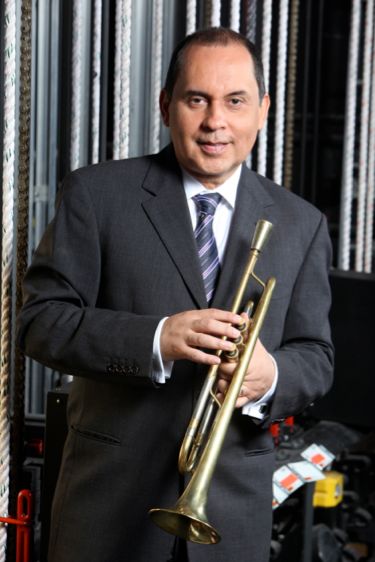
Humberto Ramírez

Latin America/ Puerto Rico / San Juan

Humberto Ramírez one of the most innovative musicians on the Island of Enchantment Puerto Rico

Recognized as one of the most innovative musicians of his generation, Humberto Ramírez grew up in a home where the music of Miles Davis, Thelonious Monk, John Coltrane, Lee Morgan, Tito Puente, Tito Rodríguez, Cal Tjader and Machito was heard.

His father, who is a saxophonist and conductor, was the one who inspired him to play the flugelhorn at age 11.

By the age of 14, Humberto was performing professionally with his father’s orchestra and at the same time taking orchestration courses with bassist Inocencio “Chencho” Rivera.

Humberto Ramírez
Humberto Ramírez

At the age of 18, after graduating from the Escuela Libre de Música de San Juan, his interest in composing and arranging music motivated him to enroll at Berklee College of Music in Boston, Massachusetts where he obtained his bachelor’s degree in music, then studied composition and orchestration for film and television at the Dick Grove School of Music in Los Angeles, California.

In 1985, and for a period of four years, Humberto worked with the Willie Rosario orchestra, one of the most popular bands in Puerto Rico.

In 1989 he became the musical director of Tony Vega.

His admirable ability as a producer and arranger led him to make important collaborations with great figures in music.

In 1999 he took over the musical direction of merengue and tropical music star Olga Tañón.

His work as a producer, arranger, composer and director for tropical music artists such as Willie Colón, Gilberto Santa Rosa, Marc Anthony, India, Domingo Quiñones, Lourdes Robles, Rubén Blades, Brenda K. Starr, Tito Nieves, Víctor Manuelle and others , has established him as one of the busiest arrangers and producers in the industry.

He has also had the responsibility of directing the concerts of important exponents of reggaeton such as Daddy Yankee, Tito El Bambino and Zion, which undeniably demonstrates his broad musical mastery in various genres.

His great dream was always to develop a career in Jazz. In 1992, Humberto Ramírez debuted as group leader in his first production for the Tropijazz label entitled “Jazz Project”.

Since then he has shared the stage with important jazz musicians such as Freddie Hubbard, Justo Almario, Alex Acuña, Chick Corea, McCoy Tyner, Gonzalo Rubalcaba, Tito Puente, Hilton Ruiz, Michel Camilo, Herbie Hancock, Eddie Gómez, Michael Brecker, Paquito D ‘Rivera, Chucho Valdés, Ray Santos, Gato Barbieri, Terence Blanchard and Herb Alpert, with whom he recorded the album “Passion Dance”.

His music has received rave reviews from prestigious publications such as Down Beat, Jazz Times, Jazziz, Latin Beat, CD Review, Hispanic Magazine, New York Daily News, The Plain Dealer, Miami Herald, The Boston Globe, and Austin Chronicle.

From the launch of his first record proposal, Humberto Ramírez has established himself as the most important exponent and promoter of Jazz in Puerto Rico.

He has recorded 26 albums in which he has experimented with all kinds of formats: duets, trios, quartets, quintets, sextets, octets and “Big Bands”.

His collaborations with the group Rumbantela and with the queen of filin, Lucy Fabery have received great praise from specialized critics. In 2005 he founded his own record label, Nilpo Music and last year he began to present his own Jazz festival: Puerto Rico Jazz Jam, marking a new stage in his musical career.

This year 2011 celebrates its 20 years cultivating the difficult expression of Jazz, a career that began with its debut as a leader in the first edition of the Puerto Rico Heineken Jazz Fest in June 1991. This year 2016 celebrates its 25 years.

Humberto Ramírez has received 4 Grammy Award nominations as a producer. His first nomination was for the album “Nueva Cosecha” by Willie Rosario in 1985, then for “Hecho en Puerto Rico” by Willie Colón in 1993, “Tony Vega” in 1996 and “Olga Viva, Viva Olga” by Olga Tañón, which earned him the Grammy Award in 2000.

In 2013 he was nominated for a Latin Grammy for his album Sentimentales with Lucy Fabery.

Among the awards he has received are 6 Platinum records, 12 Gold records, 4 “Visionary Awards” and six “Tu Música” awards. He has received tributes from Ohio State Representative Dennis J. Kucinich and from the Senate of Puerto Rico.

In 1997 he had the honor of entertaining the inauguration of the President of the United States, Bill Clinton in Washington, D.C. In October 2009 he was invited to play at the White House for President Barack Obama.

After having received several awards and nominations, as well as having recorded his own record successes, Humberto Ramírez shows that his creative explosion is still in its infancy.

https://www.humbertoramirez.com/#home-section

https://www.facebook.com/Humberto-Ram%C3%ADrez-Jazz-Project-110525453672/

José Madera Niño & his 3rd his World

Latin América / Venezuela / Caracas

José Madera Niño “The records and the radio were my first teachers”

Soon he will premiere his second production entitled Matices, with the promotional song Canta Sonero.

José Madera Niño
José Madera Niño

A creator, a great human being, this is José Madera Niño, this Colombian-Venezuelan musician, self-taught, percussionist, composer and plastic artist; who after participating in different groups decides to form his own Orchestra, José Madera Niño & 3er Mundo, assures that his passion for music began when he was very young, following the example of his father, uncle and his older brothers, defines his songs as “simple and diaphanous”. He confesses that our salsa genre, “needs to feed on new things, unpublished songs, in short, proposals, and that the music lover is the one who decides if it is good or not”; As the chorus of one of their songs says, let them be the ones to speak and express their emotions.


His first record production De amor, desamor y rumba, contains 8 songs, of which 6 are his own, with the participation of leading Venezuelan musicians; in this work he presents us with an innovative style, where he sings to love, to spite and invites us to dance to the rhythm of the conga that is in fashion. In each composition, everyday life is reflected, the adventures and misadventures that music lovers make their own, a work made of guava trees and poetic joys.

Soon he will launch his second record production with a very striking name; Nuances, something that in his words “makes him very happy”, where there is no doubt, his gift as an artist will be present and a motley of musicians with a great career who will put the final touch on his new production.


How did you start in music?


“I remember that at the age of seven, I was drawing a lot, on paper, on the walls and on whatever came my way. My older brothers already showed an interest in music, so instruments began to arrive at the house. While I drew they practiced and when they went to school I took possession of a drum and a radio, I tried to accompany all the rhythms I heard on the stations”.

Was your training professional or are you a self-taught musician?


“Autodidact. I entered the school of plastic arts, to study drawing and painting, at the age of fourteen. There I saw nine subjects, also I started at the high school where I saw nine more subjects, so there was no space to study music. I listened to a lot, yes. Records and the radio were my first teachers”.


Tell us about your experience with Orlando Poleo?


“In a self-taught way, almost without realizing it, I began to play with different groups and orchestras, I was already in trouble, so on the fly, I decided to take theory and solfeggio classes at the headquarters of the Musical Association. On a Caracas night I was playing with La Orquesta Ideal and there I met Williams Hernández -Percussionist and manufacturer of Latin percussion instruments-. It was he who recommended that I attend the workshop in Sarria where the teacher Orlando Poleo taught. The experience there at the beginning was a bit traumatic because although I already had time playing congas, I didn’t have the ideal technique. I had to get rid of what I learned on my own and put new ways into practice. It was not easy but I am very grateful to have passed through the school of Grand Master Poleo”.


Where does your musical vein and passion for painting come from?


“My father was a bolero singer back in his native Colombia, my uncle was a guitarist. That’s where the taste for music comes from.”


What motivated you to make your first production, in a market so Competitive and often poorly supported by the media?


“I was motivated by a passion for music and by that need to contribute at least one point of view, a way of doing things. For example, I think that this genre that we love, called Salsa, needs to feed on new things, unpublished songs, in short, proposals and that it is the music lover who decides if it is good or not”.


What is the reason for the name of the group; 3rd world?


“That’s where we are, that’s where we come from. This is how they classified the countries of our region and we assumed them without complexes or pride. I think it’s just a title that doesn’t detract from our ability to do great things. Baptizing the band with that name was an act of rebellion, it shows a little that despite many limitations we are capable of making quality music”.


Why the name De Amor, Desamor y Rumba?


“There were many hours of recording, then editing, then came the art of the album and when we were already finalizing details, a doubt assailed me, I thought: Isn’t the selection going to be very rockolera? I started to review the production and I realized that it was balanced. We sing to spiteful love and I think it’s very danceable. From there the title was born: “Of love, lack of love and rumba”.


What inspired you to write 6 songs of your first production?


“The need to do unpublished things, on the other hand I didn’t know so many composers who wanted to risk their songs in a novel production. The language of my songs is simple and diaphanous”.


Which of the themes do you identify with, and why?


I like them all.


How would you define the 3rd world style and how do you get there?


“It’s just Salsa, without a “surname”, as it was before. It’s not erotic Salsa or hard Salsa or Nothing Salsa… Just dance music”.


Any relationship with the percussionist José Madera -the one from Tito Puente-?


“Only immense admiration for his work and the fact that like him I play percussion and have the same first and last name.”


Have you ever been interested in another musical style?


“I listen to almost everything and in my career I have had the opportunity to play other popular music rhythms such as merengue, cumbia, vallenato.”


An artist you admire?


“There are many whom I admire, it would be unfair to name just one.”


What inspires you to write a song about love or heartbreak?


“Both, in addition to the simple, everyday things.”


Define yourself in one sentence?


Creator


How does the soul see through painting or music?


The soul sees and manifests itself in the purest and most honest way through art. Call it painting, music or another related manifestation.


Tell us about your 2nd production, who participates in it?


This is something that makes me very happy because we are giving the last brushstrokes, soon, very soon my dear friends will know about this work. There are many guests.


Why nuances?


Precisely because of the variety of its guests.

“Trayectoria de Clásicos” – Johnny Cruz and Adalberto Santiago

North America / United State / New York

Johnny Cruz releases his new Salsa album “Trayectoria de Clásicos” with Adalberto Santiago to the musical arena

The famous Timbalero and musical producer presents a CD tribute to all the Puerto Rico and the world’s Soneros, along with one of the most privileged voices of Latin music and Fania All-Stars’ vocal ex-leader: Adalberto Santiago.

"Trayectoria de Clásicos" - Johnny Cruz and Adalberto Santiago
“Trayectoria de Clásicos” – Johnny Cruz and Adalberto Santiago

Johnny Cruz “El Señor del Timbal” launches his second historical compilation “Trayectoria de Clásicos” directed to all the Salseros lovers of the whole world, which can relive in a single album ten great classics of this tropical genre in the interpretation of the vocal versatility most famous of six decades, Adalberto Santiago.

This four-years recording album involved more than 20 Latin music personalities, including: Jason Villamar, Louis Perieda and the special guest: Richi Ray (Piano), Rubén Rodríguez and Freddy Rivera (Bass), Johnny Rodríguez, Pedro Segundo and Luisito Rodríguez (Bongos), Eddie Montalvo and Erick Vélez (Congas), Jerry Rivas and Luisito Rodríguez (Three), Nelson Jaime Gazu (Trumpet), Johnny Cruz (Timbales), Moisés Noguera (Trombones), Freddy Miranda (Baritone), Jerry Rivas, Adalberto Santiago and Frankie Vásquez in the choirs and Adalberto Santiago as Leader Vocal.

Each track of this Salsa flagship CD was chosen with special attention for being emblems of the salsa movement of the 60s, 70s, and 80s popularized by great artists and orchestras, such as: Fania All-Stars, El Gran Combo de Puerto Rico, Cheo Feliciano, Tommy Olivencia, Adalberto Santiago, and Justo Betancourt.

Johnny Cruz and Adalberto Santiago

“Trayectoria de Clásicos” comes with the differentiating touch of musical arrangements of extreme sonority concerning their original compositions. “Anacaona” (1971) by Cheo Feliciano with the Fania All-Stars, “El Swing” (1965) and “Un Verano en New York” (1975) by El Gran Combo de Puerto Rico and “Hipocresía”, the work of the Cuban master: Adalberto Álvarez are interpreted by the legendary vocalist Adalberto, who at 82 years of age keeps his voice intact and dominates a wide range of tones. This former member of the Chuíto Vélez orchestra, Ray Barretto, Típica 73 and Los Kimbos has one of the most prominent careers in the music industry, which has allowed him to share stage and recording with almost all the world-famous Salseros.

In this Salsa compilation, the New Yorker Cruz, also included the six singles: “Planté Bandera” (1975) whose original composition is Tommy Olivencia, “No hago más Na” (1973) belonging to El Gran Combo de Puerto Rico, “Pa’ Bravo Yo” (1972) by Justo Betancourt, and “Imposible ha de Ser” (1977), “Más Sabroso” (1985) and “Mañoño” (1973) with Típica 73 by Adalberto Santiago.

Undeniably, it’s an album that was worth every year of waiting. “Trayectoria de Clásicos” is of incomparable quality and a super Salsera production highly recommended.

Waiting for the big concert in the city of New York for all lovers of the genre this year!

Release: 2019

Label: Cruz Music Inc.

“Salsa music means everything to me. It’s a passion that goes hand in hand with my culture and roots… I have been playing it for 40 years as a musician and love it dearly”. Johnny Cruz

Johnny  Cruz “El señor del Timbal”

The New Yorker musician, CEO, businessman, audio engineer, producer and broadcaster of radio and television, Johnny Cruz since 20 years ago has had one of the most important programs of the five counties of the city of New York dedicated to Salsa, “The Johnny Cruz Show”. This program seeks to enhance the genre, raise awareness and make a difference to what has already been established with interviews with Salsa Mainstays and emerging artists. “The Johnny Cruz Show” ​​is already part of the New York Latino culture and you can enjoy it on public access television every Saturday from 3:30 PM to 4:30 PM and also through www.mnn.org  and https://www.youtube.com/channel/UCNT-nQee0t_uiDvUGlyh5dA

Johnny Cruz
Johnny Cruz

Likewise, Cruz is also the host of the digital radio program “Galería de la Salsa” dedicated entirely to this tropical rhythm, concentrating on the biggest hits of all times and salsa styles, as well as presenting outstanding live interviews. “Galería de la Salsa” is broadcasted all over the world online at www.miradio.fm.us

This humble, sincere, and successful multifaceted artist told us that among his plans are to make great concerts in his hometown and the rest of the world.

“My legacy rests on what I have created like the SPAHA Salsa Gallery, my radio show, my TV show and all of my musical productions. I hope future generations look at my work here and are inspired to continue the Salsa tradition”. Johnny Cruz

Johnny Cruz Timbal: https://www.facebook.com/profile.php?id=100028301633677

Adalberto Santiago:

https://www.facebook.com/adalberto.santiago.1401

Balazo Destacado:

Johnny Cruz releases his new Salsa album “Trayectoria de Clásicos” with Adalberto Santiago

Eduardo Paim: The Father of Kizomba

Eduardo Paim
Eduardo Paim

Eduardo Paim, the creator of the musical genre called Kizomba, is well-cherished in the Latin Dance community for being one of the most influential musicians in Latin music history. He is internationally renowned as the godfather of Kizomba music.

Born in Angola in the 1980s, Kizomba music is a blend of Kilapanga, Semba, and Angolan Merengue. Semba is the traditional Angolan music. As compared to Semba, Kizomba has a more sensuous rhythm. It’s slower and more romantic than Semba. As the principal language of Angola is Portuguese, therefore Kizomba songs are mostly sung in Portuguese. Coming from the Bantu term “Kimbundu”, Kizomba means fiesta or party. The forefathers of Kizomba are Eduardo Paim and his band SOS that he founded in 1982.

Eduardo Paim

Though it was the album “Luanda minha banda” Eduardo Paim made his successful debut with, his real breakthrough is considered “Do kaiaia” which was his second recording in 1992.

This album exceeded 50,000 copies. Later on, he released the album “Kambuengo” which was a great success too. “Ka-Ne-La” “Rosa baila” and “Chindu a tempo” are still on the top of the list of his popular songs.

The father of Kizomba, Eduardo Paim, calls himself “the precursor of Kizomba”. According to him, it was in the early 80s that the process of creating Kizomba started. There were two groups, namely SOS and Afro Sound Star (ASS). The use of kilapanda (type of music and dance from Angola. It is related to semba and kizomba, two other popular genres of Angolan music) as a reference style by the group Afro Sound Star inspired him a lot. Moreover, traditional African music such as Semba also contributed to his inspiration for the development of a new music genre. Today, kizomba is danced worldwide.

Just like everything else in this world, Eduardo Paim also had his ups and downs in his journey to music. Having said that, a time came when his schedule was just reduced to one show per year from six shows a month! At this point, he dreamed to build up his own record studio, and started working for it. And yes, he succeeded in earning a name as a producer in Angolan music industry. He named his studio “EP Studios”. Being a producer, he supported many Angolan singers of the new generation. With his release of the album “Maruva na taca” he made his comeback to the music industry in 2006.

Eduardo Paim with Paulo Flores

Though it was the album “Luanda minha banda” Eduardo Paim made his successful debut with, his real breakthrough is considered “Do kaiaia” which was his second recording in 1992. This album exceeded 50,000 copies. Later on, he released the album “Kambuengo” which was a great success too. “Ka-Ne-La”, “Rosa baila”, and “Chindu a tempo” are still on the top of the list of his popular songs.

Many musicians of the new generation of Angolan music participated in his album “Maruva na Taca”. Yuri da Cunha, Nancy Vieira, Paulo Flores, Big Boss, and Bonga are to name a few. He also released his new cd “Etu mu dietu” a long period after “Maruva na taca”. You can keep yourself updated about his shows and releases by subscribing to Eduardo Paim Official Channel on YouTube.

Eduardo Paim, the father of Kizomba, has given birth to such a music genre that knows no borders. Known for having a sensuous, slow, and insistent rhythm, Kizomba is danced not just in Angola but also in other African countries and in USA and Europe as well. Moreover, Kizomba is also gaining a lot of fame in China, especially in cities such as Shenzhen, Shanghai, and Beijing.

https://www.youtube.com/channel/UCXO-PNPuF1K6eNSed203RMQ

https://www.facebook.com/EduardoPaimOficial/about

  • « Go to Previous Page
  • Page 1
  • Interim pages omitted …
  • Page 31
  • Page 32
  • Page 33
  • Page 34
  • Page 35
  • Interim pages omitted …
  • Page 64
  • Go to Next Page »

International Salsa Magazine (ISM) is a monthly publication about Salsa activities around the world, that has been publishing since 2007. It is a world network of volunteers coordinated by ISM Magazine. We are working to strengthen all the events by working together.