• Skip to primary navigation
  • Skip to main content

International Salsa Magazine

  • HOME
  • Previous editions
    • 2026
      • ISM / April 2026
      • ISM / March 2026
      • ISM / February 2026
      • ISM / January 2026
    • 2025
      • ISM / December 2025
      • ISM / November 2025
      • ISM / October 2025
      • ISM / September 2025
      • ISM / August 2025
      • ISM / July 2025
      • ISM / June 2025
      • ISM / May2025
      • ISM / April 2025
      • ISM / March 2025
      • ISM / February 2025
      • ISM / January 2025
    • 2024
      • ISM / December 2024
      • ISM / November 2024
      • ISM / October 2024
      • ISM / September 2024
      • ISM / August 2024
      • ISM / July 2024
      • ISM / June 2024
      • ISM / May 2024
      • ISM / April 2024
      • ISM / March 2024
      • ISM / February 2024
      • ISM / January 2024
    • 2023
      • ISM / December 2023
      • ISM / November 2023
      • ISM / October 2023
      • ISM – September 2023
      • ISM – August 2023
      • ISM July 2023
      • ISM Edition June 2023
      • ISM – May 2023
      • ISM April 2023
      • ISM March 2023
      • ISM February 2023
      • ISM January 2023
    • 2022
      • ISM December 2022
      • ISM November 2022
      • ISM October 2022
      • ISM September 2022
      • ISM August 2022
      • ISM July 2022
      • ISM June 2022
      • ISM May 2022
      • ISM February 2022
      • ISM January 2022
    • 2021
      • ISM December 2021
      • ISM November 2021
      • ISM October – 2021
      • ISM September 2021
      • ISM August 2021
      • ISM July 2021
      • ISM May 2021
      • ISM April 2021
      • ISM June 2021
      • ISM March 2021
      • ISM February 2021
      • ISM January 2021
    • 2020
      • ISM December 2020
      • ISM November 2020
      • ISM October 2020
      • ISM September 2020
      • ISM August 2020
      • ISM July 2020
      • ISM June 2020
      • ISM May 2020
      • ISM April 2020
      • ISM March 2020
      • ISM February 2020
      • ISM January 2020
    • 2019
      • ISM December 2019
      • ISM November 2019
      • ISM October 2019
      • ISM Septembre 2019
      • ISM August 2019
      • ISM July 2019
      • ISM June 2019
  • Spanish
  • Download Salsa App
    • Android
    • Apple

Search Results for: Latin Tribute

Unity, The Latin Tribute to Michael Jackson

North America / USA /

Unity, The Latin Tribute to Michael Jackson is a testament to the power of music and one man’s indomitable spirit. The passion project of Peruvian-born, Miami-raised producer / multi-instrumentalist / arranger Tony Succar, Unity features more than 100 musicians, such Latin superstars as Tito Nieves, Jon Secada and Obie Bermudez and the mixing magic of Jackson’s  legendary engineer Bruce Swedien in the first ever Latin album salute to The King of Pop.

Unity, The Latin Tribute to Michael Jackson

Fueled by his relentless commitment, quiet determination and passionate faith in the loving message behind much of Jackson’s music, Succar has spent the last four years carefully creating Unity: The Latin Tribute to Michael Jackson. He overcame seemingly insurmountable obstacles, turning each roadblock into a stepping stone to take the project to new heights. In the process, he married Jackson’s timeless pop and R&B tunes, such as “Thriller”, “Bilie Jean”, and “I Want You Back” to his glorious salsa and tropical rhythms, creating innovative, vibrant arrangements that snap to life with exhilarating energy.

“American funk, soul, jazz – all those styles that were influencing Michael – were inspired from African music”, Succar says. “Same with Afro – Peruvian music, Cuban music. These songs were meant to be. Their original flavor lends itself to these Latin rhythms”.

Succar, 28 grew up listening to his parents play Jackson’s music, and by 13 had begun his own music career. He started on piano and segued to percussion, graduating with a degree in jazz performance at Florida International University in 2008. But it wasn’t until after the superstar’s untimely passing in 2009 that Succar, who earned his Master’s in Jazz performance from FIU in 2010, took a deep dive into the music and the man.
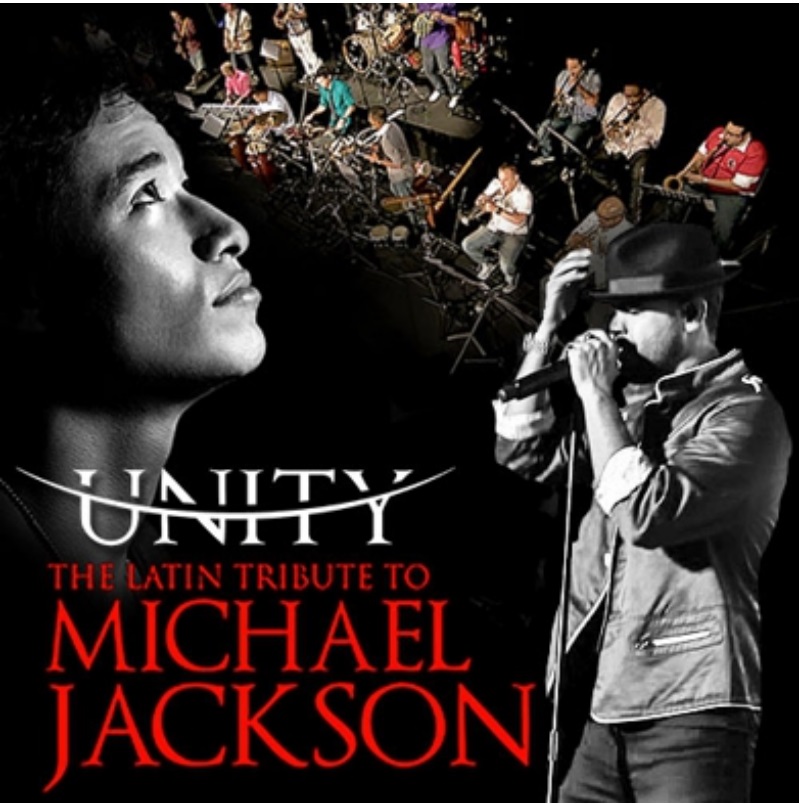
Unity, The Latin Tribute to Michael Jackson - Flyers
Unity, The Latin Tribute to Michael Jackson – Flyers

“That’s when I became a fanatic, memorizing all his lyrics” he says. “He was an amazing singer. I started analyzing every single detail”.

As Succar pored through Jackson’s material, revisiting songs like “Man In the Mirror”, “Earth Song” and “They Don’t Care About Us” – all of which are reimagined on Unity – he came to a realization: “Michael wasn’t only a musician, he was a spiritual person. He was speaking to people’s hearts through his music. He was a true role model and leader, not only in the music industry, but life in general”, he says.

Concurrent with his discovery, Succar arranged a salsa-infused version of “Thriller” for a Halloween party at Miami’s legendary, now closed Van Dyke Café. The reaction was so immediate and overwhelmingly positive to the performance of this new arrangement, that Succar recorded a version in his bedroom with his band, posted in online and gave away copies. Djs started playing the track and Succar began getting requests from around the world for a full album of Latin – flavored Jackson songs. “That sparked it”, Succar says. “I was such a fan. I felt like I had to do something”.

Photo 1: Tony Succar

He launched a Kickstarter campaign and raided more than $10,000, which allowed him to record basic tracks and the idea and harmonious ideal of Unity was born. “The one thing that stood out in Michael’s usic was love. The reality was unity,” He says. “I also wanted the title to stand for something: a real marriage between Latin roots and American pop culture and to help keep Michael’s legacy alive”.

Part of keeping Jackson’s legacy alive meant incorporating elements of the original production in each of his fresh renditions for Unity. “Even the horn lines, I would transcribe them from Quincy Jones’ produtions and then apply them to the arrangement in a different way,” Succar says. “The essence of every song was respected. I gave it my best to create this very thin line between what Michael did with his production and what I brought to the project”.

As Succar proceeded, an astounding number of coincidences buoyed the project. Succar’s initial plan was to record the album with one vocalist, soulful Broadway veteran Kevin Ceballo, but as Succar finalized the arrangements, the idea of a compilation album cae to him. The first artist he reached out to was legendary salsa singer Nieves. He heard nothing back for months . Then, one day in the studio someone suggested Nieves fo “I Want You Back”. Succar explained he’d had no success contacting Nieves.

Photo 2: Tony Succar

It’s turned out a studio visitor knew Nieves, called his manager, sent Nieves an MP3, and within 10 minutes, Nieves was on the phone asking when he should come in to record his vocals.

Nieves became the project’s godfather, bringing in other Latin stars, such as India and Jean Rodriguez. “If it weren’t for Tito, I would never have been able to develop this into what it is, “Succar say. “He really opened the doors for me”. Nieves even brought in his son, Tito Nieves Jr. to duet on the album closer, an emotional take on “You are Not Alone”.

As the project progressed, Succar sought out Secada, but once again, was running into walls. He had switched to a different studio and the recording engineer just happened to have worked wih Secada and upon hearing Succar’s story, gave Succar the singer’s direct email. Secada immediately replied that he wanted to record “Human Nature,” his favorite Jackson track.

But there was more to come. Succar contacted Swedien about mixing some tracks, but failed to get a yes after more than a year’s effort. He met his engineer Nick Valentin through a mutual friend, who piped up that he’d been Swedien some music and next thing Succar knew, he’s sitting beside his hero at Swedien’s ranch as Swedien mixed “Earth Song” and “Smooth Criminal. “He was the cherry on top,” Succar says. “When we were mixing, he would put up the original Michael songs and put on our remixes to compare and contrast. He mixed the tracks on the same Harrison 32C model console he mixed ‘Thriller’ on”.

The groundbreaking album, a joint project between Universal Music Classics, Universal Music Latin Entertainment and Universal Music Mexico, embodies Jackson’s spirit of harmony and bringing diverse cultures together through music.

Members of Unity, The Latin Tribute to Michael Jackson

Where there once was nothing but a dream, Succar now sees unlimited possibilities. Not only will there be a tour to support Unity: The Latin Tribute to Michael Jackson, but he is considering future Unity projects that could salute the music of other timeless artist, such as the Beatles or the Bee Gees, filtered through a Latin musical lens. “Unity is going to become a movement,” he says. And given how far Succar’s come already, who could possibly doubt him?
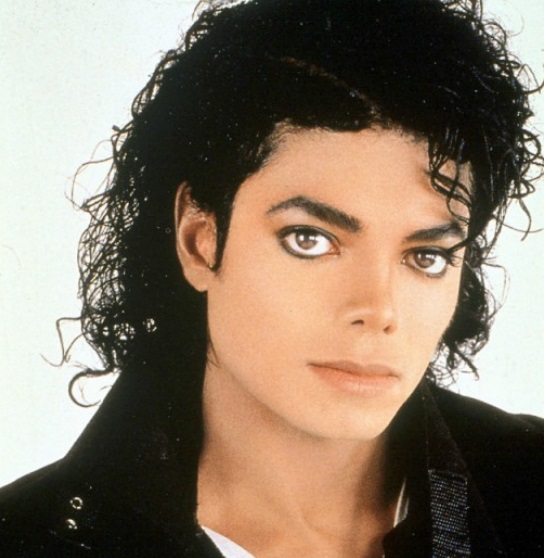

Michael Jackson
Michael Jackson

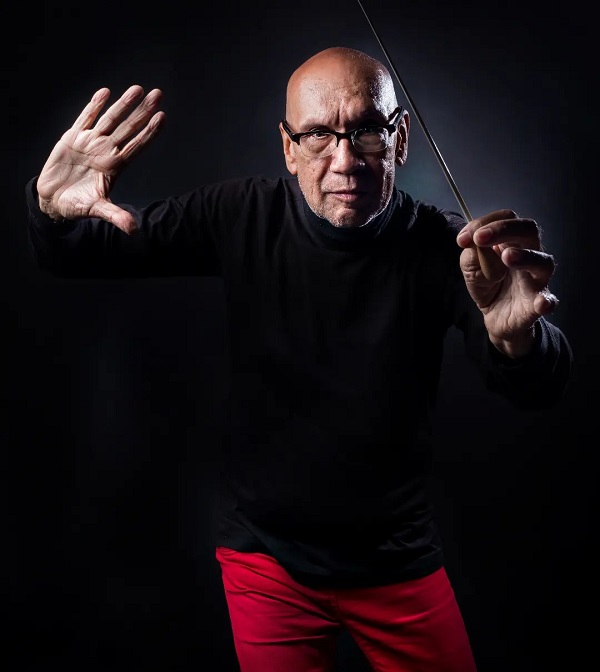
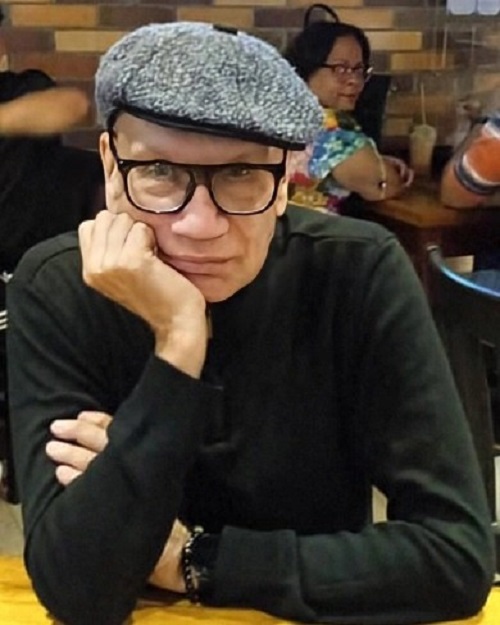
Andy Durán: The Architect of Mambo and Latin Jazz

If there is one name that embodies technical elegance and rhythmic passion in the contemporary Caribbean, it is Andy Durán.

A musician, arranger, composer, and conductor, Durán has spent over four decades serving as the guardian of the big band sound. He keeps the flame of legends like Tito Puente and Pérez Prado alive, but with a distinctive signature that fuses academic precision with popular soul.

Andy Durán El Arquitecto del Mambo y el Latín Jazz

Born in Caracas, Venezuela, on January 2, 1949, as Nelson Valor Ramos, this extraordinary artist is today an essential figure in music production and direction.

The Musician: Master of the Arrangement

Andy Durán is more than just a conductor; he is a scholar of musical structure. His academic background has allowed him to master the art of the arrangement the ability to transform a simple melody into a complex masterpiece where twenty musicians move as a single, unstoppable force.

  • The Big Band Sound: He is one of the few directors who has kept the large orchestra format relevant in Venezuela. His ensemble, Andy Durán’s Latin Jazz Big Band, is an institution renowned for its rhythmic precision and powerful brass section.
  • Stylistic Versatility: While Mambo is his backbone, his repertoire flows seamlessly through Jazz, Salsa, Mambo-Jazz, and traditional Venezuelan music.
  • Cult Discography: Albums such as Tropicalia, Mambo 2000, and his acclaimed tribute to Tito Puente, Fidelidad, are essential pieces for any collector of the genre.

The Person: The Educator and Music Lover

Behind the baton, Durán is known for his humility and profound work ethic; he is frequently described as a “gentleman of music.”

Nacido en Caracas, Venezuela, el 2 de enero de 1949, bajo el nombre de Nelson Valor Ramos
  1. Relentless Researcher: Beyond performance, he is a historian of rhythm. His concerts often turn into masterclasses where he explains the origins of the pieces, always honoring the original composers.
  2. Generational Bridge: He has served as a mentor for young Venezuelan musicians, integrating new talent into his ranks and proving that classic Caribbean genres have no expiration date.
  3. Cultural Resilience: In an era dominated by commercial trends, Durán remains faithful to acoustic quality and the complexity of Latin Jazz, earning the respect of international critics.
  4. Si existe un nombre que personifica la elegancia técnica y la pasión por el ritmo en el Caribe contemporáneo, ese es Andy Durán
    Si existe un nombre que personifica la elegancia técnica y la pasión por el ritmo en el Caribe contemporáneo, ese es Andy Durán

Career and Legacy

Andy Durán is one of the greatest exponents of Salsa and Latin Jazz in Venezuela. With 16 albums to his credit, he holds the most extensive discography of any Venezuelan jazz artist. Additionally, he is recognized as the country’s premier music copyist.

His beginnings date back to his youth with the group Nelson y su Sexteto. In 1978, he founded the Orquesta Palladium. Shortly after, he adopted the stage name “Andy Durán” to avoid confusion with other artists of the era and because it was easy to remember and write.

Since 1982, he has been fully dedicated to professional music, working alongside giants such as Aldemaro Romero, Eduardo Cabrera, the Billo’s Caracas Boys, Los Melódicos, and Soledad Bravo. In 1985, he released his first LP, Mambo Salsa. Among his most notable works are:

Nacido en Caracas, Venezuela, el 2 de enero de 1949, bajo el nombre de Nelson Valor Ramos
  • Tropicalia Caraqueña
  • Canelita y Andy Durán: Tribute to Celia Cruz
  • Tito & Tito (A tribute to Tito Puente and Tito Rodríguez)
  • Salsa Dura y Descarga: A Tribute to Fania
  • Fiesta con Billo

Reflections by Andy Durán: Is Singing Easy?

The Requirements: Flawless pitch, breath control, phrasing, and diction; in addition, a strong memory for melodies, lyrics, and orchestral arrangements.

It is highly recommended to know how to dance according to the genre being performed (e.g., Salsa). It is also beneficial to have basic acting skills to handle dramatic themes when necessary.

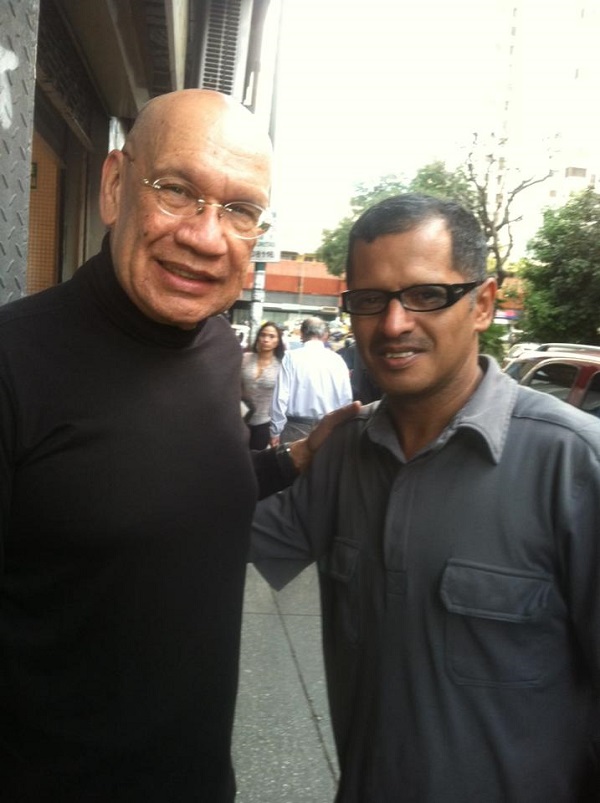
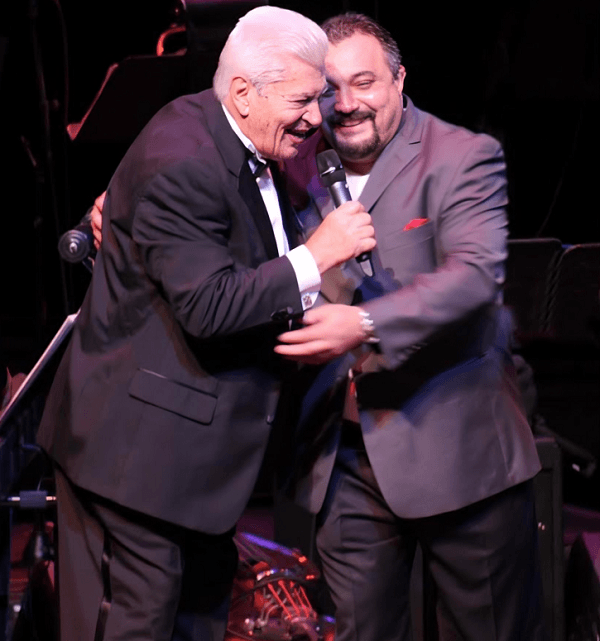
Andy Duran y Dj. Augusto Felibertt

Reading is mandatory to develop a rich vocabulary for improvisation or public speaking; it also prevents embarrassing spelling errors in written lyrics. Keeping the vocal cords healthy and trained is a vital matter. Music theory and sight-singing are the ideal, essential, and unavoidable tools.

Finally, a singer must define their style and repertoire with great care. One must invest in professional orchestral arrangements and have an arranger-director or advisor—this is an investment, just like stage attire.

Remember, my fellow singers: a director’s worst nightmare is a singer who is out of tune, off-beat, and forgetful.

Best regards to all vocalists and singers.

Maestro Andy Durán: Director, Arranger, and Composer

P.S. Vocalists must meet two more requirements: keep your nerves in check and sing from the heart.

Also Read: Víctor Cuica “The Eternal Breath of Latin Jazz and Venezuelan Identity“

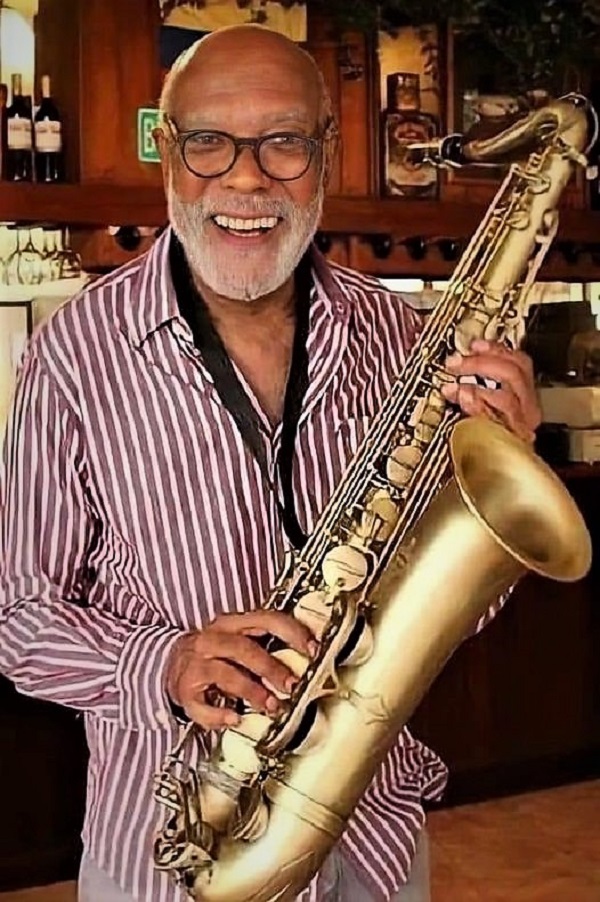
Víctor Cuica “The Eternal Breath of Latin Jazz and Venezuelan Identity “

The legacy of a visionary who fused the saxophone with the essence of the Caribbean and national cinema.

Víctor Cuica was more than just a musician; he was a bridge between two worlds. Born on April 19, 1949, in the iconic Caracas neighborhood of La Pastora, Cuica established himself as a preeminent saxophonist and actor, earning global acclaim for his innovative fusion of Jazz with Afro-Caribbean roots.

His presence defined a golden era in Venezuelan culture, as he shared the stage with legends such as Tito Puente, Paquito D’Rivera, Porfi Jiménez, and Gerry Weil.

Victor Cuica “The Eternal Breath of Latin Jazz and Venezuelan Identity”

Victor Cuica “The Eternal Breath of Latin Jazz and Venezuelan Identity”

Training and First Steps: The Birth of a Style

The journey of this virtuoso—master of the tenor and soprano saxophone as well as the flute—began in 1963 at the Military Music School of La Victoria. His time in the Venezuelan Navy band served as the catalyst for his love of Jazz, leading him to deepen his knowledge of flute, harmony, and composition at the “José Ángel Lamas” Higher School of Music.

His professional career took off in Chucho Sanoja’s orchestra. Shortly thereafter, he joined Oscar D’León’s ensemble. It was actually Cuica who suggested the name “Dimensión Latina” to replace the group’s former name, “Oscar y sus Estrellas,” thereby christening what would become the most iconic salsa orchestra in Venezuelan history.

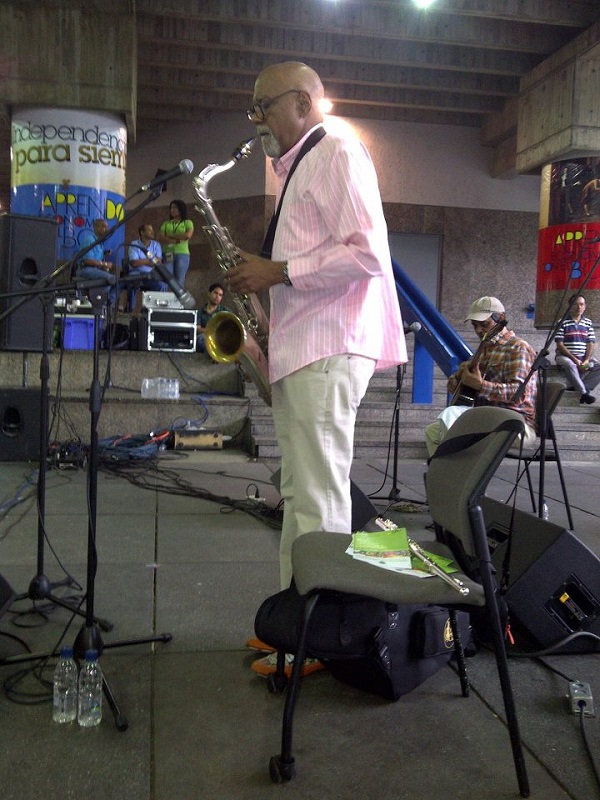
Victor Cuica in concert held on August 22, 2011 in Juan Pedro Lopez Square in Caracas

Victor Cuica in concert held on August 22, 2011 in Juan Pedro Lopez Square in Caracas

Latin Jazz: From the Silver Screen to International Stages

By the late 1970s, Cuica expanded his horizons into the “seventh art.” In 1978, he composed and performed the soundtrack for “The Sea of Lost Time” (El Mar del Tiempo Perdido), based on the short story by Gabriel García Márquez. A year later, he solidified his own group, “Víctor Cuica y su Jazz Latino,” debuting to resounding success at the Alcázar Theater in Caracas and gaining international momentum in Costa Rica.

Throughout the 1980s, critics hailed him as the most important innovator of jazz fusion in the region. His talent brought him to historic venues:

  • 1981: He triumphed at the “Memphis in May” festival in Tennessee.
  • 1982: He performed at the prestigious “Domicile” club in Munich, Germany.
  • 1985: He reached a milestone as the leader of the first Venezuelan group invited to the Montreal International Jazz Festival, where he shared the limelight with the legendary vibraphonist Lionel Hampton.

Artistic Maturity and Recognition

In the 1990s, his music reached new academic heights when Maestro Eduardo Marturet composed the work “Music for Six and Sax” specifically for him. It premiered with the Sinfonietta Caracas and represented Venezuela at the 1992 Universal Exposition in Seville.

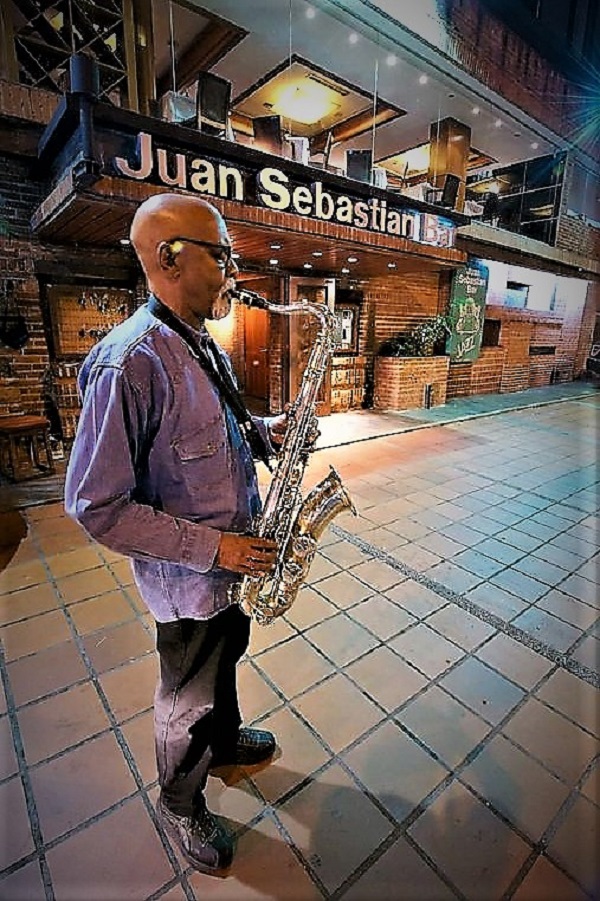
Víctor Cuica was not just a musician; he was a bridge between two worlds. Photograph at Juan Sebastian Bar

Víctor Cuica was not just a musician; he was a bridge between two worlds. Photograph at Juan Sebastian Bar

His discography, which includes gems such as Que sea para siempre (1984), Noctámbulo (1993), Just Friends (1998), and Los Locos de Caracas (1999), stands as a testament to his versatility. In 1995, the Venezuelan Artist’s Guild (Casa del Artista) honored him as Musician of the Year.

A Farewell with the Flavor of the Streets and Bohemia

Víctor Cuica passed away on Saturday, December 26, 2020, at the age of 71 due to a heart attack. His departure left a void in the film industry, where he starred in memorable films such as Santera (for which he also composed the award-winning soundtrack in 1997), and in the bohemian nights of Caracas, where his saxophone was often the soul of the evening.

A Tribute from His Peers

Multi-percussionist José Hidalgo, known as “El Tokun Mayor,” describes Cuica with words that summarize his essence:

“Víctor Cuica is the finest example of an artist intimately linked to his daily reality and cultural origins, without ever losing sight of the cosmopolitan and universal nature of his musical message. Cuica is the expression of genuine jazz performed with the simplicity of the streets.

Víctor is as authentic in his personal character as he is as an artist. This virtue was his companion as he traveled across numerous international stages, spanning the worlds of music, film, theater, and opera always with the transcendence of a bohemian, simple, and bold minstrel.

Cuica never ceases to surprise us, whether through his voice or the sound of his saxophone an instrument that, with his habitual ingenuity, he turned into a centerpiece of performance through his creativity and versatility.

His talent has graced stages across Europe and the Americas. His work projects far beyond the commercial mainstream and, today, leaves us with a brilliant musical improvisation that is truly beyond compare.”

DJ Augusto Felibertt with the one and only virtuoso Víctor Cuica

DJ Augusto Felibertt with the one and only virtuoso Víctor Cuica

Today, the name Víctor Cuica remains etched in history as the man who gave Jazz a Caribbean color and gave the Venezuelan saxophone a voice of its own.

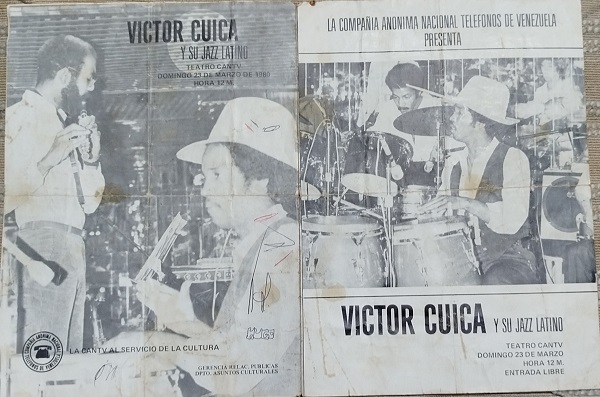
Victor Cuica and his Latin Jazz, March 23, 1980 at the Cantv Theater in Caracas

Victor Cuica and his Latin Jazz, March 23, 1980 at the Cantv Theater in Caracas

Also Read: Oscar Rojas Oscar Rojas has 54 years of musical career full of passion, rhythm and flavor

What Adalberto Santiago represents for Latin music

Our great friend Adalberto Santiago is one of the biggest references of Latin music despite his long career, so it is always appropriate to remember the greatest moments of his career. Today, he is experiencing some health difficulties, so we hope he enjoys this article and it makes him feel better.

This is Adalberto Santiago
This is Puerto Rican composer and singer Adalberto Santiago many years ago

Adalberto Santiago’s beginnings in music

Adalberto Santiago Berríos was always possessor of an extremely powerful and deep voice, making him a lyric tenor and one of the best performers of Afro-Cuban music in the United States. Some of his most important influences from an early young age were Miguelito Cuní and Benny Moré, who served as a source of inspiration for what was to come in his future career.

The artist began in music by lending his voice to trios and playing the guitar and bass, although he often accompanied these activities with some dance steps. In the eyes of many, this makes him one of the first singers to play, dance, and sing in the same concert. In addition, in this early stage of his career, he was nicknamed “The Latin Elvis Presley” due to his tall stature, thick hair, blue eyes, and elegant demeanor. 

Turning point in his career

After having had the opportunity to play with great orchestras at the time, what really made his career take off was his joining Ray Barretto’s Orchestra, prompting him to go international with albums such as “Acid” and “Rican Struction.” These albums continue to be a reference for salsa and Latin music fans in general.

Johnny and Adalberto at the museum
Johnny Cruz and Adalberto Santiago at the Spaha Salsa Museum in New York

Some time later, Santiago and other members of the aforementioned orchestra created La Típica 73, but unfortunately time did not pass much when the artist and some of his colleagues split up again over religious differences with the rest of the members and founded Los Kimbos on their own. Along with this group, of which he was the lead singer, he recorded ”Los Kimbos” and ”This Big Kimbos With Adalberto Santiago” in 1977, the year in which he dared to release his first solo album called ”Adalberto”. 

One interesting thing about that album is that it was produced by Ray Barretto, who contributed two of his compositions to his old pupil.

Solo career 

From 1977 onwards, everything that came for Alberto was nothing more than success and recognition. One of those great successes was his famous participation in “Hommy, A Latin Opera,” a work produced and directed by Larry Harlow, which was an assured stamp of excellence. Soon after, he was asked to be one of the lead singers for “Louie Ramírez y sus Amigos.” He co-produced the song “Adalberto Featuring Popeye El Marino” with Ramírez and joined Barretto on “Rican/Struction.”

In the 1980s, Adalberto and Roberto Roena came together to release ”Super Apolo 47:50”, which included songs such as ”Yo Tenía Una Mujer” and ”Vigilándote”. Around the same time, he also co-produced the album ”Calidad” with Papo Lucca, who was also very involved in the musical direction. 

Adalberto and Johnny en un homenaje
Adalberto Santiago and Johnny Cruz during a tribute to the Puerto Rican singer

Another international explosion of popularity

Another milestone in his career was his salsa version of the classic “Sex Symbol,” which has since become a cult album for fans from many countries, including Colombia, Peru, and Venezuela. It turned out to be one of the most successful albums of his entire career and practically established a new style known as “salsa monga.”

The composer has also written songs for albums in which he himself has been involved as both a bandleader and singer, and his success has in no way prevented him from staying true to his Latin roots.

Adalberto Santiago’s current situation

We have learned that Adalberto Santiago was about to participate in a tour which aimed to pay tribute to him and other participants, but due to some complications with his health, this concert series will not be able to take place for the time being.

From International Salsa Magazine, we are very sorry for this situation, and the entire team hopes that this living legend of music will be able to get out of this situation and continue to give us joy with his talent.

Johnny Cru ISM corresponde in New York City


Read also: Cache Live Music puts Miami to dance to traditional Latin music

Brian Lynch is known for his versatility, excelling in Jazz (primarily post-bop and hard bop) and notably in Latin Jazz

Brian Lynch is a top-tier jazz trumpet, flugelhorn player, and arranger, highly respected for his work in both traditional jazz and his fusion with Afro-Cuban and Latin rhythms.

Lynch has been on the jazz scene for the better part of the last three decades. He is known primarily for his work as a sideman for many of the top musicians in jazz and as co-leader of a major Latin ensemble alongside Eddie Palmieri. For a long time, he has championed the music of the great trumpet players who preceded him.

Brian Lynch is a top-notch jazz trumpeter, flugelhorn player, and arranger

On this album, which is a natural follow-up to his 2000 album, Tribute to the Trumpet Masters, Lynch pays homage to the works of some of the most prominent, yet undeservedly unknown, jazz trumpeters, such as Joe Gordon, Claudio Roditi, Tommy Turrentine, Louis Smith, Idrees Sulieman, Charles Tolliver, and Kamal Adilifu (also known as Charles Sullivan).

Some of the tributes consist of performing compositions by these artists. In other cases, Lynch performs a tune he composed in the artist’s honor. In all cases, Lynch and his team, which includes Vincent Herring and Alex Hoffman on saxes and Rob Schneiderman on piano, are more than up to the task. They make each of the honorees proud.

Lynch ha estado en la escena del jazz durante la mayor parte de las últimas tres décadas

While there isn’t a single bad track on the album, standouts include Gordon’s “Terra Firma Irma,” which moves along to the potent beat of Pete Van Nostrand, along with excellent solos from all three horn players; Turrentine’s “Big Red” and Sulieman’s “Saturday Afternoon at Four,” both part of a treasure trove of unreleased compositions that were part of the Turrentine and Sulieman estates and that Lynch was able to tap into for these sessions; the hard bop of Tolliver’s “Household of Saud” (again, Van Nostrand’s drumming blew me away) and Lynch’s “RoditiSamba,” a tribute to the Brazilian master.

In short, Unsung Heroes is Brian Lynch’s best album as a leader in his long career. The musical mastery is top-notch, the compositions are always interesting, and the backstory of the whole project is a compelling history lesson for jazz trumpet fans who want to dig deeper than Miles, Diz, and Satchmo. The best news is that there’s more where that came from: this is only Volume 1 of the project; Volumes 2 and 3 are currently available online as downloads.

Paying tribute to the unsung masters of the jazz trumpet is a natural project for trumpeter and flugelhorn player Brian Lynch (the original text mentioned “Bryan Lynch” in this section, it is assumed to be a typo), who has been immersed in the hard-bop lineage since he was part of Horace Silver’s band in the 1980s.

He is accompanied by a mid-sized group that includes Vincent Herring on alto saxophone, Alex Hoffman on tenor saxophone, Rob Schneiderman on piano, David Wong on bass, Pete Van Nostrand on drums, and Vicente “Little Johnny” Rivero on congas.

Herman Olivera El Sonero del Siglo XXI voz líder de La Perfecta II de Eddie Palmieri, Dj. Augusto Felibertt y Brian Lynch un trompetista de jazz ganador de varios premios Grammy.

Moving through rhythms ranging from ballads to riffs and Latin jazz, the band masterfully navigates the material with solo and ensemble passages executed with great fluidity. The title suggests that there may be more installments in this series, and hard-bop fans will certainly hope so. Lynch has a wealth of material to draw inspiration from and a talented band with which to make an indelible mark.

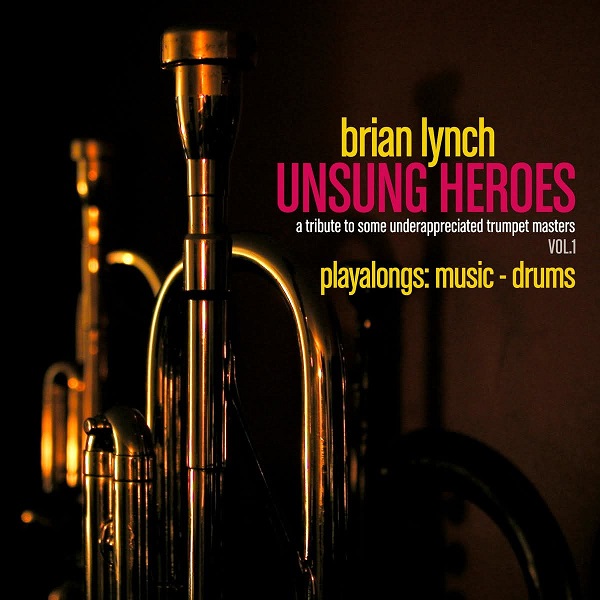
Brian Lynch – Unsung Heroes Vol. 1 (2011)

Brian Lynch - Unsung Heroes Vol. 1 (2011)
Brian Lynch – Unsung Heroes Vol. 1 (2011)

Tracks:

  1. Terra Firma Irma
  2. I Could Never Forget You
  3. Further Arrivals
  4. Saturday Afternoon At Four
  5. Household Of Saud
  6. Roditisamba
  7. Big Red
  8. Unsung Blues
  9. Wetu

Musicians: Brian Lynch (Trumpet, Flugelhorn) Vincent Herring (Alto Sax) Alex Hoffman (Tenor Sax) Rob Schneiderman (Piano) David Wong (Bass) Pete Van Nostrand (Drums) Little Johnny Rivero (Congas 1-3, 1-6, 3-5)

Recorded October 12-13, 2008 and December 22, 2009 at Knoop.

Also Read: Oskar Cartaya “My Music, My Friends, My Time” Featured collaborations with illustrious friends such as Eddie Palmieri, Giovanni Hidalgo, Dave Valentin, and Justo Almario

  • Page 1
  • Page 2
  • Page 3
  • Interim pages omitted …
  • Page 64
  • Go to Next Page »

International Salsa Magazine (ISM) is a monthly publication about Salsa activities around the world, that has been publishing since 2007. It is a world network of volunteers coordinated by ISM Magazine. We are working to strengthen all the events by working together.