• Skip to primary navigation
  • Skip to main content

International Salsa Magazine

  • HOME
  • Previous editions
    • 2026
      • ISM / April 2026
      • ISM / March 2026
      • ISM / February 2026
      • ISM / January 2026
    • 2025
      • ISM / December 2025
      • ISM / November 2025
      • ISM / October 2025
      • ISM / September 2025
      • ISM / August 2025
      • ISM / July 2025
      • ISM / June 2025
      • ISM / May2025
      • ISM / April 2025
      • ISM / March 2025
      • ISM / February 2025
      • ISM / January 2025
    • 2024
      • ISM / December 2024
      • ISM / November 2024
      • ISM / October 2024
      • ISM / September 2024
      • ISM / August 2024
      • ISM / July 2024
      • ISM / June 2024
      • ISM / May 2024
      • ISM / April 2024
      • ISM / March 2024
      • ISM / February 2024
      • ISM / January 2024
    • 2023
      • ISM / December 2023
      • ISM / November 2023
      • ISM / October 2023
      • ISM – September 2023
      • ISM – August 2023
      • ISM July 2023
      • ISM Edition June 2023
      • ISM – May 2023
      • ISM April 2023
      • ISM March 2023
      • ISM February 2023
      • ISM January 2023
    • 2022
      • ISM December 2022
      • ISM November 2022
      • ISM October 2022
      • ISM September 2022
      • ISM August 2022
      • ISM July 2022
      • ISM June 2022
      • ISM May 2022
      • ISM February 2022
      • ISM January 2022
    • 2021
      • ISM December 2021
      • ISM November 2021
      • ISM October – 2021
      • ISM September 2021
      • ISM August 2021
      • ISM July 2021
      • ISM May 2021
      • ISM April 2021
      • ISM June 2021
      • ISM March 2021
      • ISM February 2021
      • ISM January 2021
    • 2020
      • ISM December 2020
      • ISM November 2020
      • ISM October 2020
      • ISM September 2020
      • ISM August 2020
      • ISM July 2020
      • ISM June 2020
      • ISM May 2020
      • ISM April 2020
      • ISM March 2020
      • ISM February 2020
      • ISM January 2020
    • 2019
      • ISM December 2019
      • ISM November 2019
      • ISM October 2019
      • ISM Septembre 2019
      • ISM August 2019
      • ISM July 2019
      • ISM June 2019
  • Spanish
  • Download Salsa App
    • Android
    • Apple

Search Results for: Latin Tribute

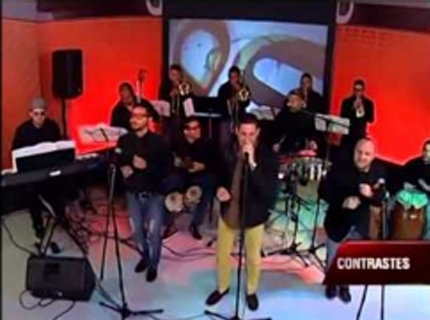
Pedrito Moya and Jhonatan Araque: A Tribute to Jerry Rivera

Latin America / Venezuela / Caracas

“There is a great variety of new artists who want to expand and promote their new talents to all lovers of salsa music. For this new edition, we present Jhonatan Araque, a Venezuelan born in Maracay, Aragua, on March 25, 1983. Since he was very young, he showed admiration and an inclination for music, especially singing. By the age of 14, he joined the Grupo Rumba Costeña for a year, performing as a soloist; later, he joined the quintet ‘Quinto Elemento,’ who interpret pop and ballad music. From that moment, he had the opportunity to perform at the ‘Forum’ of Valencia, his first experience performing in front of a significant audience.

He mentions that he began his studies at the ‘Tecnológico de Música de Valencia’ (Valencia Technological Institute of Music), where he graduated with a major in singing, obtaining excellent grades. By the age of 18, he decided to record his first solo demo, which opened the doors to his first record contract with the ‘Sonográfica’ record company, alongside the Moratinos brothers, forming part of a group called ‘Okey,’ experimenting with various genres on that album, such as ballads and pop with Latin and Spanish influences.

“Jhonatan Araque’s Orchestra is made up of very talented young Venezuelans.”
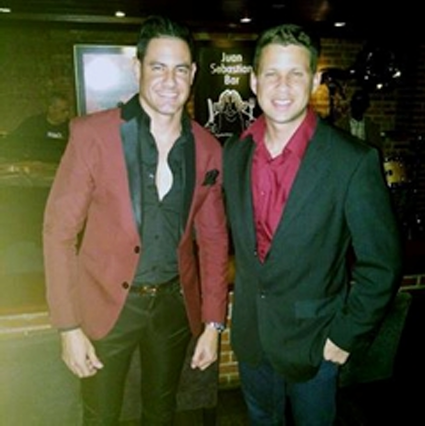
Pedrito Moya and Jhonatan Araque

After performing in various nightclubs, he decided to join the salsa orchestra ‘Los Latinos,’ where he became known in the cities of Caracas, Maracay, and Valencia, having the opportunity to share the stage with great national and international performers of the genre, including: Hernan Olivera, Marcial Istúriz, Wilmer Lozano, Edgar ‘Dolor’ Quijada, Hildemaro, Erick Franchesqui, Rodrigo Mendoza, Ángel Flores, and Mariana La Sonera.

Additionally, he spent six months as the singer for La Dimensión Latina, performing with them in different cities across the country; he also auditioned and became part of the ‘Simón Bolívar Latin Caribbean Orchestra,’ belonging to the National System of Youth and Children’s Orchestras and Choirs of Venezuela, with which he had great experiences in various projects under the direction of maestro Alberto Vergara Icaza.

With all these new experiences, new opportunities arose for him in various forms to become part of renowned orchestras within the national salsa genre, such as Rumberos del Callejón, Orquesta Puma Band, El Combo de Venezuela, and the recording of two tracks with Fidel and Julito Antillano. In 2013, he decided to retire from La Latino Caribeña and form his own orchestra to lead ‘The Tribute Project to Jerry Rivera and Rey Ruiz.’

Salsa singers Jerry Rivera (Puerto Rican) and Rey Ruiz (Cuban) are recognized in all Caribbean countries, and both have had a great impact in the Venezuelan salsa scene, where their recordings are widely known and have a large following.

Jhonatan Araque’s orchestra is made up of very talented young Venezuelans with specific studies for each of the instruments they use. They are dedicated to presenting the audience with the interpretations that have been highly successful throughout their careers, thus paying tribute to these two singers of great international renown.

The members of this great orchestra are:

Name Role
Jonathan Araque Solo Vocalist
Mauricio Marin Backing Vocalist
Luis Martínez Backing Vocalist
Angel Palma Piano
Edwin Garcia Bass
José “Puma” Reyna Timbales
Braimy Mijares Congas
Lukas Gomez Bongos
Jose Anahole Trumpet
William Rada Trumpet
Pedro Xavier Moya Trombone (Musical Director)
Leycester Licon Trombone
Pedrito Moya and Jhonatan Araque - TV
Pedrito Moya and Jhonatan Araque – TV

For more information, contact them at:

Contact Method

Phones

Jonathan Araque: +58 424-3443504 Pedro Xavier Moya: +58 416-3077868 0414-9276637

Facebook: https://www.facebook.com/ Bachology?hc_ref=SEARCH

Correo: [email protected]

YouTube: https://www.youtube.com/ channel/UCZP0snvp3tqkP24c X_fg1KQ

Twitter: @Bachology
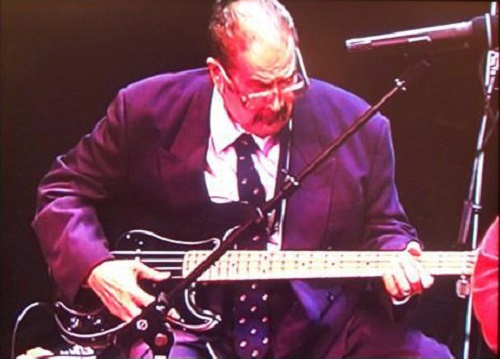
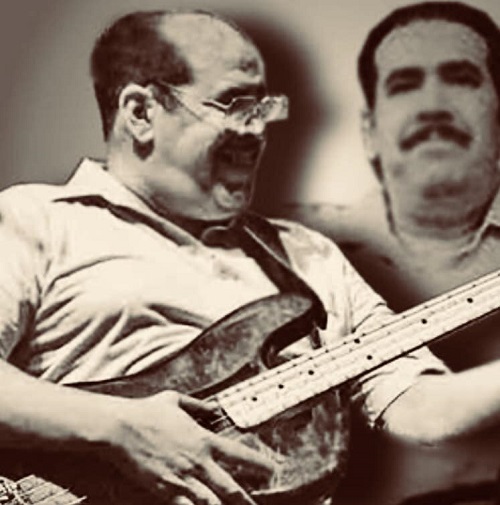
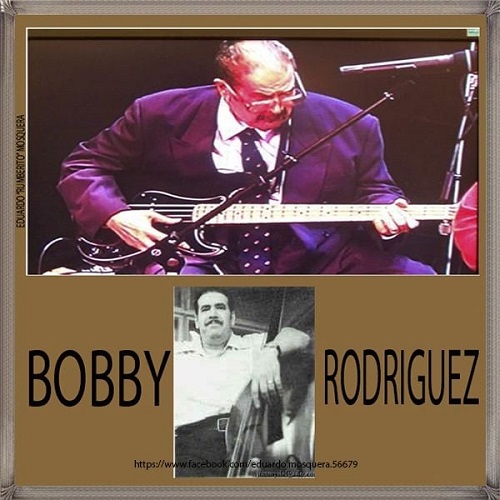
Roberto “Bobby” Rodríguez was a master of the Baby Bass and was instrumental in its popularization within Latin music

Roberto “Bobby” Rodríguez “Big Daddy” (1927-2002) was a renowned bassist and a key figure in Latin jazz and salsa. He was known for playing both the upright bass and electric bass.

Roberto Bobby Rodriguez was a master of Baby Bass and played a decisive role in its popularization within Latin music

He worked with legendary artists and bands such as Charlie Parker, Dizzy Gillespie, Machito, Tito Puente, and The Alegre All Stars. Born in Tampa, Florida, to Cuban parents, he is often associated with the Baby Bass, a type of electric upright bass.

The Baby Bass is a specific type of electric upright bass developed by the Ampeg company. It has a distinctive sound and is very popular in Latin music, especially salsa.

Many famous bassists in the genre, including Roberto “Bobby” Rodríguez “Big Daddy,” are known for playing this instrument. With its deep, percussive tone, the Baby Bass helped define the sound of salsa music.

In summary, the connection between Roberto “Bobby” Rodríguez and the Baby Bass is that the famous bassist, Roberto “Bobby” Rodríguez “Big Daddy,” was a master of the instrument and was instrumental in its popularization within Latin music.

“Big Daddy’s” Career and Legacy.

The son of Cuban and Puerto Rican parents, Roberto “Bobby” Rodríguez “Big Daddy” was born in Tampa, Florida, on May 2, 1927. His talent left a lasting mark on the performance of both the upright bass and the electric bass.

He began his career in New York at the age of 17 with Machito and His Afro-Cubans, where he replaced Julio Andino. He participated in recordings with Chico O’Farrill, Dizzy Gillespie, Cal Tjader, Eddie Palmieri, Willie Bobo, Mongo Santamaría, Joe Cuba, Eric Dolphy, the Alegre All Stars, and Tito Rodríguez. His most important and enduring collaboration, however, was with Tito Puente.

Rodríguez’s involvement with Puente’s band resulted in a catalog of countless tumbao basslines. He occasionally had the opportunity to lead the band with a solo, loaded with highly creative melodic improvisations.

On the 1990 album, Goza mi Timbal, the track “Ode to Cachao” features a large number of Bobby Rodríguez’s solos. In addition to being a tribute to Israel López, this track is a showcase of “Big Daddy’s” immense virtues and is considered one of the most unforgettable solos in Latin jazz. This partnership remained active from the 1950s to the 1990s.

Roberto Bobby Rodriguez Big Daddy was born in Tampa, Florida, on May 2, 1927

The nickname “Dedo Gordo” (Fat Finger) was given to him for his way of playing the electric bass, with a thick sound—something that in American musical circles is called a “groove.” According to experts, his technique was meant to emulate the sound of the Ampeg Baby Bass.

One characteristic he was always recognized for was his unique ability to play the clave rhythm with his foot while performing on the bass. His musical experience always made him seem like a contributor with a jazzy style.

On July 29, 2002, after a life full of resounding successes and an impressive legacy, Bobby Rodríguez passed away in New York.

Ambiguities with the Name Roberto “Bobby” Rodríguez.

The name “Bobby Rodríguez” has been used by several artists within the universe of Caribbean music.

One common source of confusion is the flutist, clarinetist, and saxophonist from Manhattan, Robert “Bobby” Rodríguez, who founded the group “La Compañía.” His date of birth has not been confirmed.

Another point of confusion is the common misconception that “Big Daddy” began his career with the Marcano Quartet. The truth is that the quartet featured Félix Manuel Rodríguez, who, in the early stages of his career at age 17, also went by the name “Bobby Rodríguez.” He would later adopt his famous stage name, Bobby Capó.

A third artistic namesake is Dr. Bobby Rodríguez, a trumpet player born in Los Angeles, California, who is also a teacher and author of the book, ABC’s of Brass Warm-Up. He has been nominated for a Grammy and has received awards as an educator.

Roberto Bobby Rodríguez Big Daddy (1927-2002)

The list of names similar to Roberto “Bobby” Rodríguez becomes much longer if you search for homonyms of his given name. For example, there is Roberto (Reimundo) Rodríguez, a trumpet player from Cienfuegos, Cuba. He co-founded the orchestra Los Jóvenes Estrellas de Cuba and became a member of the Fania All Stars. He also appears in the documentary Nuestra Cosa Latina. In 1982, he founded the group Los Rodríguez with his sons, Roberto Jr. and Willie.

His son, Roberto Rodríguez Jr., is another homonym we encounter in these musical paths.

Continuing with more homonyms, there’s the Cuban trumpet player Roberto Luis Rodríguez, who is the father of the currently famous trumpet player Roberto Juan Rodríguez, also Cuban, but who moved with his Jewish family to Miami at the age of nine. He has played with top artists such as Joe Jackson, Julio Iglesias, and Paul Simon.

 By: Diego Aranda (Audiokat)

Dj. Augusto Felibertt

Los Mejores Salseros del Mundo

Also Read: Bobby Valentín, the King of the Bass in the Fania All-Stars Machine – The Mind of a Master

Tempo Latino

Europe / France / Vic-Fezensac

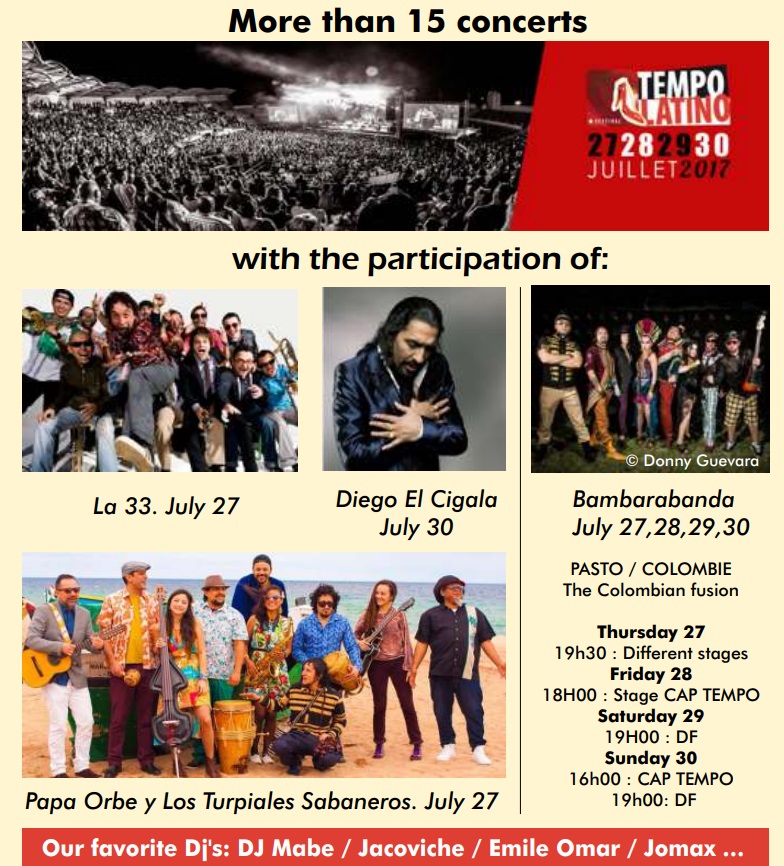
Tempo Latino: The biggest party for every Latin Music lover in Europe!

Tempo Latino
Tempo Latino

In Vic-Fezensac, in the heart of Gers in Gascony, Tempo Latino is the biggest European festival of Latin music and Afro-Cuban, salsa, Latin jazz and hip-hop. This is a reference to music and Latin music. This year they are bigger than ever with the participation of dancers, musicians, orchestras and amazing dj’s around the world.

Tempo Latino presents each year for 4 days and 4 nights, a varied concerts and internship program with artists and professors of international level including from Cuba, Puerto Rico, Colombia, Venezuela, Panama, Africa, US, Europe and Japan.

Thursday, July 27

The party starts on July 27 with the Colombian group Puerto Candelaria. This amazing group was formed in 2000 in Medellín, Colombia, the result of the fateful meeting of six talented musicians, united and guided by talented composer Juancho Valencia to create a totally new and original musical show.

Colombian group Puerto Candelaria
Colombian group Puerto Candelaria.

The imaginary land of Puerto Candelaria is a sonorous place and the spiritual home to the members of the group and to all who enjoy taking a musical journey with the sound of the Candelarios. The group’s founders never imagined that a decade later their idea would come to be hailed the most daring, controversial and innovative Colombian musical project of recent times.

Puerto Candelaria bases its sound in popular Colombian rhythms, full of imagination and magical spirit that provoke the senses and awaken heightened emotions in audiences around the world.

Their creation of contradictory rhythms like Cumbia Underground or Jazz “a lo Colombiano” is responsible for creating a special place for their country in the global markets of jazz, experimental, and world music. On Thursday and thanks to the France-Colombia’s year celebration, this day will be a reunion between these two cultures.

Friday, July 28 Calypso Rose

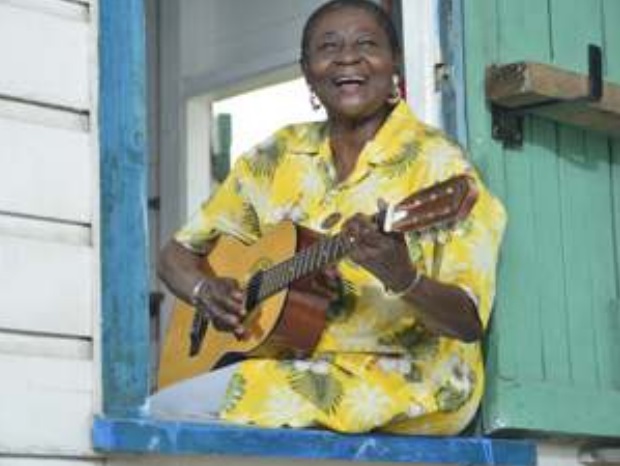
Then, on July 28 you will have the pleasure to see the performance of Calypso Rose. This iconic singer is a calypsonian. She began writing songs at the age of 15, turned professional in 1964 and has written more than 800 songs and recorded more than 20 albums.

Calypso Rose
Calypso Rose

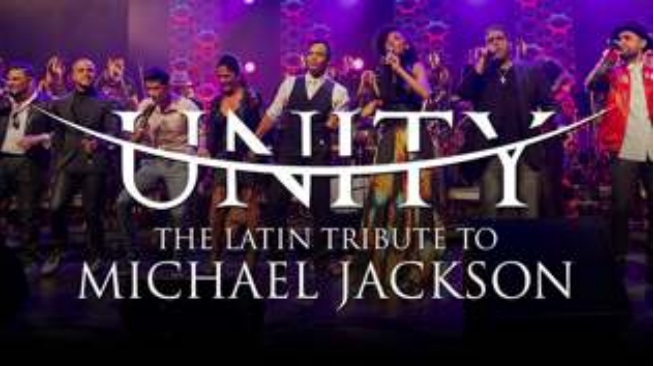
Saturday, July 29 Unity. Michael Jackson Latin Tribute

Friday 29 will be time to present the Michael Jackson Latin Tribute with the amazing show of the talent of Tony Succar and Unity. Unity is a testament to the power of music and one man’s indomitable spirit.

Michael Jackson Latin Tribute

The passion project of Peruvian-born, Miami-raised producer/multi-instrumentalist/arranger Tony Succar, Unity features more than 100 musicians, such Latin superstars as Tito Nieves, Jon Secada and Obie Bermúdez, and the mixing magic of Jackson’s legendary engineer Bruce Swedien in the first ever Latin album salute to The King of Pop.

Sunday, July 30 Orkesta Mendoza

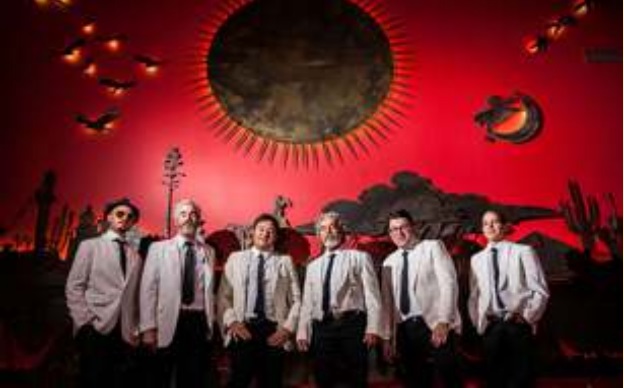
And finally, the event will end with the concert of Orkesta Mendoza. Orkesta Mendoza is a Latin music band from Tucson, Arizona. It was founded by singer and guitarist Sergio Mendoza in 2009. Through the use of Latin percussion, accordion, brass, and steel guitars, the band’s style, dubbed “indie mambo”, is a combination of ranchera, cumbia, psychedelic and indie rock.

Orkesta Mendoza
Orkesta Mendoza
  • Sergio Mendoza – vocals, piano, guitar
  • James Peters – drums
  • Joe Novelli – lap steel guitar
  • Marco Rosano – saxophone, clarinet, accordion, keyboard
  • Salvador Duran – vocals, cajón, maracas
  • Sean Rogers – double bass

With all the concerts, dance and parties, you can’t miss the summer event that brings all the Latin talent to Europe.

You go to Latin tempo

Tickets: Pre-sale prices

  • One night 30€ – 36€
  • 4 days pass: 100 – 120
  • Free entrance for kids under 12 years old

Transportation and accommodation

Transport: http://tempo-latino.com/CommentVenirTempo

Accommodation: http://tempo-latino.com/Hebergement

Our favorite Dj’s: DJ Mabe / Jacoviche / Emile Omar / Jomax …

Tempo Latino - Information
Tempo Latino – Information

For further information and tickets:

  • http://tempo-latino.com/accueil
  • Tourism office in Vic Fanzensac : 05.62.06.34.90
  • Telephone: 05.62.06.40.40.

And all the social networks

  • Facebook: @tempolatino
  • Twitter : @tempo_latino
  • Instagram: @tempolatino
  • Youtube: tempolatinofestival

Tribute to Alberto Naranjo and his musicians

Latin America / Venezuela / Caracas

40 years of El Trabuco Venezolano A Deserved Tribute to Alberto Naranjo and his musicians

Teresa Carreno Theater. Caracas, Venezuela August 21 to 25, 2017
Collaboration and Photographs by Lysbeth Weffe

From August 21 to 25, at the Teresa Carreño Theater (TTC), in Caracas, the Tribute to maestro Alberto Naranjo was held for his 57 years of artistic life, and to the group of his creation El Trabuco Venezolano for its 40 years of founding . With a long time of preparation and a lot of love involved, as it said in the hand program and was perceived in the environment, the event had the general production of Franklin Rojas, the Grupo Madera Foundation and the Teresa Carreño Theater Foundation.

Alberto Naranjo and Noel Mijares

More than an orchestra, El Trabuco Venezolano has been an authentic Venezuelan salsa movement born from the initiative of Alberto Naranjo, a veteran drummer and arranger who has walked the trade through the most diverse tendencies and schools of popular music in the Caribbean, always counting with the direct support of the musical producer, Orlando Montiel(I).

It was at a recital conference given by César Miguel Rondón and Domingo “El Flaco” Álvarez at the Museum of Contemporary Art in Caracas, in August 1977, that El TrabucoVenezolano(2) made its public debut.It immediately became the most finished and interesting musical project known to the city of Caracas up to that time. Alberto Naranjo organized it under the concept of a big band with the idea of ​​developing a particular proposal that would differ from its similar ones in the rest of the Caribbean, with a sound that bridges salsa, jazz, funk and Venezuelan.

With seven albums released, two of them live with the group Irakere from Cuba, and having passed more than a hundred performers through its ranks, El Trabuco, more than a group in conventional terms, has been a download and meeting space for local musicians, as well as the best of schools for many of them.

Alberto Naranjo
Alberto Naranjo

He also counts among his achievements, having motivated the Caracas salsa environment of the moment, imposing a high standard that influenced the formation of the best salsa orchestras, apart from creating, in short, his own Caracas sound brand(3).

The activities of this large tribute began on Monday 21 with the talks in the Protocol Plate of the TTC: “History in Venezuelan salsa” with Franklin Rojas and “Hera & Pablo, the Venezuelan salsa dance”; on Tuesday 22, Cheo Guevara’s discussion on “Alberto Naranjo, and his historical mark” and the forum “The production of salsa content in alternative radio” moderated by Zulay Millán. They continued like this throughout the week.

Several workshops were held, among them, “Percussion Tuning” dictated by Nicolás Monterola and “Latin Percussion” by Professor Frank Márquez. Also in the lobby on the ground floor of the TTC, the following concerts were presented: Caracas Legends Ensemble, with its tribute to Eddie Palmieri, the Salsarría Orchestra, Grupo Madera, Mundito and his Orchestra La Celestial, The Big Band of San Agustín and the Orquesta Carlin.

Grupo Madera
Grupo Madera

The highlight of this week of well-deserved recognition was the Trabuco Venezolano concerts at the Ríos Reyna venue on August 24 and 25, presented by Zulay Millán and José Gregorio Acero.

Although with a room not completely full and recalling other times of splendor of a TTC that received the stars of the show from all over the world, we enjoyed two nights of memorable, tasty, lively and educational concerts, with a stage full of great musicians. and a full Alberto Naranjo, going through it and playing around more than directing the members of the big band. With the best of the best-known musicians and singers of Venezuela in the genre, with some of the original members of this group and new talents, we were able to delight ourselves in an exquisite waste of salsa, jazz and funk, lasting three hours each day.

“The teacher was narrating the stories of the different themes that they interpreted…”

Alberto Naranjo at the Teresa Careño with his orchestra "Trabuco Venezolano"
Alberto Naranjo at the Teresa Careño with his orchestra “Trabuco Venezolano”

The member musicians of El Trabuco Venezolano 2017, present at the concerts on August 24 and 25, were: Alberto Lazo (piano), José “Mortadelo” Soto (bass), William Vásquez (three), William Mora (tumbadoras), Frank Márquez (timbale), Franklin Rojas (bongo), Hugo Olivero (sax), Eduardo “Mondy” Dávila (sax), Manuel Barrios (sax), Irvin Blanco (sax), Edwin Ruiz (sax), Adrián Suárez (trombone), Eliel Rivero (trombone), Pedro Carrero (trombone), Franklin Moreno (trombone), Oscar Mendoza (trombone), Vicente Freijeiro (trumpet), Rafael Rey (trumpet), Gustavo Aranguren (trumpet), José “Cheo” Rodríguez (trumpet) , Noel Mijares (trumpet), Edgar “Dolor” Quijada (voice), Troy Purroy (voice), José Luis Peña (voice), Yeci Ramos (voice), Arturo Guaramato (voice).

The teacher was narrating the stories of the different songs they performed, referring to the fact that his musicians were chosen by meritocracy, sharing with the audience and ordering someone to shut up on more than one occasion, in a humorous tone, yes. He reminded us that they are not only dedicated to salsa and in some pieces where they did not sing, he emphasized that they were instrumental and that they could help us soar our imagination and dream.

Yeci Ramos, Juan Jose Conde, Edgar "Dolor" Quijada, Jose Luis Peña, Troy Purroy
Yeci Ramos, Juan Jose Conde, Edgar “Dolor” Quijada, Jose Luis Peña, Troy Purroy

The great experience of this meeting of musicians that has been El Trabuco Venezolano was reflected in a repertoire of 13 songs, including originals, emblematic and premieres, which they gave us.

They began with the songs “Yo Soy La Rumba” (Marcelino Guerra) with the solo voice of Troy Purroy and a timpani solo by Frank Márquez, “Bravo Rumbero” (José “Cheo” Navarro) sung by Edgar “Dolor” Quijada, “ La Negra Tomasa” (Guillermo Rodríguez Fiffe) in the voice of Arturo Guaramato, “Tres Días”, an original theme by Chucho Valdés and ceded to El Trabuco, sung by José Luís Peña, with the participation of the dancers Hera and Pablo. At this point, the entire audience had warmed up, and there was even a couple from the public who danced in the hall from the beginning of the concert until the end, both days.

The night continued with the emblematic “Almendra” (Alberto Barroso). This theme arranged by Naranjo for Arturo Sandoval 46 years ago, featured the masterful participation of Noel Mijares -Venezuela Big Band Jazz, Desorden Público- on trumpet, interacting with great complicity with the maestro. It followed with a premiere, “Alna’s Mambo” an instrumental composition, subliminal as Naranjo described it.

Yeci Ramos, Juan Jose Conde, Edgar "Dolor" Quijada, Jose Luis Peña, Troy Purroy - Photo
Yeci Ramos, Juan Jose Conde, Edgar “Dolor” Quijada, Jose Luis Peña, Troy Purroy – Photo

The concert continued with “Gongo Blues” (Eduardo Cabrera), a theme in which the extraordinary solos of Eliel Rivero on the trombone, Gustavo Aranguren on the trumpet, Manuel Barrios on the saxophone and Alberto Naranjo pleased us playing the kettledrum. . He followed up with the instrumental “El Ojo del Huracán,” a Latin jazz combo, which was written in the early ’70s and still sounds weird, Maestro Naranjo said.

Then with the song “Oye como va” (Tito Puente) the rumba was lit up, the lights in the room were turned on and hardly anyone could keep up without stopping and dancing. In the song “El Hijo del Sonero” (Ricardo Quintero) Yeci Ramos sang, in “El Cumaco de San Juan” (Francisco Delfin Pacheco), Arturo Guaramato and in “Compañeros” (Ricardo Quintero), Juan José Conde, these three songs they were accompanied by the drums of Grupo Madera.

“Imágenes Latinas” (Bernardo Palombo – Andy González), was the theme chosen as the finale, a piece that has become a cult object among music lovers, the salsa audience and lovers of Latin jazz, according to the words of connoisseur José Orellán .

It featured the extraordinary participation of Adrián Suárez in the trombone and bodyguard solo, and the interpretation of the son player Edgar “Dolor” Quijada.

Alberto Naranjo in his tribute

At the concert on Friday 25, El Trabuco Venezolano and its creator were declared CULTURAL HERITAGE OF THE NATION by the Institute of Cultural Heritage (IPC) and the Ministry of People’s Power of Culture of Venezuela.

With the hope that this experience can be repeated in other theaters in the country and the world, we congratulate the organizers, Alberto Naranjo and the musicians of El Trabuco Venezolano for having received such well-deserved recognition as Cultural Heritage of the Nation.

Notes: (1) and (2) The salsa book. Chronicle of urban Caribbean music. Cesar Miguel Rondon. Ediciones B Venezuela SA., 2007. (3) Taken from the Caracas Exhibition. Ciudad del Son, montage and texts by Alejandro Calzadilla, at the La Estancia Cultural Center, belonging to the company Petróleos de Venezuela (PDVSA La Estancia), September 2017.

Latin America – October 2017

40 años de El Trabuco Venezolano thubnails ingles - Latin America - October 2017

Alfrid Valdez thubnails - Latin America - October 2017

Ilhe Habana thubnails - Latin America - October 2017

Manya thubnails Latin America - October 2017

Son Salome thubnails - Latin America - October 2017

Goce Pagano thubnails ingles - Latin America - October 2017

  • « Go to Previous Page
  • Page 1
  • Page 2
  • Page 3
  • Page 4
  • Interim pages omitted …
  • Page 64
  • Go to Next Page »

International Salsa Magazine (ISM) is a monthly publication about Salsa activities around the world, that has been publishing since 2007. It is a world network of volunteers coordinated by ISM Magazine. We are working to strengthen all the events by working together.