• Skip to primary navigation
  • Skip to main content

International Salsa Magazine

  • HOME
  • Previous editions
    • 2026
      • ISM / April 2026
      • ISM / March 2026
      • ISM / February 2026
      • ISM / January 2026
    • 2025
      • ISM / December 2025
      • ISM / November 2025
      • ISM / October 2025
      • ISM / September 2025
      • ISM / August 2025
      • ISM / July 2025
      • ISM / June 2025
      • ISM / May2025
      • ISM / April 2025
      • ISM / March 2025
      • ISM / February 2025
      • ISM / January 2025
    • 2024
      • ISM / December 2024
      • ISM / November 2024
      • ISM / October 2024
      • ISM / September 2024
      • ISM / August 2024
      • ISM / July 2024
      • ISM / June 2024
      • ISM / May 2024
      • ISM / April 2024
      • ISM / March 2024
      • ISM / February 2024
      • ISM / January 2024
    • 2023
      • ISM / December 2023
      • ISM / November 2023
      • ISM / October 2023
      • ISM – September 2023
      • ISM – August 2023
      • ISM July 2023
      • ISM Edition June 2023
      • ISM – May 2023
      • ISM April 2023
      • ISM March 2023
      • ISM February 2023
      • ISM January 2023
    • 2022
      • ISM December 2022
      • ISM November 2022
      • ISM October 2022
      • ISM September 2022
      • ISM August 2022
      • ISM July 2022
      • ISM June 2022
      • ISM May 2022
      • ISM February 2022
      • ISM January 2022
    • 2021
      • ISM December 2021
      • ISM November 2021
      • ISM October – 2021
      • ISM September 2021
      • ISM August 2021
      • ISM July 2021
      • ISM May 2021
      • ISM April 2021
      • ISM June 2021
      • ISM March 2021
      • ISM February 2021
      • ISM January 2021
    • 2020
      • ISM December 2020
      • ISM November 2020
      • ISM October 2020
      • ISM September 2020
      • ISM August 2020
      • ISM July 2020
      • ISM June 2020
      • ISM May 2020
      • ISM April 2020
      • ISM March 2020
      • ISM February 2020
      • ISM January 2020
    • 2019
      • ISM December 2019
      • ISM November 2019
      • ISM October 2019
      • ISM Septembre 2019
      • ISM August 2019
      • ISM July 2019
      • ISM June 2019
    • 2016
      • ISM December 2016
  • Spanish
  • Download Salsa App
    • Android
    • Apple

Search Results for: Latin dance world

Omslig D’ León: “I am the son of the sonero of the world, but I have my own style and I am creating my own musical history

Omslig D’ León enters the world of musical art hand in hand with his father Oscar D’ León, who works functionally as a dancer, choreographer, percussionist, background singer and singer, this young Venezuelan talent has already traveled the world in its breadth and length, through almost all the countries of North America, Europe and Latin America.

Omslig decided to start his career as a soloist and create his own history with new challenges, forming his own orchestra with his own compositions, innovating with his own unique and international style.
Omslig D' León I am the son of the sonero of the world
Omslig D’ León I am the son of the sonero of the world

“He recently toured Europe for more than two months, including performances in Switzerland, Germany, Italy and Istanbul”.

“And with you, the sonero of the world, Oscar D’ León. Any Venezuelan or fan of the emblematic salsero from Caracas would be thrilled to hear such a presentation, but when you carry his blood, the adrenaline is even greater. His son, Omslig, explained it this way.

It was inevitable that I would become a musician. It’s not just my father, Oscar, it’s my mother, it’s my whole family that has music in their blood,” said the son of one of the most important salsa musicians in history.

Omslig, who began his musical career at the age of 16 as a lectern player in his father’s orchestra, with which he toured the world for 23 years, was in Panama to promote his solo career, which recently took him on a European tour that included Italy, Switzerland, Germany and Istanbul, among other countries.

He will stay a while longer in the isthmus, a country that he says has treated him wonderfully, and then he will travel to Peru and Colombia. “People will think that I am 100% influenced by my father.

Although I learned a lot from him, especially responsibility, I have my own style,” said the director of the orchestra La Melena, referring to his musical project in which he covers songs by various artists, including Panamanian Omar Alfano and Venezuelan Frank Quintero.

Omslig D' León I am the son of the sonero of the world, but I have my own style.
Omslig D’ León I am the son of the sonero of the world, but I have my own style.

Not everything is rosy.

Being the son of Oscar D’ León can be very good, but it can also be difficult. He recalled that in the past there were people who “wanted to throw his last name in his face.

“Don’t think that because you’re Oscar’s son it’s going to be easy. I don’t think you sing the same as your father. Things like that have been said to me, but I have moved forward and thank God with his support and a unique style,” he explained.

For those who think that everything has been handed to him on a silver platter, he wanted to leave this anecdote from when he was in Oscar D’ León’s band. “We were in the Canary Islands, we had already finished the show and the next day, very early, we had to take the ferry to another island.

I fell asleep and my dad dropped me off. In the lobby he left me a note saying ‘you have to learn to be responsible’ and that marked me. Then I was able to make it, but I had to pay for everything.

¿Reencuentro de Leones?

Omslig admitted that he would like to reunite with his “soul mate”, his brother Yorman, to start a musical project and, if the opportunity arises, with Iroska, better known as “La Mazucamba”, Oscar’s daughter, who currently lives in the United States.

“A few days ago my dad called me to tell me that why don’t we do something together and the truth is that it would be great. We’ll see, but it was there and something important is going to happen,” he explained.

For now, Omslig is concentrating on his work as a soloist, with several confirmed performances, and continuing his work as a father, already with three children and happily married.

“I will continue to sing my father’s songs, I will continue to keep his name high, but with the tasty and fusion style of Omslig D’ León,” concluded the 42-year-old native of Caracas.

Omslig León enters the musical artistic world hand in hand with his father Oscar D' León.
Omslig León enters the musical artistic world hand in hand with his father Oscar D’ León.

In a few words

One place: Milan, Italy.

One food: lasagna.

Artist: Luis Enrique.

A person you admire: Will Smith.

A musician: Robert Vilera.

Hobby: Painting.

Why Omslig: Oscar, Moises (paternal grandfather) and Ligia (mother).

Also Read: Freddy de Jesús Ortega Ruiz “Coco & su Sabor Matancero”

Sources:

Peggy Blanco (Manager)

Panama El Venezolano

Mimi Ibarra singer-songwriter from Colombia to the world

Latin America / Colombia / Bogota

Mimi Ibarra Colombian singer-songwriter. Her talent makes Latin American women proud

Elizabeth “Mimi” Ibarra was born in Colombia in the department of Choco. Since she was a child she dreamed of being able to venture into music as a performer, but “Mimi” was far from imagining that she would first become known internationally as a composer.

It all started when “Mimi” Ibarra dedicated herself to writing melodies, she felt happy doing it and as she describes it “it was definitely a gift from God” she kept the songs she wrote. She composed some songs for a record label in her native Colombia.

Mimi Ibarra - Tu no me mandas
Mimi Ibarra – Tu no me mandas

Her first song as a composer “Amor ingrato” was recorded in Puerto Rico by Milly, Jocelin y los Vecinos for the Musical Productions label.

“Mimi” Ibarra wrote songs that were definitely hits such as: “Señora”, “Nobody’s Toy”, “Déjala”, “Morena Linda”, “Tell him” and “Te Propongo” in the voices of well-known salsa performers like Tito Rojas, La Puerto Rican Power, Tito Gómez, Anthony Cruz, Maelo Ruiz among others.

“Mimi” Ibarra, romantic par excellence… a woman who has the virtue of writing beautiful songs dedicated to love, but who in turn considered that it was time to offer the public songs with romantic lyrics that were also danceable.

After becoming known as a composer “Mimi” Ibarra, she makes her most cherished dream come true… to become a performer. In the first production, the eight songs are of his inspiration, among them “así”, “que tiene ella”, “Para Quererte” and “No puede ser” in duet with Anthony Cruz.

In the second production the themes “hurts” (a duet with Tito Rojas), “I love you like this”, “Private Property” were heard.

These productions have taken her with her music to different places such as Panama, Colombia, the Dominican Republic, Puerto Rico; and cities like New York, Houston and Los Angeles, among others.

Now, he presents us with his fourth record production, with a very varied repertoire to satisfy all his followers.

The bachata “because I loved you so much” stands out, a theme that in turn was recorded as a ballad, in addition to “the Tun Tun dance, which is an indigenous rhythm of Colombia.

All songs are authored by Mimi Ibarra, arranged by Rafael “Bodo” ​​Torres, Ramón Sánchez and Julio “Gunda” Merced.

Mimi Ibarra singer-songwriter
Mimi Ibarra singer-songwriter – Colombia

Hit compositions by Mimi Ibarra

  • Nobody’s Toy – Puerto Rican Power
  • Déjala – Tito Rojas in duet with Tito Gómez
  • I propose – Hector Rey
  • I need you my love – Maelo Ruiz
  • Why do I love you so much – Tito Rojas
  • For that woman – Tito Rojas
  • Lady – Tito Rojas
  • It also hurts us – Tito Rojas
  • I will cry – Tito Rojas
  • Why do you refuse – Roberto Roena
  • Compare me – Roberto Lugo
  • If you let me love you – Roberto Lugo
  • I couldn’t help it – La Mulenze Orchestra
  • Blame Me – Luisito Carrion
  • Your way of loving – Pedro Conga
  • You are the only one – Nino Segarra
  • Win – Tito Gomez
  • Never let you down – Anthony Cruz
  • Tell Him – Anthony Cruz

José Madera Niño & his 3rd his World

Latin América / Venezuela / Caracas

José Madera Niño “The records and the radio were my first teachers”

Soon he will premiere his second production entitled Matices, with the promotional song Canta Sonero.

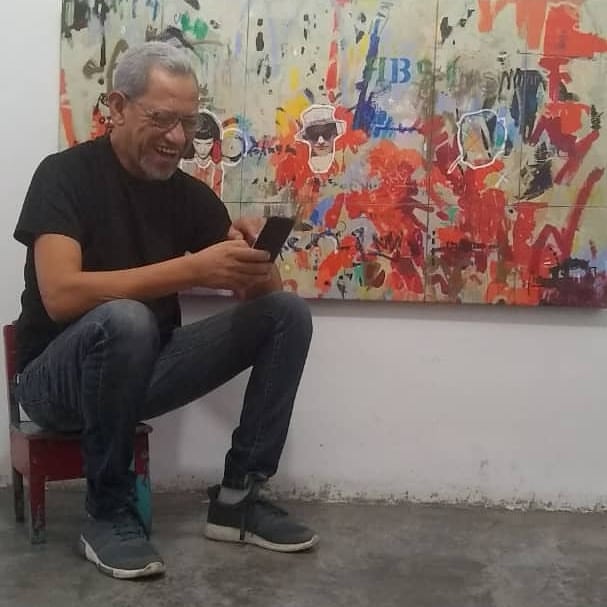
José Madera Niño
José Madera Niño

A creator, a great human being, this is José Madera Niño, this Colombian-Venezuelan musician, self-taught, percussionist, composer and plastic artist; who after participating in different groups decides to form his own Orchestra, José Madera Niño & 3er Mundo, assures that his passion for music began when he was very young, following the example of his father, uncle and his older brothers, defines his songs as “simple and diaphanous”. He confesses that our salsa genre, “needs to feed on new things, unpublished songs, in short, proposals, and that the music lover is the one who decides if it is good or not”; As the chorus of one of their songs says, let them be the ones to speak and express their emotions.


His first record production De amor, desamor y rumba, contains 8 songs, of which 6 are his own, with the participation of leading Venezuelan musicians; in this work he presents us with an innovative style, where he sings to love, to spite and invites us to dance to the rhythm of the conga that is in fashion. In each composition, everyday life is reflected, the adventures and misadventures that music lovers make their own, a work made of guava trees and poetic joys.

Soon he will launch his second record production with a very striking name; Nuances, something that in his words “makes him very happy”, where there is no doubt, his gift as an artist will be present and a motley of musicians with a great career who will put the final touch on his new production.


How did you start in music?


“I remember that at the age of seven, I was drawing a lot, on paper, on the walls and on whatever came my way. My older brothers already showed an interest in music, so instruments began to arrive at the house. While I drew they practiced and when they went to school I took possession of a drum and a radio, I tried to accompany all the rhythms I heard on the stations”.

Was your training professional or are you a self-taught musician?


“Autodidact. I entered the school of plastic arts, to study drawing and painting, at the age of fourteen. There I saw nine subjects, also I started at the high school where I saw nine more subjects, so there was no space to study music. I listened to a lot, yes. Records and the radio were my first teachers”.


Tell us about your experience with Orlando Poleo?


“In a self-taught way, almost without realizing it, I began to play with different groups and orchestras, I was already in trouble, so on the fly, I decided to take theory and solfeggio classes at the headquarters of the Musical Association. On a Caracas night I was playing with La Orquesta Ideal and there I met Williams Hernández -Percussionist and manufacturer of Latin percussion instruments-. It was he who recommended that I attend the workshop in Sarria where the teacher Orlando Poleo taught. The experience there at the beginning was a bit traumatic because although I already had time playing congas, I didn’t have the ideal technique. I had to get rid of what I learned on my own and put new ways into practice. It was not easy but I am very grateful to have passed through the school of Grand Master Poleo”.


Where does your musical vein and passion for painting come from?


“My father was a bolero singer back in his native Colombia, my uncle was a guitarist. That’s where the taste for music comes from.”


What motivated you to make your first production, in a market so Competitive and often poorly supported by the media?


“I was motivated by a passion for music and by that need to contribute at least one point of view, a way of doing things. For example, I think that this genre that we love, called Salsa, needs to feed on new things, unpublished songs, in short, proposals and that it is the music lover who decides if it is good or not”.


What is the reason for the name of the group; 3rd world?


“That’s where we are, that’s where we come from. This is how they classified the countries of our region and we assumed them without complexes or pride. I think it’s just a title that doesn’t detract from our ability to do great things. Baptizing the band with that name was an act of rebellion, it shows a little that despite many limitations we are capable of making quality music”.


Why the name De Amor, Desamor y Rumba?


“There were many hours of recording, then editing, then came the art of the album and when we were already finalizing details, a doubt assailed me, I thought: Isn’t the selection going to be very rockolera? I started to review the production and I realized that it was balanced. We sing to spiteful love and I think it’s very danceable. From there the title was born: “Of love, lack of love and rumba”.


What inspired you to write 6 songs of your first production?


“The need to do unpublished things, on the other hand I didn’t know so many composers who wanted to risk their songs in a novel production. The language of my songs is simple and diaphanous”.


Which of the themes do you identify with, and why?


I like them all.


How would you define the 3rd world style and how do you get there?


“It’s just Salsa, without a “surname”, as it was before. It’s not erotic Salsa or hard Salsa or Nothing Salsa… Just dance music”.


Any relationship with the percussionist José Madera -the one from Tito Puente-?


“Only immense admiration for his work and the fact that like him I play percussion and have the same first and last name.”


Have you ever been interested in another musical style?


“I listen to almost everything and in my career I have had the opportunity to play other popular music rhythms such as merengue, cumbia, vallenato.”


An artist you admire?


“There are many whom I admire, it would be unfair to name just one.”


What inspires you to write a song about love or heartbreak?


“Both, in addition to the simple, everyday things.”


Define yourself in one sentence?


Creator


How does the soul see through painting or music?


The soul sees and manifests itself in the purest and most honest way through art. Call it painting, music or another related manifestation.


Tell us about your 2nd production, who participates in it?


This is something that makes me very happy because we are giving the last brushstrokes, soon, very soon my dear friends will know about this work. There are many guests.


Why nuances?


Precisely because of the variety of its guests.

Samba The dance that wakes up Carnival in Brazil 

Latin America / Brasil 

“The samba” The dance that wakes up Carnival in Brazil 

Despite the fact that carnivals are known worldwide for their costumes and samba parties, none is as good as the carnival that takes place in Brazil, Rio de Janeiro, especially in the Sambadrome, known for being one of the largest open-air spaces in the city. city ​​where one can hold big events.

The Brazilian Carnival or the Carioca Carnival is a great event where Brazilians and tourists meet to dance and see the great festivals offered by the different dance academies and/or samba studios where the evaluation of each one will depend on the rhythm, participation, costumes and the originality of the parade.

Samba dancers at the carnival

Samba is the national music of Brazil, which has Afro-Brazilian origin of 2 times 4 times but the beginning was specifically in Angola before reaching Brazil; It currently has a style that has currently received many fusions and is very varied.

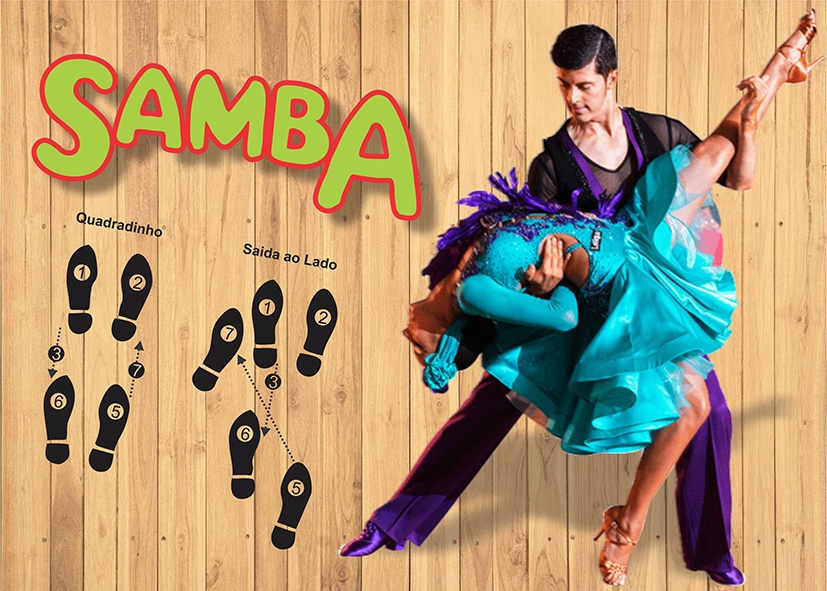
To learn to dance it, one begins with the progressive basic movement that consists of the normal basic step and the lateral basic step (left and right, front and back), then the whisk step that consists of the variation of the lateral basic step and instead of carrying the other foot next to the leading foot, you will take it backwards if you want to know all the details of this step visit the following page (https://es.wikihow.com/bailar-samba), the next step is the stationary walk of samba where the person who performs it in a closed position holding the partner with both hands, unlike the position explained at the beginning; the arms should be extended.

The leader will have his left leg extended behind him, while the follower will have the same position but with his right leg behind him, the inside leg will be the one that stabilizes him and in this way the couple will not move and will stay in one place.

The samba walk is the displacement that is carried out in a very similar way to the stationary one, but in a walking position; it is very similar to the closed one, but it forms an open “V”; the left side of the leader and the right side of the follower should be slightly turned outwards so that the opposite sides of both are next to each other. To perform this move, start with your outside leg diagonally behind your inside stabilizer leg.

One of the secrets so that the movement reflects the essence of this music is the “rebote” between one step and another, there must be a fluid transition that engages the whole body and to achieve this it is possible to think that we are constantly stepping on different objects that appear in our way and that we quickly try to lift our foot so as not to break them. It is very important that this bounce is expressed with the whole body, and not just with the legs.

Among the recommendations to perform an effective and great dance is concentration and looking forward over the shoulders of your partner.

Among the many benefits that dances give, Samba has certain privileges not only physically but also psychologically.

  • On a physical level:
    • Strengthens the legs, as it tones them since the movements are very fast and continuous.
    • Flat stomach, since in the dance they must have the abdominals contracted and the body stretched.
    • Slims the hip for extensive movements.
  • On a psychological level: it releases stress since the person plays sports by practicing it, in such a way that it helps the body to release tension, resulting in fun and relaxation.
Steps to dance samba

Now that we know more about samba and its influence on carnival at an international level, can we say that it is a single style? Well, no… Did you know that the “Carnival” differs in the different ways in which it is carried out or developed in each city?

It is true that there are many traits in common, such as their origins and motivations. One of the most attractive characteristics in Brazil is that it takes place in the open air, which means that the visitor has a more active participation at a lower cost and can dance and enjoy the shows and/or shows that take place during the marches.

by the academies with their dancers wearing their best costumes and Samba steps as well as the allegorical cars and also the public can enjoy and see the electric trios (they are musical groups that travel the city in equipped trucks playing music) at street parties river; and not only in “Rio” it is celebrated but it can be found in Recife and Olinda, in Salvador de Bahía, the city where Samba was born – Florianópolis, among others.

These cities have an architectural beauty that seduces the visitor and transports them historically both historically and culturally.

If you want to have your own experience, do not miss the next carnival in Brazil 2020 that will take place from February 21 to 26, you can buy your tickets here https://www.carnavales-brasil.com/rio-brasil/carnaval /tickets-tickets/dates-2020/buy .

Where to dance Salsa in London?

Europe/ England/ London

Where to dance Salsa in London?

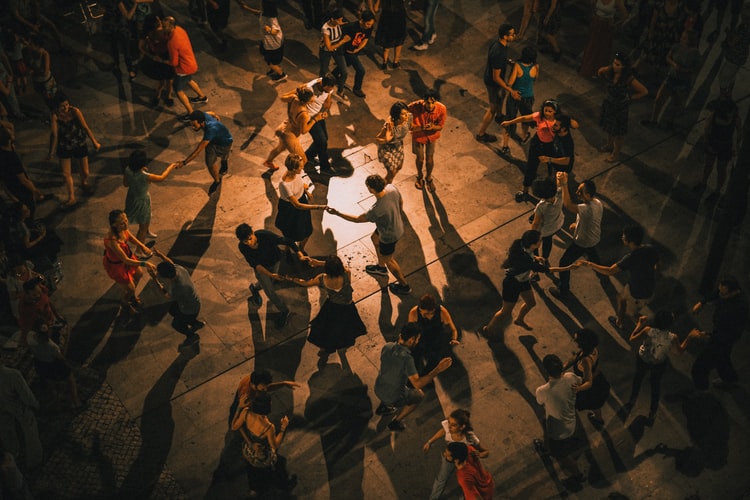
dance salsa
dance salsa

We present you 5 options to go dance Salsa in London

Every place just promise delicious cocktails and a hearty food menu, also features salsa classes, cocktail masterclasses and fun-time Latin party vibes. In London there are all kinds of events and parties, and Latin music is not far behind. So you will find numerous options to enjoy a night of salsa in the English capital.


1.- Caramelo Latin Dance:

It’s a dance school with Salsa On1 and On2 classes, plus they have the option of doing an intensive salsa in one day, so if you go with your salsa friends to London, this is your chance to learn the basics, and leave to dance with them.

From time to time the school organizes an event for social dancing.

Caramelo Latin Dance

Address: Paddington Academy, 50 Marylands Rd, London W9 2DR.

Metro: Warwick Avenue

Call them:  +44 7572 891570


2.- Hammersmith Salsa & Bachata Club:

6 levels of Bachata and Salsa classes followed by loads of social dancing. Absolute beginners always warmly welcomed. Make new friends, get fit, have fun and dance your night away. Every week DJ Incognito  regularly play the latest Salsa, Bachata, Cha Cha and Latin music. Fun and friendly staff.

Hammersmith Salsa & Bachata Club
Dance in Hammersmith Salsa & Bachata Club

Address: 11 Rutland Grove, Hammersmith, London W6 9DH.

Call them: +44 7831 715368


3.- Salsa! Soho:

Partying is what they do, and they do it well! Party with them and you will get a big injection of Latin party vibe to your celebration!

They have menus to suit all occasions. Salsa classes every night of the week, amazing drinks menu with over 50 cocktails and of course non- stop latin music. Enquire about booking and plan your party.

Salsa! Soho
Dance in Salsa! Soho

Address: 96 Charing Cross Rd, London WC2H 0JG

Call them: +44 20 7379 3277


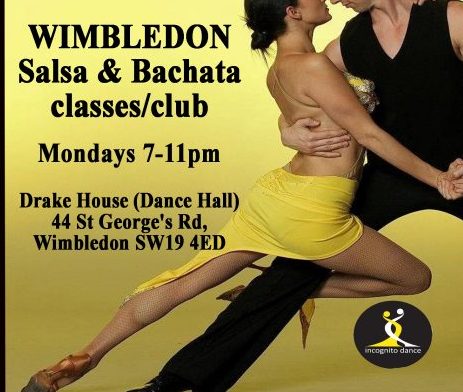
4.- Wimbledon Salsa and Bachata Club and Classes:

Fun & friendly classes for dancers of all levels. Plenty of high quality social dancing to the best and  latest Salsa, Bachata, Cha Cha and Latin grooves. Absolute beginners warmly welcomed. High quality lessons from Beginners to Advanced. No prior bookings needed, just turn up and dance.

Wimbledon Salsa and Bachata Club
Dance in Wimbledon Salsa and Bachata Club

Address: 44 St George’s Rd, Wimbledon, London SW19 4ED

Call them: +44 7831 715368


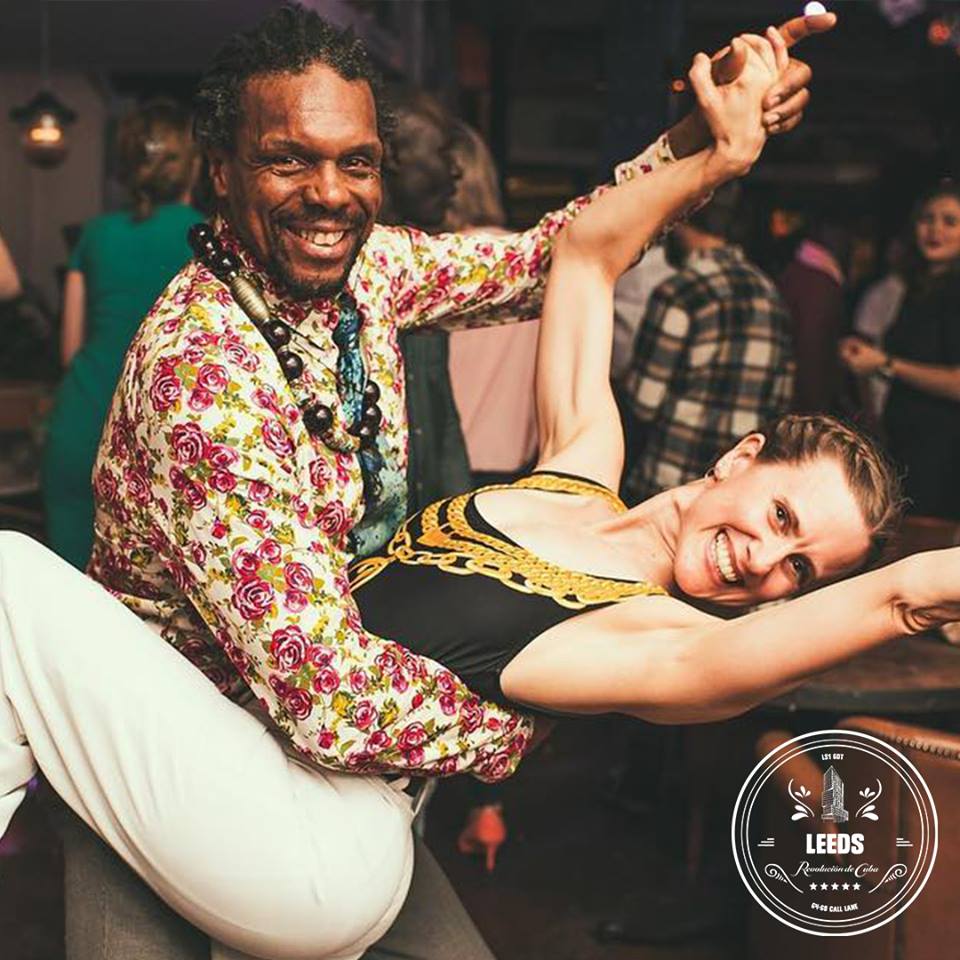
5.- Revolucion de Cuba:

Rum Bar & Cantina. Unique, expertly made cocktails and Latin-inspired food, with amazing music and live entertainment. Feel-good Cuban vibes all year round! This is not only one bar.

It’s the story of a team of rum lovers, who knew that taking on this spirit meant capturing it. And that doing so would lead to a discovery of food, drink, dance and the culture that makes up one of the world’s most exciting and intriguing places: The island of Cuba.

Revolucion de Cuba
Dance in Revolucion de Cuba

Address: More of 15 locations in England, you can choose anyone!

Call them: +44 1423 226133

We hope this alternatives help you enjoy a great party. Tell us how do you spend the night dancing London.

  • « Go to Previous Page
  • Page 1
  • Interim pages omitted …
  • Page 8
  • Page 9
  • Page 10
  • Page 11
  • Page 12
  • Interim pages omitted …
  • Page 85
  • Go to Next Page »

International Salsa Magazine (ISM) is a monthly publication about Salsa activities around the world, that has been publishing since 2007. It is a world network of volunteers coordinated by ISM Magazine. We are working to strengthen all the events by working together.