• Skip to primary navigation
  • Skip to main content

International Salsa Magazine

  • HOME
  • Previous editions
    • 2026
      • ISM / June 2026
      • ISM / May 2026
      • ISM / April 2026
      • ISM / March 2026
      • ISM / February 2026
      • ISM / January 2026
    • 2025
      • ISM / December 2025
      • ISM / November 2025
      • ISM / October 2025
      • ISM / September 2025
      • ISM / August 2025
      • ISM / July 2025
      • ISM / June 2025
      • ISM / May2025
      • ISM / April 2025
      • ISM / March 2025
      • ISM / February 2025
      • ISM / January 2025
    • 2024
      • ISM / December 2024
      • ISM / November 2024
      • ISM / October 2024
      • ISM / September 2024
      • ISM / August 2024
      • ISM / July 2024
      • ISM / June 2024
      • ISM / May 2024
      • ISM / April 2024
      • ISM / March 2024
      • ISM / February 2024
      • ISM / January 2024
    • 2023
      • ISM / December 2023
      • ISM / November 2023
      • ISM / October 2023
      • ISM – September 2023
      • ISM – August 2023
      • ISM July 2023
      • ISM Edition June 2023
      • ISM – May 2023
      • ISM April 2023
      • ISM March 2023
      • ISM February 2023
      • ISM January 2023
    • 2022
      • ISM December 2022
      • ISM November 2022
      • ISM October 2022
      • ISM September 2022
      • ISM August 2022
      • ISM July 2022
      • ISM June 2022
      • ISM May 2022
      • ISM February 2022
      • ISM January 2022
    • 2021
      • ISM December 2021
      • ISM November 2021
      • ISM October – 2021
      • ISM September 2021
      • ISM August 2021
      • ISM July 2021
      • ISM May 2021
      • ISM April 2021
      • ISM June 2021
      • ISM March 2021
      • ISM February 2021
      • ISM January 2021
    • 2020
      • ISM December 2020
      • ISM November 2020
      • ISM October 2020
      • ISM September 2020
      • ISM August 2020
      • ISM July 2020
      • ISM June 2020
      • ISM May 2020
      • ISM April 2020
      • ISM March 2020
      • ISM February 2020
      • ISM January 2020
    • 2019
      • ISM December 2019
      • ISM November 2019
      • ISM October 2019
      • ISM Septembre 2019
      • ISM August 2019
      • ISM July 2019
      • ISM June 2019
    • 2016
      • ISM December 2016
      • ISM November 2016
      • ISM October 2016
  • Spanish
  • Download Salsa App
    • Android
    • Apple

Search Results for: Latin dance

Isaac and Esteban Hernández, two brothers making history

How they got their start in the world of the arts

There have been many artists of Latin origin who have become known in much of the world thanks to their talent and dedication to what they do. A perfect example of this are the Mexican siblings Isaac and Esteban Hernandez, who have given much to talk about in major media outlets both in Spanish and English.

Isaac and Esteban Hernández in an event together

These boys, originally from Guadalajara, Mexico, are two of 11 siblings in a very large family. They are children of two dancers and one of them is Héctor Hernández, who taught the youths to dance from an early age thanks to the wide experience he gained in this profession. Isaac and Esteban have commented in some interviews that their father built a barre and both used thin pieces of wood as a ballet floor, which they used to practice their moves.

In addition to that, they were home-schooled by their mother, Laura, which helped a lot to train them in dance and allow them to devote more time to these activities.

These brothers think that they have managed to change their lives in a relatively short time thanks to the effort and dedication to dance, a discipline that they love so much. However, they knew that the path might not be as easy as they would like it to be.

When questioned about machismo and the feedback they might get on being men who dance ballet, they said that their father has prepared them very well for that moment. When they asked him to teach them to dance, he warned them that it would not be easy for them to start a real career in this discipline, but they did not care and moved on.

Isaac and Esteban during an interview

Service to the Latino community

After achieving this level of fame, they have set out to help new generations of dancers in any way possible so that they can get ahead in the world of the arts, specifically in dancing. In the past, it was very difficult to bring dance schools and talent auditions to many Latin American countries, which has made it difficult for young people interested in learning all these disciplines to have access to the necessary training to succeed. However, established artists such as Isaac and Esteban have played a very important role in the turning of things.

In the specific case of Mexico, it has been possible many children throughout the country to have access to the opportunities they need to climb positions in the world of entertainment, as even as it was with these professional dancers.

While it is true that dancing on the most important stages of the world and being judges in competitions fill their souls and makes them feel very lucky, the use of all their potential to change the lives of so many people in their Latino community excites them in an indescribable way and makes them understand the great social responsibility they have.

Roselyn Sanchez, Isaac Hernández and Paulina Rubio in the competition ''Mira Quien Baila''
Roselyn Sanchez, Isaac Hernández and Paulina Rubio in the competition ”Mira Quien Baila”

Presence in the media

Given that Latino Heritage Month had just been held, many digital media outlets took advantage of the brothers’ popularity to make reports on their great work and all they have achieved in such a short time. There are many online newspapers or websites that have highlighted the talent of the Hernandezes and all the achievements obtained through the effort and hard work put forth by both of them.

In one of those many reports, it is highlighted that Esteban is considered as one of the most influential Mexicans and has become one of the main dancers of SF Ballet. For his part, Isaac has received a Medal of Merit in the Fine Arts from the President of Mexico at the time, Enrique Peña Nieto, is also part of the SF Ballet as a main dancer and is one of the judges in the dancing competition ”Mira Quien Baila”. 

Both Isaac and Esteban are clear proof that dreams come true and everything can be achieved with effort and dedication no matter where we came from.

Read also: A new salsa talent with Latin parents and born in Boston
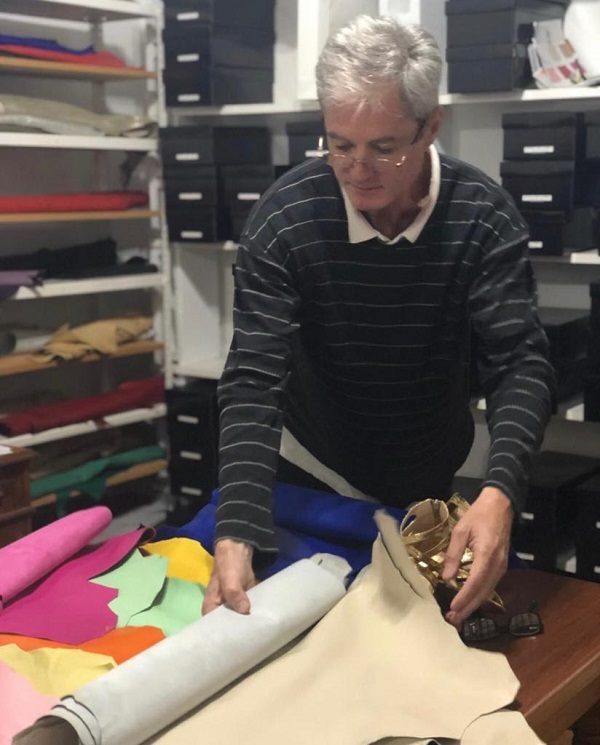
Shoemaker and shoe designer Carlo Farroni

We talked with shoemaker and shoe designer Carlo Farroni

In entertainment, singers, musicians and dancers are always the ones who show their faces to the audience, so they usually take the credit that comes from the final result, but there are many other professionals who also do their part so that a stage performance can be carried out, but unfortunately they do not get the recognition they deserve from the mass media.

Carlo Farroni checking his materials for shoes

Some of those professionals are shoemakers and shoe modelists, who offer absolute comfort and elegance to artists during their shows, especially when it comes to dancers. Today, we are going to bring the story of Mr. Carlos Farroni, who kindly agreed to talk to us and told us how he began in this interesting and important occupation.

How did you start your career as a shoemaker and shoe designer? (título 3)

Carlos Farroni tells us that he started his apprenticeship at the age of 20, namely more than four decades ago. All this training took place at the shoemaking institute in Buenos Aires, Argentina, Farroni’s native country, but it was not the only place responsible for teaching this man everything he knows today. He also combined his studies with certain tasks in an artisan footwear workshop, something that would be a great support to the knowledge gained within the field of formal education.

Dancing shoes for women made by Carlo Farroni

A few years later, he enbarked on a trip to Italy, where he worked in various areas of the creation of shoes, such as design and subsequent manufacturing, which was also extremely important for the Argentinean to continue learning how to navigate the world that has made him so well known.

Asked why he dedicates himself to the creation of special shoes to dance, he replied that he was carrying out exclusive footwear for theatre plays for many years, during this time his work started to become known in many parts of the world. After the quality of his products made news in many countries, many dancers started contacting Farroni to design exclusive shoes for them. It can be said that this is how he started the famous brand we know today.

More dancing shoes for women made by Carlo Farroni

How is your working methodology? (título3)

Regarding the production process, Mr. Farroni has revealed to us that everything is hand-made, which means that the tailoring, design, choice of materials, cutting, sewing, assembly and finished are handmade. In the same way, he ensures that the materials used for his products (most of the shoes are made of leather) are of excellent quality both in tanning and in thickness. This whole process is what makes the shoes look so professional and, at the same time, so comfortable and light as to allow the wearer to move freely.

It is also important to underline that the shoes handmade by Mr. Farroni’s brand can be used to dance every kind of musical genre without an problem. Obviously, tango dancers are the ones who most often seek out and promote these products, but there is no limit with regard to this detail. Anyone who wants the greatest elegance, sophistication and comfort at the moment of dance anything can contact Carlo Farroni, who will be happy to assist them and offer them the best of his work.

Dancing shoes for men made by Carlo Farroni

Read also: Omar Ledezma Jr talks about his experience at the Tempo Latino Festival

International Salsa Magazine presents “El Cangri de la Salsa” Dj. Caramelo after triumphing in Lima Peru

On October 2, 1974, Jesús Rafael Torres Caldea, nicknamed “El Cangri de la Salsa” and also known as “El Caramelo de la Salsa”, was born in the populous parish of El Cementerio, son of Candelario Torres, the popular “Robinson” and Doña María de Jesús Caldea, In addition to his biological parents, life also gave him two foster parents who gave him all the love, affection and values, they were Emilio Torres, younger brother of the percussionist musician and Orchestra Director Lisandro Torres, and his wife Alicia Castillo.

Since his childhood he felt great interest in Salsa music and with the help of his childhood friend Oscar Madrid Colina “NENE” they began to buy his first vinyl records without realizing that from that moment on he would begin his career as a collector, musicalizer and producer of events, being today recognized as one of the best music lovers in Caracas and Venezuela.

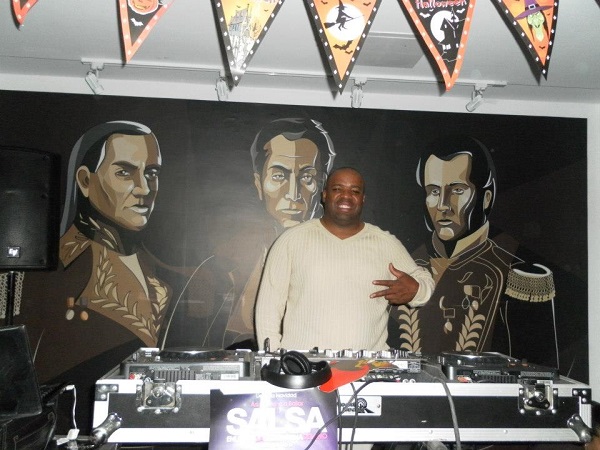
Dj. Caramelo
Dj. Caramelo

Although he was raised in the parish of El Cementerio, part of his youth was spent in the Marín neighborhood of San Agustín in the home of the Pino and Palacios families, where he was influenced even more by this tasty musical genre.

He rubbed shoulders with other excellent musicians such as Augusto Felibertt, Alfredo Lozada from whom he learned many things and also with Ivan Piñero, Jonathan Castillo and Ivan Walcott among others.

He ventured as a producer of events with Alejandro Tovar and Betty Zapata, whom he baptized as “The True Lady of Salsa” nothing more and nothing less than with the presentation of Ray De La Paz at the Lido Center in Caracas.

Dj. Caramelo y Dj. Augusto

Among the places where he had the opportunity to provide the best of the artillery of his musical collection for music lovers and dancers we can name the Gran Salón Cedro Líbano (La Mezquita), JABEGUERO, La Pachanga among others, reaching his musicality to events where prominent artists such as Herman Olivera, Tito Allen, BAILATINO have participated and also had the honor of being the official musicalizer in the debut of the great Venezuelan orchestra Rumberos del Callejón.

Caramelo was one of the founders of the Online Program via Facebook “Bloque de Salseros de la Mata” which is transmitted every Sunday by the hand of the Master of Masters Mr. Ali Delgado with Junior Villasmil and Alfredo Lozada.

“El Cangri de la Salsa“

Among his favorite artists and orchestras we can mention the Great Carlos “Cano” Estremera, the Bobby Valentin Orchestra, the Willie Rosario Orchestra and the Yambó Orchestra among others; He is currently living in Lima, Peru but has plans to return to Venezuela very soon, to return to the arena of musicalization and production of events again and already has an excellent proposal to participate as a musicalizer in an event where an international artist will participate later this year, from Salseros de la Mata we wish our pana Caramelo a happy birthday and the greatest of success and happy return to his homeland Venezuela.

You can read: The owner of the Soneo’s solo career Cano Estremera

Dj. Caramelo

Sweden Will Live November With Swing

3 events that will warm your days during winter

Going out on winter nights in Sweden (the fifth coldest country in Europe) can be a truly daunting task. Temperatures during the eleventh month of the year are around 5 °C during the day and 1 °C at night. Most people yearn for the scarce two hours of radiant sunshine a day, however, we bring you three Latin music events that accompany the beautiful northern lights that cover the sky during this date and that will make you vibrate and get warm during these days of lively freezing.

The Showtime with some of the best dancers in the world will start at 9 PM

We begin with a weekend full of Salsa parties with Hot Salsa Weekend, the largest Salsa and Bachata festival in Sweden will be celebrating its twentieth edition from November 4th to November 6th.

This festival will bring together dancers from the US, Italy, Mexico, Norway, and Stockholm. It will also feature inspiring workshops in Salsa L.A Style, Salsa On2, Salsa Cubana, and Bachata, impressive shows, and nightly parties accompanied by seven international and national DJs.

The workshops will take place on Friday from 4:30 PM at SSD Studio (Adolf Fredriks Kyrkogata 13, Stockholm) while on Saturday (11 AM) and Sunday (11 AM) they will take place in the beautiful building located in the heart of Stockholm Norra Latin (Drottninggatan 71b).

The themed parties (White Gala Party, Glitter & Glamor Gala Party, and Farewell Party) will take place from 10 PM to 5 AM on three dance floors (Salsa, Salsa Cubana & Bachata) at the Norra Latin a short distance from the central station Stockholm. Tickets for the three days of learning and fun are worth 2000 SEK. So get ready to be a part of Sweden’s biggest weekend party, Hot Salsa Weekend 2022. https://hotsalsaweekend.com/

Max Alton (Drums/Timbal), Raciel Garcés (Vocals), Rapson Espinosa (Vocals), Jonás Pomo (Piano), Homero Álvarez (Guitar), Aleks Brdarski (Bass), Rickard Valdés (Congas), Rickard Lindgren (Trumpet), Nikolas Viisanen (Trombone)

We continue with the Cuban band La Liga Habanera. This group formed 15 years ago in Havana (Cuba) has toured Europe and mainly has infected every corner of Sweden with its music. Its melody lies in a mixture of modern Cuban Timba with elements of traditional Son, Salsa, Soul, and Funk. The voices create a nuance that adorns the brass section that, together with the bass and the piano, recreates the Son montuno. The Havana League will be presented at the emblematic Fasching Club https://www.fasching.se (Kungsgatan 63, 111 22 Stockholm) on Friday, November 11th at 9 PM, and tickets are now available for 260 SEK (standing places). The age limit is 18 years.

The beginners’ course in Salsa starts at 4:30 PM

We end with the free dance party with Swing, Salsa, and Tango at the Merjeriet cultural center https://g.page/Mejeriet (Stora Södergatan 64, 222 23 Lund). This great event on Sunday, November 27th will now be free and open to all those over 13 years. The dance rhythms will range from an intense Salsa set through Lindy Hop (Swing) to Tango with surprises on stage and on the dance floor with three different DJs.

The evening will begin with workshops for each rhythm and three rounds of courses so you can try the three dance styles and choose the one you prefer. The party will be from 5:30 PM until 7 PM while the courses for beginners will be gradually every hour starting at 2:30 PM.

The Dance Party with Swing, Salsa, and Tango is organized in collaboration with the extensive program of new and recurring events in the center of Lund known as vinterlund https://vinterlund.se/

The main objective of this vast program is to fill the inhabitants of this city in the province of Scania with joy through cultural life during the dark winter months.

Directory of Salsa Clubs in Europe

France – Paris

Germany – Berlin

Spain – Barcelona

United Kingdom

  • « Go to Previous Page
  • Page 1
  • Interim pages omitted …
  • Page 104
  • Page 105
  • Page 106
  • Page 107
  • Page 108
  • Interim pages omitted …
  • Page 143
  • Go to Next Page »

International Salsa Magazine (ISM) is a monthly publication covering salsa activities around the world and has been publishing since 2007. It is a worldwide network of volunteers coordinated by ISM Magazine. Together, we work to strengthen salsa events around the world.