
• Skip to primary navigation
  • Skip to main content

International Salsa Magazine

  • HOME
  • Previous editions
    • 2026
      • ISM / April 2026
      • ISM / March 2026
      • ISM / February 2026
      • ISM / January 2026
    • 2025
      • ISM / December 2025
      • ISM / November 2025
      • ISM / October 2025
      • ISM / September 2025
      • ISM / August 2025
      • ISM / July 2025
      • ISM / June 2025
      • ISM / May2025
      • ISM / April 2025
      • ISM / March 2025
      • ISM / February 2025
      • ISM / January 2025
    • 2024
      • ISM / December 2024
      • ISM / November 2024
      • ISM / October 2024
      • ISM / September 2024
      • ISM / August 2024
      • ISM / July 2024
      • ISM / June 2024
      • ISM / May 2024
      • ISM / April 2024
      • ISM / March 2024
      • ISM / February 2024
      • ISM / January 2024
    • 2023
      • ISM / December 2023
      • ISM / November 2023
      • ISM / October 2023
      • ISM – September 2023
      • ISM – August 2023
      • ISM July 2023
      • ISM Edition June 2023
      • ISM – May 2023
      • ISM April 2023
      • ISM March 2023
      • ISM February 2023
      • ISM January 2023
    • 2022
      • ISM December 2022
      • ISM November 2022
      • ISM October 2022
      • ISM September 2022
      • ISM August 2022
      • ISM July 2022
      • ISM June 2022
      • ISM May 2022
      • ISM February 2022
      • ISM January 2022
    • 2021
      • ISM December 2021
      • ISM November 2021
      • ISM October – 2021
      • ISM September 2021
      • ISM August 2021
      • ISM July 2021
      • ISM May 2021
      • ISM April 2021
      • ISM June 2021
      • ISM March 2021
      • ISM February 2021
      • ISM January 2021
    • 2020
      • ISM December 2020
      • ISM November 2020
      • ISM October 2020
      • ISM September 2020
      • ISM August 2020
      • ISM July 2020
      • ISM June 2020
      • ISM May 2020
      • ISM April 2020
      • ISM March 2020
      • ISM February 2020
      • ISM January 2020
    • 2019
      • ISM December 2019
      • ISM November 2019
      • ISM October 2019
      • ISM Septembre 2019
      • ISM August 2019
      • ISM July 2019
      • ISM June 2019
  • Spanish
  • Download Salsa App
    • Android
    • Apple

Search Results for: Latin fever

Europe / October 2024

Calibrated maracasMartinez attorney

Czech Republic circular flag
CZECHIA
DIRECTORY OF NIGHTCLUBS

La Macumba 2024
La Macumba
Štefánikova 230/7 150 00
Prague, Czech Republic

fRANCE FLAG
FRANCE

DIRECTORY OF NIGHTCLUBS

Canela
Canela Club Latino Paris
77 Rue du Faubourg du temple 75010
Paris, France

Cuba Compagnie
Cuba Compagnie Café
48 BD Beaumarchais 75011
Paris, France

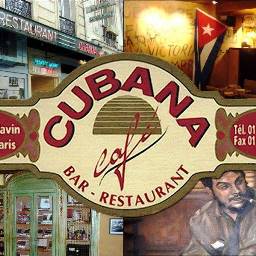
Cubana
Cubana Café
47 rue Vavin 75006
Paris, France

La Pachanga
La Pachanga Officiel
8, rue vandamme 75014
Paris, France

La Peña
La Peña Saint Germain
3 passage de la Petite Boucherie 75006
Paris, France

Balajo
Le Balajo
9 rue de Lappe 75011
Paris, France

Pachamama
Pachamama PARIS
46 rue du Faubourg Saint Antoine 75012
Paris, France

Selsero
Salseroparis
9 Rue du Petit Pont, 75005
Paris, France

Germany circular Flag
GERMANY
DIRECTORY OF NIGHTCLUBS

Cascadas
Cascadas
Ferdinandstr. 12
20095 Hamburg-Mitte, Germany

Havanna
Havanna Berlin
Hauptstr. 30
10827 Berlin-Schöneberg, Germany
La Macumba - The Real Latin Club in Hamburgs
La Macumba – The Real Latin Club in Hamburgs
Adenauerallee 3 20097
Hamburg, Germany

Latin Palace Changó
Latin Palace Changó
Münchener Strasse 57
60329 Frankfurt, Germany

SODA
Soda Club Berlin
Schönhauser Allee 36
10435 Berlin, Germany

Malta Circle flag
MALTA

Bario Latino Malta venue
Barrio Latino Malta
Ghar il Lembi Street SLM1562 Sliema
Central Region, Malta

Poland flag
POLAND
DIRECTORY OF NIGHTCLUBS

Teatro Cubano
Teatro Cubano Warsaw
ul. Aleksandra Fredry 6 00-097 /> Warsaw, Poland

Spain Flag
SPAIN
DIRECTORY OF NIGHTCLUBS

ACM City
ACM CitY
Carrer Can Pallarès 2, Cerdanyola del Vallès
08290 Barcelona, Spain

Antilla
Antilla Barcelona
C/ d’Aragó, 141
08015 Barcelona, Spain

Azucar
Azúcar SalsaDisco
Calle de Atocha, 107
28012 Madrid, Spain

Disco Bar Cuba Live
Cuba Live
Ramón y cajal número 2
07011 Palma de Mallorca, Spain

El Son
Discoteca El Son
C. de la Victoria, 6
28012 Madrid, Spain

Prisma Discoteca
Discoteca Prisma
C. de Alcalá, 192
28028 Madrid, Spain

Discoteca El Edén Boliviano
El Edén Boliviano
Carrer Gremi de Tintorers, 49A
07009 Palma, Illes Balears, Spain

Mojito
Mojito Club
Rosselló, 217
08008 Barcelona, Spain

Morena
Morena Barcelona
calle 11 num.29
08860 Castelldefels, Spain
Que Chimba
Qué Chimba
Av. del Vallès, 117
08223 Terrassa, Barcelona, Spain
Sala Olvido Madrid
Sala Olvido
C/ Olvido 15
28026 Madrid, Spain
Seven Dance
Seven Dance (Dio Club)
Carrer del Perill 10
08012 Barcelona, Spain

The Host Madrid
The Host
C/ Ferraz nº 38
28008 Madrid, Spain
+34 918 05 36 48

United Kingdom circular flag
UNITED KINGDOM
DIRECTORY OF NIGHTCLUBS

Salsa Soho
Bar Salsa Soho
96 Charing Cross Rd
WC2H 0JG London, UK

Salsa Temple
Bar Salsa Temple
Victoria Embankment, Temple
WC2R 2PH London, UK

Juju's
JUJU’s Bar & Stage
Ely’s Yard 15 Hanbury Street
E1 6QR London, UK

Revolucion de Cuba
Revolucion de Cuba Leeds
64-68 Call Lane
LS1 6DT Leeds, UK

LightHouse
The LightHouse Bar & Club
62 Rivington Street
EC2A 3AY London, UK
EUROPE OCTOBER 2024 FESTIVALS by Karina Bernales

Albania circular flag
ALBANIA
Albania Kizomba Festival October 2023

Albania Kizomba Festival

Oct 09 / 15 2024

Fafa Premium Hotel
Golem, Albania 2504

€ 88.09

Belgium circular flag
BELGIUM
Omaloku Kizomba Congress 2024

Omaloku Kizomba Congress

Oct 31 / Nov 04 2024

Sportoase Philipssite
Philipssite 6
Leuven, Belgium 3001

€ 82.05

Cyprus circular flag
CYPRUS
Salsa Jam Cyprus 2024

Salsa Jam In Cyprus

Oct 03 / 07 2024

The Olive Tree Hotel
Inonu Caddesi
Kyrenia, Cyprus 8099

€ 70

Vip Bachakizz 2024

Vip Bachakizz

Oct 17 / 21 2024

Concorde Luxury Resort
Parsel 12
Bafra, Cyprus 99920

€ 690

Czech Republic circular flag
CZECHIA
Back 2 Mambo Prague 2024

Back 2 Mambo Prague

Oct 17 / 21 2024

Empire Hall – Slovansky Dum
Na Příkopě 22, Prague, Czech Republic,110 00

€ 140

France circle flag
FRANCE
TKF 2024

Toulouse Kizomba Festival

Oct 11 / 13 2024

Le Bascala
12 Rue de la Briqueterie
Bruguieres, France 31150

€ 60

Kamba Kizomba 2024

KAMBA Kizomba

Oct 25 / 28 2024

Relais Culturel
Place Georges Pompidou
Verrieres-en-Anjou, France 49480

€ 50

Global Tarraxo Paris 2024

Global Tarraxo Paris

Oct 31 / Nov 03 2024

Hotel Mercure 4
22 Av. de l’Europe
Velizy, France 78140

€ 50

Diamond Bachata 2024

Diamond Bachata

Oct 04 / 06 2024

Hôtel Logis Lyon Est
5 chemin du Pilon 01700
Saint-Maurice-de-Beynost, France

€ 80

Germany circular Flag
GERMANY
Fiesta Latina XXL Gala 2024

Fiesta Latina XXL

Oct 02 / 06 2024

The Atlantic Grand Hotel Travemünde
Kaiserallee 2
Lubeck, Germany 23570

Frankfurt Salsa Marathon 2024

Frankfurt Salsa Marathon

Oct 03 / 07 2024

EDanceFever
Frankfurter Strasse 121
Dreieich, Germany

€ 139

Euro Sensual Festival 2024

Euro Sensual Festival

Oct 11 / 13 2024

Hilton Dusseldorf
Georg-Glock-Str. 20
Dusseldorf, Germany 40474

€ 119

Bachata Me Mucho

Bachata Me Mucho

Oct 11 / 13 2024

Circulo
Dance Studio
Rosenheimer Str. 139, Munich, Germany 81671

€ 130

DJ Got us

DJ Got Us

Oct 25 / 28 2024

Son Latino Tanzschule
Gablonzer Str. 9
Karlsruhe, Germany 76185

€ 81

Bachata Explosion 2024

Bachata Explosion

Oct 18 / 20 2024

Lakeside Night
Club
Wilkestraße 1 13507 Berlin
Berlin, Germany

€ 75.99

Bachata Zouk Royals 2024

Bachata Zouk Royals

Oct 25 / 27 2024

MAK Studios
Kaiser Joseph Straße 268
Freiburg, Germany 79098

€ 9

Bavarian Bachata Congress 2024

Bachata Congress

Oct 25 / 27 2024

Vereinshaus Scholastika
LedererStr. 5
Munich, Germany

€ 115

Greece circular flag
GREECE
South Salsa Festival 2024

South Salsa Festival

Oct 25 / 27 2024

Elite City Resort
Navarinou 237
Kalamata, Greece 241 00

€ 85

Hungary circular flag
HUNGARY
Budapest Kizomba Connection 2024

Budapest Kizomba Connection

Oct 24 / 28 2024

The Aquincum Hotel
Árpád fejedelem útja 94
Budapest, Hungary 1036

€ 120

All Stars 2024

All Stars Festival

Oct 31 / Nov 04 2024

The Aquincum Hotel
Árpád fejedelem útja 94
Budapest, Hungary H-1036

€ 85

Italy circle flag
ITALY

KiMa 2014
Promo

KiMa International Marche

Oct 17 / 20 2024

Hotel Baia Flaminia & SPA
Via Parigi, 8
Pesaro, Italy 61121

€ 80

EBF 2014

Europe Bachata Festival

Oct 24 / 28 2024

Tower Genova Airport Hotel & Conference Center
Via Pionieri e Aviatori d’Italia, 44
Gonova, Italy 16154

€ 99

Lithuania circle flag
LITHUANIA
Vilnius 2024

Vilnius Bachata Festival

Oct 11 / 14 2024

Vilniaus Lenkų Kultūros Namai
Naugarduko gatvė 76
Vilnius, Lithuania 03202

€ 90

Poland flag
POLAND
Cuban Festival 2024

Cuban Festival

Oct 04 / 06 2024

Airport Hotel Okecie
Komitetu Obrony Robotników 24
Warsaw, Poland

€ 80

Poland Dance Festival 2024

Poland Dance Festival

Oct 17 / 21 2024

Premier Kraków Hotel
33rd Degree Conference
Krakow, Poland 31-323

€ 66.95

Spain Flag
SPAIN
On1 2024

On1 Salsa Festival

Oct 04 / 06 2024
Hotel Isla de la Garena
C. Galileo Galilei, 18
Madrid, Spain 28806

 € 40

Madrid Esencia Festival 2024

Madrid Esencia Festival

Oct 18 / 20 2024

Hotel Occidental Aranjuez
Plaza de la Unesco, 2, Aranjuez
Madrid, Spain 28300

€ 60

La Negra 2024

La Negra

Oct 24 / 27 2024

Hotel AR Diamante Beach Spa
Av. Juan Carlos I, 48, Calp
Alicante, Spain 03710

€ 109

 Afro festival 2024

Afro Festival

Oct 01 / 08 2024

Hotel MS Amaragua
23 Calle Nidos, Torremolinos
Malaga, Spain 29620

€ 102,56

Azembora 2024

Azembora

Oct 02 / 07 2024

Hotel Alua Tenerife
C. Antonio Ruiz Alvarez, 7
Tenerife, Spain 38400

€ 70

Kizomba Open Festival 2024

Kizomba Open Festival

Oct 24 / 28 2024

Hotel Occidental Aranjuez
Pl. de la Unesco, 2
Madrid, Spain 28300

€ 75

Kizombachata 2024

KizomBachata

Oct 24 / 27 2024

Barceló Punta Umbría Beach Resort
Avenida del Decano s/n
Punta Umbria, Spain,21100

€ 60

KQF 2024

Kizomba Queen Festival

Oct 31 / Nov 04 2024

Hotel Occidental
Torremolinos Playa
C. la Toja, 25, Torremolinos, Malaga, Spain 29620

€ 115

Turkey circle flag
TURKEY
6th Istanbul 2024 Istanbul Social Dance Marathon

Oct 09 / 14 2024

Elite World Grand İstanbul Küçükyalı
Aydınevler, İnönü Cd. No:22
Istanbul, Turkey 34854

€ 100

United Kingdom circular flag
UNITED KINGDOM
Kuke 2024

DUKE

Oct 18 / 21 2024

MidKent College
Medway Campus, Medway Rd.
Gillingham, United Kingdom ME7 1FN

£ 80


Robert Tellez is undoubtedly “El más que sabe de salsa” (The one who knows the most about Salsa)

Recently, the second edition of the authorized biography of Míster Afinque, entitled Willie Rosario, El Rey del ritmo, was released. This work is authored by journalist and music researcher Robert Tellez M. The publication of this second edition of Willie Rosario, El Rey del ritmo came just in time to add to the centennial celebration of the musical leader, who has managed to keep his orchestra active and alive for more than six decades.

Photo by Sandro Sanchez Robert Tellez
Robert Tellez (Photo by Sandro Sanchez )

With this second edition, in alliance with our publishing house, the author was pleased with the treatment of the content and in his appreciation tells us: “This is a documentary work that exposes the different facets of the maestro Willie Rosario: the human being, the family man, the radio broadcaster and of course the leader of the “Banda que deleita””.

Fortunately, during the five years that followed the publication of the original text, maestro Willie Rosario has remained extremely active. In addition, since 2019, the orchestra leader has received several awards; so it was quite easy to collect data and photos that allowed us to expand the text with unpublished content.

As a journalist and researcher, Tellez affirms the importance of the text while clarifying: “This book is also a contribution to the preservation of the memory of salsa, a task that requires a rigorous, precise and responsible approach, ensuring adequate documentation for present and future generations. In my opinion, the work of building this memory is an inherent duty for communicators who are dedicated to disseminating this musical expression.”

Robert Téllez con Willie Rosario
Robert Téllez and Willie Rosario

Who is the biographer of Mister Afinque?

Labeled as “the one who knows the most about salsa”, Robert Téllez Moreno is a journalist.  Within journalism, he has excelled in different media.  He says he prefers his facet as a radio broadcaster, a branch in which he decided to specialize since he was a child.  However, Robert has also made a name for himself in the press and has ventured into television. Specifically, his interest in salsa music led him to be the biographer of Willie Rosario, his third literary work entitled Willie Rosario, el Rey del Ritmo (Willie Rosario, the King of Rhythm). His first literary publication was Ray Barretto, Fuerza Gigante and his second was Frankie Ruiz, Volver a nacer (co-authored with Felix Fojo).

A passion for salsa, but first a passion for the radio

Robert says that his first encounter with salsa was inexplicable.  It happened when he was a child by way of the Martínez family, some Caleños who moved in across the street from the Téllez Moreno home, located in a popular neighborhood.  In the mid-1980s, the Martinez family came to live in a neighborhood that did not accept them as noisy, because the Bogotá of that time was very conservative. Bogota belonged to the Bogotanos, and those who came from other parts of the country were in the minority. Robert’s mother went further and said that the Martínez were marihuaneros, not because she saw them smoking marijuana, but because she thought it was too noisy for the tranquility of the neighborhood before the arrival of the Caliños.  Téllez adds: “I was struck by the fact that since they arrived they had parties every weekend; Thursday, Friday and Saturday. There was music all night and they would wake up there. In reality, they were family parties.”.

“Uncles, nephews, cousins and brothers shared that taste for music there. The only thing you could hear was salsa at a time when salsa was not the prevailing thing in Bogotá. That sound attracted me.  That’s where I identify that my passion for this music began. Of course, first came a greater passion, which was the passion for the radio. I connected them very early in my childhood. I was attracted to what I heard. However, my brothers listened to Anglo American music. They heard other kinds of sounds. Break dancing was coming in, American music was invading us. Ballads were what my sister liked; the romanticism of Juan Gabriel, Camilo Sesto and all that kind of music. Vallenato was also listened to a lot, but the only thing that made an impact on me was salsa. As my love for salsa was born without explanation, but it arrived, I romantically say that salsa touched the window of my room, and I fell in love with it. It’s just that the room in the living room where those parties were held faced my bedroom window.”

Robert Téllez con Ismael Miranda
Robert Téllez and Ismael Miranda

A potential programmer

At just 7 years old, Robert began to understand the workings of radio as a means of communication and entertainment intuitively. He recalls how for as long as he can remember, he imitated the announcers of the moment, knew to tell the time; maintaining awareness of the time in relation to the songs in the order of radio programming. Sometimes he reasoned and concluded: “that song played a while ago and so he tried to understand everything that was happening on the radio”. However, that station did not play salsa; it played ballads, vallenatos, American music, and other genres. Of course, within the musical environment available, since he was a child he began to understand the style of the whole radio world and there he drew a line of programming. Later, when the Martinez family arrived in the neighborhood, Robert was able to connect the radio with salsa. However, he says, “I didn’t even have a record in my house to be able to have a reference. The arrival of the new neighbors coincided with the arrival of a Caracol FM station called Bienvenida Estéreo, the director was Rodrigo Salazar. Today I understand that Salazar began to program salsa in a city that was not salsa. But he came from Cali and tried to program the first salsa station in Bogotá, on FM”.

Robert Téllez con Willie Rosario
Robert Téllez and Willie Rosario

At just 8 years old, the precocious programmer had already won a radio contest that consisted of going to the station that sponsored the contest and doing voice-over, presenting songs and having the listeners select the winner. Robert does not remember which song he presented, but he does remember that he knew the station’s slogan, told the time, said his name and went to commercials. With the memory vivid in his mind, Robert adds, “I won because of the confidence I had. The other kids were shy. Many were silent on the air.”

In spite of his young age, with discipline and precision he remained engrossed by the radio, listening to it as if it were a mandatory activity. He knew all the programming, made programming spreadsheets and began to understand how the songs rotated and to memorize the songs that were played in the morning and later played at noon and then at night.

I began to understand everything and to compare different stations. Already with his critical thinking polished in the prediction of musical themes within the programming lineup, he began to participate in radio competitions in which they gave away records on a weekly basis and, “as that was what I wanted, to have records, then I became quite tired”. He continues his story, stating: “I think they already knew me there and I always guessed what the number one song of the week was. Since I had the program listings, it was easy for me”.  That’s how he got his first album: Salsa Fever, (1988, Gunda Merced y su Salsa Fever). But, he had nowhere to listen to it. He put it in his room, looked at it and read that the record had the song ‘La familia’ on it.  He went to a friend’s house to listen to it. After listening to it several times, he returned home and put it away again. Later, that LP gave him entry to the Martinez house, and established him as the DJ of the family parties; at first programming what they told him so that people would dance. About that entry, Robert adds: “Later I learned and I was already programming according to what they liked”. Later, that experience led him to play music at youth parties of the time that were called “minitecas” and to earn his money programming.

At just 14 years old, he went to his first concert, to see Grupo Niche, during the time when Tito Gómez was part of the front. It was also in those days when, in addition to being the Martínez’s DJ, he had already convinced the parents’ association of the public school where he was studying that it was time to create a school radio station. First they gave him permission to animate the breaks that were half an hour. He used the school recorder and placed it in front of the microphones, which were the same ones used for protocol activities. From there, Robert would give the time and announce the songs. Later on, a messenger service was created to guarantee the permanence of his radio functions on campus.

When he finished high school, he went to do mandatory military service in the Colombian army. There he had already defined that he wanted to study Social Communication and Journalism, but he had to go to the army first. Going to the army was not his worst drawback; the real impediment was the lack of money to pay for a career.

Before applying for the army he sold everything, even his records. He later regretted it, although the money came in handy to survive in the army from 1992 to 1993. He served days after Pablo Escobar’s death. While in the army, he did not stop listening to the radio, nor did he stop listening to salsa. In order to have access to the radio, he was designated to carry and maintain the communications radio and to prepare the sergeants’ reports. As a reward, he was allowed a transistor radio to listen to commercial radio. That radio wave accompanied him in the army and that is how he learned of Hector Lavoe’s death on June 29, 1993.

Eventually, in January 1994, he began studying at the Colegio Superior de Telecomunicaciones in Bogotá, and was also employed full time at the Luis Ángel Arango Library.  On Fridays and Saturdays, after his shift at the library, he would go to El Canelazo to program music until 3:00 a.m.

Once graduated from the Superior College of Telecommunications, the recent graduate was disappointed at not being able to enter the media because he did not have a referral. Later on, a client of the men’s fashion store that Robert managed, more out of necessity than for pleasure, recommended him to Gilma Camelo de Tobón, who gave him his first opportunity in the radio. About this, the journalist says: “she gave me the opportunity to enter the radio without having a name, without being anyone, without having had any experience working in the booth”. This is how Téllez entered Radio Capital that first of three times, in 1999. In his first on-air program, hosted by Henry Segura, Téllez was in charge of programming and news reading. In his second contract, in 2001, he programmed the station, but this one was boleros. Eventually, Robert took over the station, turning it into a 100% salsa station, 24 hours a day.

Already with the maturity of one who can choose his functions, Robert has dedicated himself to interviewing salseros. “That’s what I started to like more than the programming itself and they say that what I do best is the music programming, but interviewing is where I think I add the most to salsa and the media (…) because I am original, because I already have a method that works well for me. Some people want me to share my interviews in order to plagiarize them”, says Téllez, who remembers having made his debut as an interviewer with Ismael Miranda in 1998.

In the editorial field, Téllez was founder and director of Sonfonía magazine.  Sonfonía was first a portal that was managed as a virtual magazine and then went to paper, to which Robert adds: “It was an economic failure, but we did it”.

From there it went to Superestación Salsa, which is an important brand within Colombian youth radio and was a milestone in the 80s. Under the brand, Superestación rock, Superestación ballada, super pop station and super vallenata station were created. Within that conglomerate, Robert came to be the founder of Superestación Salsa under the online radio system, as director of that salsa concept.

In 2012, he accepted to be the manager of singer Miles Peña, and successfully represented him for a year. However, in 2013, when he accepted a contract with Radio Nacional de Colombia, he had to terminate his representation agreement with Miles.  Of course, they are still linked by a great friendship that survived beyond that artistic representation agreement. And as for his imprint on Radio Nacional de Colombia, for nine years he directed and hosted the weekly program known as Conversando la salsa con Robert Téllez. In that space, in which more than 400 unpublished interviews were published, hundreds of key figures in the musical memory of salsa were made known. There at Radio Nacional de Colombia he also maintained a podcast, entitled Cronología de la salsa as well as La salsoteca, digital content produced specifically to interact with salsa fans during the COVID-19 pandemic.

Today he is an advisor to a Christian radio station, Ambiente Estéreo, of which he was director a few years ago. Before directing it, he had a program entitled Salsa de verdad. In that space, in which he listened to salsa dura, he even programmed non-Christian artists who have recorded songs with a biblical message.

According to Téllez, his greatest professional achievement has been to write the biography of the longest-serving salsero who remains active playing his instrument and directing the oldest salsa orchestra in the salsa scene. In addition, as a result of that work he achieved a close relationship with Dr. Willie Rosario, adding: “that has no comparison”. Robert is welcome in Willie’s home, and often shares phone calls in which he is free to talk about any subject, including politics and religion. These are privileges he is humbled to receive, which he insists have come about because of the publication of the literary work. Regarding this achievement, Tellez shares with us: “Having the privilege of being the biographer of maestro Willie Rosario represents the pinnacle of my work as a researcher and journalist. It is an honor that transcends into a deeply rewarding and enriching experience. The opportunity to delve into the life and work of such an emblematic figure in the world of Latin music as Maestro Rosario has been a fascinating journey, full of invaluable discoveries and learning. Robert was recently invited by the Senate of Puerto Rico to be t Robert Téllez M.’s musical knowledge has been requested and published in prominent media such as Revista Nómadas, – a scientific publication, with an interdisciplinary approach and monographic character. – of the Universidad Central de Colombia. He has also collaborated with Latin Beat Magazine, Agencia EFE, Semana Magazine, Caracol Televisión, El País de Cali Newspaper, El Heraldo de Barranquilla, El Tiempo Newspaper and El Espectador Newspaper, among others.

Robert Téllez en el Capitolio de Puerto Rico
Robert Téllez at the Capitolio de Puerto Rico

Full time and overtime -because his days are approximately 12 hours working for the responsible documentation of salsa- he is a repository of stories that nurture what he has aptly called the memory of salsa. Currently, he is building a comprehensive project and, as he says: “I believe that this will be published, but we will disclose it in due time”.

The second edition of Willie Rosario, El Rey del ritmo is the second work that author Robert Téllez M launches in collaboration with Be more. The first was the translation of Ray Barretto, Fuerza Gigante (Unos y Otros Editores, 2016) under the title: Ray Barretto, Giant Force (Be more, 2021), which won a silver medal for best translation from Spanish to English in the 23rd International Latino Book Awards.

For me as an editorial leader, the publication of this work is of utmost importance not only because my roots, like those of maestro Willie Rosario, come from the Center of the Universe, as Coamo is known, but also because I am passionate about the cultural and historical context in which salsa has developed as an artistic and sociological movement. For my work team, it is a priority to disseminate the memory of salsa with the responsibility and scientific precision with which history is written.

Bella Martinez Puerto Rico

Also Read: A party of dancers at the concert to celebrate Willie Rosario’s 100th birthday

Papo Lucca. The Giant of the South

Latin America / Puerto Rico

Papo Lucca born in Ponce, Puerto Rico on April 2, 1946, Enrique ‘Papo’ Lucca began playing the piano at age 11 with his father’s orchestra. Initially, La Ponceña played versions of tropical hits of the moment by bands like Cortijo y su Combo and La Sonora Matancera.

Papo Lucca. The Giant of the South

In the late 1960s, Papo became the orchestra’s musical director, beginning a profound transformation that would eventually establish la Ponceña as one of the most progressive groups in the history of Afro-Caribbean music. Papo’s orchestrations were bold, experimenting with elements of jazz, rock, and Brazilian music. Representing the authentic spirit of Puerto Rican salsa, his piano solos were velvety, displaying elegance, restraint, and infinite swing.

During the mid-’70s, La Ponceña began to enjoy unprecedented success with critics and the public. The band recorded for the Inca label, which eventually became part of the Fania empire. Papo was invited to arrange and play on sessions for the company’s biggest artists, including Johnny Pacheco, Celia Cruz and Cheo Feliciano. He also recorded and toured with the Fania All Stars.

This compilation pays tribute to the art of Papo Lucca through 14 classic songs recorded between 1967 and 1981. Although Lucca has recorded as a solo artist and also collaborated with a multitude of salsa stars, it is his work with La Ponceña that best expresses the clarity of his vision.

The music we make has to make people happy, as well as make them dance. That’s what it’s all about, says Lucca from her home in Puerto Rico. When the public can dance, no matter how complicated the music is. The first theme that this genre had was to divulge the things that happened in the different communities, as if it were a newspaper.

Our journey begins with two fiery songs from the beginnings of La Ponceña: “Hachero Pa’Un Palo” and “Fuego En El 23” are versions of songs by Cuban Arsenio Rodríguez. La Ponceña always had a soft spot for Puerto Rican folklore, but she also found inspiration in the golden age of Cuban music.

La Sonora Ponceña
La Sonora Ponceña

The precise moment in which La Ponceña becomes a mature orchestra in total control of its aesthetics can be found in the six songs from the Musical Conquest/Conquista Musical and El Gigante Del Sur albums. Launched on the market in 1976 and 1977 respectively, they represent the pinnacle of the salsa movement.

These songs combine a musical skill that approaches virtuosity with deep lyrics and a generous sense of humor. “Ñáñara Caí” is a hilarious narrative of pure magical realism, describing a world where everything is turned upside down (my favorite phrase: I saw a cow/Hit with Pacheco). Also included in Musical Conquest, “El Pío Pío” achieves the perfect cross between Afro-Cuban rhythm and contagious pop. This hit is a mandatory part of all La Ponceña concerts.

The opening theme of the El Gigante Del Sur album, “Boranda” seems to offer a salsa version of progressive rock. Its lyrics contain an important sociopolitical message, and the sophistication of its arrangement is a slap in the face for all those who believe that this music is only for dancing. “Soy Tan Feliz” combines bolero climates with an electric piano solo that recalls the psychedelic sound of jazz-rock from the ’70s. “Noche Como Boca ‘E Lobo” creates a tasty collision between salsa fever and Brazilian rhythms.

Lucca was not alone in his mission to reinvent the rules of Puerto Rican dance music. It was also benefited by the prowess of some of the best instrumentalists on the island. Furthermore, his instinct for choosing singers was always irreproachable.

Some of the vocalists of la Ponceña that appear here are Tito Gómez, who would later find fame with the Grupo Niche de Colombia; the inimitable Luigi Texidor, who gave a sense of placidity to all the songs he performed; and Yolanda Rivera, who added variety to the band’s sound with her unique timbre.

One of Rivera’s happiest moments is included here: Coming from 1980’s Unchained Force, Johnny Ortiz’s “Borinquen” is a soulful anthem to Puerto Rico, blessed with a sinuous melody and subtle instrumental arrangement–one of Rivera’s happiest moments. transcendental within the Ponceña canon.

The golden days of salsa are a distant memory in the new millennium, but Papo Lucca hasn’t stopped shining. Perhaps precisely because he continues to record new music, he refuses to idealize the past when I ask him what his favorite album with “La Ponceña.”

The last one, the most recent, he explained in his characteristically introverted tone. All the albums are very important in the career of the orchestra. They all fulfilled their mission at the time, which was to reaffirm the previous one. That’s the way to maintain a pool after 50 years.

Papo Lucca
Papo Lucca

The teacher was a little more direct when I asked him about his favorite concert of all time.

It was my first concert with the Fania All Stars at Madison Square Garden, back in 1974, he said. All the stars of the Fania were still alive. A few years later we played in front of 47,000 people in Cali. My knees always shake before I go on stage, but this time they shook a little more.

Soneros Birthdays Party

Soneros Birthdays Party

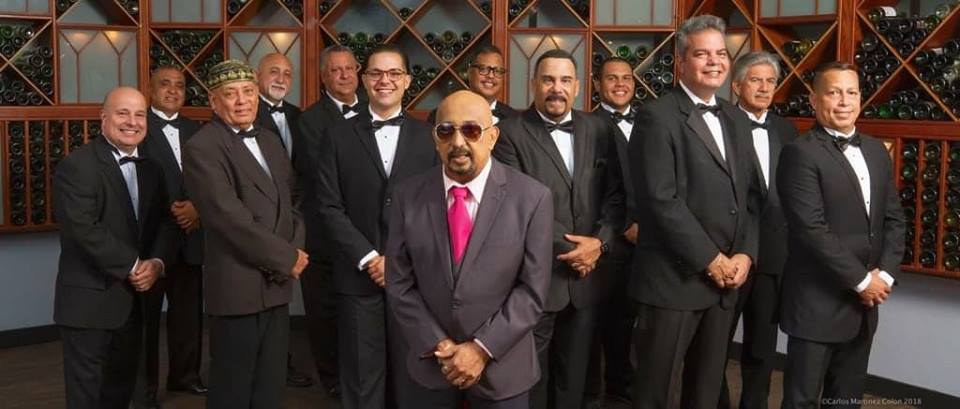
Omara Portuondo, Ismael Rivera, Jimmy Bosch, and Luisito Carrión celebrate their birthdays this month

October is filled with talent and it’s that in this month a hurricane of brilliant artists of the Salsero genre was born, who have captivated us and have shown their Gift before hundreds of audiences around the world. These Latin Stars have bathed us in SABOR with their lyrics and infected with joy with their melodies. It for that, this month we celebrate their births and dance to the rhythm of the applause towards them. Happy Birthday, Soneros!

Omara Portuondo (October 29, 1930)

Omara was born in La Habana (Cuba). Her first encounter with music was at a very early age. Just as in any other Cuban home, the future singer and her siblings grew up with the songs which her parents, for lack of a gramophone, sang to them. Those melodies, some of which still form part of her repertoire, were young Omara’s informal introduction to the world of music.

She and her sister Haydee sang well-known American group “Los Loquibambla” and their style, a Cubanised version of the Bossa Nova with touches of American jazz, was known as “Feeling”. In their radio debut, Omara was introduced as “Miss Omara Brown, the girlfriend of Feeling”.

“Magia Negra” was her debut record released in 1959. It combined Cuban music with American jazz and included versions of “That Old Black Magic” and “Caravan”, by Duke Ellington. Later she joined one of Cuba’s most important orchestras, La Orchestra Aragón, with which she recorded several albums, such as the one she did with Adalberto Álvarez in 1984 and “Palabras and Desafíos” on which she was accompanied by Chucho Valdés.

Omara Portuondo
Omara Portuondo

However, Omara Portuondo catapulted to her well-earned fame was in the mid-1990s when she collaborated in the recording sessions for Buena Vista Social Club on which she sang “Veinte Años”.

She was the star of the third launching of the Buena Vista Social Club released in 2000 and she toured Europe, traveled to Japan, and performed in the USA and Canada.

Omara went back to the studio to record her second solo album “Flor de Amor” (World Circuit), which was produced by Nick Gold and Alê Siqueira, signals a change in direction in her career: it is an album marked by a more subtle sound and a richness of texture. Portuondo brought in a mixture of Cuban and Brazilian musicians for this album, and it is this factor which influences the particular style of the music.

Omara returned to Europe in 2004 to promote this album, performing at such illustrious venues as the North Sea Jazz Festival, Marble Hill House in London, Olympia in Paris and the Concertgebouw in Amsterdam. “Flor de Amor” was nominated for a Grammy in the Best Traditional Tropical Record category and the 16th edition of the Billboard Latin Music Awards (2005); this album obtained the Tropical Record of the Year award.

Later, Omara released “Gracias”, the record that marks her sixtieth year in the music business and won the Latin Grammy Award for the Best Contemporary Tropical Album. It was a very special night as Omara was there to receive the prize in person and she also presented one of the awards, the first time that a Cuban artist has done this. The album was also later nominated for a Grammy in the Best Tropical Latin Album category.

After touring with the Orquesta Buena Vista Social Club in Europe during 2010, “the girlfriend of Feeling” released the latest recording, Omara & Chucho (Montuno Producciones) in spring 2011. 14 years after their last joint album, they reunite once again to continue unravelling the thread of their first joint project, and show us their talents in the simplest, most unclad manner on a context that enables them to lay emphasis on some of the features that been characteristic of their music at various stages in their careers.

Omara will also tour with the Orquesta Buena Vista Social Club later in Europe and the U.S.

Ismael Rivera (October 5, 1931 – May 13, 1987)

Puerto Rican singer and songwriter contributed to the dissemination of the island’s native rhythms such as the Bomba and Plena, and he was one of the first standard-bearers of the Salsero movement of the decade, the reason for he was called “El Sonero Mayor” and also known for others by the nickname “Maelo”.

In 1952 he was hired as a singer for the Lito Peña’s Orquesta Panamericana with which he became known and reaped his first hits: “La vieja en camisa”, “La sazón de la abuela” and the most popular “El charlatán”, a song in Plena rhythm that was widely heard through the Puerto Rico’s local radio stations.

Two years later he left this group to join the Combo de Cortijo with whom he popularized “El bombón de Elena” by Rafael Cepeda Atiles, and as well as performed on Puerto Rican television in the “El Show del Mediodía”.

At the end of the ‘50s, they were presenting their shows at the prestigious New York club Palladium Ballroom, where they contributed to making popular the tropical rhythms imported from the island with great hits such as “El negro bembón”, “Maquinó Landera”, “Tuntuneco ”, and others.

Ismael Rivera
Ismael Rivera

Ismael Rivera’s triumphant career was interrupted in 1962 for paying four years under the laws of Puerto Rico for possession of narcotics. Then, after recovering his freedom, Ismael formed his musical ensemble “Los Cachimbos” and immersed himself in the nascent Salsero movement to which he contributed two classics such as “Dime por qué” y “Mi negrita me espera”.

In the mid-70s “El Sonero Mayor” became the ambassador of Salsa throughout America, working for the record label of the genre Fania, and triumphing with emblematic songs such as “De todas maneras rosas”.

In his facet as a composer, he wrote very notable pieces such as “Besito de Coco” (famous song by Celiz Cruz), “El incomprendido”, “Arrecotín, arrecotán”, “El que no sufre no vive”, y “Mi libertad eres tú among many others.

In his last years, he suffered a throat cancer that caused him to lose his voice and he died as a result of a heart attack.  R.I.P MASTER!

Jimmy Bosch (October 18, 1959)

Jimmy Bosch was born in 1959 (New Jersey, U.S.). He is a world-renowned Trombonist, composer, singer, and bandleader in the world music genres. He has been performing professionally since age 13. Jimmy’s first two solo CDs, “Soneando Trombón” and “Salsa Dura” established him as the Ambassador of the Salsa Dura movement. He ignited this movement by combining old school quality salsa arrangements with a modern NY aggressive edge and socially conscious lyrics. “El Avión De La Salsa” demonstrates and solidifies his commitment to dancer centered music, while “A Millón” is the title of Jimmy’s 4th solo record released.

Jimmy Bosch
Jimmy Bosch

Appearing in over 100 recordings, Bosch “El Trombón Criollo de La Salsa” has garnered at least 10 Grammys and has toured with his orchestra, his sextet or as a solo artist, as well as with: Eddie Palmieri, Ruben Blades, Celia Cruz, Ray Barretto, Willie Colon, Manny Oquendo y Libre, FANIA Allstars, and the list goes on.

Jimmy has been featured throughout the world in major venues and festivals, including; Carnegie Hall, Lincoln Center (NYC), Celebrate Brooklyn (NYC), Montreal Jazz (Canada), Madison Square Garden (NYC), Sydney Opera House (Australia), Barranquijazz (Colombia), El Poliedro and Teresa Careña (Venezuela), and many other important places.

Luisito Carrión (OCTOBER 26, 1962)

A native of Arecibo in Puerto Rico, Luisito Carrión has been singing since he was 13 years old. He began his career as a Salsa artist with the Orquesta Kafe, Orquesta La Nativa and Grupo Concepto Latino.

In his first performances, he sang along with Celia Cruz, Adalberto Santiago, and Santitos Colón. Later on, he was a member of Salsa Fever together with Julio “Gunda” Merced, were several hits come from: “Renta de Amor” and “Señores ahí va Julián”. Afterward, he joined the Bobby Valentín Orchestra, where he sang songs, such as: “El Señor de las Señoras”, “Ramos de flores”, “El Gigoló”, “Tributo de Cali” and “Como lo hago yo”. In his evolutionary process, Luisito joined the Orquesta Don Perignon where he sang “La Fuga” and later with the Sonora Porceña, where he performed songs, such as “Yaré” and “A Comer Lechón”.

Luisito Carrión
Luisito Carrión

In 1997, he recorded with Roberto Roena y Su Apollo Sound “Mi música 1997”. At the end of the 90s, Carrión began his career as a soloist with the record company MP Records with Julio “Gunda” Mercéd and Rafael Bodo Torres, which led to hits, such as: “Sin tu amor”, “La Chica Más Popular”, “Nadie Como Tú”, “Porque”, “Amiga Mía”, “Muriendo”, “Como Ave Sin Rumbo” and “Para Ser Real”. Nowadays, Luisito Carrión is one of the best Puerto Rico’s Soneros bringing on “Histeriaaaa…” in his fans.

Renis Mendoza

Europe / Colony / Germany

Renis Mendoza “San Agustín is like a continent and Marín is its capital”

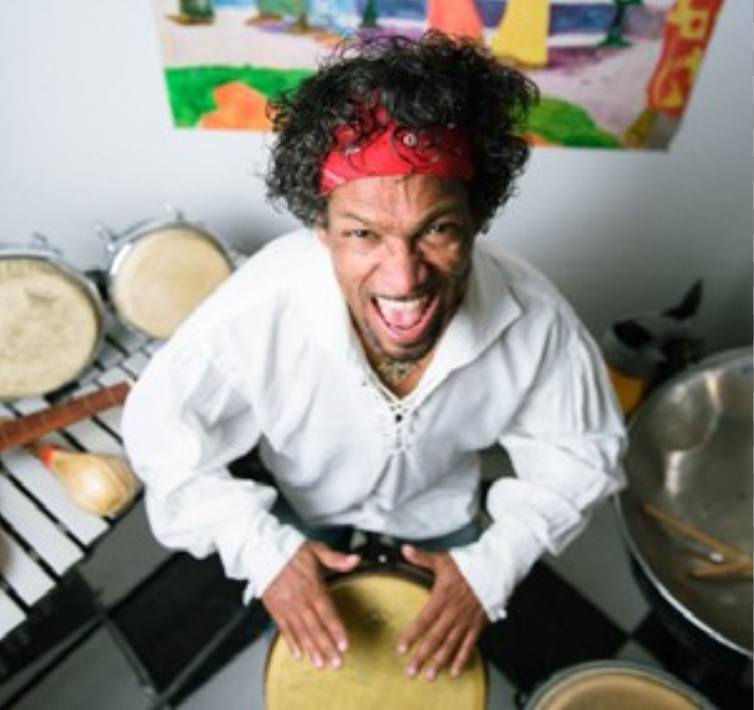
Renis Mendoza
Renis Mendoza

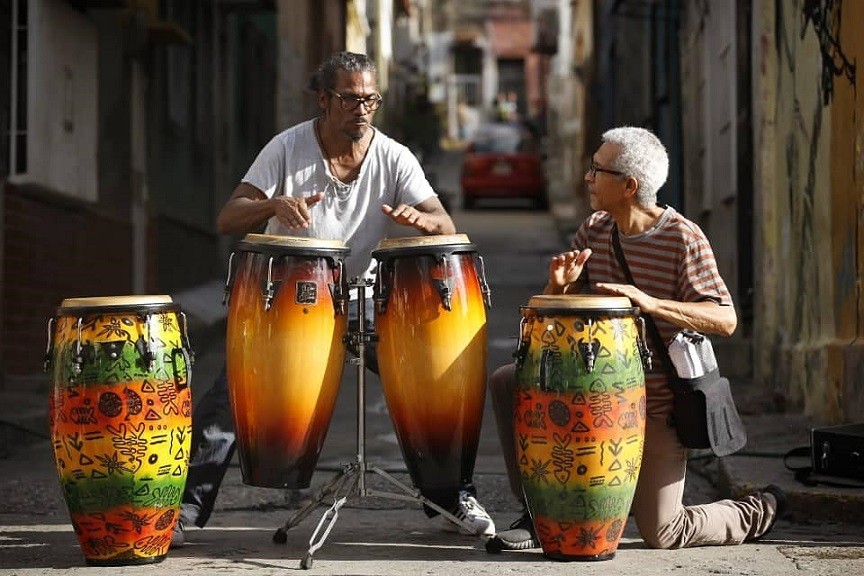
Renis Mendoza is a long-standing Venezuelan percussionist, who has participated with renowned groups inside and outside our country, sprouting from the Marín neighborhood, in the San Agustín parish. A character full of great spirituality and magic, transmits us with his joy and slow way of talking.

He has been based in German Colony for 33 years, together with a group of countrymen who decided to expand their borders and internationalize, to leave the tricolour imprint throbbing in every touch of a drum.

He remembers San Agustín as a vibrant neighborhood, where as a child he listened to “gaitas” (typical venezuelan December music), rock, salsa, parrandas, drums, music downloads, among other cultural activities. In his home, art was always present, his parents were excellent dancers, and Mendoza always lived with his ear attached to the radio to listen to what was playing.

In his early stage, he also liked to rub shoulders with the greats of the neighborhood, Jesús “Chu” Quintero, Carlos “Nené” Quintero, Alfredo Padilla, Crucito Mijares, Carlos Daniel Palacios, Pedro “Guapachá” Father, Manuel Madriz, Carlos Orta, as they were his great teachers and role models. He witnessed many famous people visiting the parish, among them the visit of Ángel Canales, Eddie Palmieri, Peter Conde Rodríguez and many others.

Everything has not been rosy for our interviewee, he had to go through a difficult health situation and be almost on the verge of death, this did not intimidate him and he confesses that; “In the midst of this tragedy I never lacked love, the warmth, the prayers and good vibes of my dearest beings,” – it was a true miracle – he assures us. He recovered from an aneurysm, the doctor said he was going to die despite the 2 interventions performed, but the desire to live, love and music broke with all the prognosis, Mendoza woke up and the machines he was connected to started working normally, it was a real miracle.

Living in a musical parish does not allow anyone to escape from this spell. How were your beginnings in music?

“Being surrounded all the time by people who sing, dance, listen to different types of music, allows you to open a range of possibilities, there it all started, at home, in the corner, watching the “Gaitetricos” and the “Super Cremas” rehearse, your parents , your grandparents, your friends, the sound neighborhood and how not to be part of that musicality, the milk pot, any object that allowed you to play and download ”.

Is it true that the best percussionists were born in San Agustín?

“It would be necessary to make a survey – laughter -, before“ Guapachá ”- father – arrived in the neighborhood, there were musicians and people who played percussion, it is important to name them all, we must not forget them, nor can we name two or three people, but in my way of seeing it, I think it’s great that many percussionists were born in San Agustín, I love it because there is so much quantity and quality that is very important, the quantity and quality of the percussionists specifically from Marín, the neighborhood where I am from. ”

So all this influenced your life. Could you have had any other profession not having lived in San Agustin?

“I don’t know, but, -how do you escape your destiny if there was art in your house-, my dad wanted me to be a sailor, but there was a great influence with everything I experienced, my father was a sailor and he brought many records, many Lp’s, a lot of varied music, he was a tremendous dancer, a great salsa player, just like my uncle Joselito, they called him José salsa ”. “At the age of 4, I was pumping the “Super Crema” rehearsal, I had to listen to all that, as I saw all those people playing, that was a great influence for me.”

“In the period of the “Gaitas” I was the drummer – Marín, Marín, Marín, Marín, is the neighborhood that’s always in something, and in it the Christmas carols are enjoyed – right now I don’t remember the name of the group, at that moment I realized that I liked to play, although my grandmother didn’t like that noise at home. ”

Renis Mendoza
Renis Mendoza

The music from home seduced you..?

“Yes, I learned from all those great musicians, Crucito Mijares, Manuel Rico (my father), José “Salsa” Quintero, José Alberto “Caraotica” France,“Chacho” Pérez, Nano Grant, Melquiades, Carlos Orta, Los Quintero, Los Palacios, Los Rengifos, Los Blanco, watching the rehearsals of Mon Carrillo, Frank and his Tribe, Group 3, Los Gaitetricos, took us to the downloads, with the Maderita group (Wood Group), to the young people I advise you to pay attention to our history, all those people who have been trainers must be given credit, they are eternal for me. ”

“On the other hand, Felipe Rengifo announced the parties, with a lot of talent, he has been a key guy in percussion and the creation of instruments, his influence was Mr. Jesús Blanco, they always did something out of nothing, for me it was great to learn the percussion, San Agustín is a garden of different trees ”.

Talking about San Agustin and not talking about the Madera Group is almost a sin. Tell us about your time at the Maderita Group and after your growth with the Madera Group.

“Many people forget and we must activate the memory of all, the Madera Group for me is a nectar, the nectar of a fruit brought to juice, they were part of many groups at the beginning.”

“The Madera Group formed a group of young people since they were little, I believe the Maderita Group, there were Daniel silva, Jesús Paicosa, Chopo, Martin – with his noise – Robert and Chipilín were dancers, Ramón Gil, Cron Cron Orta, Luisito Quintero, there were others that I don’t remember. ”

“There was dance, theater, Venezuelan and Caribbean folk music, the texts that had significant depth, still today for me become eternity.” “Everyone should be mentioned, not one, two, those who left and those who survived, the wood represents wind, rain, sun, it’s sadness and joy, it’s creativity, it’s fidelity and musicality, those who were part of the Madera Group, are part of our trees, of which all of us are wood ”.

When did the tragedy dissolve the grouping?

“That hurt us a lot, there are wounds that do not heal, after the tragedy we finished all the concerts, one hand it was excellent, but sad on the other, we had to sell joy, when we were going through a very sad moment, many things happened , when the time is right, each one will say them, then I leave with the Coreoarte group with Carlos Orta, for me the wood is infinite, for me we are all wood, it is important to build, rebuild and continue creating ”.

The dilemma of the “original” Madera and the “copy” Madera, still, after so many years there are controversies between them, what do you think of this?

“With the reformed Madera group played; Felipe Rengifo, Migdalia Felipe’s mother, Noel Márquez -he was already taking the reins of the group-, Carlos Daniel, José Rivero, Simón Blanco, Farides Mijares, and many of the former members, then they left, they must explain their reasons, we played a lot, even with Ali Primera. ”

“With this current project we must see things from a constructive and objective criticism, from my point of view, they have done many things, they have been constructive and have kept that name, there are boys who are playing and it seems great, Noel has moved a lot as President of this new project, he is like an engine, without an engine, the car does not roll, although a name should not be repeated, it should be a tribute to the Madera, something that represents the Madera or something, we must recognize that he has done positive things. -Who is saying but not doing-, it is better to do than to say ”.

“This story is very long, yes, something original should be done.” “Following the death of some members of the Madera group we formed the Kimbiza group and then Cimarrón, the Madera Group should remind everyone, the Madera is root, stem, leaf, flower and fruits, who attack the Madera, -the parasites – Those who do nothing … We are all Madera”.

What does San Agustin mean to you?

“It is a beautiful parish, I consider it as a galaxy surrounded by various planets such as La Charneca, Los Hornos, La Fila, El Manguito, La Ceiba, El Mamón, La Ford, Marín, etc. you should not name a single family , a single person, we are a salad, we are a pavilion, we are what we are for what we are, and we have all put a grain of sand, we are taking root in many places ”…“ San Agustin is like a continent and Marín is the capital. ”

With so many experiences, what memories do you have of the parish?

“San Agustín has been boxing, volleyball, baseball, musicality, dance, as a child I remember the story of Los Rebeldes de Marín, a baseball group, they wanted to take them to play outside the country – a fascinating story – the final was against Willis Willis, the Marin Rebels won and the prize was a trip to Venezuela, this story is as fascinating as the Madera Group. ”

“I remember when we wanted to be evicted and the No to Eviction movement was formed, in the end they built the Yerbera buildings.” “The disc jockey in the neighborhood on weekends, the Parra family played excellent music, Carlos Daniel replied, on the other hand the chicheros -familia Mata-, each alternated, they were all excellent, the true history of the neighborhood , we must open that trunk and get the stories with all those names. ”

Your jump to Germany, How has been the receptivity of the public?

“The love is felt, we mix folklore with the classic, with the neighborhood and people like it, whatever you do, do it positively, transform and do not copy, do not imitate.”

His journey has paid off. On which projects have you worked in Germany?

“Of course, with the Modern Talking duo, the second most successful group in Germany, with Jesse Milliner -is like a brother to me-, a Rock monster quoted in the US, I owe him a lot, when I was serious he was always by my side Milliner has been a pianist to artists such as Lee Ritenour, Chaka Khan, Trilok Gurtu, Tierra Viento y Fuego; I also worked with Afro-Jazz-Gruppe Cámer; Nélio Costa Band, from Brazil; DJ Olly Tonköpfe ”. “With many famous artists, in the atmosphere of soul and funk. And I recorded a lot of Brazilian, African music, with the Chilean group called Loa. ”

“In the world of jazz I have accompanied great musicians such as Eric Marienthal, Nelson Rangel and Rick Braun, among others. In addition, I have participated in musicals such as “Saturday Night Fever”; “Tabaluga; Miami Night ”, at the“ Montreaux Jazz Festival ”. I am requested in the curricula of the institutions the “Folkswangs Hochschule de Essen”; the “Johannes Gutenberg-Universität Mainz”; “Hochschule für Musik und Tanz Köln”.

Dance and percussion, your two passions, the sublime and the loud, is not something ambiguous …

“Both go together, we dance through music, here the phenomenon of osmosis occurs, the drum is not to hit or slap, it is to caress it, the world of dance had a great dancer Pina Bausch, she created contemporary dance, with her danced Arnaldo Álvarez – nephew of Carlos Orta – whom I thank very much ”.

You went through a very difficult stage when you got sick, it almost ended in a sad outcome, what triggered all that?

“Look- I was playing a lot, I did not stop, my cousins ​​and my brother told me (Luisito and Robert Quintero, my brother José Luis and Charles), and I simply ignored them, and then I began to feel tired, weak, sweaty. The first diagnosis was wrong (allergies), then they found me high blood pressure, I had to go to the doctor on December 2nd, but on December 1st, I lost track of me, I did not have time to go to the consultation ”.

“The medical evaluation determined that I had an aneurysm, the doctor told my relatives that I was going to die. Two operations were of no use to me, I was in a coma, however, in the midst of this tragedy, faith, love, and miracles, those that happen every day were always present, and there were my friends, they never failed, you know, Jesse Milliner came with his piano , others approached with their violins, they sang to me Godspel ”.

“When the day of the farewell arrived, they were going to disconnect me, they were all present, they started taking all the cables off, Jesse told me, then my daughter Fe arrived and started singing and rubbing my feet”… “ when they got sick I used to rub their hands and their feet, and the doctor, who didn’t let anyone come near me, let my daughter do it. ”

“I woke up, the machines started working, what could have been my funeral, became a miracle, the doctor said: -we are not going to get Renis out of the hospital, Renis is alive-, I weighed 40 kilos.” “The doctor was surprised, my daughter Fe came back the next day and was surprised by my physical improvement, and then repeated the therapy.”

“They played Kimbiza music, with themes of Yma América, and Jesse Milliner, it was a real miracle, the doctor says it and I reaffirm it.”

Being so close to death, How do you value or see life?

“It gave me a wide sensitivity, I am fully convinced that there are two dimensions, before I didn’t believe in anything, people change to another level, to another dimension, for me life is the awakening.” “Every day that passes is a day we win, but every day that passes, it is one day less, life is infinite, someone that leaves and leaves a good memory, is someone who lives forever by leaving us their energy.”

Currently, what activities are you doing?

“I am working in two universities; in one, I give what they call co-repetition, I teach contemporary dance students what is the rhythm and interpretation of the movement and feeling, and the creation of choreography. In parallel, I am at Johannes Gutenberg University, I work in Latin Jazz – which I thank the neighborhood, since I introduce things I have lived through -, besides this, I play a lot, I tour with jazz, soul, pop groups, the boys created a group and named it Renis “ Live ”, which means that I am alive, due to the health accident I had and when I returned they were impressed.

“To teach people, to contribute to my neighborhood, to create and not copy, to be part of those trees, I dream of taking these kids to my neighborhood, to exchange what they have learned with us, I reaffirm you” to be, you have to do. “

A recommendation for the new generation

“We must investigate all our roots, music, dance, boxing, theater, “bolas criollas” games, baseball, all this as a representative identity of our neighborhood, we must recognize everyone who has done something for the parish, because thanks to them, we will be eternal. ”

A phrase by Renis Mendoza …

“Live today and now, be constructive, do not copy.”

Translated by: Thisby Ferrara


By Eiling Blanco, Correspondent for Latin American


  • « Go to Previous Page
  • Page 1
  • Page 2
  • Page 3
  • Page 4
  • Page 5
  • Page 6
  • Go to Next Page »

International Salsa Magazine (ISM) is a monthly publication about Salsa activities around the world, that has been publishing since 2007. It is a world network of volunteers coordinated by ISM Magazine. We are working to strengthen all the events by working together.