• Skip to primary navigation
  • Skip to main content

International Salsa Magazine

  • HOME
  • Previous editions
    • 2026
      • ISM / April 2026
      • ISM / March 2026
      • ISM / February 2026
      • ISM / January 2026
    • 2025
      • ISM / December 2025
      • ISM / November 2025
      • ISM / October 2025
      • ISM / September 2025
      • ISM / August 2025
      • ISM / July 2025
      • ISM / June 2025
      • ISM / May2025
      • ISM / April 2025
      • ISM / March 2025
      • ISM / February 2025
      • ISM / January 2025
    • 2024
      • ISM / December 2024
      • ISM / November 2024
      • ISM / October 2024
      • ISM / September 2024
      • ISM / August 2024
      • ISM / July 2024
      • ISM / June 2024
      • ISM / May 2024
      • ISM / April 2024
      • ISM / March 2024
      • ISM / February 2024
      • ISM / January 2024
    • 2023
      • ISM / December 2023
      • ISM / November 2023
      • ISM / October 2023
      • ISM – September 2023
      • ISM – August 2023
      • ISM July 2023
      • ISM Edition June 2023
      • ISM – May 2023
      • ISM April 2023
      • ISM March 2023
      • ISM February 2023
      • ISM January 2023
    • 2022
      • ISM December 2022
      • ISM November 2022
      • ISM October 2022
      • ISM September 2022
      • ISM August 2022
      • ISM July 2022
      • ISM June 2022
      • ISM May 2022
      • ISM February 2022
      • ISM January 2022
    • 2021
      • ISM December 2021
      • ISM November 2021
      • ISM October – 2021
      • ISM September 2021
      • ISM August 2021
      • ISM July 2021
      • ISM May 2021
      • ISM April 2021
      • ISM June 2021
      • ISM March 2021
      • ISM February 2021
      • ISM January 2021
    • 2020
      • ISM December 2020
      • ISM November 2020
      • ISM October 2020
      • ISM September 2020
      • ISM August 2020
      • ISM July 2020
      • ISM June 2020
      • ISM May 2020
      • ISM April 2020
      • ISM March 2020
      • ISM February 2020
      • ISM January 2020
    • 2019
      • ISM December 2019
      • ISM November 2019
      • ISM October 2019
      • ISM Septembre 2019
      • ISM August 2019
      • ISM July 2019
      • ISM June 2019
  • Spanish
  • Download Salsa App
    • Android
    • Apple

Search Results for: Latin genres

Jorge Duran

Europe / Germany

Interview to Jorge Duran & his Jalea de Mambo

Now settled in Europe, venezuelan vibraphonist Jorge Duran is leading Jalea de Mambo band which mix musicians from different nationalities recovering the swing and mambo of the 50s with the smart flavor of the New York Palladium, the famous Broadway dance-hall, and the color of the best Latin Jazz that can be heard in Europe right now. Its characteristic vibraphone sound makes this band a unique and raw example in the current music panorama.

Recently documentary “We Like It Like That” has been released worldwide http://latinboogaloo.com/ emphasizing that cultural revolution where boogaloo, mambo, among other genres, were considered the so-called “Latin Soul” creating that cultural movement which day by day takes more strength everywhere.

Jorge Duran
Jorge Duran

1) Jorge, tell us a little bit about your background, your roots, and your musical influences.

Well, I started playing Latin American percussion in Venezuela (Caracas) having the chance to share with great musicians beside studying with amazing percussion players but my degree was focus in composition. Then I begun to play jazz vibraphone and it took me a few years to play again Latin American Music although here I am ready to give my very best.

2) How did you come to the idea of Jalea de Mambo?

The idea of Jalea de Mambo came to me long time ago (10 years ago or more) when I first heard the album Cal Tjader Modern Mambo Quintet, quite old album indeed (1955). That record change everything for me and blew my mind up focus then on mambo, latin jazz and what so called “Latin Soul”.

3) Mambo, Boogaloo, what many people called “Latin Soul” was a revolution during the 50s. Do you think that nowadays these genres could reach something similar?

I really think everything is possible if you work hard, I’m not trying to make a revolution my idea is that every single person come to see us playing, enjoying magic music, having a great time. Obviously that “revolution” happened once but its essence has come along the years in all musicians who play caribbean rhythms. Nowadays, this genre is getting popular again but honestly I believe it has never lost validation.

Photo of Jorge Durán and his band members in the music world

4) What are your feelings coming from Venezuela performing in Europe and worldwide? Is the musical movement opened and active enough over there?

My feeling is that in Europe we, musicians, have more opportunities to show our culture and most of the people here are opened enough to hear or see our projects.

Beyond Europe is quite the same because I have Heard about concerts with more tan 100.000 audiences in Arab Countries, for instance. It simply means that latin and caribbean music “hook” people hearts so they enjoy it full.

5) Now that you are settled in Europe tell us a bit more about your projects and expectations.

I’m living in Germany now and it is a huge challenge for me as it is a real different culture and language but my idea is to spread the Latin American culture and music not only in Europe but worldwide. We are living very tough moments at this very moment and firmly believe that músic and culture are more needed than ever because music tame the beasts, as people usually say, and that’s what we need now, I mean, peace, calm and mainly love.

Photo of Jorge Durán and his team at the live concert

6) Looking for these goals, are you working on your own or you are supported by a company, agency or similar.

Now I have the great pleasure to say that I’m not alone in this business because Cat 7 Production is my new family and they are really focused in spreading my music to reach more people. I think this is the idea, music is a language we need to be heard as I said before.

7) Finally Jorge, let’s share a message for all your fans beside colleagues who work hard to achieve similar goals you are looking for.

Well, I’m always very grateful when some one takes time to send emails or messages after watching us in a concert, I love it and love fans who give me strenght to keep doing what my heart says. My humbly advice to all musicians who have an idea or project is that never stop making music because everything is possible in life and the real power is inside us. This is one of more beautiful and hard profession but sure worth it!


Jorge Duran in concert

Vinny Rivera release his latest single “Mientes”

North America / USA / Boston

Vinny Rivera. The #1 Latin Kizomba Artist in the World

Vinny Rivera
Vinny Rivera

Vinny Rivera ‘s new single “Mientes” coming off of his album “La Torre” takes Kizomba to the next level. Good friend Guelo Star who is currently writing for the likes of Don Omar, Ivy Queen, Jowell y Randy, De La Ghetto just to name a few originally wrote this song with the spirit of Kizomba and Vinny Rivera was the perfect voice to compliment the writing. This love song is sure to bring The #1 Latin Kizomba singer and songwriter towards new heights of world music.

Sound off the bongos & kick in the bass, Vinny Rivera is ready to hit the stage. One of the hardest working singer/songwriters, Victor “Vinny” Rivera, continues to shine in the music entertainment scene. Surrounded by great mentors and industry leaders such as world renowned international producers M&N Pro, Jorgie Milliano, Grammy award winning producer Richy Peña (Niña Bonita), and Universal Latino’s recording artist Yunel Cruz, Vinny’s sound has captured audiences all around.

The music of Vinny Rivera is refreshing and lends a sweet tuned voice to the likes of urban bachata Superstar Prince Royce mixed in with Latin Pop Superstars Luis Fonsi & Enrique Iglesias. Genres of music are no different. His voice as well as being multilingual lends itself to Salsa, Bachata, Kizomba, Mambo, Pop, R&B and many more musical genres.

Vinny Rivera - Mientes
Vinny Rivera – Mientes

On the other hand and recognizing musical legend “Jerry Rivera”, Vinny Rivera alongside longtime friend and producer Jorgie Milliano pay tribute to a tropical classic “Amores Como El Nuestro” by giving it a tasteful Kizomba twist that audiences everywhere are sure to enjoy.

Vinny Rivera is currently working on a new Latin Kizomba album that will continue to capture the hearts and ears of all Kizomba lovers.

Besides, Vinny’s talent for capturing audiences has exponentially increased his passion for performing and entertaining. Performing in festivals and special events, the demand has been genuine and stage performances continue to impact his listeners.

Musical Trajectory 

Victor Rivera, known artistically as Vinny Rivera, was born in Boston, Massachusetts, United States. Of Puerto Rican parents under the tutelage of his Dominican stepfather, he is one of the most hard working singers / composers to shine in the musical entertainment scene. Being influenced by the Boston city melting pot, he was exposed to a variety of musical genres including Reggae, Jazz, Soca, R & B and pop and the sounds of his native island and the neighboring Dominican Republic sounds the Salsa, Merengue, Bachata.

2- Vinny Rivera
2- Vinny Rivera

Completely addicted and forced by music and the desire to share his energy and healing skills, at the age of 16 he bought his first DJ set with his best friend Okland López and began playing music of all kinds of events. In that period he realized that he wanted to take the next step, to make music. He then began to study all kinds of music and finally was able to be comfortable enough to sing.

His friends encouraged him to record music and were associated as a trio together Loco Jow to pursue a career within the music industry. Although not signed with any record label they achieved a network of relationships around the world that got them heard everywhere, which allowed them to rank No.3 in a company of radio and distribution of popular music in South America.

Vinny continued to work with the group opening shows for world-renowned acts such as Don Omar, Wisin & Yandel, Zion & Lennox, Ivy Queen, Rakim & Ken-Y, Tony Dize, Alexis & Fido.

The group split because of four years of Vinny’s enlistment in the United States Air Force. Now a veteran of the Air Force from June 2004 to December 2014 Vinny learned that “Life is too short and you have to give everything you have.”

He started working and learning with Grammy-winning Producers such as Richy Peña who produced the hit “Niña Bonita” by Chino & Nacho and Lenny Santos recognized by the Bachata group “Aventura”. To then sing and write with Universal Billboard and Cuban artist Yunel Cruz. He also wrote a final hit for Jowell and Randy “Lo Que Quiero”, which reached # 11 on the charts, being remixed with Reggaeton Super Stars Arcangel, Farruko and Divino produced by his great friend Jorgie Milliano.

Vinny Rivera collash

His work and vocal skills have captured the respect and attention of the public around the world. The formula for Vinny Rivera’s latest plan is to use his music as a tool to address problems in the world. Until then he will continue to work diligently on making good music to enjoy.

Buika. The Multicultural Sensation

European Union
Buika
Buika

“It takes a lot of guts to expose your true self to others, and acclaimed singer, songwriter, poet, composer and music producer, Buika (pronounced BWEE-ka), does that every night she goes on stage. As plain as the tattoos on her skin, Buika bears her soul to her fans across the world, which she affectionately calls her “tribe.””

This summer, Buika continues her journey of storytelling across Europe and South America in support of her latest album, fittingly named Vivir Sin Miedo (To Live Without Fear). Her eighth album and one with the most English lyrics, Vivir Sin Miedo, co-produced by Grammy Award-winning Swedish producer, Martin Terefe (Mary J. Blige, Mutya Buena, Coldplay) features Grammy-winning singer-songwriter Jason Mraz, German neo-soul artist Meshell Ndegeocello, and Spanish underground flamenco legend Potito.

2- Buika
2- Buika

Born María Concepción Balboa Buika in Palma de Mallorca, Spain, Buika grew up immersed in Spanish culture with her African-born parents. Surrounded by multiple cultures throughout her life, Buika had a variety of musical influences, from jazz and flamenco to pop, soul and African polyrhythm. This eclectic upbringing shaped Buika’s ability to make music without limitations. During her 15-year recording career, her albums flow seamlessly between pop, jazz, soul, reggae, afro beat, R&B and flamenco. Equally diverse are her collaborators, which include Pat Metheny, Anoushka Shankar, Chick Corea, Niño Josele, Bebo and Chucho Valdés, Seal and Nelly Furtado.

Photo 2 - Buika
Photo 2 – Buika

“Filmmaker and longtime fan, Pedro Almodóvar, remarked about Buika, ‘Seeing her draw from such different genres…mix them all together with such grace and spontaneity, one cannot help but think that there is a brighter future as long as one can witness the boundless evolution of this infinite performer.'”

A brighter future did arrive for Buika with each new album. Her 2006 album, Mi Niña Lola (My Little Girl Lola), won Buika high praise from the US media, including The New York Times, The New Yorker, Miami Herald and NPR. She received two Latin Grammys, one for her 2009 album, El Ultimo Trago (The Last Drink) and for her 2013 album, La Noche Más Larga (The Longest Night), which also won a Grammy nomination for Best Latin Jazz album.

Photo 3: Buika
Photo 3: Buika

Other Latin Grammy nominations included Best Album and Best Production for Niña de Fuego (Girl of Fire, special 2-CD Edition, which included her first collection of poems – 2008), Record of the Year for her albums, Se Me Hizo Facil (2010) and La Nave del Olvido (2013) as well as the new Record of the Year nomination for Vivir sin Miedo for the song “Si volveré” (2016)

Buika knows no boundaries when it comes to language or geography. She has collaborated with musicians and singers in Spanish, Catalan, English, French, Portuguese, Iranian and Armenian. Her touring has spanned the globe, covering Europe, Latin America, the Caribbean Islands, Asia, Africa and the US.

A great music ambassador, she reaches any small or large crowd..i.e performed at the US Embassy in Madrid, Spain, on a great 4th of July or a year ago at the Spanish Embassy in DC, for a larger audiences at different music festivals, such as “La Notte della Taranta” Italy over or “Jazz al parque” Bogotá just a month ago.

Photo - Buika
Photo – Buika

She has no barriers in terms of artistic expression and rejects any kind of self-limitation, a business owner, singer / songwriter, producer and poet, whom on her time off immerses herself in the world of photography, some of her best portraits and self-portraits can be seen on any of her books, Niña de fuego (Girl of fire) “special edition” and -A los que amaron a mujeres difíciles y acabaron por soltarse (To those who loved difficult women and ended up letting go)

Buika singing
Buika singing

For Buika, her music is more than a career. She says, “I am music (…)!”

  • [email protected]
  • [email protected]
  • [email protected] 
  • [email protected]

Eduardo Herrera. The Man Behind Every Song – The Story of His Music

Latin America / Puerto Rico / Puerto Rico
Eduardo Herrera
Eduardo Herrera

“There’s a wide variety of artists, singers, and famous orchestras in different parts of the world, but that doesn’t mean you can’t discover new artists who have the motivation and desire to boost their musical talent. Here, we have as our guest Eduardo Herrera, a salsa and ballad singer.

Eduardo is the son of Puerto Rican parents, raised in New York with a ‘boricua sazón’ (Puerto Rican flavor/style). From a very young age, he fell in love with music, and over time, he gained many musical experiences in different genres with Latin nuances and foreign fusions.

He mentions that when he was younger, he participated in youth choirs on stages and attended concerts of great artists, learning the lyrics of urban music. As time passed, he captivated the perfect school that shaped his unique style; it includes spiritual music, Latin rhythms, and the influence of American styles without abandoning his Puerto Rican roots. He also mentions that he had the opportunity to share and collaborate with very famous artists who influenced him with their exceptional style and talent, even to this day.

Eduardo Herrera comments that his music is a collection of life experiences that many people identify with. It has no age or time; it has ‘sazón,’ Caribbean rhythm, and soulfulness.

When you hear the melody, you fall in love; when you pay attention to the lyrics, you are captivated; when you listen to it again, you turn it into something that identifies you, regardless of your age, race, condition, or gender.

It simply identifies what no one else sees or knows in or about you. In fact, his songs tell stories; they tell your life, his, and mine. Each story on a bus or train in New York, each event in family life or with a stranger, the stories of the fans, among others.”

“Eduardo Herrera comments that his music is a collection of life experiences that many people identify with. It has no age or time; it has ‘sazón,’ Caribbean rhythm, and soulfulness.

When you hear the melody, you fall in love; when you pay attention to the lyrics, you are captivated; when you listen to it again, you turn it into something that identifies you, regardless of your age, race, condition, or gender. It simply identifies what no one else sees or knows in or about you. In fact, his songs tell stories; they tell your life, his, and mine. Each story on a bus or train in New York, each event in family life or with a stranger, the stories of the fans, among others.

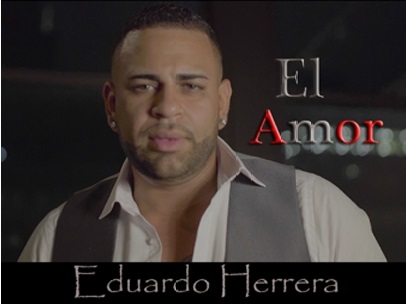
Eduardo Herrera - El Amor
Eduardo Herrera – El Amor

In the course of his life, he mentions that it was a transition as he went through many positive and negative life experiences, which allowed him to gain different meanings for the emotions he felt, whether real or false. All these experiences helped him help others, such as in personal growth.

In ‘Salsa‘ and ‘Balada,’ he has found his perfect space to express what he carries in his life’s baggage. Hoping that many couples will have a happy life to the rhythm of his music. Eduardo told us, ‘To achieve that emotional catharsis that lifts you up from any tragedy, it is necessary to LOVE YOURSELF BEFORE LOVING SOMEONE.’ So remember that when you listen to Eduardo Herrera’s music: ‘LOVE YOURSELF BEFORE LOVING SOMEONE.’

Recognizing the value of an individual and appreciating their abilities while learning from mistakes, that is what defines every song you will hear from Eduardo. The message will arrive; it’s up to you for the outcome to be happy. Because you learn from the difficulties in the process, the final result depends on how you handle the ‘tests’ to qualify yourself in feelings for the life you choose to live.

If you wish to know more about him:

  • Facebook: https://www.facebook.com/eduardoherrerasalsa
  • Instagram: eduardoherrerasalsa
  • Email: [email protected]
  • Phone: 787 399 5064


Son 14 The History of the Orchestra and the Success of “A Bayamo en Coche”

The Son 14 orchestra was founded in Santiago de Cuba in 1977 by vocalist Eduardo “El Tiburón” Morales (born in Cuba in 1935) and pianist and musical director Adalberto Álvarez.

As the name suggests, it is a 14-member ensemble dedicated to performing son, the national musical genre of Cuba. In 1978, Lázaro Rosabal (born in Santiago de Cuba in 1953) joined the group.

They quickly recorded several albums for the local EGREM label, many of which became bestsellers throughout Latin America, allowing them to undertake extensive tours across the Americas and Europe.

In 1992, co-founder Álvarez left the band to form his own group. Nevertheless, Son 14 continued its journey under the musical direction of Rosabal.

In addition to their continued success in the Latin market, the band began to gain international recognition, first with the song “El Son De La Madrugada,” included on the compilation Cuba – Fully Charged (Earthworks Records, 1993), and later with the release of Son – The BIG SOUND (Tumi Records, 1995), a compilation of their material from the Álvarez era.

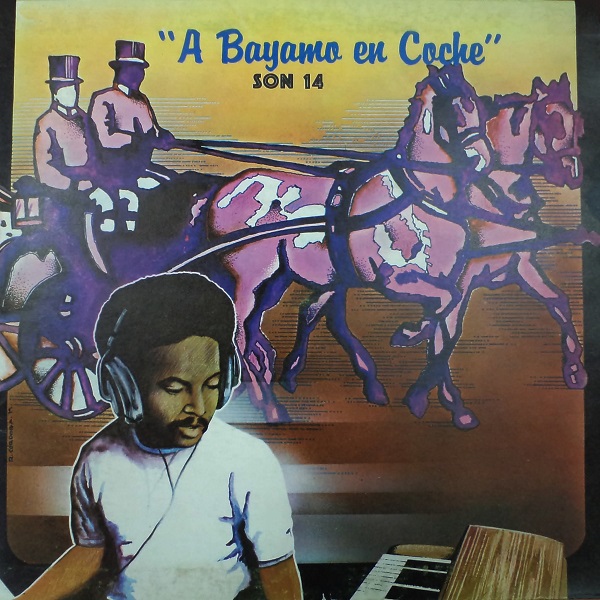
Son 14 de «A Bayamo en Coche»

After introducing a modern, vibrant version of son and its variations (son montuno, bolero son, etc.) to non-Latin audiences, Tumi Records commissioned a new recording at Cuba’s EGREM studios. Released in 1996 as part of the Cuba Explosion series, the album Cubanía proved that the band had not lost an ounce of its musical talent and energy under Rosabal’s direction. Three years later, the group released La Máquina Musical, which incorporated Colombian tropical rhythms into their sound, promoting the album with a European tour that included a performance at the Cuba Presente Festival at the Barbican Centre in London. (Source: AllMusic)

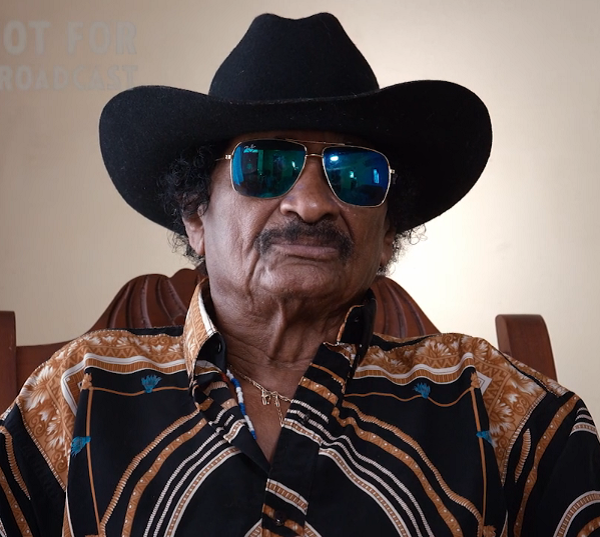
Eduardo Morales Orozco Tiburón

 The Milestone of “A Bayamo en Coche”

The album A Bayamo en Coche (A Bayamo by Carriage) was released in 1979, with its biggest hit being the title track itself. The album’s opening song, composed and arranged by Adalberto Álvarez from Camagüey, instantly transformed him into one of the leading figures in popular Cuban dance music from that year on.

The song “A Bayamo en coche” not only revives traditional son and enriches it with new sounds but also artistically recreates a cherished tradition rooted in Bayamo, the cradle of Cuban nationality. In this city, coches (horse-drawn carriages) are used for pleasure rides and recreation, and the song’s lyrics narrate these moments.

The album contained other tracks that were hugely popular in Cuba between 1978 and 1980, such as “Calle Enramada” (a son elegy to that main Santiago street), “El Son De La Madrugada” (with a beautiful later version by Omara Portuondo), “Se quema la trocha,” and “Elena la cumbanchera,” which turned the record into a landmark within this genre of Cuban music. Most of the tracks were performed by Tiburón Morales, the group’s lead vocalist.

Tribute to The Gentleman of Son

Recently, Son 14 founder Adalberto Álvarez, known as “El Caballero del Son” (The Gentleman of Son), was honored with a concert at the Karl Marx Theatre. This event celebrated his 46 years in music and the 35th anniversary of his later orchestra, Adalberto Álvarez y su Son.

The concert was a memorable tribute to the work of the composer of “A Bayamo en coche.” Some of his best songs were performed by notable Cuban musicians:

  • Septeto Santiaguero (Son para un sonero)
  • Pancho Amat and Alain Pérez (Tu fiel trovador)
  • Alexander Abreu (Pura imagen)
  • Paulo F. G. (Fin de semana)

At other points, Frank Fernández performed a duet accompaniment with the voices of Adalberto Álvarez and Jorge Luis Rojas, “Rojitas,” on Santa Cecilia.

Additionally, Rojitas sang with Tania Pantoja (Vivir lo nuestro) and solo (Y qué tú quieres que te den). Robertón and Lele, vocalists from Van Van, performed Agua que cae del cielo, while the orchestra Adalberto Álvarez y su Son took on De Cuba pa’l mundo entero, Son de la madrugada, and Los caminos de Ifá.

En La Sala Show “El Saraito” Adalberto Álvarez (R.I.P) Fundador, Director. Arreglista y Pianista del Son 14 de Cuba, Dj. Augusto Felibertt y Vicente López

That night, Maestro José Luis Cortés highlighted Álvarez’s musical quality, focusing specifically on “A Bayamo en coche,” the song that, in 1979, announced the existence of a great artist to the public. Álvarez was capable of bringing son to Cuban art schools and has defended Cuban son with grace and artistry, all while staying true to the essence of one of the dance music genres that best represents Cuban identity. (Source: Joel del Río, Cibercuba)

“A Bayamo En Coche” Album Details (1980)

No. Track Genre Composer
01. A Bayamo En Coche Son Adalberto Álvarez
02. El Son De La Madrugada Son guaguancó Adalberto Álvarez
03. Se Fue Mi Amor Y No Lo Vi Partir Bolero son Adalberto Álvarez
04. Calle Enramada Son Pedro Gómez
05. Elena La Cumbanchera Son Gerardo Martínez
06. Se Quema La Trocha Bachata-Son Adalberto Álvarez
07. Tal Vez Vuelvas A Llamarme Son montuno Adalberto Álvarez
08. Gimen Las Rosas Por Una Triste Ilusión Bolero Adalberto Álvarez
09. Vamos, Háblame Ahora Bachata-son Adalberto Álvarez

Musicians who participated in the recording (1979):

  • Director, Acoustic Piano, Keyboards: Adalberto Álvarez
  • Vocals, Minor Percussion: Eduardo “El Tiburón” Morales, Héctor Wedderbron, Daniel Carmenates
  • Bass: Jorge Machado
  • Guitar: Efisio Barroso
  • Trumpet: Eduardo Sánchez, Guillermo Femández, José Fernández, Dagoberto Rodríguez
  • Trombone: Lázaro Rosabal
  • Tumbadora (Conga Drum): Ubaldo Canes
  • Bongó, Cowbell: Guillermo Viera

Recorded at: EGREM Studios (1979)

Collaborators:

L’Òstia Latin Jazz

Dj. Augusto Felibertt

Also Read: Luis Conte: The Cuban-American percussionist who fuses Cuban son with global music

  • « Go to Previous Page
  • Page 1
  • Interim pages omitted …
  • Page 17
  • Page 18
  • Page 19
  • Page 20
  • Page 21
  • Interim pages omitted …
  • Page 62
  • Go to Next Page »

International Salsa Magazine (ISM) is a monthly publication about Salsa activities around the world, that has been publishing since 2007. It is a world network of volunteers coordinated by ISM Magazine. We are working to strengthen all the events by working together.